Prob theory Final
 Call Kai
 Learn
Learn Practice Test
 Spaced Repetition
 Match
Match Flashcards
 Knowt Play
1/12

There's no tags or description
Looks like no tags are added yet.
Name | Mastery | Learn | Test | Matching | Spaced | Call with Kai |
|---|
No analytics yet
Send a link to your students to track their progress
13 Terms
Sample space definition
the set of all possible outcomes of an experiment
permutation vs combination
permutation: order matters. n!/(n-k)!
combination: order doesn’t matter. n!/(k!(n-k)!). (n k)
What is stars and bars and how do you use it?
Number of ways to put n identical objects into k distinct bins
Number of ways to put n identical objects into k distinct bins when number in each bin can be 0. (n+k-1 k-1)
Number of ways to put n identical objects into k distinct bins when number in each bin must be >=1. (n-1 k-1)
Formula for conditional probability P(A|B)
P(A|B)=P(A and B)/P(B)
Baye’s rule
P(A|B)*P(B)/P(A)
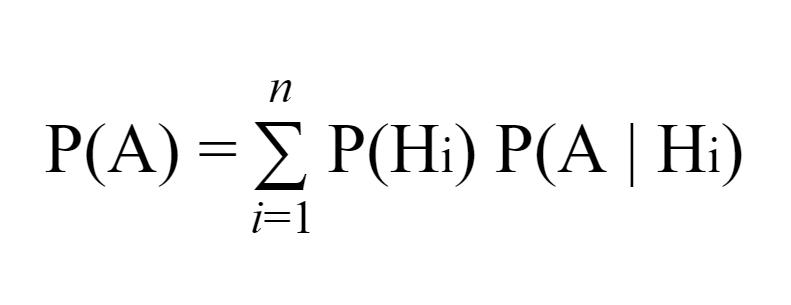
Law of total probability
How to prove independence
P(A |B)=P(A)
P(A and B)= P(A)P(B)
When to use
binomial
hypergeometric
geometric
negative binomial
poisson
uniform
exponential
binomial: success in n independent trials. p=probability of success. Bin(n,p)
hypergeometric: success in n trials WITHOUT REPLACEMENT.
geometric: number of trials until 1st success; each trial having a constant success probability of p and failure probability of q (= 1-p)
negative binomial: number of FAILURES until rth success
poisson: # of events in a predefined fixed interval X~Pois(lambda)
uniform: all outcomes in [a,b] equally likely
exponential: time between events in a poisson process
Explain memoryless property. WHich distributions does it apply to
Probability of a future waiting time is independent of time already elapsed
exponential (continuous) and geometric (discrete)
Describe poisson process. What the poisson and exponential distributions represent
Stochastic model for counting random, independent events at a constant average rate (lambda) over time or space.
Number of arrivals in time t is Pois(lambda*t)
Time between arrivals are iid Exp(lambda)
How to prove independence of joint distributions
P(X=x,Y=y)=P(X=x)P(Y=y)
How to find marginal distribution of joint distributions
P(X=x)=P(X=x,Y=all values of y)
P(Y=y)=P(X=all values of x, Y=y)