Hellenistic World: Term 2 Week 10: The Hellenistic Aesthetic II: Art:
 Call Kai
 Learn
Learn Practice Test
 Spaced Repetition
 Match
Match Flashcards
 Knowt Play
1/83

There's no tags or description
Looks like no tags are added yet.
Name | Mastery | Learn | Test | Matching | Spaced | Call with Kai |
|---|
No analytics yet
Send a link to your students to track their progress
84 Terms
What words can be applied when considering the Hellenistic aesthetic?
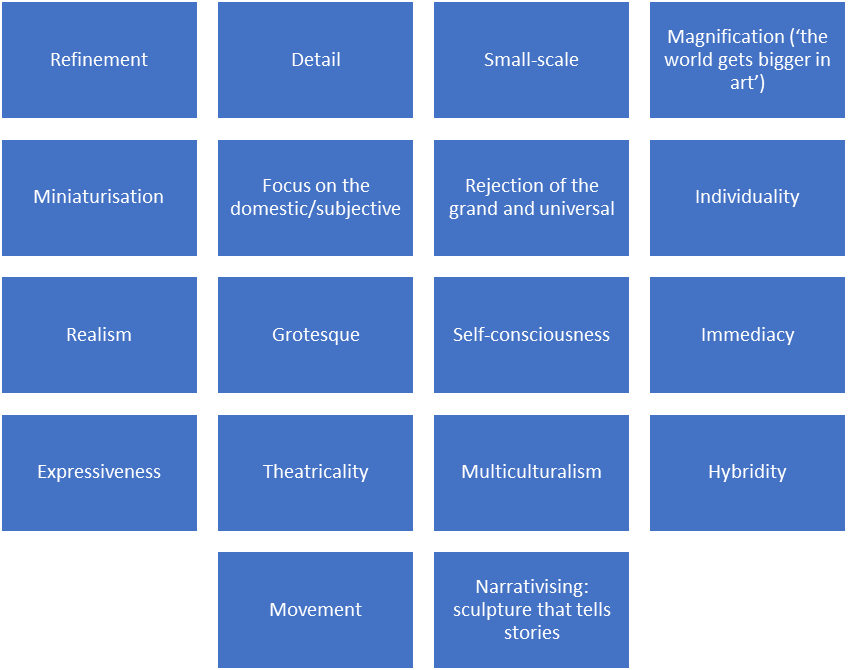
Whata re the problems with Hellenistic Art (3, and quote from Pliny)
One of the main problems is that there is no clear narrative of it, with Hellenistic art there is not the same sense of narrative that there is in ancient Greek art (naturalistic)
Pliny the eders natural history is a useful resource as he writes about the history of art and specific artists, but unhelpfully by book 34 he states that art ceased for about 100 years (ergo no sense of narrative for what was happening int he fist half of the Hellenistic period)
Another problem is that a lot of statuary is found in rome and italy- unsure if these are new Roman originals in the Hellenistic style, or if they are copies of Hellenistic works that haven’t survived, lots of debate about individual statues
Dating is difficult as in Roman art there is a multiplicity of styles that are drawn upon, they co-exist, don’t always have secure provenance for statuary (a problem of statuary is that statues can be moved around)
What styles/terms have been applied to Hellenistic art?
Baroque- term that comes from 17th and 18th centuries, these were historically applied to Hellenistic as well
Rococo- term that comes from 17th and 18th centuries, these were historically applied to Hellenistic as well. Rococo emerged in 18th century France, idyllical landscapes, people enjoying themselves
Realism
‘Grotesque’ and Genre Figures (grotesque is an older term and it includes subjects of people with ‘non-ideal’ bodies and disabilities- this term would not really be used today
What style is this statue?
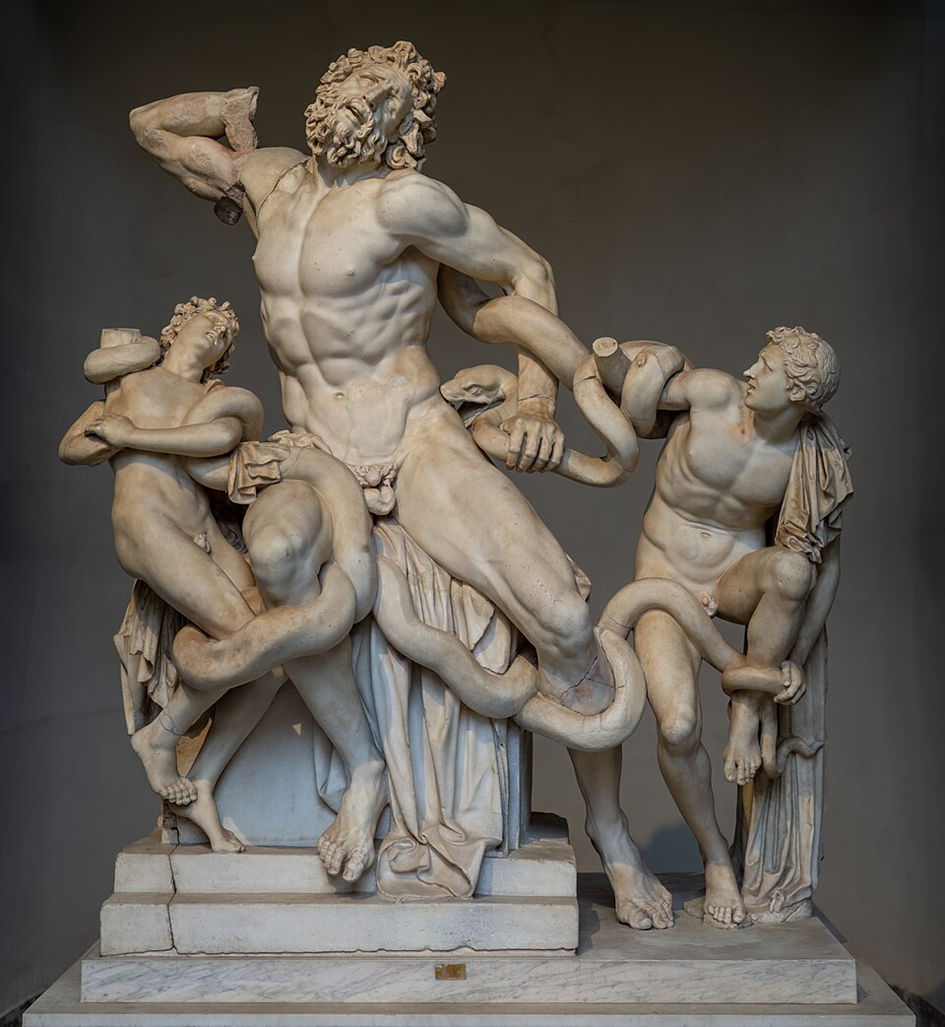
Baroque
When and where is this statue dated to and what did Pliny say about it?
Dated between 1st century BCE and 1st century CE,. This statue was found in Rome, linked to this piece of text in Plinys Natural History:
Pliny, Natural History 36.37
“The Laocoon in the emperor Titus’ palace, a work superior to any painting or bronze. Laocoon, his sons and the wonderful coils of the snakes were carved from a single block, by three artists – Hagesander, Polydorus and Athenodorus, all from Rhodes”.
Pliny states that it was carved from a single block but it was more likely to have been carved from six blocks
Where else do the three names of the carvers appear and what does this tell us about the statue?
These three sculptors names appeared carved in a statue of a ship? Found in Sperlonga. The Laocoon statue is believed to have come from a group of sculptures due to these inscriptions- unsure if the sculptors were copying earlier pieces of art.
This ship and Laocoon are seen as being Hellenistic, more so in their style than their dating
What stylistic features do these artworks share?
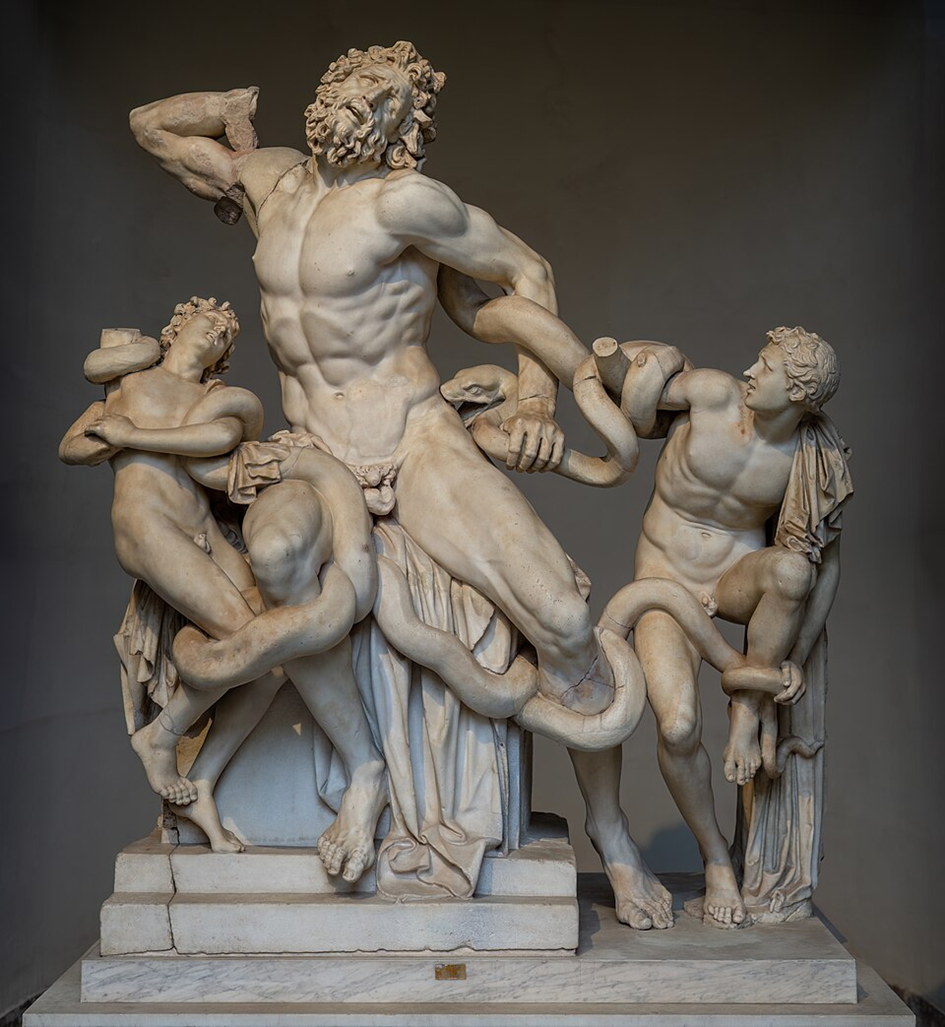
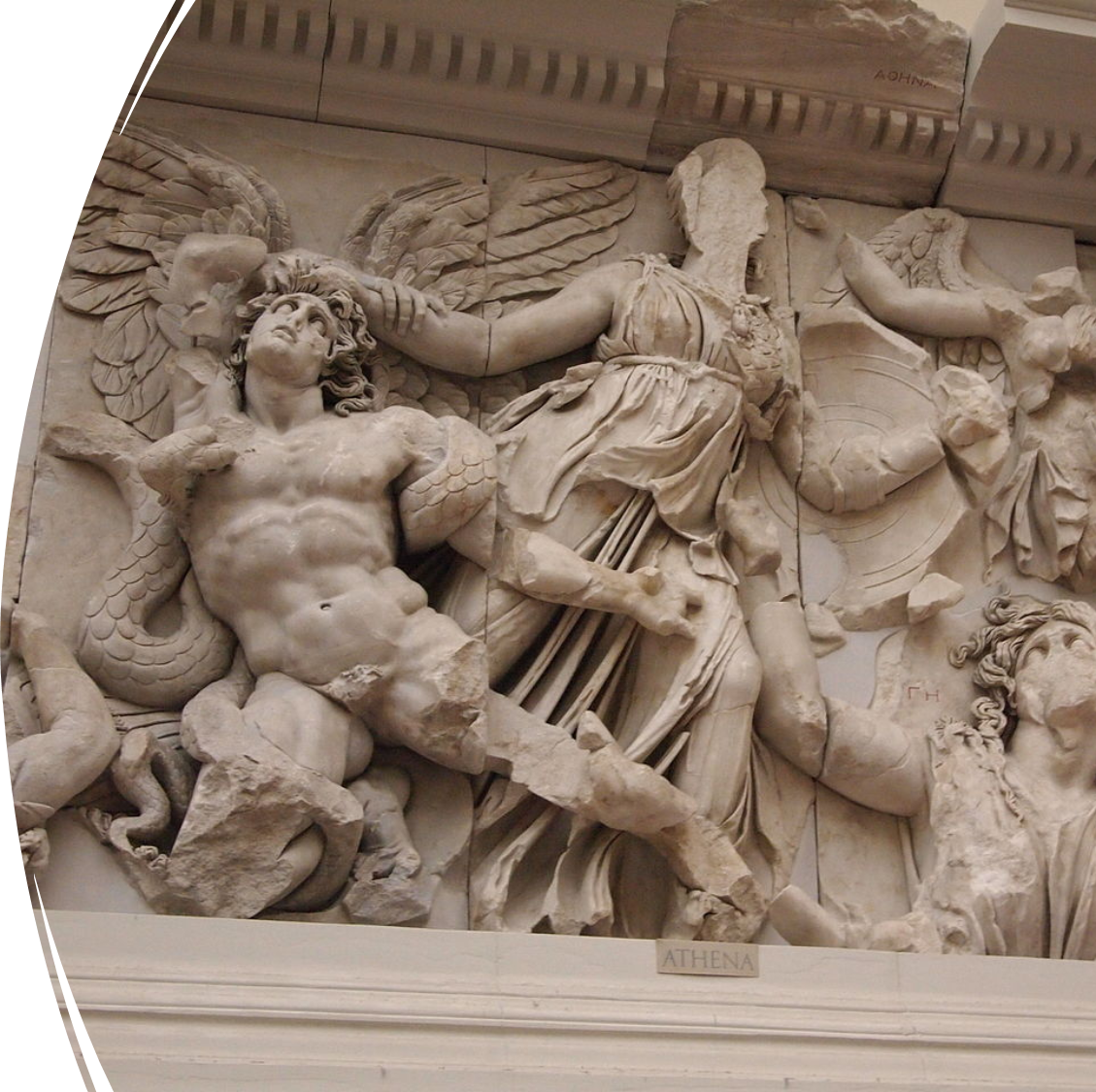
The position of Laocoon and the man in the bottom left, positioning of arm and the way that the body is turning, facial expression- looking up in horror/despair
The snake being entwined around the arms?
Looking at the drapery that they both share
Hair
Depiction of pain (expression)
Distorted bodies
Wild eyes
Twisted torso
hyper-realistic musculature
Snakes, coming from ground = cthonic deities and Gaia
Their stances are similar
Animalistic depiction of Giants
Dynamic and detailed movement depicting the climax ? ( action of the scene, tells the story)
Very narrative
Both are examples of magnification
Heads always thrown back - neck strain showing discomfort
Contorted faces
drapery
Theatrical, indicative of tragedy masks, highly interested in emotion
Galatian style hair
Intense struggle/Anguish
How would these carvings be categorised?
Intense emotions and suffering, in the throws of pain and struggle
Techniques that the sculptors use to convey this with a deep carving makes in intense as well
Different textures, the hair, drapery and wings- feathers and scales
How would they be characterised/described?
Physicality - anatomical features detailed and exaggerated
Dynamic - bodies in movement
The ideal body?/ young and healthy? ✔
What are the differences between these carvings?
One is a sculpture in the round and the other is a panel (even though its a panel we get and idea of 3d)
More hyperrealism with Laocoon, due to the impression of his age due to his face
We can look at the Pergamum altar as having a clearer fixed date- baroque style was at its height
Identify this statue:
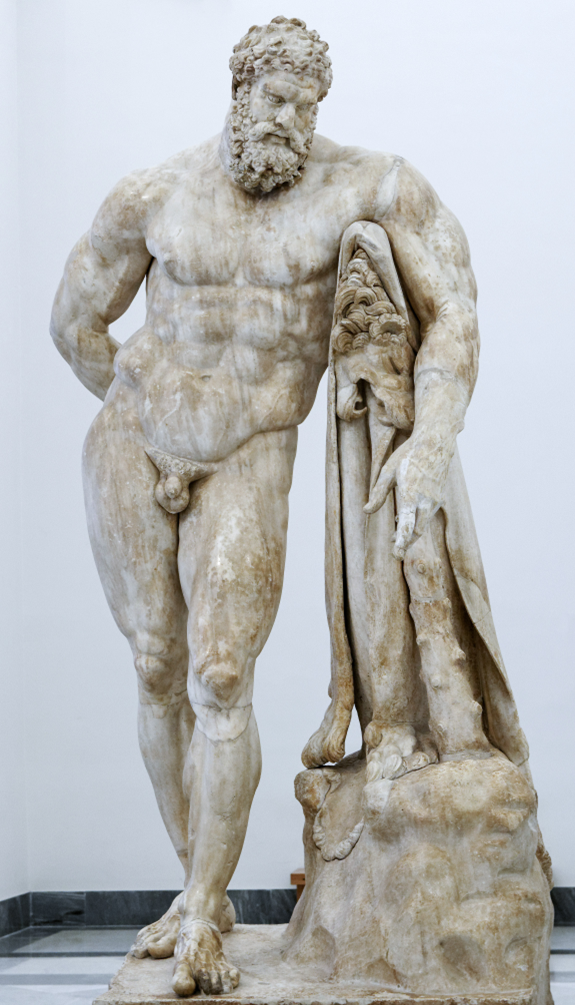
Farnese Hercules is a Roman copy, found int he baths of Calacala in Rome, obvious musculature- National Archaeological Museum, Naples.
Identify and describe this statue
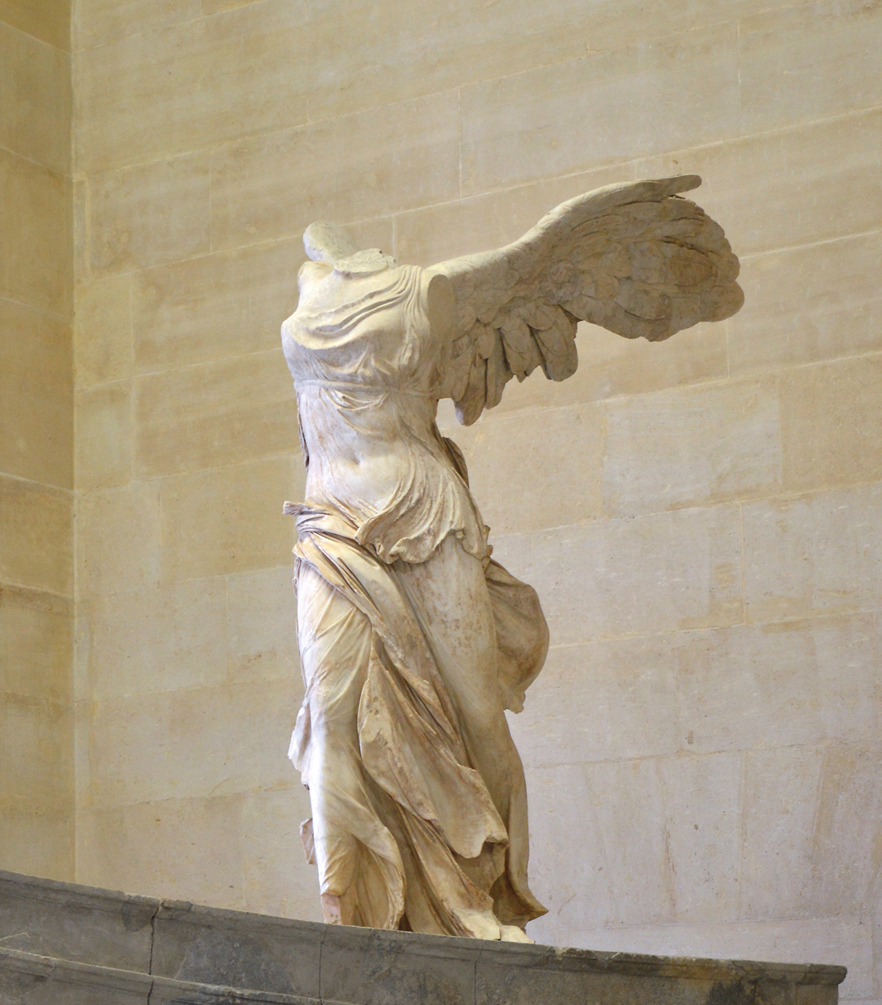
Nike of Samothrace, a Hellenistic original, similar stylistic features, particularly with the drapery but also the texture with the wings and the feathers. Some debate as to what she represented, datigns are also debated- generally accepted to be 190 BC- she seems to be positioned as if ion the prow of a ship (similar imaging on soins),w e don’t know who dedicated the statue or if she was dedicated for a specific victory. Godoe xampel of Baroque style
What is often shown in Rococo art?
Playful interpretations of deities and mythological characters
Concentration of sensuality and sexuality
Identify this statue group:
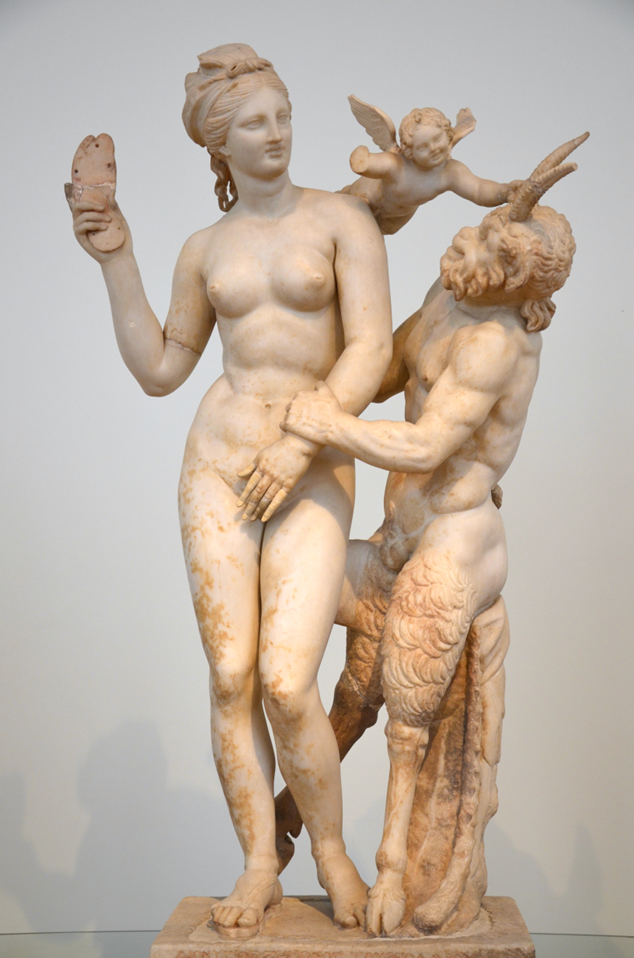
•Aphrodite, Pan and Eros group - first century BCE?
•Found in the club-house of the Poseidoniasts of Berytos, on Delos.
•Dedicatory inscription:
“Dionysius from Berytos, son of Zeno son of Theodoros, benefactor,
[donates the statue] on behalf of himself and his children to the ancestral gods”.
How is this statue group sometimes referred to?
This statue group is sometimes referred to as the slipper slapper group as she is holding a slipper trying to slap Pan away. Eros is between the two figures also trying to push Pan away
No threat of violence happening here really, all very playful
identify this statue
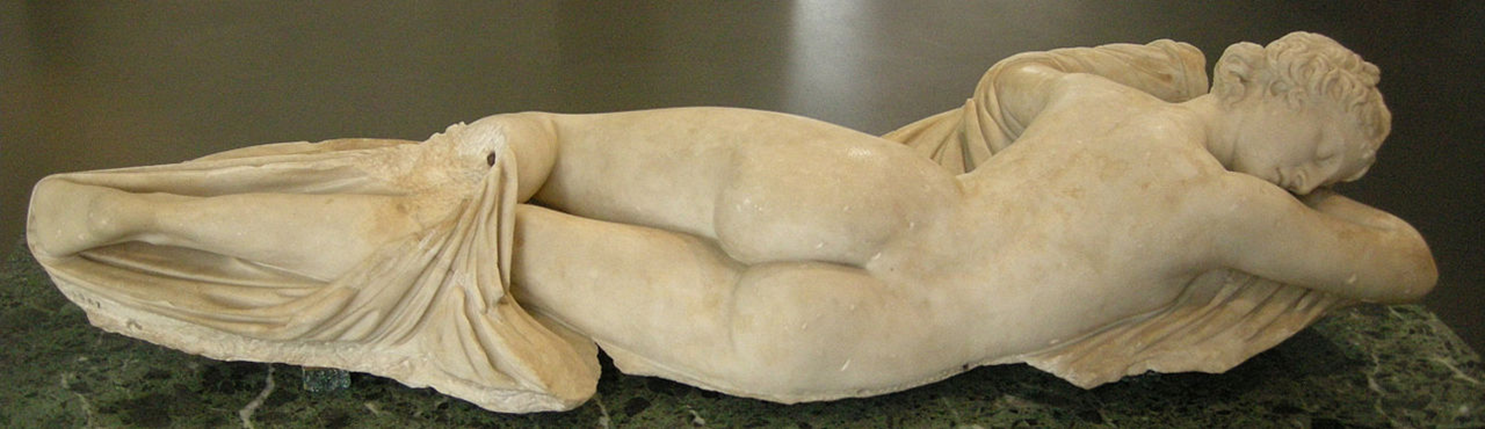
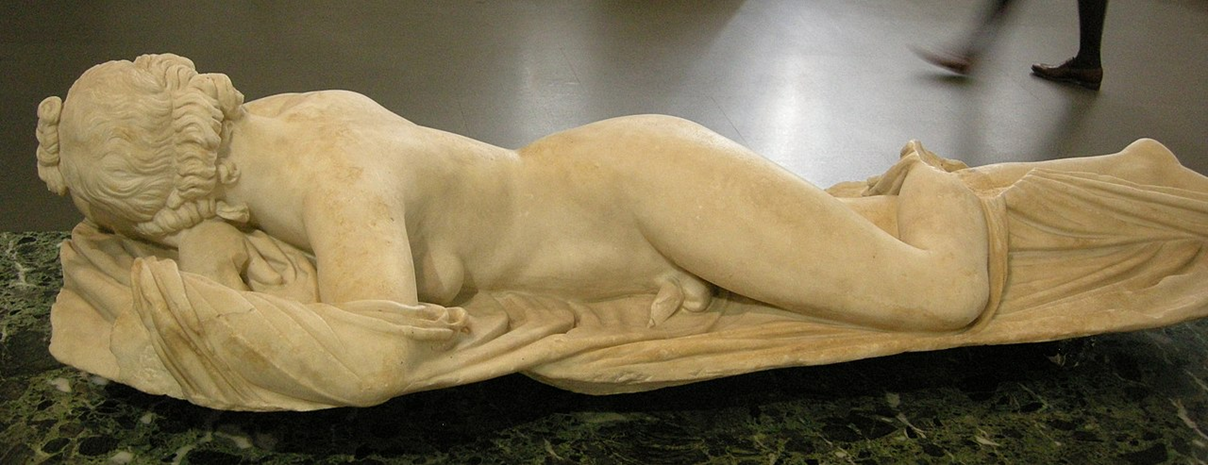
Sleeping Hermaphridite, National Museum of Rome
Analyse the statue
On one side it looks like a woman, on the other side you see male genitalia and female breasts. This statue ties into the idea of playing with the viewers experience- ties into the cultural context of the Hellenistic world and ideas of identity not being stable and transitions. A very sensual image, the hermaphrodites are always shown sleeping- playing into the viewers experience of the statue, gives the idea that you’re looking at something that you maybe shouldn’t be
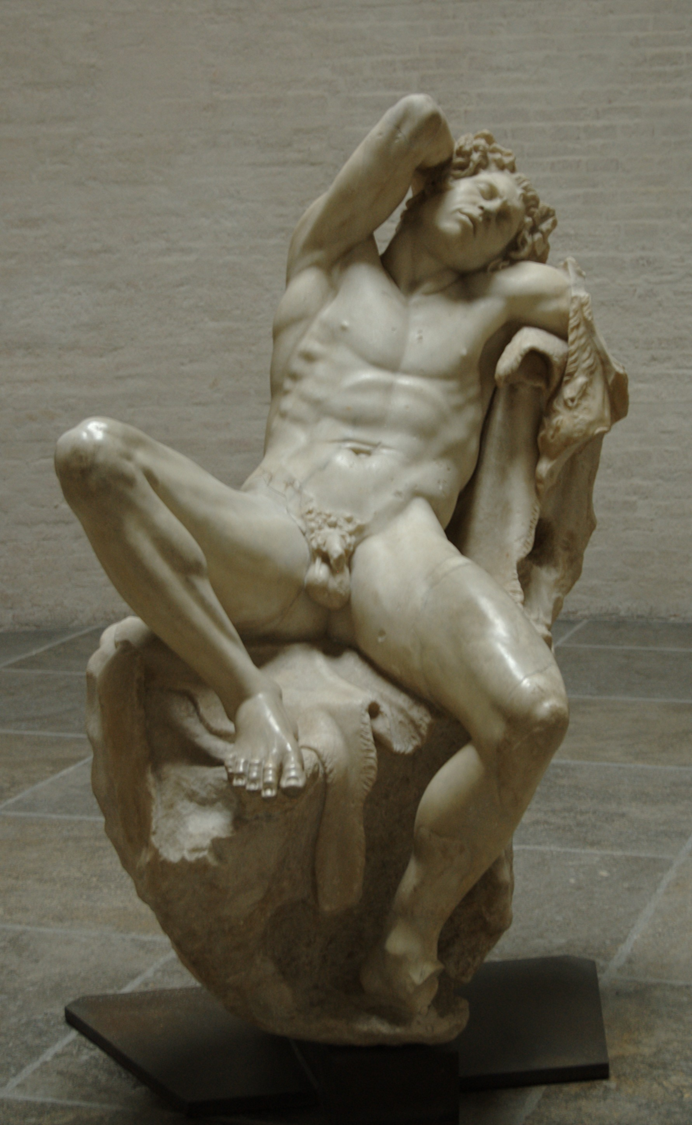
Identify this statue:
The Barberini Faun
Analyse the statue
A Hellenistic statue found in Rome, smoothness of the body against the rough rock, animal skin that he is lying on. Here as well because is a faun of satyr, we are given the impression of it being a drunken sleep- sense of vulnerability, the viewer is coming acrosss soemthignt heyre not supposed to see.
What is there often a focus on in the Rococo style?
In the Rococo style there is also a focus on children, everyday scenes that are also playful
Identify this statue:
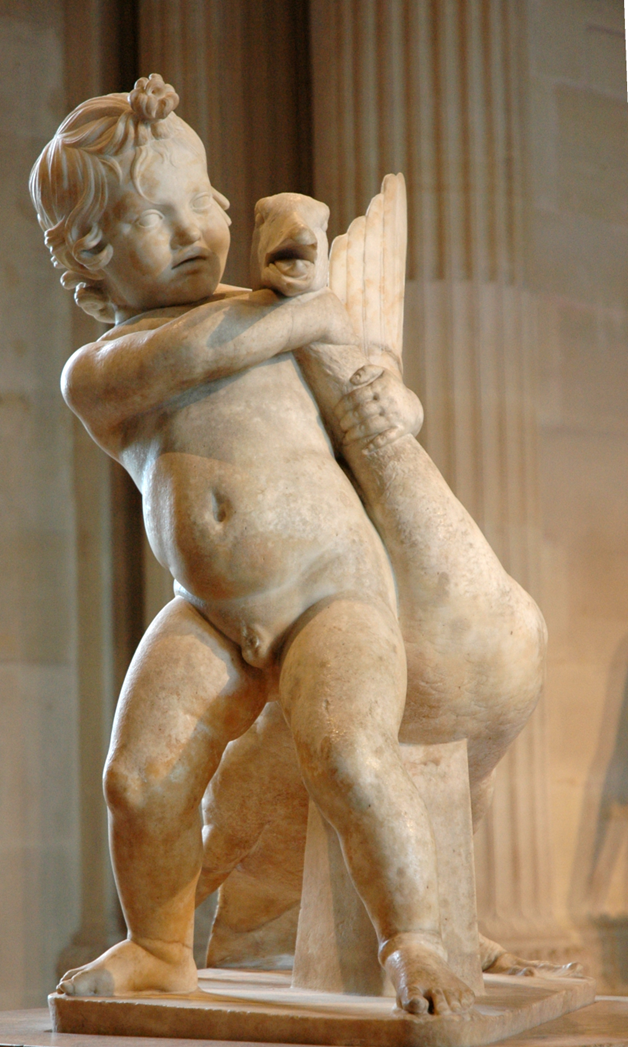
Child with goose, The Louvre, Paris
Give more detail on the statue
Roman copy
A number of these as Roman copies, so it could have been copied from a more famous version
What were changed in art during the Hellenistic period?
Moves towards realism in the third and fourth century BCE
Pliny states in Natural History that Lysistratos: ‘He was the first to mould an image in plaster from the human face itself, ….[he thereby] instituted the practice of making likenesses; beforehand they tried to make portraits as beautiful as possible’
Describe the classical style of this athletic statue:
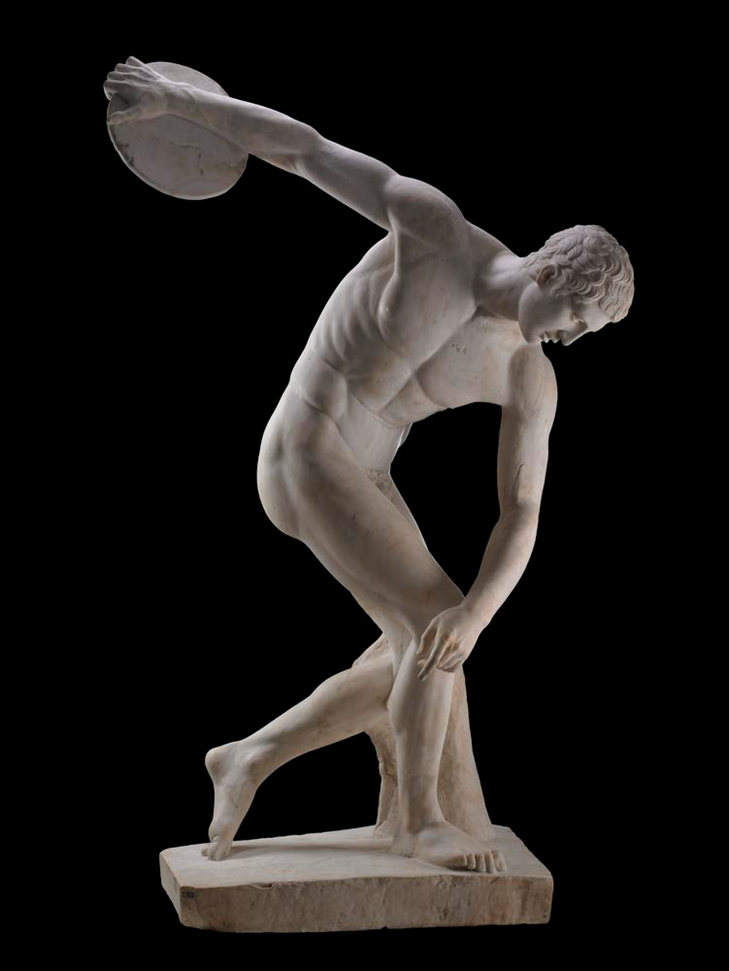
Very classically styles statues, very idealised forms are representations of the body and face (this changes with Hellenistic art). ‘The Townley Discobolus’ The British Museum, London
Identify this statue:
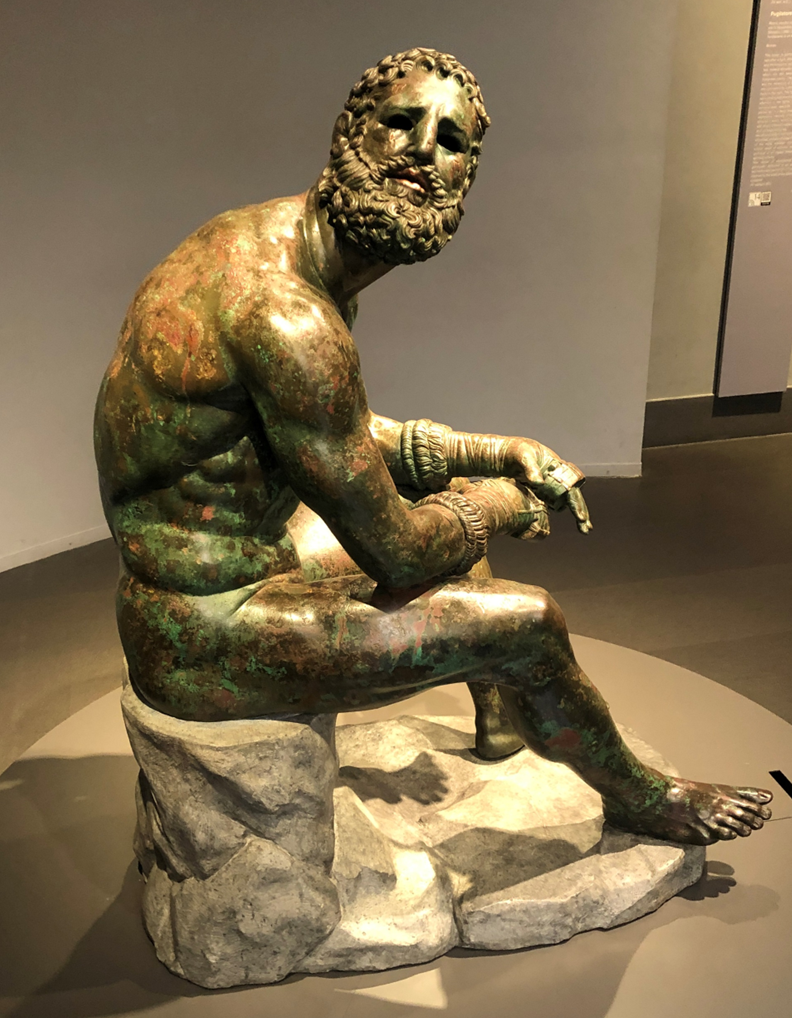
The Terme Boxer
Compare the discobolus and terme boxer statues/describe the terme boxer statue
Different moment in time, the classical ones are in the action/before the action while the Hellenistic world statue is after the action- also get a sense of exhaustion front he boxer
Still have a sense of idealisation in the musculature, but him hunching forward shows less idealism in comparison to the others
Aged features
Distortion of features
Slouching back/rounded shoulders- he’s still athletic but not perfectly upright
Posture differences
Boxer static looking up at adversary- others caught in movement
Less idealistic than classical statues - more realistic (vulnerable?)
Moment of rest/defeat/pain
Encourages Pathos? Viewer feels emotion? Sympathy?
More emotions shown on the face
The material of the statues
The bronze allows light to create harsher and more dramatic shadows, the marble is very smoothed and polished in comparison
Hands are crossed, not poised to strike, vulnerable, not participating…
Boxer is looking directly at viewer, they are on the same level, whereas the others are elevated/ focused on their sport
Cauliflower ear, injury
Hunched stature vs perfect posture
Describe the grotesque genre figures
These are almost a blend of the other styles that we have seen, but taking it to almost an extreme
Expresses a sense of social realism, no sense of idealism, no perfection in form- change of focus onto individuality
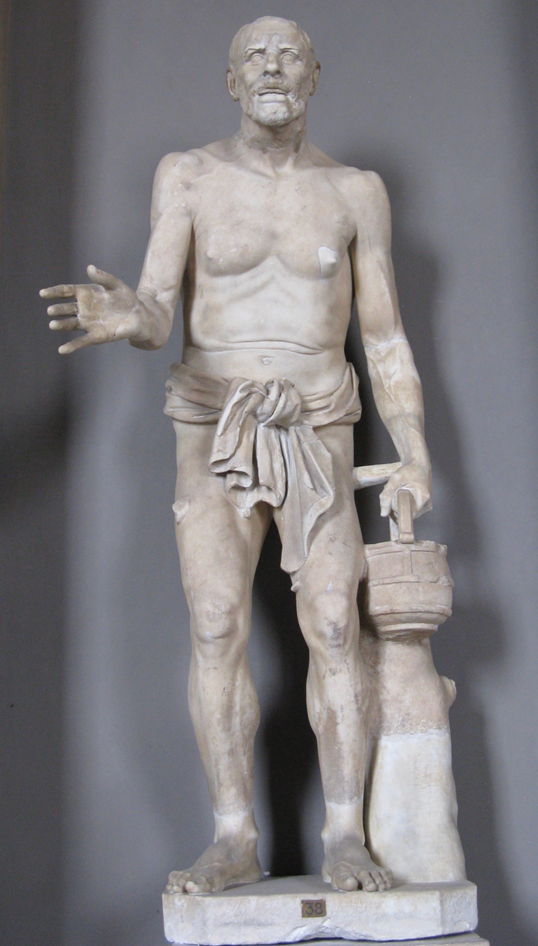
Identify and describe this type of statue
The ‘Old Fisherman’ type one are life size figures with sagging flesh, and leathery looking skin- carry a basket of fish- generally they look ravaged by hard work
Identify and describe this type of statue:
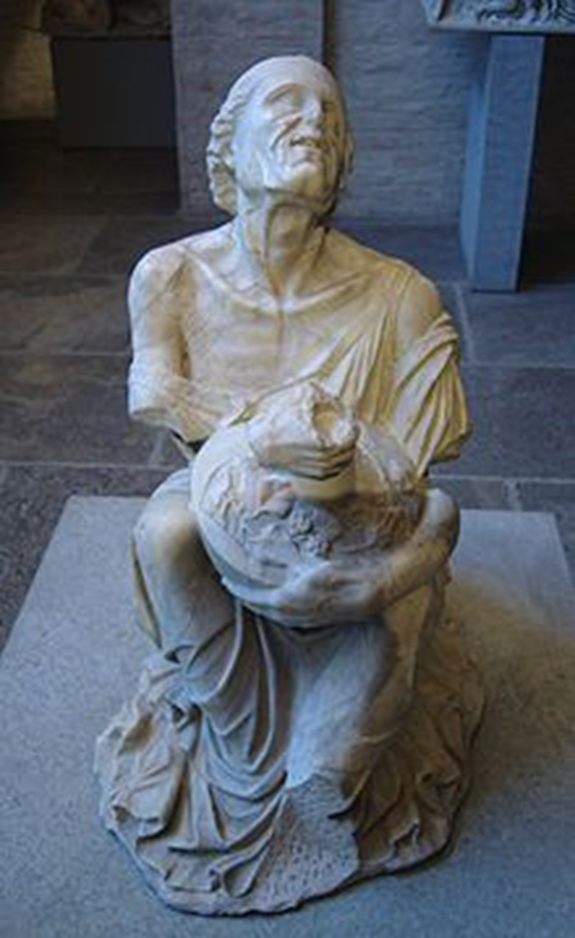
‘Drunken Old Woman’- Also see drunken old women, can see the sinews on their face, head thrown back, looks like she is in pain
Identify and describe this type of statue:
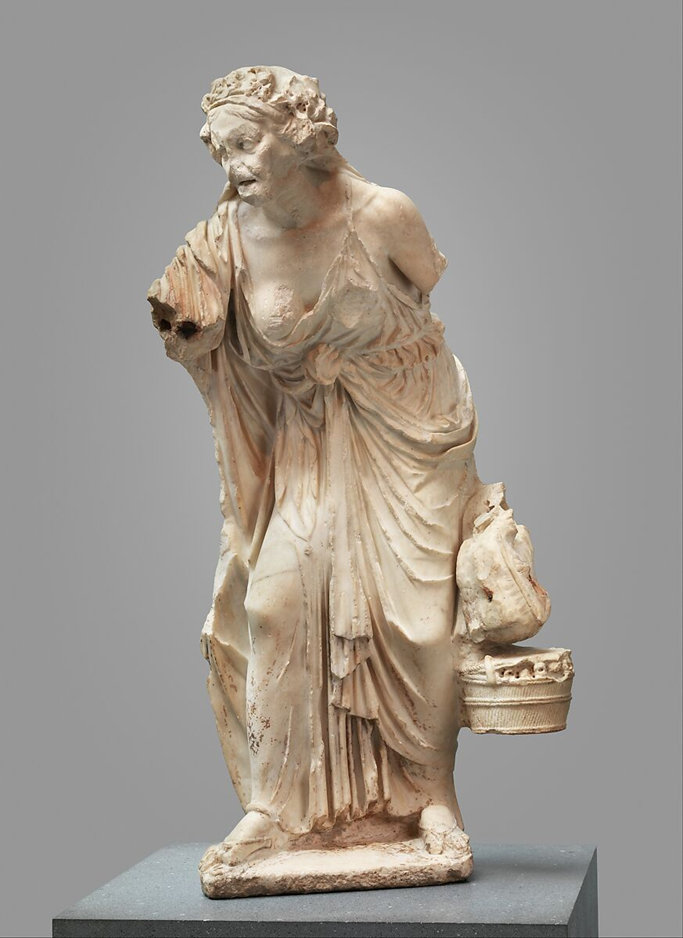
Old market women, carrying a basket of fruit and two chickens, suggested that her clothing and sandals mean its more likely that she is a fallen courtesan, she is also earring an ivy wreath so it may be that what she is carrying in offerings. Body that is ravaged by hard work or poverty- all of the statues above and this one have their mouths open (idea of shouting or calling out), opposite to the perfect serene classical statues
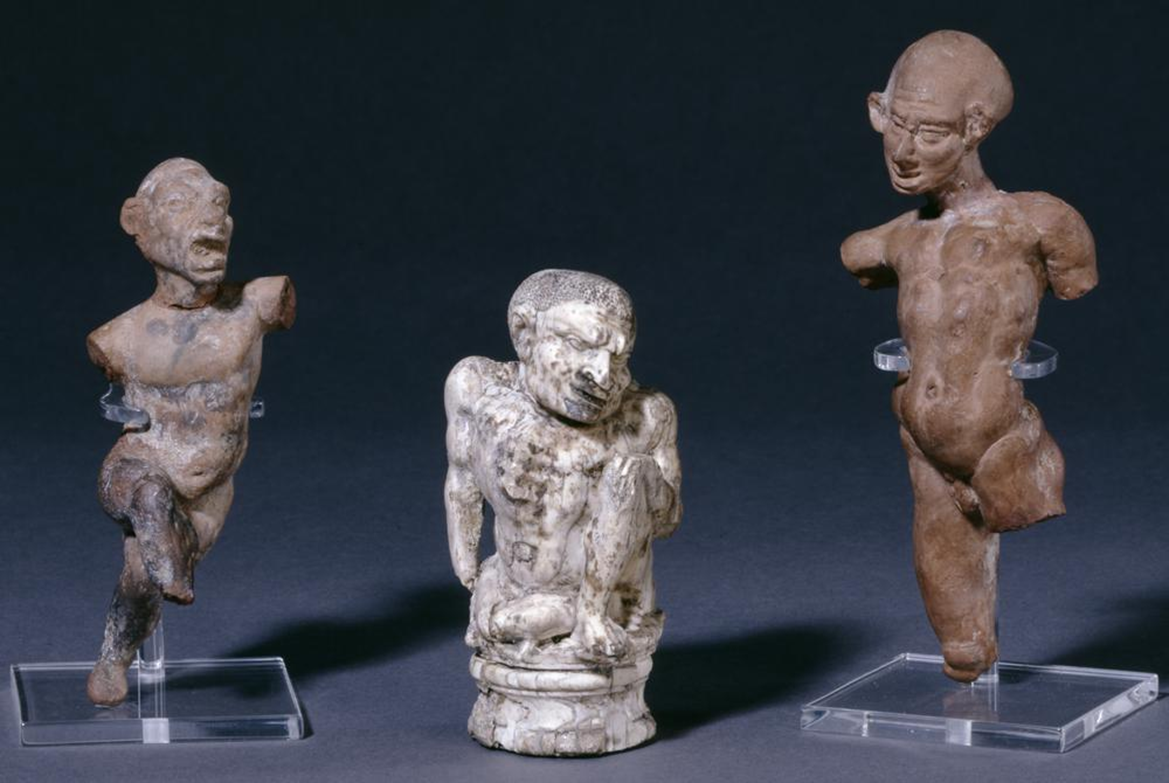
Identify this style of statue
Smaller stattuettes: Terracotta statuettes- Terracotta statuettes from Smyrna (left and right), ivory statuette from Alexandria (centre).
Who are these statues suggested to be?
Some of these are suggested as being performers, comic actors or dancers
Have a physical awkwardness to them, sometimes they are more clearly showing physical disabilities- these are often debated in scholarship
What are the five key attitudes in the Hellenistic Age?
Obsession with Tyche (goddess of fortune)
Theatrical mentality
Scholarly mentality
Individualism
A cosmopolitan outlook- especially in the temr so the realism and diversity of the figures that are represented
What are the differing opinions on what Tyche might have represented?
Pure chance
Future and fate
Unpredictable
What are the two types of Tyche?
Personal tyche
Collective tyche, in the form of cities
How is Tyche depicted in art?
Popular as sculpted figure
Standard format taken from the ‘Tyche of Antioch’ by Eutychides
Miniatures (statuettes, gems etc)
Scenes of reversal of fortune
Identify this statue:
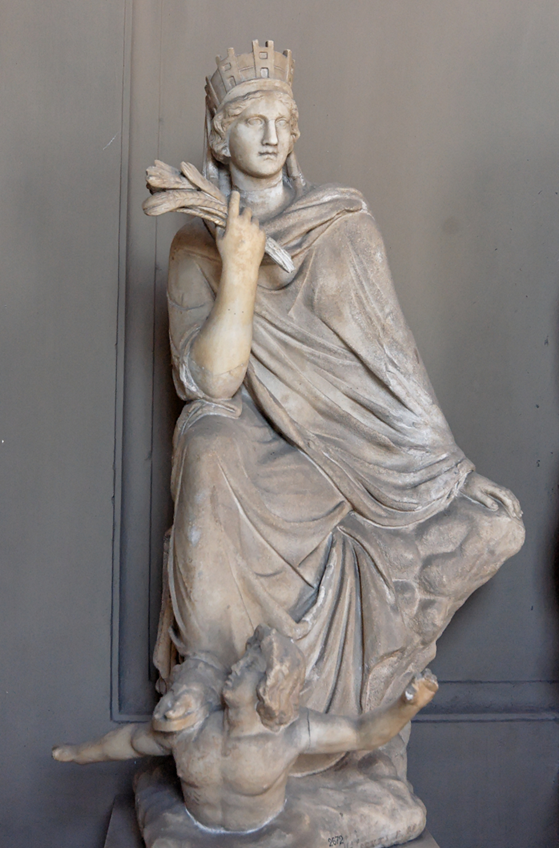
Roman copy of the ‘Tyche of Antioch’.
Vatican Museum Inv. 2672.
Analyse/describe the statue
This is how she is typically portrayed
Sat on a rock, below her is the personification of a river
She has the city walls as her crown
Wheat sheaf in her hand refers to representing prosperity
She was also popular in smaller statuettes
She alsof eatured on gems, these could have potentially worked as amulets
Artworks that show dramatic reversal of fortune may have been simulated by these statues of Tyche
How did the Library of Alexandria and Pergamon impact the Hellenistic art and peoples reactions to it
We see the reflection of all of this appreciation of art coming through into the poetry and artworks of the time period- one way that we see this is in how the viewer becomes foregrounded through their reaction to artworks, theme of self reflection is quite pervasive. New thing that is useful to look at in this regard is Hellenistic epigrams, especially ecphrastic epigrams as they specifically refer to artworks.
What is an ekphrastic epigram?
Description of an artwork in a vivid way, gives the reader/listener enough detail to visualise it, it can sometimes arouse emotions as well
Give an example of an ecphrastic epigram (about a cow):
Myrons Cow:
Greek Anthology 9.719 (Leonidas):
‘Myron did not sculpt me; he lied; but driving me from the herd where I was feeding, he fixed me to a stone base’.
Greek Anthology 9.720-721 (Antipater of Sidon):
‘If Myron had not fixed my feet to this stone
I would have gone to pasture with the other cows’.
‘Calf, why dost thou approach my flanks? Why dost thou low?
The artist put no milk in my udders.’
Analyse this epigram
The pilgrims respond to the realism of the object that is being described, and this gives us a distinctively Hellenistic pictorirealism, but they don’t only do this some of them do the opposite- some of the emphasise that the cow is not real (e.g. the one given above, where they state that its not real and have no milk to give)
First line ties into philosophical ideas, idea aof lying was part of philosophical discussion
How are the epigrams connected to artwork?
The epigrams do talk about an artwork but they are very separate from it, more intellectual slant or purpose, but they can also be quite playful, see the idea of questioning and puzzlement
Identify this statue:
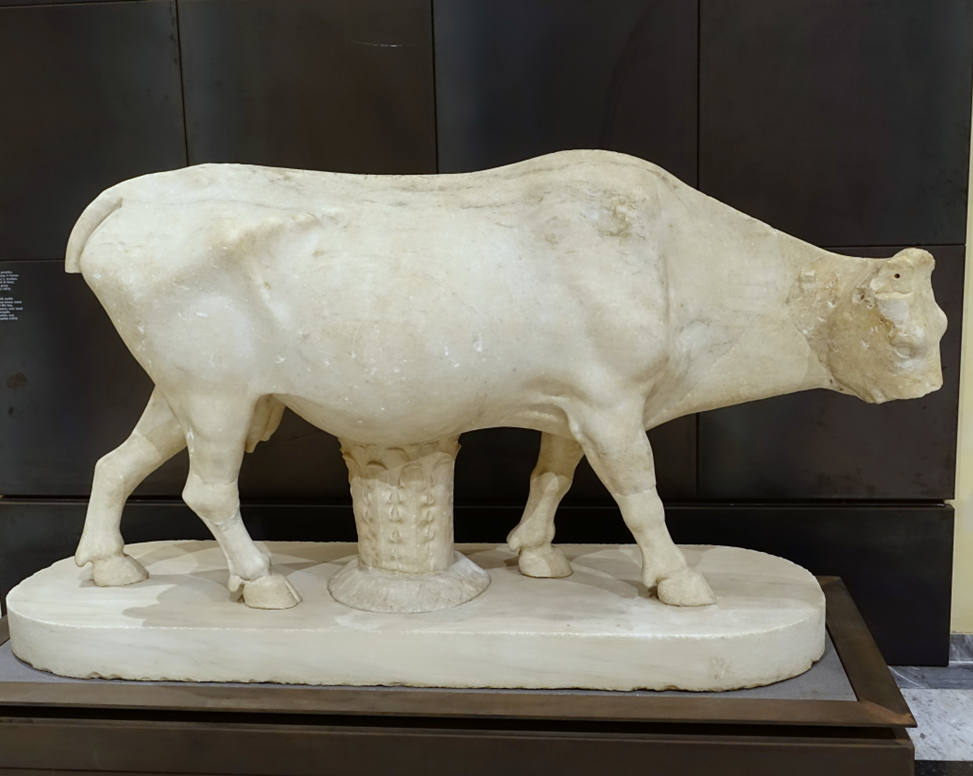
Roman copy of ‘Myron’s Cow’, Capitoline Museum, Rome
Identify this epigram:
Poseidippos (Greek Anthology 16.275)
A: Who and whence was the sculptor? B: From Sicyon. A: His name?
B: Lysippos. A. And you? B. Opportunity, the all-subduing.
A: Why stand on tiptoe? B. I’m always running. A. And why
The pair of wings on your feet? B. I fly with the wind.
A. And why the razor in your right hand? B. It’s a sign to men
That I am sharper than any blade.
A. And why the hair over your face? B. For those I meet to take me
By the forelock, by Zeus. A. And why are you bald in back?
B. Because once I’ve raced by on my winged feet
No one, even if he wants to, can grab me from behind.
A.Why did the artist fashion you? B. For your sake, stranger,
And set me up in the porch as a lesson.
Its about Lysippos’ Kairos (a statue that no longer survives)
Give an example of an image that would have looked like the statue
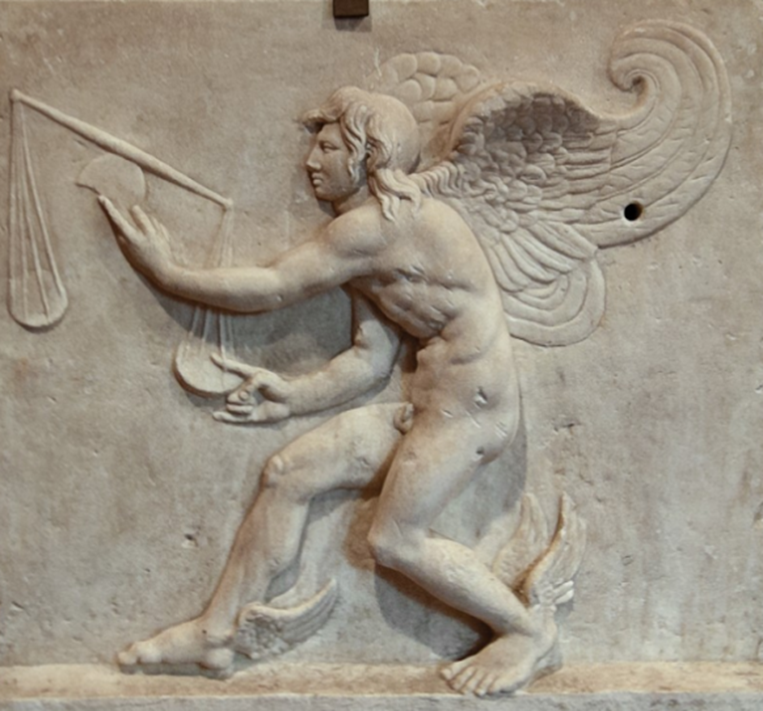
Analyse this statue/epigram
The statue being talked about hasn’t survived so the relief on the right gives an idea of what it might have looked like. This epigram takes the form of dialogue between the viewer and the statue itself, this functions to explain the imagery- idea of questioning and puzzlement in regards to what they are seeing. Idea of it benign a bit like a riddle, teasing to it, by the end it is clear that it is a moral lesson about taking opportunities
Analyse this epigram:
Greek Anthology, 7.427
‘This gravestone – come let me see whose corpse it holds, But I spy
No letter cut anywhere upon the stone.
Merely three thrown dice. The first four
Evidence the throw called ‘Alexander’.
The second four, the throw called ‘Ephebe’, the bloom of youthful age.
The one die indicates the unluckier throw, ‘Chios’.
Is this, then. Their message: ‘’Both the boastful potentate
And the man flourishing in youth have nothing at the end?’
Or is it not so? I think I will shoot my arrow straight
As the mark, like a Cretan archer.
The dead man was a Chian, his name was
Alexander, and he died at a youthful age.
How well someone has told through voiceless dice
Of a young man dead rashly, his breath of life staked and lost!’
Hellenistic epigrams tend to drmaatise the moment of viewing, but also the idea of having to interpret what is written and seeing meaning
Almost another riddle, the inscription describes these nine dice that had been thrown into three specific patterns, what these reveal to a viewer is what you would expect to find on a memorial- the persons name, where theyre from and their status
Also see through language of ‘wager’ and the dice themselves of life as a game of chance
These all tend to foreground the viewer, relationship between the viewer and the object, draws the viewer in intellectually
Identify this work:
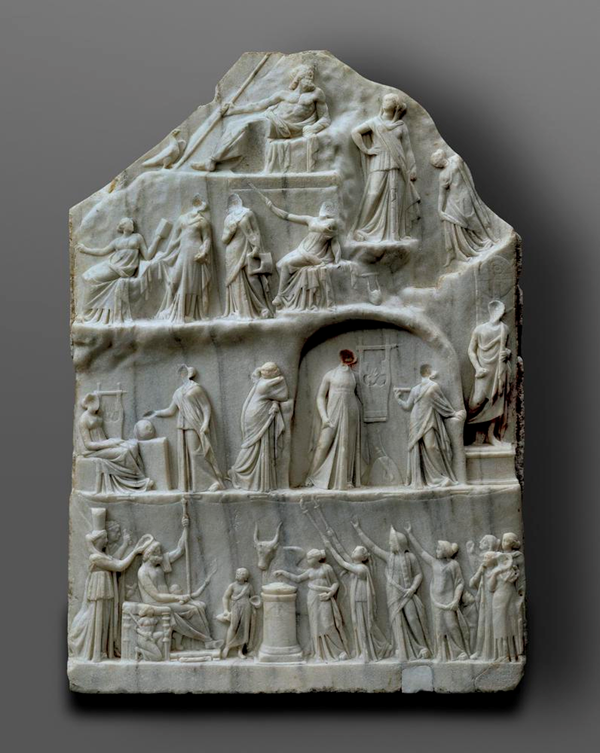
‘The Archelaos Relief’ (sometimes called ‘The apotheosis of Homer’
Date it
Dating ca. 221-205 BCE.
What identifies the characters?
Inscriptions under lower relief identify characters.
Who is the sculptor?
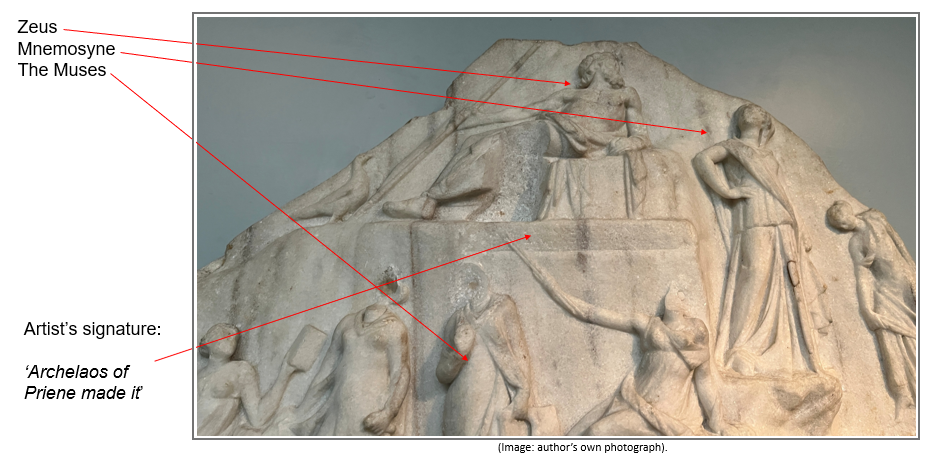
Another inscription identifies the sculptor as Archelaos of Priene.
Where was it found?
Findspot: ruins of a villa, Bovillae (south-east of Rome on Appian Way).
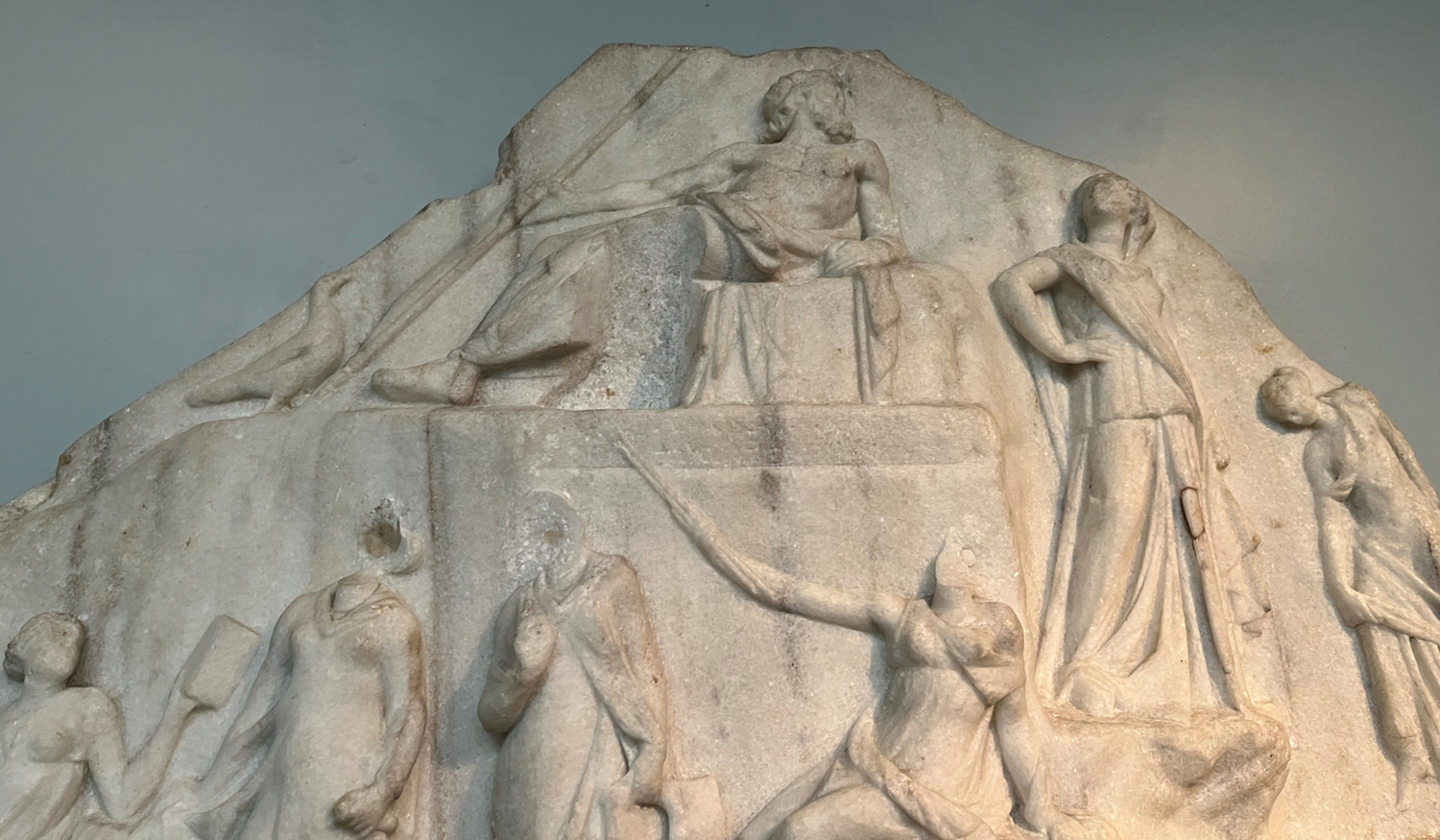
Identify the figures in the upper register:
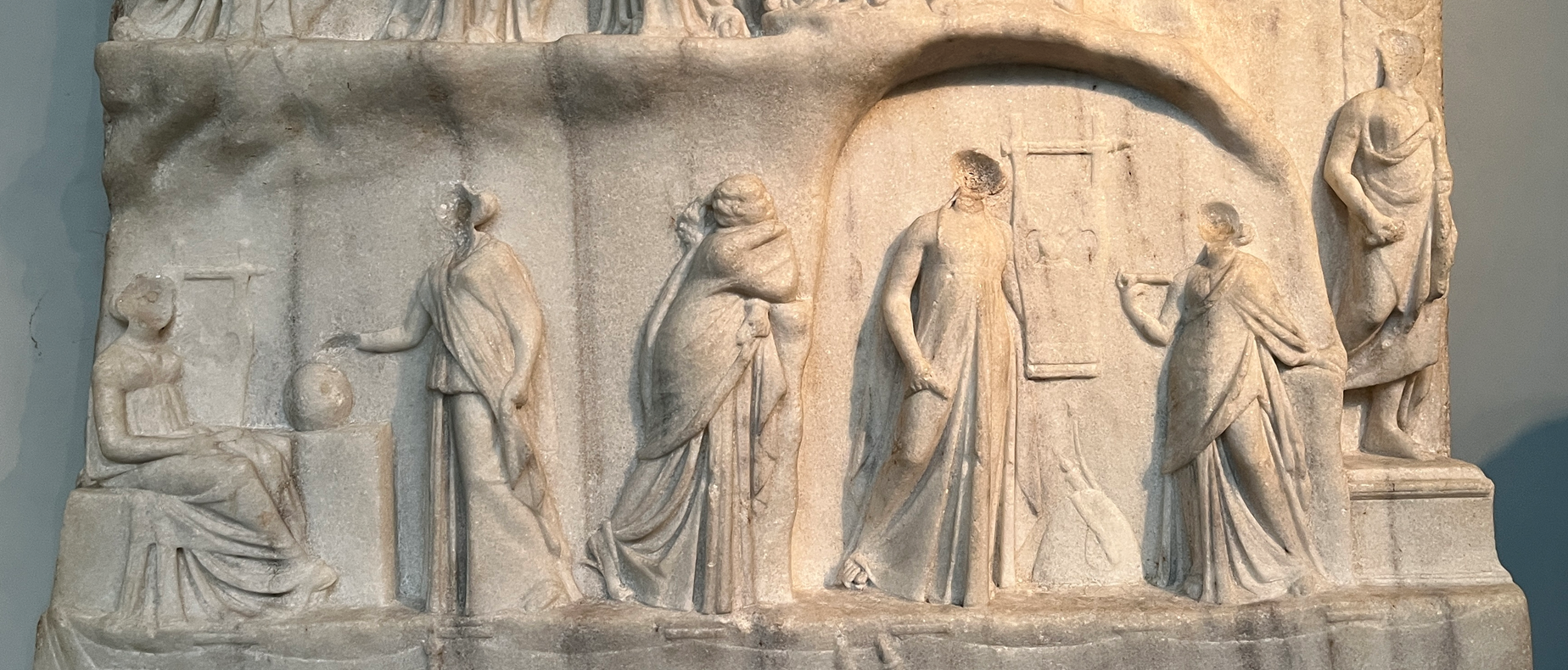
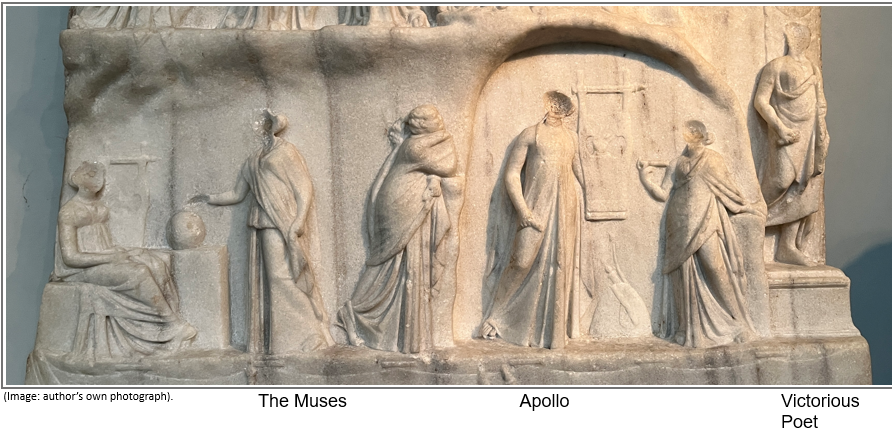
Identify the figures in the middle register:
Identify the figures in the lower register:
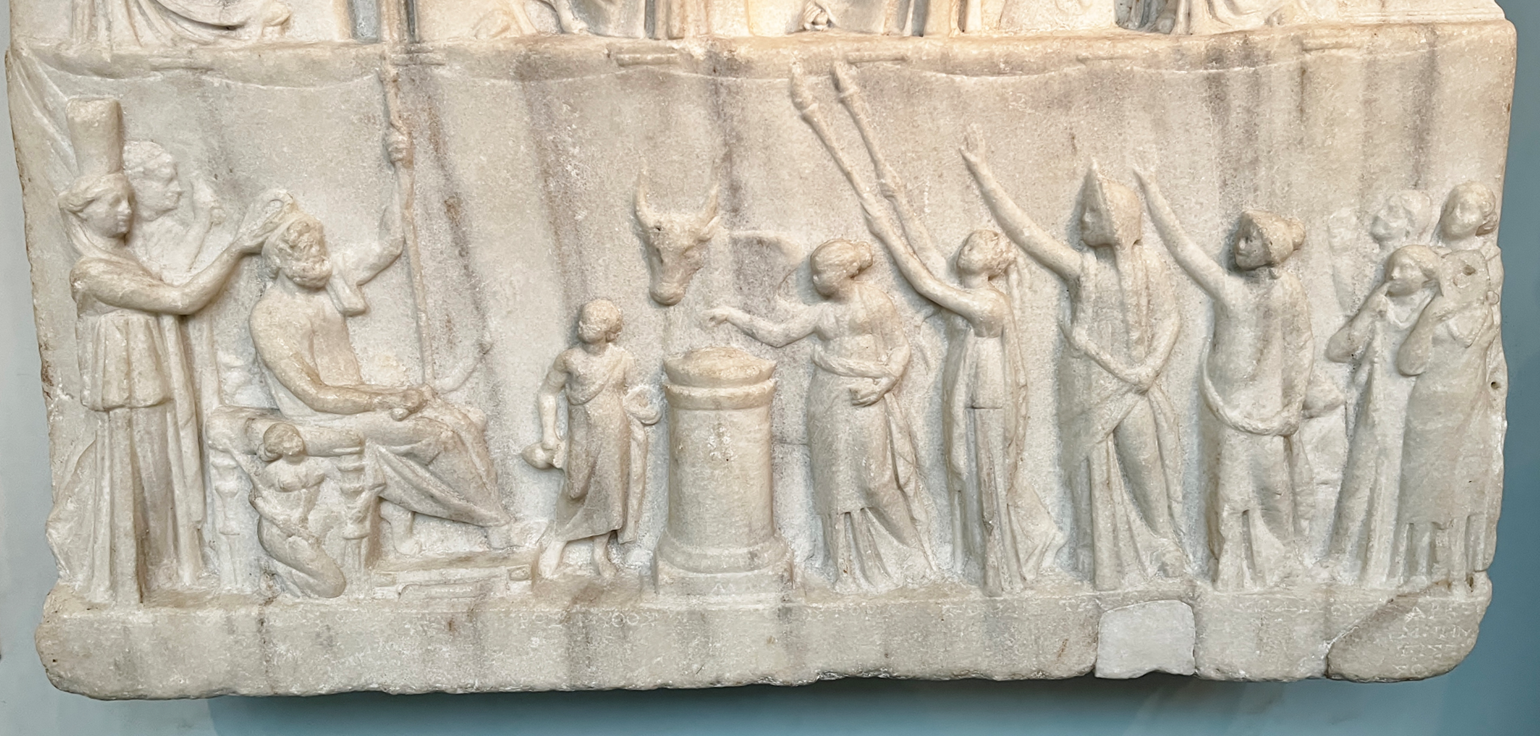
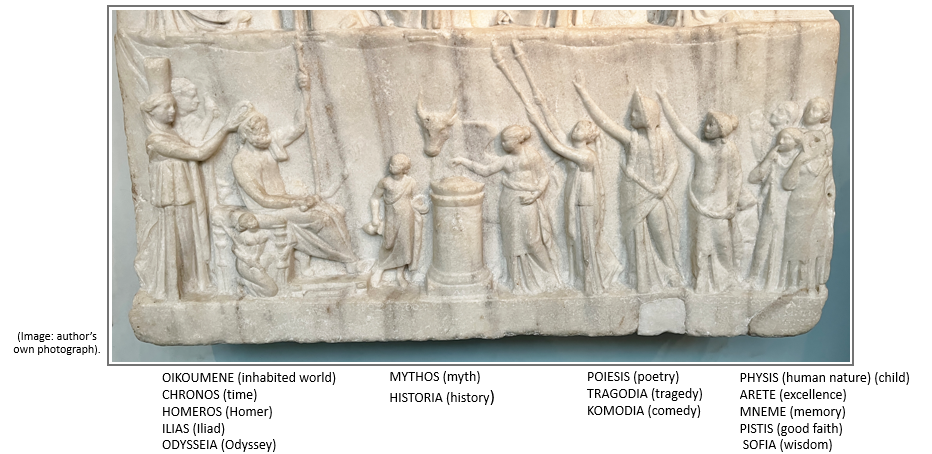
What do the inscriptions on the lower register tell us?
They identify homer and his two works as personifications
More personifications in the rest of the characters
Homer is being crowned by time and the inhabited world- being honoured by the other personifications, representing different genres of works
Worship?
Sacrifice being made? Cow and an altar on the bottom register. Seated figure with a staff
Personifications of cosmic order and cities
The iliad and the odyssey being included- ongoing relevance? Personifying epic
Perhaps a reference to cultural canon?
Elements of Ptolemaic literary patronage.
How do we visually identify the other characters?
In the middle register with the muses we can recognise them from their iconographic attributes, one muse always shown leaning against a pillar, one shown with a globe another with a lyre
Victorious poet on the right (statue mounted on a base), in the centre there is Apollo, this is likely in Delphi (all describing the middle register)
Gods are usually depicted bigger than mortals
Apollo has his instrument (on the middle section)
What is the overall message of the relief?
If we look at it top to bottom, Zeus is at the stop (idea of him being the pinnacle), he is handing something down to Mnemeosyne, this is then being passed down through the muses, Apollo and the poet (this is where the signature appears as well). The bottom of the relief is a bit more of a votive relief in form, a god (homer) being approached by worshippers- suggests that the message is that homers works are timeless and appreciated everywhere and that he is benign worshipped by some of these personifications. Shows Homer benign worshipped as a god not becoming a god (he is the ultimate poet), the virtues can be understood as personal moral qualities that pass intot he reader if he reads the works of Homer
Trickle-down effect of mythology into culture?
Appealed to elite - History, poetry, tragedy, comedy
Anything else of significance?
Poet and muses are the same size/ stature, poet likening themselves with the muses but not quite Apollo as he is larger than them both
Do we know how or why this relief was set up?
We don’t know how or why the relief was set up
Give literary references to the shrines of Homer
Aelian, Varia Historia 13.22: mentions a Homereion founded in Alexandria by Ptolemy IV Philopator and a painting by Galaton.
(anonymous) Epigram: ‘Blessed Ptolemy..set this up to Homer who wrote of old the ageless song of Iliad and Odyssey from his immortal mind. O happy benefactors of mankind! You sowed the seeds of a king who excels with spear and among the Muses!’
What is the relief an example of?
Intellectual art
How does this tie into the Hellenistic world?
Alexandra- the library and how writing and art was becoming more intellectual in general during this period
Identify this bowl and what scene is on it:
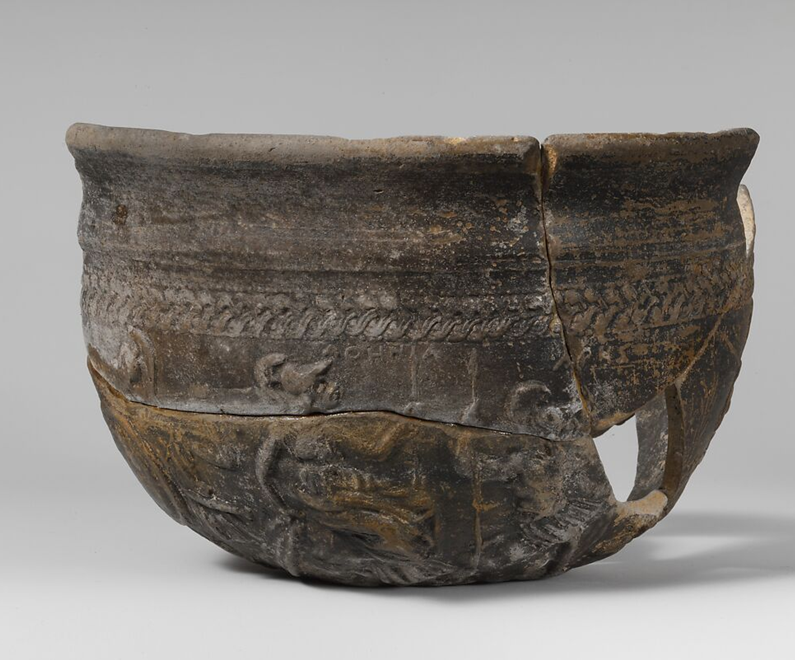
Megarian bowl with scene relating to the Iliad, 2nd century BCE.
Metropolitan Museum of New York, Inv. 1980.11.2a-c
Identify this bowl:
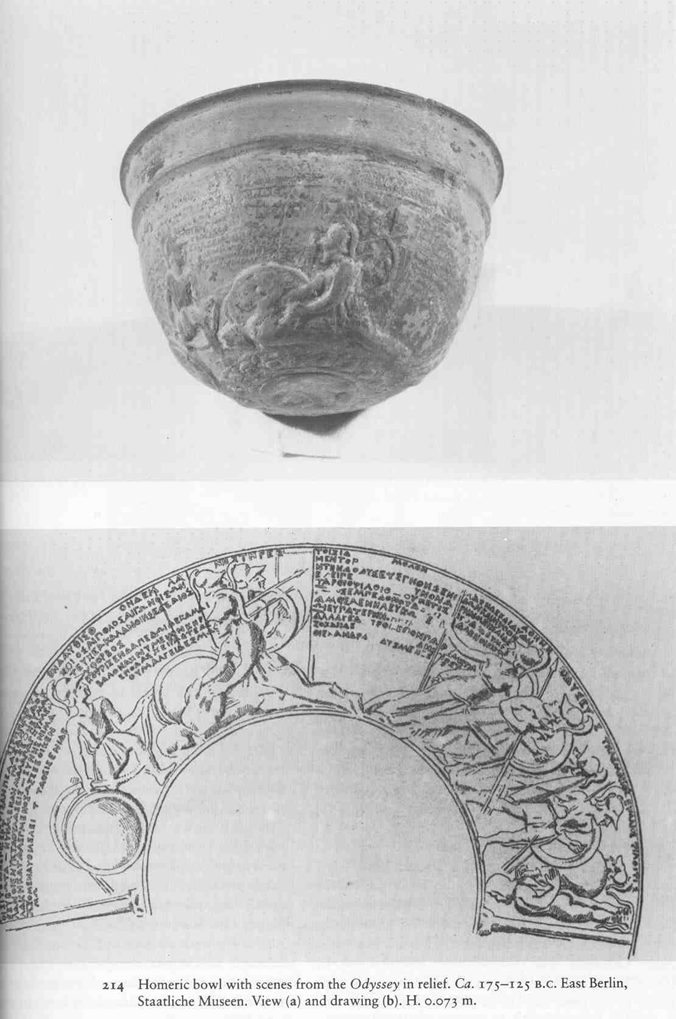
Megarian bowl with scenes from the Odyssey
What did these bowls tend to pair?
These tend to pair imagery and textual inscriptions
How were these bowls made?
Mould made bowls, very distinct type of pottery
Where did these bowls originate from?
Seem to have originated in Athens but are found in various different areas
What do we see scenes of on these bowls?
We see scenes from both Greek epic and tragedy
Give an example of a bowl with tragedy shown on it
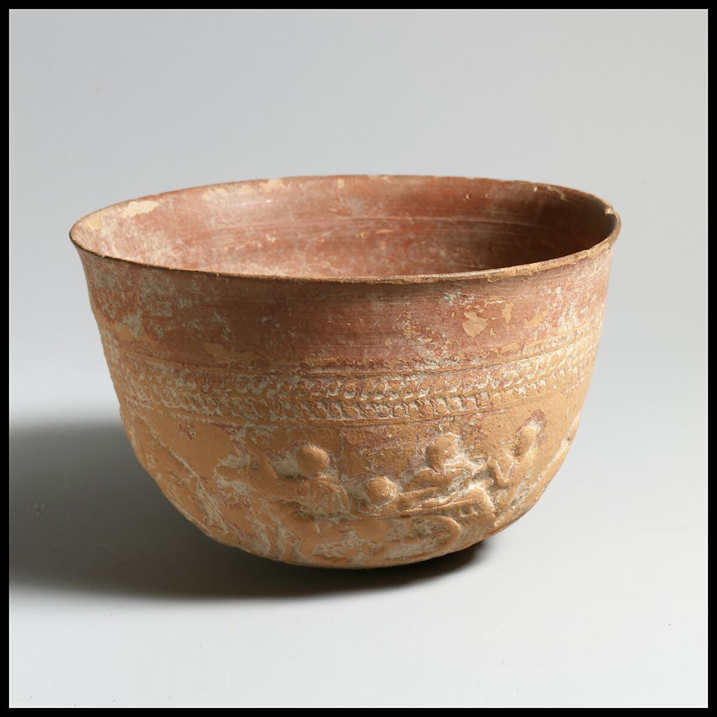
Megarian bowl with 5 scenes relating to Euripides’ Iphigenia at Aulis, 2nd century BCE.
Metropolitan Museum of New York, Inv. 31.11.2
Identify and date this piece:
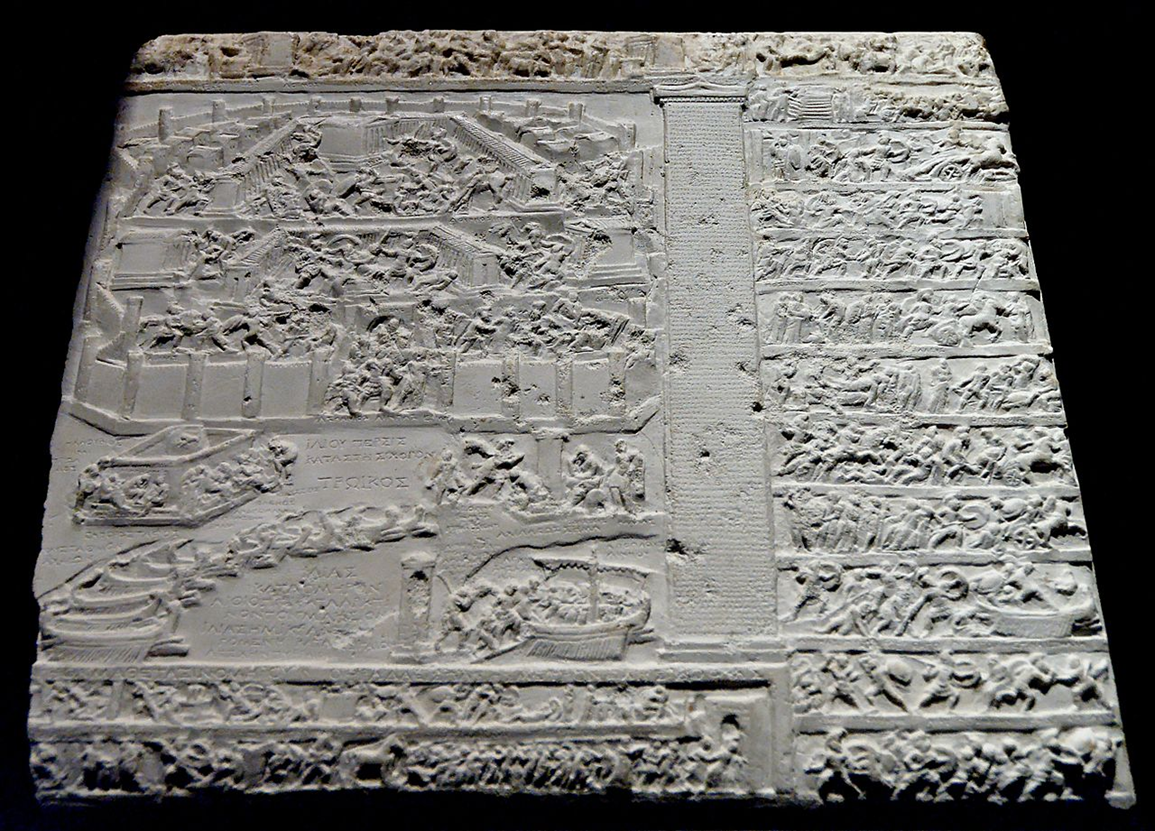
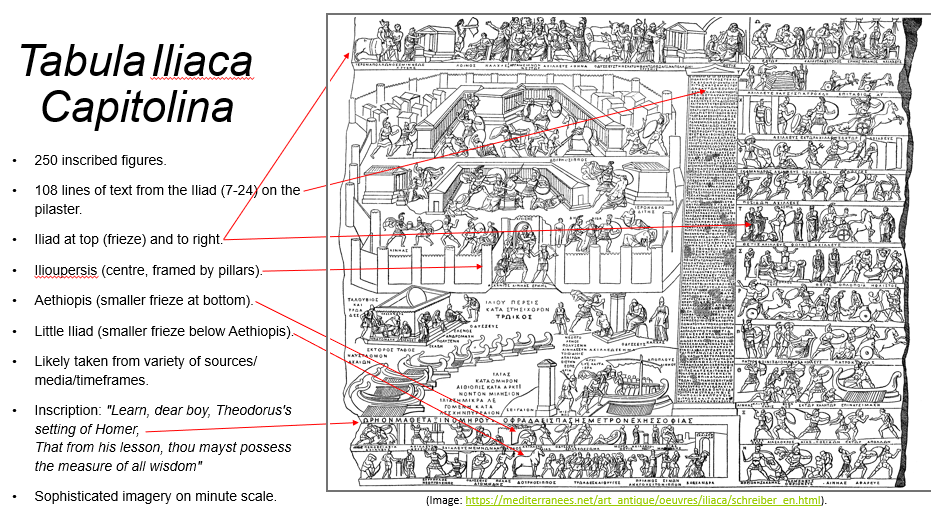
Tabula Iliaca Captiolina, 1st century BCE- 1st century CE.
Capitoline Museum, Rome, Inv. MC 03106.
What are the tabula Iliaca?
The Tabulae Iliacae ("Iliac tablets") are a series of roughly 22 miniature Roman marble reliefs dating from the late 1st century BCE to the early 1st century CE. They feature intricate, tiny carvings and Greek inscriptions illustrating scenes from the Trojan War and Greek epic cycles, designed as sophisticated visual summaries of texts like Homer's Iliad
Small marble reliefs which also combine text and images- historically in scholarship theyve proved quite difficult to work out and understand
22 in different museums (fragmentary)
Epics in miniature visual and verbal form.
Capitoline example (pictured) measures 25 x 30 cm.
What epics are depicted on the tabula?
Diverse epics depicted but majority relate to the Iliad.
Variety of epics depicted on these, not entirely homeric- one with the deeds of Heracles and some are more historical, there does seem to be a focus on the Iliad, some scenes from the Odyssey as well
Analyse this image:
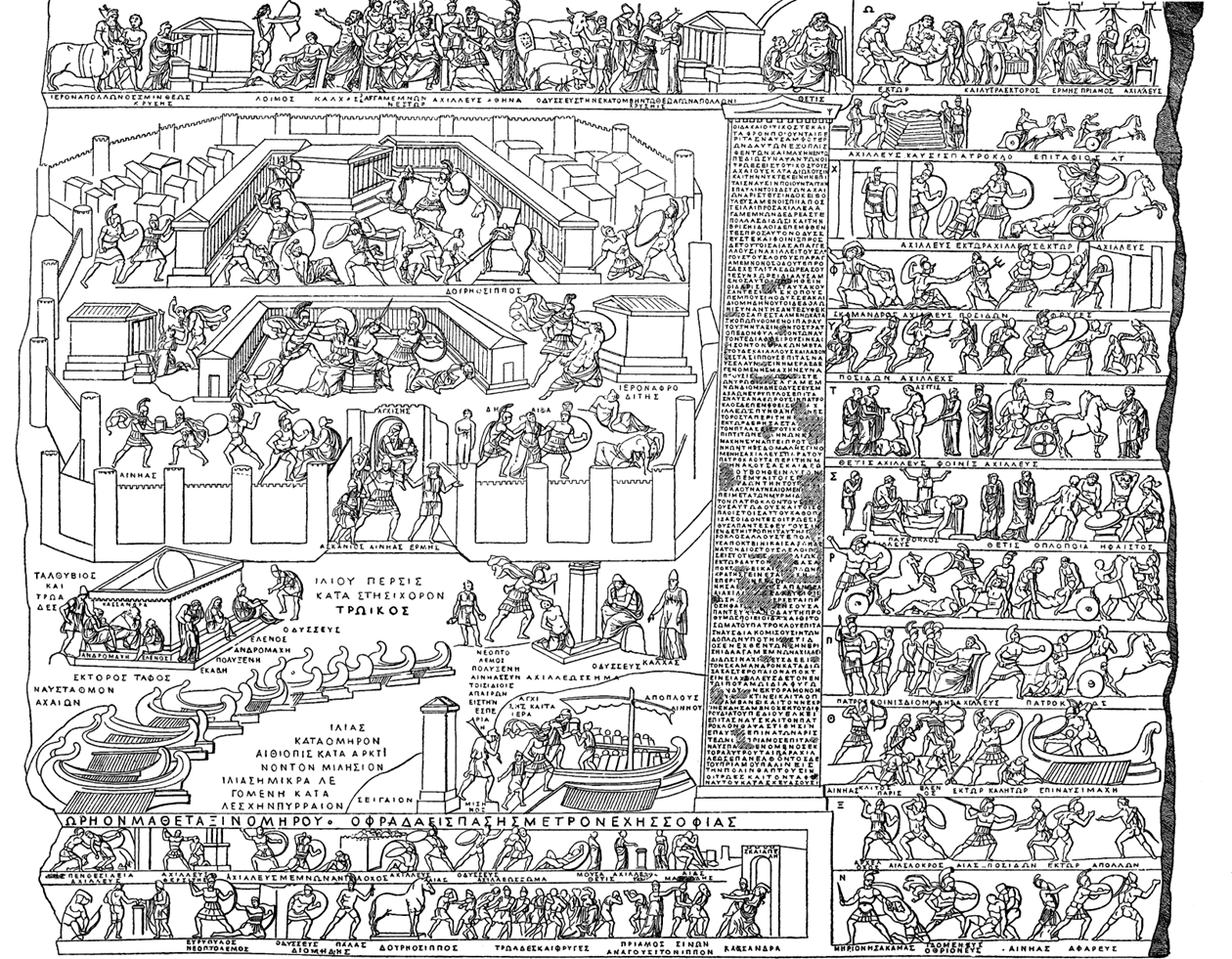
What are the hugeness of the epics reduced to?
Hugeness of the epics are being reduced to a very small medium, small tabley bearing such a vast quantity of imagery and text
Identify these images:
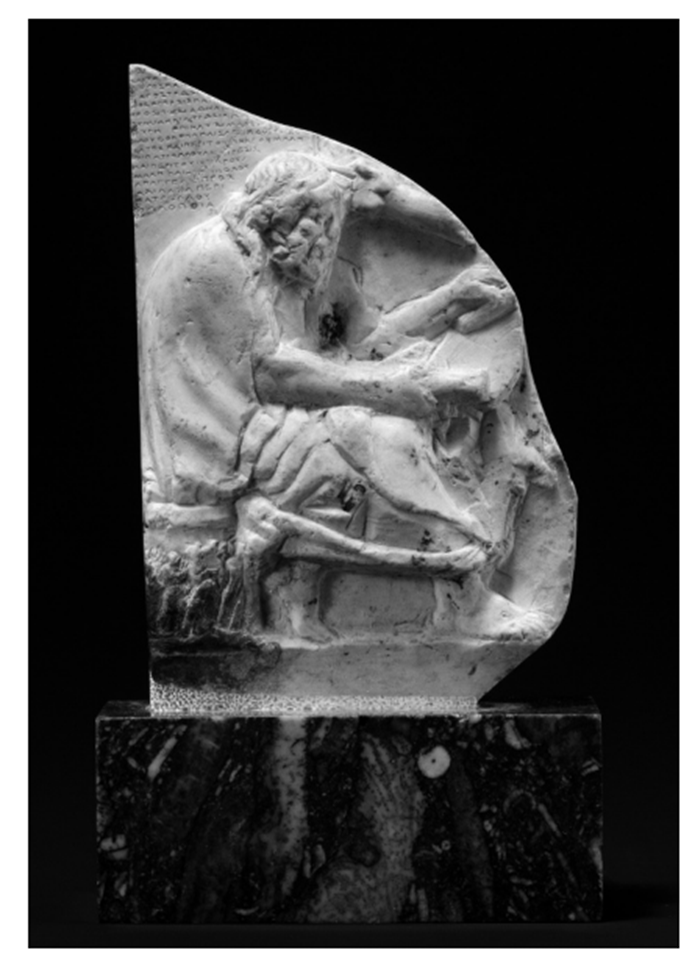
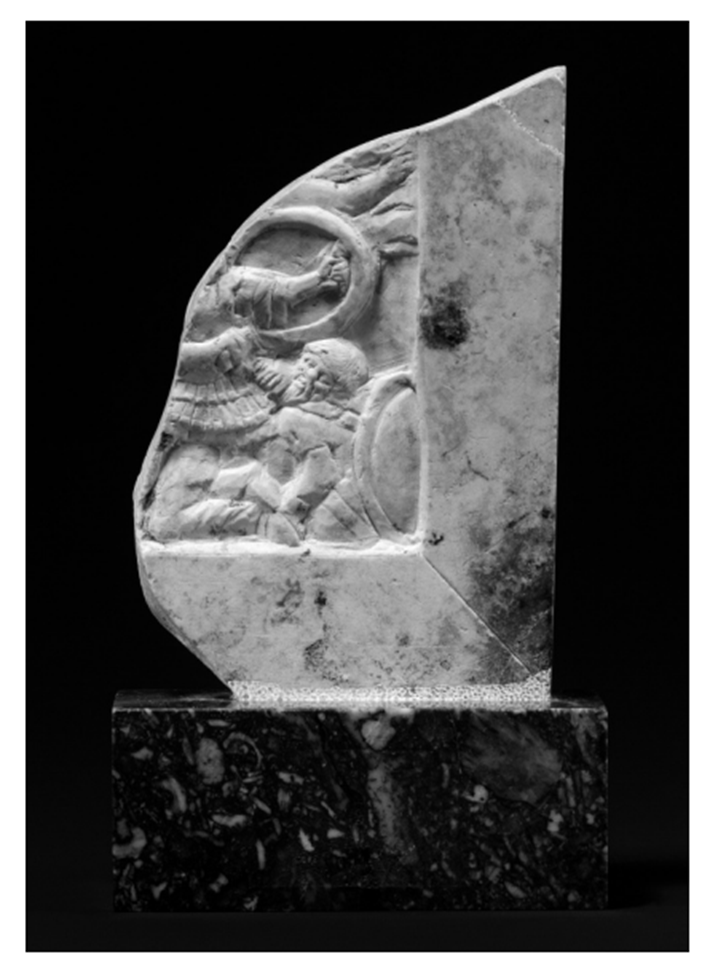
Tabula Homerica
Identify the person in the top image?
Homer reading a scroll on the left, summary of books 14-18 (Iliad) above him