protien structure
 Call Kai
 Learn
Learn Practice Test
 Spaced Repetition
 Match
Match Flashcards
 Knowt Play
1/24

There's no tags or description
Looks like no tags are added yet.
Name | Mastery | Learn | Test | Matching | Spaced | Call with Kai |
|---|
No analytics yet
Send a link to your students to track their progress
25 Terms
what are the elements found in a protien
CHON(s)
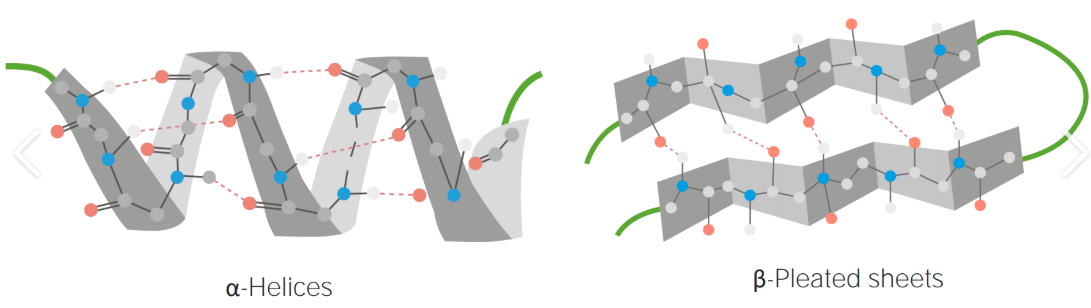
main bonding of a secondary structure is ___?
hydrogen bonding
Specifically, hydrogen bonds form between:
The C=O (carbonyl oxygen) of one amino acid
The N–H (amide hydrogen) of another amino acid
stablize alpha helix and beta pleated sheets
definition of globular protien
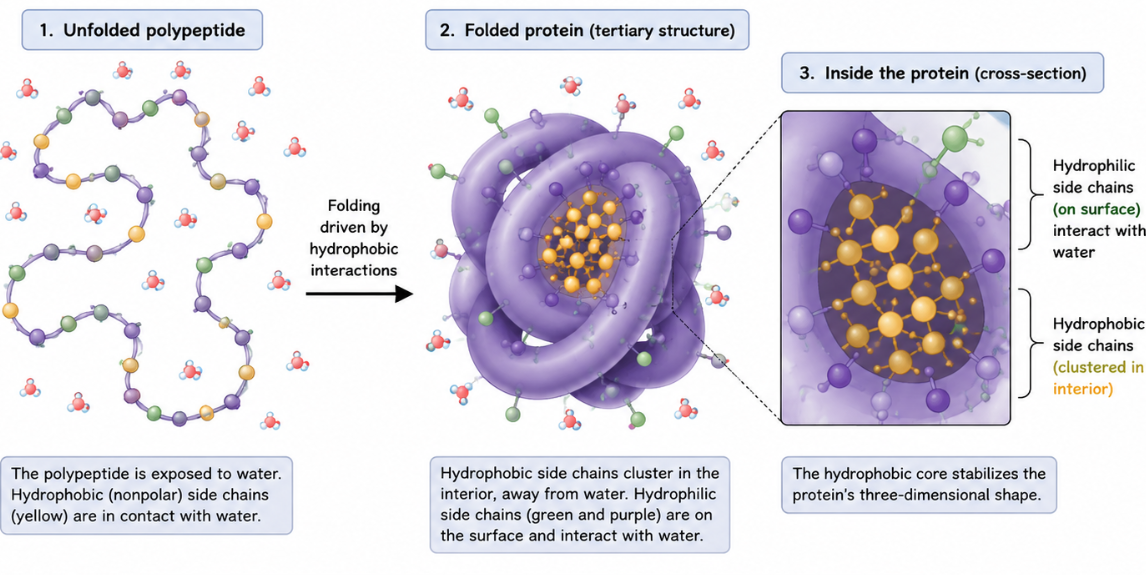
soluble protiens with hydrophobic groups pointing inwards
Explain how hydrophobic interactions contribute to the structure of a protein?
cause nonpolar amino acid side chains to cluster in the interior of the protein, away from water. This helps the protein fold into a stable three-dimensional (tertiary) structure.
explain the role of chaperonins?
help folding - specialized proteins shaped like barrels that provide an ideal environment for folding.
diseases of misfolding protein?
misfolding protein nullifies that proteins funtion causing
diseases like alzehiemers and parkinson
what is the primary structure of protein structure
sequence of amino acids linked by peptide bonds just a polypeptide chain
this sequence determines how protein will fold and function
what is the secondary structure of protein structure
local folding of the polypeptide chain into α-helices and β-pleated sheets, stabilized by hydrogen bonds between the backbone amino acids.
what is the tertiary structure of protein structure
overall 3d shape of single polypeptide chain, formed when secondary structures fold due to interactions between amino acid side chains.
R group interactions: hydrophobic, ionic, disulfide, Van der Waals, hydrogen bonds determine functional shape
what is the quaternary structure of protein structure
Quaternary structure is two or more polypeptide chains that join together to form a functional protein.
Multiple subunits held together by the same types of interactions found in tertiary structure.
what are amyloids
clumps(aggregates) of misfolded protiens
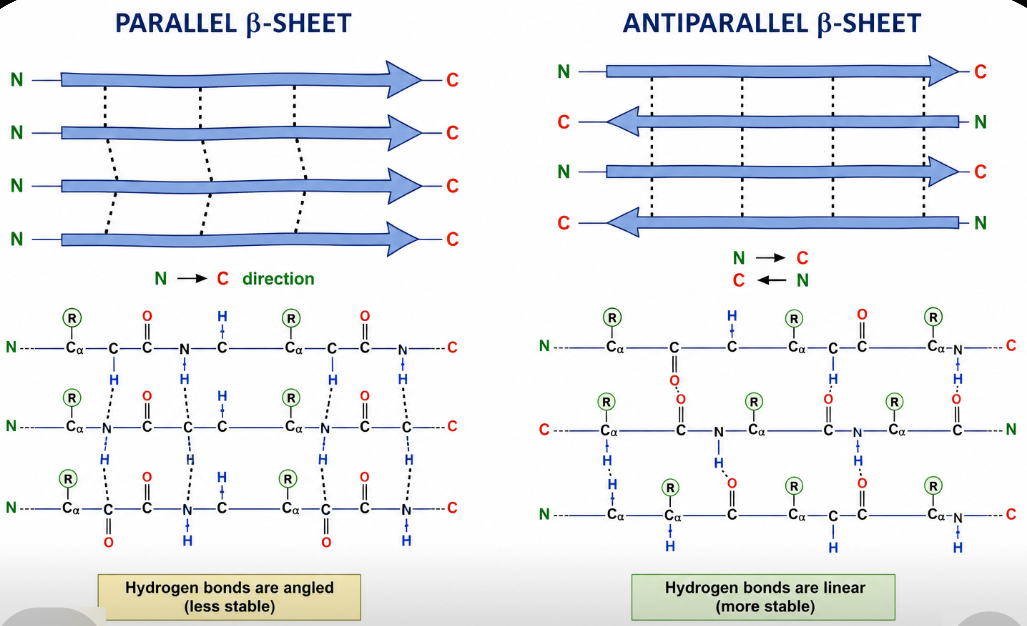
explain parralel and anti paralel beta sheets?
Parallel and antiparallel β-sheets are types of secondary protein structure formed when β-strands are held together by hydrogen bonds.
Parallel β-sheet
Adjacent β-strands run in the same direction (N-terminus → C-terminus).
Hydrogen bonds are slightly angled, making them a bit less stable.
give a protein example of primary protein stucture
insulin - basic amino acid sequence
give an protein example of a secondary protein stucture
keratin specifically has alpha helix
this structure makes hair strong
give an protein example of a tertiary protein stucture
myoglobin its job is to store oxygen
it needs a globular shape to make a pocket to store oxygen
give an example of a qauternary protein structure
hemoglobin needs 4 protein chains to coperate to carry oxygen in blood
A protein contains several folded regions: Hydrophobic amino acids are clustered in the center while polar amino acids are on the outside.
a) What level of protein structure is shown?
b) Why are hydrophobic amino acids located in the center?
c) How does this arrangement help the protein function?
a.) tertiary
b.) avoid water so they cluster together in the middle
c) makes a stable 3d shape
A protein is composed of four separate polypeptide chains:Each circle represents a folded polypeptide.
a) What level of protein structure is shown?
b) Name a protein that has this structure.
c) What is the advantage of having multiple subunits?
a.) qauternary
b.) hemoglobin
c.) subunits can cooperate together
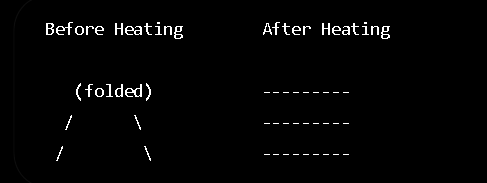
The diagram below shows a protein before and after heating:a) Which level(s) of structure are affected by heating?
b) What is this process called?
c) How would the protein's function change?
a.) tertiary ,secondary, qaurtenary has weak interactions these break due to heating only primary structure remains unchanged due to strong peptide bonds
b.) denaturation
c.) it will not be able to carry outs its function
how can a change of an amino acid in the primary structure of a protein affect the tertiary structure and function of protein?
Yes, the protein’s function can change because the amino acid substitution alters interactions such as hydrogen bonds, ionic bonds, and hydrophobic interactions. This can change the folding of the tertiary structure, including the active site or binding pocket, so the protein may no longer bind to its target molecule.
difference between denaturation and mutation
Denaturation is loss of protein shape due to environmental conditions without changing the amino acid sequence, whereas mutation is a change in the amino acid sequence due to a change in DNA.
how does denaturation affect protein
Denaturation
What it is:
Loss of protein shape due to environmental conditions
Causes:
Heat
pH change
Salts / chemicals
What changes?
Secondary, tertiary, (and quaternary) structures
Primary structure stays the same
Why it happens:
Weak bonds break (hydrogen, ionic, hydrophobic interactions)
Effect:
Protein unfolds → active site changes → loss of function
how does mutation affect a protein
What it is:
Change in the DNA sequence
Cause:
DNA replication errors
Mutagens (radiation, chemicals)
What changes?
Primary structure (amino acid sequence)
Why it happens:
Codon changes → different amino acid inserted
Effect:
May change folding → may or may not affect function
Key idea:
👉 Different amino acid sequence → possible new shape
A protein contains the following amino acid sequence:
Valine – Leucine – Isoleucine – Phenylalanine
A mutation changes Leucine to Lysine.
Question:
Explain why this mutation might significantly affect the tertiary structure of the protein.
This mutation may significantly affect the tertiary structure because leucine is a non-polar, hydrophobic amino acid, whereas lysine is positively charged and hydrophilic. The substitution changes the chemical properties of the R group and may disrupt hydrophobic interactions that help stabilize the protein's folded structure. As a result, the protein may fold differently, altering its tertiary structure and potentially affecting its function.
(*when asked for specific amino acid consider hydrophobic and hydrophillic how this affects shape*)
explain the function of collegen, opsin ,and fibrin?
collogen -Provides strength and support to connective tissues such as skin, tendons, ligaments, cartilage, and bones.
opsin - helps with vision
fibrin - forms blood clots to prevent blood loss