Organizational Culture and Change
 Call Kai
 Learn
Learn Practice Test
 Spaced Repetition
 Match
Match Flashcards
 Knowt Play
1/25

There's no tags or description
Looks like no tags are added yet.
Name | Mastery | Learn | Test | Matching | Spaced | Call with Kai |
|---|
No analytics yet
Send a link to your students to track their progress
26 Terms
Organizational Culture
system of shared assumptions, values, and beliefs indicating what is appropriate behavior
matters because it often has a strong influence on people’s behaviors
strength is measured by consensus
how much agreement is there on what is right (acceptable) or wrong (unacceptable)
the stronger it is, the less variance there is in people’s behaviors
Culture as an Asset
Generally more effective way of managing employee behavior than rules or regulations
Can bring employees together and crease a sense of identity
Culture as a Liability
The “wrong” one can make it difficult for organizations to respond to changes in the environment
Employees who do not agree it may rebel against it
Subculture
set of values unique to a limited cross-section of an organization
Counterculture
shared values that are in direct opposition to values of broader organizational culture
Iceberg Model of Culture
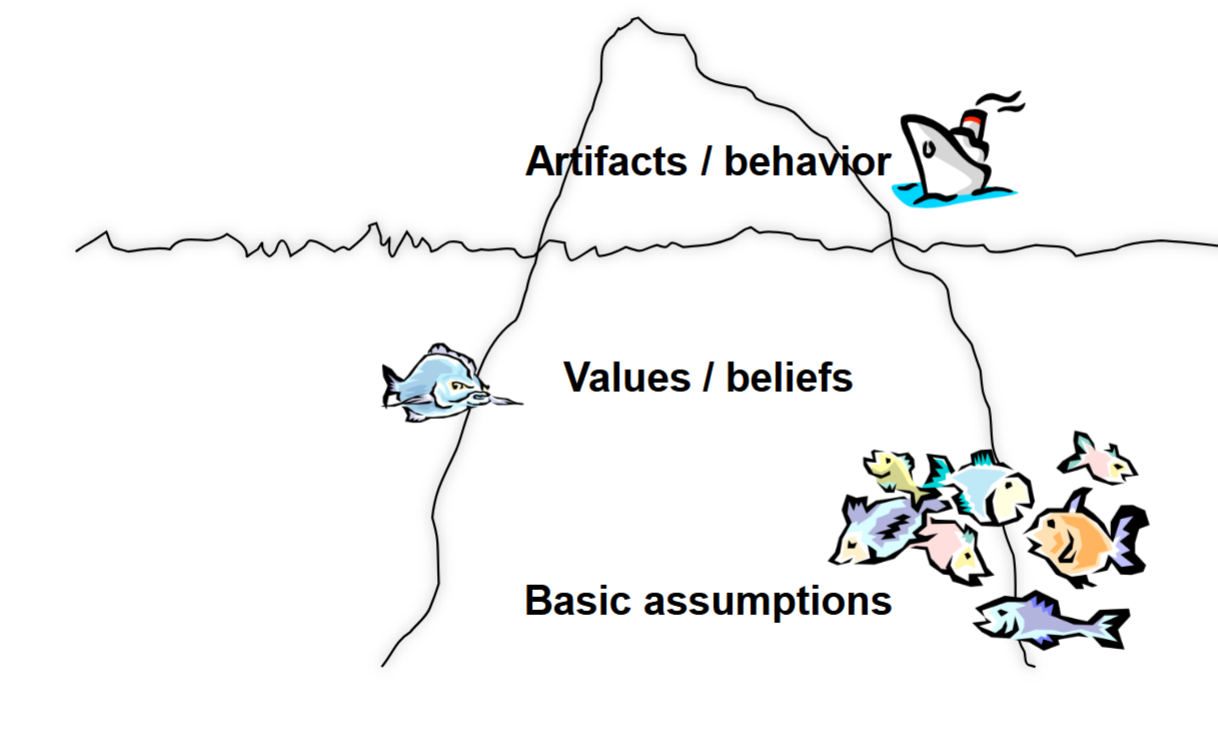
Artifacts
the visible and tangible elements of organizational culture
physical layout of company, dress code, decorations, signage
Values
shared principles, standards, and goals
mission statement
Assumptions
taken for granted beliefs about human nature and reality
is the least visible of the three
Founder’s Values
culture is tied to the personality and values of its founder(s)
establish the vision for the company in initial stages
goals, policies, structure
Southwest airlines
Industry Demands
force to create similarities among organizational cultures
(institutional) isomorphism
ex. business schools
Attraction-Selection-Attrition
culture maintenance
culture acts as a self-defending organism and intrusive elements are kept out
: people self-reflect in and apply to organizations they think they will fit
: attraction is not enough because misfit candidates might still apply so organization screens candidates and look for those who will fit culture
: selection imperfect because there will still be employees who do not fit so organizations eventually eliminate candidates who do not share company’s values
Onboarding
process through which employees learn the KSAs and behaviors to be an effective organizational member
can be done by organizations through assigning formal orientation program and mentors
can be done by new employees by seeking feedback and building social networks
Reward Systems
plays a role in how culture is maintained
Potential criteria
is it for behavior or results?
is it based on performance or seniority?
is it based on tangible metrics? or are there intangible aspects?
Rating system: absolute or relative?
Leadership
shape culture through their day to day actions and reactions to behaviors
Messaging: what is their vision? what stories are they choosing to tell? are they setting a good example?
Responsiveness: do they show concern about culture? open to feedback? do they seek improvement?
Control
Organizational Culture Types (Stable)
companies emphasize predictable, rule-oriented, and bureaucratic adherence to rules and regulations
Performance
Organizational Culture Types (Aggressive)
Companies emphasize outperforming competitors through competitive actions
Relationship
Organizational Culture Types (People-Oriented)
Companies emphasize fairness, supportiveness, and respecting individual rights
Responsive
Organizational Culture Types (Innovative)
companies are flexible, adaptable, and willing to experiment with new ideas
Organizational Change
movement of an organization from one state of affairs to another
can take many forms:
culture, structure, strategy, decision making processes, etc.
this is inevitable and often essential for company to remain competitive
Reasons for Change
changes in environment
technology
globalization
market conditions
poor performance
Resistance for Change
disrupted habits
don’t want to learn something new if it requires more cognitive effort
inertia and path dependency
feelings of uncertainty
how it will be implemented and what the consequences might be creates stress
fear of failure
people might fear their performance might worsen under new system
perceived loss of power
threats of losing power and influence if one worked hard to earn status
Kurt Lewin’s Change Model
Three stages of change
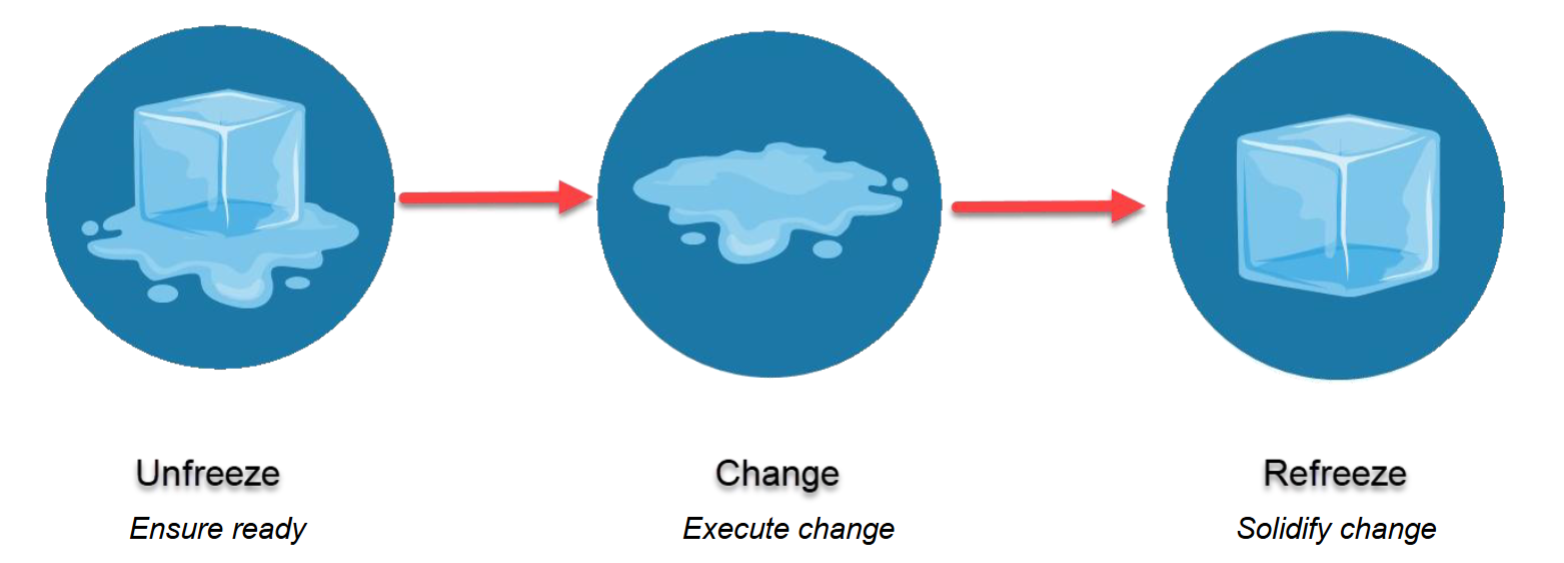
Unfreezing
many change efforts fail because people are insufficiently prepared
create a sense of urgency
make the case for why change is needed
people don’t change unless they absolutely have to
Build a coalition
enlist the right people who can become helpful allies to get everyone else on board
Communicate vision for new way of operating
Drew Carton: few goals, describing concrete future = higher motivation
Executing Change
Eliminate obstacles to change
points of resistance
can you partially accommodate these points without sacrificing the new culture?
create small wins
break up change into smaller targets so people can realize their efforts
change that is too far out to see results will lead to demotivation
capitalize on momentum
one results start coming, don’t declare victory too early
try to make continuous improvements while things are still fluid
Refreezing
reward change adoption
modify reward system to recognize when employees adopt changes
reinforce behaviors to make sure these behaviors are more likely to be repeated
publicize success
share results: what was gained? how much money did company save?
Make change part of the culture
real change is not reflected in superficial elements or artifacts (website, mission statements, etc)
work on shifting values and assumptions