Indigenous Politics
 Call Kai
 Learn
Learn Practice Test
 Spaced Repetition
 Match
Match Flashcards
 Knowt Play
1/26

There's no tags or description
Looks like no tags are added yet.
Name | Mastery | Learn | Test | Matching | Spaced | Call with Kai |
|---|
No analytics yet
Send a link to your students to track their progress
27 Terms
How has the demographic and social context of indigenous people grown?
rapid population grown and increase in self identification of 5% in 2021, 9.4% increase since 2016 (5.3% non-indigenous growth)
→ First Nations: 60% in 2021, 9.7% increase
→ Metis: 36% in 2021, 6.3% increase
→ Inuit: 4% in 2021, 8.5% increase
What is life expectancy like in indigenous vs non-indigenous individual?
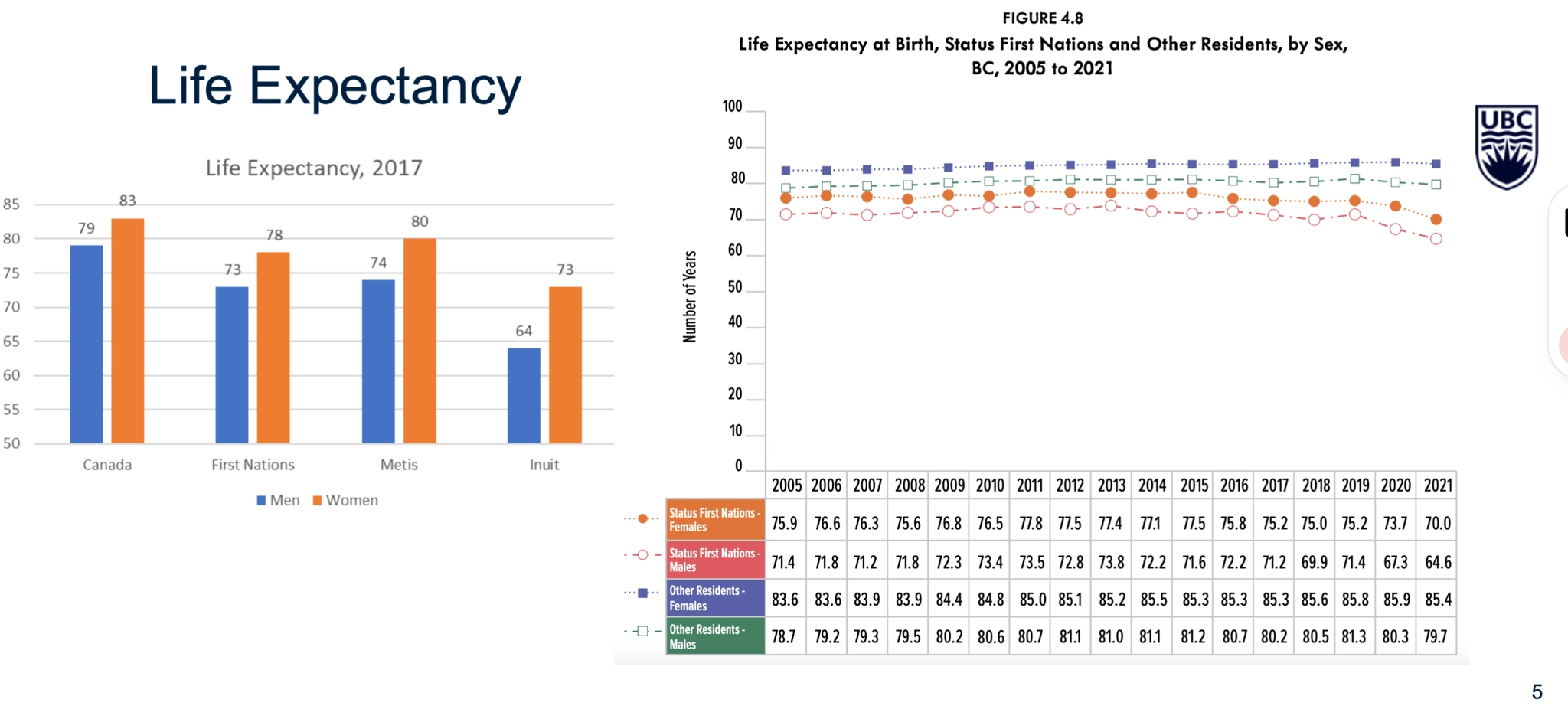
Life expectancy shows unequal outcomes in Canada: women live longer than men, Indigenous peoples have lower life expectancy than non-Indigenous (e.g., non-Indigenous men ≈ 79 in 2017; Inuit men ≈ 15 years lower), and First Nations vs other Canadians is mostly flat but may decline from ~2014/15–2021.
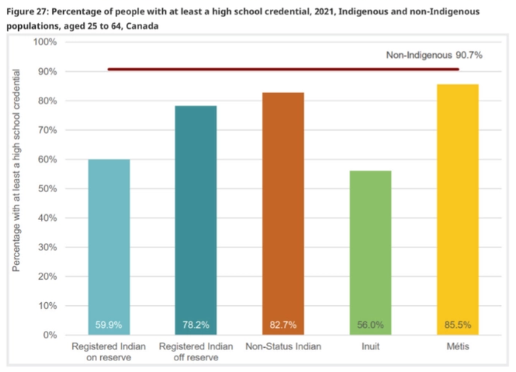
How does High School Completion vary from Indigenous to Non-Indigenous?
non-Indigenous = 90.7% with at least a high school credential.
→ high school completion is lower for all Indigenous categories shown vs non-Indigenous Canadians, with especially large gaps for Inuit and on-reserve First Nations
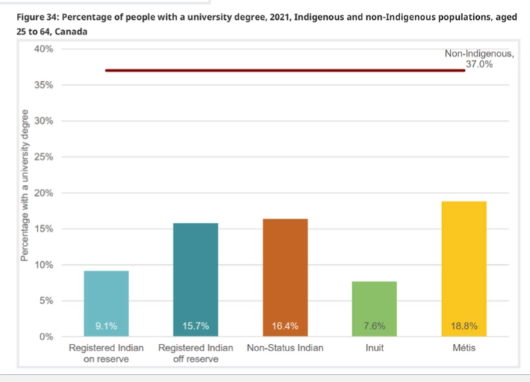
How does University Degree Attainment vary from Indigenous to Non-Indigenous?
non-Indigenous = 37.6% with a university degree.
→ the university degree gap is very large across all Indigenous categories compared to non-Indigenous Canadians. (ie. highest non-status at 16.4, inuit at 7.6)
How does Medial Individual Income vary from Indigenous to Non-Indigenous?
non-Indigenous = $50,400.
→ median incomes are lower for Indigenous groups, with the largest gap for on-reserve First Nations; Métis incomes are closest to the non-Indigenous benchmark but still lower.
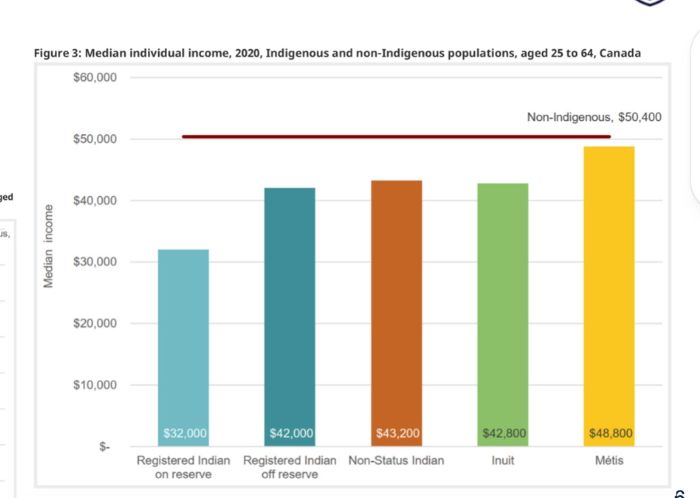
How does Medial Individual Income vary from Indigenous to Non-Indigenous?
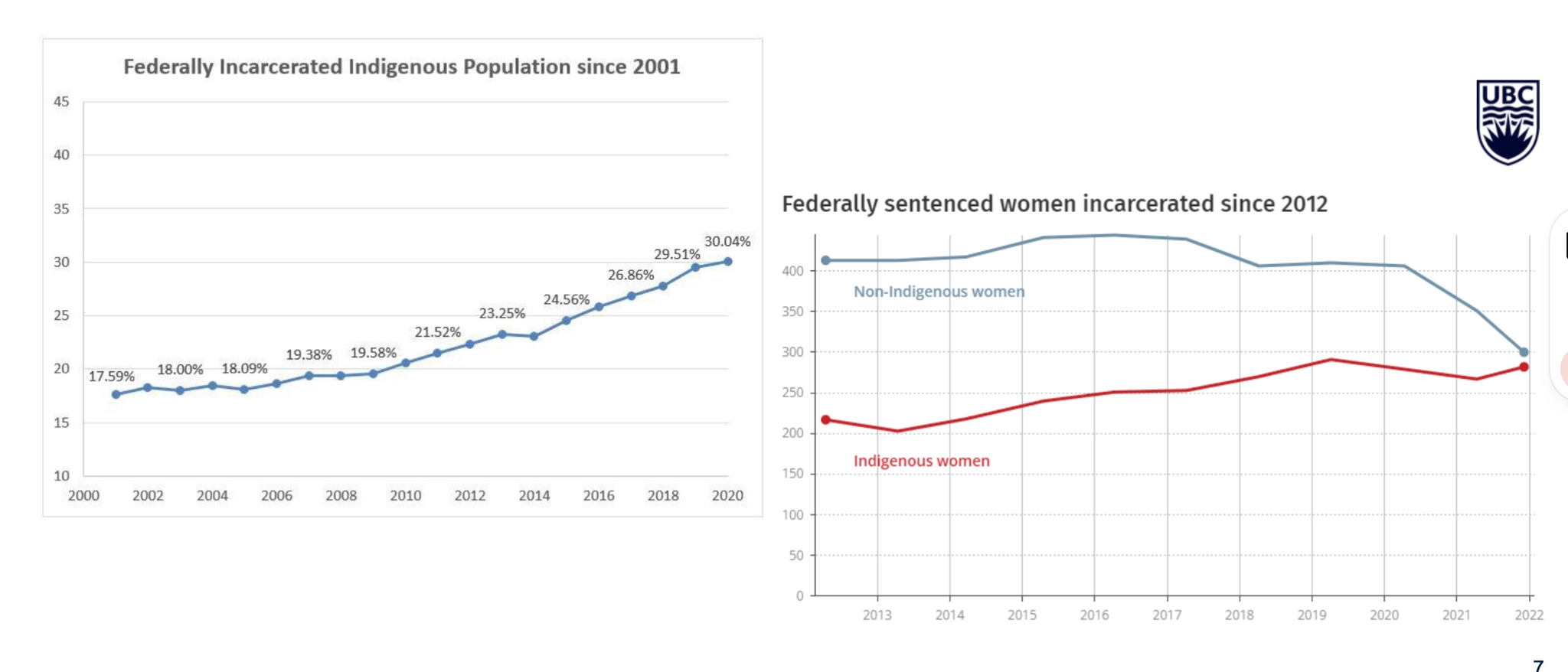
2001 (17.59%) → 2020 (30.04%)
→ Indigenous people are increasingly overrepresented in federal incarceration over this period. gap narrows for indigenous to non-indigenous woman recently.
What is settler colonialism?
distinctive form of colonial practice, rooted in belief in the supremacy of European settler institutions over those of Indigenous groups, and policies and practices that impose this belief
What is Terra Nullius?
a legal concept that depicts land as unoccupied or empty, denying the rights of Indigenous peoples to land ownership and sovereignty.
What is the Doctrine of Discovery?
A legal and religious framework that justified and legitimized European colonization of Indigenous lands by asserting that any land not occupied by Christians was available for seizure.
What is the Royal Proclamation of 1763?
Establishment of Crown ‘sovereignty’ that established legal recognition of Indigenous land rights and prohibited settlement beyond the Appalachian Mountains, intending to regulate colonial expansion.
What are the ‘Historic Treaties’ in Canada?
series of treates in 18th to 19th century between First Nations and British crown/Canadian government (post-1867) where land exchanged for payments, rights
What are the numbered treaties, 1871-1921?
A series of eleven treaties between the Canadian government and various First Nations that aimed to define land rights and responsibilities, often poorly understood, promises not kept, reserve land poor.
What is the Confederation and the Indian Act (1876)?
federal government granted power over ‘Indians’ in s. 91 of the Constitution Act resulting in the Indian Act (1876)
What was the goal of the Confederation and the Indian Act (1876)?
goal: assimilation into the majority population, control over every aspect of life
extensive authority of department of Indian Affairs and ‘Indian Agents’
Indian status and “enfranchisement”
Reserve system
‘band’ governance
residential schools
What was the Trudeau White Paper, 1969?
proposed complete integration of Indigenous peoples into mainstream society, opposed by aboriginal groups; ‘spark’ that ignited Indigenous movement in Canada
→ notable that Trudeau’s behaviour quite dismissive (especially when starting prayer because the Indigenous were praying)
What is the Constitution Act, 1982?
recognised aboriginal rights
S.35: affirmation of existing aboriginal and treaty rights
What was the Charlottetown Accord (1992)?
attempt to add/clarify constitutional changes to s.35, including recognizing an inherent right of Indigenous self-government as a “third order of government”. But it was rejected in the 1992 referendum, so it did not become law.
What is the Royal Commission on Aboriginal Peoples, 1996?
premised on acknowledgement of sovereignty, ownership of land:
inherent rights of self-government
aboriginal parliament
participation, veto in constitutional talks
almost entirely ignored though useful in other ways
What is an aboriginal title?
claim to land on the basis of traditional occupancy and use rather than treaty.
Where is the aboriginal title recognised?
recognised in Calder v. Attorney-General of BC (1973)
Where is the aboriginal title defined?
defined in Delgamuukw v. British Columbia (1997)
must demonstrate exclusive and continuous occupation of land prior to Canadian claim of sovereignty
Where is the aboriginal title clarified?
clarified and applied in Tsilhqot’in Nation v. British Columbia (2014)
infringing title: duty to consult, compelling and substantial goal, Crown duty of trust to indigenous people.
Where are inherent communal rights to distinctive cultural practices defined?
Sparrow (1990): SCC interprets s. 35 of the Constitution Act, 1982
Van der Peet (1996): criteria for determining validity of rights claim
What are the 3 narratives of self government?
full sovereignty: inherent right under international law
coexisting: shared sovereignties (federal solution)
delegated authority: grant of powers from Canadian government to indigenous governing bodies (akin to municipalities)
How did the Truth and Reconciliation Commission report define reconciliation?
“Establishing and maintaining a mutually respectful relationship between Aboriginal and non-Aboriginal peoples in this country. In order for that to happen, there has to be awareness of the past, acknowledgement of the harm that has been inflicted, atonement for the causes, and action to change behaviour.”
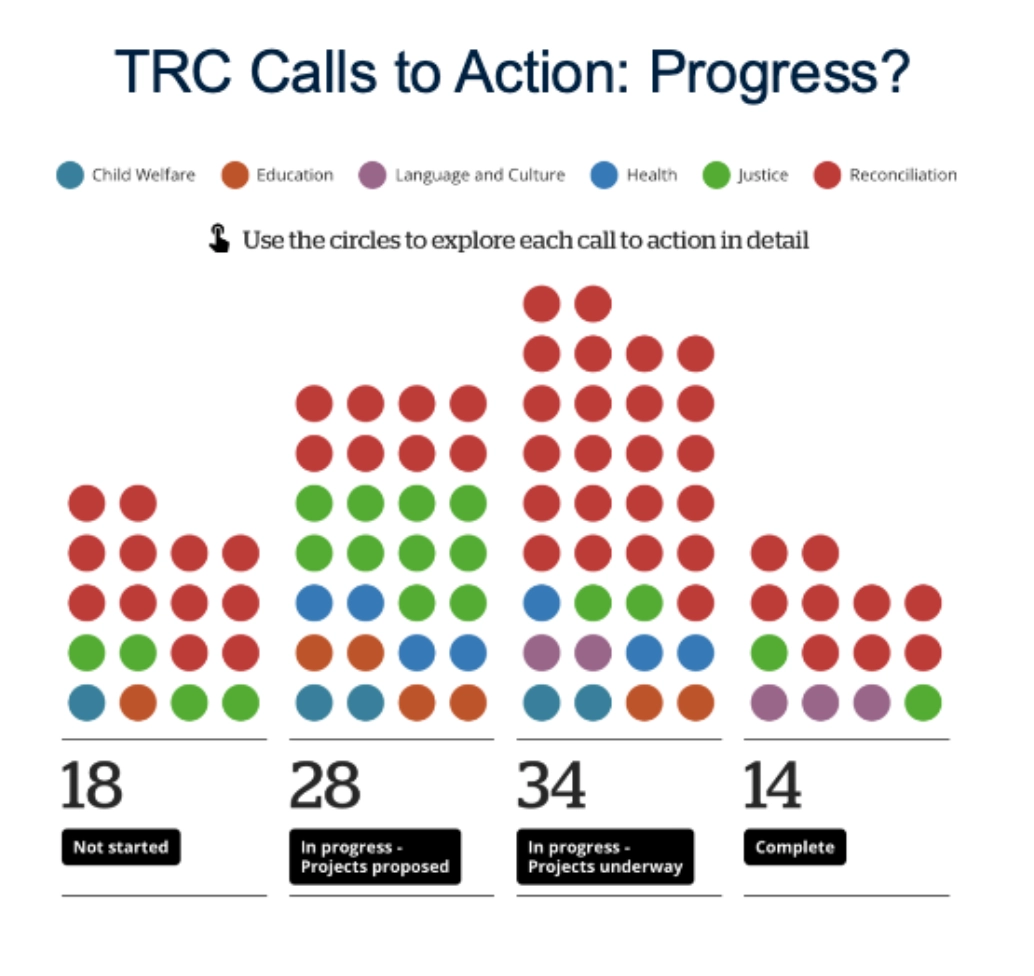
What are the statistics of TRC Calls to Action?
14 complete
34 in progress
28 proposed
18 not started
94 total
What are Canadian attitudes towards Indigenous Issues?
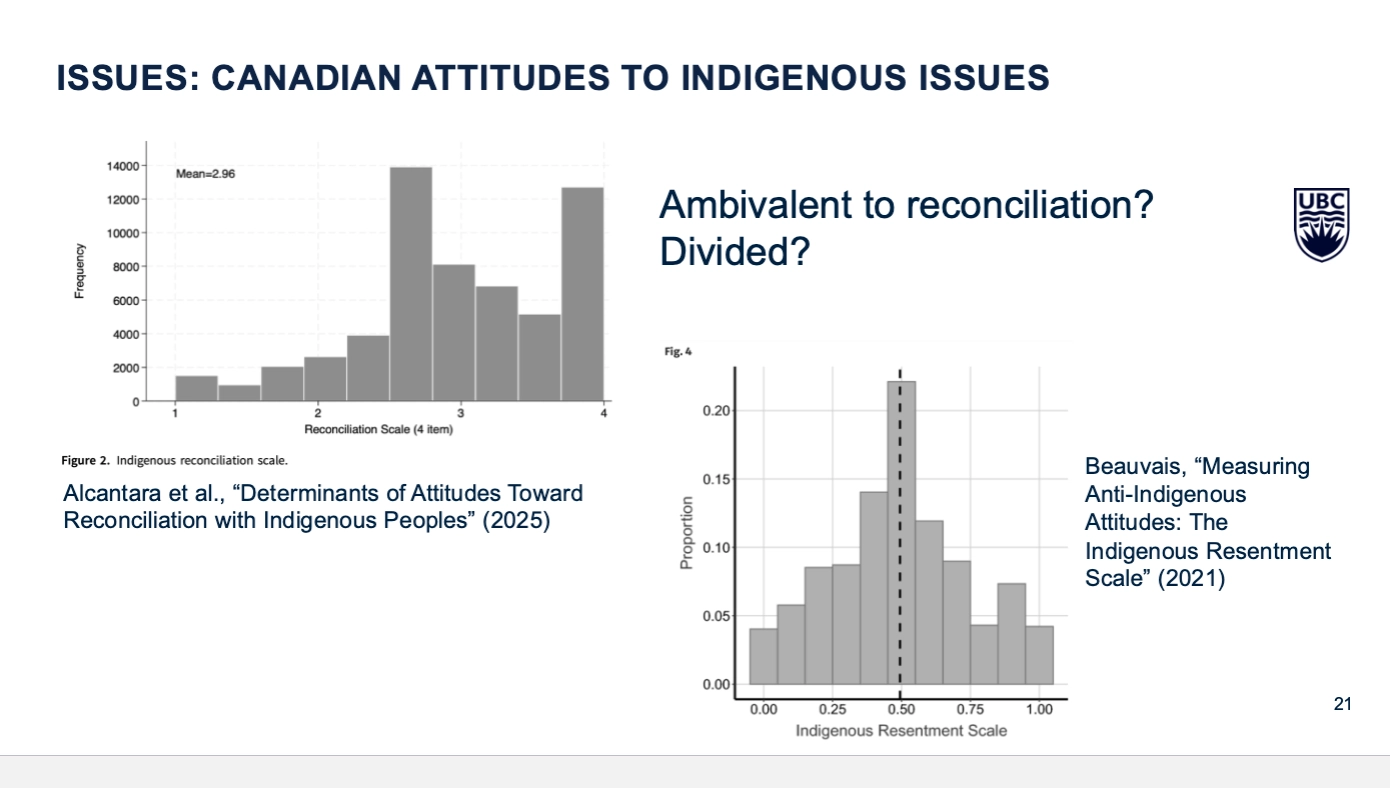
not one single consensus, measurable support for reconciliation, but also measurable resentment/anti-Indigenous sentiment, and both appear widely distributed rather than concentrated at one extreme.