CHAPTER 9
 Call Kai
 Learn
Learn Practice Test
 Spaced Repetition
 Match
Match Flashcards
 Knowt Play
1/22

Earn XP
Description and Tags
Emotion & Motivation
Name | Mastery | Learn | Test | Matching | Spaced | Call with Kai |
|---|
No analytics yet
Send a link to your students to track their progress
23 Terms
Emotion
defined as a subjective mental state that is usually accompanied by distinctive behaviors as well as involuntary physiological changes.
Aspects of emotions:
feelings
physiological arousal
What causes emotions?
James-Lange Theory
Cannon-Bard
Schachter-Singer
James-Lange Theory
proposes our subjective emotional experience is the consequence of a specific physiological arousal pattern
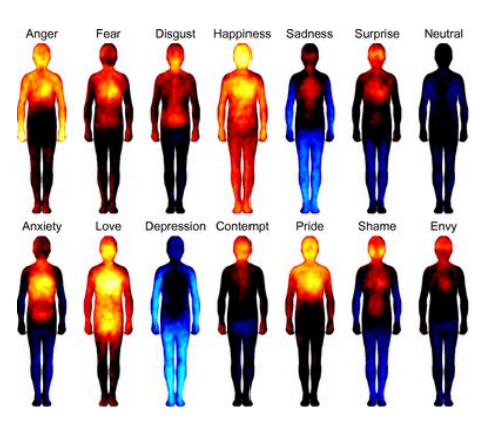
A study examining where people felt certain emotions showed a great deal of consistency across cultures
supports James-Lange Theory
Cannon-Bard Theory
proposes a stimulus triggers both our subjective emotional experience and a specific physiological arousal pattern
Schachter-Singer Theory
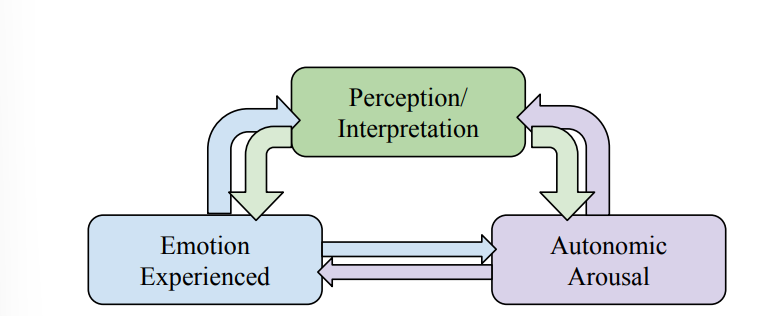
proposes our subjective emotional experience is the consequence of a specific physiological arousal pattern and our interpretation of that pattern
Emotions & the Brain
Many of the same brain areas are activated by multiple emotions, so it appears that there is no obvious pattern that leads to one particular emotional state
Modern view emphasizes the impact of any one process on the others
we also know that there are two pathways that compute emotion
fast pathway
slow pathway
Fast Pathway
goes directly to the amygdala
Slow Pathway
gets additional reasoning through cortex, can override fast pathway
Showing Your Emotions
Ekman says there are 6 distinctive expressions… universality hypothesis
But culture can regulate how we express emotion- display rules
Duchenne and the Duchenne Smile
Duchenne
Duchenne tried to study the musculature responsible for the expression of different emotions… and recreate them using electrical stimulation
Duchenne Smile
Duchenne Smile
genuinely expressed emotion, engages orbicularis oculi
Fake smile: no crows feet (or lots of botox)
Empathy
Expressing emotions is communicative- we can use these expressions to signal others
Empathy is the ability to accurately track what others are feeling
As discussed previously, empathy is an important part of emotional intelligence
Framington Heart Study & Spreading Emotions
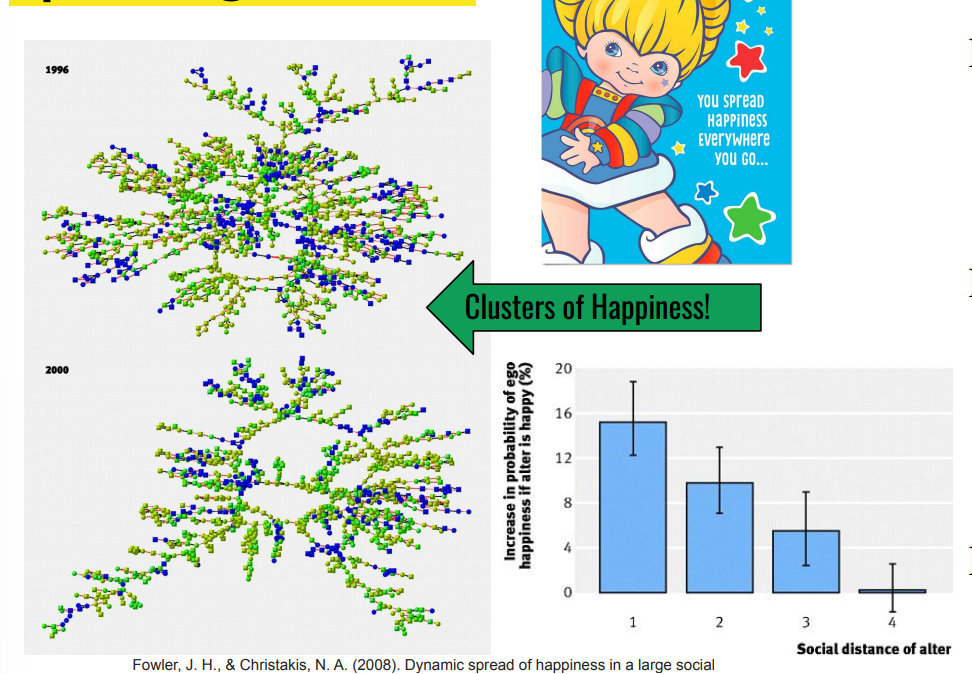
Framington Heart Study looked at over 5000 individuals from one town over 40 years
Examined ‘happiness’ component of Center for Epidemiological Studies Depression Scale
Larger clusters than chance
Motivation
the purpose for or psychological cause of an action
Emotions can help motivate us
emotions help us navigate the world
hedonic principle
orbitofrontal cortex
homeostasis
approach and avoidance motivation
Hedonic Principle
The hedonic principle has been around since ancient times, and suggests we are motivated to increase our pleasure and avoid pain
Orbitofrontal Cortex
Lack of emotional responses following damage to orbitofrontal cortex can make it very hard to make decisions
Homeostasis
Homeostasis is the process of keeping an equilibrium
When that balance is out of alignment, it can generate a drive to restore
Approach and Avoidance Motivation
Approach motivation to get a positive outcome
Avoidance motivation to avoid a negative outcome (more powerful)
Hunger
How do we know when we are hungry? Two competing signals (orexigenic and anorexigenic) battle out in the hypothalamus!
Our desire to eat is also signaled by other cues.
In contrast to just wanting to maintain our current weight, our bodies were designed to get pleasure from food… positive incentive theory.
Sex
Another key motivator for humans is sex
Sexual response function differs for males and females
While we consider sex a basic motivator, there are actually many reasons that people engage in sex
Intrinsic vs. Extrinsic Motivation
Intrinsic motivation occurs when actions themselves are rewarding, drive comes internally
Extrinsic motivation occurs when we complete actions to achieve rewards (or avoid punishment), drive comes from external sources
Willpower
your ability to engage in self-control