Lecture 1- Medical Genetics
 Call Kai
 Learn
Learn Practice Test
 Spaced Repetition
 Match
Match Flashcards
 Knowt Play
1/63

Earn XP
Description and Tags
Fundamentals of DNA, Chromosomes, and Cells
Name | Mastery | Learn | Test | Matching | Spaced | Call with Kai |
|---|
No analytics yet
Send a link to your students to track their progress
64 Terms
Genetics
the science of genes, heredity, and variation in living organisms
Human Genetics
the science of human variation and its causes
Clinical Genetics
branch of medicine that cares for individuals and families with abnormal variation of structure and function
Medical Genetics
Combination of Human Genetics and Clinical Genetics
What does medical genetics involve?
any application of genetics to medical practice:
• Mapping of disease genes to specific locations on
chromosomes
• Analyses of the molecular mechanisms by which genes
cause disease
• Diagnosis and treatment of genetic disease
• Studies of the inheritance of diseases in families
Genetic counseling
which information regarding risks, prognoses, and treatments is communicated to patients and their families
Genetic diseases make up how much?
a large percentage of the total disease burden in pediatric and adult populations - will continue to grow as our understanding of the genetic basis of disease grows (and as % of death from infections diseases decreases)
Importance of Genetics
basis of understanding the fundamental biological makeup of an organism and disease process
helps with prevention of a disorder
can lead to more effective disease treatment
types of genetic diseases
chromosome disorders
single-gene disorders
multifactorial disorders
mitochondrial disorders
chromosome disorders
in which entire chromosomes (or large segments of them) are missing, duplicated, or otherwise altered.
These disorders include diseases such as
Down syndrome
Turner syndrome
single gene disorders
in which single genes are altered; these are often termed mendelian conditions. Well-known examples include cystic fibrosis, sickle cell disease, and hemophilia.
Can be autosomal dominant, autosomal recessive, X-linked, Y-linked.
multifactorial disorders
which result from a combination of multiple genetic and environmental causes. Many birth defects, such as cleft lip and cleft palate, as well as many adult disorders, including heart disease and diabetes, belong in this category.
mitochondrial disorders
a relatively small number of diseases caused by alterations in the small cytoplasmic mitochondrial chromosome
Mitochondrial diseases are genetic disorders that occur when mitochondria—the "powerhouses" of the cells—fail to produce enough energy for the body to function properly
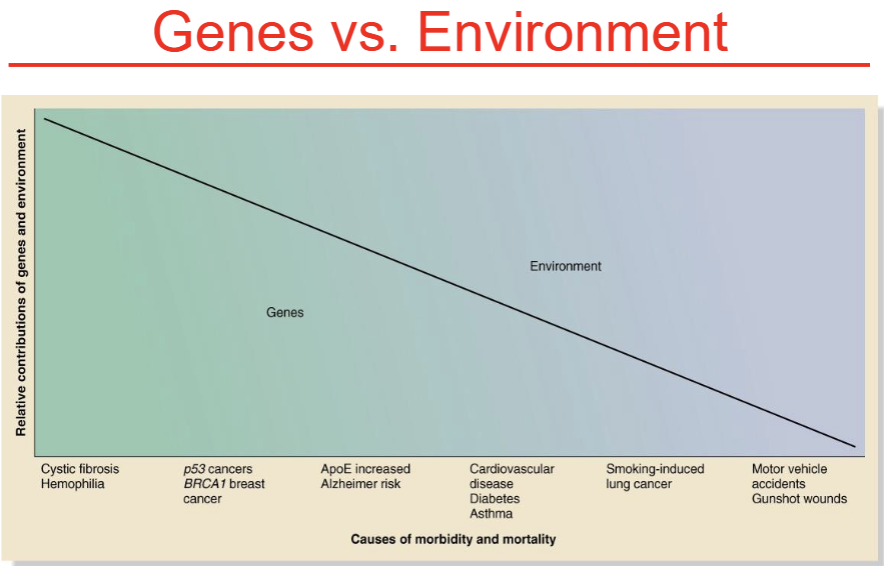
Are all diseases determined by your genetic background?
NO (genes vs environment)
genotype
the genetic makeup of a person. the specific genetic composition (like DNA sequence) of a cell or organism made up of cells all containing the same DNA sequence
phenotype
the physical manifestation of an inherited trait or disease. The outward, physical characteristics of an individual organism. The physical manifestation of all the atoms/ molecules in an organism
relationship with cancer, genotype, and phenotype?
in cancer, both the genotype and phenotype could keep changing over time
the two genetic approaches
forward genetics
reverse genetics
forward genetics
from phenotype to gene
start with the mutant phenotype → study morphological, physiological, developmental differences → identify the gene (DNA sequence) responsible for the mutant phenotype
reverse genetics
from gene to phenotype
start with a known gene in an normal organism → mutate, knockout or overexpress the gene → analyze morphological, physiological, or developmental effects (the phenotype)
Major model systems
arabidopsis thaliana (a weed plant)
drosophila melanogaster (fruit fly)
saccharomyces cerevisiae (yeast)
neurospora crassa (fungi)
escherichia coli (bacteria)
Caenorhabditis elegans (roundworm)
Mus musculus (house mouse)
what is a good model organism?
small (easy and inexpensive)
a short generation time → quickly cross and study 1st and 2nd generation hybrids
small genome
easy to cross
produce large numbers of offspring
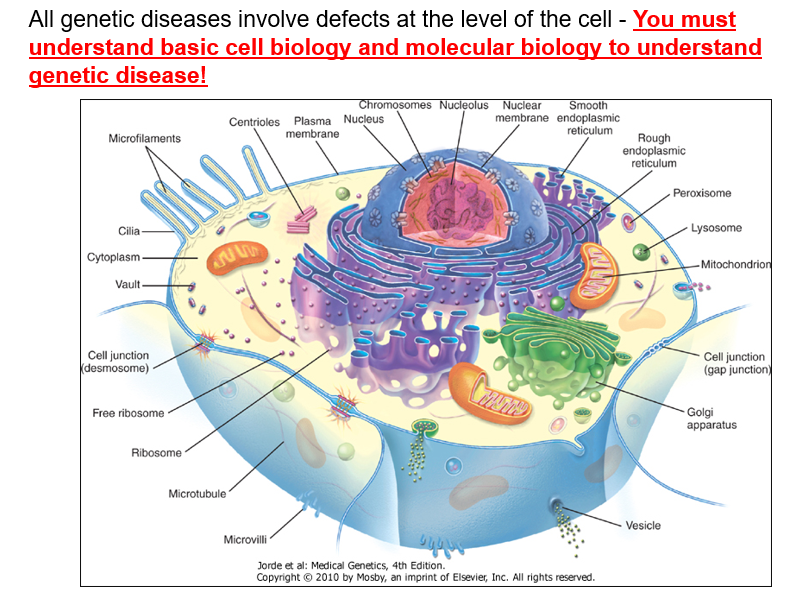
how genetics affects your health
you must understand basic cell biology and molecular biology to understand genetic disease
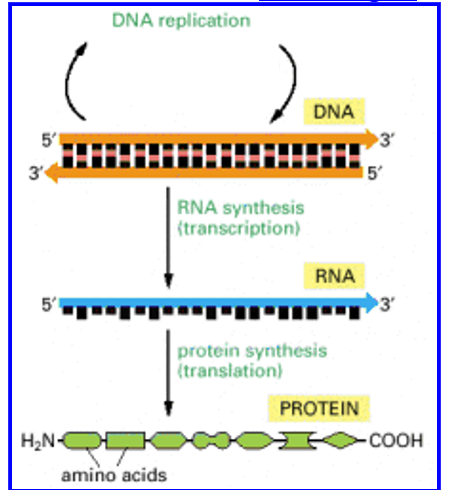
Central Dogma flow
DNA —> RNA —> protein
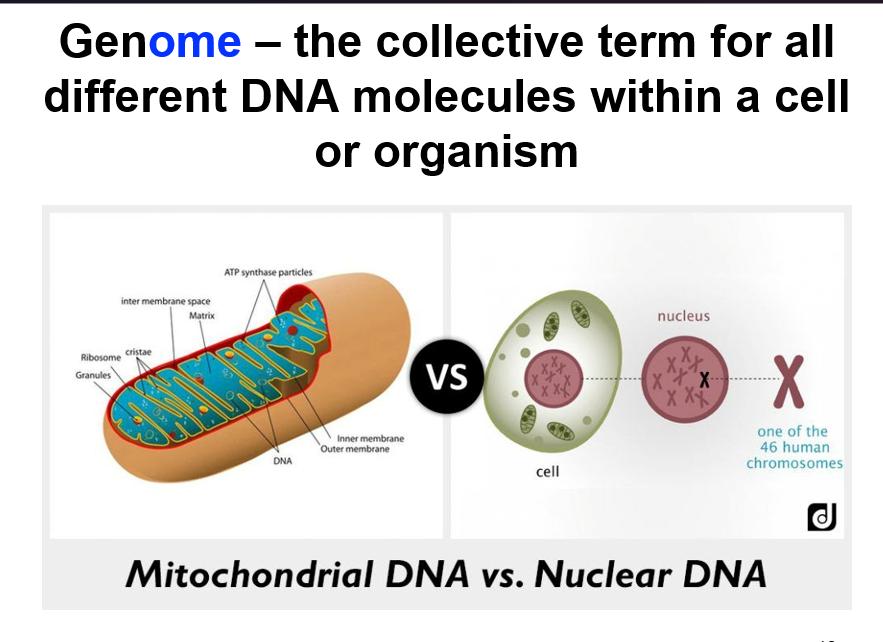
genome
the collective term for all the different DNA molecules within a cell or organism
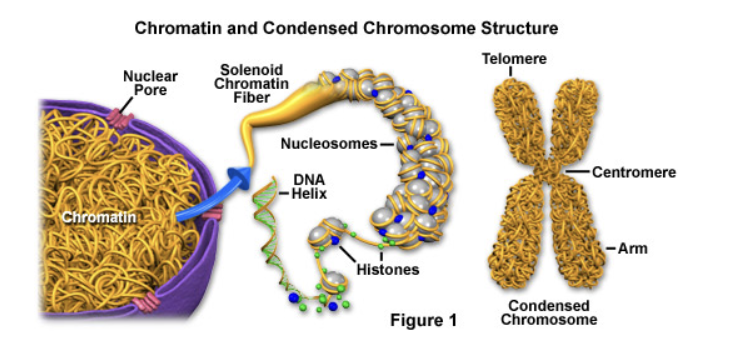
chromatin
the substance that gives the nucleus a granular appearance, contains genomic DNA that is observable in the nuclei of nondividing cells
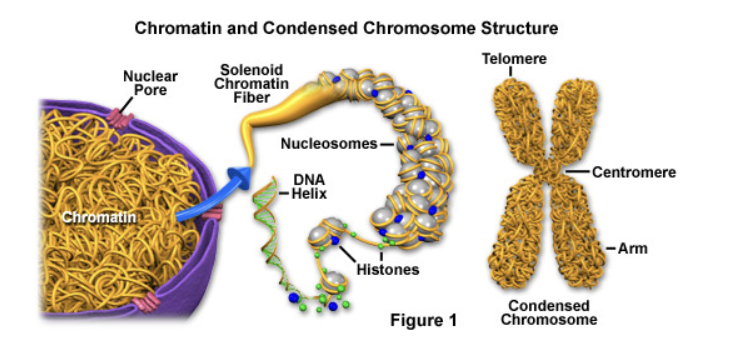
chromosomes
just before a cell undergoes division, the chromatin condenses to form discrete, dark-staining bodies called chromosomes (from the Greek words for "colored bodies").
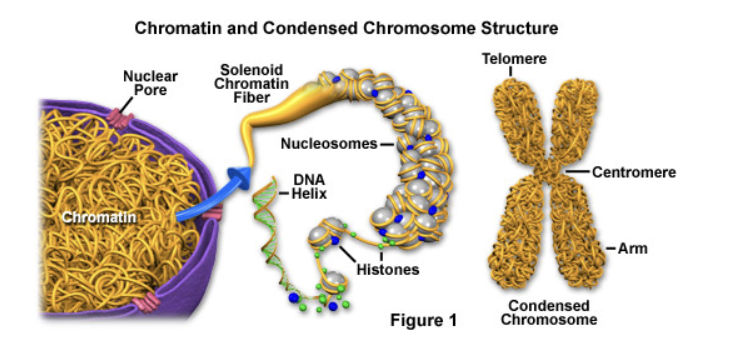
what are genes made of and how many genes do humans have?
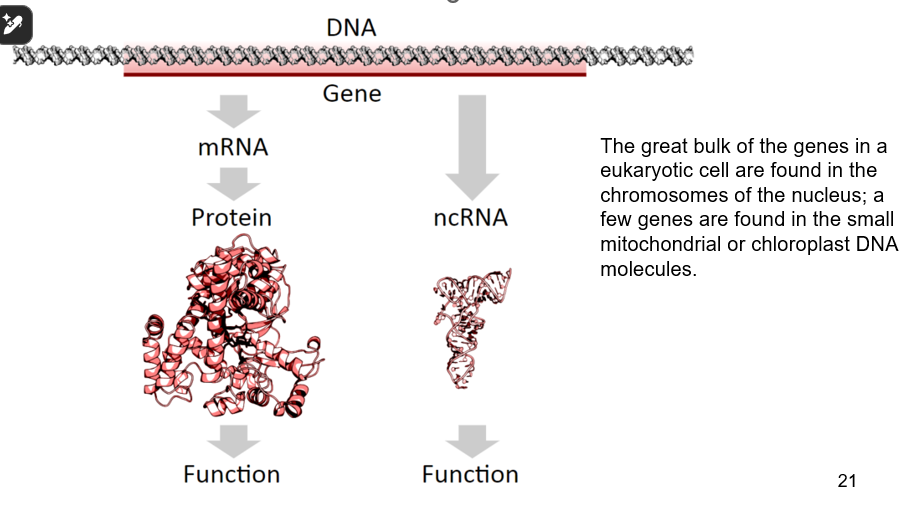
Physically, genes are composed of deoxyribonucleic acid (DNA). Humans are estimated to have 20,000 to 25,000 genes.
what is a gene
the DNA segments that carry the genetic information to make proteins or functional RNA molecules within cells.
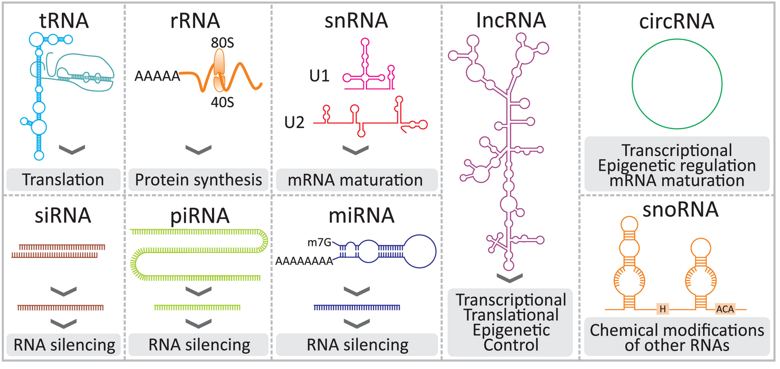
non coding RNA (ncRNA) types
tRNA (transfer RNA)
rRNA (ribosomal RNA)
snRNA (small nuclear RNA)
IncRNA (long ncRNAs)
circRNA (circular RNAs)
siRNA (small interfering RNA)
piRNA (PIWI-associated RNAs)
miRNA (microRNA)
snoRNA (small nucleolar RNA)
what does a somatic cell contain
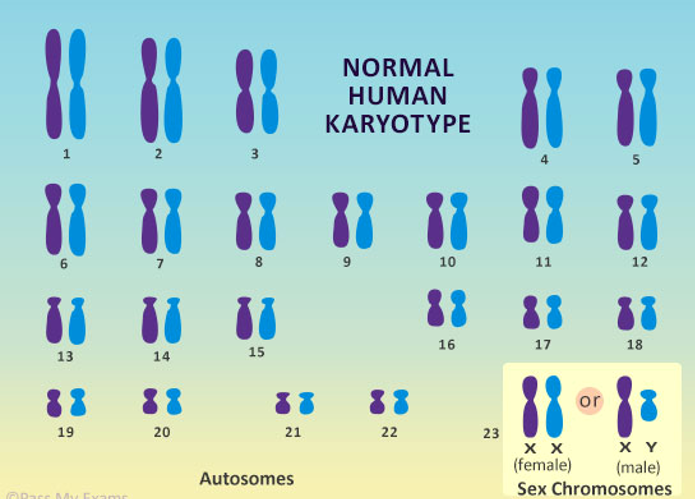
Each human somatic cell (cells other than the gametes, or sperm and egg cells) contains 23 pairs of different chromosomes, for a total of 46
Sex Chromosomes
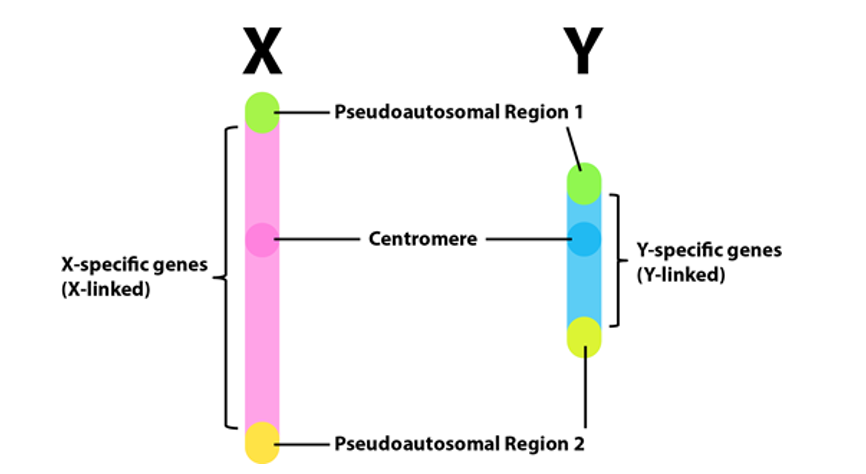
One of the chromosome pairs consists of the sex chromosomes. In normal males, the sex chromosomes are a Y chromosome inherited from the father and an X chromosome inherited from the mother. Two X chromosomes are found in normal females, one inherited from each parent.
what are autosomes
The other 22 pairs of chromosomes (not sex chromosomes) are autosomes. The members of each pair of autosomes are said to be homologs, or homologous, because their DNA is very similar. The X and Y chromosomes are not homologous of each other.
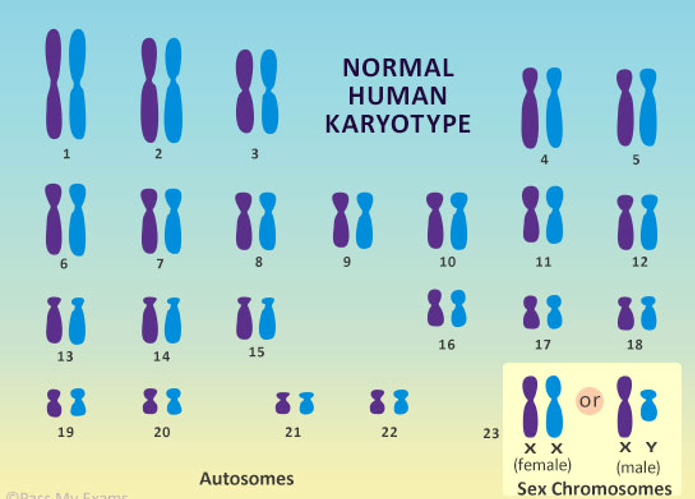
A normal human MALE karyotype
46, XY
refers to a male karyotype, meaning a person with 46 chromosomes in each cell, with one X and one Y chromosomes.
A normal human FEMALE karyotype
46 XX
refers to a female karyotype, meaning a person with 46 chromosomes in each cell, with two X chromosomes, indicating a typical female genetic makeup; "46" represents the total chromosome number, and "XX" denotes the female sex chromosomes.
difference in length and genetic content between X and Y sex chromosomes?
In humans, women have both X chromosomes alike in size and genetic content. Pairing and recombination can exist along their entire length. Men have one X and one Y chromosome and only two limited regions of identical sequence, located at the tips of the short and long arm of the X and Y chromosomes
what are diploid cells
somatic cells, having two of each chromosome
what is the haploid number for human genetics?
23
how the diploid number of chromosomes maintained?
The diploid number of chromosomes is maintained in successive generations of somatic cells by the process of mitosis, whereas the haploid number is obtained through the process of meiosis.
DNA coiling
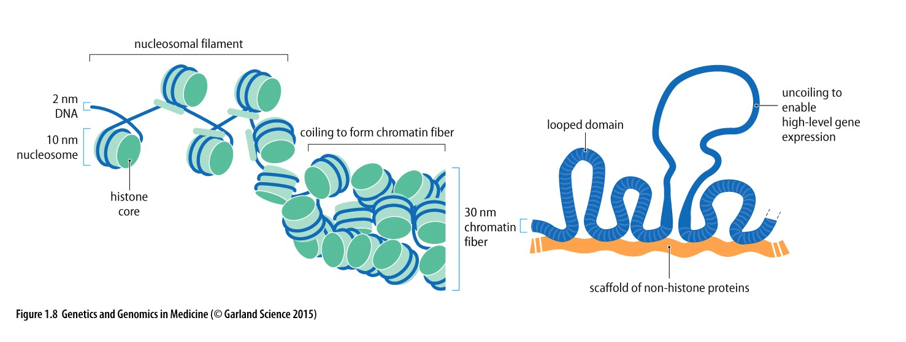
If the DNA in a cell were stretched out, it would be about 2 meters long. To package all of this DNA into a tiny cell nucleus, it is coiled at several levels.
the DNA is wound around a histone protein core to form a nucleosome. About 140 to 150 DNA bases are wound around each histone core, and then 20 to 60 bases form a spacer element before the next nucleosome complex.
The nucleosomes in turn coil form a chromatin fibers. The chromatin fibers themselves are organized into chromatin loops, which are attached to a protein scaffold of non-histone proteins. Each of these loops contains approximately 100,000 base pairs (bp), or 100 kilobases (kb), of DNA.
The end result of this coiling and looping is that the DNA, at its maximum stage of condensation, is only about 1/10,000 as long as it would be f it were fully stretched out.
Composition and Structure of DNA (RNA)
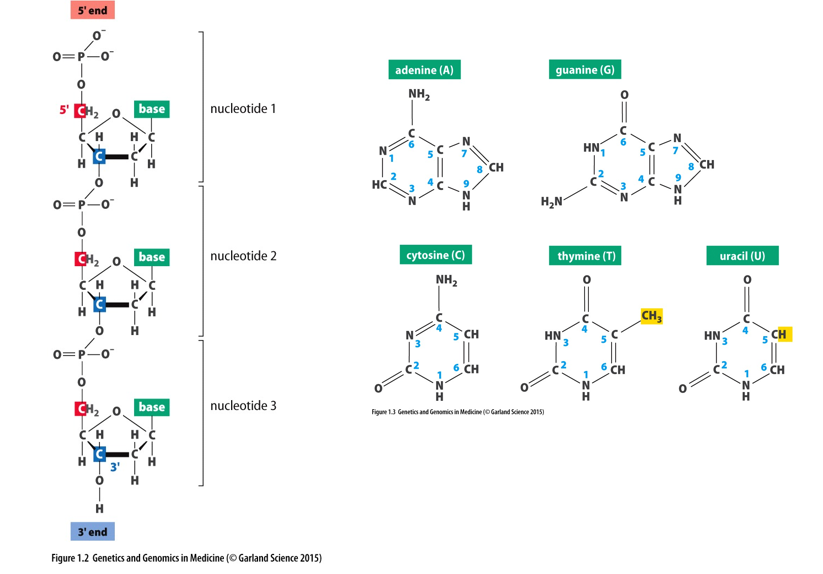
Adenine, guanine, cytosine, thymine, and uracil
purine
adenine, guanine
pyrimidine
cytosine, thymine, uracil
base pairs in RNA
a biopolymer consisting of 4 different species of monomers (bases): G, C, A, U
5’ end
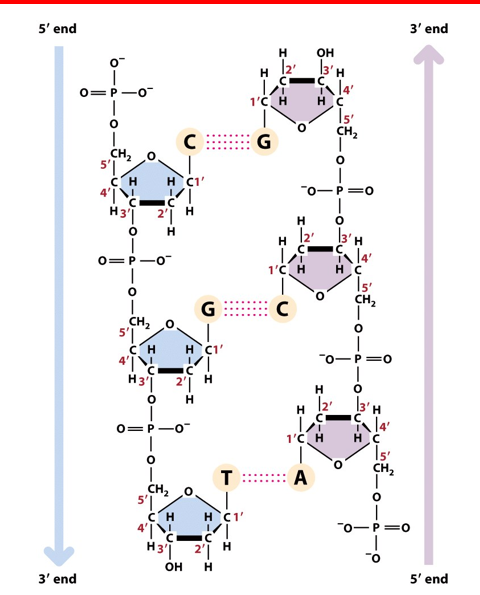
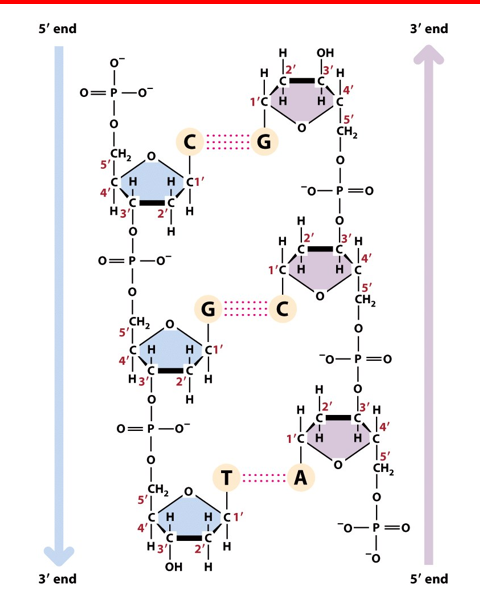
As the phosphodiester bonds link carbon atoms number 3′ and number 5′ of successive sugar residues, one end of each DNA strand, the so-called 5′ end, will have a terminal sugar residue in which carbon atom number 5′ is not linked to a neighboring sugar residue.
3’ end
The other end is defined as the 3′ end because of a similar absence of phosphodiester bonding at carbon atom number 3′ of the terminal sugar residue.
The two strands of a DNA duplex are said to be antiparallel because they always associate (anneal) in such a way that the 5′ → 3′ direction of one DNA strand is the opposite to that of its partner (Figure 1.6).
A- DNA and B-DNA?
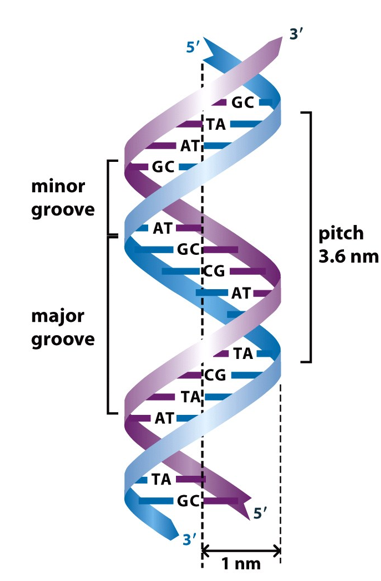
DNA can adopt different types of helical structure. A-DNA and B-DNA are both right-handed helices (ones in which the helix spirals in a clockwise direction as it moves away from the observer). They have respectively 11 and 10 base pairs per turn. Z-DNA is a left-handed helix which has 12 base pairs per turn. Under physiological conditions, most of the DNA in a bacterial or eukaryotic genome is of the B-DNA form in which each helical strand has a pitch (the distance occupied by a single turn of the helix) of about 3.6 nm.
enzyme for DNA replication
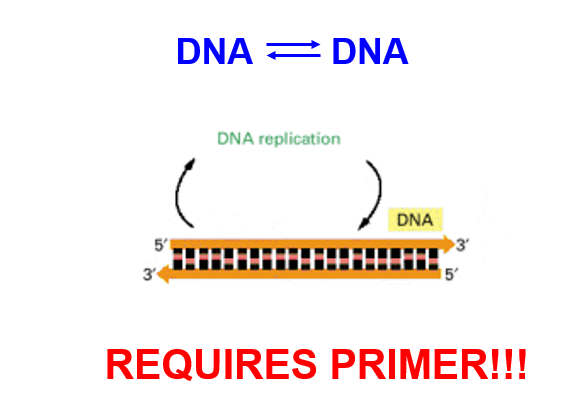
DNA-dependent DNA polymerase (DdDp) (= DNA polymerase) REQUIRES PRIMER
Remember all the parts for replication fork
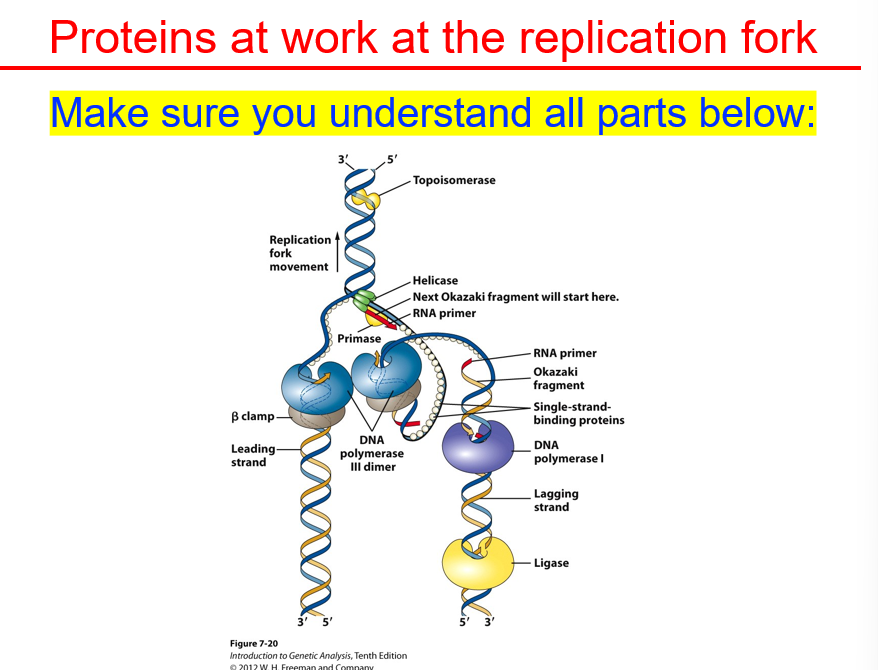
Topoisomerase
replication fork movement
helicase
primase
RNA primer
primase
beta clamp
leading strand
DNA polymerase III dimer
lagging strand
ligase
DNA polymerase I
single-strand binding proteins
okazaki fragment
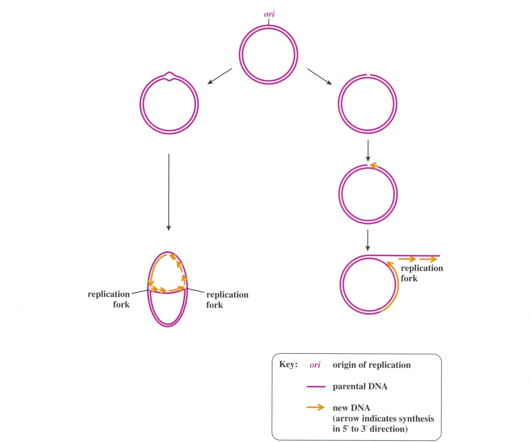
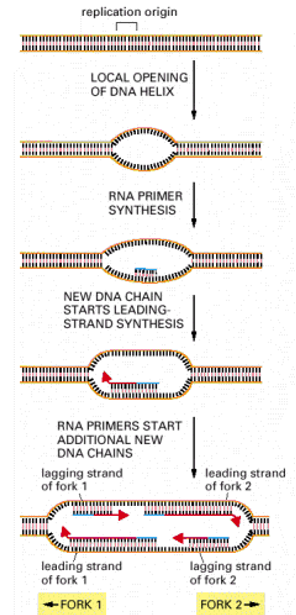
replication bubble
replication bubble formed by replication fork
The major steps involved in the initiation of replication forks at replication origins. The structure formed at the last step, in which both strands of the parental DNA helix have been separated from each other and serve as templates for DNA synthesis, is called a replication bubble
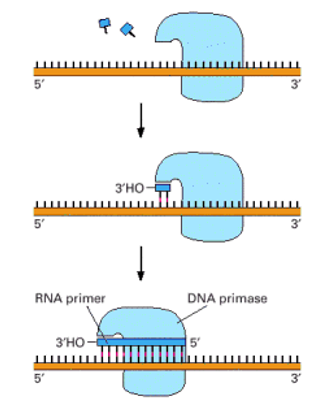
RNA Primer snthesis
This reaction is catalyzed by DNA primase, the enzyme that synthesizes the short RNA primers made on the lagging strand using DNA as a template. Unlike DNA polymerase, this enzyme can start a new polynucleotide chain by joining two nucleoside triphosphates together. The primase synthesizes a short polynucleotide in the 5′-to-3′ direction and then stops, making the 3′ end of this primer available for the DNA polymerase
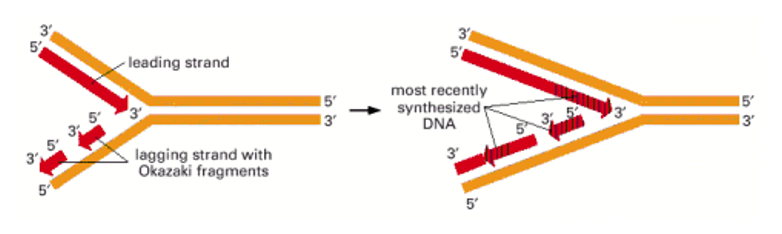
What are okazaki fragments
Because both daughter DNA strands are polymerized in the 5′-to-3′ direction, the DNA synthesized on the lagging strand must be made initially as a series of short DNA molecules, called Okazaki fragments
Why DNA polymerases need primers?
This requirement prevents DNA polymerases from continuing DNA synthesis without proofreading a previously added nucleotide first.
The requirement for a perfectly base-paired primer terminus is essential to the self-correcting properties of the DNA polymerase. It is apparently not possible for such an enzyme to start synthesis in the complete absence of a primer without losing any of its discrimination between base-paired and unpaired growing 3’-OH termini.
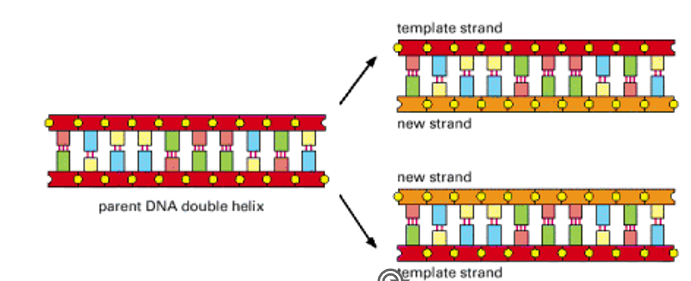
what is semi-conservative replication?
Two strands of a DNA double helix are pulled apart, and each serves as a template for synthesis of a new complementary strand.
eukaryotic chromosomes contain____ origins of replication
multiple

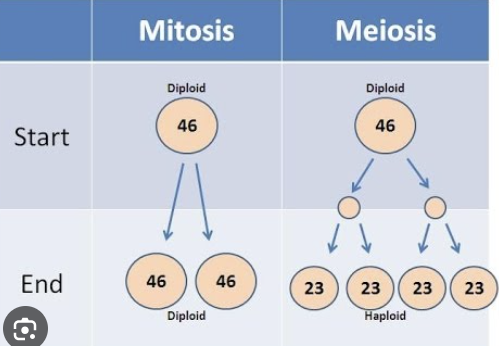
mitosis vs meiosis? Haploid vs diploid?
Somatic cells, having two of each chromosome, are diploid cells.
Human gametes have the haploid number of chromosomes, 23.
The diploid number of chromosomes is maintained in successive generations of somatic cells by the process of mitosis, whereas the haploid number is obtained through the process of meiosis.
DNA replication of a circular chromosome
Two replication forks moving in opposite directions on a circular chromosome. An active zone of DNA replication moves progressively along a replicating DNA molecule, creating a Y-shaped DNA structure known as a replication fork: the two arms of each Y are the two daughter DNA molecules, and the stem of the Y is the parental DNA helix. In this diagram, parental strands are orange; newly synthesized strands are red