Biology 1106 Exam 4
 Call Kai
 Learn
Learn Practice Test
 Spaced Repetition
 Match
Match Flashcards
 Knowt Play
1/72

There's no tags or description
Looks like no tags are added yet.
Name | Mastery | Learn | Test | Matching | Spaced | Call with Kai |
|---|
No analytics yet
Send a link to your students to track their progress
73 Terms
Habituation
A progressive loss of behavioral response with repetition of a stimulus (non-associative learning)
Associative Learning
Association between two stimuli, or a behavior
Classical Conditioning
Association of two stimuli (involuntary)
Operant Conditioning
Association of behavior and reward (Involves reward or punishment = voluntary)
Instinct (Innate)
Innate predisposition to forming certain association (imprinting)
Altruism
Behavior that helps the survival of a species without benefiting the particular individual
Kin Selection
Are those benefiting your blood relative? (Not Altruism)
Mututalism
Do both have improved fitness? (Not Altruism)
Manipulation
You get someone else to do your work for you without them knowing (Not Altruism)
Example: Fish birthing/taking care of other species of fish
Reciprocity
Putting your self temporarily at risk but you might gain an edge if others do the same (Not Altruism)
Example: Fish cleaning barracuda's teeth
Batesian Mimicry
Looking more harmless then you actually are (fake)
Fecundity
The number of offspring produced per individual over time
Generation Time
The time between births from one generation to the next
Recruitment
The number of individuals replacing lost members of the population
Random Distribution

Cluster Distribution
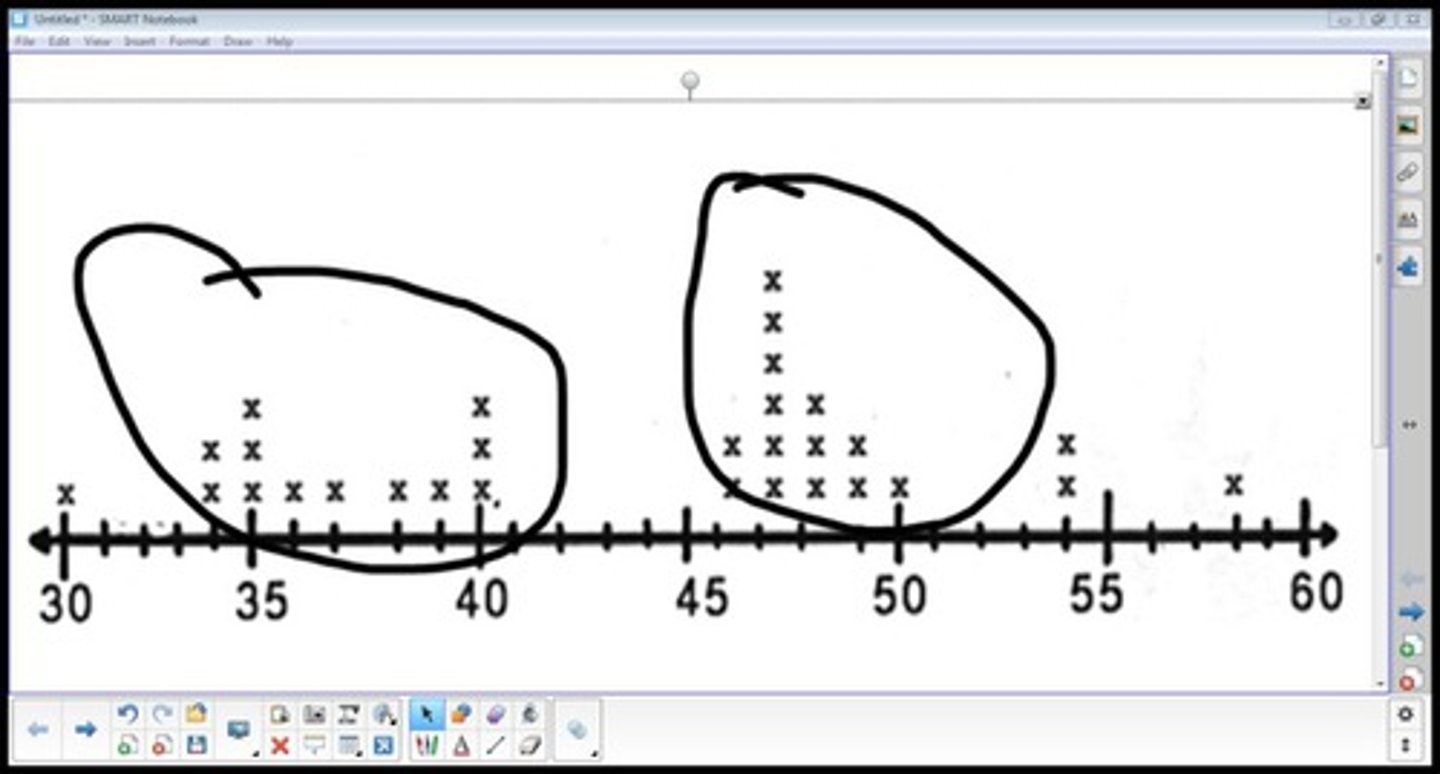
Uniform Distribution

Metapopulations
Several distinct populations occupying suitable but separate habitats
Keystone Species
Create habitat for many other species and therefore have a crucial role in species diversity
Intermediate Disturbance
Improves species diversity (coincides with keystone species)
Density Independent
Weather
Catastrophes
Does not depend on population size
Chaotic change in population size
Lead to crashes => fast growth
Density Dependent
Directly related to population density
Food availability
Predators
Territories
Slow effects on growth rate
Encourage stability
Allopatric
Population separated by a barrier
Sympatric
No physical separation between a population
Carrying Capacity
The maximum stable population size sustainable by the environment
(Can be represented by both K and N)
Net Productivity
Energy that remains in the primary producers after accounting for the organisms respiration and heat loss
Carbon Cycle
Photosynthesis
Respiration
Combustion
Nitrogen Cycle
A cycle controlled by bacteria (most abundant gas)
Phosphorous Cycle
A cycle of geological proportions (no gaseous phase)
Geological upheavals
Food Web
Logistic Growth
G = rN*(K-N)/K
(K-N)
How many new individuals are added
(K-N)/K
How much of the environment is available for new individuals
Population
A group of randomly mating individuals of one species that are separate from other groups of that species that occupy a shared distribution
Exponential Growth
G = rN
G
Births - Deaths
rN
Number of individuals (population size) per individual
Rain Shadow Effect
An area having relatively little precipitation due to the effect of having a topographic barrier
Precipitation and Temperature
Correlate with primary productivity
Niche
Function/role of species in environment
Individual Adaptation
Helpful change within an individual; phenotypic plasticity (ability to change ones phenotype)
Evolutionary Adaptation
Inherited trait that improves the ability of individuals to survive and reproduce
Limitation
One factor stops growth
Regulation
Keeps population dynamically stable
Key/Sign Stimulus
Signals from the environment that triggers a stereotyped behavior
Cognitive Learning
Conscious planning ahead with information, memory, and knowledge of what it intends to do and the possible outcomes
Fields of Ecology
Individuals
Population
Community
Ecosystem
Age Structure
Distribution of individuals in different age groups
Survivorship Curve
Plot the number of individuals still alive at each age in the maximum life span
Intraspecific Competition
Competition between individuals of the same species for the same limited resources
Ecological Footprint
Describes the global acres of land one needs in order to consume and maintain their lifestyle
Community
Groups of different species occupying and interacting within an environment
Fundamental Niche
Possible set of conditions in which an animal can survive and reproduce
Realized Niche
Actual set of conditions used by a given animal after interactions with another species (competition)
Mullerian Mimicry
Two or more unrelated organisms exhibit closely related warning systems
Aposematic
Defensive/warning coloration
Allelopathy
Chemical signals (toxins)
______ % of freshwater available for human use
_____ % in streams/rivers
0.3, 0.06
Blacksburg (most US towns) obtain water from _____
Rivers
Groundwater
95% of freshwater on Earth
Transpiration
90% of Water Cycle
Water Cycle
Evaporation
Transpiration
Condensation
Precipitation
Groundwater
Primary Productivity
Rate at which different trophic groups move food/energy through the ecosystem
Trophic Cascades
The numbers of top carnivores (or absence of them) can influence two or more lower levels
Top Down Effects
Examines the food web disruption by the removal of a top predator, or top level consumer on herbivores and the food they eat
Bottom Up Effects
Examines the food web disruption when a primary producer, or primary consumer is removed which may diminish population size or functionality through the community
Species Diversity
The number of different species (richness) found in an ecosystem, and their abundance (density)
Biomes
A large region of environments defined by the plant, climate, geography, geology, etc
Biosphere
Earth's living realm
Resource Partitioning
Relates to evolutionary change in species in response to selection pressures generated by interspecific competition
Interspecific competition
Individuals of different species compete for the same resources in an ecosystem
Character Displacement
An evolutionary divergence that occurs when two similar species inhabit the same environment
Proximate
Physiology
Ontogeny
(HOW)
Ultimate
Phylogeny
Adaptive Significance
(WHY)