Innovation and Profit
 Call Kai
 Learn
Learn Practice Test
 Spaced Repetition
 Match
Match Flashcards
 Knowt Play
1/5

Earn XP
Name | Mastery | Learn | Test | Matching | Spaced | Call with Kai |
|---|
No analytics yet
Send a link to your students to track their progress
6 Terms
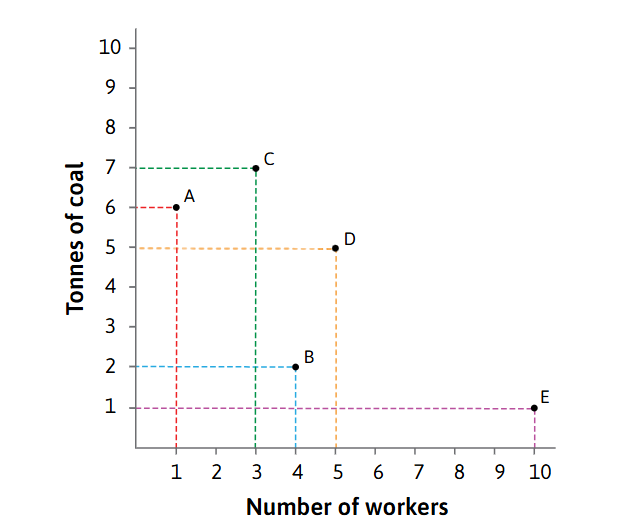
Assuming that the wage = £10 and price of coal = £5, what technology will the firm pick? Why is this relevant to England? Draw the graph
-Technology A becomes the most cost-efficient way of production. Its iso-cost line being set behind the other technologies means it is vastly superior.
This is important, as England had this happen during the 18th Century - a fall in the relative price of coal.
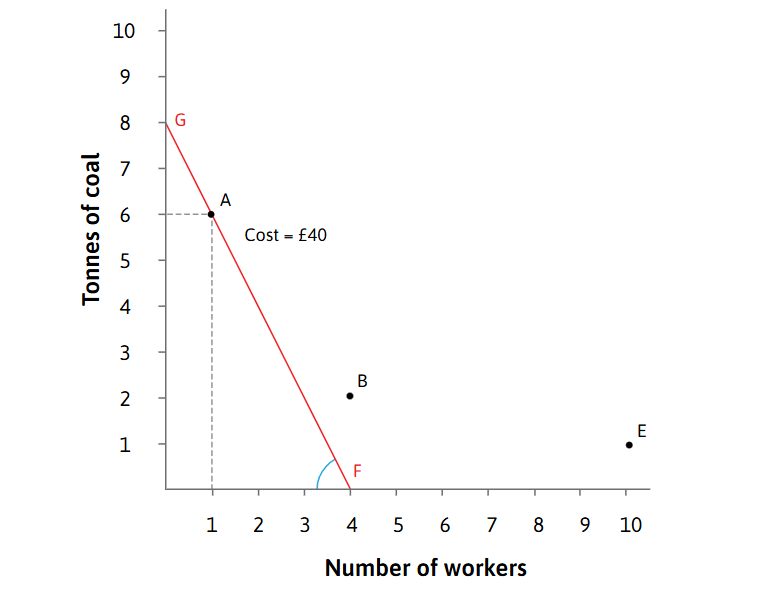
How can we calculate the gains to the first firm that adopts the energy-intensive technology after the relative price of labour to coal rises?
-Iso-cost lines can showcase the benefit to the firm in cost-effective terms.
-When the price of coal =£20, we see the most competitive iso-cost line passing B at £80.
-The rise of the relative price of labour to coal then meant that the iso-cost passing A was less costly compared to the new iso-cost line that passed B
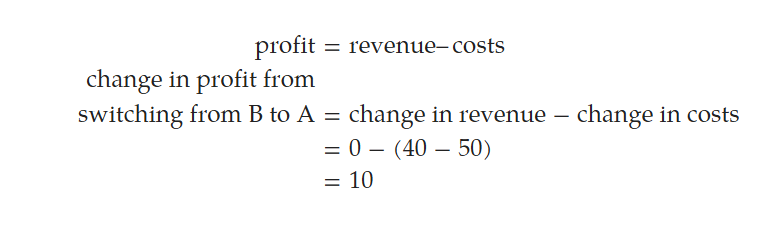
-Thus changing from B —> A led to costs falling from £50 —> £40. Thus, changing technologies causes costs to fall by £10
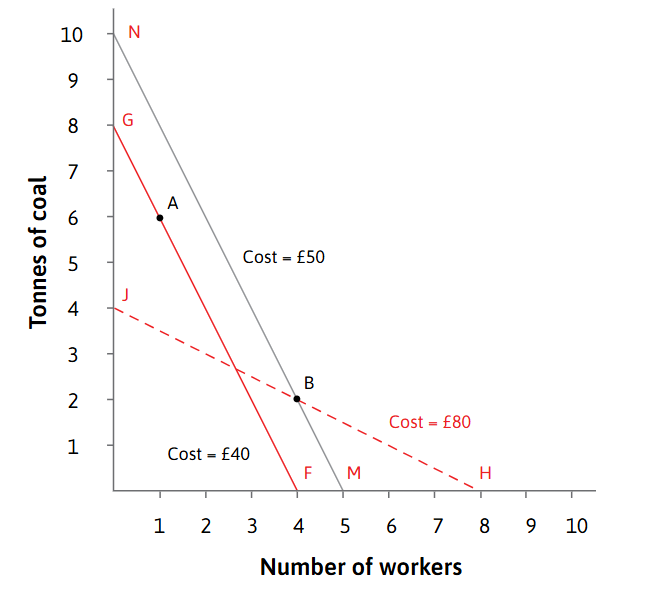
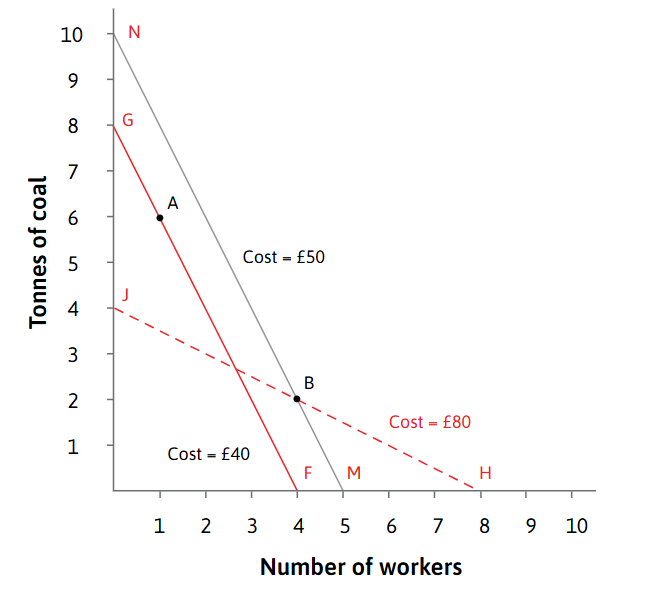
What is the economic rent for the firm to be switching from technology B to technology A?
-When switching technologies, your revenue will remain unchanged as the output has not changed
-But the costs has changed - from £50 to £40. So the change in profit from switching, which can be seen as the economic rent of switching, is £10
What is an entrepreneur?
-A person who creates/is an early adopter of new technology, organisation forms, and other opportunities.
What does Joseph Schumpeter discuss with regards to entrepreneurs and innovation rents?
-Schumpeter placed the adoption of technological improvements by entrepreneurs a key reason for the dynamism of capitalism
-That is why innovation rents are also called Schumpeterian Rents
-But these rents won’t last forever - other firms will notice the entrepreneurs’ economic rents will also adopt the new technology, lowering their own costs and bolstering their profits
-As more firms introduce the new technology, they will boost the supply to the market and the price will thus fall. This will continue until all firms are using the same technology, thus fully eliminating Schumpeterian rents.
What does Joseph Schumpeter talk about in regards with creative destruction?
-The firms that do not adopt the cost-effective technology will be unable to cover their costs at the new, lower price, making them go bankrupt.
-Thus Schumpeter used creative destruction to describe the process where old technologies and firms that don’t adapt are swept away by the new technologies and firms. The failure of unprofitable firms is creative, as their labour and capital goods are released in order to be utilised for new combinations.