ESS 17 Final Exam Study
 Call Kai
 Learn
Learn Practice Test
 Spaced Repetition
 Match
Match Flashcards
 Knowt Play
1/74

There's no tags or description
Looks like no tags are added yet.
Name | Mastery | Learn | Test | Matching | Spaced | Call with Kai |
|---|
No analytics yet
Send a link to your students to track their progress
75 Terms
Which of the following statements describes the oceanic crust?
Has a density of 3.0 g/cm3
Rank the following in order of LEAST TO MOST dense:
Oceanic crust
Outer core
Inner core
Continental crust
Upper mantle
Lower mantle
Continental crust, oceanic crust, upper mantle, lower mantle, outer core, inner core
Which of the following is NOT a part of the lithosphere?
Lower mantle
All of the following is evidence for continental drift EXCEPT
Magnetic reversals
Magnetic declination can be used to determine ______while inclination can be used to determine _____.
longitude
2. latitude
Cooling magnetic minerals in lava pinpoint their location relative to the pole because...
The magnetic minerals align themselves parallel Earth's magnetic field at the time of cooling and don't move again
Paleomagnetism shows that _________ has/have moved because __________________.
the continents
2. geologic records in various continents show differing apparent pole wander paths
Mid-oceanic ridges are a consequence of...
Diverging Plate Boundaries
How do we know the age of oceanic crust?
Distinct bands of magnetic minerals in the ocean floor aligned themselves with the poles at the time of cooling therefore showing magnetic reversals
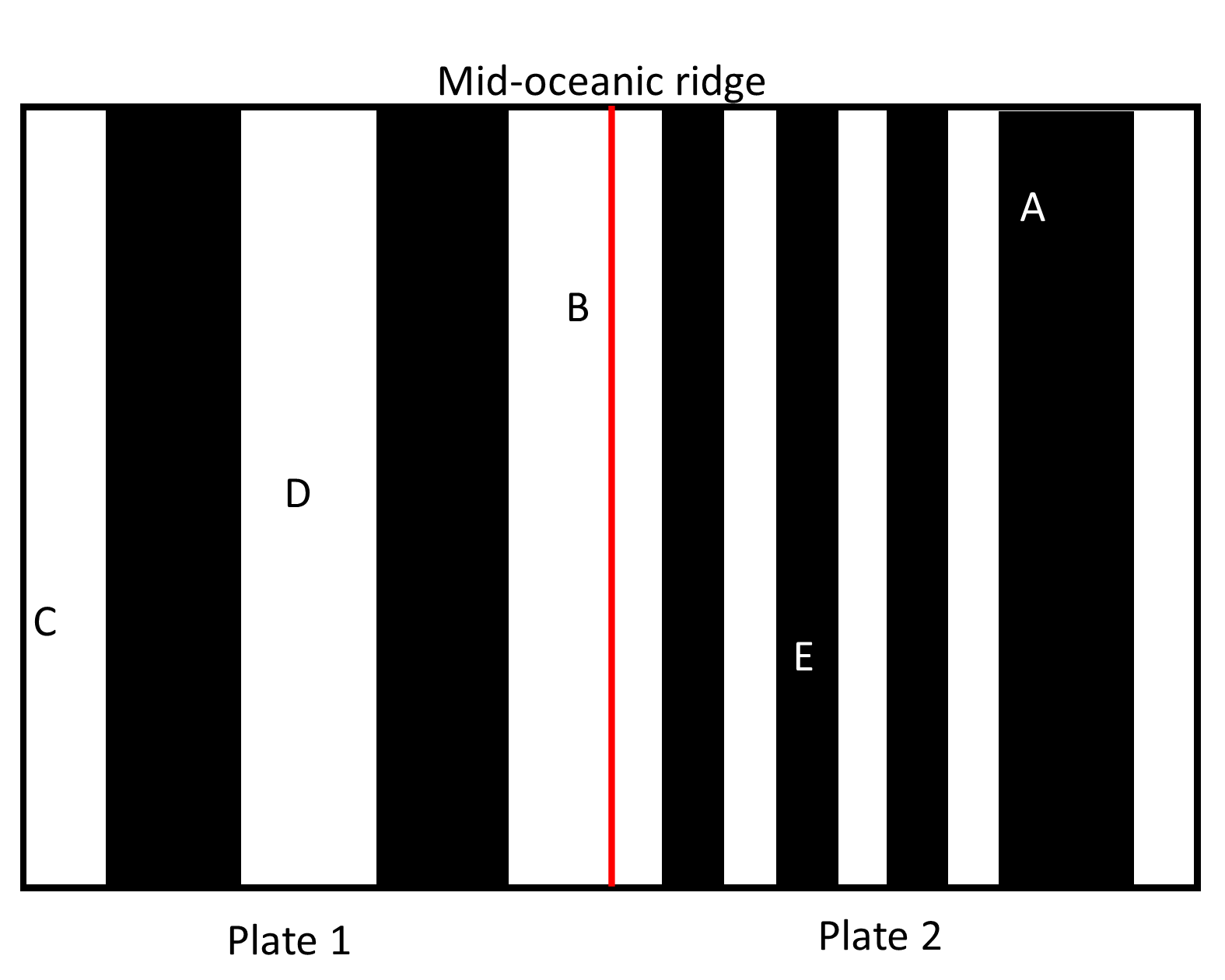
Which plate generally moved the fastest?
Plate 1
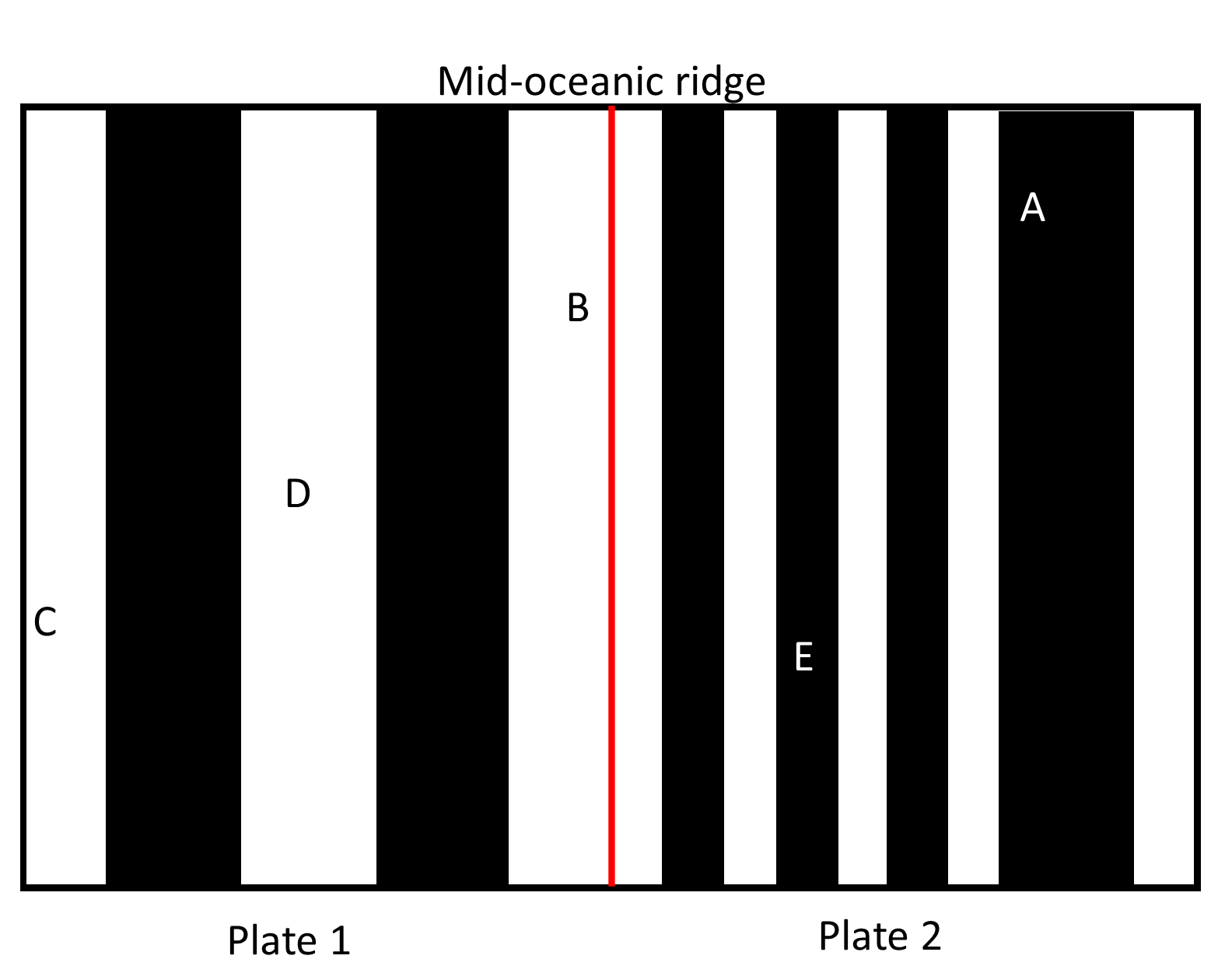
Where can the oldest oceanic crust be found?
A
A trench and a volcanic arc indicate which type of boundary?
Convergent boundary
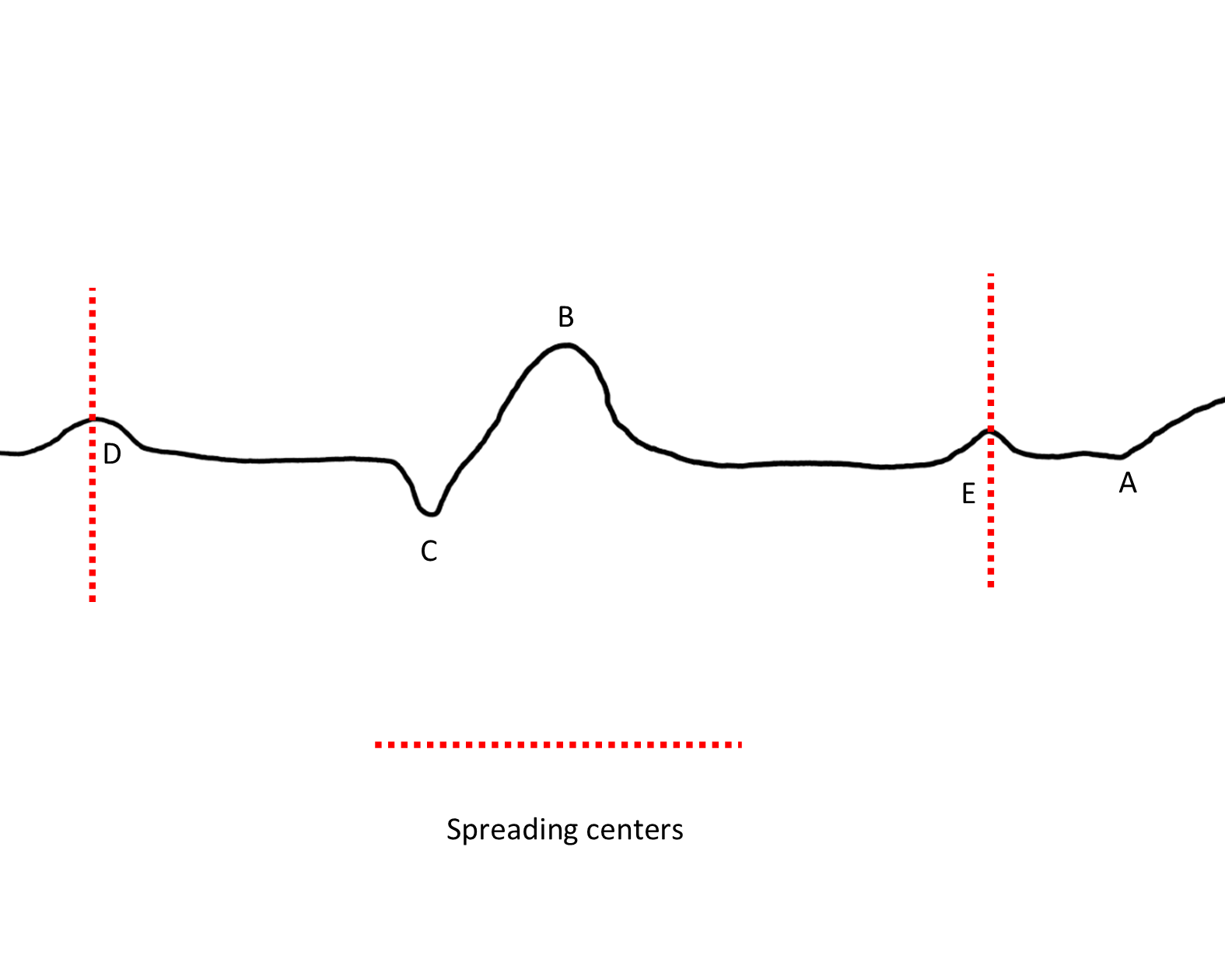
Where is subduction actively occurring?
C
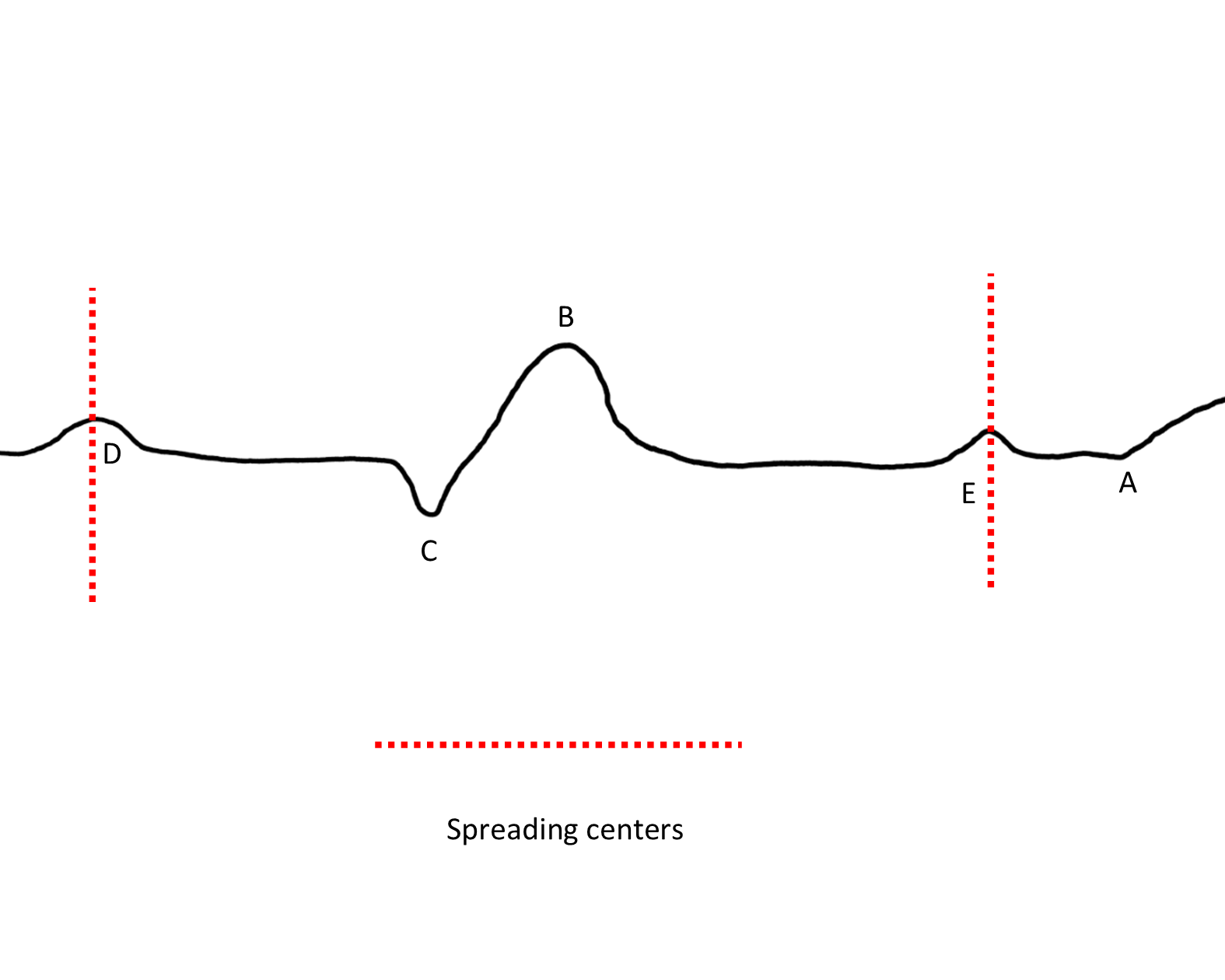
How many plates are shown in the image below?
4
Moving into the interior of Earth, ____________________. (choose all that apply)
temperature and pressure both increase
the density of matter increases
the chemical composition of the material changes
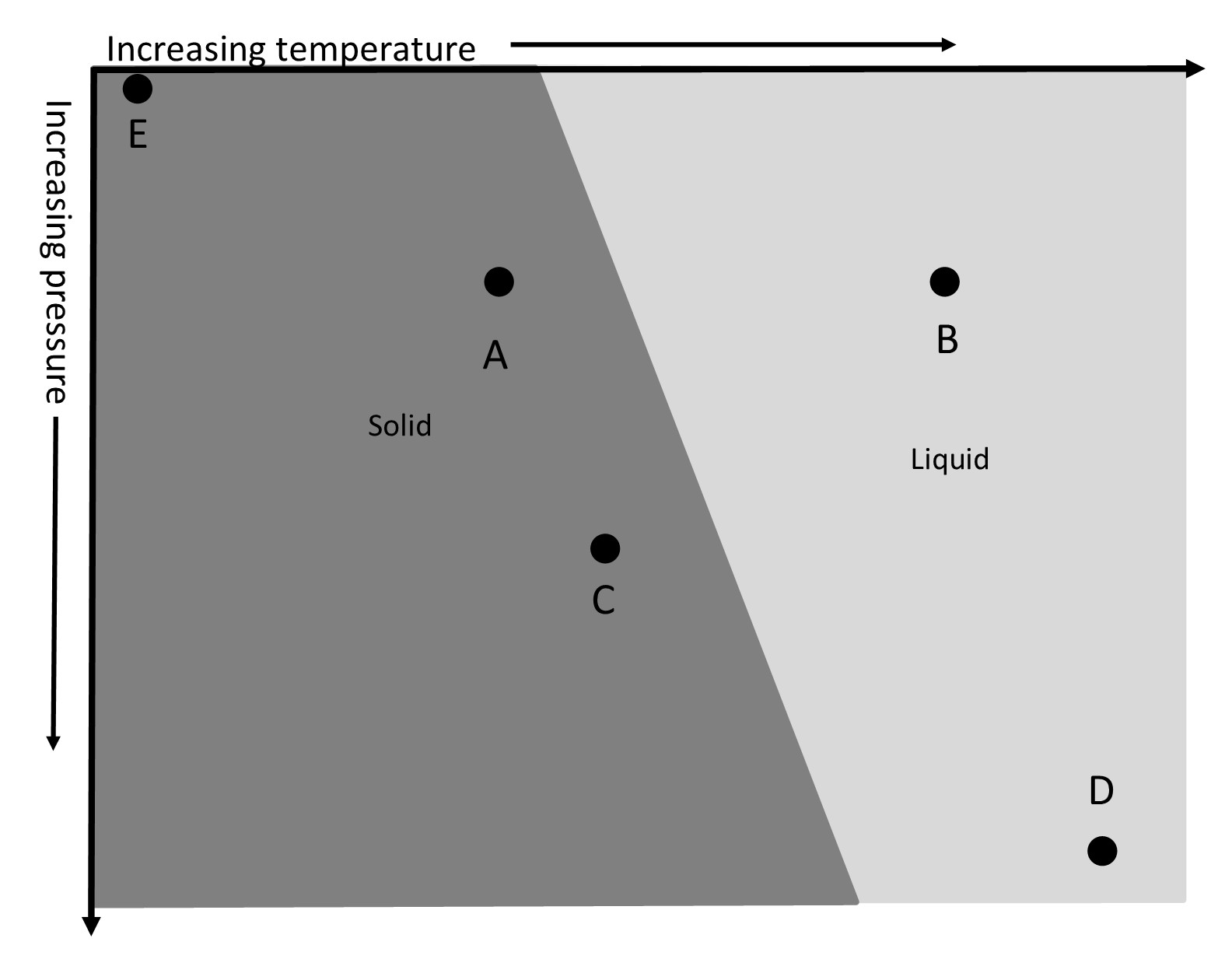
Which process can shift a rock at point C to point B? (choose all that apply)
Decompression melting
Heat transfer
Which of the following plate boundaries DO NOT result in volcanoes? (choose all that apply)
Continental to Continental Convergent Boundaries
Transform Boundaries
Partial melting favors the melting of _____minerals, therefore _______the silica content in a magma.
felsic
2. increasing
Oceanic crust is mainly made of ____ type, which contains ___ silica content.
mafic
low
Rhyolitic magma is ____in viscosity because __________________________.
high
the silica tetrahedrons link up to other silica tetrahedrons to increase viscosity
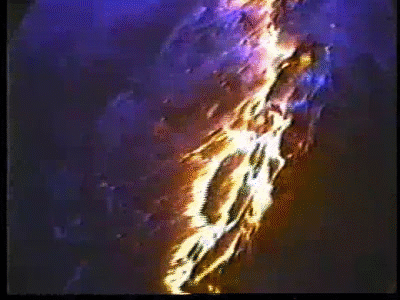
The gif above shows the formation and subsequent cooling of pillow lava, often found in mid-oceanic ridges. This will become a...
mafic rock
The San Andreas Fault is
a right lateral transform fault
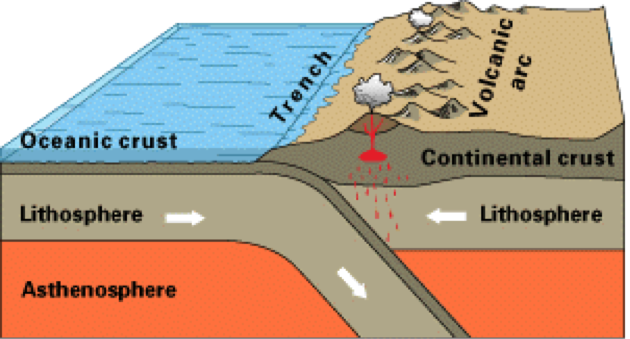
Where on Earth is this type of plate boundary found? Match the picture to the correct description.
Off the coast of South America along the Peru-Chile trench, the oceanic Nazca Plate is pushing into and being subducted under the continental part of the South American Plate. The overriding South American Plate is being lifted up, creating the towering Andes mountains. Strong earthquakes and the rapid uplift of mountain ranges are common in this region.
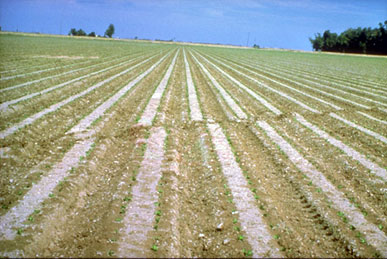
The following is a ______ ________ fault.
left-lateral
strike-slip
How is the distance to the epicenter of an earthquake determined?
By measuring the time difference of P and S wave arrival.
Large non-volcanic mountain ranges are created at...
continental-continental convergent boundary
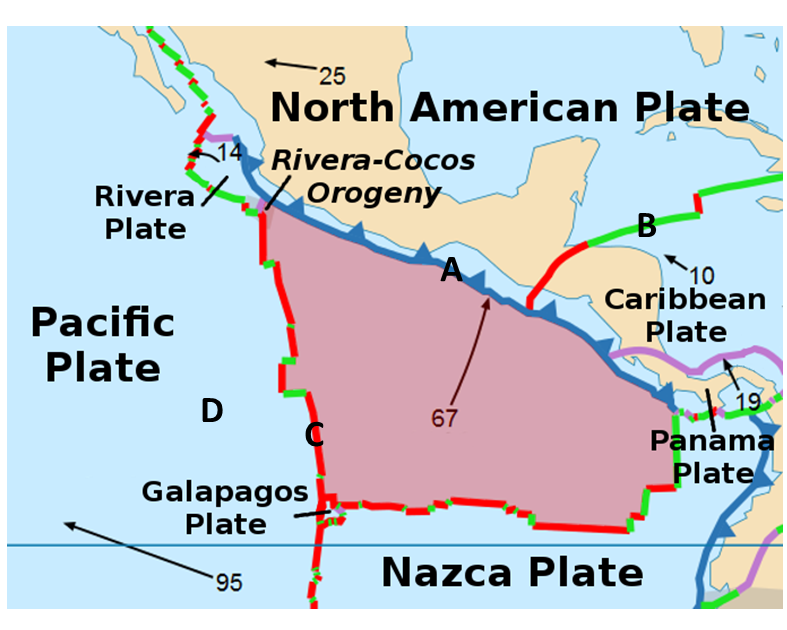
The image above shows the Cocos plate shaded in red. The red lines indicate rift zones while the blue triangles are pointed in the direction of the plate movement. Which letter indicates a transform boundary?
B
Which of the following is FALSE about normal faults
They form left-lateral faults
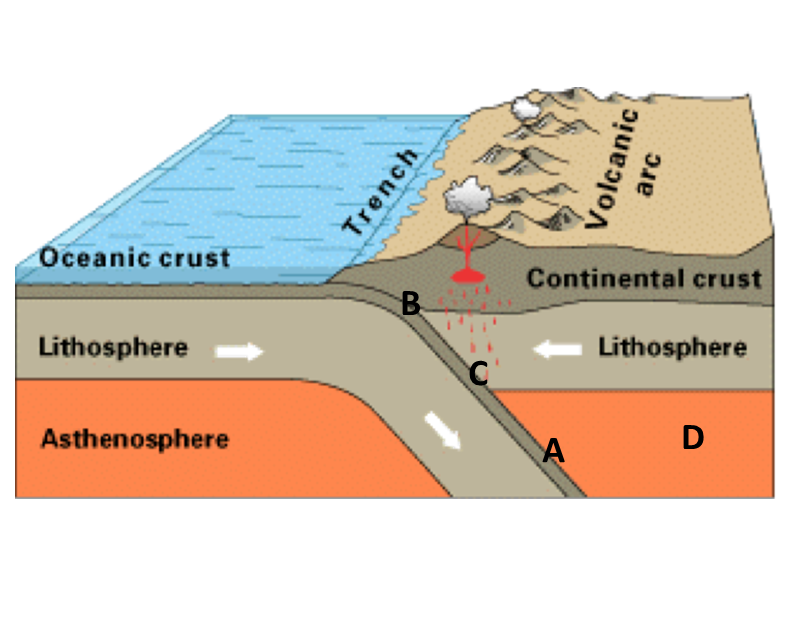
An earthquake along which point will generate the strongest surface waves?
B
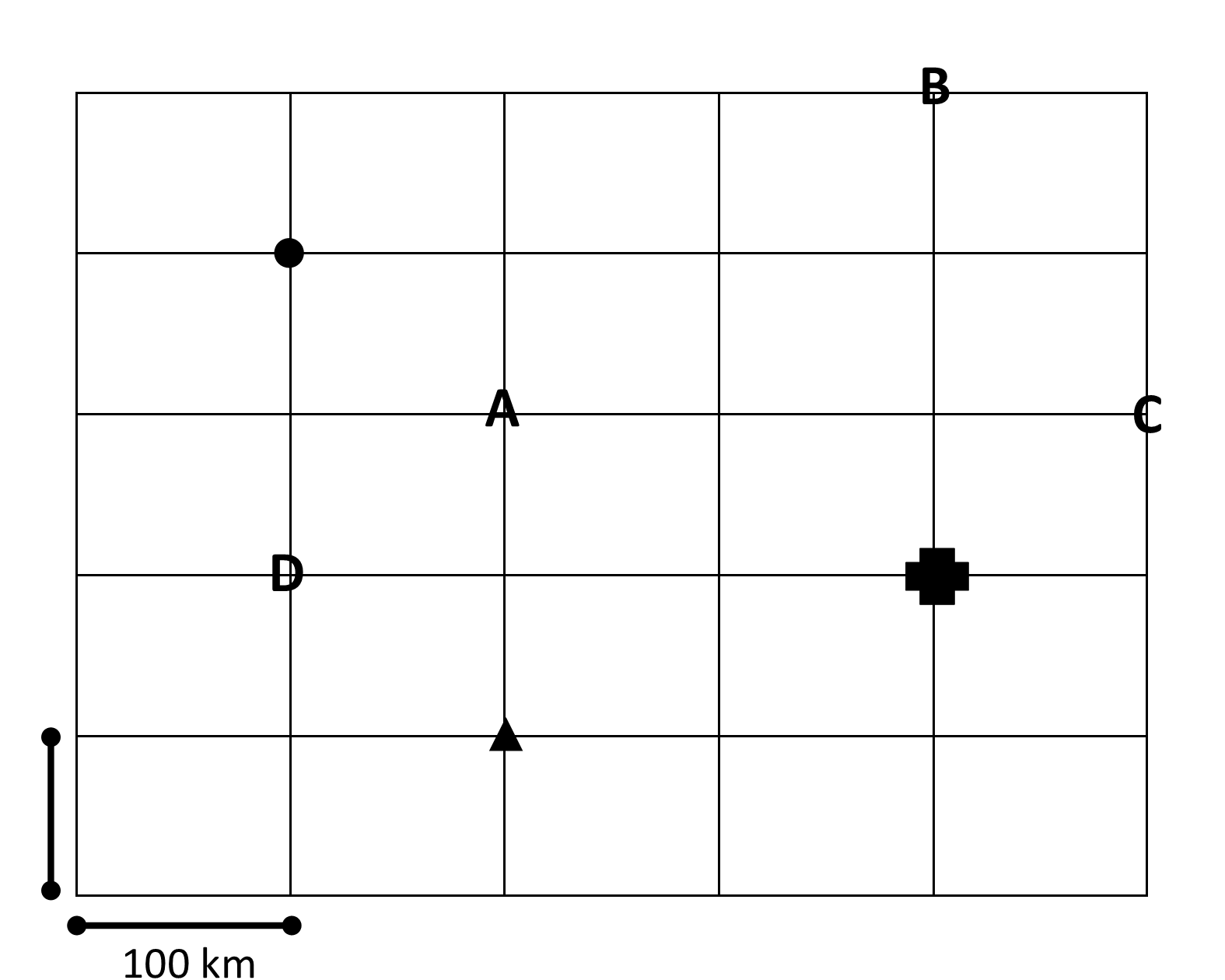
The circle, triangle, and cross represent three seismographs that measured a seismic event nearby. Through some calculations, the distances between the epicenter and each of these seismographs were determined. Where was the epicenter of the event located?
Each square is 100 km by 100 km.
Distances from seismographs to epicenter:
circle: 141.4 km
triangle: 200 km
cross: 223.6 km
A
A magnitude 4 earthquake has how much stronger ground motion than a magnitude 3 earthquake on a seismogram? Assume you're using the Richter scale.
10 times stronger
The speed of the P waves generated from an earthquake on the Nazca-South American plate boundary was 6 km/s while S waves traveled at 4 km/s. These seismic waves were captured by a seismograph in Lima, Peru at the following times:
P-wave: 00:34:56 (hh:mm:ss)
S-wave: 00:36:04
How far away was the epicenter of the earthquake?
Use the following equation:
where:
Δt is the time difference in arrival times of the P and S waves in seconds
Vs is secondary wave speed in km/s
Vp is primary wave speed
~850 km
Would a Loma Prieta earthquake (strike-slip fault) cause a tsunami?
No because strike-slip faults do not vertically displace water
Which of the following is not an impact from a volcanic eruption?
liquefaction
Which of the following is a soft solution to mitigating tsunami damage?
Pre-designating evacuation zones for every populated coastal region
Which of the following is NOT a warning sign that a tsunami has been generated?
You feel any earthquake along any coastline
What type of event has repeatedly generated very high tsunami waves in coastal fjords of southeastern Alaska?
a large rockfall into the fjord
Surfing waves are _____ -water waves and are best when _________ is high and period is _____.
shallow
wave height
short
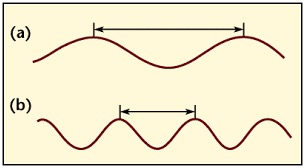
In the image, which wave has the longest wavelength?
A
What is the maximum height a wave with a wavelength of 20 m will have before breaking?
2.9 m
At what depths would a wave with a wavelength of 56 m become a deep-water wave?
> 28 m
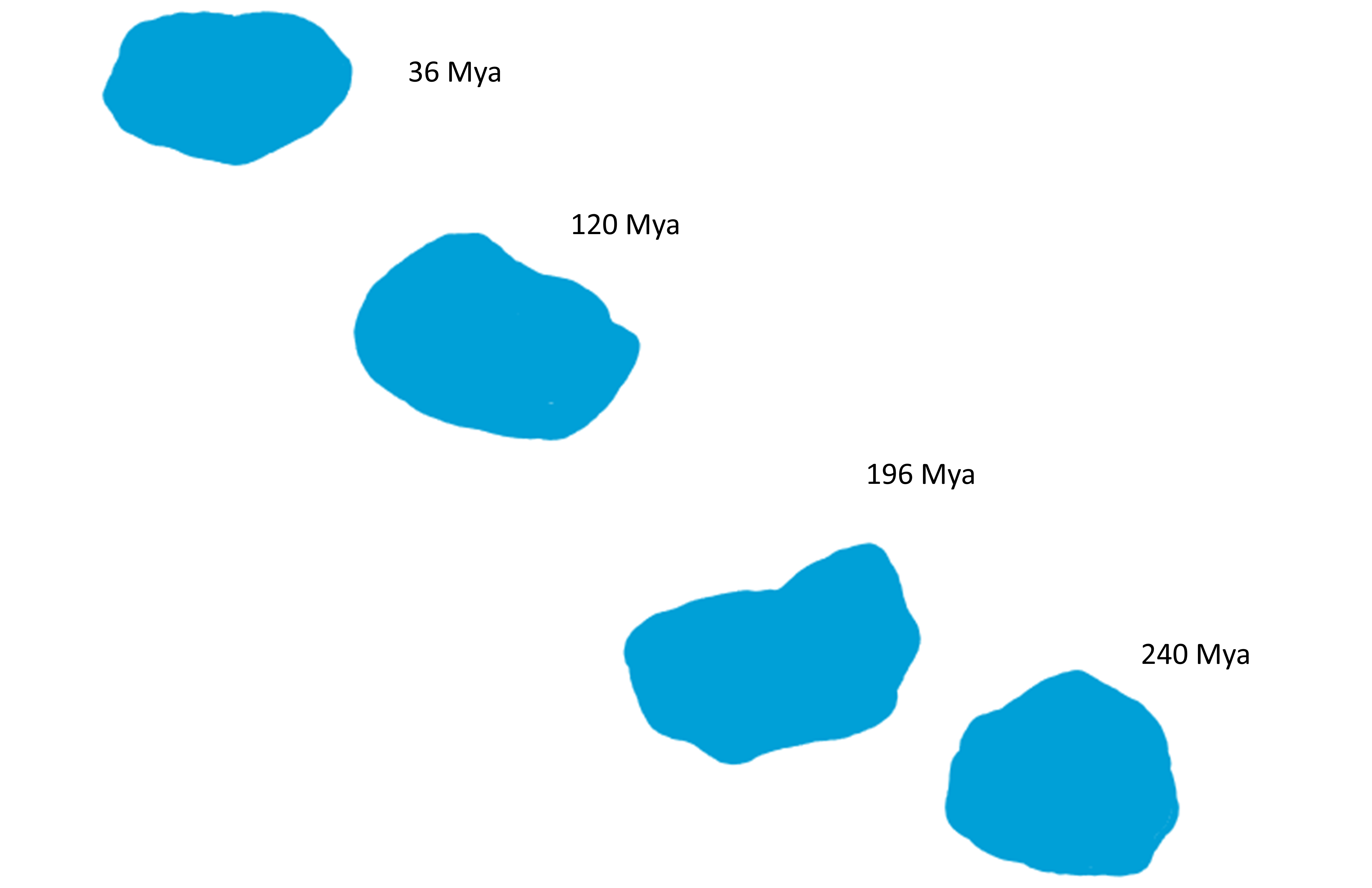
The image above shows a string of calderas formed from past eruptions over a hotspot and how long ago they were formed (Mya: million years ago). In which direction is the plate moving?
↘
In which tectonic setting is a rhyolitic supervolcanic eruption likely to occur?
Hot spot
Which of the following regions do NOT have a high risk for tsunami?
Coasts near normal faults
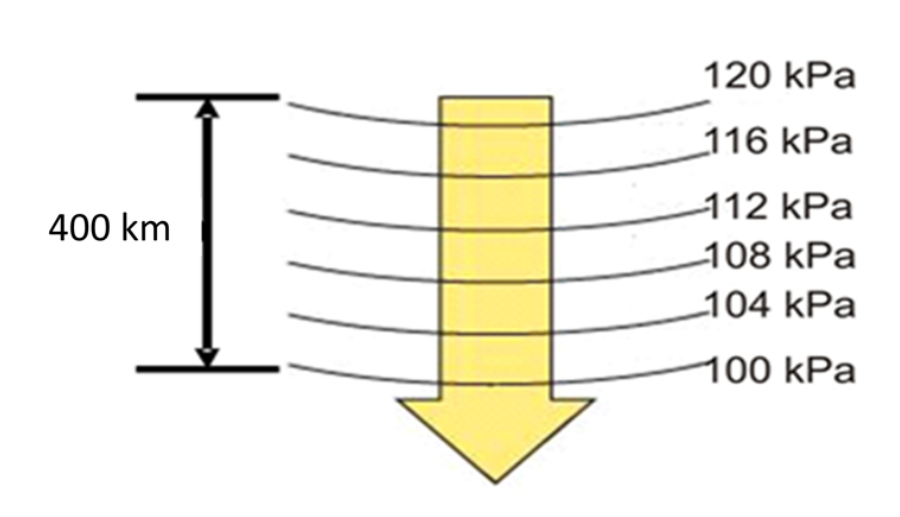
What is the pressure gradient shown in the diagram below? Use the formula:
Pressure gradient = (high pressure - low pressure) / distance
0.05 kPa/km
When I add 4000Joules to a kg of a substance it heats up from 12 oC to 20 oC.
What is the specific heat of this substance?
500 J/kg/oC
![<p>At what point on the map would you find the largest pressure gradient and strongest winds?</p><p>(Sea Level Pres [hPa])</p>](https://assets.knowt.com/user-attachments/188284ba-8e23-45ee-a8b6-1a96deb5c5e8.png)
At what point on the map would you find the largest pressure gradient and strongest winds?
(Sea Level Pres [hPa])
C
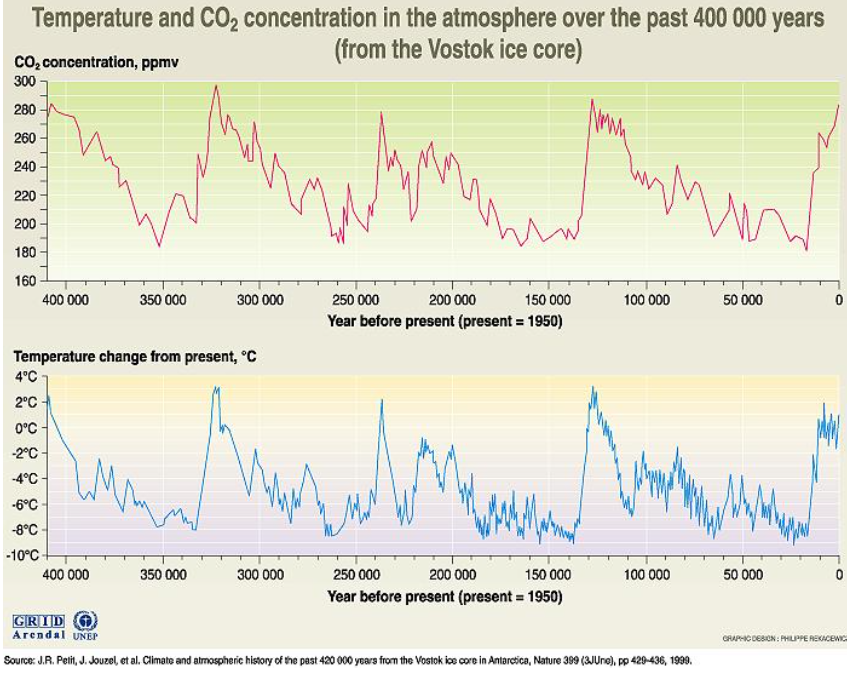
Over the last 400,000 years (and longer) carbon dioxide concentrations in the atmosphere have varied between 180-300 ppm (parts per million). Use the internet to discover what the carbon dioxide concentration of the atmosphere is today.
420 ppm
Which of the following is the reason that nitrogen and argon make up a large proportion of Earth’s atmosphere today?
Because they are both chemically nonreactive and do not dissolve easily in the oceans
If a plane flies from the Equator towards the South Pole it would be deflected to the:
East
Which of the following is false about air pressure?
High pressure exerts a pull on low pressure areas
Fill in the blanks:
Earth’s axis is inclined at _______ degrees, In the winter in the US, the _______ hemisphere tilts from the sun.
23.5
northern
Why does warm air rise?
It is less dense than the air around it and therefore forms low pressure
What happens to air as it rises in the atmosphere?
It cools, water vapor condenses and clouds form
Which of the following are examples of CLIMATE? (select all that apply)
The abundance of moss and shrubs growing on top of the permafrost in the Siberian Arctic
Average June temperature of 107ºF (42ºC) in Phoenix Arizona
Average August rainfall of 200 mm (7.9 inches) in Shanghai, China
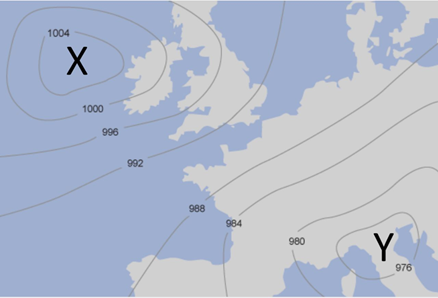
What is the pressure gradient between X and Y if the distance between them is 2000 km
Recall:
Pressure gradient= (high pressure - low pressure) / distance
0.014 mb/km
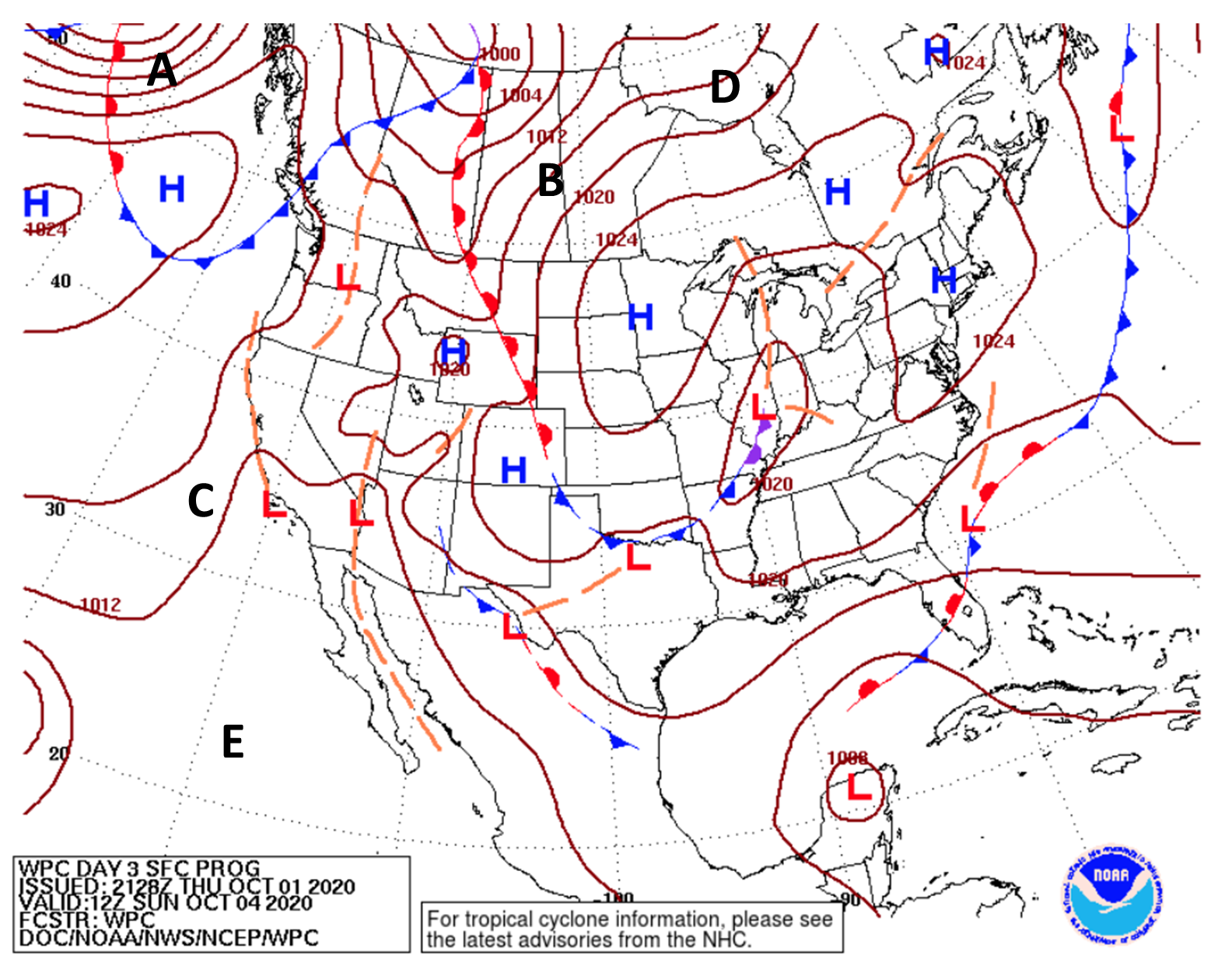
At which point would you expect calm wind conditions?
E
Which of the following takes the MOST amount of energy to do?
Specific heat of water: 4,184 J/kg/1ºC
Latent heat of vaporization: 2,257 kJ/kg
Latent heat of fusion/melting: 334 kJ/kg
Evaporate 3 kg of water
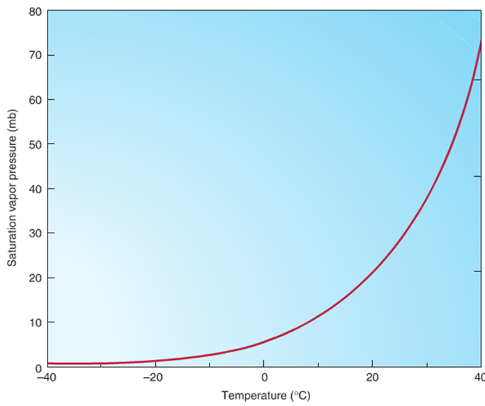
On a cool November morning in Irvine, the temperature is 16ºC with a relative humidity of 89%. What is the actual vapor pressure?
Relative humidity = (Actual vapor pressure / Saturation vapor pressure) * 100%
14 mb
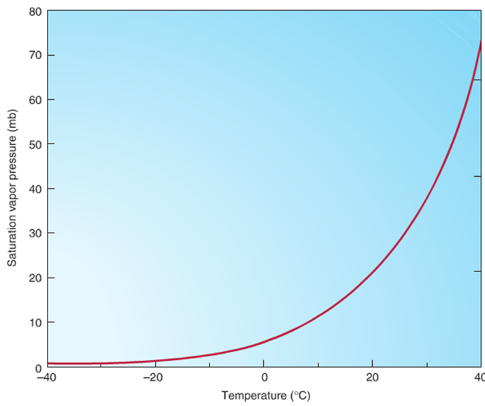
If an air mass with 10mb of water vapor at 30ºC were to be forced to rise, at what height would it form a cloud?
2km
What causes a cold front?
A cold air mass moves in under a warm air mass.
Adiabatic cooling occurs because
As a rising mass of air expands, its heat is distributed over a larger volume
When moist air reaches land, it rises over mountain ranges where it expands adiabatically and cools. This is called the _________________ effect. (Be very careful with spelling or it will be wrong!)
orographic
Where is the deflection due to Coriolis maximized?
At the poles
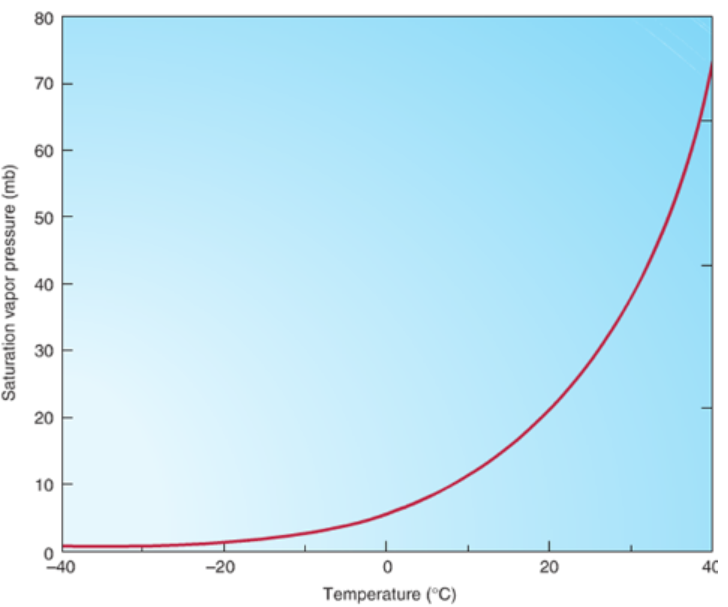
What is the relative humidity of an air parcel at 30°C and 10mb of water vapor that was forced to rise 1 km?
50%
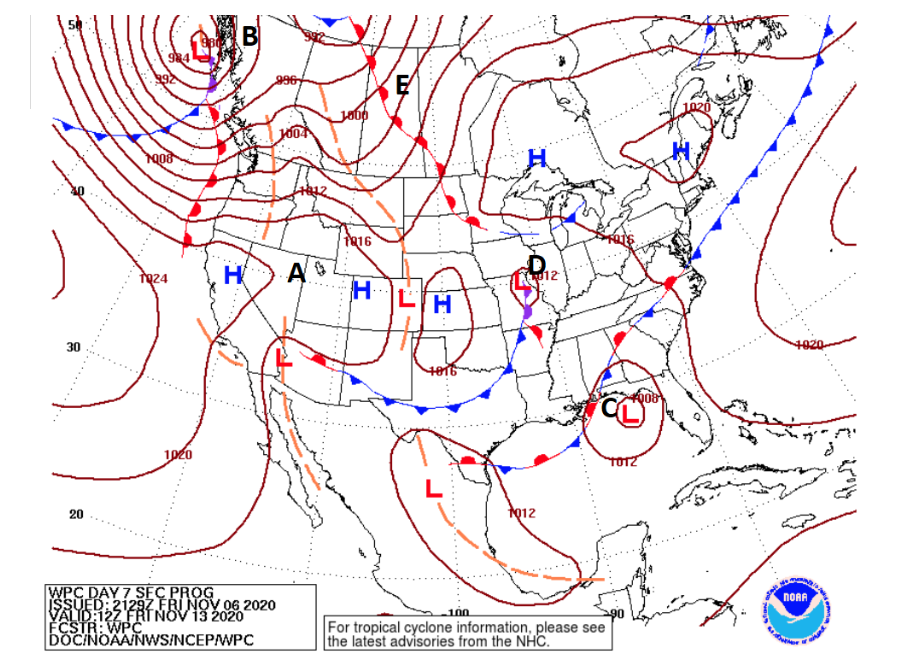
Where would you expect clear skies?
A
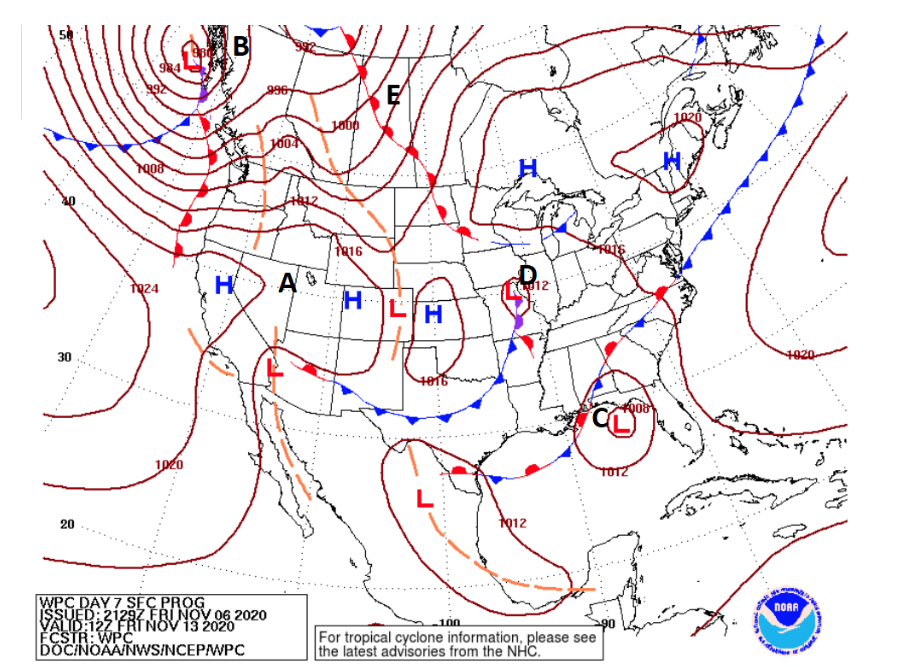
How will winds blow at the high-pressure systems near A?
clockwise
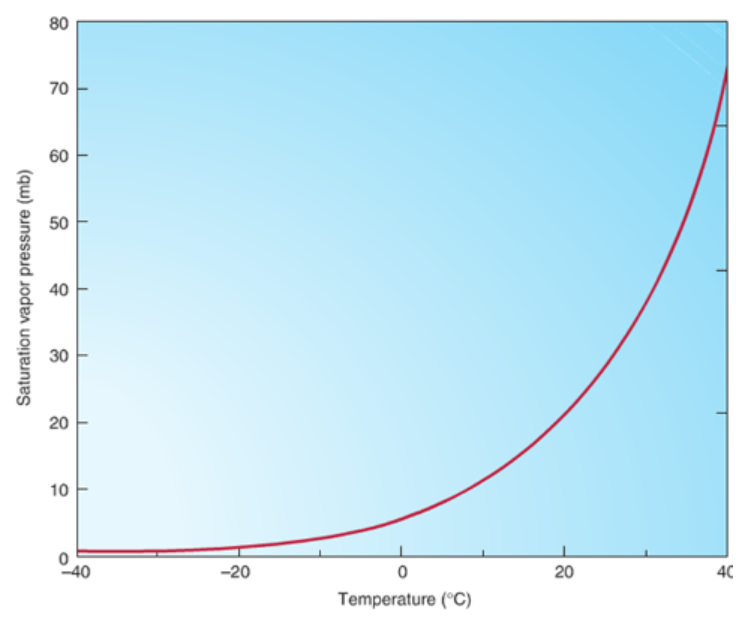
An airmass is descending and is at 1 km initially. If the airmass is at 20°C with 10 mb of water vapor, what will the relative humidity be when it reaches the surface?
33%
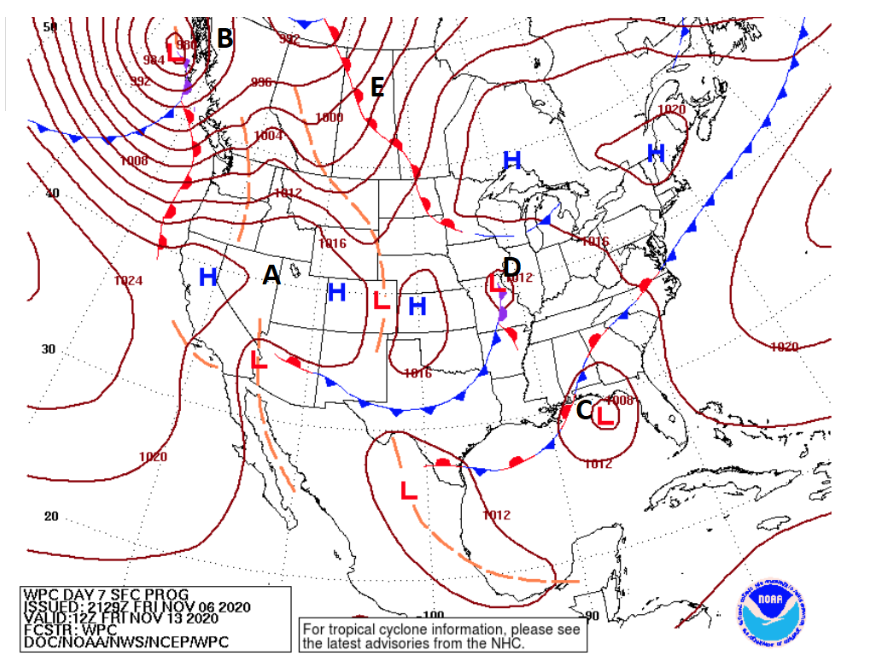
Where would you expect heavy rain (choose all that apply)?
B, C, & D
What causes a cold front?
A cold air mass moves in under a warm air mass
Which of the following parts of the 3-cell conceptual model can explain the presence of deserts at about 20-30°N and 20-30°S?
Subtropical highs where air sinks from the upper atmosphere, compresses and so warms, resulting in clear skies and low humidity.
Put the following steps to form lightning in order:
A. Connecting between positive streamers and stepped leaders, therefore creating a lightning strike
B. Positive charges flow upward toward the cloud
C. Negative charges
Which of the following is NOT a necessary condition to create a hurricane?
high wind shear
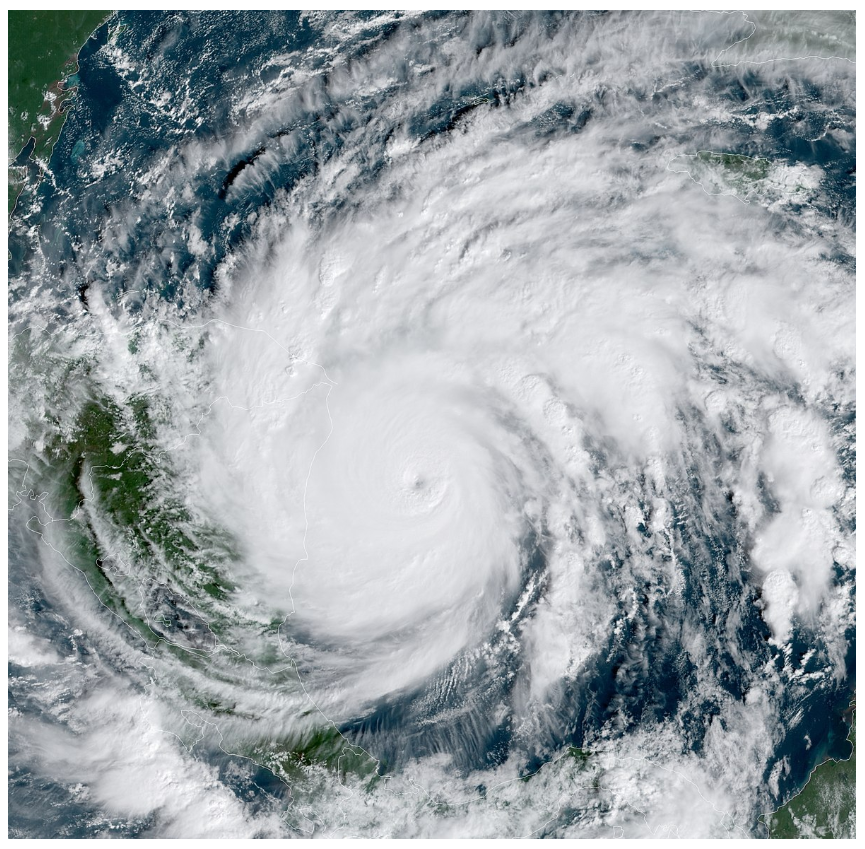
The image above is a satellite image of a very recent hurricane. In which hemisphere did this occur?
Northern Hemisphere