Physical Science Final SG 2026
 Call Kai
 Learn
Learn Practice Test
 Spaced Repetition
 Match
Match Flashcards
 Knowt Play
1/78

There's no tags or description
Looks like no tags are added yet.
Name | Mastery | Learn | Test | Matching | Spaced | Call with Kai |
|---|
No analytics yet
Send a link to your students to track their progress
79 Terms
static electricity
a charge imbalance that results in the build-up of excess electric charge on an object
electric field
area surrounding charged particles/objects within which a force can be exerts on other charged particles/objects
conductor
materials that allow electrons to easily flow
insulator
materials that block the flow of electrons through them
current
the net movement of electric charge in a single direction
voltage difference
the push (force) that causes charge to move
resistance
the tendency of a material to oppose the flow of electrons through it
ohm’s law
the amount of current is directly proportional to the voltage difference (the higher the voltage, the higher the current; the lower the resistance, the higher the current)
circuit
closed path through which electrons can flow
ammeter
measures amount of current (only in series circuits)
voltmeter
measures the voltage drop (only in parallel circuits)
fuse
small piece of metal within that melts when overheated to open the circuit and prevent current from flowing
circuit breaker
piece of metal that bends when overheated to open the circuit and prevent current from flowing
magnetism
property of some materials that allows them to give off an attractive or repulsive force
magnet
a material that gives off an external magnetic field, making it possible to apply a force over a distance
magnetic field
external force given off by a magnet; strongest at the poles
ferromagnetism
phenomenon where objects placed in a strong magnetic field become magnetized due to the poles within their atoms aligning
differentiate between the effects of an open vs. closed circuit
in a closed circuit, electricity flows and devices can operate, while in an open circuit, the flow of electricity is interrupted, and devices cannot function
ex. calculate the current flowing through the circuit of a toy car that has a resistance of 20 ohms and is powered by a 3-volt battery
0.15 amps
wave
a rhythmic disturbance that transfers energy through matter or space
medium
matter through which a wave travels through can be solid, liquid, or gas
period
the amount of time it takes one wavelength to pass a point
frequency
the number of waves that pass a given point in one second
reflection
when a wave strikes an object and bounces off of it
refraction
the bending of waves caused by a change in its speed as it moves from one medium through another
diffraction
when an object causes a wave to change direction and bend around it
absorption
when a wave strikes an object and goes into it
interference
when two or more waves combine to form a new wave
draw a transverse wave and label crest, trough, wavelength, and amplitude
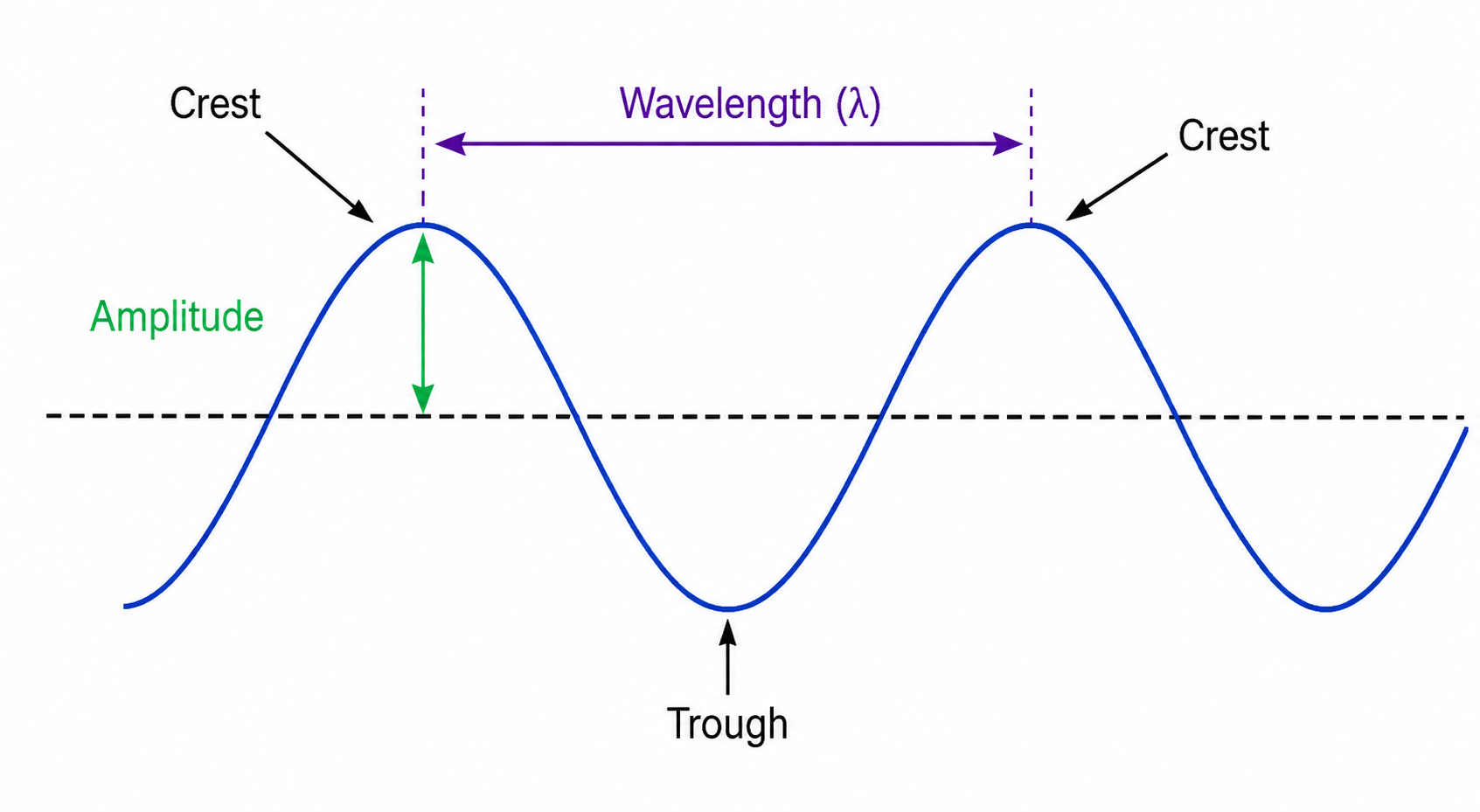
draw a longitudinal wave and label a compression, rarefaction, and wavelength
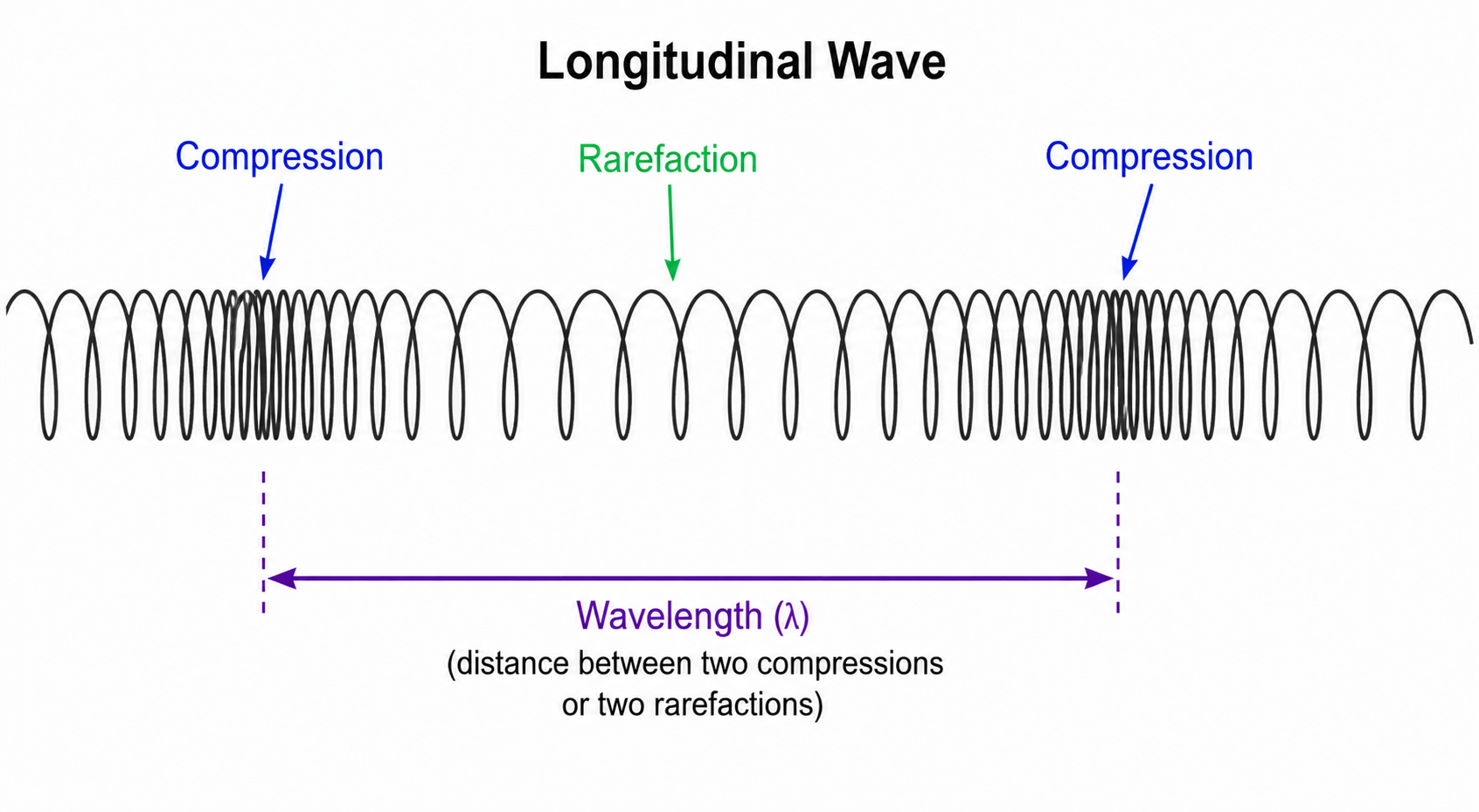
define amplitude and how it looks different on a transverse and a longitudinal wave
it’s the amount of energy carried by a wave; in transverse waves it is the height of the wave and in longitudinal waves it’s the amount of compression in the wave
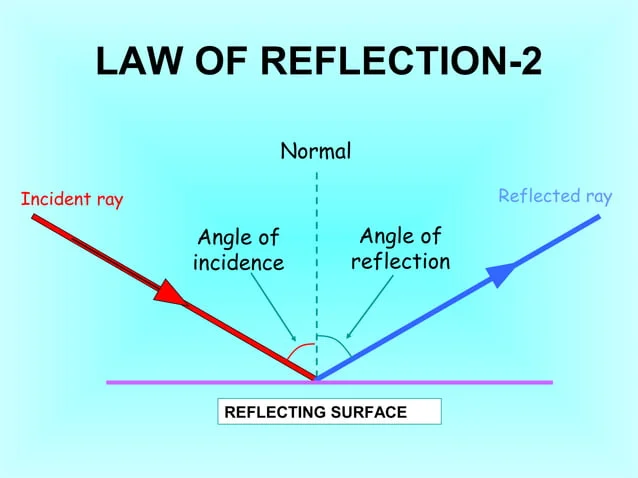
explain the Law of Reflection. include a picture of it with the incident ray, reflected ray, angle of incidence, and of reflection, and normal labeled
angle of incidence = angle of reflection
it is the angle of incidence is always equal to the angle of reflection
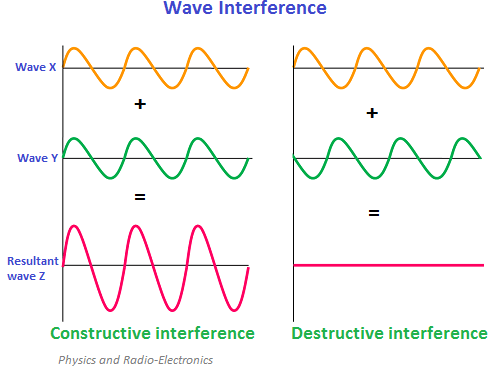
draw a picture to show the difference between constructive and destructive interference
ex. a wave has a frequency of 3.2 Hz with a wavelength of 10m. what is the velocity of the wave?
32 m/s
matter
anything that takes up space and has mass
substance
all particles in matter are identical (fixed composition)
mixture
two or more substances physically combined (variable composition)
element
simplest form of matter from which more complex substances are made
compound
two or more elements chemically combine in a fixed proportion
differentiate between a homogeneous mixture and a heterogeneous mixture
a homogeneous mixture is when components are evenly distributed out on a microscopic level; while a heterogeneous mixture is when the substances in the mixture are not evenly spread out
density
measure of compactness or consistency of a material
what is the formula for density
density = mass/volume
combustibility
how easily a substance will set on fire ex. burning charcoal
reactivity
how easily a substance reacts, usually with an acid or base
oxidation
how easily a substance reacts with oxygen
chemical reaction
process by which the atoms of one or more substances are rearranged to form different substances
law of conservation of matter
matter is neither created nor destroyed during a chemical change, it only changes forms
explain the difference between solids, liquids, and gases. include volume, shape, and particle motion in your description
a solid has a fixed volume, a fixed shape, and particles are help tightly together with low KE; a liquid has a fixed volume, shape changes based on container it is in, and particles have more KE than solids; a gas has no fixed volume or shape, particles will spread out to fill the container (called diffusion), and the particles have high KE
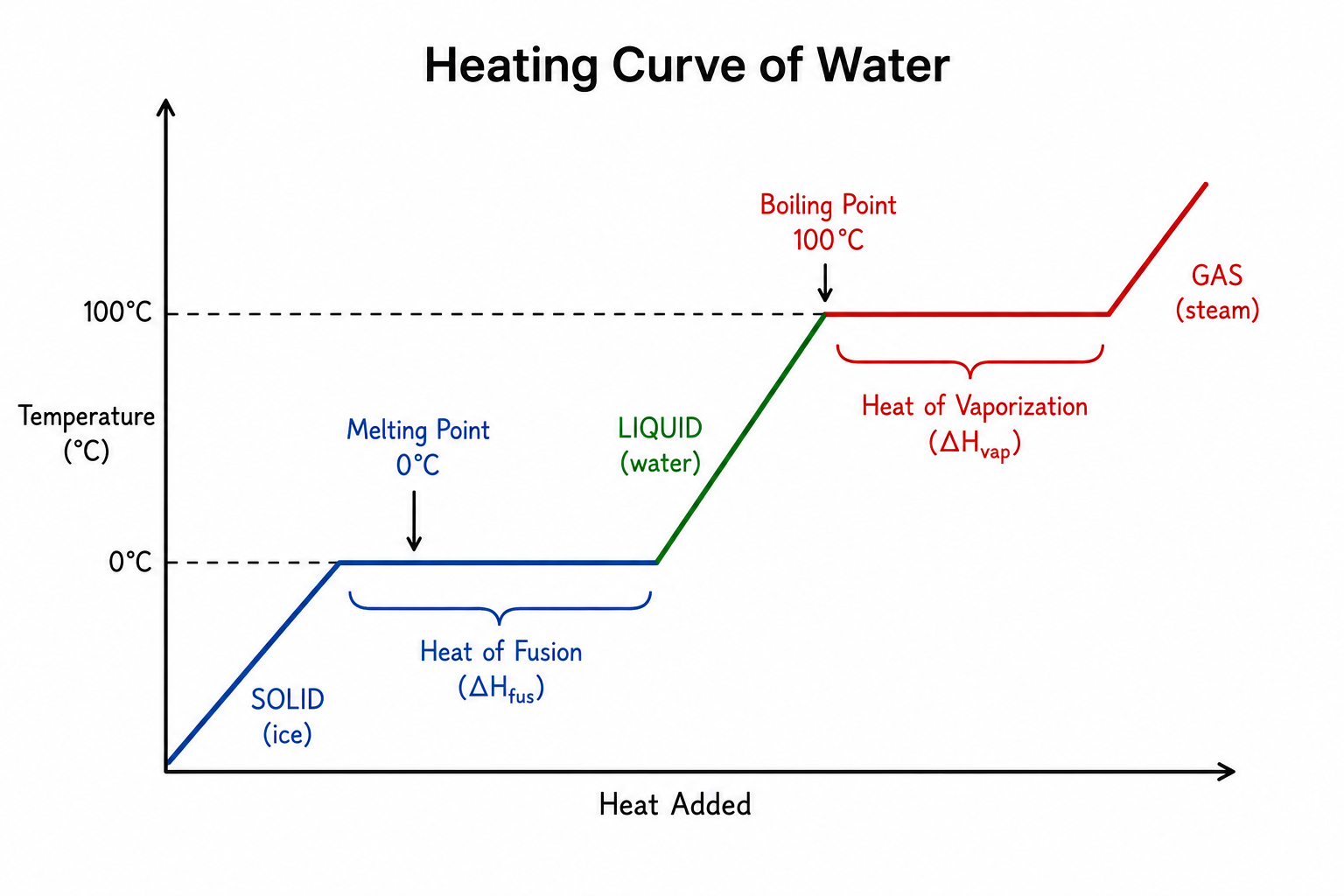
sketch a sample heating curve of water and label melting point, boiling point, heat of fusion, heat of vaporization, solid, liquid, and gas
atom
the smallest particle of an element that still has the properties of that element
proton
positive particle on the nucleus
neutron
neutral particle in the nucleus with protons
electron
negative particle outside of the nucleus in the electron cloud
quarks
what protons and neutrons are made of; the smallest known particles
valence electrons
the electrons in the atom’s outermost energy level in the electron cloud
atomic number
tells the number of protons in an atom of the element; used to identify an element
mass number
not on the periodic table; tells the number of protons and neutrons in the nucleus of an atom
isotopes
atoms of the same element with different numbers of neutrons
average atomic mass
weighted average of all of the different versions of an element (called isotopes)
explain what two isotopes of the same element have in common and what is different between about them. include when an isotope is considered to be most stable
they have the same numbers of protons, which defines the element, but they are different because of the number of neutrons which leads to different mass numbers; and isotope is most stable when it has balanced amount of both protons and neutrons
differentiate between the characteristics of metals, nonmetals, and metalloids. include their general location on the periodic table
metals are shiny silvery solids, goof conductors of heat and electricity, malleable and ductile, located on the left of the metalloids; nonmetals are gases or dull brittle solids, poor conductors, right of the metalloids; metalloids are solids, semi-conductors, physical properties like metals, chemical properties like non-metals
use the periodic table to determine the identity of each group described below ex. their atoms have 5 valence electrons, they are the most reactive metals, they do not react in nature
nitrogen group, alkali group, and noble gases group
use the periodic table to determine the identity of each element described below ex. the first element in group 13, a period 2 nonmetal with 6 valence electrons, a metalloid with 71 neutrons, a gas with 2 valence electrons and 1 energy level in its electron cloud
boron. oxygen, antimony, helium
chemical reaction
process by which the atoms of one of more substances are rearranged to form different substances
reactants
starting substances; “ingredients”
products
ending substances; what is made
aqueous
dissolved in water
explain the law of conservation of mass and how it relates to the amount of reactants and products
it states that matter can neither be created nor destroyed, it can only change forms; therefore, the mass of the reactants must equal the mass of the products
balance this equation: AlBr3 + K2SO4 → KBr + Al2(SO4)3
2 AlBr₃ + 3 K₂SO₄ → 6 KBr + Al₂(SO₄)₃
balance this equation: Al + O2 → Al2O3
4 Al + 3 O₂ → 2 Al₂O₃
balance this equation: . LiCl + Br2 → LiBr + Cl2
2 LiCl + Br₂ → 2 LiBr + Cl₂
balance this equation: NF3 → N2 + F2
2 NF₃ → N₂ + 3 F₂
balance this equation: C4H10 + O2 → CO2 + H2O
2 C₄H₁₀ + 13 O₂ → 8 CO₂ + 10 H₂O
balance this equation: Pb(OH)2 + HCl → H2O + PbCl2
Pb(OH)₂ + 2 HCl → 2 H₂O + PbCl₂
synthesis
2 or more reactants combine to make 1 product
decomposition
when 1 reactant breaks down into 2 or more
combustion
when something is burned
single replacement
one element replaces a similar element in a compound
double replacement
two ionic compound reactants switch ions forming two new ionic compound products; usually results in the formation of a precipitate (an insoluble compound that comes out of the solution)