Chapter 47, 16th Century Art of Italy
 Call Kai
 Learn
Learn Practice Test
 Spaced Repetition
 Match
Match Flashcards
 Knowt Play
1/8

There's no tags or description
Looks like no tags are added yet.
Name | Mastery | Learn | Test | Matching | Spaced | Call with Kai |
|---|
No analytics yet
Send a link to your students to track their progress
9 Terms
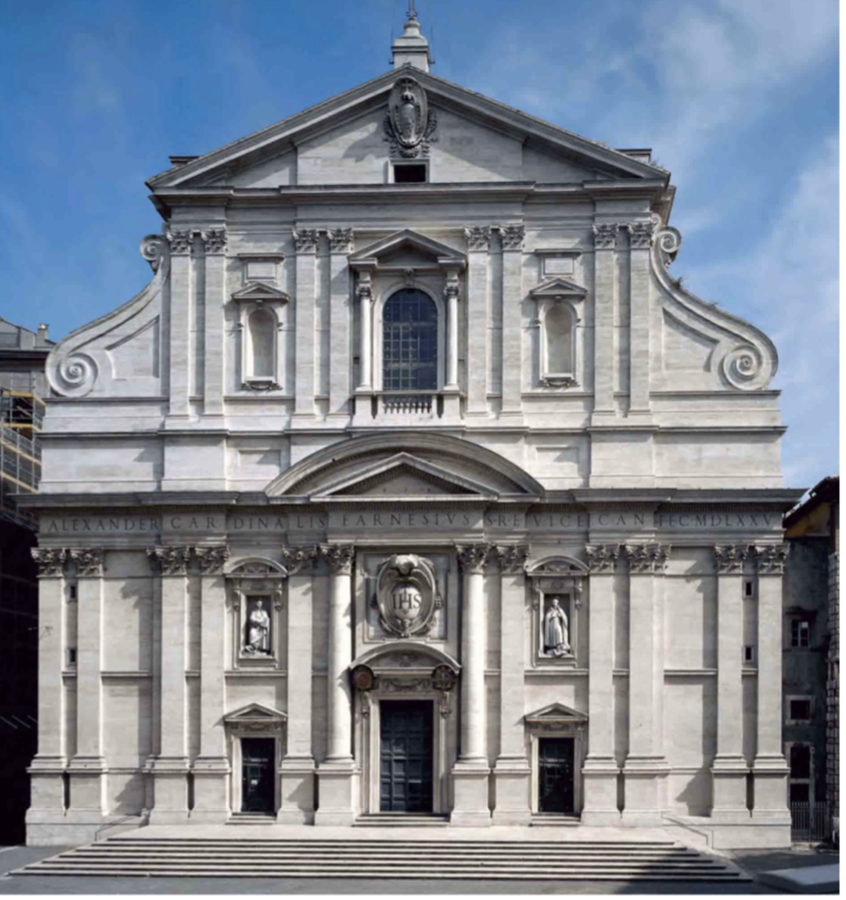
47.17 Giacomo da Vignola and Giacomo della Porta, Church of the Gesu
Italian renaissance style architecture
this is a neighborhood church, local and modest, meant to be smaller and more welcoming than the huge cathedrals and churches.
basilica style, nave that goes down to the apse and side aisles.
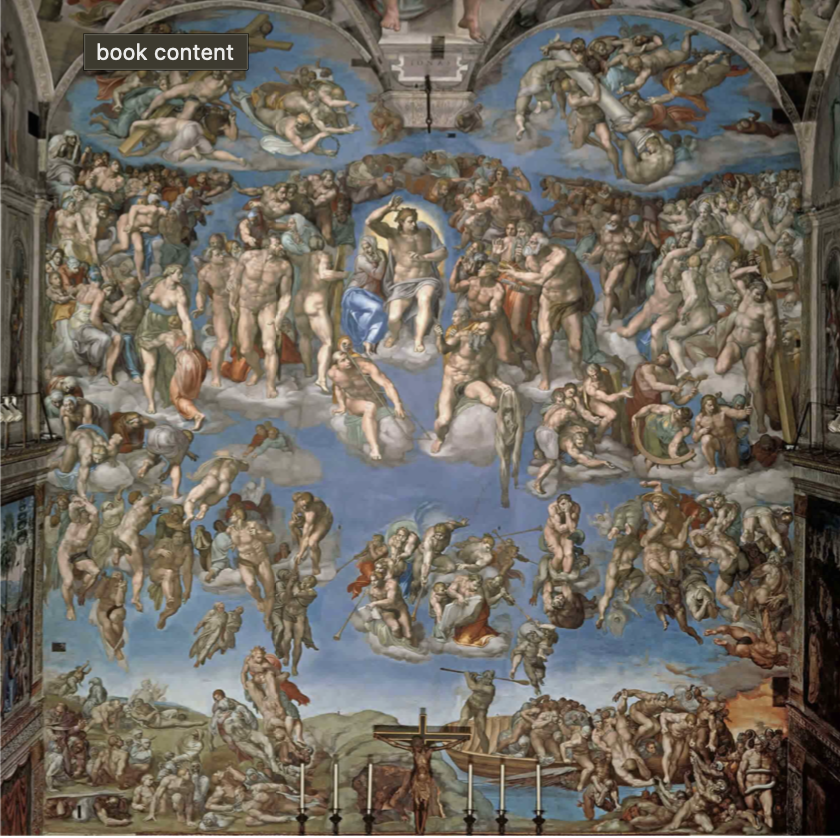
47.16 Michelangelo, Last Judgement
fresco
he was originally meant to paint a different scene but the Pope had him change to the last judgement scene.
this was pointed and meant to be pointed to people who believed in the reformation.
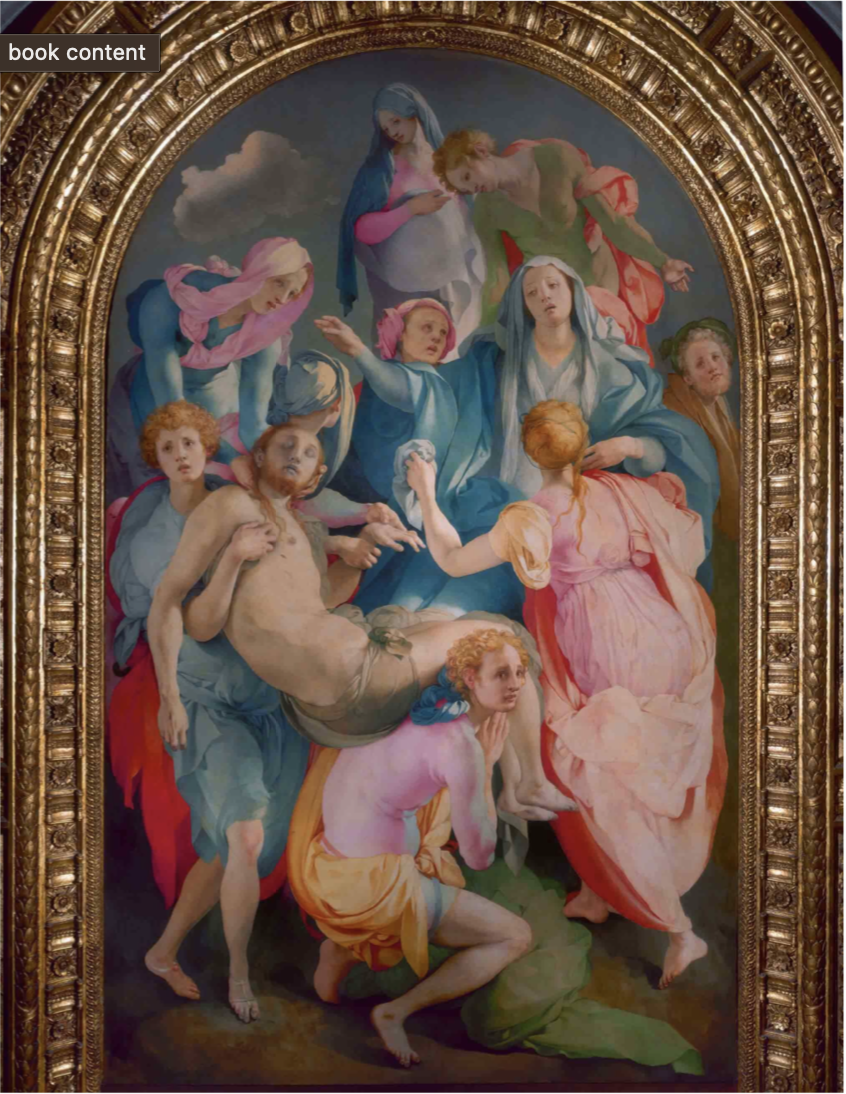
47.3 Jacopo Carucci da Pontormo, Deposition of Christ
Mannerism: denoting a mannered or contrived style. known for intellectual sophistication, and artificial elegance.
this is an example of a classic mannerist painting.
Christ is disproportional, not based on real life figures like the modest dignity of the high renaissance paintings.
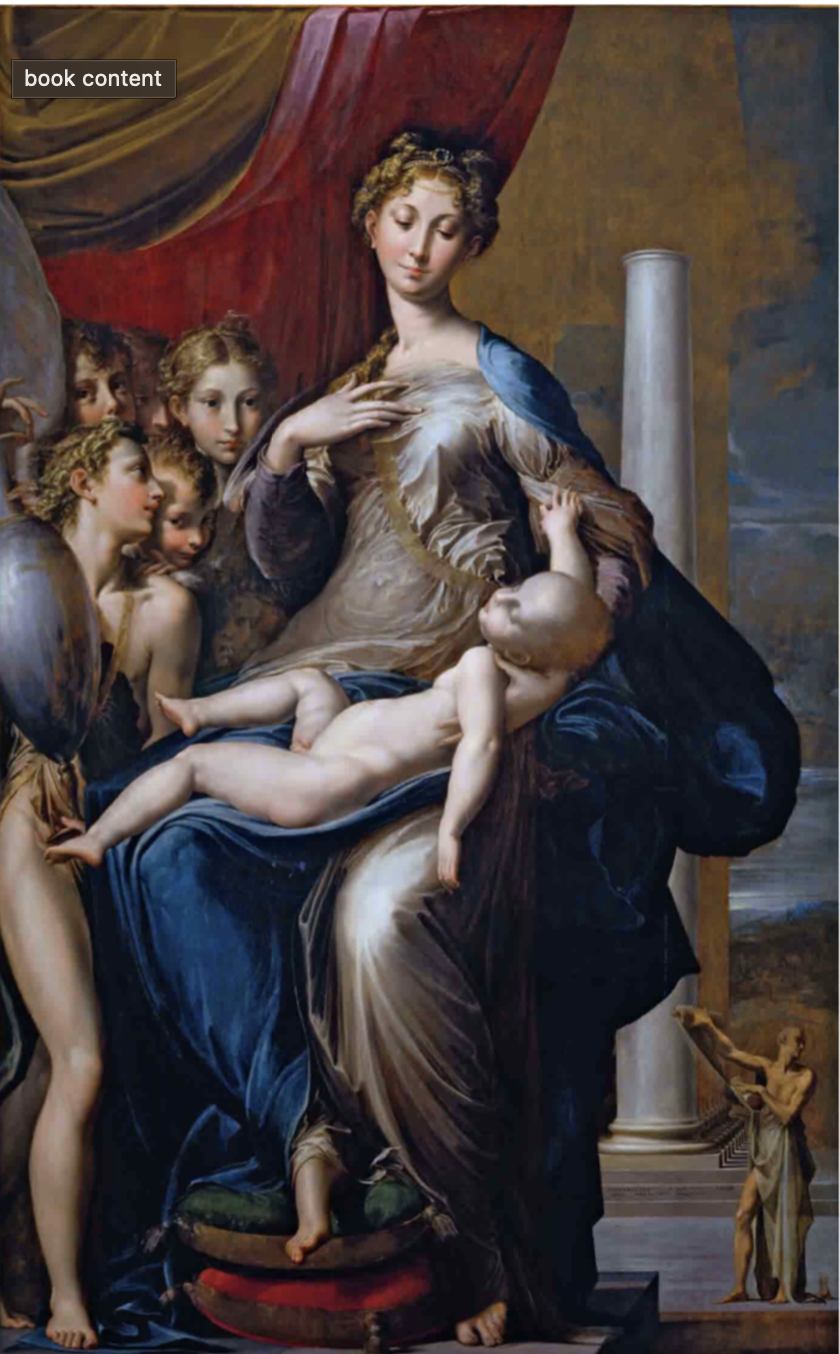
47.4 Parmigianino, Madonna of the Long Neck
long limbs and non accurate perspective. they know how to do accurate proportions and perspective but they are rejecting it.
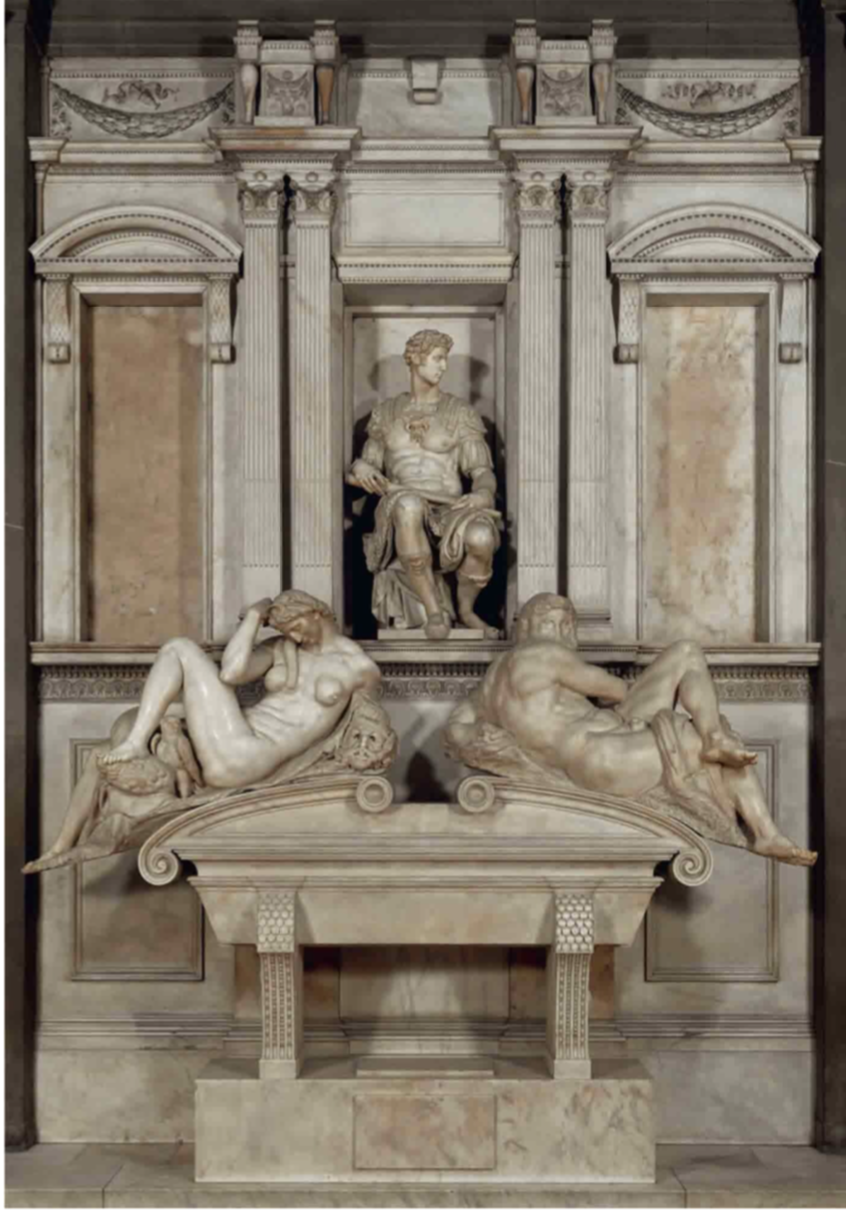
47.1 Michelangelo, tomb of Giuliano de Medici
Volute: decorative element in the form of a coiled scroll
Pilaster: a flat, rectangular projection from a wall.
sarcophagus
Giuliano helped design this tomb before he died.
the figures are meant to represent day and night. day is on the right.
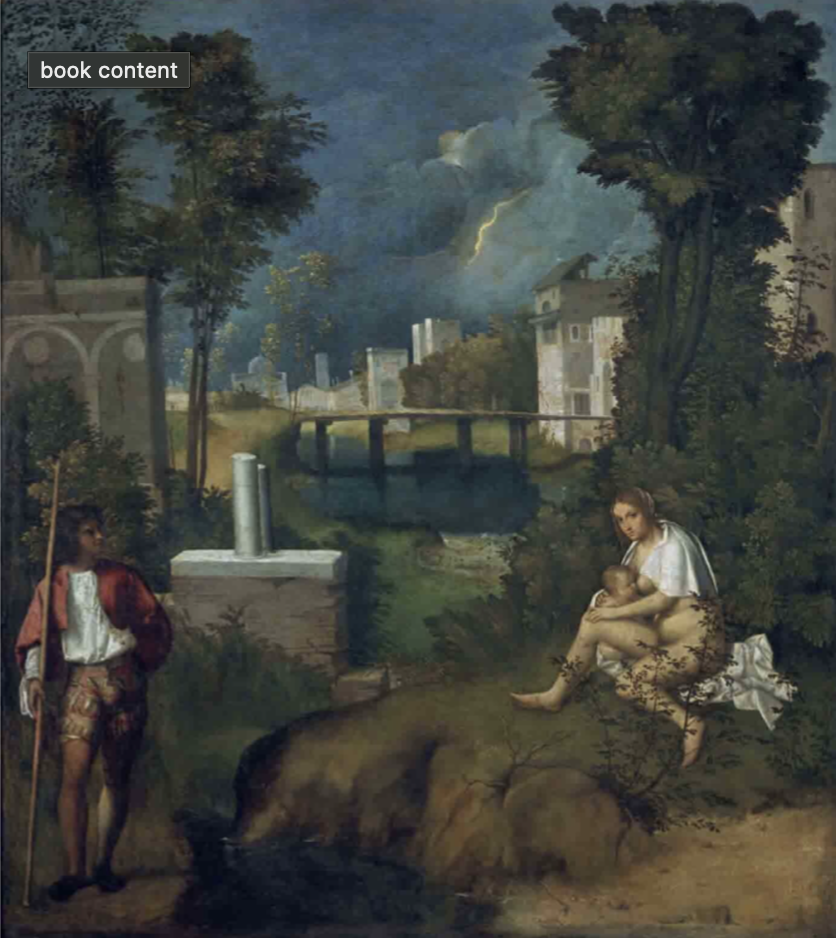
47.9 Giorgione da Castelfranco, The Tempest
from Venice, Italy
a German soldier watches a woman breast feed.
this is possibly inspired by Virgil’s series of poems
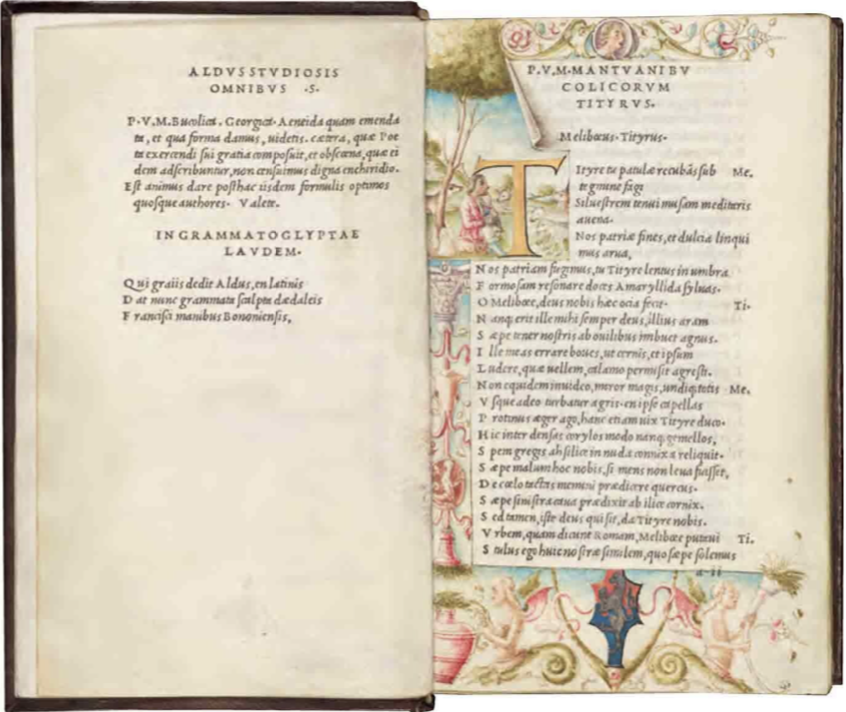
47.8 Aldus Puis Manutius, Aldine Eclogues by Virgil
the first use of italic font
Virgil is a Roman poet who wrote this series of poetry about escaping the city, meaning Rome.
romanticizes living pastoral lives.
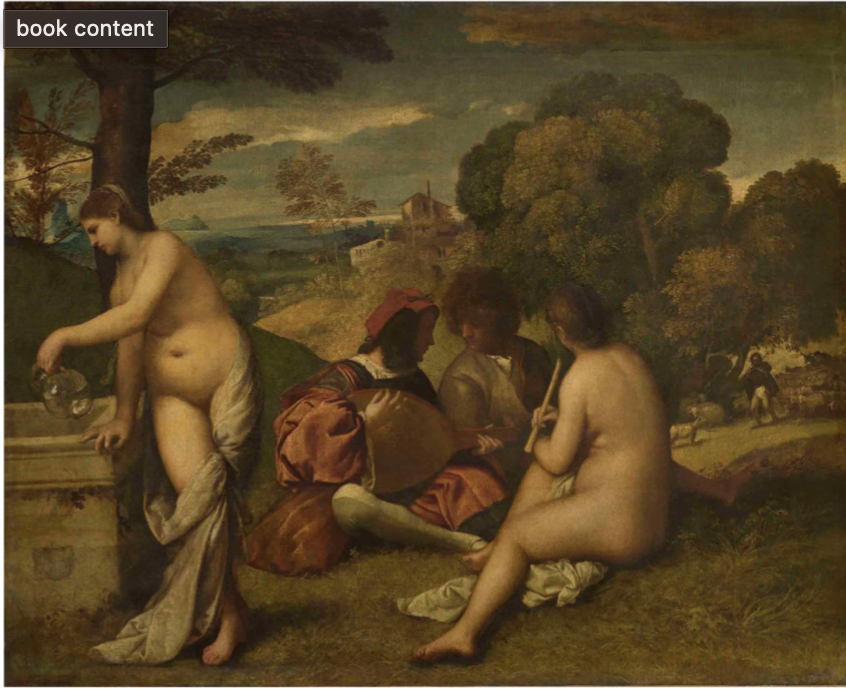
47.10 Titian, Pastoral Concert
also inspired by Virgil’s epilogues
the poetry also heavily valued musicians, which this painting includes.
this uses oil on canvas, Venice had a huge canvas making productions for sails on boats. This is the distinct medium for Venetian artists of this time.
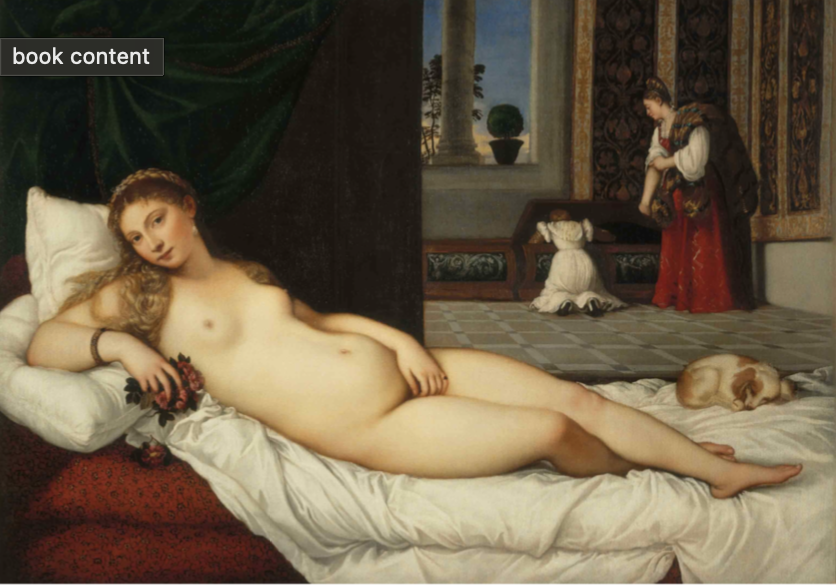
47.11 Titian, Venis of Urbina, oil on canvas
cassone- a chest given to a bride, holds clothing and household textiles and is often richly decorated.
this is a risky thing at the time to paint a nude woman like this. it is excused because she is a bride.
she is seen possibly preparing for her husband after her wedding.