AP Psychology - Unit Two
 Call Kai
 Learn
Learn Practice Test
 Spaced Repetition
 Match
Match Flashcards
 Knowt Play
1/27

Earn XP
Description and Tags
Cognition
Name | Mastery | Learn | Test | Matching | Spaced | Call with Kai |
|---|
No analytics yet
Send a link to your students to track their progress
28 Terms
Perception
The process of organizing and interpreting sensory information to make it meaningful
Bottom-Up Processing
Analysis that starts at the sensory level and works up to higher levels of processing
Top-Down Processing
Information processing guided by higher-level mental processes, as when we construct perceptions drawing on our experiences and expectations
Schema
A concept or framework that organizes and interprets information
Perceptial Set
A predisposition to perceive things in a certain way
Gestalt Psychology
An approach to psychology that emphasizes that the whole is different from the sum of its parts
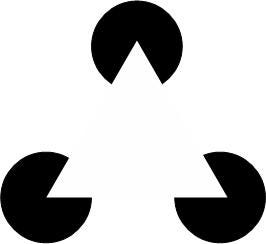
Closure
The perceptual tendency to fill in gaps in order to perceive a complete image
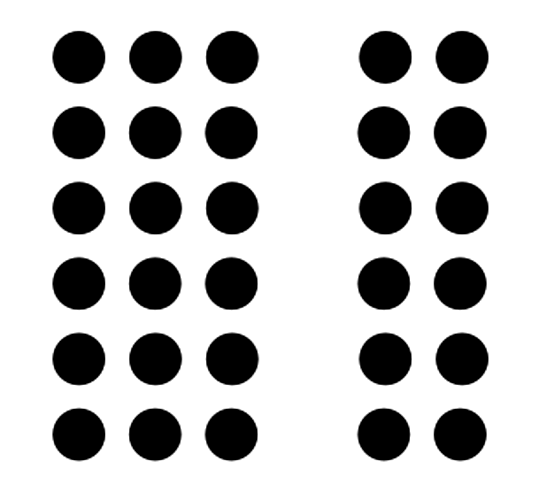
Proximity
Objects that are close to each other tend to be perceived as belonging together
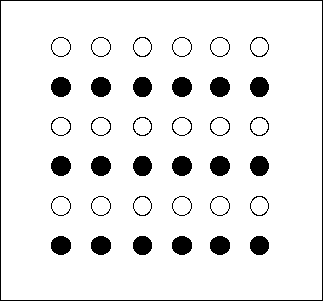
Similarity
Objects that are similar in appearance are more likely to be perceived as belonging together
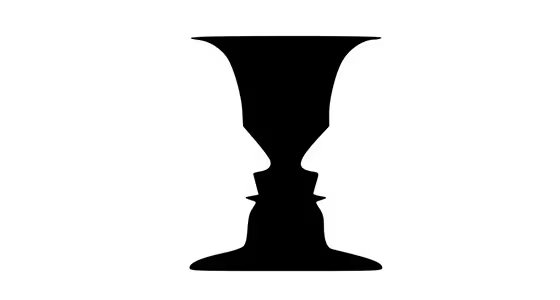
Figure and Ground
The organization of the visual field into objects (figures) that stand out from their surroundings (ground)
Attention
Focusing awareness on a narrowed range of stimuli or events
Selective Attention
The focusing of conscious awareness on a particular stimulus
Cocktail Party Effect
The ability to focus one’s auditory attention on a particular stimulus while filtering out a range of other stimuli, much like tuning into a single voice at a noisy party
Inattentional Blindness
Failing to see visible objects when our attention is directed elsewhere
Change Blindness
Failing to notice changes in the environment
Binocular Depth Cues
Depth cues, such as retinal disparity, that depend on the use of two eyes
Retinal Disparity
A binocular cue for perceiving depth: By comparing the two eyes, the brain computes distance — the greater the disparity (difference) between the two images, the closer the object
Convergence
A binocular cue for perceiving depth; the extent to which the eyes converge inward when looking at an object
Monocular Depth Cues
Depth cues, such as interposition and linear perspective, available to either eye alone
Relative Size
If two objects are known to be of similar size, we perceive the one that casts a smaller retinal image as farther away
Texture Gradient
Tendency for surfaces to appear more textured when they are closer and smoother and less detailed as distance for the viewer increases
Linear Perspective
Parallel lines, such as railroad tracks, appear to converge with distance. The more the lines converge, the greater their perceived distance
Interposition
If one object partially blocks our view of another, we perceive it as closer
Perceptual Constancies
Perceiving objects as unchanging (having consistent shapes, size, and color) even as illumination and retinal images change
Apparent Movement
The paerception that a stationary object is moving
Prototypes
A mental image or best example of a category. Matching new items to a prototype provides a quick and easy method for sorting items into categories
Assimilation
Interpreting new experiences in terms of existing schemas
Accommodation
Adapting one’s current understandings (schemas) to incorporate new information