Other Systems 1 Lecture
 Call Kai
 Learn
Learn Practice Test
 Spaced Repetition
 Match
Match Flashcards
 Knowt Play
1/61

There's no tags or description
Looks like no tags are added yet.
Name | Mastery | Learn | Test | Matching | Spaced | Call with Kai |
|---|
No analytics yet
Send a link to your students to track their progress
62 Terms
A review of the patient’s medical chart shows blood pressure of 168/90 mmHg, triglyceride level of 160 mg/dL, and a fasting blood glucose level of 115 mg/dL. The patient’s body mass index is 40 kg/m2 and waistline is 54 inches. What are these findings suggestive of?
a. chronic heart disease
b. type 2 diabetes
c. metabolic syndrome
d. stage 1 hypertension
c. metabolic syndrome
metabolic syndrome
consists of signs and symptoms that are risk factors and are strongly linked to type 2 diabetes, cardiovascular disease, and stroke
need 3 or more S/S present:
waist circummference (>40 M, >35 F)
triglycerides 150 mg/dL or higher
HDL (<40 M, <50 W)
blood pressure 130 mmHg systolic or higher, 85 mmHg or higher diastolic
fasting plasma glucose >100 mg/dL
Metabolic Syndrome Mnemonic
WEIGHHT
Hypothalamus
regulation of ANS
body temperture, thirst, sweating, sexual behavior, rage, fear, blood pressure, sleep
Pituitary Gland
secretes endrophins and reduces a person’s sensitivity to pain
controls ovulation
works as catalyst for testes and ovaeries to create sex hormones
Thyroid Gland
produces hormones that act to control the rate at which cells burn the fuel from food
parathyroid gland
regulate calcium and phosphate metabolism
adrenal gland
produces corticosteroids that will regulate water and sodium balance , body’s response to stress, immune system, metabolism
Addison’s Disease cause
infections, neoplasm, hemorrhage, autoimmune process
Addison’s disease is an insufficiency of the
adrenal gland
Addison’s disease S/S
decrease BP, dehydration
hyperkalemia
decreased glucose
bronze pigmented skin
weight loss, anorexia, GI disturbances
generalized weakness
intolerance to cold and stress, anxiety and depression
Addison Disease Mnemonic
Miss Addison
brown old petite lady walking with a stick
Cushing Disease Cause
pituitary tumor with increased ACTH secretion
Cushing Disease causes
elevated cortisol and aldosterone
Cushing Disease S/S
increased BP, water retention
hypokalemia
increased glucose
ruddy appearance, striae on skin
weight gain, centripetal obesity, round moon face
proximal muscle weakness and atrophy
increased susceptibility to infection, osteoporosis (buffalo hump), poor wound healing
Cushing Disease Mnemonic
Mr. Cushing
Santa Claus
a white chubby boy who loves chugging beer, pink cheeks, big belly
a patient reports having significant weight gain in their abdomen and face. lab shows high levels of cortisol and high levels of ACTH secreted by the pituitary gland. What is the MOST LIKELY diagnosis?
a. addison’s disease
b. hashimoto’s disease
c. cushing disease
d. cushing syndrome
c. cushing disease
Cushing Disease
pituitary adenoma - more ACTH secreted by pituitary gland - stimulates adrenal gland - more cortisol released
cushing syndrome
adrenal gland tumor - adrenal gland secretes more cortisol - drug toxicity
Hyperthyroidism
increased T3 and T4, low TSH
increased HR
high BMR
heat intolerance
increased glucose absorption
restlessness, insomnia
diarrhea
silky hair, moist palm
weight loss and increased appetitie
increased perspiration
hyperreflexia
Exophthalmos, Graves’ disease
Hypothyroidism
decreased T3 T4, increased TSH
decreased HR
low BMR
cold intolerance
decreased glucose absorption
sleepiness, tiredness, proximal muscle weakness
constipation
brittle nails, dry skin and hair
weight gain and decreased appetite
decreased perspiration
prolonged DTR
Myxedema, Hashimoto’s disease
hypothyroidism example
lazy person laying on couch all day watching TV in sidelying
patient reports persistent fatigue, recent weight gain despite decreased appetitie, constipation, and dry skin due to a thyroid gland disorder. Which of the following findings BEST correlates with this presentation?
a. increased HR, low BP, heat intolerance
b. decreased HR, high BP, cold intolerance
c. increased HR, low BP, cold intolerance
d. decreased HR, high BP, heat intolerance
b. decreased HR, high BP, cold intolerance
Hyperparathyroidism
elevated calcium and decreased serum phosphate
can demineralize bone - bone weakness and decreased density
hyperparathyroidism symptoms
osteopenia, gout, arthralgia, kidney stones, renal insufficiency, peptic ulcers, proximal muscle weakness, fatigue, depression, confusion, drowsiness, glove/stocking sensory loss
hyperparathyroidism mnemonic
bones, stones, groans, moans, sensory
hypoparathyroidism
low calcium and high phosphorus
hypoparathyroidism symptoms
convulsions, cardiac arrhythmias, muscle twitching, tetany, muscle cramps, muscle spasms, paresthesia of fingertips and mouth, fatigue, weakness
hypoparathyroidism mnemonic
CATS are numb
a patient presents to the clinic with hyperfunction of the fland shown. Which of the following signs and symptoms are MOST LIKELY to be associated with this condition
a. hypocalcemia and hyperphosphatemia
b. convulsions and tetany
c. osteopenia and peptic ulcers
d. weight gain and decreased appetite
c. osteopenia and peptic ulcers
Type 1 Diabetes Mellitus
pancreas produces no insulin - insulin dependent DM
diagnosed mostly at childhood, but can be any age
Type 1 Diabetes Mellitus Symptoms
polyphagia, weight loss, ketoacidosis, polyuria, polydipsia, blurred vision and dehydration
Type 2 Diabetes Mellitus
body resistance to insulin - insulin resistant DM
occurs secondary to other dysfunctions
Type 2 Diabetes Mellitus Symptoms
similar to type 1
rare occurance of ketoacidosis
Diagnosis of DM
Fasting blood glucose level >126
Random blood glucose level >200
Hb1AC levels > 7%
Hypoglycemia Glucose Levels
<70 mg/dL
Hypoglycemia Early Signs
pallor, sweating
shakiness
poor coordination and unsteady gait
tachycardia and palpitations
dizziness, fainting
excessive hunger
Hypoglycemia Mnemonic
TIRED
Hypoglycemia Late Signs
slurred speech, drowsiness, confusion
loss of consciousness and coma
Hyperglycemia Glucose Levels
> 300 mg/dL
Hyperglycemia Early Signs
dry mouth
frequent, scant urination
deep and rapid respirations
dull sense, confusion, diminished reflexes
excessive thirst
Hyperglycemia Late Signs
fruity odor (acetone breath)
hyperglycemia coma
Unsafe Blood Glucose Levels to Exercise (low)
<70 mg/dL
70-100 mg/dL
give them a carb snack and wait til it reaches 100
then able to exercise
100-250 mg/dL
safe to exercise
250-300 mg/dL
without ketone
exercise with caution
250 mg/dL with ketones
emergency
above 300 mg/dL
never exercise
avoid exercise during peak insulin hours which is
2-4 hours after absorption
insulin is absorbed quicker in an active extremity
insulin dosage reduced after exercise
Diabetic Footcare
screening
wash feet daily in warm water
keep toenails cut straight across
clean, white socks, avoid wrinkles
alternate shoes
snug fit laces or velcro
a patient who is obese (33 kg/m2) with type 2 DM, is working out on the treadmill in hospital setting. While exercising, the patient suddenly develops lightheadedness, dizziness, and instability. Which of the following is the MOST APPROPRIATE action to be taken by the PT?
a. stop the treadmill and call the PCP
b. stop the treadmill and give patient orange juice
c. stop treadmill and give patient insulin injection
d. stop the treadmill and give patient a slice of whole grain bread
b. stop the treadmill and give patient orange juice
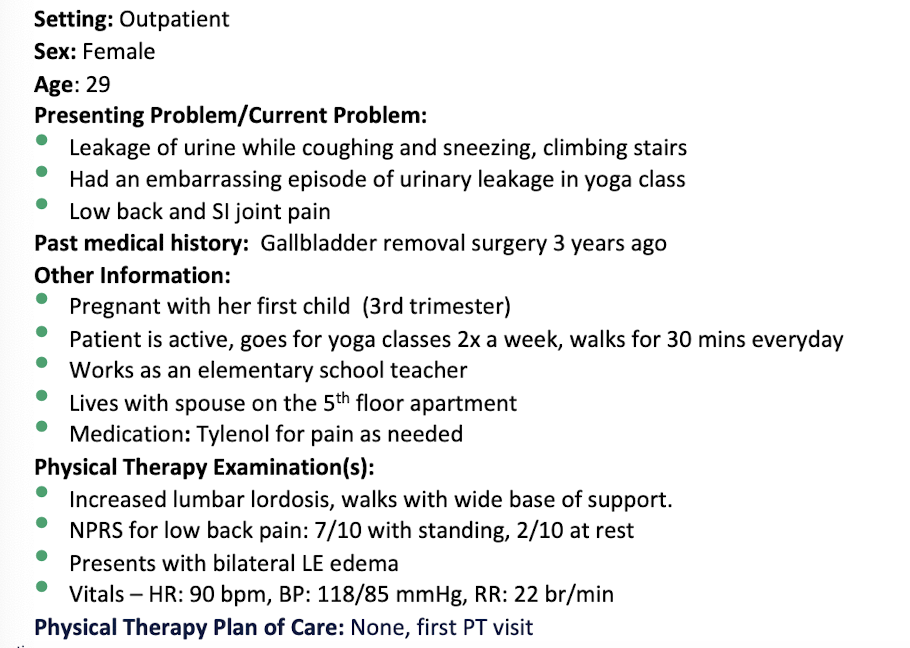
Which of the following diagnosis is MOST LIKELY based on patient presentation
a. stress incontinence
b. overflow incontinence
c. functional incontinence
d. urge incontinence
a. stress incontinence
stress incontinence
involuntary leakage of urine during cough, sneezing or exertion
can be seen postpartum pelvic floor muscle weakness
urge incontinence
involuntary contraction of the detrusor muscle with a strong desire to void (urgency)
can be seen with infections, Parkinson’s disease, UMN lesions
overflow incontinence
incontinence caused by acontractile or underactive detrusor muscle
bladder is overdistended, can not empty completely and urine dribbles or leaks out
can be seen with benign prostatic hyperplasia, DM
functional incontinence
incontinence due to mobility, dexterity or cognitive deficits
can be seen with dementia, lower extremity weakness
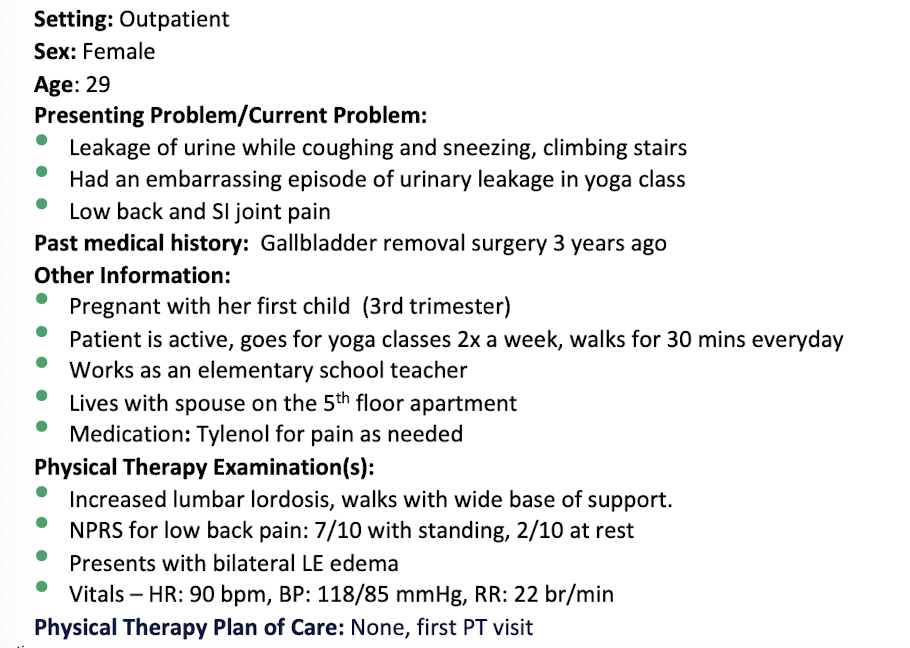
which of the following is MOST APPROPRIATE intervention for this patient?
a. use of absorbent pads
b. pelvic floor exercises targeting levator ani muscles
c. scheduled toileting and prompted voiding
d. continuous catheterization
b. pelvic floor exercises targeting levator ani muscles
stress incontinence treatment
strengthen pevlic floor muscles
urge incontinence treatment
treat infections, voiding schedule
functional incontinence treatment
clear clutter, improve accessibility, and prompted voiding
overflow incontinence treatment
behavioral modification like double voiding, medication and catheterization
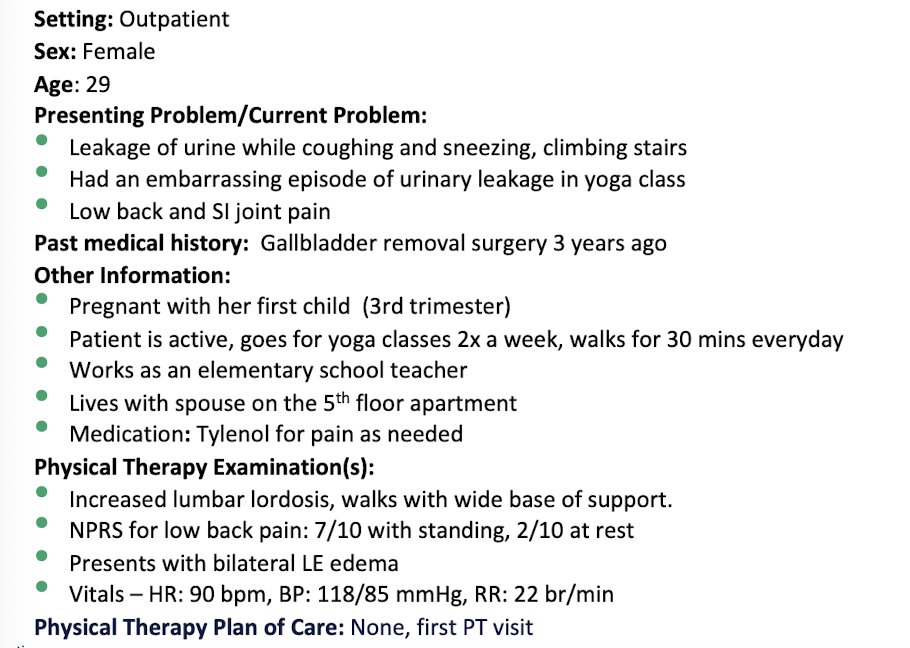
What is the BEST initial physical therapy intervention?
a. supine, perform contractions held for 3 seconds each
b. left sidelying and perform contractions held for 5 seconds
c. right sidelying and perform contractions held for 5 seconds
d. sitting and perform contractions held for 10 seconds each
b. left sidelying and perform contractions held for 5 seconds