Holy Roman Empire / Germany: Notable Religious Figures, Theologians, Philosophers, and Linguists
 Call Kai
 Learn
Learn Practice Test
 Spaced Repetition
 Match
Match Flashcards
 Knowt Play
1/37

Earn XP
Description and Tags
Organized chronologically by death year / date of publication
Name | Mastery | Learn | Test | Matching | Spaced | Call with Kai | Chat |
|---|
No analytics yet
Send a link to your students to track their progress
38 Terms
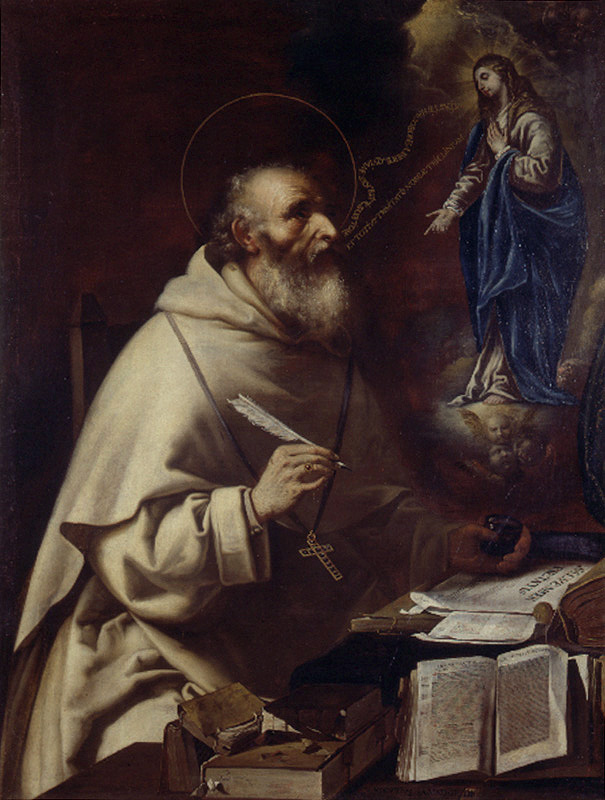
1200 - 1285 - St. Albertus Magnus (All Facts)
German Dominican Friar, Bishop, Philosopher, and Scientist
He mentored St. Thomas Aquinas
He brought works of Aristotle, recently available in new Latin translations from Arab sources, into scholasticism, the study of the meaning of Christian teaching
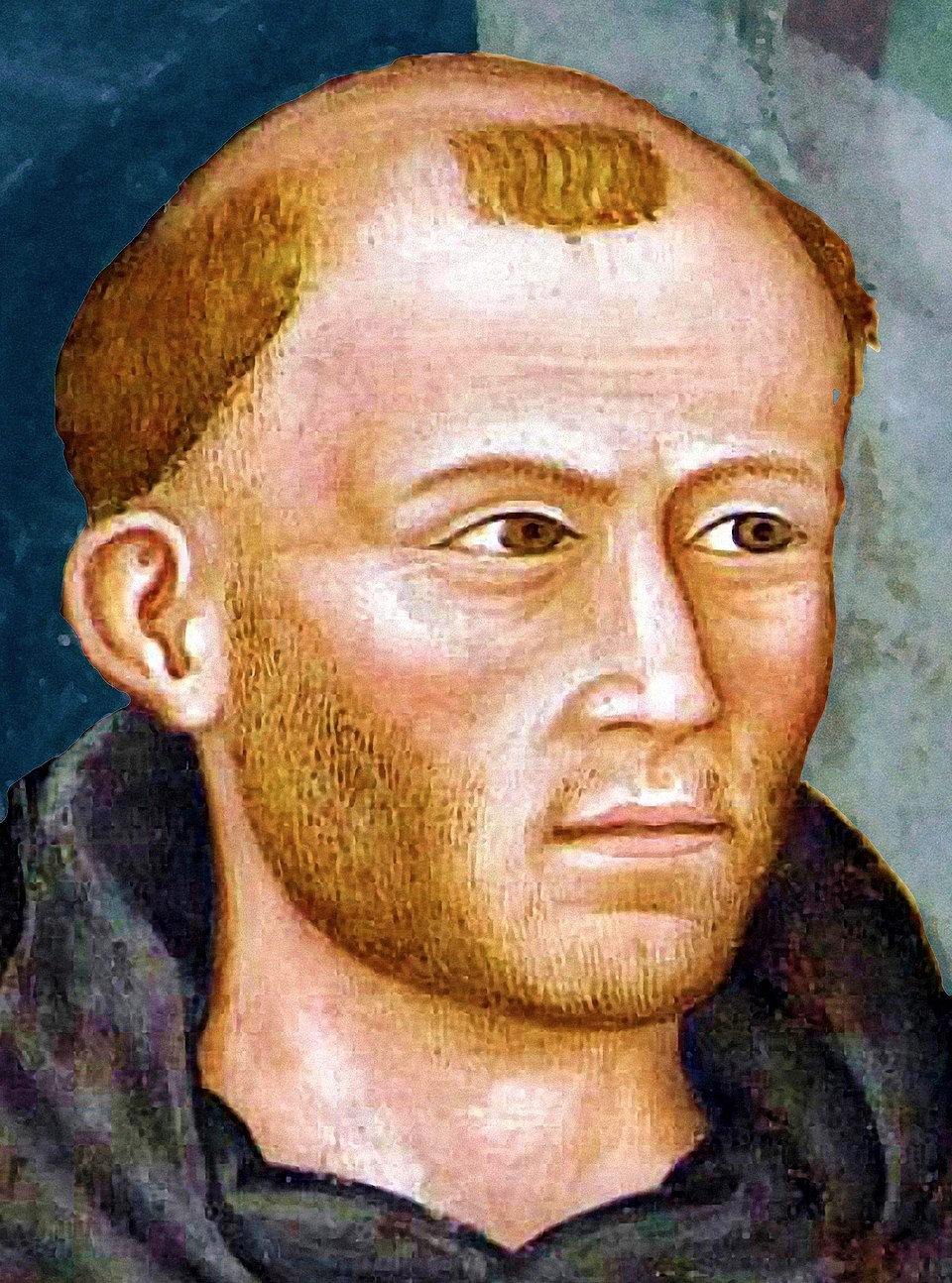
1260 - 1328 - Meister Eckhart (All Facts)
German Dominican Theologian, Philosopher, Priest, and Mystic
He was a celebrated mystic
He presented himself in Avignon in France to face his critics at the convocation called by Pope John XXII, who condemned 28 of the namesake’s views in his “In Agro Dominico” Papal Bull
He saw the soul as the divine spark which enabled man to know God
To reach God meant
turning inwards, doing nothing, owning nothing, and knowing nothing
being free of desire, even the desire for sanctity and God
This particular belief set him apart from many monks who had chosen poverty and self-abnegation
He argued that the sacraments, though they played a part as preparation, must be cast off if man was to have direct access to God
This view was seen as the most direct threat to the authority of the Church and what Pope John XII saw as heretical
He died in Avignon in France
1325 - 1397 - Henry of Langenstein (All Facts)
German Scholastic Philosopher, Theologian, and Educator
He taught at the University of Paris in France, where he attempted to end the Great Schism, but his arguments were not accepted by King Charles VI of France
He was promptly dismissed from the University of Paris and France altogether
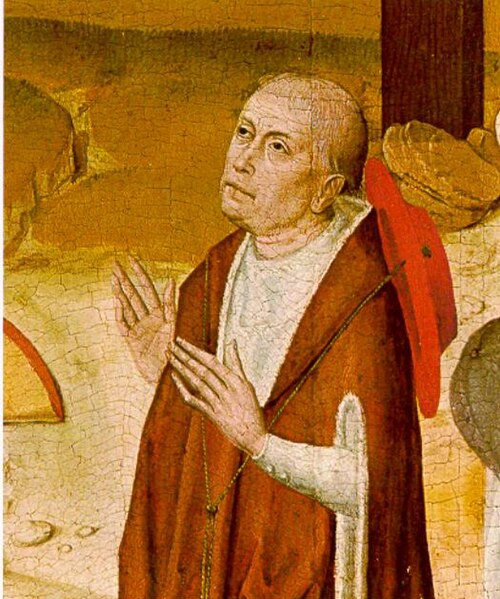
1401 - 1464 - Nicholas of Cusa (All Facts)
German Philosopher
He wrote that the Earth, and not the heavens, revolved daily, a refutation of the accepted Ptolemaic System
His idea was based upon philosophic notions, however, and not on observable scientific data
He was also appointed cardinal by Pope Nicholas V and sent on a successful mission to lead reform in Germany
1433 - Nicholas of Cusa: The Catholic Concordance / De Concordantia Catholica (ALl Facts)
Work in which the namesake author argued for the General Council’s authority over the Pope
Despite this, the council’s lack of power led the namesake author to reverse his position on this issue four years after the publication of the namesake
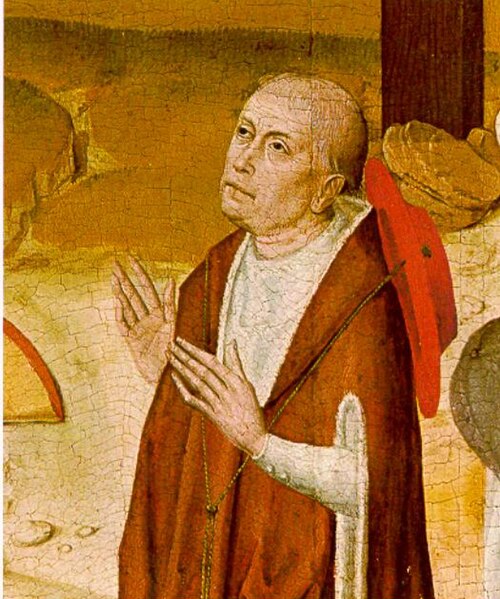
1440 - Nicholas of Cusa: Of Learned Ignorance (All Facts)
Work in which the namesake author argues against the possibility of ever attaining eternal truths

1379 - 1471 - Thomas a Kempis (All Facts)
German-Dutch Writer of Devotionals

1427 - Thomas a Kempis: The Imitation of Christ (All Facts)
Was considered at the time to be the most influential Christian work since the Bible
Simple book which emphasized the need for a moderate asceticism
1436 - 1495 - Jakob Sprenger (All Facts)
German Dominican Theologian and Inquisitor
He was authorized by Pope Innocent VIII to stamp out witchcraft in Germany in the 1400s
He and his co-inquisitor had burnt 41 witches who had confessed to having sex with the devil
1430 - 1505 - Heinrich Kramer (All Facts)
German Dominican Theologian and Inquisitor
He was authorized by Pope Innocent VIII to stamp out witchcraft in Germany in the 1400s
He and his co-inquisitor had burnt 41 witches who had confessed to having sex with the devil
1486 - Jakob Sprenger and Heinrich Kramer: Hammer of Witches / Malleus Maleficarum (All Facts)
Work which suggests that witches
really do fly
raised hailstorms and hurtful tempests and lightnings
caused sterility
made horses go mad under their riders
ate children
had sex with the devil
engaged in sexual orgies
engaged in cannibalistic orgies
Work which provides voluminous evidence of these practices, mostly obtained from torturing suspected witches
Work which described witchcraft, condemned its practices, and encouraged its suppression
Work written by German Dominicans and authorized by the pope, whose pages inflamed many peasants who were fearful of satanic attacks on their crops
Work which was highly misogynistic, obsessed with female lust; with the majority of the namesake accused persons having been women and introducing the concepts and potent images of the namesake persons’ '“Sabbath” or “black mass”
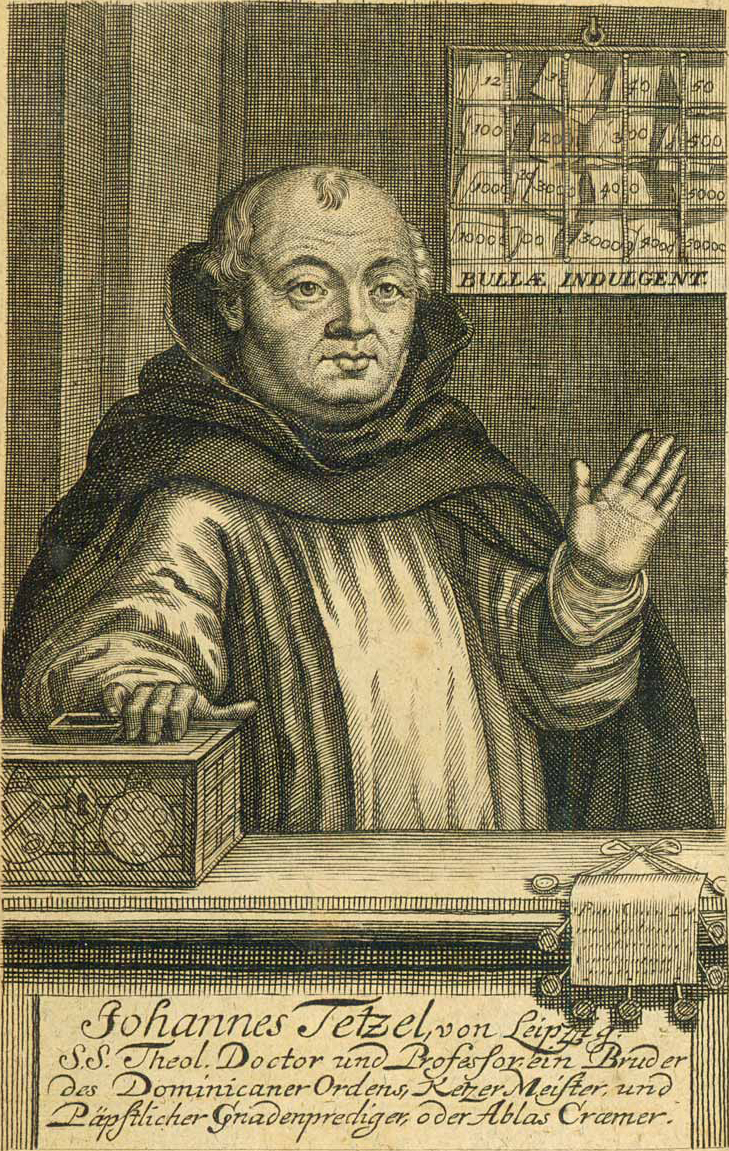
1465 - 1519 - Johannes Tetzel (All Facts)
German Dominican Friar and Preacher
His travelling around Germany with a papal bull on a scarlet velvet cushion auctioning indulgences like a common street peddler shocked and inspired Martin Luther to publish his 95 theses against the sale of indulgences for the forgiveness of sins
1469 - 1521 - Johannes Pfefferkorn (All Facts)
German Ex-Jewish Catholic Theologian
He engaged in a long running pamphleteering battle with Johann Reuchlin
He had obtained authorization from Holy Roman Emperor Maximilian, with the help of the Cologne Dominicans to destroy all Hebrew books except the Bible
He was opposed by Reuchlin and the Archbishop of Mainz
He vented this anger towards Reuchlin, alleging in print that
he had accepted bribes from Jews
other scholars had written books which Reuchlin claimed as his own

1455 - 1522 - Johann Reuchlin (All Facts)
German Catholic Humanist Hebraist
He first became interested in Hebrew and the Jewish mystical texts of the Kabbalah while visiting Pica de la Mirandola in Florence in Italy
He was an internationally known scholar who was particularly respected in Italy
He was brought before the court of the inquisition in Cologne, charged with heresy because of his most famous work
He opposed Johannes Pfefferkorn and his attempt to destroy all Hebrew books except the Bible
He was not without hope in his quest to preserve Hebrew literature as the Archbishop of Mainz was a powerful friend of his despite his enemies being that of
The Cologne Dominicans
The Inquisition courts and their draconian powers

1506 - Johann Reuchlin: On The Rudiments of Hebrew (All Facts)
Work which shows how the Hebrew language is essential for Christian theology
Work which is the namesake author’s most famous

1511 - Johann Reuchlin: Augenspiegel (All Facts)
Work which argues for the preservation of Jewish literature
Work which was the namesake’s stinging reply to Johannes Pfefferkorn’s charges against him

1488 - 1523 - Ulrich von Hutten (All Facts)
German Humanist Scholar
He came from a wealthy Franconian noble family
He studied Greek and Latin in Bologna
He never ceased to stress the warrior code of a nobleman of the Holy Roman Empire
He was a staunch opponent of the Roman Catholic Church
He was something of a hothead and had long had a reputation for ferocious anti-clericism

1515 - Ulrich von Hutten: Letters from Obscure Men / “Epistolæ Obscurorum Virorum” (All Facts)
Work which was a satire and which was designed to help Johann Reuchlin in his battle to escape from the clutches of the Inquisition
Work which consists of an amusing skit on the Dominican monks, deliberately written in vile Latin
Work which is in the form of letters written to monks, teachers, and theologians
Work whose letter writer purports to be Ortvinus Gratius, a theologian of the University of Cologne who is (was) one of the principal supports of the Dominicans in their attempt to convict Johann Reuchlin
Work which portrays monks as having more taste for earthly pleasures than for prayer
Work in which the monks portrayed love the wine of the Rhine River more than the wine of the Mass
Work in which the letters in it are long on coarse pleasantries and short on theological discussion
Work whose title refers to another work, “Letters from Illustrious Men” written by humanists who supported the namesake author’s cause
1489 - 1525 - Thomas Müntzer (All Facts)
German Preacher and Theologian
He preached in Zwickau
He had radical political aspirations
He clashed with Martin Luther
He advocated both social and religious reform while Luther advocated that religion was above political and social matters
He supported (led) the German Peasants’ War / German Peasants’ Revolt
He was imprisoned and beheaded as a result

1482 - 1531 - Johannes Oecolampadius (All Facts)
German Protestant Reformer
He attended the Marburg Colloquy
1495 - 1535 - Bernard Rothmann (All Facts)
German Preacher
He was the Anabaptist Leader of Anabaptist Munster
He won the first townspeople of Munster to the Anabaptist cause when he
questioned infant baptism
promoted a community of goods among Christians
He was elected to the city council, the first of many to quickly overtake the Munster city council
He was killed in the Anabaptist Munster Rebellion

1486 - 1543 - Johann Eck / Johann Maier (All Facts)
German Catholic Theologian
He was also a Renaissance Humanist scholar
He hoped to see the revival of the Catholic Church
He was the Chief Opponent of Martin Luther in his day
He was responsible for having Martin Luther excommunicated by the Catholic Church
He attended the
(Second) Diet of Augsburg, supporting Holy Roman Emperor Charles V and the Catholics
He published a Catholic version of Luther’s German translation of the Bible
He died at Ingolstadt

1514 - 1545 - Albert von Brandenburg (All Facts)
German Cardinal and Archbishop of Mainz and Magdeburg
He was deeply in debt to the Fuggers and paid off his debts by selling indulgences, one of the worst offenders of the crime
Through his notorious sale of indulgences, he became the catalyst for Martin Luther's Reformation and thus its staunch opponent

1483 - 1546 - Martin Luther (All Facts)
Leader of the Protestant Reformation
He was the effective leader of the Protestant Reformation in Germany (the Holy Roman Empire)
He argued that
priests should not stand between men and the Bible
faith is a gift from God
faith, as a gift from God, cannot be gained by scholarship, despite what his contemporaries, the Humanists, believed
the pope was fallible
When he implied this, he was summoned to Rome to answer a charge of heresy on this point
He published
the first German Mass
a book of hymns
a book of catechisms
He
was born of peasant stock to a wealthy copper miner in Eisleben in Saxony
was totally committed to the needs of the ordinary people
studied nominalist philosophy at the University of Erfurt
eventually became an Augustinian monk after a dramatic experience in a thunderstorm in which he decided to enter a convent of the Austin Friars
studied St. Augustine heavily and fell in love with his work
became a doctor and professor at the University of Wittenberg while living at Austrian Friars
eventually abandoned his monastic life and vows as an Augustinian
He
was a big, tough man with disturbing eyes
was often vulgar, coarse, and crude in his language and renown for his violent temper; but usually when focusing on the cause of ordinary people, who he felt were exploited and oppressed by the church and secular authorities
was immensely proud of his peasant blood, having come from peasant stock himself
laughed long, loud, and deeply
sang tenor
played the flute
had a happy home life
He married Katarina von Bora, a former nun
One time she told him he was too rude, to which he responded that “they [his enemies] teach me to be rude”
He fathered six children
His lectures laid great stress on
the Epistles of St. Paul
his view that “the just shall live by faith” (“Sola Fide”)
As a scholar, he was unusual in that
he had no sophistication or cunning
was open about his views and feelings
always wrote in plain language (German)
he always made sure to be in tune with the language of the common people by listening to phrases they use in the marketplace
He deepened his rift with Rome after he published three pamphlets on reform
During the (First) Imperial Diet of Augsburg,
He refused to retract his then-widely-circulated 95 Theses
He was excommunicated after publicly burning Pope Leo X’s Exsurge Domine Papal Bull, which condemned his 95 Theses as “heretical and scandalous”
His breach with the Catholic Church became total when this occurred
However, the rebellious German princes helped him to establish the new churches and maintain the Protestant Reformation
During the Imperial Diet of Worms, he
challenged the papal claim that the Papacy was to be the sole authority on the scriptures
questioned many of the rights of the priests
rejected the belief that bread and wine become the body and blood of Christ
affirmed Christians’ personal right to faith
moved the audience, whose revolutionary spirit Holy Roman Emperor Charles V feared would affect his power
After the Imperial Diet of Worms, he
was “kidnapped” for his own safety by Duke Frederick of Saxony
rejected Ulrich von Hutten and Franz von Sickingen’s request to form a military branch of German knights to support him and his revolt against the Church
He clashed with Thomas Müntzer
He considered religion to be above political and social matters; while Müntzer advocated both social and religious reform
His teachings were one of the main causes of the German Peasants’ War / German Peasants’ Revolt
However, while he supported many of their aims, he condemned the revolt as a whole, especially because of the atrocities the protestors were carrying out
He clashed with Ulrich Zwingli
He attended the Marbury Colloquy
He failed to attend the Diet of Augsburg with Philip Melanchthon because he was still in exile from the Holy Roman Empire at that time
He made it clear he would not go along with armed resistance to Holy Roman Emperor Charles V, but his battle with Catholic theologians was as fierce as ever by this time
He died at Eisleben in Saxony
His body was broken after years of overwork and illness
However, his mind was as clear as a bell right to the end
He died in a mood of total serenity, despite being renowned for his violent temper

1517 - Martin Luther: 95 Theses (All Facts)
Work in which the namesake author argued against the sale of indulgences granting the forgiveness of sins, published on the eve of All Saints’ Day by him having posted the pamphlet on the front door of his church in Wittenberg
These theses attacked the use of indulgences by the Roman Catholic Church
They were written in Latin
They mixed fine theological points with emotional attacks on Pope Leo X’s men
He published these in reaction to his shock when he saw a Dominican named Johannes Tetzel travelling around Germany with a papal bull on a scarlet velvet cushion, auctioning indulgences like a common street peddler
He argued that selling / auctioning indulgences does not justify suggesting to people that they can buy remission from their sins, even if the money if used to build religious structures like St. Peter’s Basilica in Rome
In one thesis, he asserted that if the Pope knew of his preacher’s exactions, he would rather have St. Peter’s Basilica reduced to ashes than “built with the skin, flesh, and bones of his sheep”
In another thesis, he asserted that any Christian who is truly repentant is entitled to forgiveness, without any indulgences
Although these were not especially radical, especially in the context of contemporary and prior critics of the Roman Catholic Church, his students who attended his lectures at the University said that the namesake publisher was an unusual man who was developing a radical theology which could easily bring him into head-on collision with the Roman Catholic Church
Work which was condemned by Pope Leo X in his Papal Bull, Exsurge Domine, as “heretical and scandalous”

1525 - Martin Luther: Against the Murdering Thieving Hordes of Peasants (All Facts)
Work in which the namesake author condemned (condemns) the German Peasants’ War / German Peasants’ Revolt
Work in which the namesake author writes that, “you cannot meet a rebel with reason” and “[that] your best answer is [to] punch him in the face until he has a bloody nose”
Work which the namesake author wrote because he was deeply shocked by the atrocities committed by the German Peasants (many of whose aims he initially supported), such as when peasants speared the Count of Helfenstein in front of his wife and child at Weinsberg

1534 - Martin Luther: Luther(an) (German) Bible (All Facts)
Work which consists of the Bible in the (plain) German language, translated by the namesake in his most ambitious work
Work which allowed Germans who did not understand Latin to be able to read the Bible for themselves
Work which allowed the thousands of poor Germans who could not previously read the Holy Scriptures to be able to do so
Work which allowed the common Germans to purchase it because it could be bought relatively cheaply because of the recent boom in printing presses
Work which contains thrilling narrative, not dull theology

1497 - 1560 - Philip Melanchthon (All Facts)
German Protestant (Lutheran) Reformer
He was a loyal disciple of Martin Luther, who did not compromise with the Holy Roman Empire or any other entity on matters of essential doctrine
He was a close associate of Martin Luther
He was influenced by the humanism of Desiderius Erasmus
He drafted the Augsburg Confession
He attended the (Second) Diet of Augsburg to present it
He was a pacifist who wanted to avoid common cause with the more rebellious Swiss
He became the spiritual leader of the Lutheran Church after Martin Luther’s death
He made great efforts to reconcile opposing factions amongst the Protestant Reformers
He attended the Marburg Colloquy
He died at Wittenberg

1528 - 1590 - Jakob Andreae (All Facts)
German Lutheran Theologian and Protestant Reformer
He was the Chancellor at the University of Tubingen

1577 / 1580 - Jakob Andreae: Formula of Concord / Book of Concord (All Facts)
Work which comprised a formidable tract of some 17K words
Work which was designed to heal divisions in the Lutheran church at the time
Work which was published on the day of the jubilee of the Augsburg Confession
Work which reaffirms (reaffirmed) the Augsburg Confession as the heart of Lutheran doctrine, after the Bible and the “three creeds”
Work which is conciliatory in tone to Catholic, but fiercely attacks Calvinist views of presedestination as “all false, horrifying, and blasphemous”

1548 - 1606 - Balthasar von Dernbach (All Facts)
Abbot who presided over the Fulda Witch Trials with the help of his assistant minister Balthasar Ross

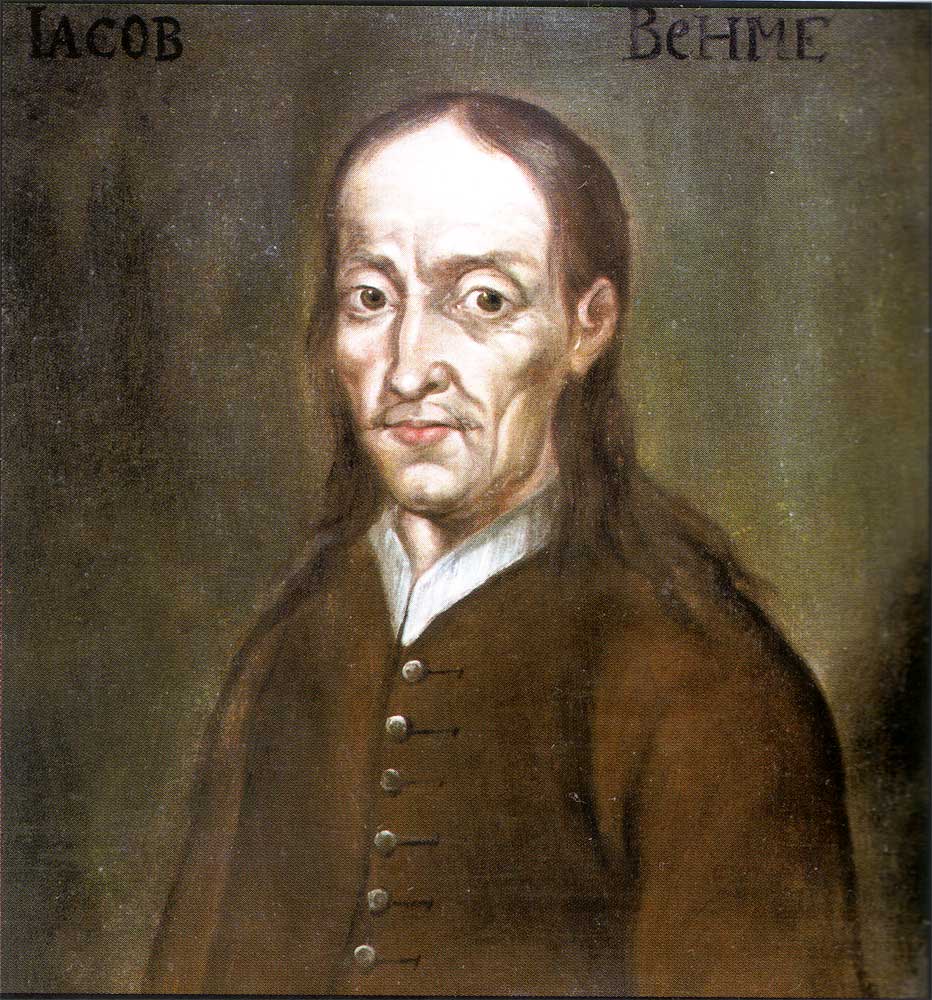
1575 - 1624 - Jakob Bohme (All Facts)
German Lutheran Theologian, Mystic, Philosopher, Theosophist, and Shoemaker

1612 - Jakob Bohme: Aurora (All Facts)
Work which comprises revelations and meditations on God, man, and nature
Work in which the namesake author shows a remarkable familiarity with alchemical writings as well as the scriptures
Work which was condemned by the ecclesiastical authorities at the time of its publication
1623 - Jakob Bohme: Mysterium Magnum (All Facts)

1591 - 1635 - Fredrich Spee (All Facts)
German Jesuit Priest and Theologian
He was a courageous opponent of the procedure followed in Germany’s Witch Trials

1631 - Fredrich Spee: Cautio Criminalis (All Facts)
Work in which the namesake author gives a passionate plea on behalf of those accused of witchcraft

1601 - 1680 - Athanasius Kircher (All Facts)
German Jesuit Scholar and Linguist
He worked on deciphering the Coptic language and Egyptian hieroglyphics