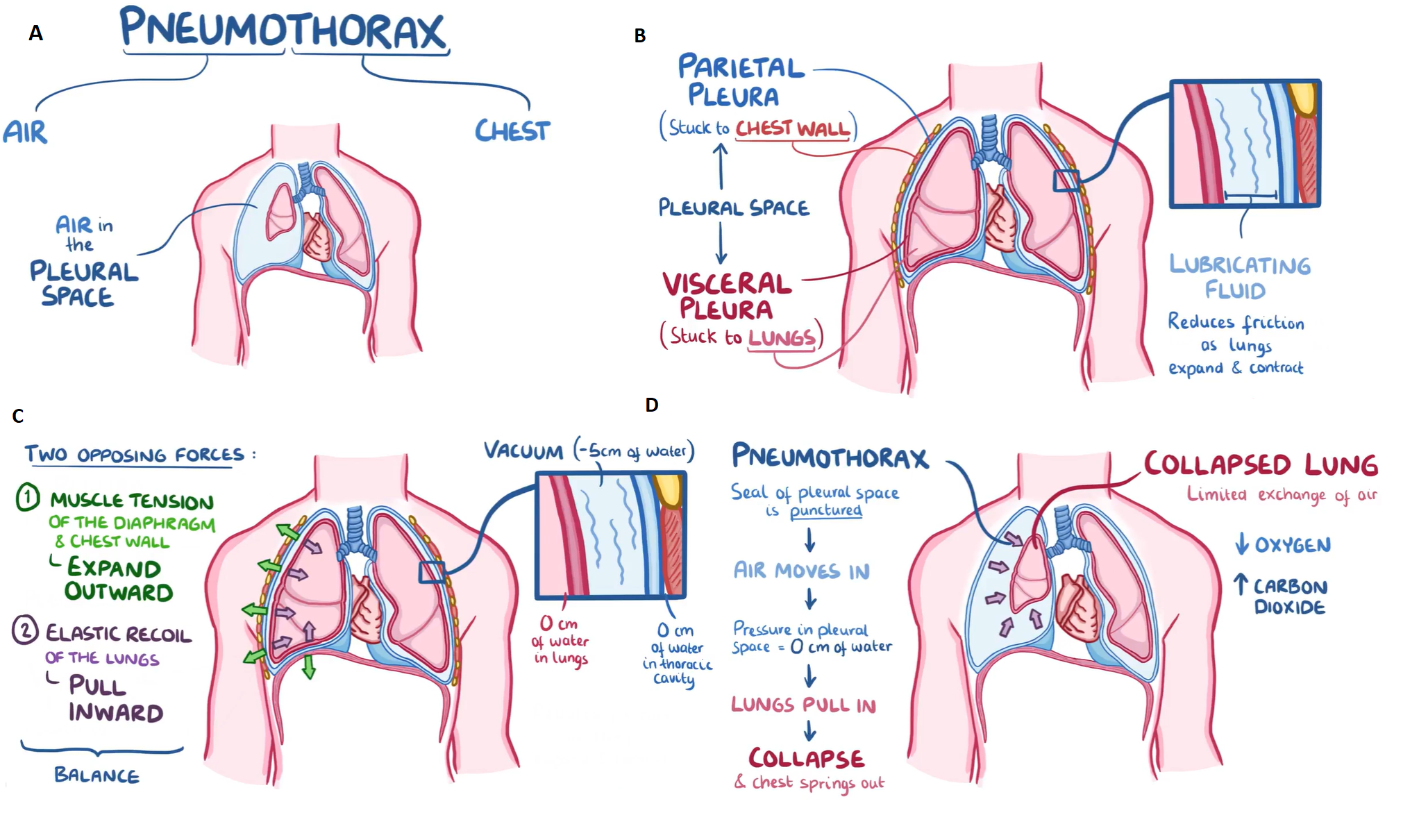
8.0 pneumothorax
 Call Kai
 Learn
Learn Practice Test
 Spaced Repetition
 Match
Match Flashcards
 Knowt Play
1/17

There's no tags or description
Looks like no tags are added yet.
Name | Mastery | Learn | Test | Matching | Spaced | Call with Kai |
|---|
No analytics yet
Send a link to your students to track their progress
18 Terms
A pneumothorax occurs when there is the presence of air within the pleural space,
the potential space between the parietal and visceral pleura.
A pneumothorax is a collection of air outside the lung
but within the pleural cavity.
It occurs when air accumulates between the parietal + visceral pleurae inside the chest which can apply pressure onto the lung → its collapse,
the degree of collapse determining the clinical presentation.
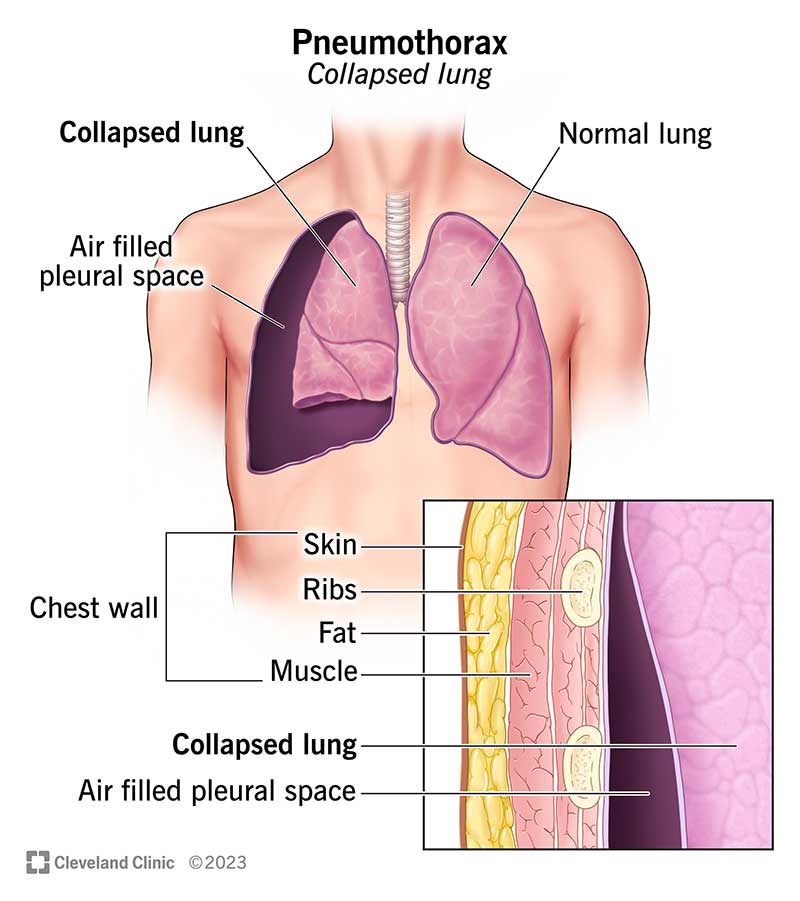
Figure 1: Presentation of a pneumothorax
Air can enter the pleural space by two mechanisms:
Trauma causing communication through the chest wall
Rupture of the visceral pleura.
There are two types of pneumothorax;
traumatic
and atraumatic
primary
and secondary.
Under normal physiological conditions pleural pressure is maintained by the balance between two opposing forces that generate a negative pressure of approximately -5 cmH₂O (centimetres of water) within the pleural space,
this ensures that the lungs remain expanded against the chest wall.
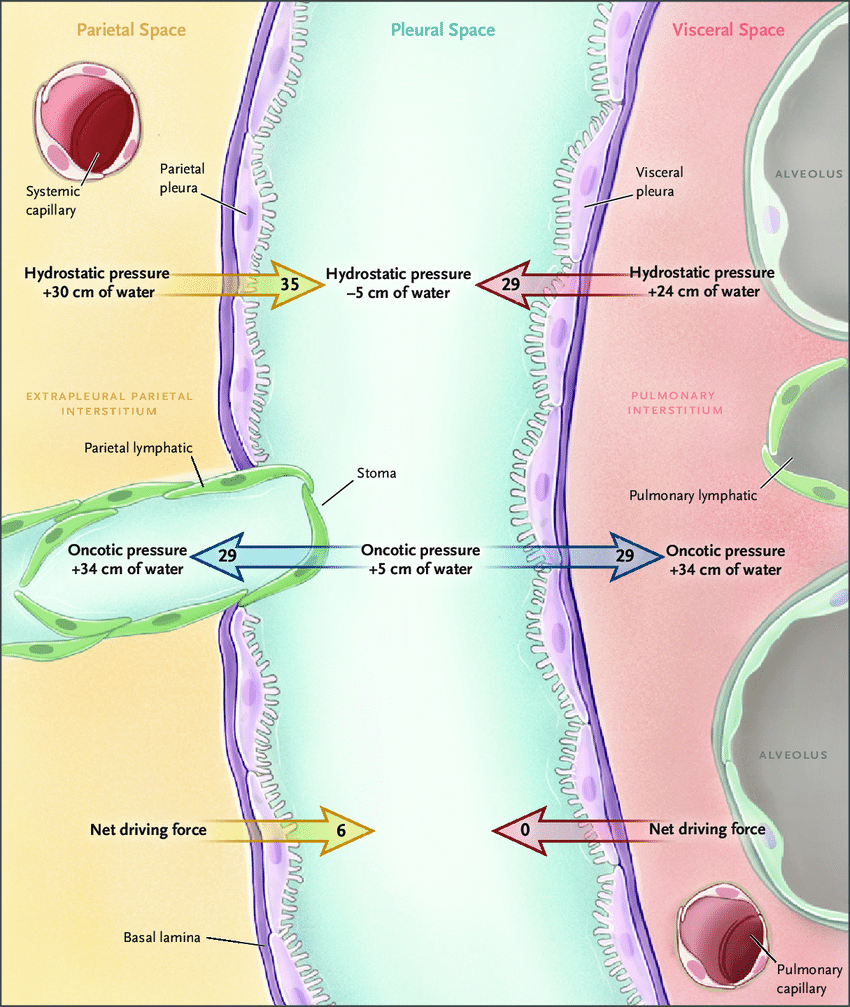
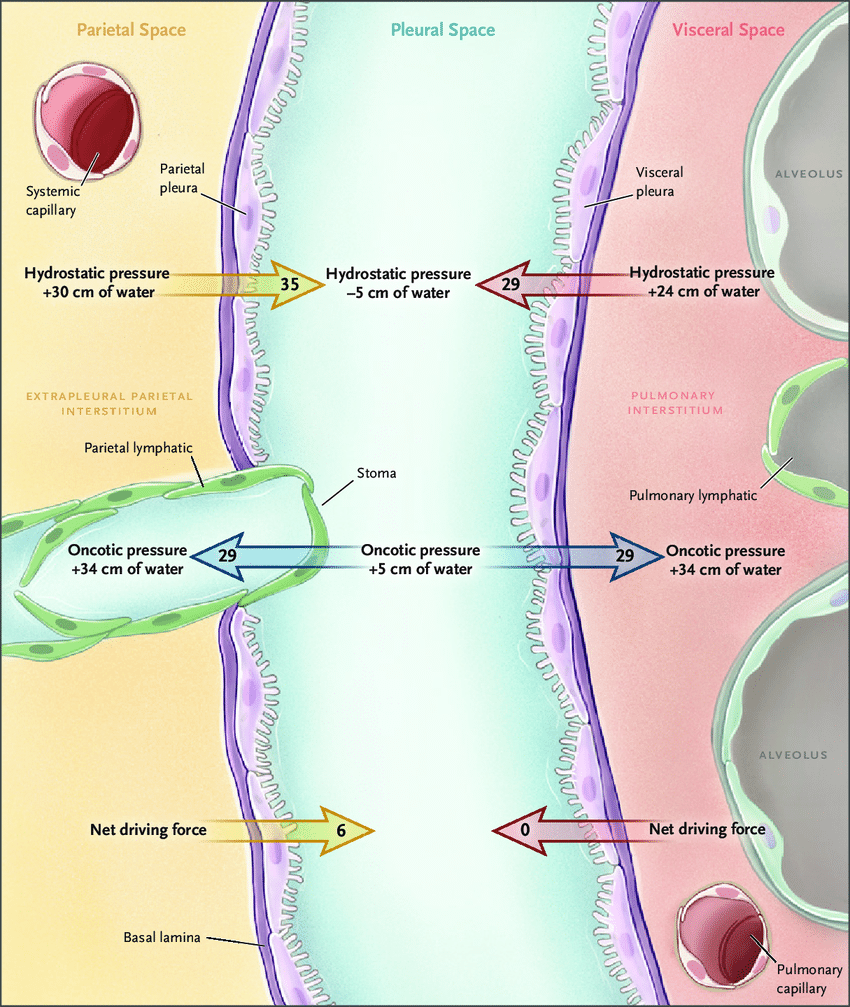
These forces are:
Hydrostatic Pressure
Oncotic Pressure
hydrostatic pressure
pulmonary capiliary hydrostatic repssure is the force of fluid pushing against the walls of the pulmonary capiliaries normally 8-10mmHg
oncotic pressure
the osmotic pressyre exerted by proteins in the plasma that are too large to pass thru the pulmonary capiliaries
In addition, maintenance of pleural pressure is facilitated by the presence of pulmonary surfactants
that allow for the smooth movement of the lungs during respiration while maintaining a negative pressure relative to the atmosphere.
Pneumothorax results in a change in the pressure gradient inside the thorax.
The standard negative pressure (compared to athmospheric pressure) usally present in the pleural space
allows for the lungs to collapse due to elastic recoil during breathing.
When there is communication between the alveoli and the pleural space, air fills this space and results in a change of the pressure gradient,
allowing for lung collapse unit equilibrium, i.e. a collapsed lung.
The pneumothorax then enlarges, and the lung gets smaller due to this vital capacity,
and oxygen partial pressure decreases.
Clinical presentation of a pneumothorax can range anywhere from
asymptomatic → chest pain + shortness of breath
A tension pneumothorax can cause
severe hypotension (obstructive shock) and even death.
tension pneumothorax
a life threatening emergency wherein a large air collection in the pleural space compromises respiration and cardiac function this condition can arise from events like trauma or aggressive emchanical ventilation or resucitation