ch 8 nucleotides and nucleic acids
 Call Kai
 Learn
Learn Practice Test
 Spaced Repetition
 Match
Match Flashcards
 Knowt Play
1/62

There's no tags or description
Looks like no tags are added yet.
Name | Mastery | Learn | Test | Matching | Spaced | Call with Kai |
|---|
No analytics yet
Send a link to your students to track their progress
63 Terms
Nucleotides- role in cellular metabolism
•have a variety of roles in cellular metabolism:
–energy currency in metabolic transactions
–essential chemical links in the response of cells to hormones and other extracellular stimuli
–structural components of an array of enzyme cofactors and metabolic intermediates
constituents of nucleic acids: deoxyribonucleic acid (DNA) and ribonucleic acid (RNA)
Gene
•segment of a DNA molecule that contains the information required for the synthesis of a functional biological product, whether protein or RNA
Functions of DNA
–storage of biological information
transmission of that information to the next generation
The functions of RNA
•several classes of RNA:
–ribosomal RNAs (rRNAs) = components of ribosomes
–messenger RNAs (mRNAs) = intermediates in protein synthesis
–transfer RNAs (tRNAs) = adapter molecules that translate the information in mRNA into a specific amino acid sequence
noncoding RNAs (ncRNAs) = wide variety of functions
Components of nucleotides
have three components:
a nitrogenous base (pyrimidine or purine)
a pentose
1+ phosphates
Nucleoside
The molecule without a phophate group
Nucleotide bonds
N-β-glycosyl bond = covalently joins the 1′ carbon of the pentose to the base (at N-1 of pyrimidines and N-9 of purines)
formed by removal of the elements of water
the phosphate is esterified to the 5′ carbon
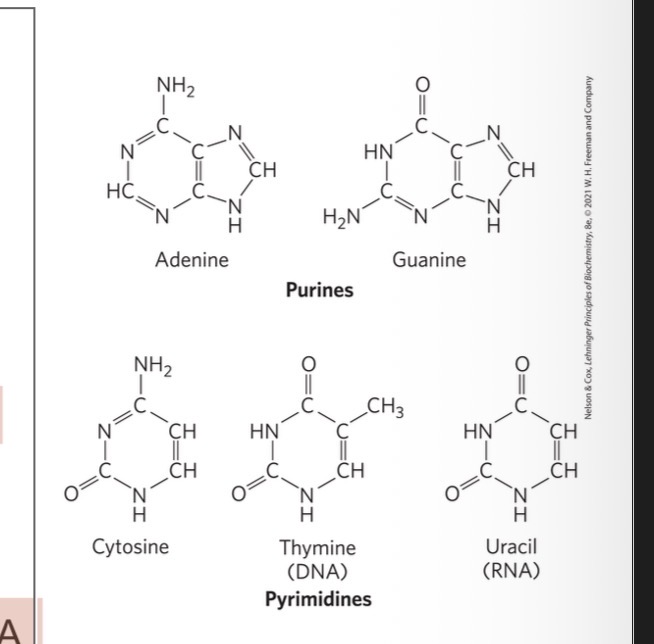
Nitrogenous bases
major purine bases:
adenine (A) = in DNA and RNA
guanine (G) = in DNA and RNA
major pyrimidine bases:
cytosine (C) = in DNA and RNA
thymine (T) = only in DNA
uracil (U) = only in RNA
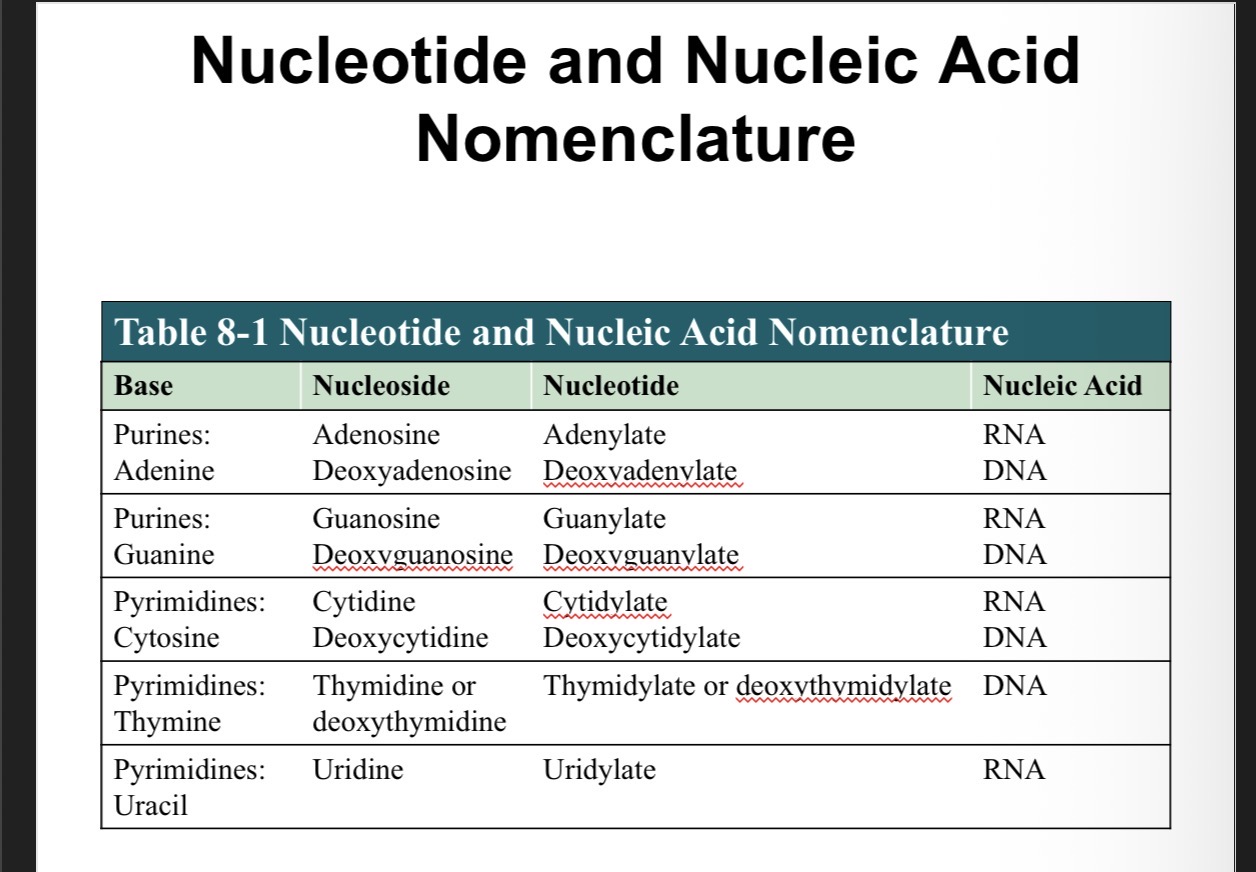
Nucleotide nulcleic acid Nomenclature
Nucleotide pentose
two kinds of pentoses:
2′-deoxy-d-ribose = in DNA
D-ribose = in RNA
both are in their β-furanose (closed five-membered ring) form
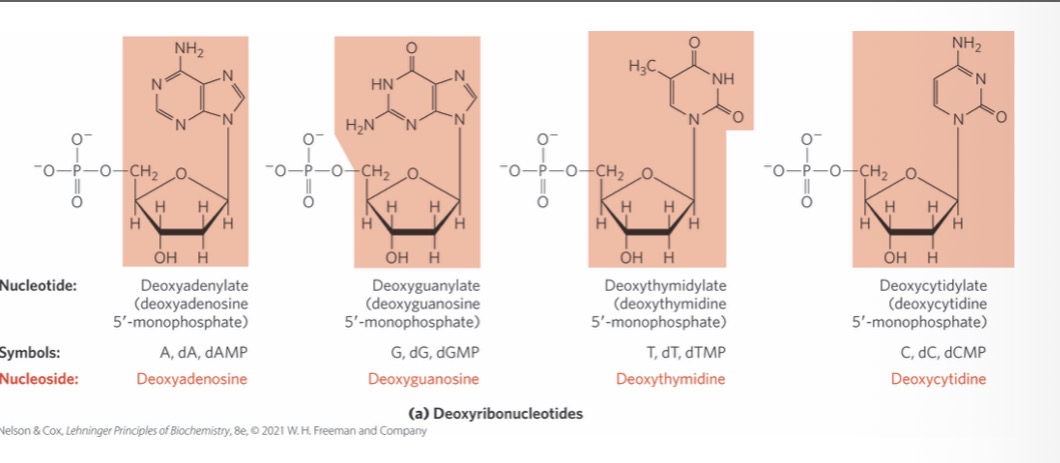
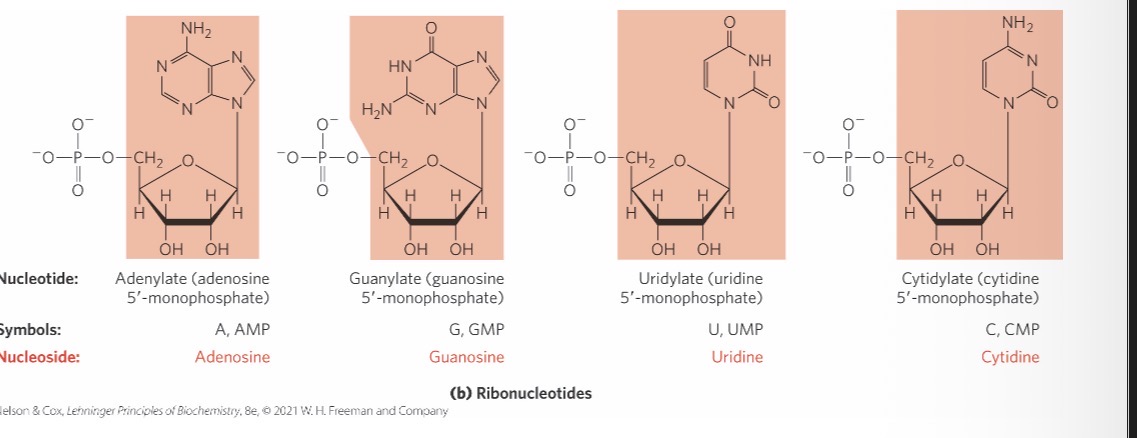
Deoxyribonucleotides
structural units of DNA
also called deoxyribonucleoside 5′-monophosphates, deoxynucleotides, and deoxynucleoside triphosphates
Ribonucleotides
structural units of RNA
also called ribonucleoside 5′-monophosphates
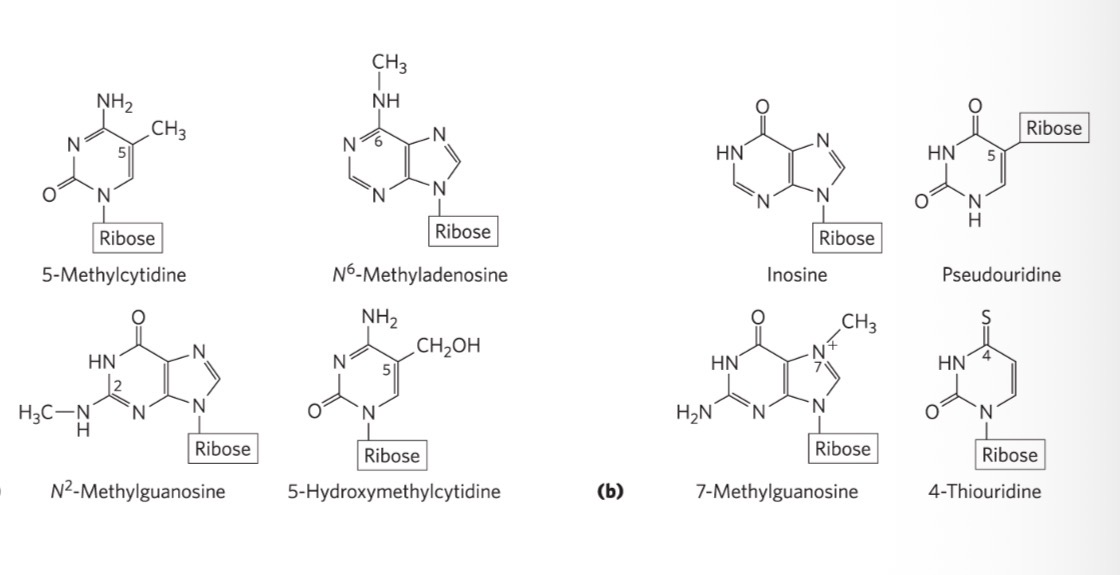
Minor purine and pyrimidine bases
Methylated forms most common in DNA
Phosphodiester linkage
covalent bond that joins successive nucleotides of both DNA and RNA
between the 5′-phosphate group of one nucleotide unit and the 3′-hydroxyl group of the next nucleotide
Hydorlysis of DNA and RNA
under alkaline conditions:
RNA is rapidly hydrolyzed due to the presence of 2′-hydroxyl groups
DNA is not rapidly hydrolyzed
Oligonucleotide
Short (typically <50 nucleotides) nucleic acid
Polynucleotide
Longer nucleic acid
What are the properties if nucleotide bases that affect eh 3 dimensional stucture of nucleic acids?
weakly basic compounds
aromatic molecules
because most bonds in the ring have partial double-bond character:
pyrimidines are planar
purines have a slight pucker
What are the pryimidine andpurine bases that may exist as tautomers forms called?
may exist in readily interconverted forms called tautomers
lactam
lactim
double lactim
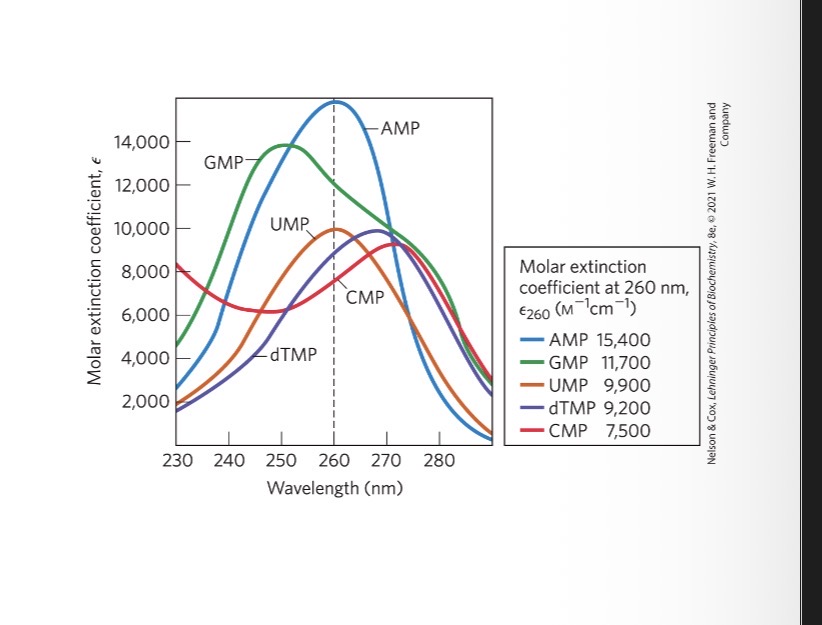
Absorption spectra of common nucleotides
all nucleotide bases absorb UV light
strong absorption near 260 nm
Solubility of nucleotides
hydrophobic and relatively insoluble in pH 7.0 water
leads to stacking interactions (van der Waals and dipole-dipole)
charged and more soluble at acidic or alkaline pH values
Base pairs
hydrogen-bonding patterns between complementary strands of nucleic acids
A bonds specifically to T (or U)
G bonds specifically to C
Hierchial levels of nucleic acid structure
primary structure = covalent structure and nucleotide sequence
secondary structure = regular, stable structure taken up by some or all the nucleotides
tertiary structure = complex folding of large chromosomes or the elaborate folding of tRNA or rRNA structures
Watson crick model for the structure of DNA
offset pairing of the two strands creates a major groove and a minor groove
3 hydrogen bonds form between G and C
2 hydrogen bonds form between A and T
parallel
3′ ,5′ -phosphodiester bonds run in the same direction
DNA strands are antiparallel
3′ ,5′ -phosphodiester bonds run in opposite directions
ultimately confirmed by x-ray analysis
Double helix measurements
10.5 base pairs
36 A (3.6nm0
Complementary
double-helical DNA strands are complementary:
when A occurs in one chain, T is found in the other
when G occurs in one chain, C is found in the other
hydrogen bonding does not contribute significantly to stability of the structure
How is the double helix stabilized
metal cations that shield the negative charges of backbone phosphates
base stacking interactions between successive base pairs
successive G≡C or C≡G are stronger than successive A=T or T=A
duplexes with higher G≡C context are more stable
Replication of DNA
Step 1: preexisting or “parent” strands become separated
Step 2: each “parent” strand serves as a template for the biosynthesis of a complementary “daughter strand”
What does structural variation in DNA refelects
different possible conformations of the deoxyribose
rotation about the contiguous bonds making up the phosphodeoxyribose backbone
free rotation about the C-1′–N-glycosyl bond
B-form DNA
the Watson-Crick structure
most stable for a random-sequence DNA molecule under physiological condition
A-form DNA
right-handed double helix with a wider helix, 11 bp/turn, and a tilted plane
favored in solutions devoid of water
Z- form DNA
left-handed helix with 12 bp/turn and a backbone with a zig-zag appearance
appears more slender and elongated
Palindrome
region of DNA that is identical when read either forward or backward
applied to regions of DNA with inverted repeats
Mirror repeat
Sequence when the inverted repeat occurs within each individual strand
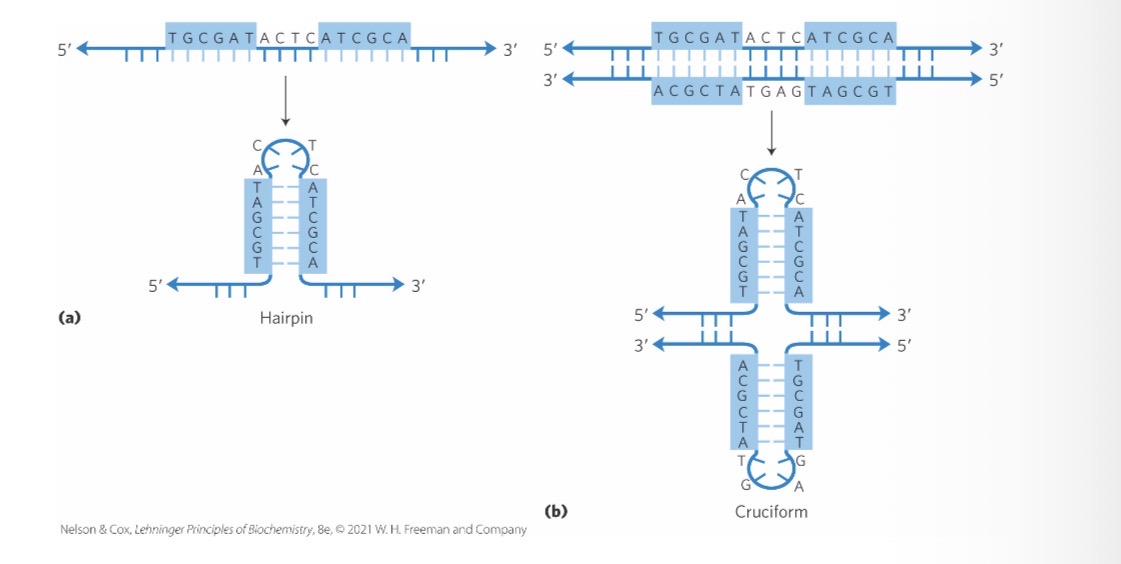
Hairpin and cruciform structures
Form form the self complementarity within each strand
Tetraplex DNA
occur when four DNA strands pair
occur readily only for DNA sequences with a very high proportion of G residues
G tetraplex = very stable
Messenger RNA (mRNA)
Portion of cellular RNA carrying gentic information from DNA tot he ribosome
Transcription
Process by which mRNAs are formed on DNA template
Monocistronic
Codes for only one polypeptide
-most mRNAs in eukaryotes
Polycistronic
Codes for 2 + different polypeptides
-occurs in bacteria and archaea
MRNa structure
mRNA is always single-stranded
right-handed helical conformation
dominated by base-stacking interactions
strongest between two purines
can base pair with complementary regions of DNA or RNA
paired strands are antiparallel
Secondary suture of RNAs
structure of complementary RNA strands is an A-form right-handed double helix
breaks caused by mismatched or unmatched bases result in bulges or internal loops
internal loops form between palindromic sequences
Denaturation or melting of the double helix
due to pH extremes or high temperatures
disrupts hydrogen bonds and base-stacking interactions
Anneal
Process by which two stands spontaneously rewind when temperature or pH is returned to its normal range
-two step process
Hypochromic effect
The observed decrease int eh absorption of UV light when complementary strands are paired
Hyperchromic effect
The observed increase in the absorption of UV light when a double stranded nucleic acid is denatured
-monitoring UV absorption at 260nm can detect the transition from the double stranded to the single stranded DNA
Denaturation temperature tm
temperature at which ½ of DNA is present as separated single strands
increases with content of G≡C base pairs
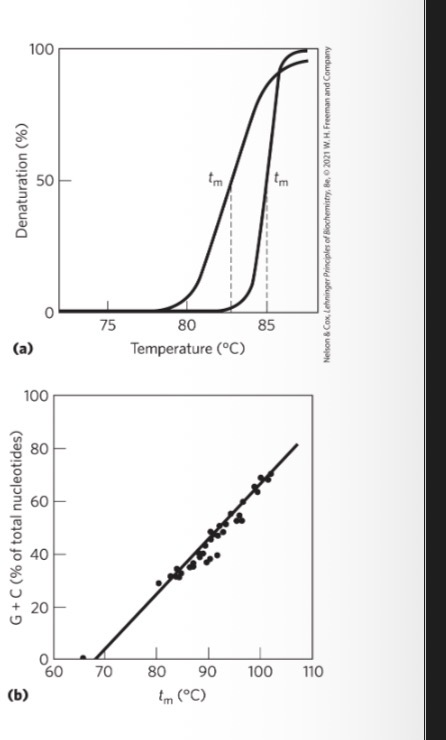
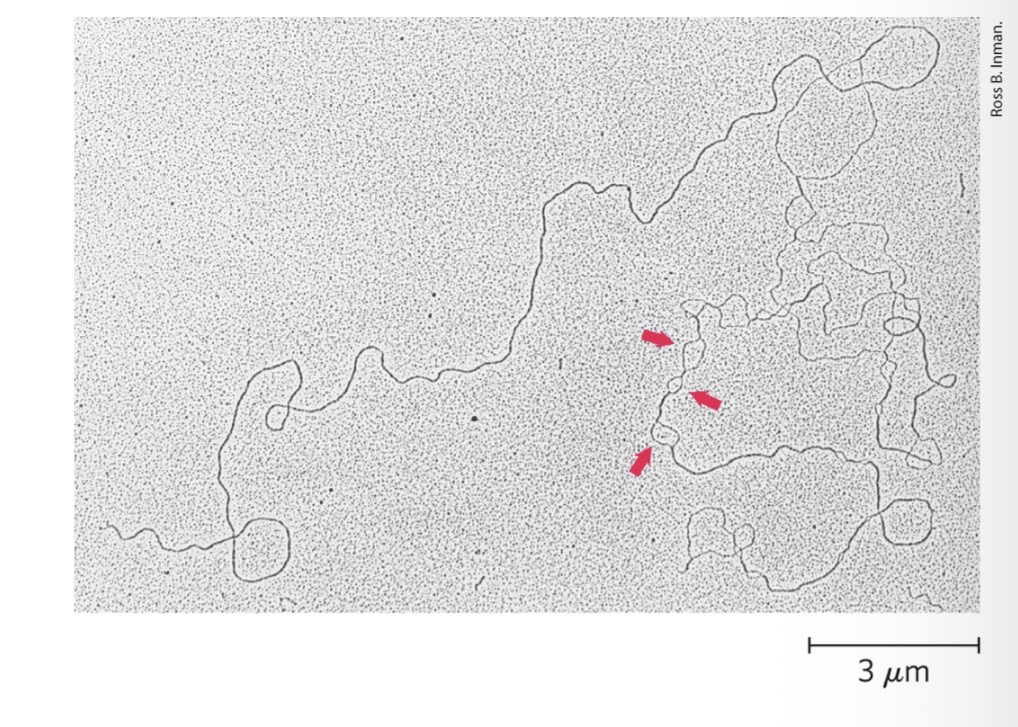
Partially denatured DNA
Denatured regions form bubbles
Often rich in A=T base pairs
Mutations
Alteration sin DNA structure that produce permanent changes in genetic information encoded
-linked to aging and carcinogenesis
Delamination reactions
deamination = spontaneous loss of exocyclic amino groups
deamination of cytosine to uracil = ~100 events/day
recognized as foreign in DNA and removed
almost certainly why DNA contains thymine rather than uracil
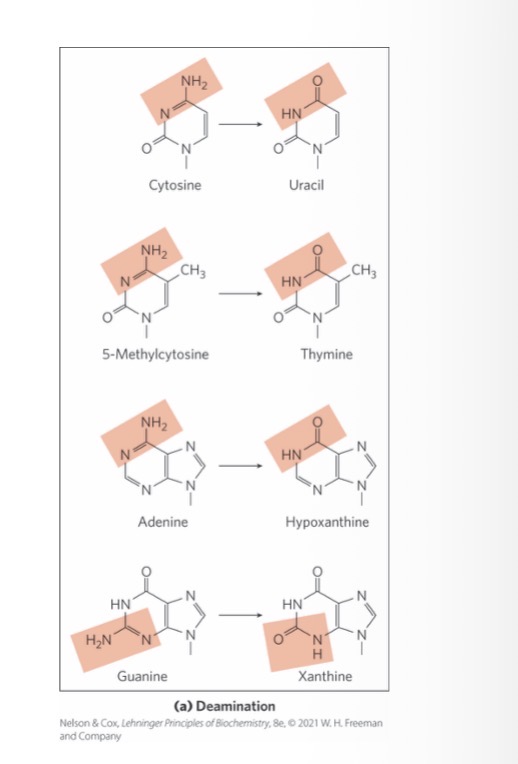
Depurination reactions
hydrolysis of the N-β-glycosyl bond between the base and the pentose
creates an AP (apurinic, apyrimidinic) site or abasic site
more common with purines
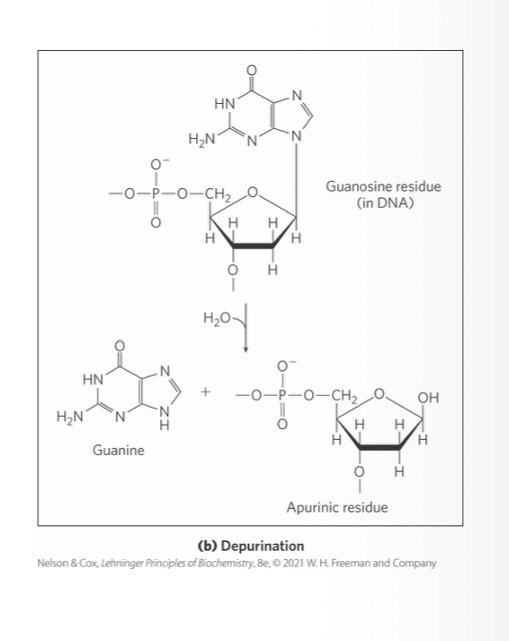
Reactions promoted by radiation
UV light causes:
cyclobutane pyrimidine dimers
6-4 photoproduct
ionizing radiation (x-rays and gamma rays) causes:
ring opening
base fragmentation
breaks in the covalent backbone of nucleic acids
What are reactive chemicals that damage DNA?
nitrous acid precursors = deaminating agents
alkylating agents = generate modified nucleotides nonenzymatically
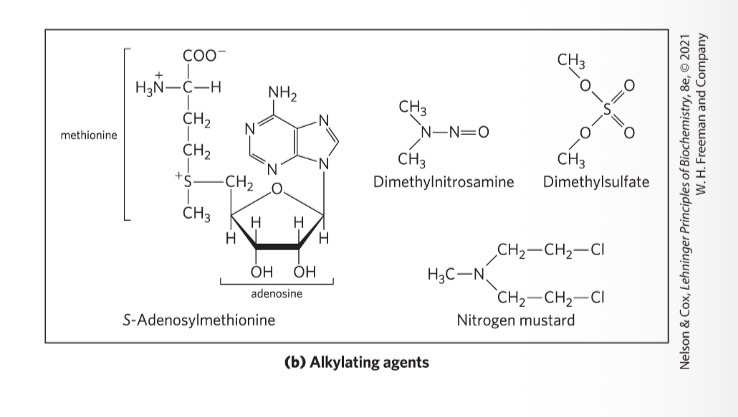
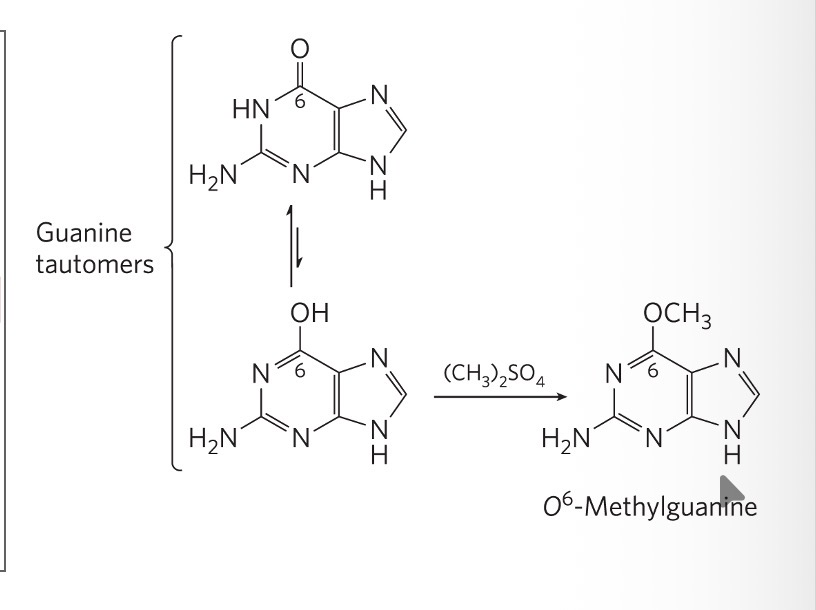
How does alkylating agents can alter certain bases of DNA
can methylate guanine to O6-methyl-guanine, which cannot base-pair with cytosine
DNA damage by oxidative damage
reactive oxygen species (hydrogen peroxide, hydroxyl radicals, superoxide radical) damage DNA
hydroxyl radicals are responsible for most oxidative DNA damage
cells have an elaborate defense system to destroy reactive oxygen species
Polymerase chain reaction (PCR)
method of amplifying DNA segments of interest
relies on DNA polymerases (enzymes that synthesize DNA from deoxyribonucleotides (dNTPs) using a DNA template)
DNA polymerases add nucleotides to the 3′ ends of preexisting strands called primers
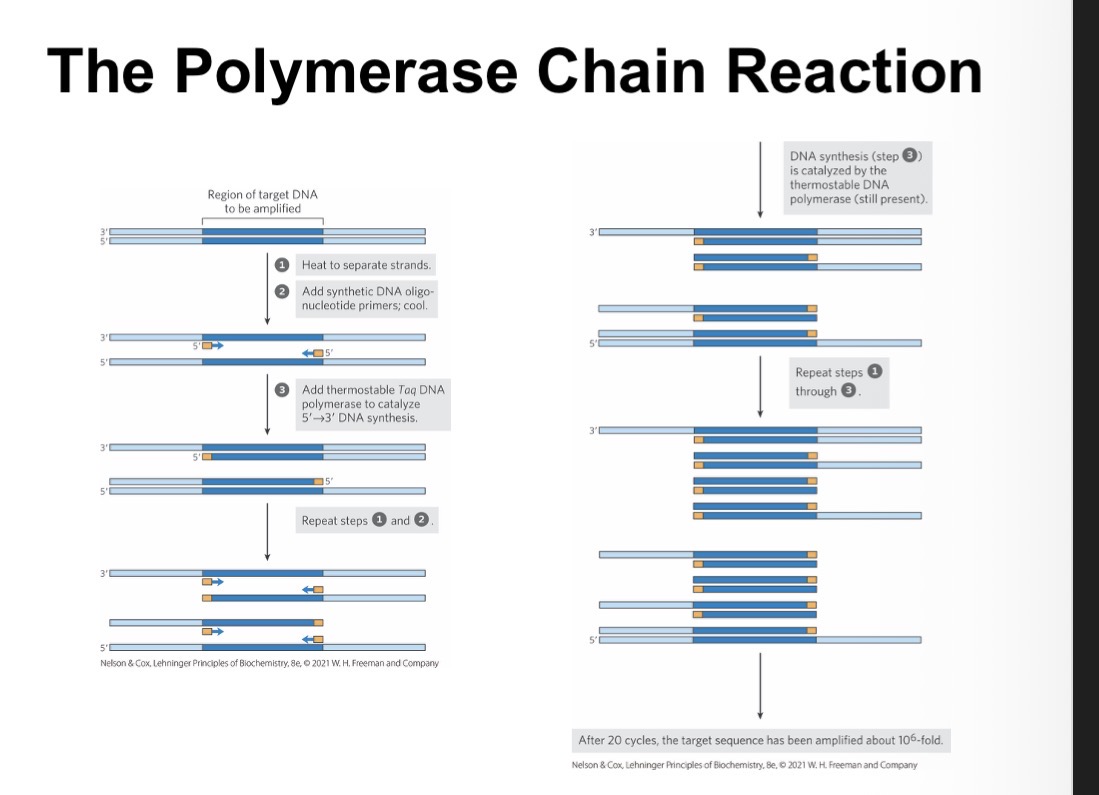
Pc technology id highly sensitive
PCR can detect and amplify just one DNA molecule in almost any sample type
Uses of PCR:
cloning of rare, undegraded DNA segments from 40,000+ years ago
tracing evolution
potent tool in forensic medicine
detecting viral infections and cancers before they cause symptoms
prenatal diagnosis of genetic diseases
Sanger sequencing
dideoxy chain-termination sequencing
nucleotide analogs called dideoxynucleoside triphosphates (ddNTPs) interrupt synthesis
Reversible terminator sequencing
developed by Illumina
uses four different modified deoxynucleotides (A, T, G, and C), each with a particular fluorescent label and a 3′ blocking group
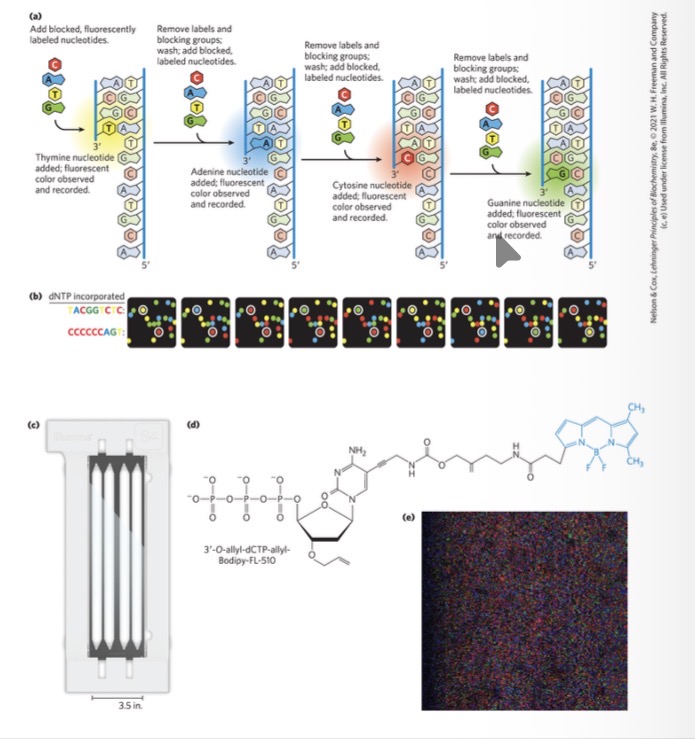
SMRT sequencing
technology allowing read lengths averages up to 30,000-40,000 bp
lower throughput, higher cost, and higher error rate than the Illumina approach
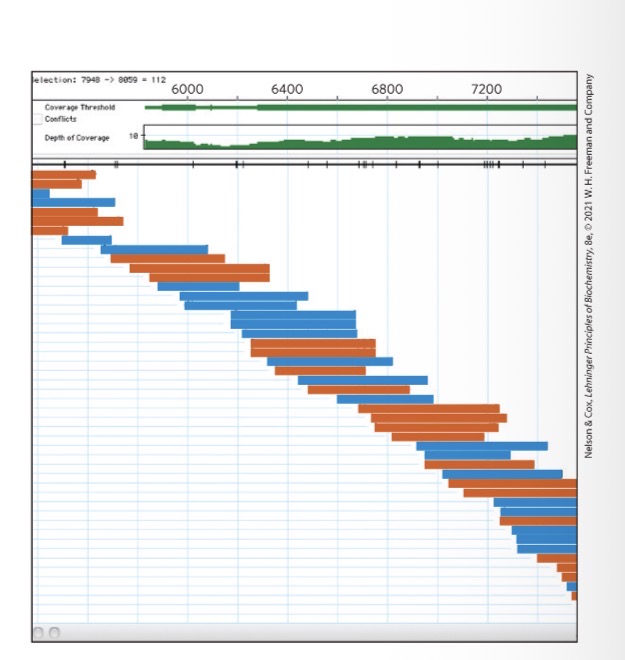
Sequencing depth
Contigs
the number of times that a particular nucleotide in a genome is sequenced, on average
Contigs- long contiguous sequences that are assembled form overlaps