CBR - Vehicle driving safety and reacting in emergency situations
 Call Kai
 Learn
Learn Practice Test
 Spaced Repetition
 Match
Match Flashcards
 Knowt Play
1/17

There's no tags or description
Looks like no tags are added yet.
Name | Mastery | Learn | Test | Matching | Spaced | Call with Kai |
|---|
No analytics yet
Send a link to your students to track their progress
18 Terms
Hand gestures
Friendly hand gestures from drivers is a good way to indicate it is safe to cross the road. Never use aggressive hand gestures.
Can you drive with a broken horn?
No
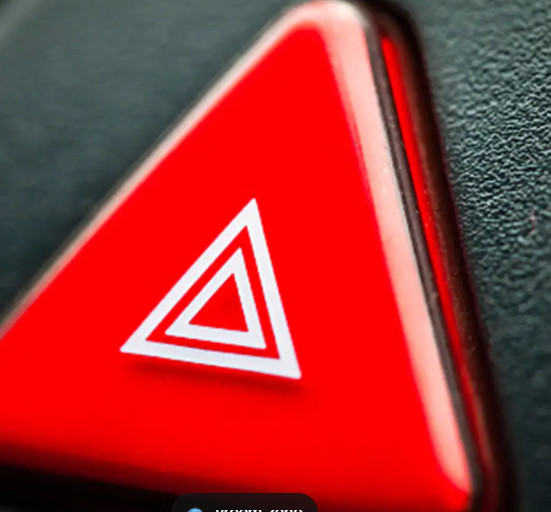
Hazard lights
The use of hazard lights during a breakdown is mandatory.

Indicators
The use of indicators is mandatory before and during turning and during special manoeuvres, changing lanes and exiting. Misuse or no use of indicators is a criminal offence.

Flashing signal with full-beam headlights
You may use full beam headlights to warn drivers if you can avert imminent danger, for example is a driver is not using any lighting at all in the dark.
Using the brake lights
You may use the break pedal as a warning, briefly and lightly before actually braking
Warning triangles
It is not mandatory for a driver of a passenger car to have a warning triangle in the passenger car, but in some cases you’re obliged e.g if you breakdown in the road or have an accident.
Where must warning triangles be placed if necessary to use one?
30 metres from the vehicle, in the direction of the traffic endangering the vehicle.

Dipped Headlights
Dipped headlights is white or yellow on the front of the vehicle and illuminates a good portion of the road in front of the vehicle. Mandatory during the day in poor visibility and at night.
Daytime running lights
Daytime running lights may only be used if dipped headlights are not mandatory and if no other front lighting is switched on.
When is using full-beam headlights prohibited?
During the day
When encountering other road users
When driving closely behind another vehicle

Front fog lights
Lighting that should only be used during a fog
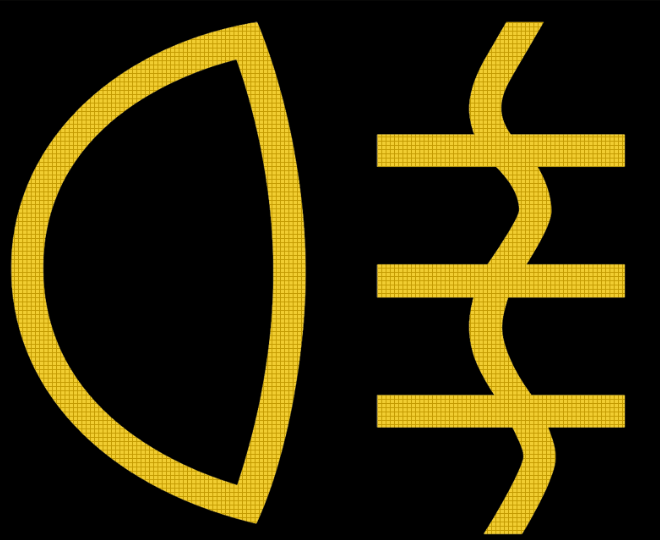
Rear fog lights
Rear fog lights should only be used if visibility is very poor, and when visibility is less than 50 metres.
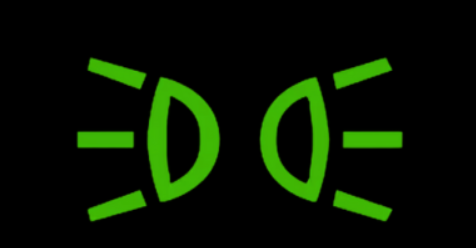
Sidelights
Sidelights are white or yellow lamps on the front of the vehicle.
Rear lights
Normal red lamps on the back of a passenger car. These should always be on when full-beam or dipped headlights, sidelights or fog lights are on at the front.
Number plate lighting
Number plate lighting must also be on if full-beam or dipped headlights, sidelights or fog-lights are switched on at the front.
Brake lights
Consists of three bright red lamps that light up as soon as you use the break pedal. The third brake light usually located at the top or bottom centre of the rear window.
Reverse lights
These are the white or yellow lights on the back of a passenger car that comes on as soon as you put the car in reverse gear.