Peds - 20 - Oncology & Limb Deficiency
 Call Kai
 Learn
Learn Practice Test
 Spaced Repetition
 Match
Match Flashcards
 Knowt Play
1/65

There's no tags or description
Looks like no tags are added yet.
Name | Mastery | Learn | Test | Matching | Spaced | Call with Kai |
|---|
No analytics yet
Send a link to your students to track their progress
66 Terms
easy bleeding or bruising
a unique red flag to leukemias is ___________
pruritus (itching)
a unique red flag to lymphoma is ___________
enlarged lymph nodes
night sweats
fatigue
unexplained weight loss
fever
red flags for both leukemias and lymphomas: (5)
intermittent pain worse at night
swelling
altered gait / decr ROM
red flags for sarcomas: (3)
headache
vomiting
vision, speech, or hearing changes
worsening balance
unsteady gait
unusual sleepiness
weakness
red flags for brain and CNS tumors: (7)
acute lymphoblastic leukemia ALL and acute myeloblastic leukemia AML
the two types of pediatric leukemia are ________ and _________
acute lymphoblastic leukemia
________________ is the rapid proliferation of nonfunctional leukocytes
lymphoblastic
acute __________ leukemia is very treatable and has a high survival rate
2-5
acute lymphoblastic leukemia is most frequent at age/s _____
< 3 yo
acute myeloblastic leukemia is most frequent at age/s _____
myeloblastic
acute __________ leukemia is less common, more severe, and causes severe immunocompromise
acute myeloblastic leukemia
________________ is the rapid proliferation of other blood cells like granulocytes and monocytes
hodgkin’s lymphoma, non-hodgkin’s lymphoma
the two main types of pediatric lymphomas are ____________ and _____________
hodgkin’s
(hodgkin’s/non-hodgkin’s) lymphoma is caused by abnormal B-lymphocytes
non-hodgkin’s
(hodgkin’s/non-hodgkin’s) lymphoma impacts both B- and T-lymphocytes
hodgkin’s
(hodgkin’s/non-hodgkin’s) lymphoma has a higher survival rate
adolescents
hodgkin’s lymphoma is more common and has rising rates in ____________ age
you’re doing so great :)
just wanted to let you know:
peripheral neuropathy
some chemotherapies can cause ____________ so it’s important to check sensation depending on their chemo drug
conditioning
transplantation
recovery
the three stages of a bone marrow transplant are:
high dose chemo and/or radiation
in the conditioning phase of BMT, ___________________ is used to kill of existing bone marrow and cancer cells
healthy bone marrow
in the transplantation phase of BMT, __________ is reintroduced via a central venous catheter
infection, engraftment
in the recovery phase of BMT, it is important to monitor response to BMT, prevent ___________ and support __________ for production of new blood cells
autologous, allogenic
the two possible types of donors for BMT are _________ and ________
autologous
___________ BMT donors and self-donors when healthy bone marrow is harvested pre-treatment and then implanted
allogenic
___________ BMT donors are either a related or unrelated donor, with related donors being a better match with a reduced risk of rejection
graft vs host disease GVHD
__________________ is an immune response to BMT transplant tissue that can be life threatening, with an onset usually within the first 100 days
high dose steroids
GVHD is treated with ___________ to reduce immune response
fever
skin rash
diarrhea, vomiting, bloody stool
jaundice/liver failure
signs of GVHD: (4)
whites of eyes
the easiest place to see and check for jaundice is the _________-
white blood cells: <5k AND FEVER
platelets: <20k
hemoglobin: <8
blood parameters for NO aerobic exercise:
white blood cells: _________ cells/mm3
platelets: _________ cells/mm3
hemoglobin: __________ g/dl
white blood cells: >5k
platelets: 20-50k
hemoglobin: 8-10
blood parameters for light aerobic exercise:
white blood cells: _________ cells/mm3
platelets: _________ cells/mm3
hemoglobin: __________ g/dl
white blood cells: >5k
platelets: >50k
hemoglobin: >8
blood parameters for resistance exercise:
white blood cells: _________ cells/mm3
platelets: _________ cells/mm3
hemoglobin: __________ g/dl
internal bleeding
if platelets are too low, there is a risk for _________
decr oxygenation, anoxic event
if hemoglobin is too low, there is a risk for _________
sarcomas
________ are solid tumors from muscle, bone, cartilage, and fat
rhabdomyosarcoma (muscle)
ewing’s sarcoma (bone and soft tissue)
OSTEOSARCOMA (bone)
the most common types of sarcomas are: (3)
RAPIDLY PROGRESSING
CNS/PNS tumors can be ____________ and have variable survival rates
growth plate
osteosarcomas come from bone cells are are typically found at the __________
chemo, SURGERY, radiation
the three possible treatments for osteosarcomas are: (3)
amputation
limb salvage
rotationplasty
the three possible surgical options for osteosarcomas are:
rotationplasty
a ___________ is when a section of the lower extremity is removed and the ankle and foot is preserved and attached to the femur rotated 180 to become a new “knee”
congenital, acquired
limb deficiencies are either ________ or _________
congenital
_______ limb deficiencies are present at birth and can be caused by genetic conditions, vascular restrictions, teratogens, or amniotic band syndrome
aquired
_______ limb deficiencies develop after birth and can be caused by trauma, growth plates, fractures, cancer, or infection
transverse
amniotic band syndrome can cause ______ limb loss because of complete blood loss to the constrained limb/area
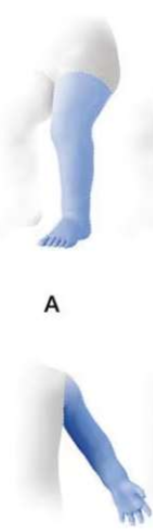
amelia
this limb deficiency would be considered ___________
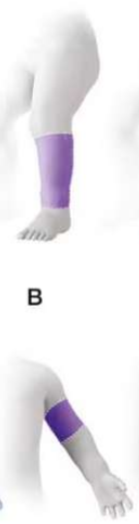
intercalary defect
this limb deficiency would be considered ___________
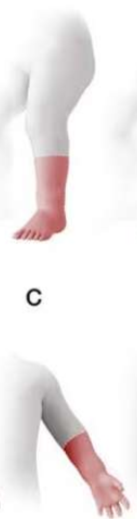
terminal transverse defect
this limb deficiency would be considered ___________
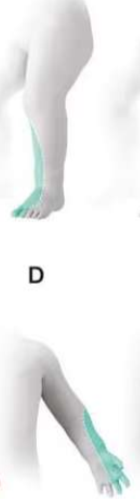
preaxial longitudinal defect
this limb deficiency would be considered ___________
central longitudinal defect
this limb deficiency would be considered ___________
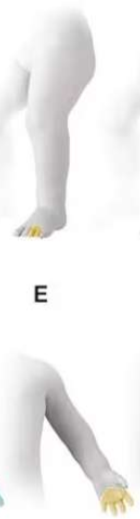
post axial longitudinal defect
this limb deficiency would be considered ___________
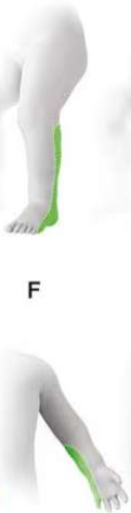
pre and post axial longitudinal defect
this limb deficiency would be considered ___________

amelia
the complete absence of all segments is called _________
intercalary
________ limb deficiencies are when there is absence or hypoplasia of part of the limb, while terminal limb segments remain normal
preaxial, axial (central), postaxial
the three types of longitudinal limb deficiencies are ___________, __________, and __________
preaxial
_________ longitudinal limb deficiencies are radial, tibial, or first digit/toe
axial / central
_________ longitudinal limb deficiencies are hand / foot only, third ray involved; usually involves a split hand/foot
postaxial
_________ longitudinal limb deficiencies are fifth digits/toes involved
proximal femoral focal
___________ deficiency is when the foot is at the height of the uninvolved knee, with a very shortened thich and severe leg length discrepancies
12-18 months
pediatric patients get new prosthetics every ___-____
ARE
pediatric prosthetics (are/are not) considered DME
knee
pediatric prosthetics don’t have complicated _____ joints until the child is older since kids walk with straight legs at first anyways
functional mobility assessment FMA
the ____________________ is an outcome used for bone sarcomas as well as amputations
child amputee prosthetics project functional status inventory CAPP-FSI
the ___________________ is an outcome that measures both with and without prosthesis
limits their function
a UE prosthesis may be avoided if it _____________