5.2 Dislocations and strengthening and 5.3 Fracture and Failure
 Call Kai
 Learn
Learn Practice Test
 Spaced Repetition
 Match
Match Flashcards
 Knowt Play
1/52

There's no tags or description
Looks like no tags are added yet.
Name | Mastery | Learn | Test | Matching | Spaced | Call with Kai |
|---|
No analytics yet
Send a link to your students to track their progress
53 Terms
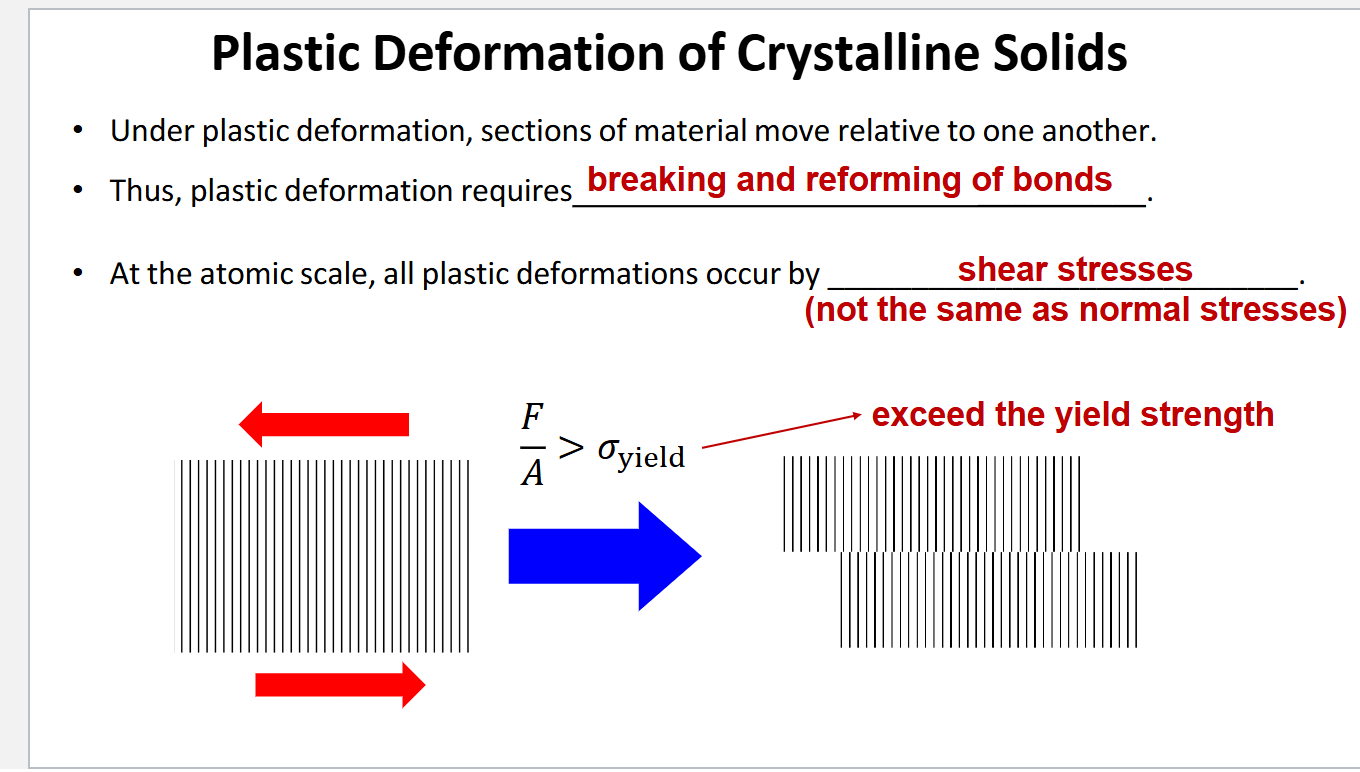
Plastic deformation of crystalline solids
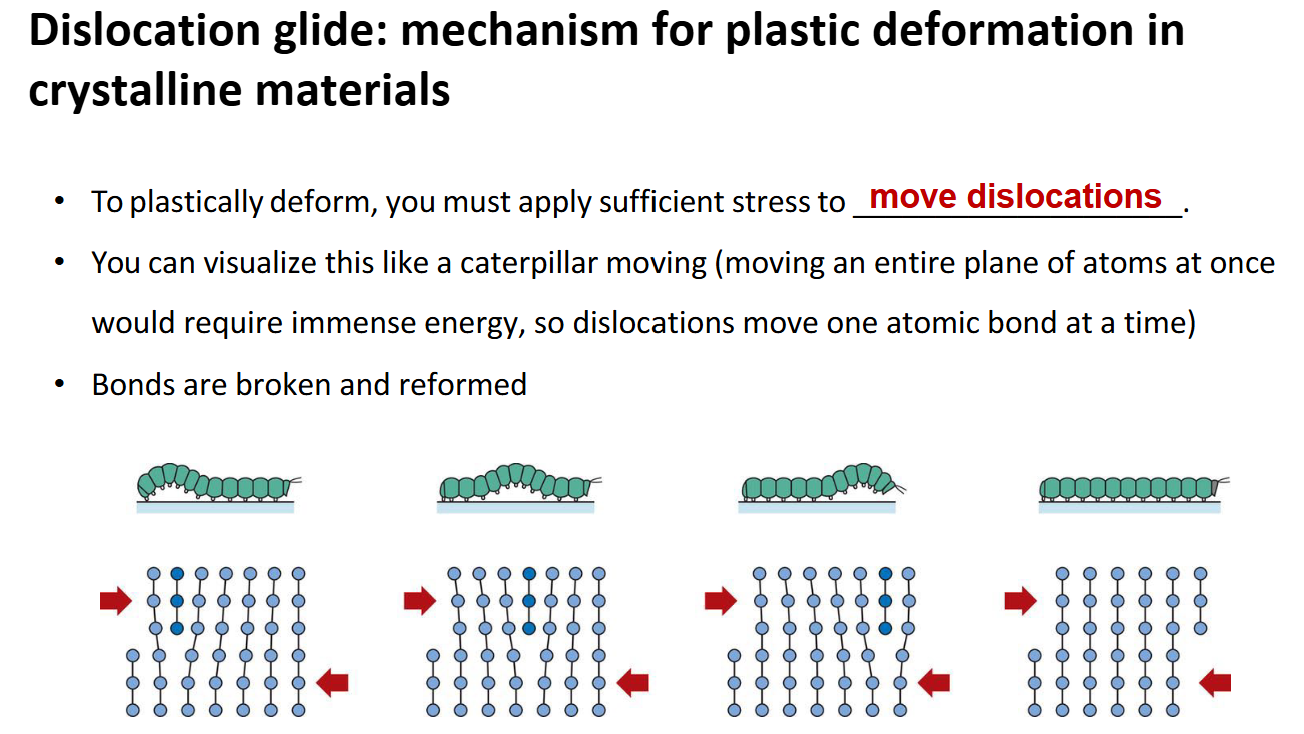
Dislocation glide
Explain this in plain language
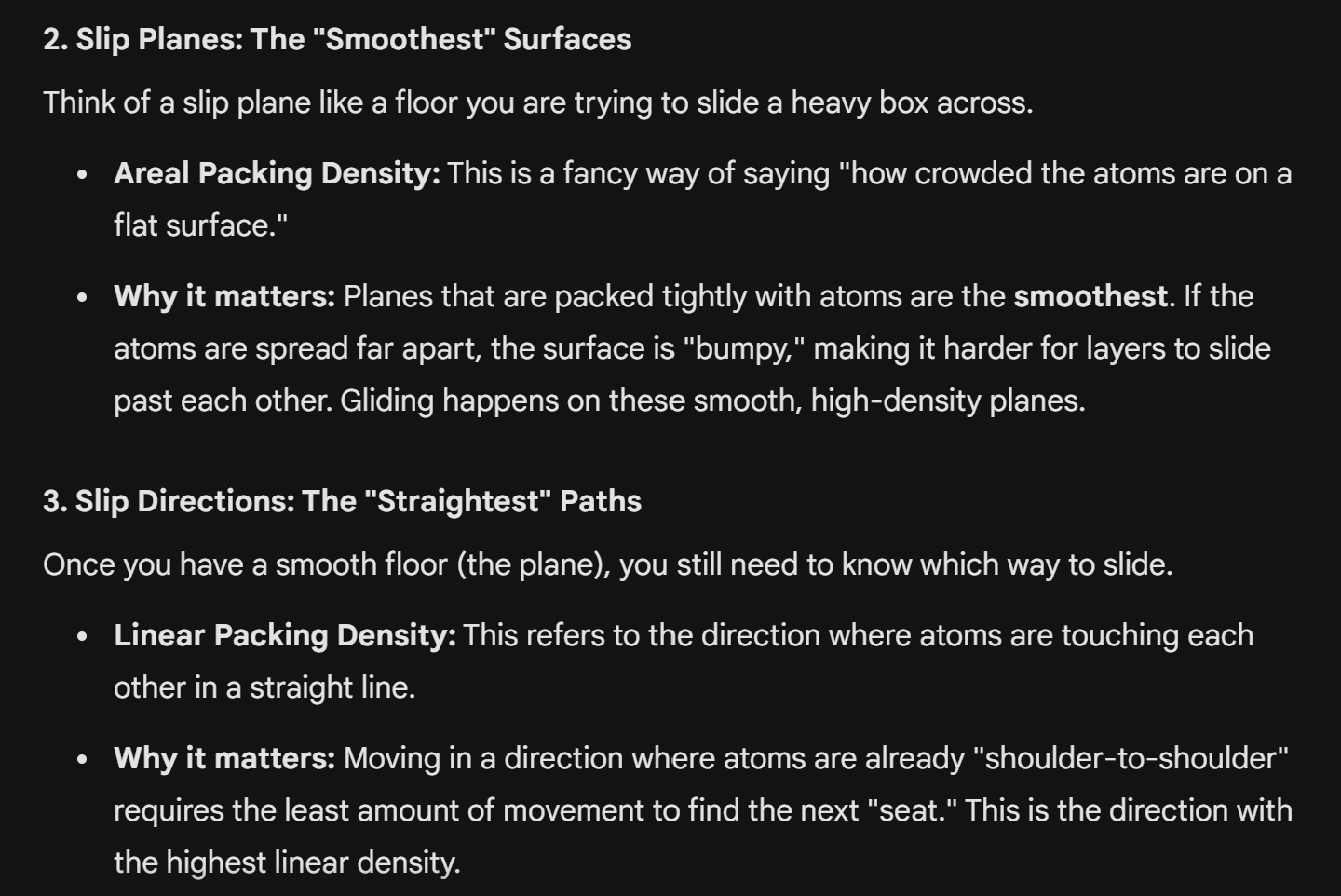

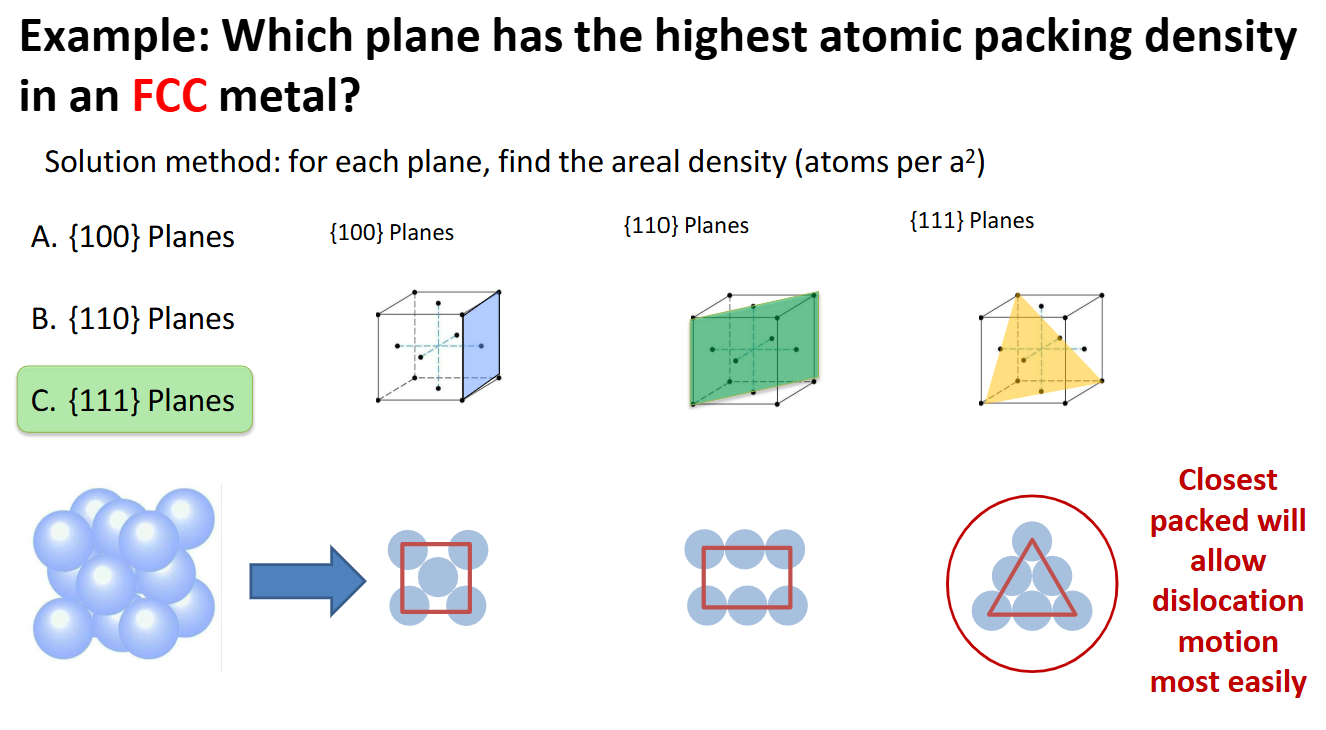

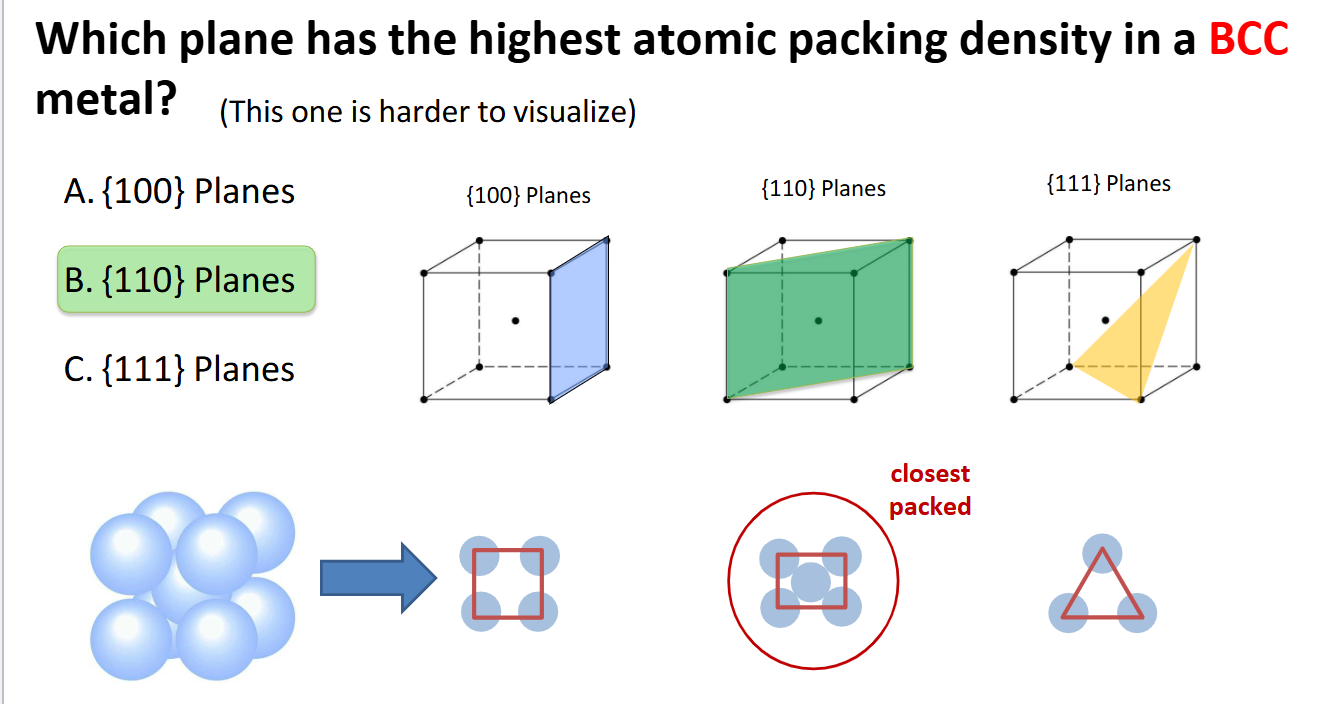
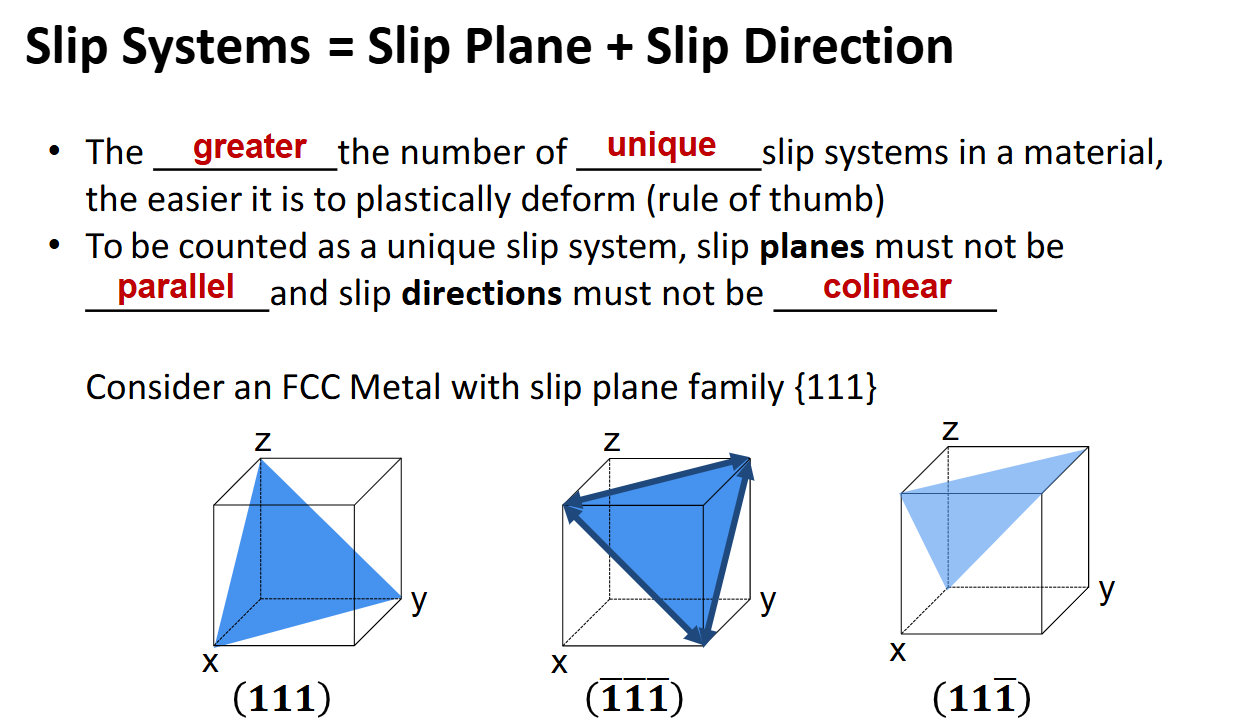
Explain this in plain language
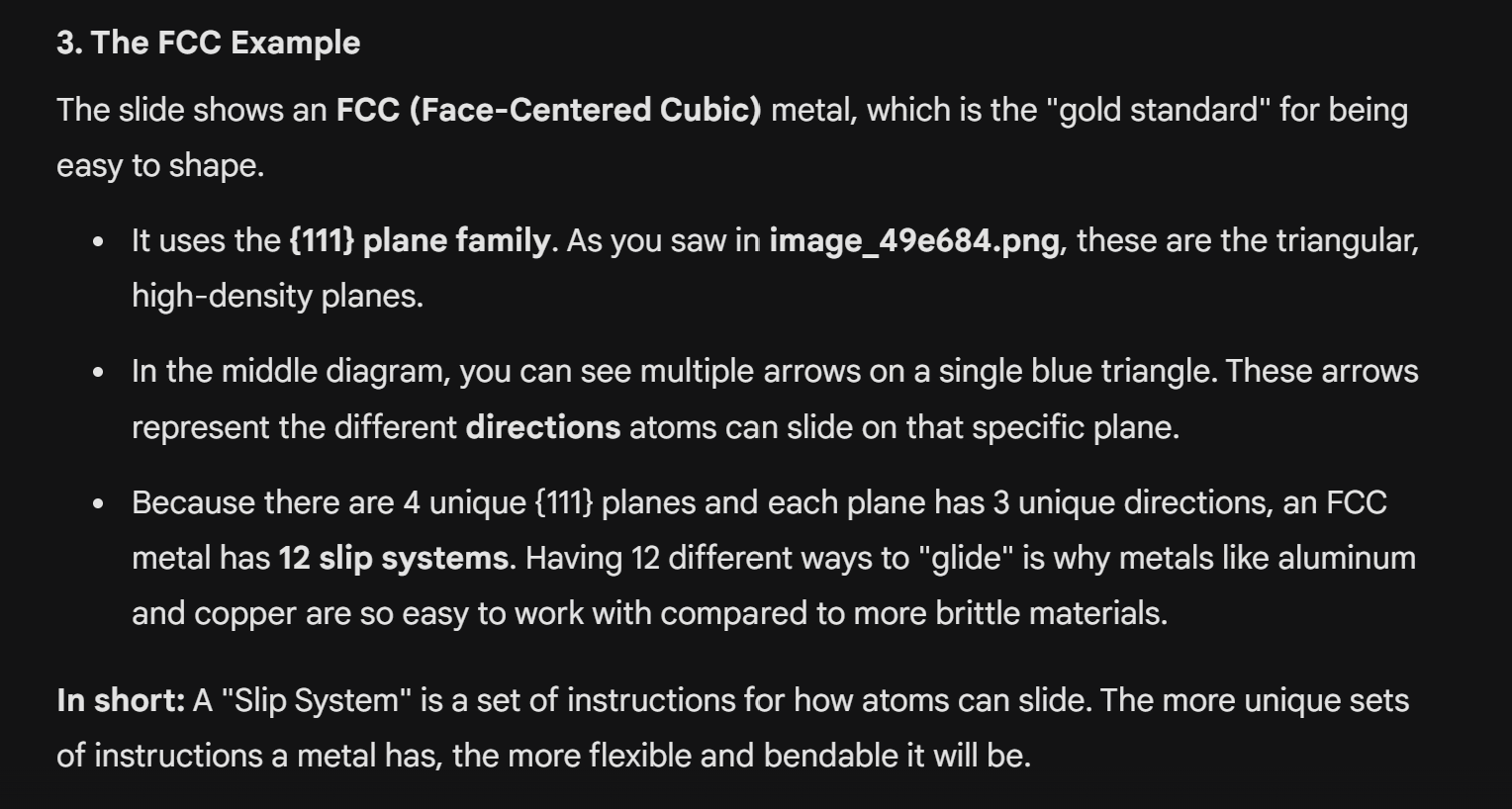
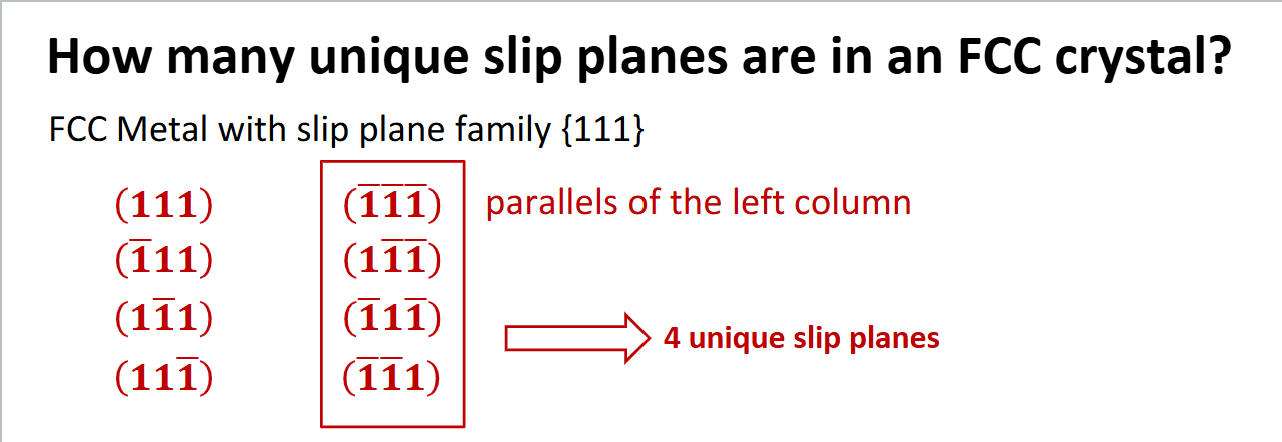
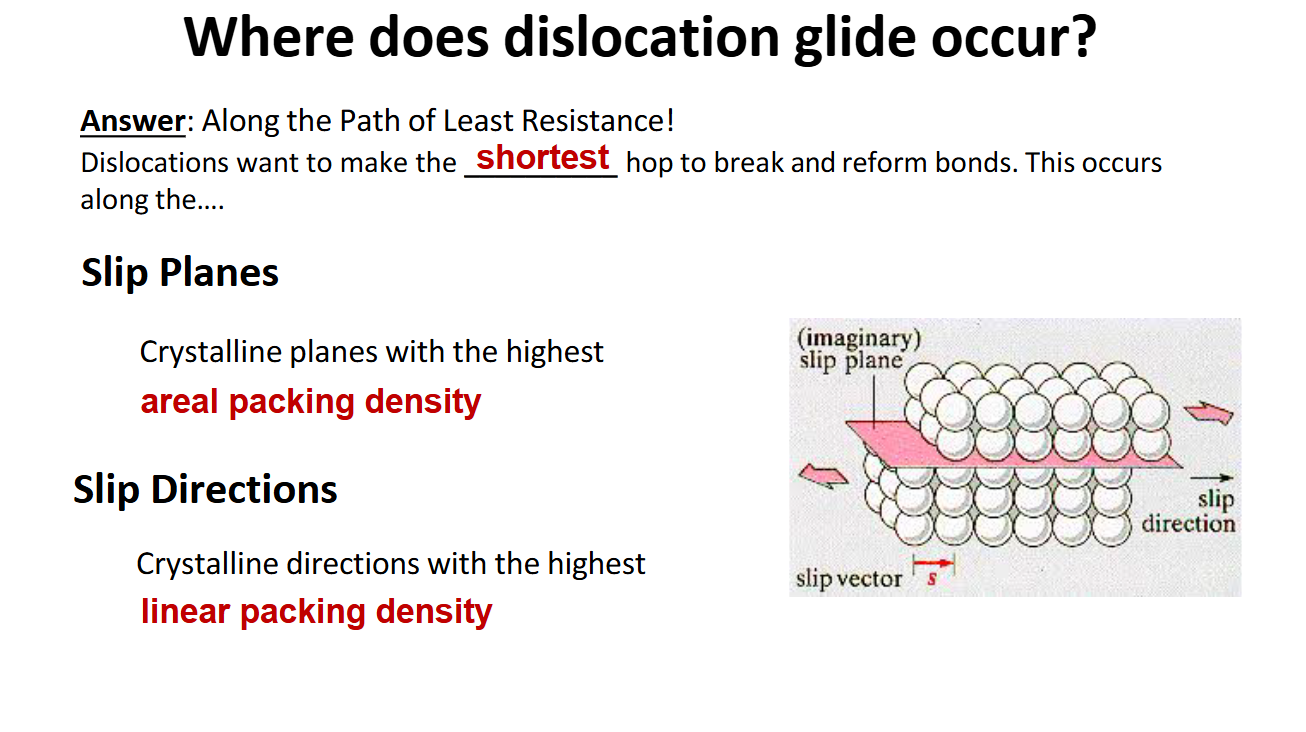
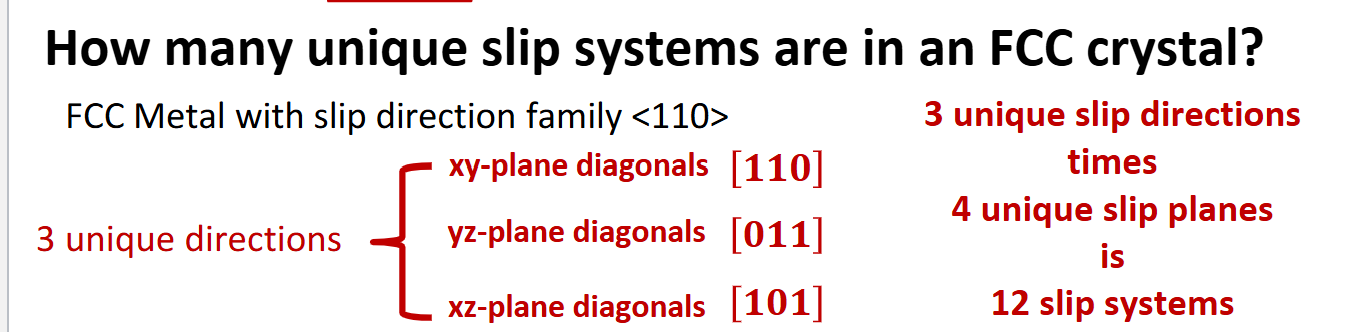
How do you find how many unique slip planes there are in a crystal?
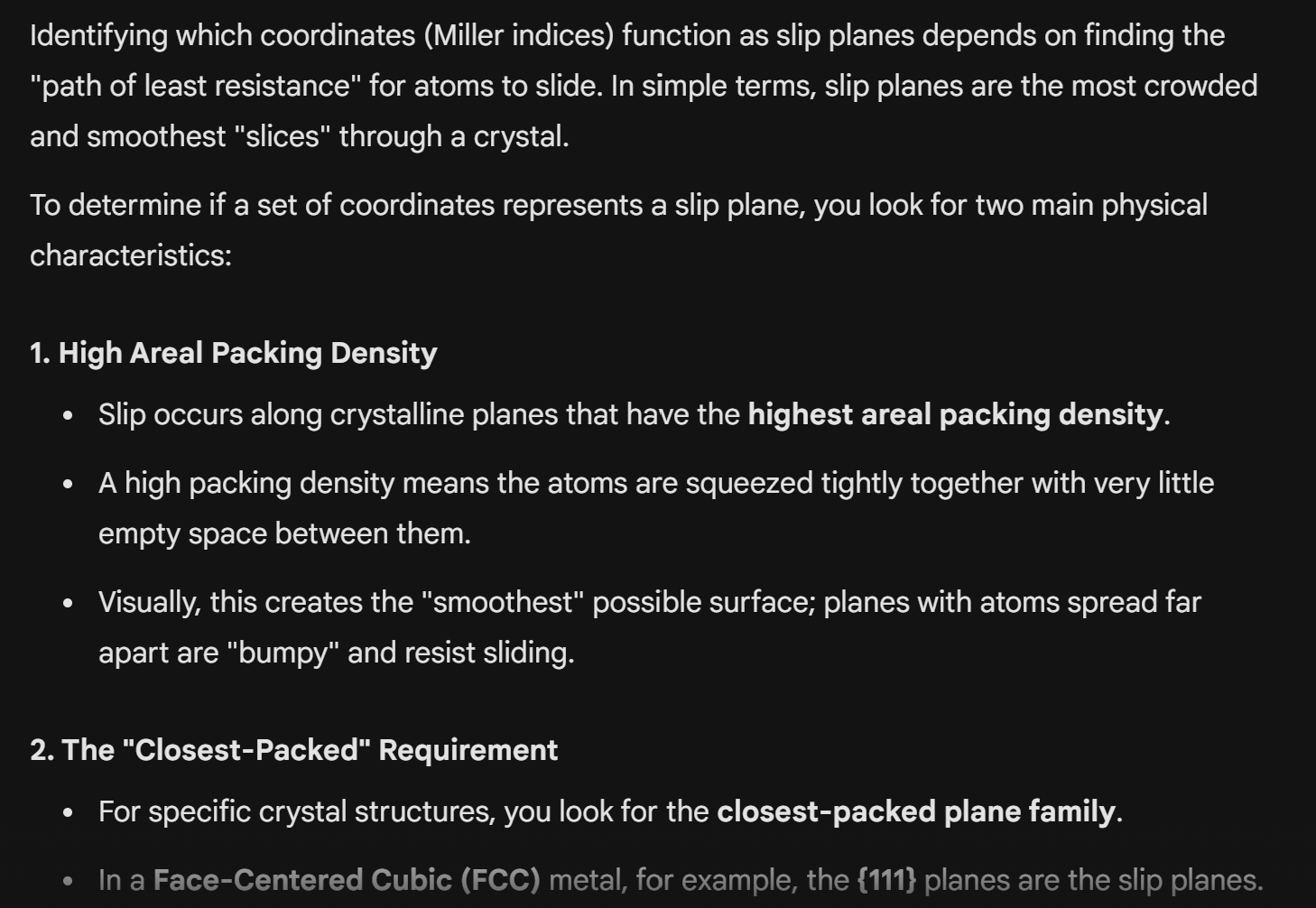
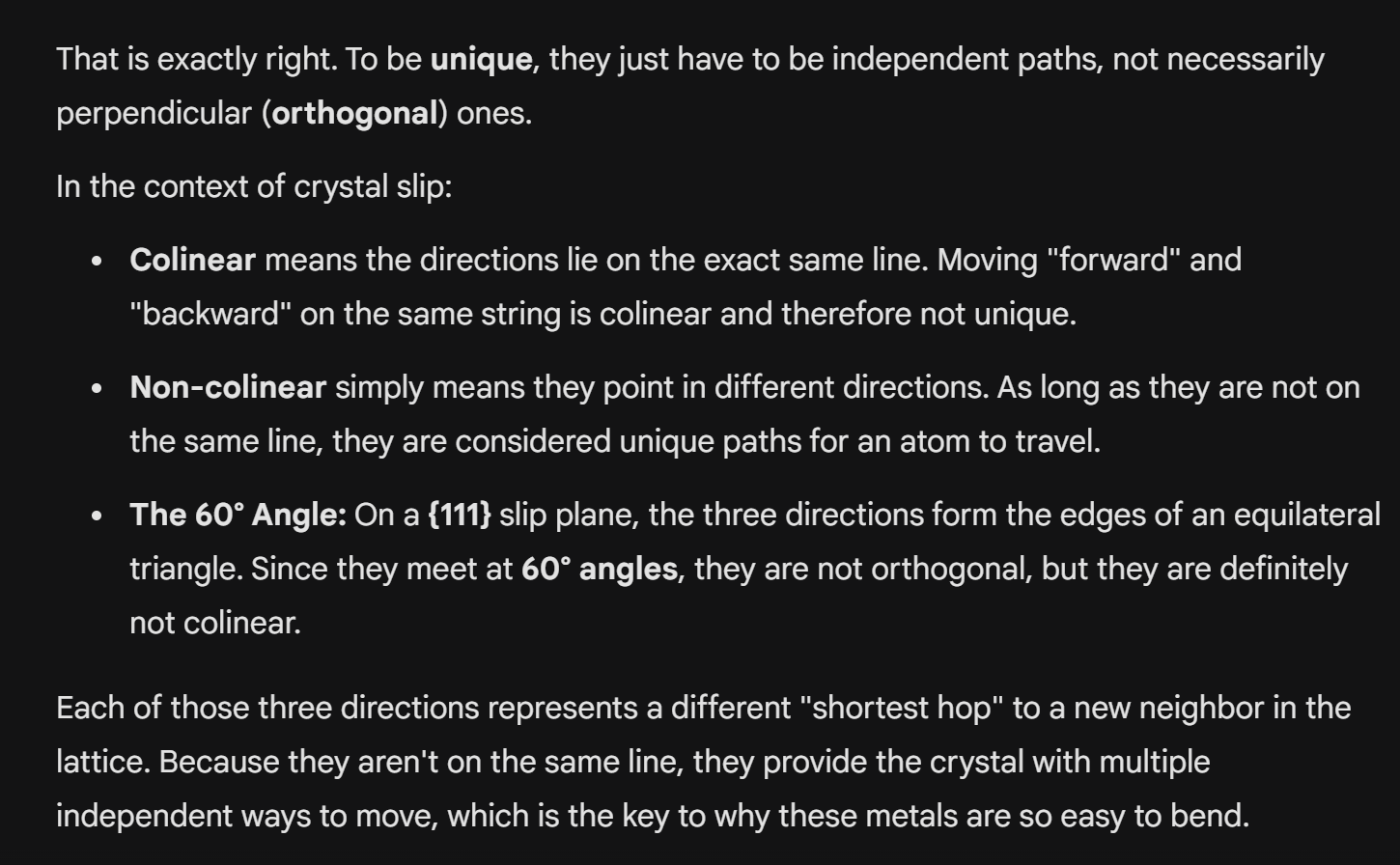
Unique slip plane directions?
Relationship between slip planes, slip systems, and slip directions
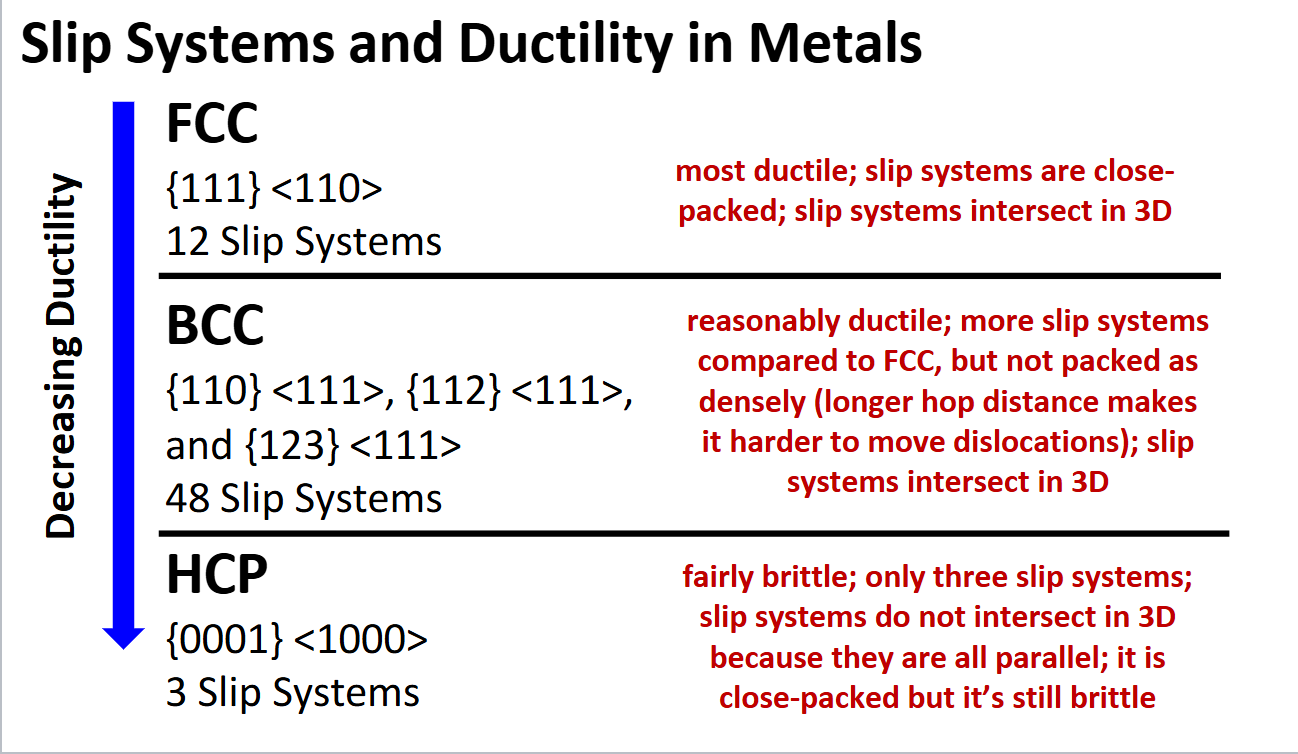
Slip systems and ductility in metals
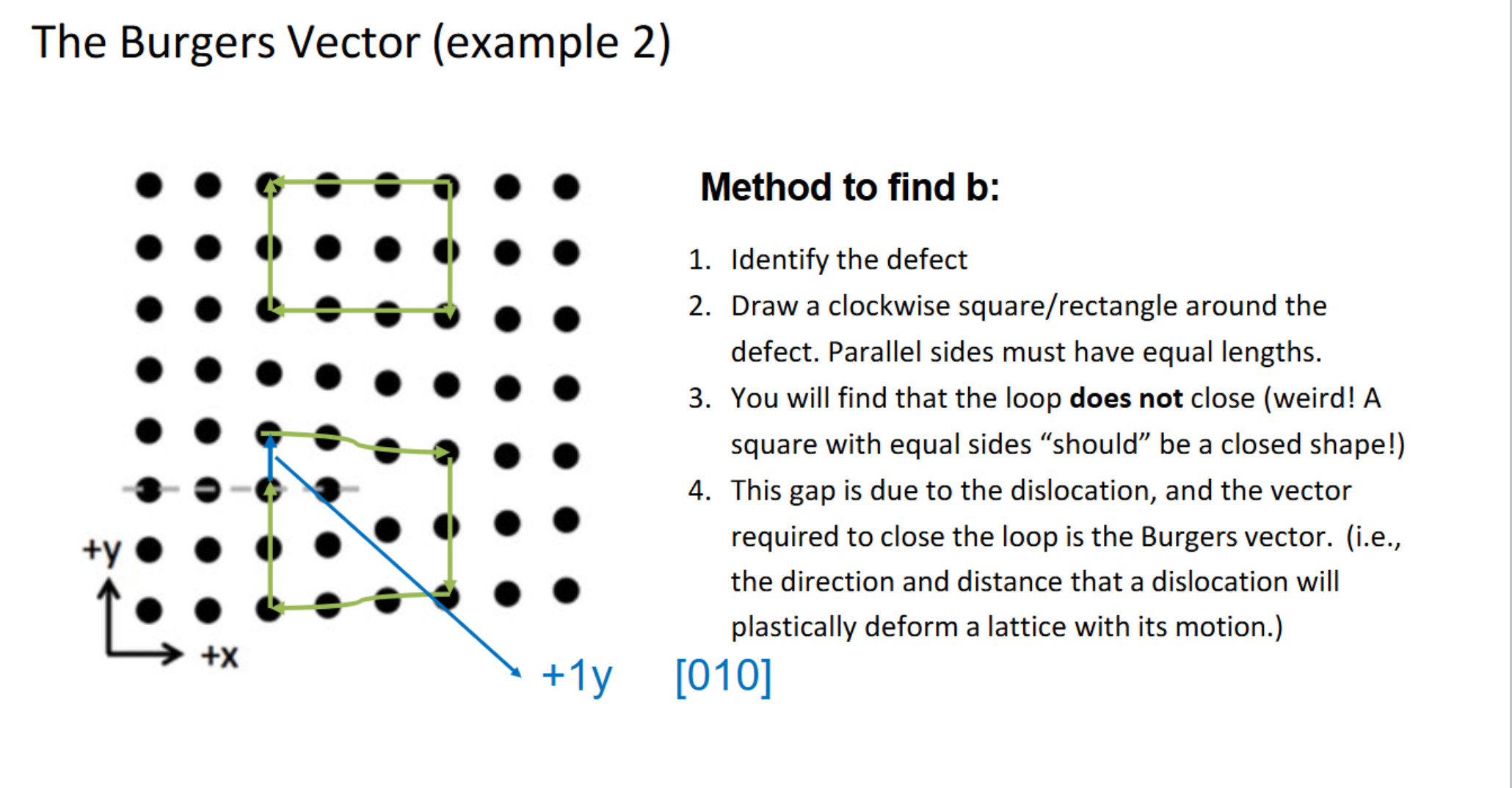
Drawing the burgers vector
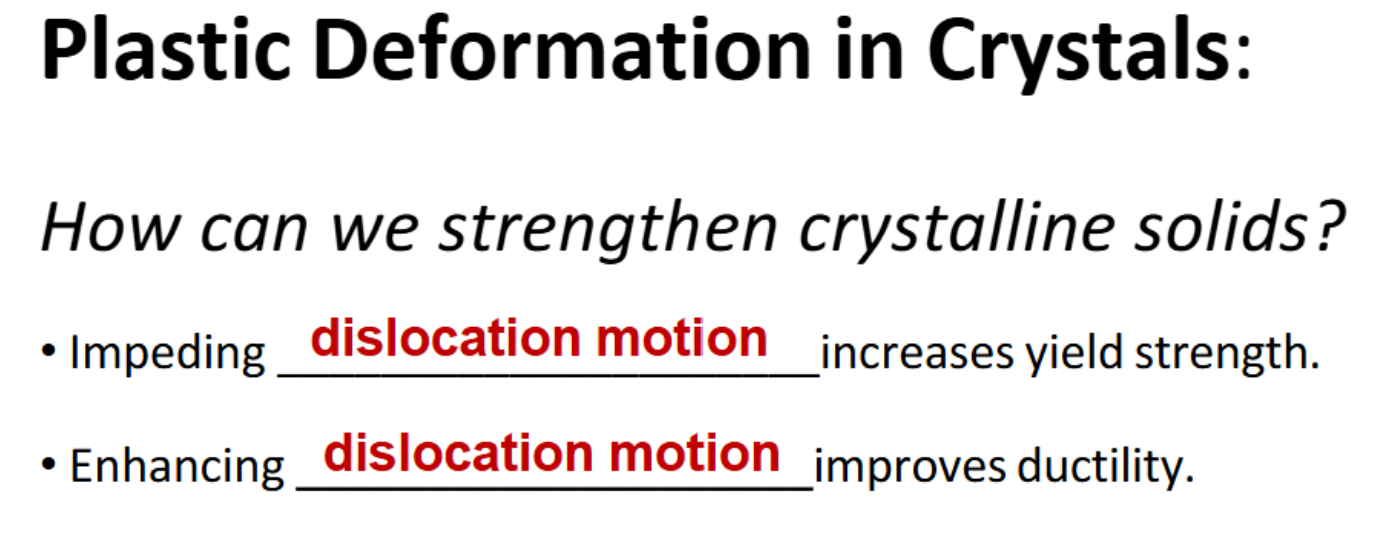
Yield strength, ductility, and dislocation motion
When does applied shear stress drive dislocation motion?


Put this into plain words
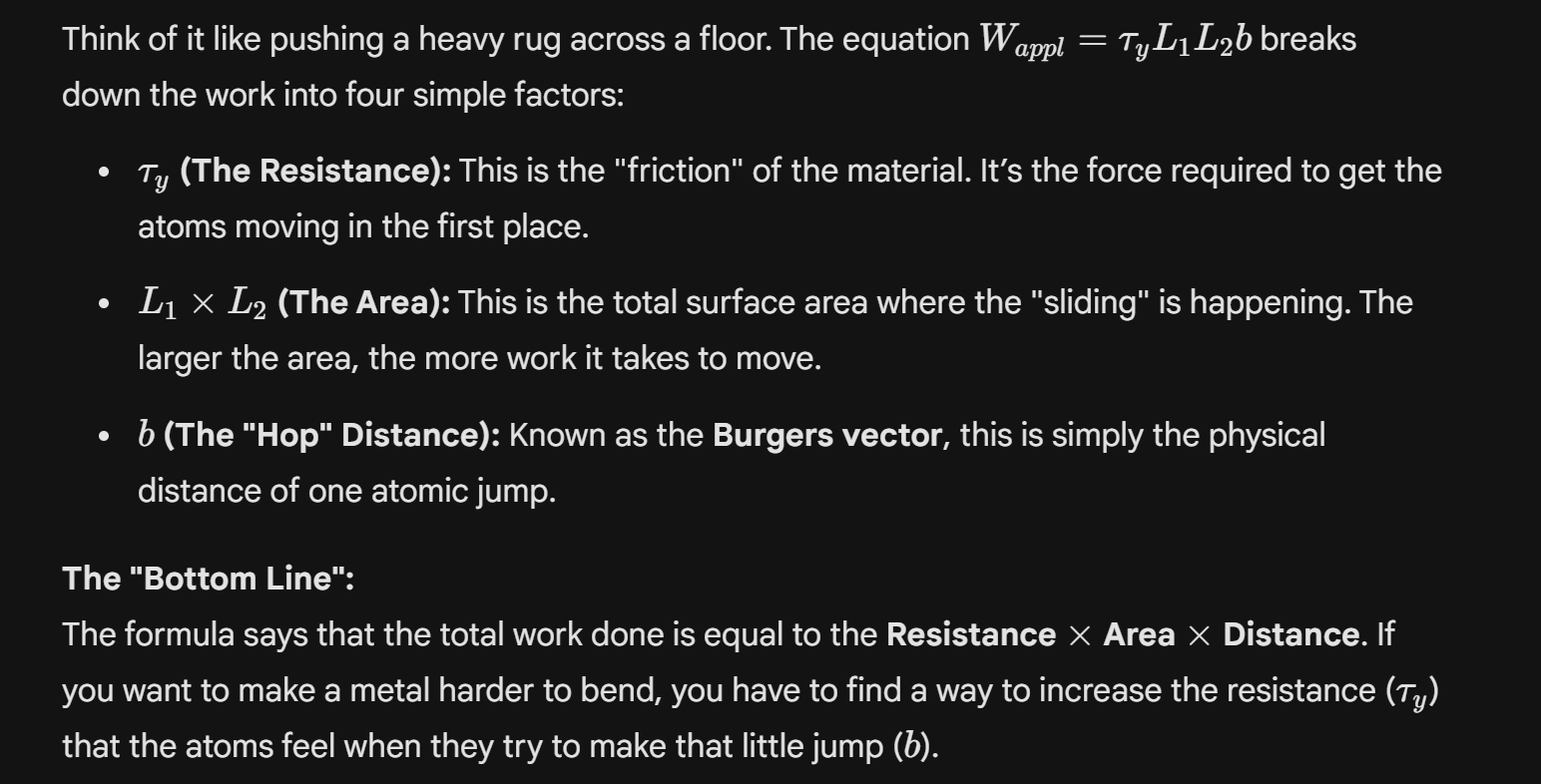
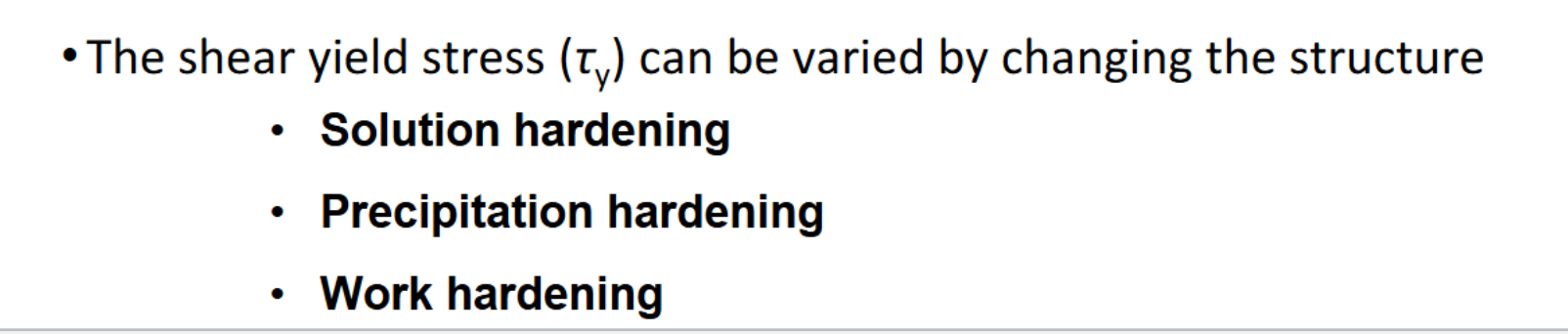
Ways to change the shear yield stress
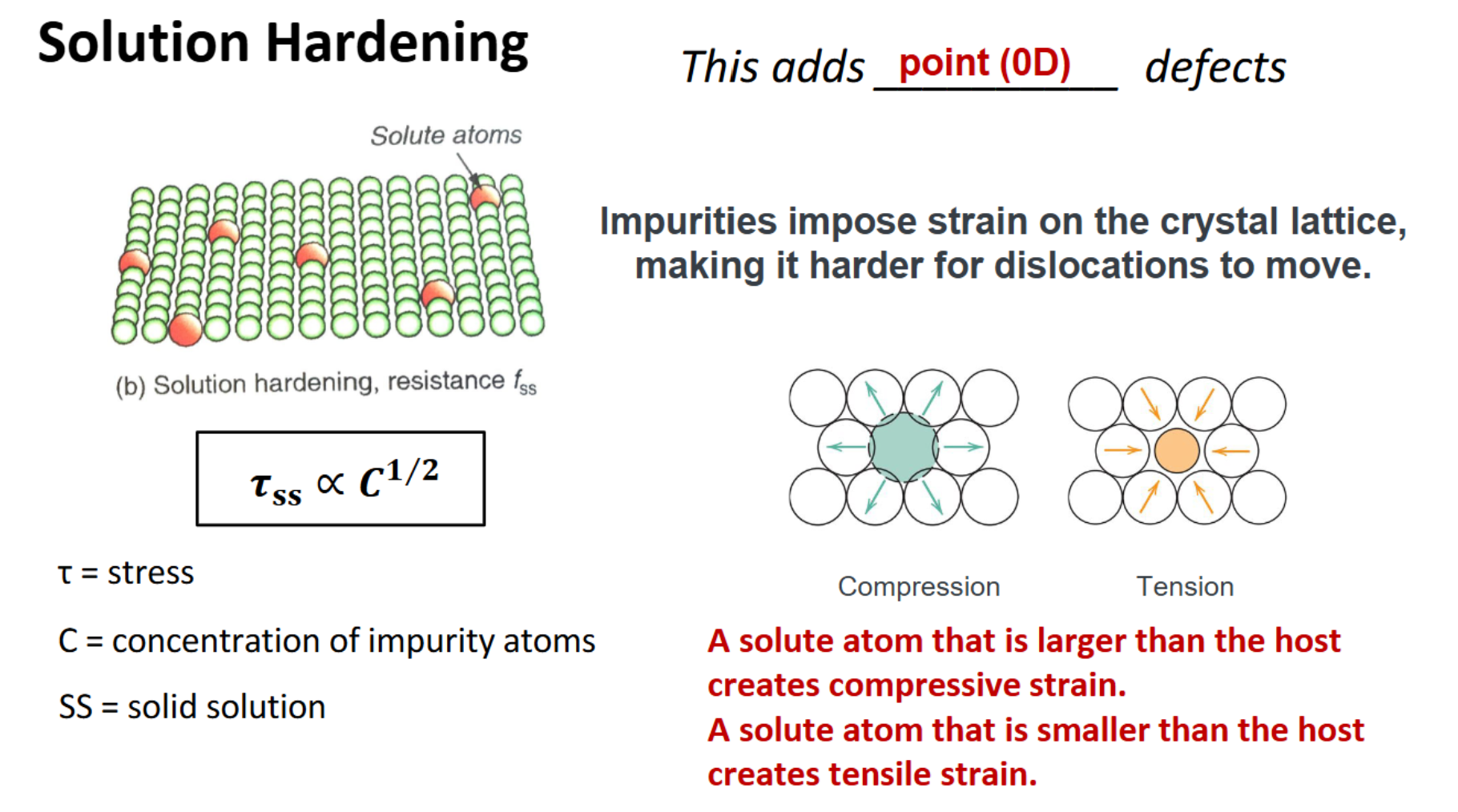
How does solution hardening affect shear yield stress
Solution hardening increases shear yield stress by making dislocation motion more difficult through lattice distortions caused by solute atoms.
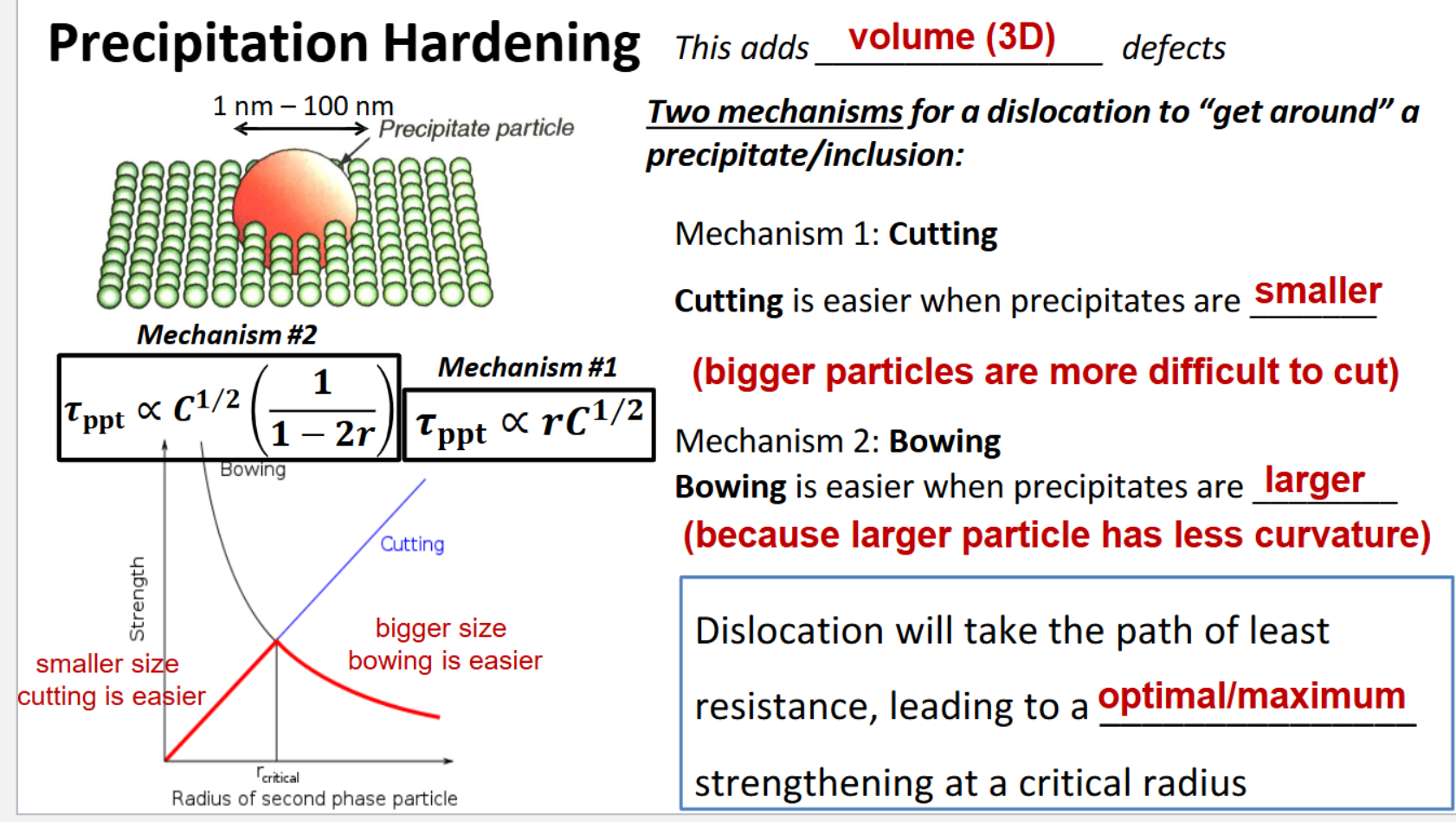
Now tell me about precipitation hardening
Increasing Resistance: The tiny precipitates act as physical obstacles. A dislocation must either cut through these particles or bow around them.
The Result: This significantly increases the force required to move the dislocation. Because the dislocations can't move easily, the metal becomes much stronger and harder to deform plastically.
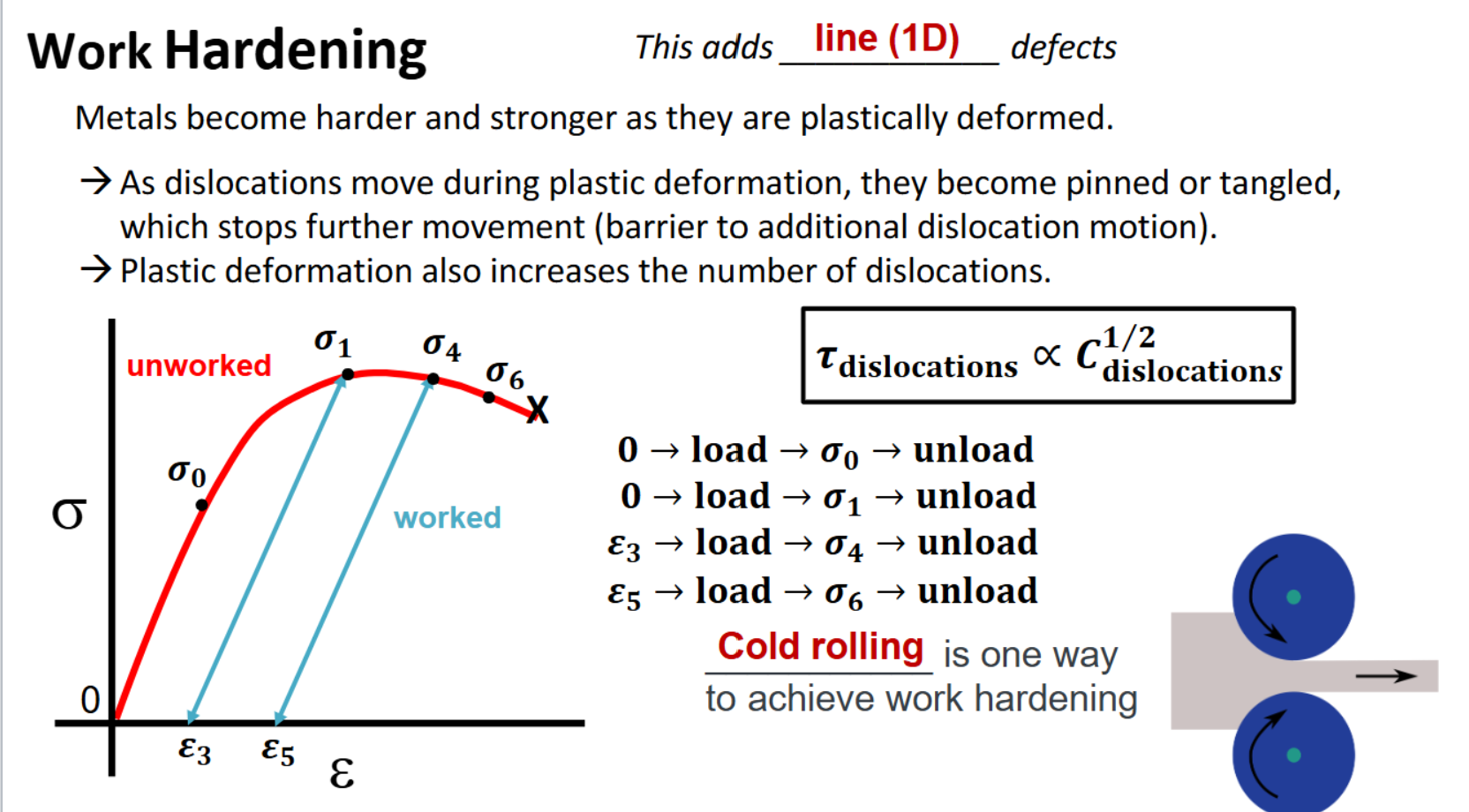
Work hardening
Bending a Paperclip: If you bend a paperclip back and forth, the metal at the hinge becomes harder and stiffer due to work hardening. Eventually, it becomes so brittle that it snaps.
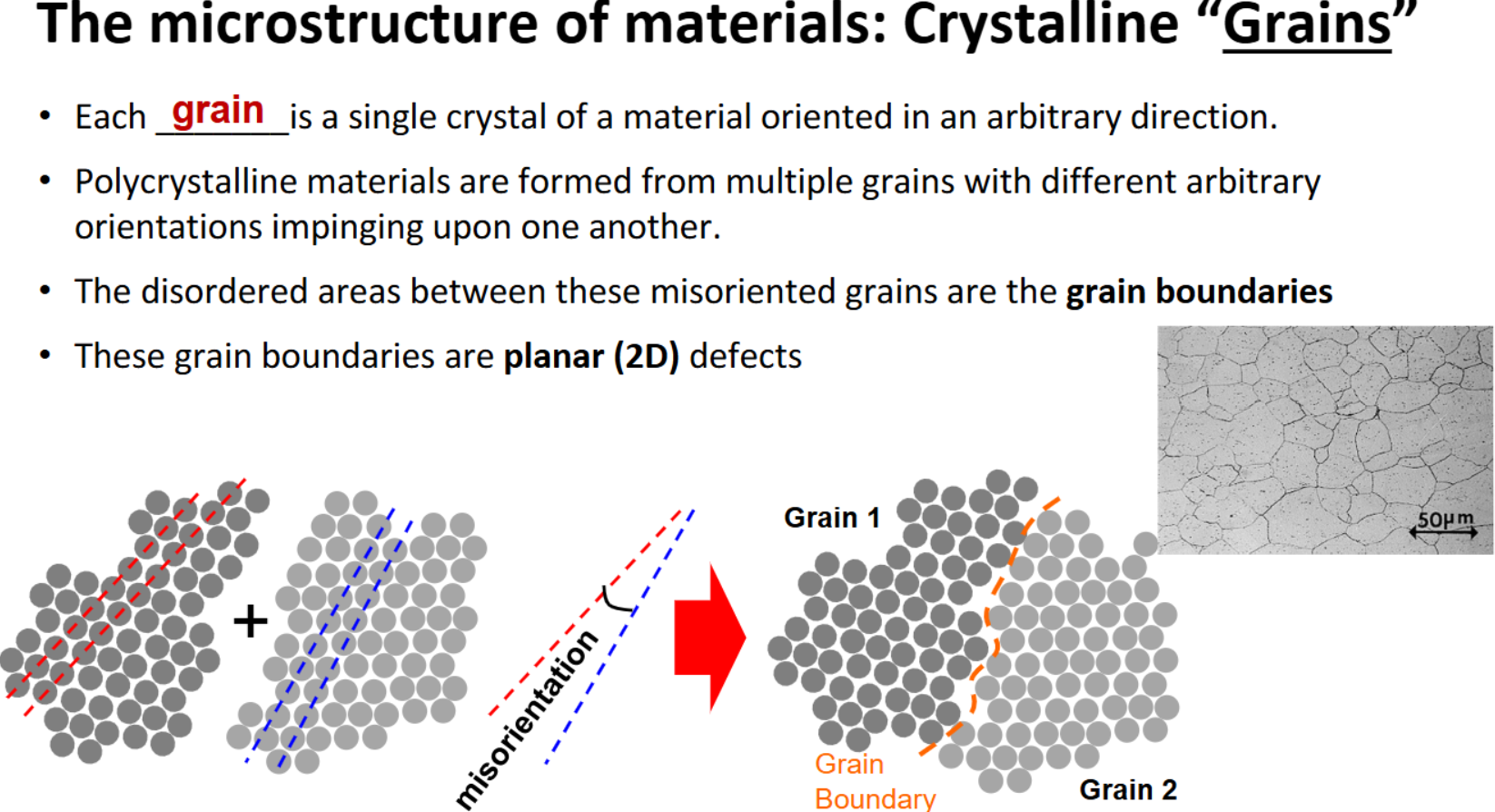
Microstructure of grains
Grain boundary hardening
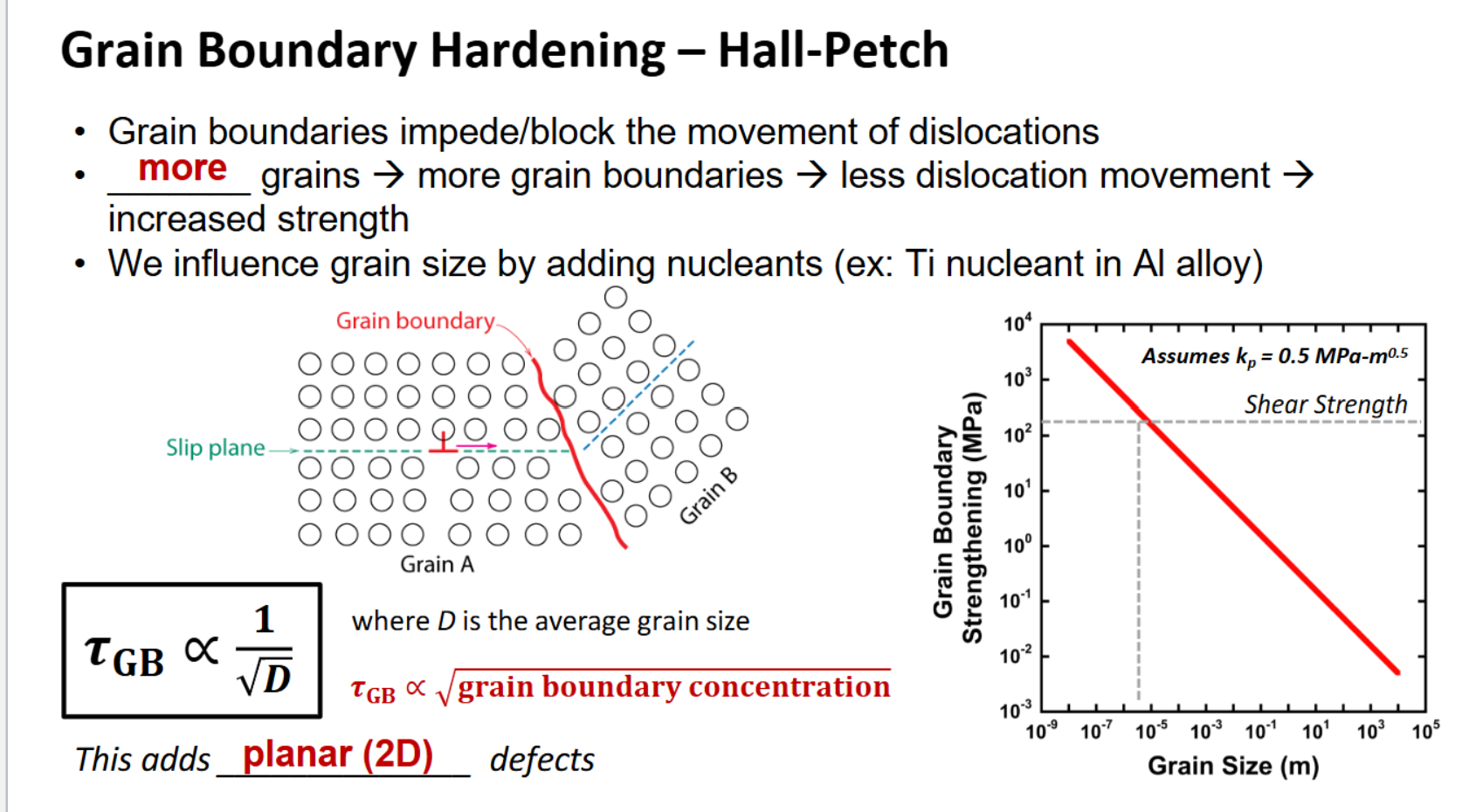
What is the relationship between grain boundary size and grain boundary strengthening
Grain boundary strengthening increases as grain size decreases, because more grain boundaries block dislocation motion, raising the yield stress according to the Hall–Petch relationship.
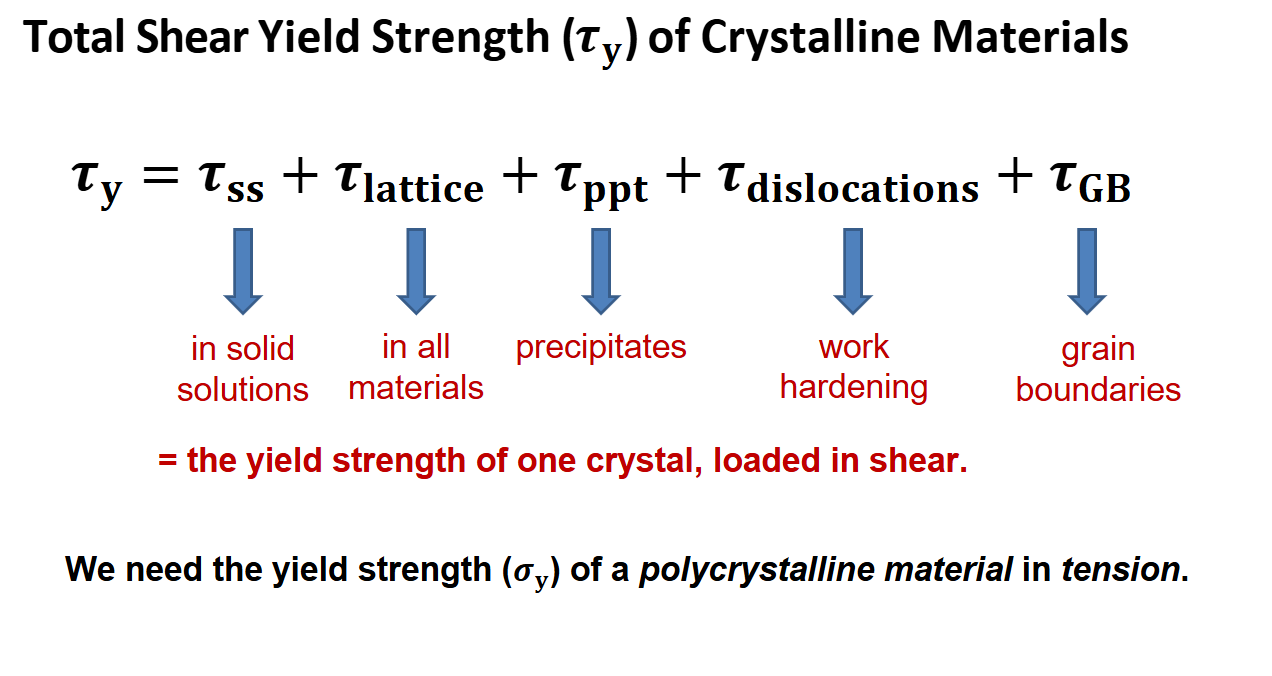
What is the total yield strength of crystalline materials comprised of
What is a tensile test

What is a tear test

What is an impact test

Tear test: how does a material fracture?
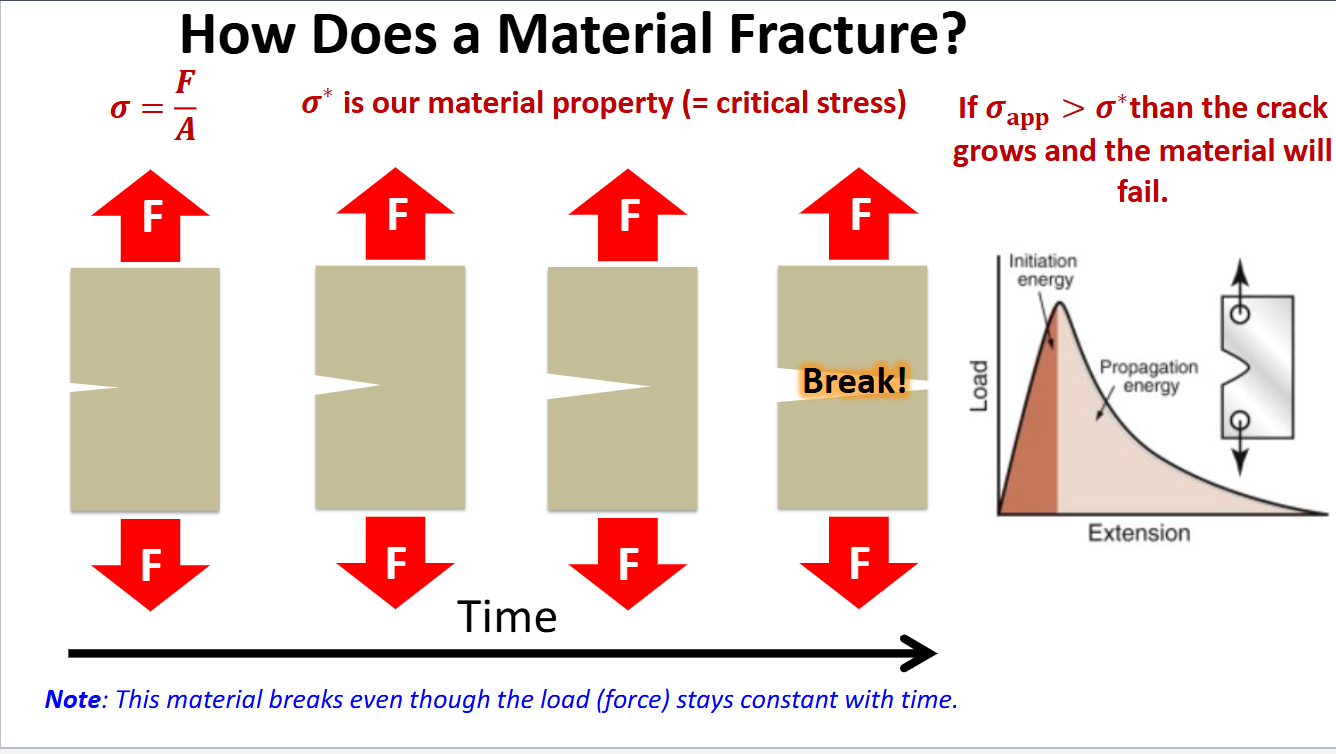
Crack growth in tough vs brittle materials
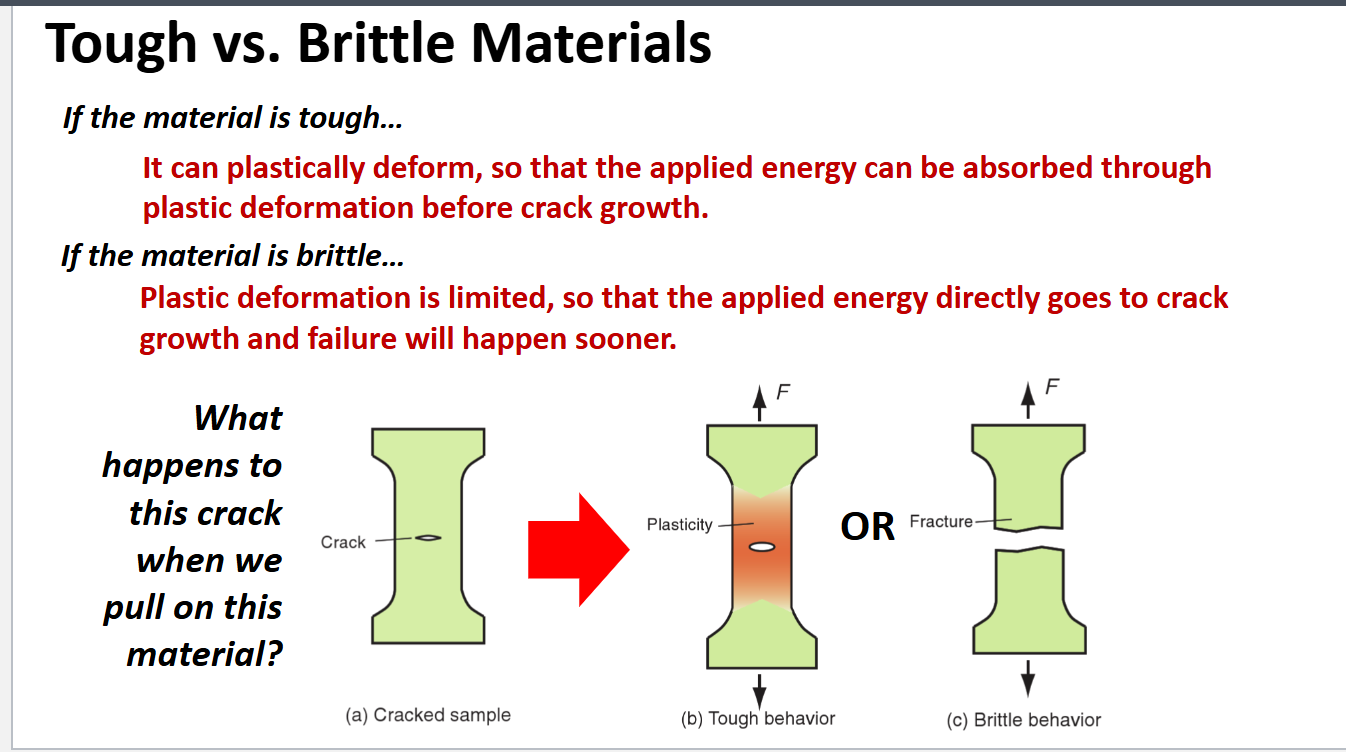
Notch toughness
Notch toughness is a material’s ability to absorb energy and resist fracture when a crack or notch is present.
In simple terms: how well a material survives a sudden crack-like defect under impact loading.
High notch toughness → material resists crack growth, deforms more before breaking
Low notch toughness → brittle failure from a small flaw
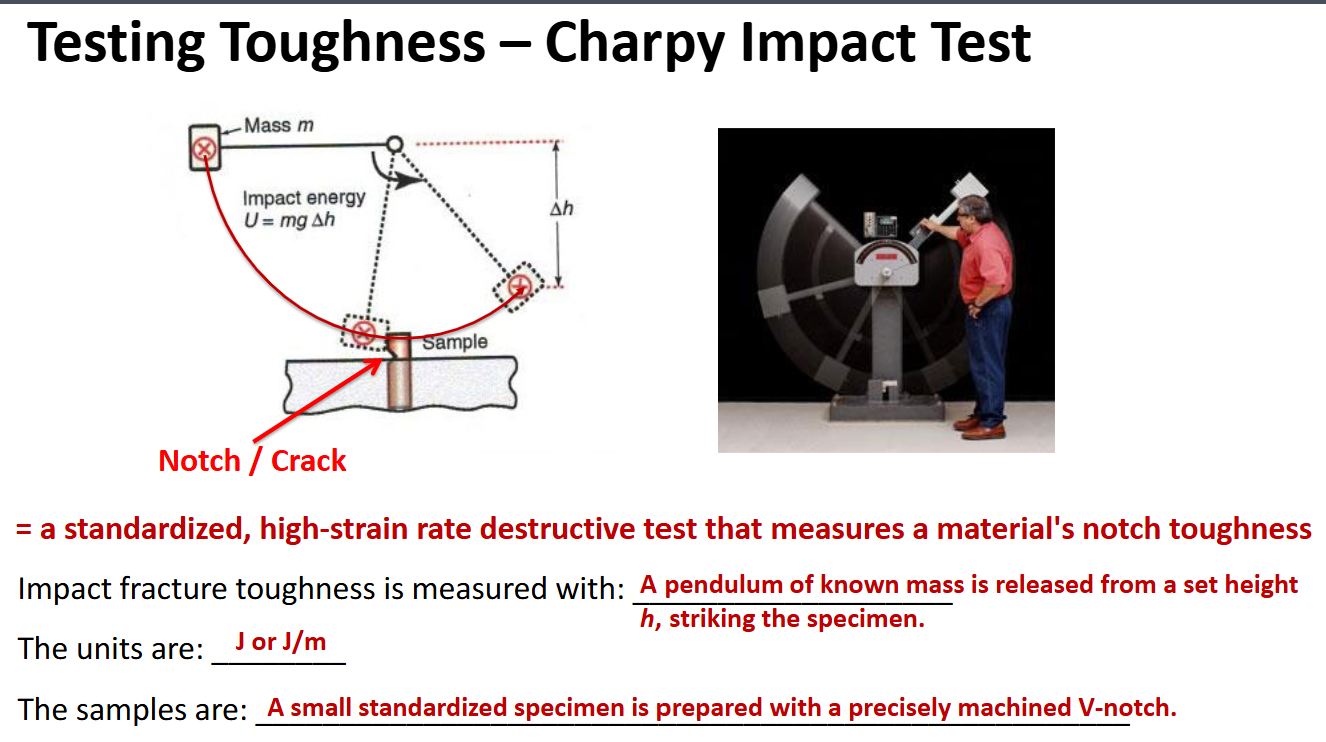
Charpy impact test
Why do materials break at a crack or notch
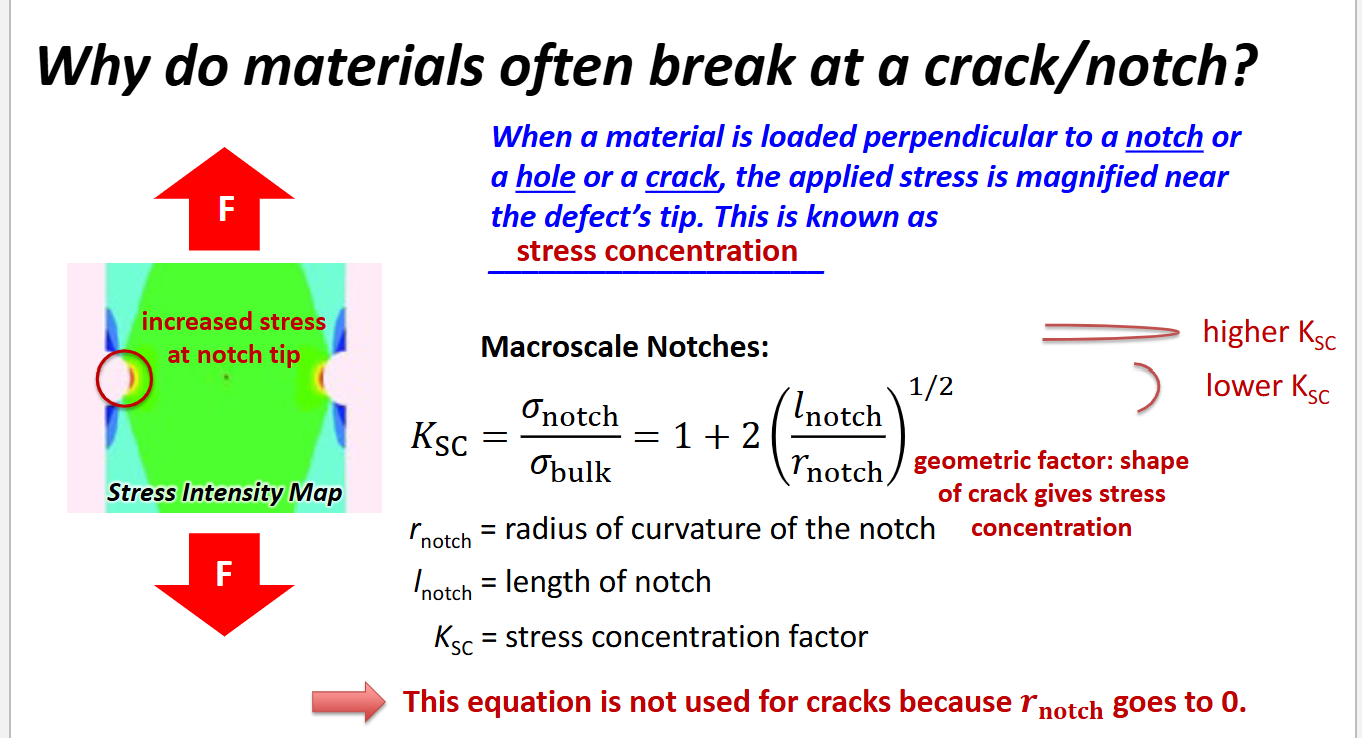
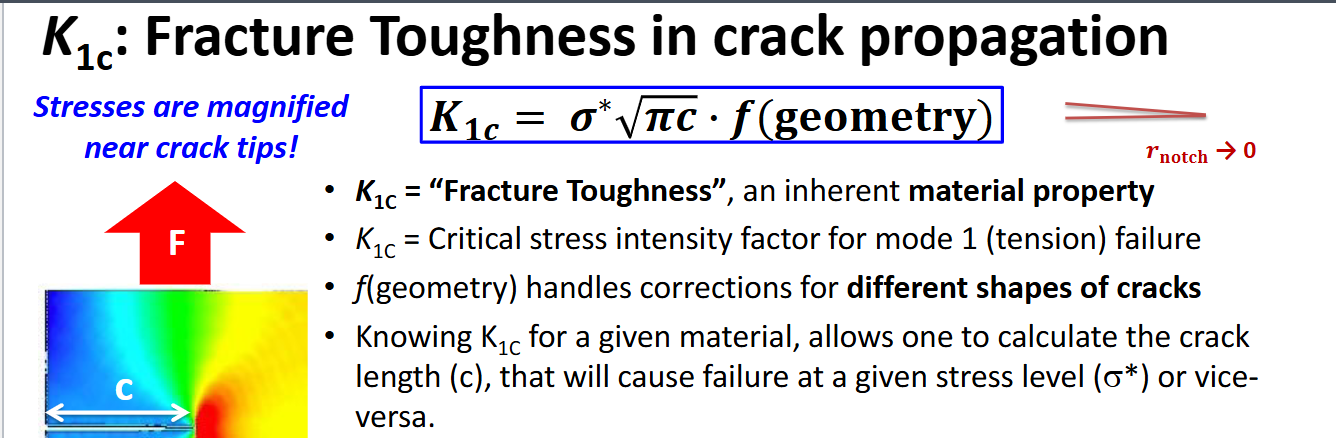
Explain this in plain terms
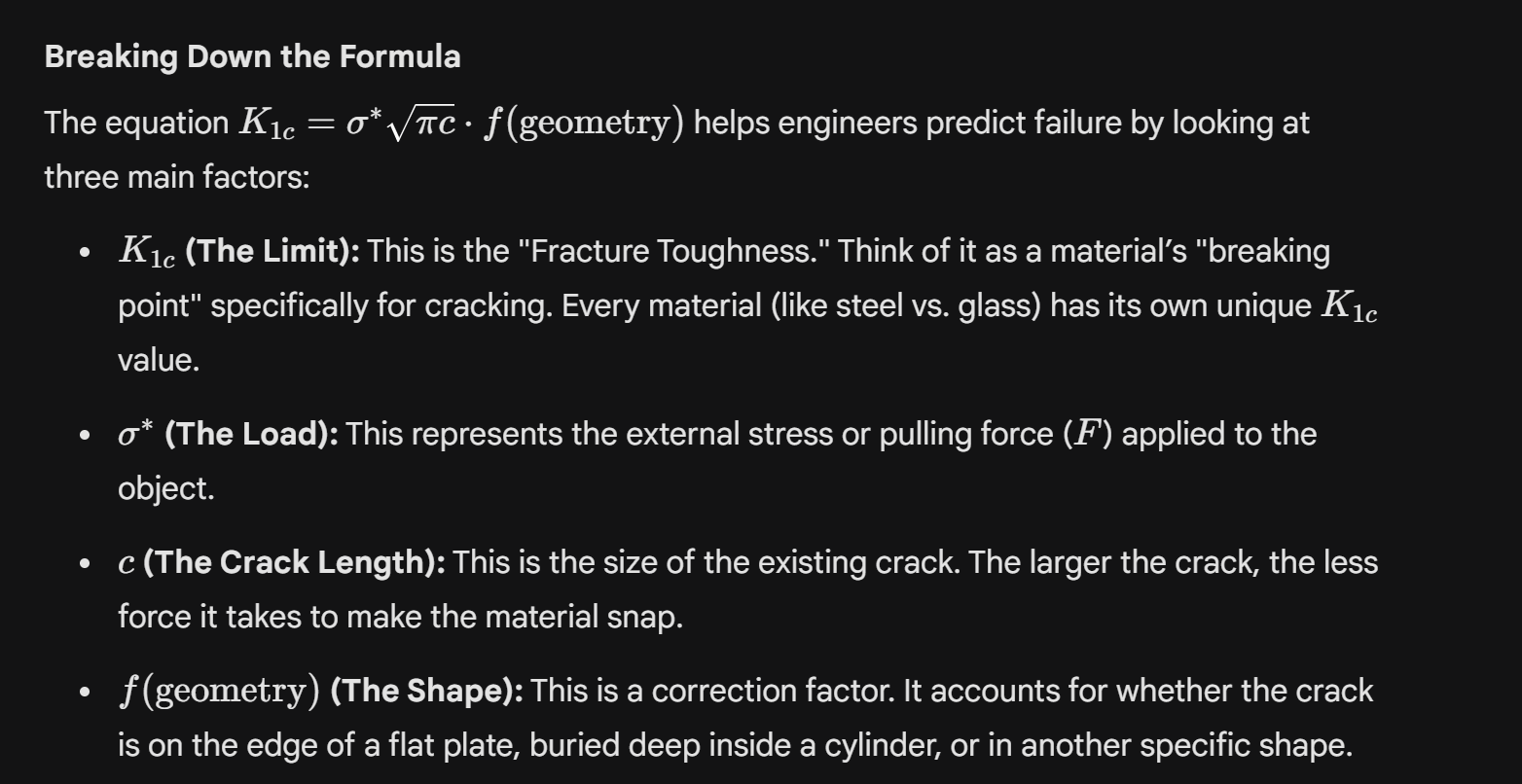
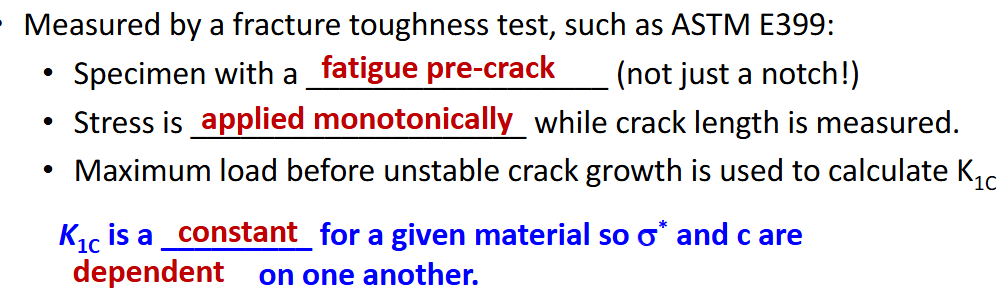
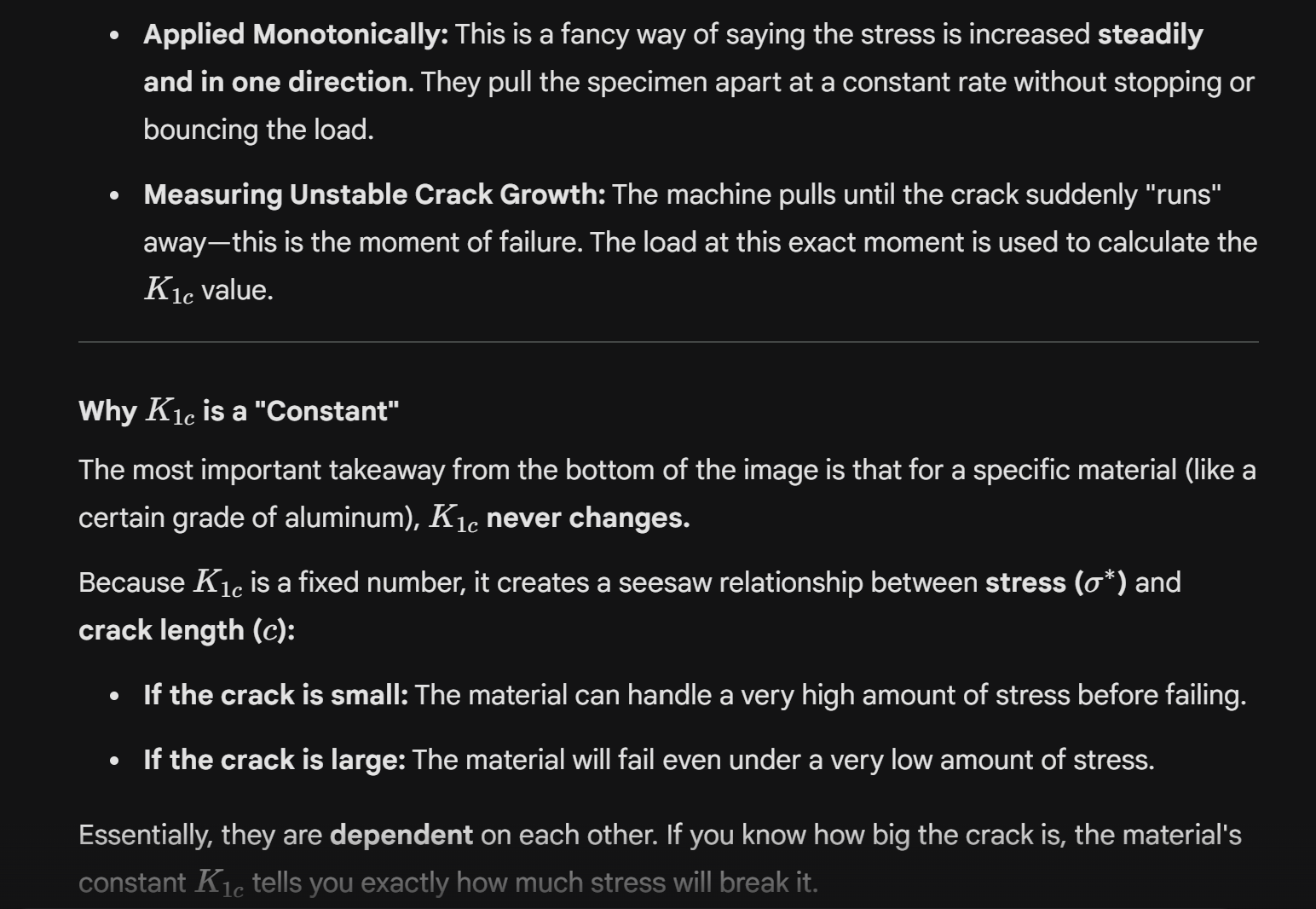
Now explain this
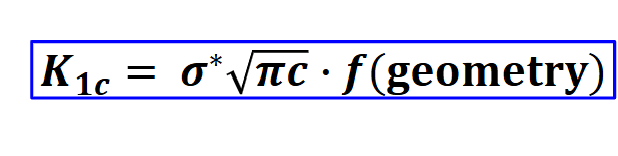
What are the units for fracture toughness?
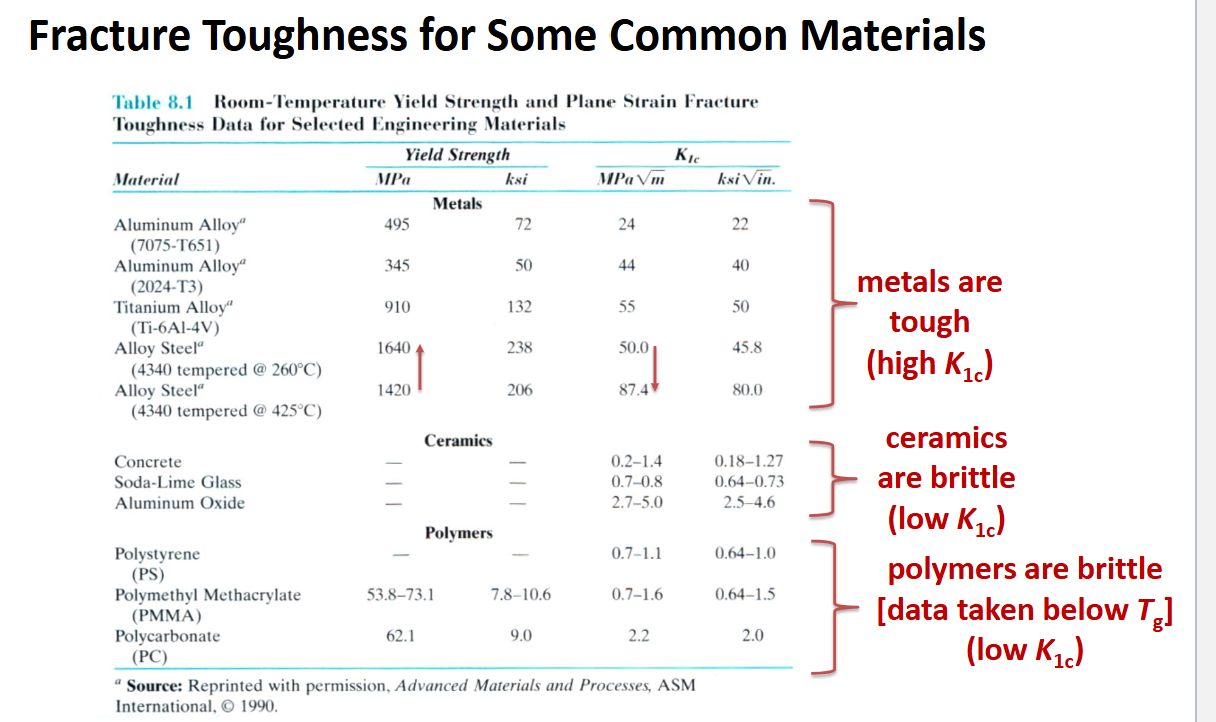
Fracture toughness trends in materials
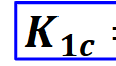
Constant for fracture toughness
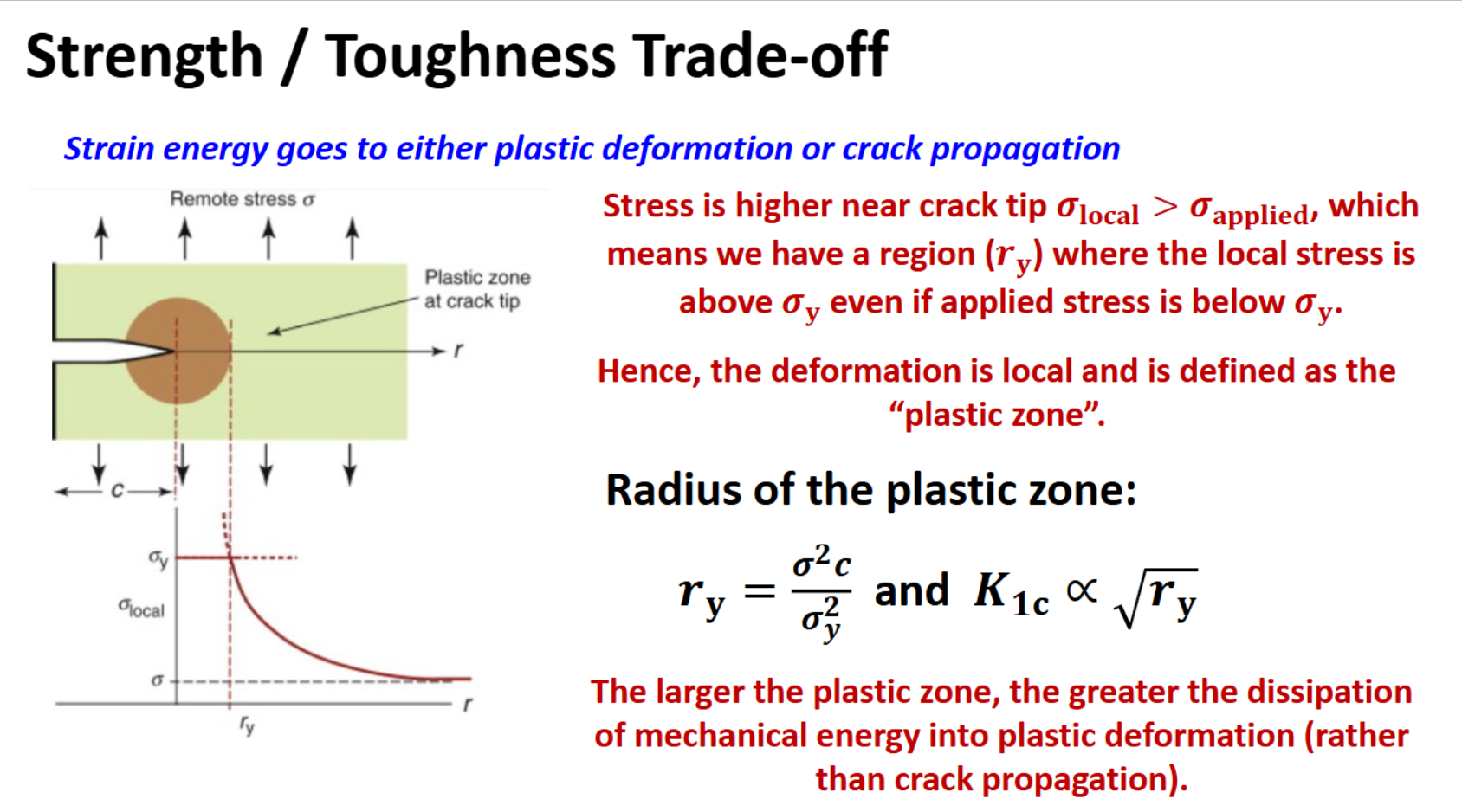
Explain this in plain terms
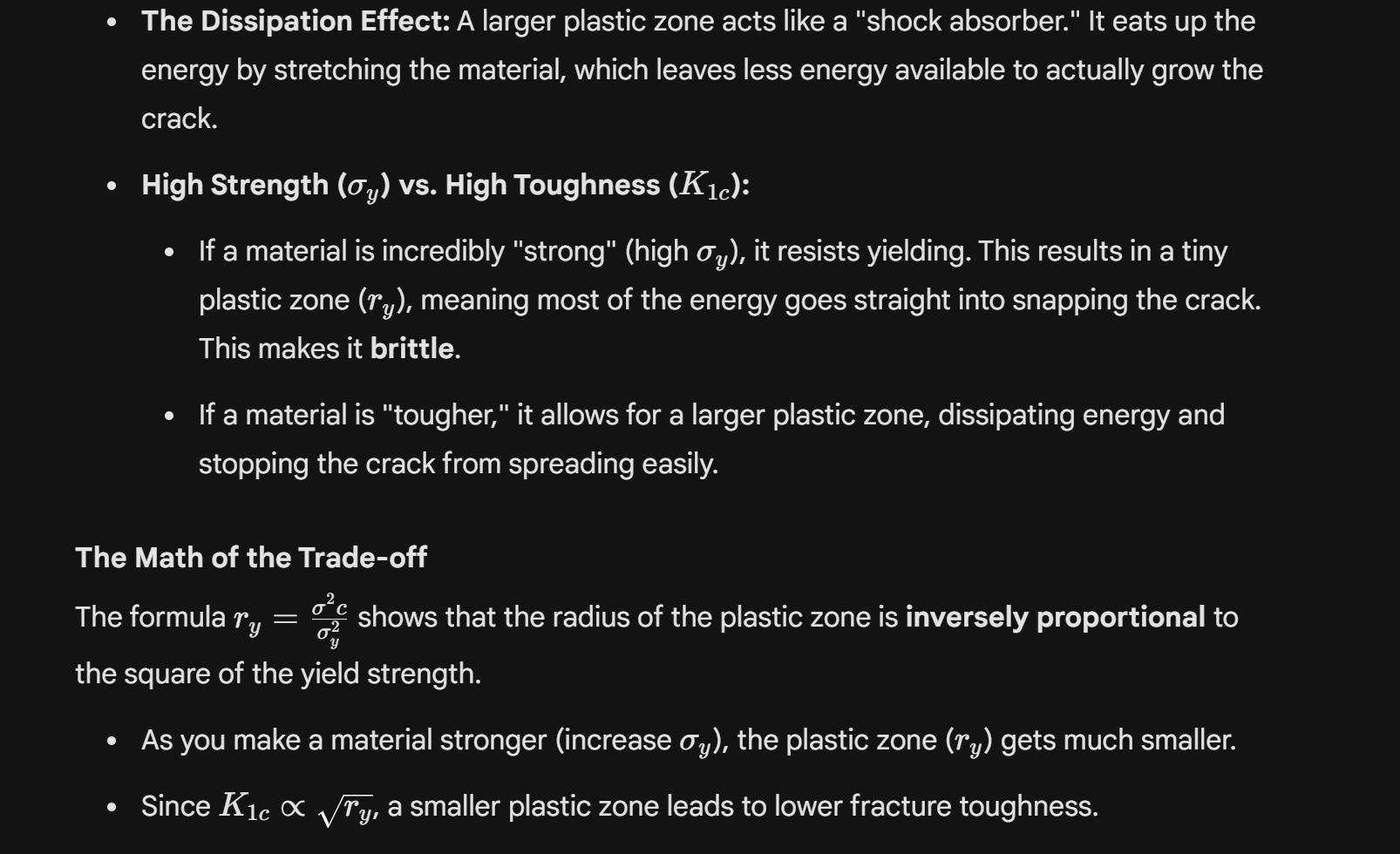
Strength vs toughness
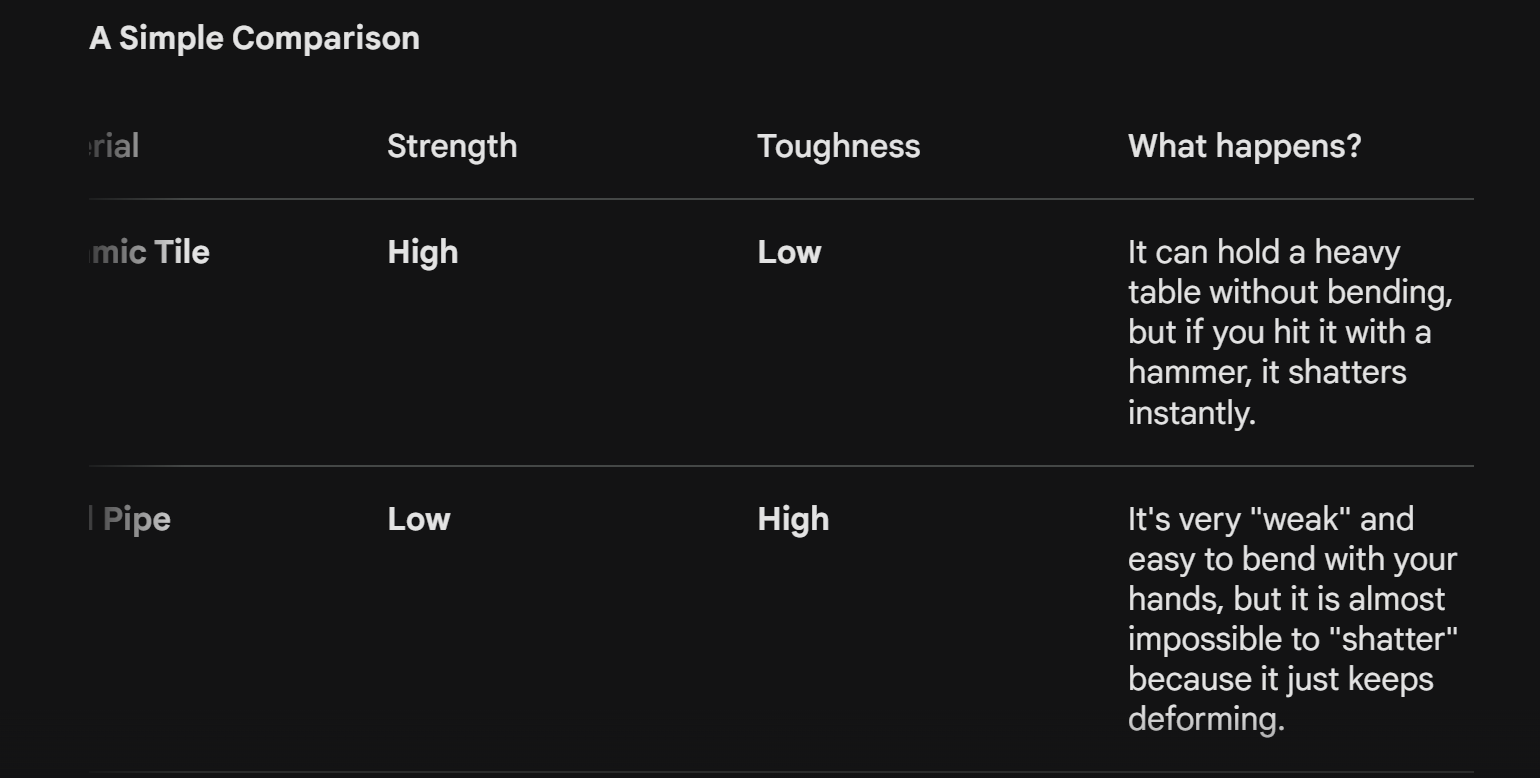
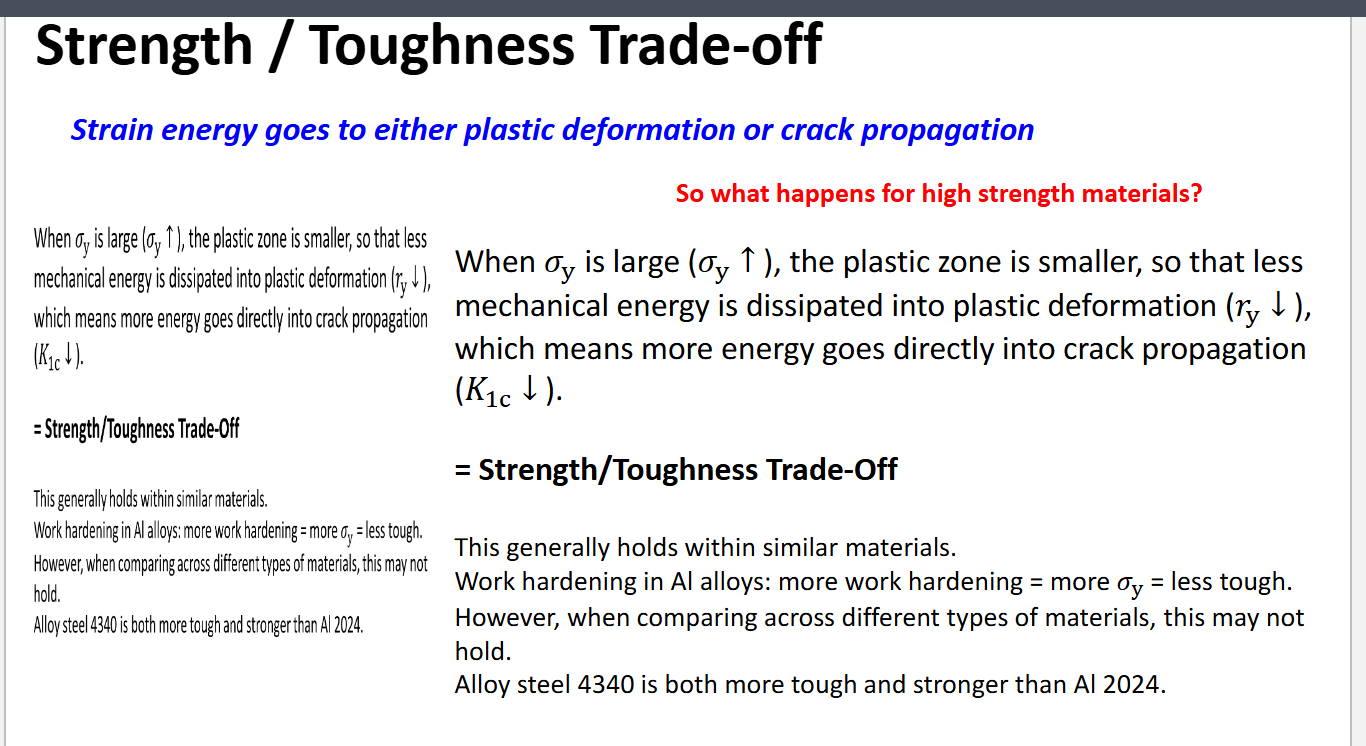
More on the strength toughness tradeoff
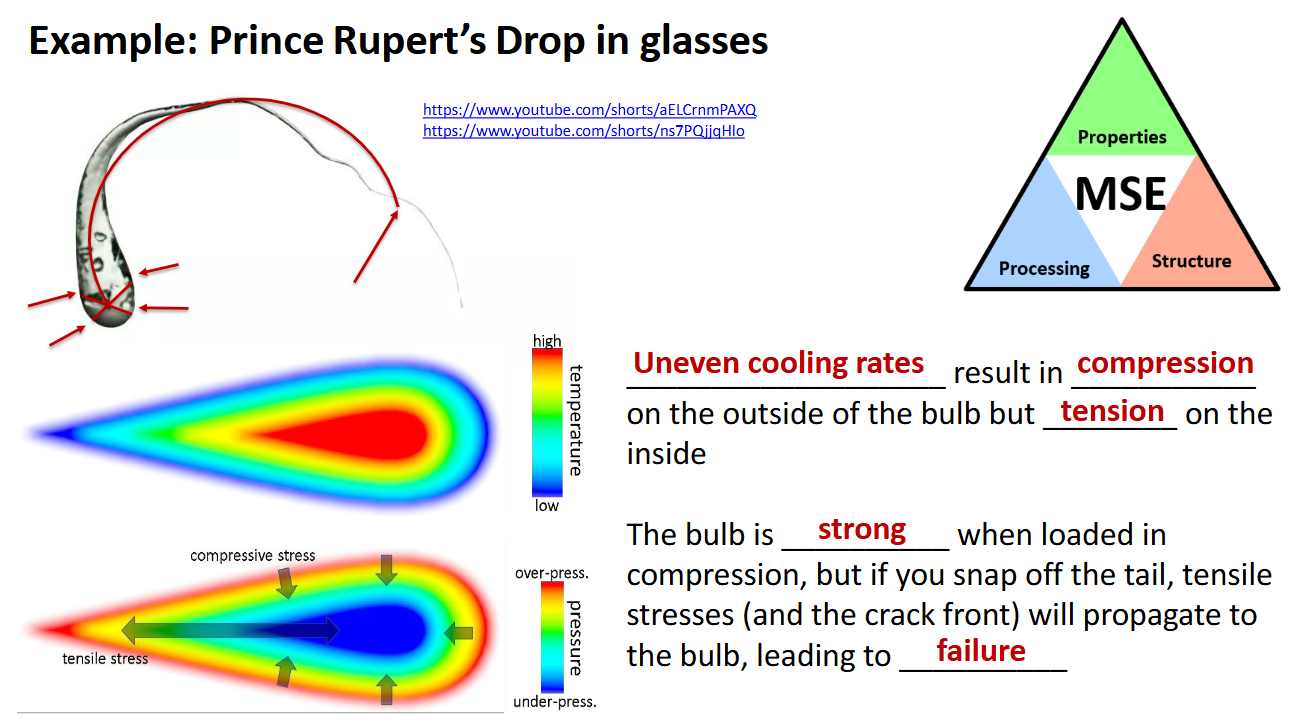
Price ruperts drop in glasses
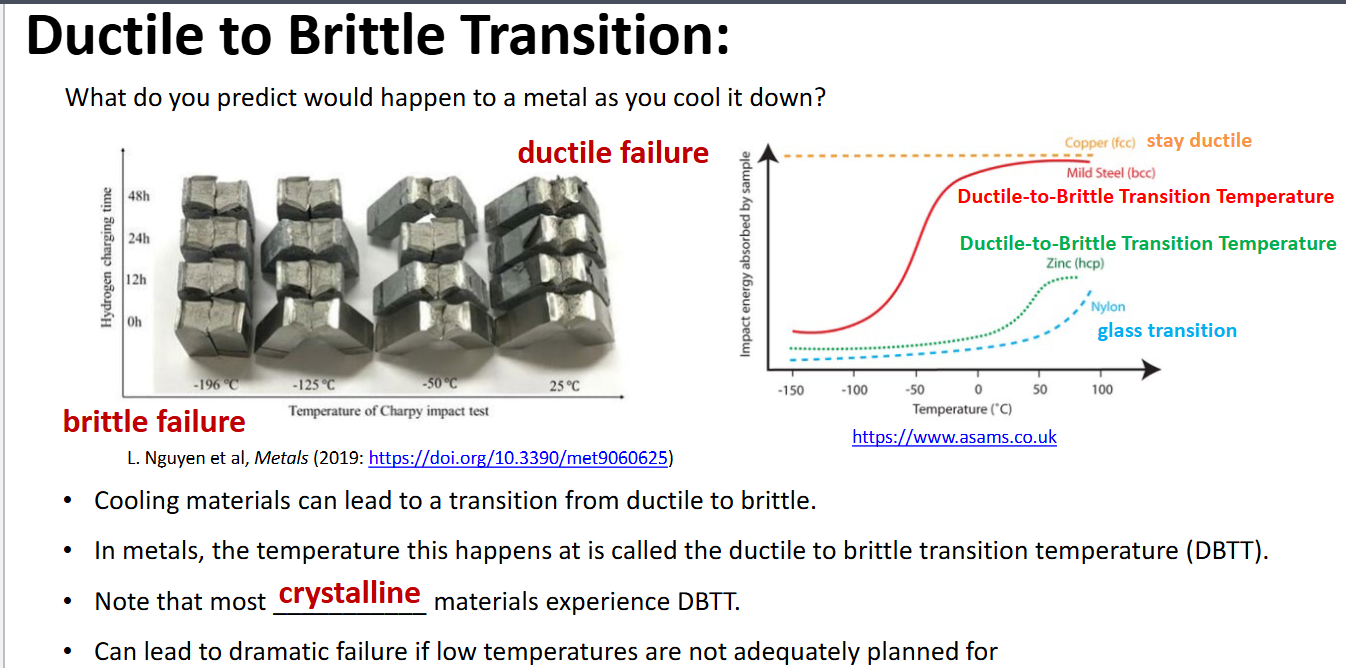
Relation between temperature and ductility?
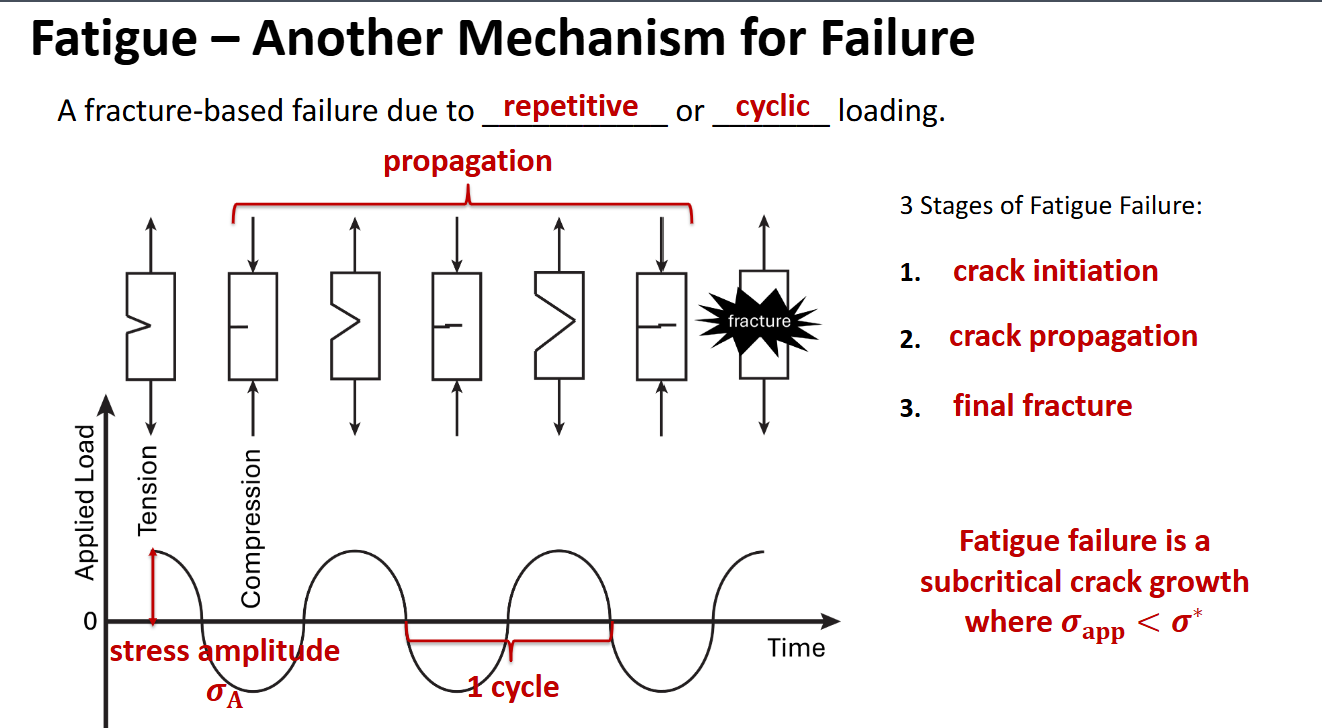
What is the mechanism for fatigue?
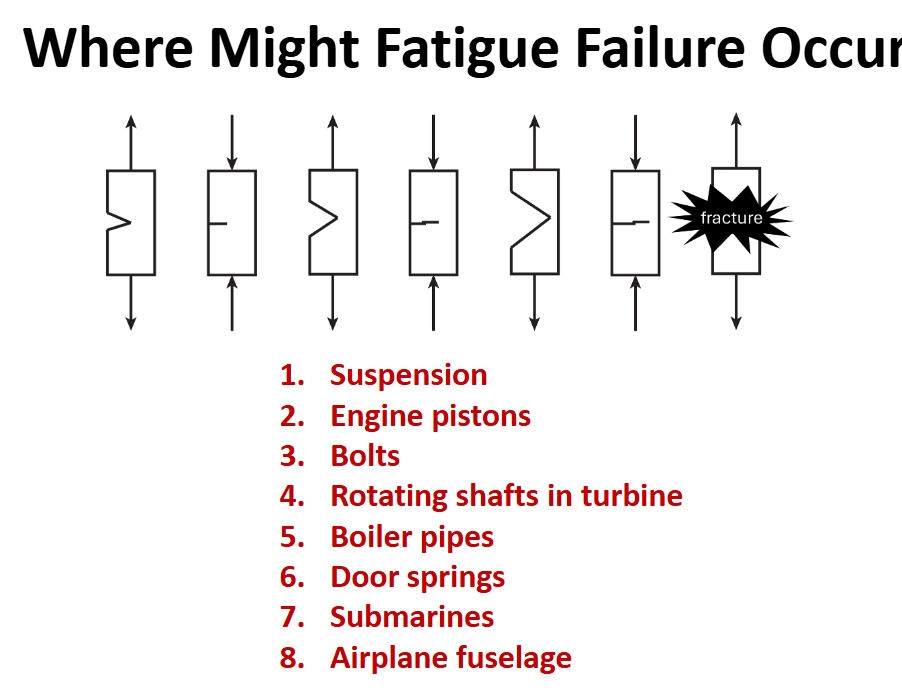
Where might fatigue failure occur?
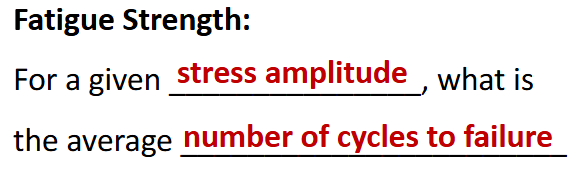
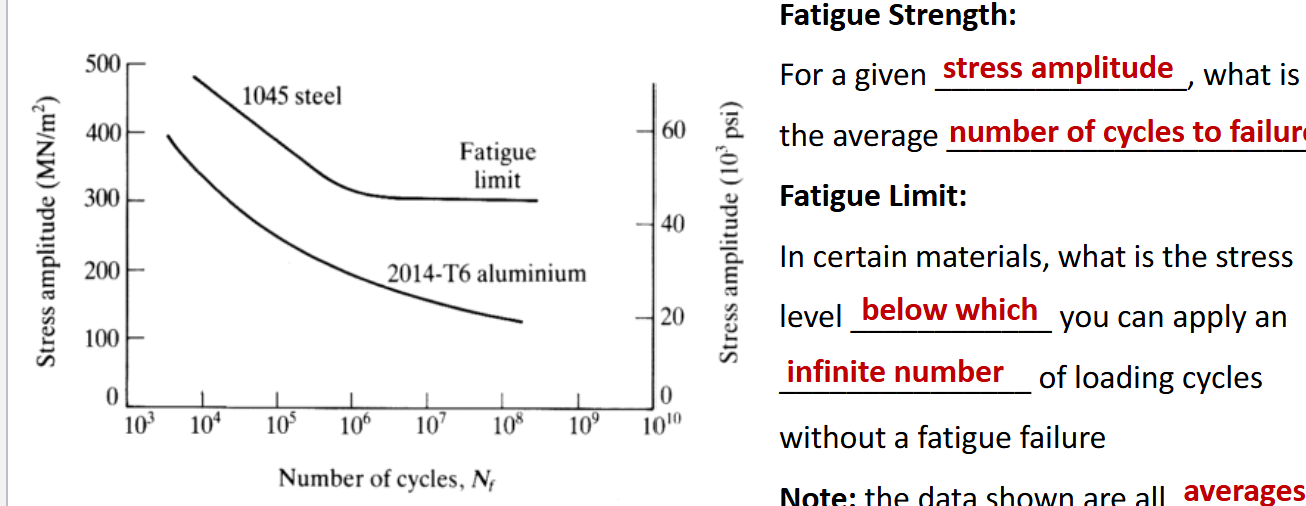
What is fatigue strength and stress amplitude?
Stress amplitude is the “size” of the stress swing back and forth each cycle.
It tells you how severe the cyclic loading is, regardless of whether the stress is mostly tensile, compressive, or alternating.
What is a fatigue limit
How do notches in a material affect fatigue strength?
Lower it
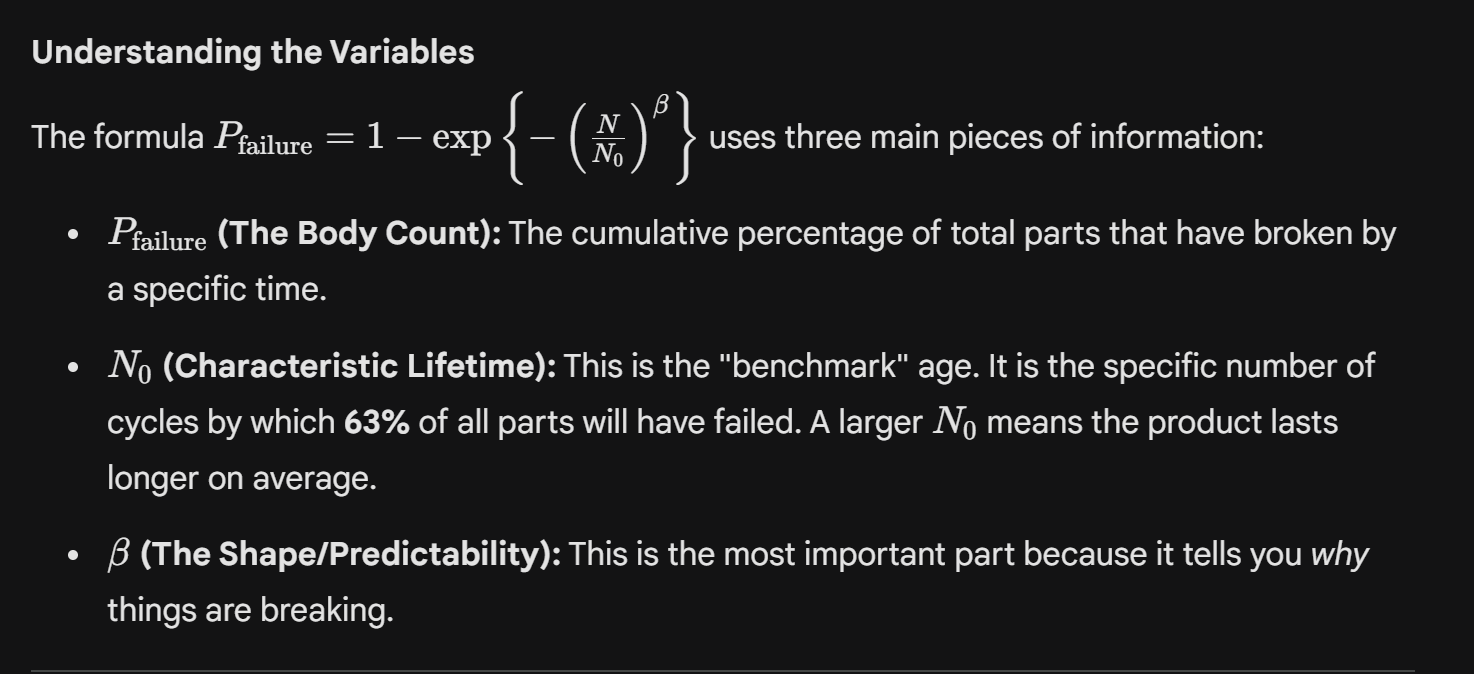
Variables for Weibull distribution
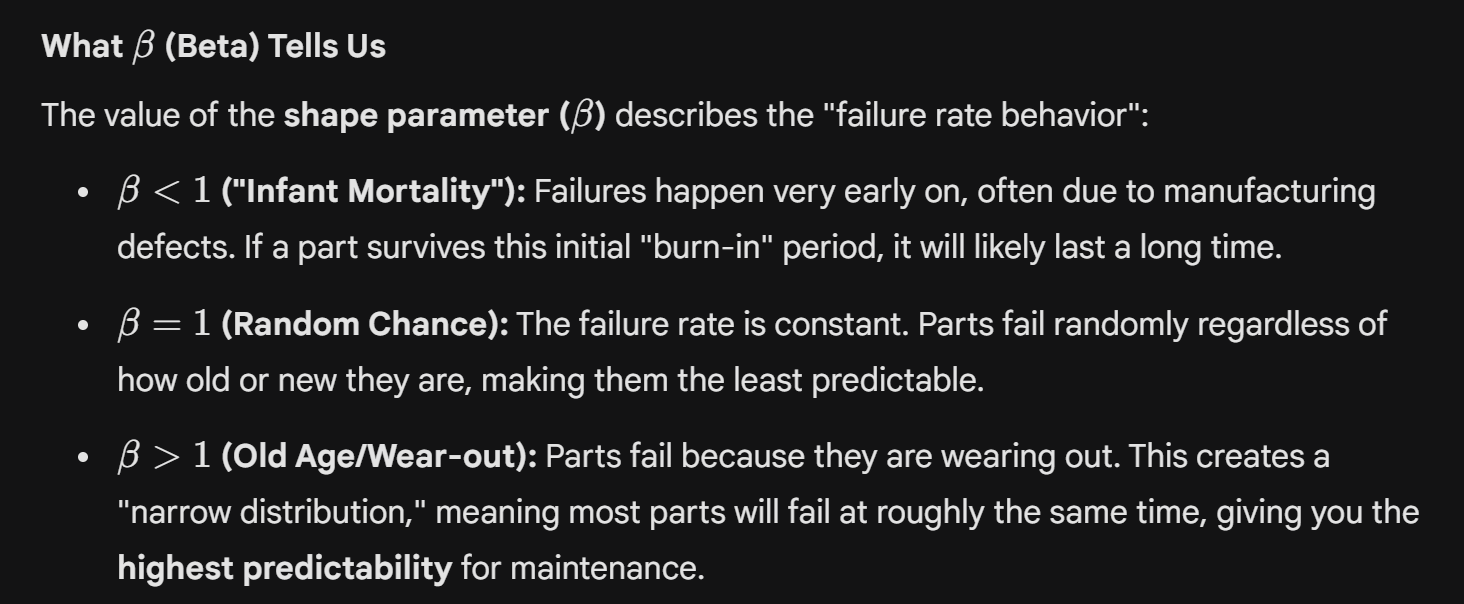
What Beta tells us
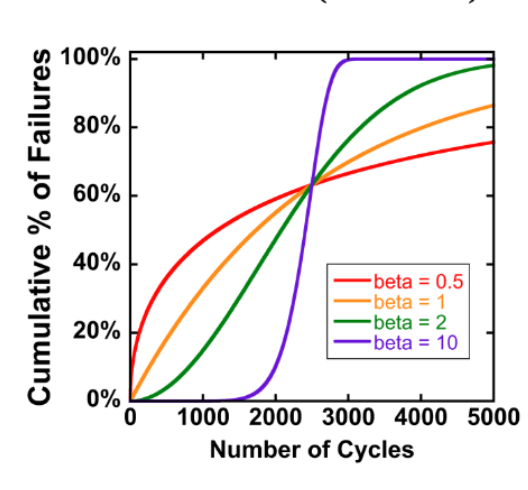
Visual for the Weibull distribution
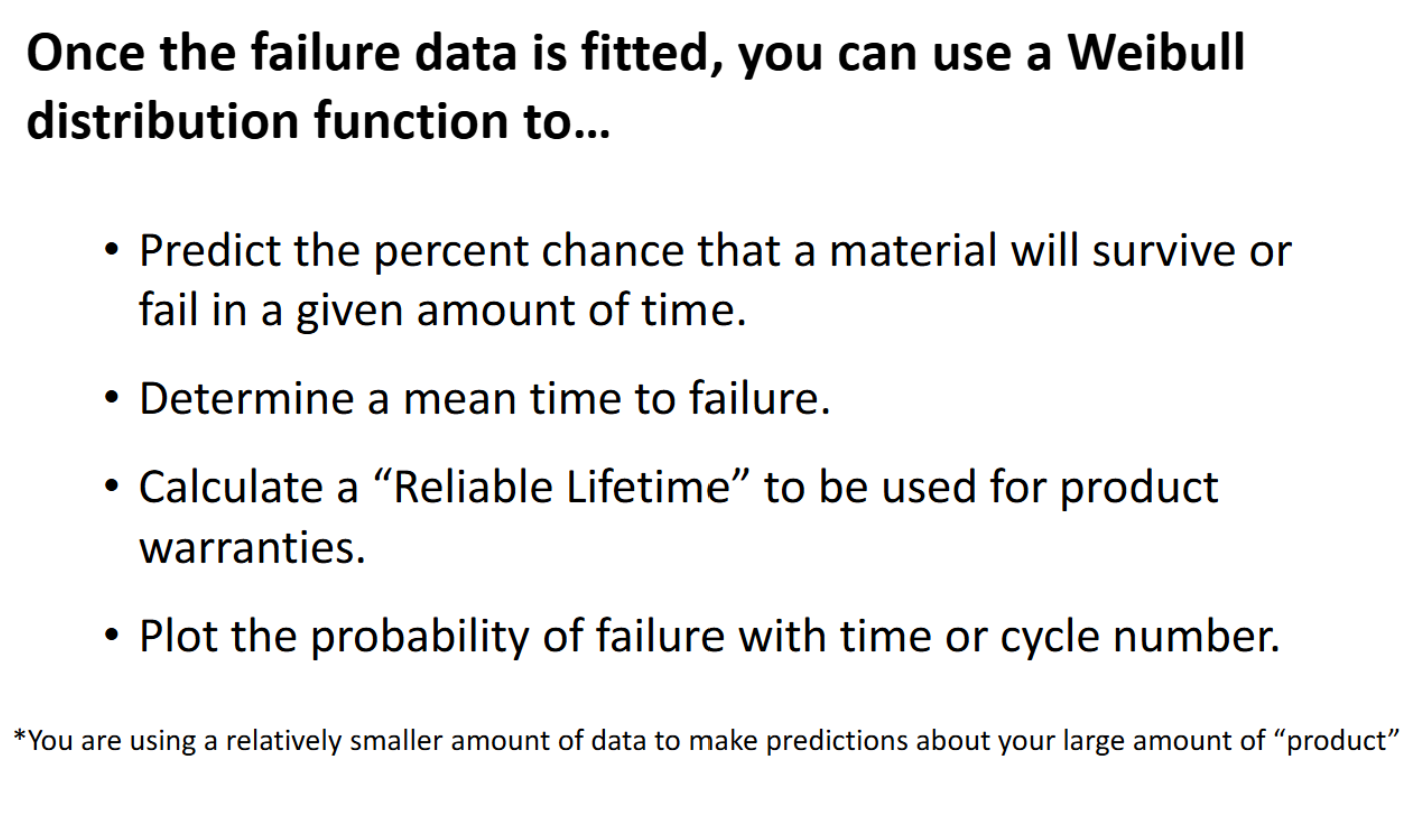
How can you use a Weibull distribution?
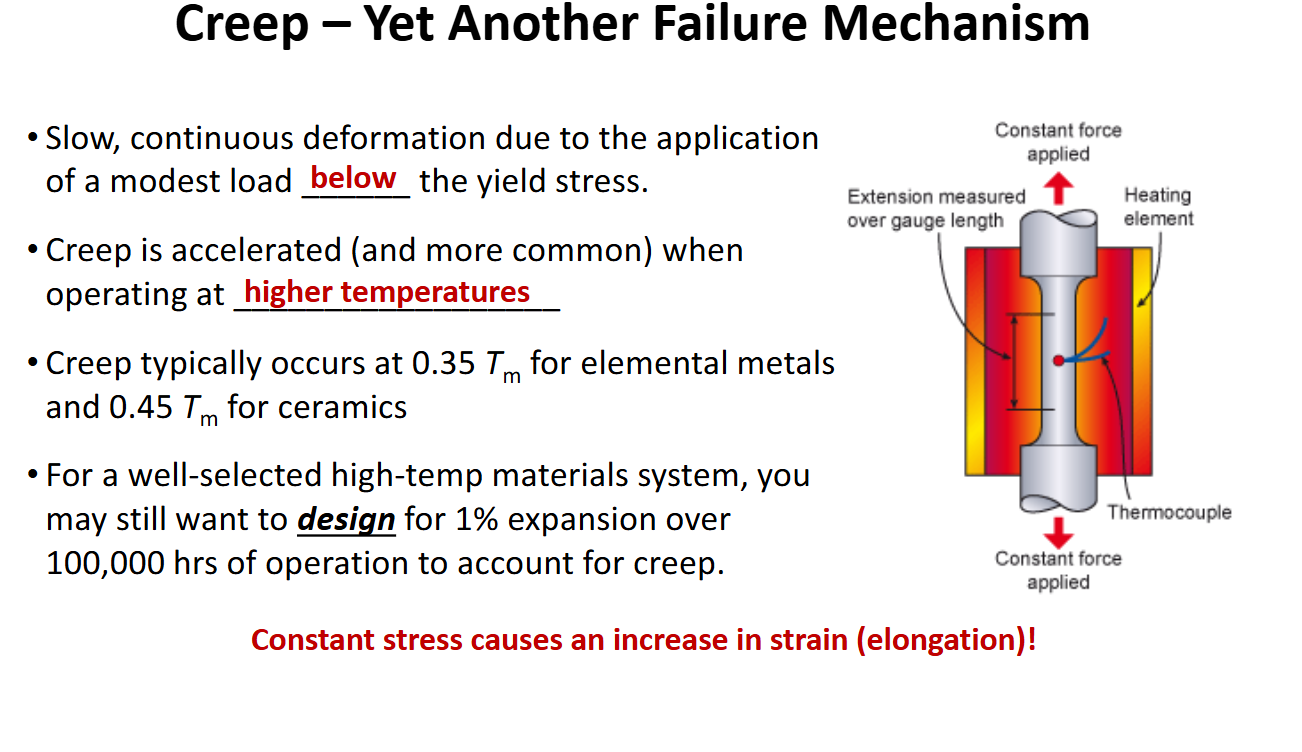
Creep
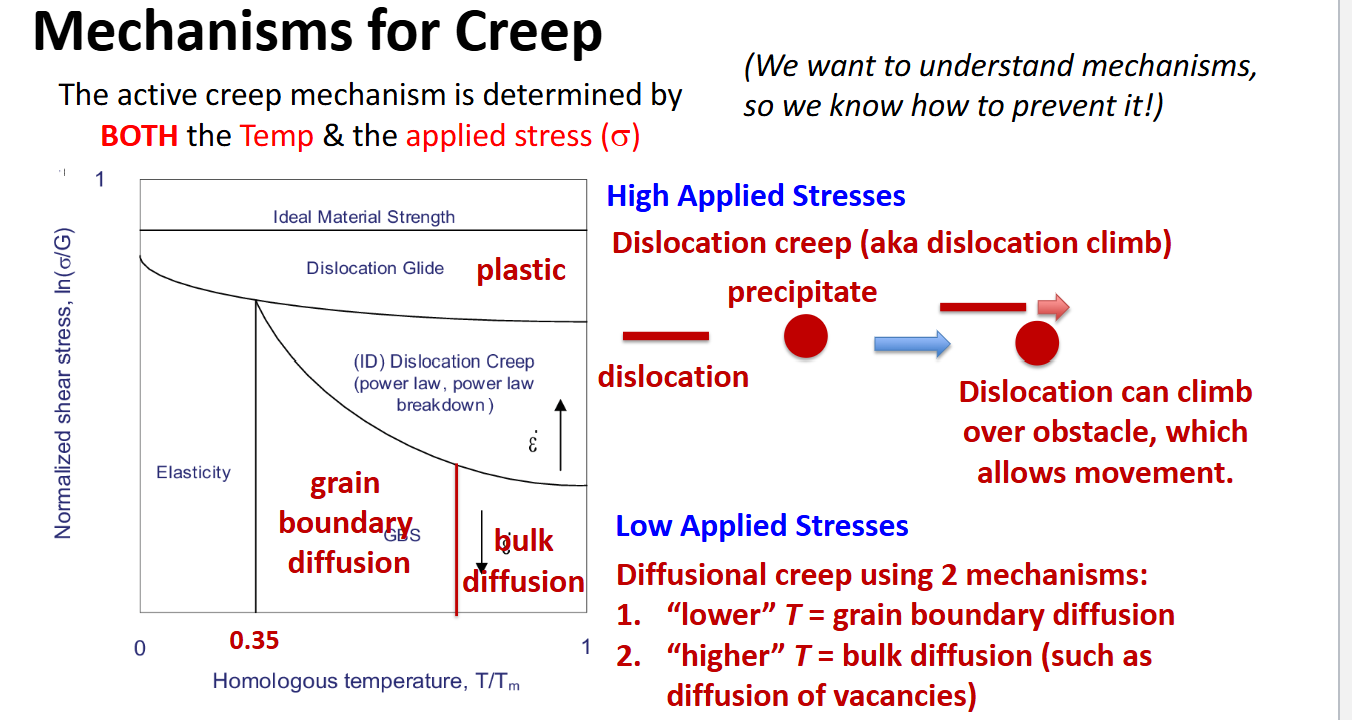
Break allat down
Didnt get this - genuinely come back and minimally understand this
Ways to reduce creep
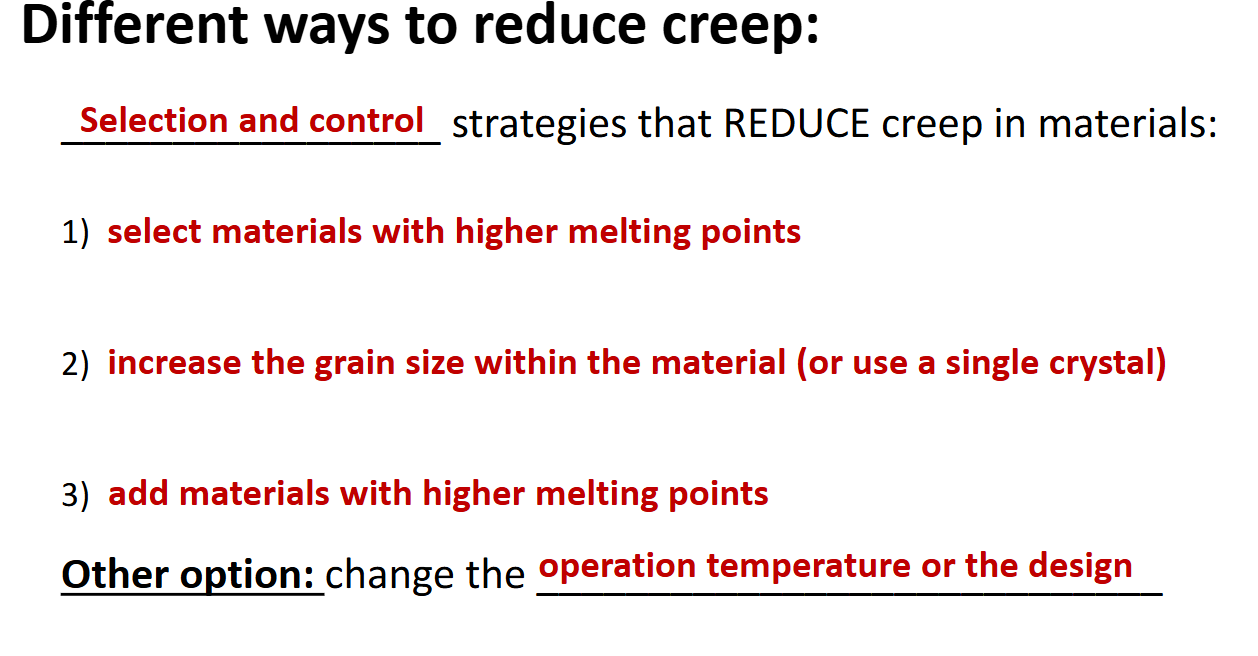
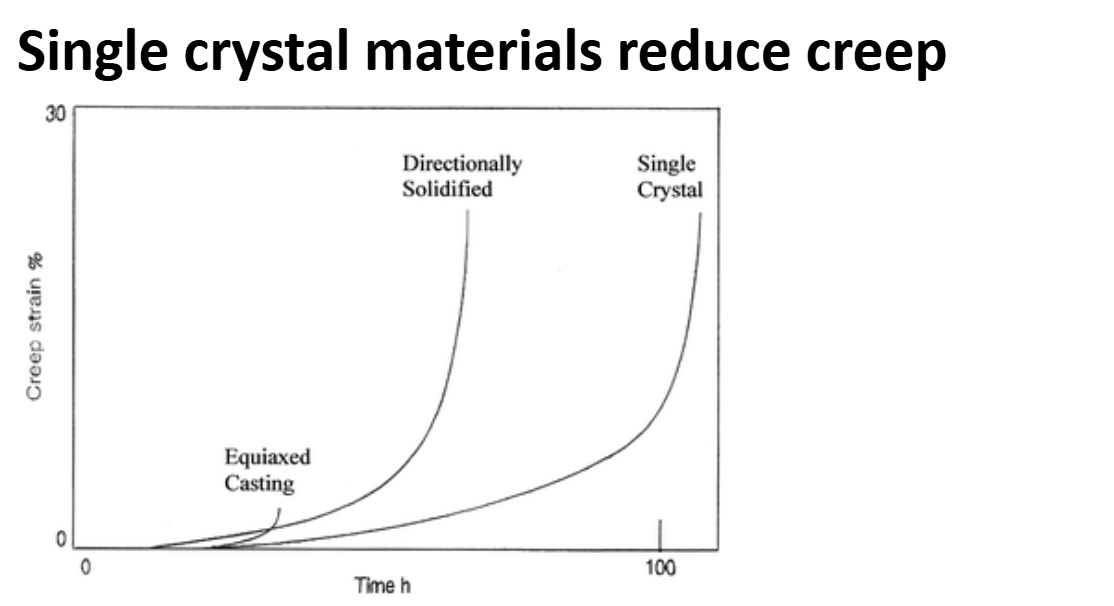
How do single materials deal with creep