2.4- cell immunity
 Call Kai
 Learn
Learn Practice Test
 Spaced Repetition
 Match
Match Flashcards
 Knowt Play
1/29

There's no tags or description
Looks like no tags are added yet.
Name | Mastery | Learn | Test | Matching | Spaced | Call with Kai |
|---|
No analytics yet
Send a link to your students to track their progress
30 Terms
what is a pathogen, three examples and how do they cause disease?
micro organism that causes disease
bacteria, fungi and viruses
damaging host cells and releasing toxins
what is an antigen?
what are some non self antigens?
molecules, usually proteins, located on the surface of cells which generates an immune response by lympocytes which are detected in the body (involving antibodies)
pathogens, cells from other organisms of the same species, abnormal body cells and toxins
what happens in phagocytosis?
receptors on surface of phagocyte attach to antigens on pathogen
phagocyte changes shape to move around and engulf pathogen
pathogen contained within phagosome vesicle
phagosome fuses with lysosome + releases it contents
lysozome hydrolyses pathogen and destroys it
what are lymphocytes?
what is the difference between a specific and non-specific immune response?
what are the two types of specific immune response?
white blood cells involved in specific immune response
non specific- present from birth + effective against wide range of pathogens + foreign substances
specific- slower + only effective against specific pathogens; response faster after re-infection
two types: humoral + cellular
what do t lymphocytes (T cells) recognise?
What can APC’s be?
recognise non-self antigens presented on the surface of other body cells
they can be:
cells that are infected by virus
a phagocyte which has just engulfed and hydrolysed a pathogen
abnormal body cell e.g. cancer cell
what is the role of T cells in cellular immunity?
1) pathogen invade body cells or are taken in by phagocytes
2) phagocyte/infected body cell places antigens from pathogen on its surface
3) receptors on specific T cell bind to antigen as they’re complementary
4) activates T cell (helper T cell) to divide rapidly by mitosis and form clones- releases chemicals to activate other T and B cells that are specific to the antigen
what are the three different functions of T cells?
1) some are cytotoxic T cells which destroy infected body cells- produce a protein perforin- makes holes in cell membranes
2) some develop into memory cells- enables rapid response to future infections by same pathogen
3) others are helper T cells that release chemical signals which stimulate other cells e.g. phagocytes, B cells and T cells
what is the humoral response?
cell surface membranes of B cells contain specific antibodies (act as receptors)
once a specific B cell with a complementary antibody binds to an antigen, this activates the B cell
B cell then divides rapidly by mitosis to form clones (clonal selection)
antibodies are produced that are complementary to a specific antigen
develops into either plasma or memory cells
what do plasma cells do and what is this known as?
secrete antibodies directly
primary immune response
what do memory cells do and what is this known as?
if they encounter the same antigen later, they:
divide rapidly, produce large numbers of memory and plasma- more antibodies will be produced faster
secondary immune response- long term immunity
what are antibodies and what do they do? draw the structure
what happens when an antibody binds to an antigen? (after a complex is formed)
1) proteins synthesised by plasma cells (B cells)
bind to antigen forming antigen-antibody complex- complementary shapes
antibodies are therefore very specific
2) agglutination occurs- all bacteria are clumped together- can be engulfed more easily by a phagocyte
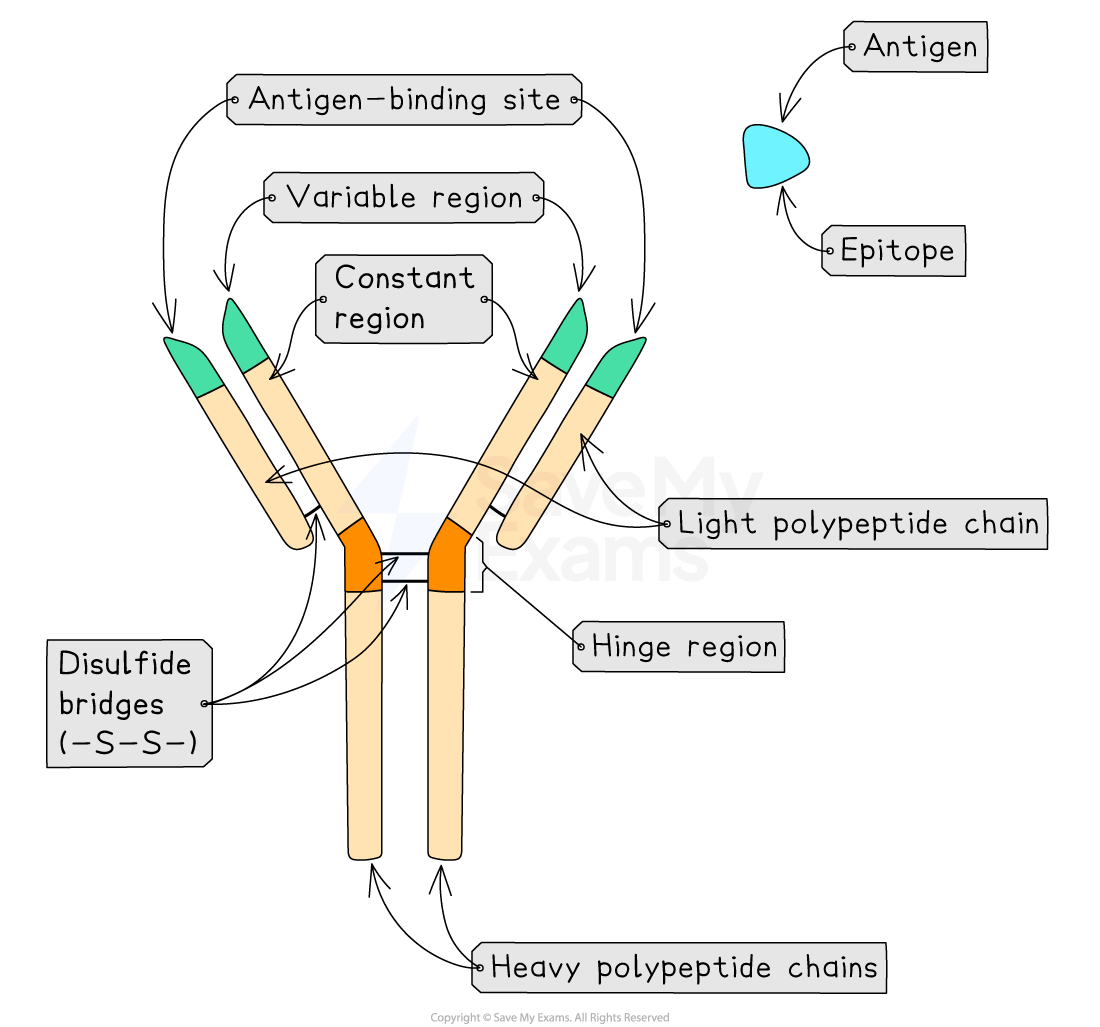
what are monoclonal antibodies?
does the antigen have to be a pathogen?
identical antibodies produced from a single clone of a B cell
no, any non-self protein will result in production of monoclonal antibodies by B cells
what are the four uses of monoclonal antibodies?
medical diagnosis
targeted drug treatments
drug testing of athletes
pregnancy testing kits
what is antigenic variability?
relate to immune response
antigens on the surface of each strain are different e.g. influenza viruses
won’t correspond to memory cells from previous infections
what does the ELISA test use?
what is the process?
uses monoclonal antibodies to detect the presence of and amount of a specific protein in a sample
container is coated with monoclonal antibodies
sampled to be tested is added + if specific antigen is present, it will bind to the antibodies
wash off unbound antibodies
a second antibody, with an enzyme attached is added- this binds to the antigens or the first antibody
the substrate for this enzyme is added- produces a colour change indicating a positive result
why are the washes needed?
remove unbound antibodies and prevent a false positive test
what would happen if there are no antigens present in the sample?
2nd antibody (with enzyme attached) won’t bind , will be washed
no enzyme to hydrolyse substrate- no colour change
what are some arguments for and against using monoclonal antibodies?
for:
treat conditions e.g cancer and diabetes
new treatments for specific conditions
against:
may test on animals
deaths when treating multiple sclerosis
what is passive immunity?
individuals acquire antibodies from an outside source
immunity is immediate, however short lived as the antibodies will be broken down and not replaced by the body
what is active immunity?
immune system is stimulated to produce its own antibodies
memory cells are produced which means antibodies can be produced again
takes longer but is longer lasting
what is vaccination?
what do vaccines contain and what do these do?
what may vaccines be?
introduction of a vaccine into an organism,
antigens and stimulates the production of specific plasma cells, antibodies and memory cells against a particular pathogen
killed or attentuated (weakened) pathogens/ isolated antigens
what makes a vaccine programme successful?
few side effects
economically available in quantities sufficient to immunise entire vulnerable population
must be easily stored and transported
must have means of administration
what is herd immunity?
vaccinating 90% of population is sufficient to stop the spread of the disease because pathogen will be killed quickly in vaccinated people and people aren’t vaccinated have a very low chance of coming into contact with another unvaccinated person
why might vaccination not eliminate a disease?
some individuals have a defective immune system
pathogen mutates quickly- change their antigens so immune system fails to recognise infection
many varieties of same organism, each with a different antigen
what are the arguments for and against vaccinations?
for:
protects against diseases
protects communities- herd immunity
against:
side effects
clinical trials on humans
animal testing
when to discontinue?
how does HIV replicate?
attachment proteins on virus binds to specific, complementary receptors on surface of helper T cells
RNA injected into T helper cell and reverse transcriptase converts RNA into DNA
DNA inserted into T cell’s genome
DNA transcribed into RNA
Viral proteins are produced (for assembly into virus particles)
how does AIDS develop and what are the symptoms?
replication and release of HIV from the T helper cell leads to destruction of the cells and the number of T helper cells decrease
less T helper cells mean that less B cells and T cytotoxic cells become activated
body’s immune response is reduced- individual more susceptible to other infections and cancers
fever, headaches, rash and diarrhea
what is used to treat HIV and why are these ineffective?
treated using a combination of antiviral drugs- often have to be changed as the virus has a high mutation rate + becomes resistant to them eventually
why can’t HIV be treated using antibiotics?
HIV is a virus and antibiotics are only effective against bacterial infections
this is because: viruses live in cell and antibiotics can’t reach them without damaging the cell
Why are antibiotics ineffective against viruses?
Antibiotics target bacteria and so viruses don’t have:
bacterial structure
Metabolic processes
cell wall