Transportation Final Exam
 Call Kai
 Learn
Learn Practice Test
 Spaced Repetition
 Match
Match Flashcards
 Knowt Play
1/44

There's no tags or description
Looks like no tags are added yet.
Name | Mastery | Learn | Test | Matching | Spaced | Call with Kai |
|---|
No analytics yet
Send a link to your students to track their progress
45 Terms
Why has the number of ton miles hauled by railroads decreased from the 1920s to today?
- It’s because the U.S. economy has changed from a manufacturing-based economy to a service-based economy.
- So that means that we don't need to haul as many raw materials, which is what railroads do well.
Since 1950, railroads have been supplanted by other modes of transportation, so which mode has stolen the most freight from railroads?
- Truck
Know what railroads are best suited for moving in terms of shipment size and shipment distance
-RR’s dominate shipments >30k lbs., distances >300 miles (shipment greater than 30 lbs. and more than 300 miles)
(average length of haul = 917 miles)
Study the pictures below and know what their functions are
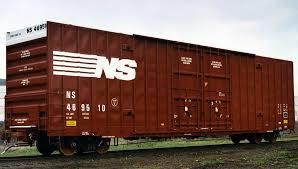
Box Car
-Roofed freight car with sliding doors on the side.
-Used to haul many different things (food, paper, auto parts, etc.)
- Vary in length from 40’-86’
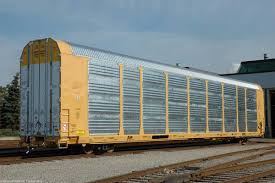
Auto rack
-Large car used to haul vehicles.
-Double level models are most common.
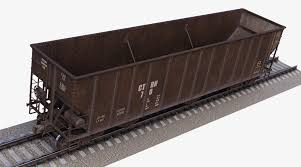
Open Hopper Car
-Floor slopes to one or more hinged doors for discharging bulk materials.
-May carry ballast (rocks or other type of filler that goes below and between rail ties) to maintain tracks.
-In revenue service they usually haul coal.
-Many modern hopper cars don’t have hoppers for unloading but are rotated upside down and dumped.
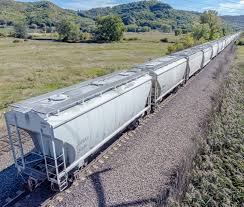
Covered Hopper Car
-Hopper car with roof to haul bulk materials that need protection (e.g., grains, sand, plastic pellets, etc.)
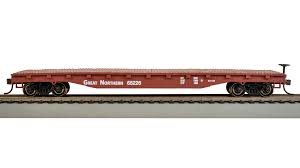
Flatcar
-Car with no top or sides used primarily for TOFC service, machinery, and building materials.
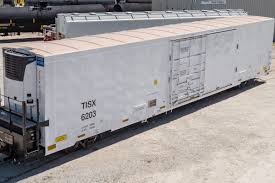
Refrigerated Car
-Used to haul foods or other goods that must be kept cold.
-Reefers are had to make ice stops before becoming equipped with gas powered coolers.
-Most reefer freight goes by truck because of its increased speed and on-time service advantage.
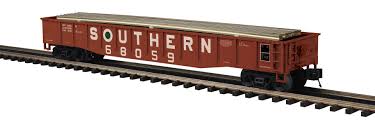
Gondola train car
-Car with no top, flat bottom, and fixed sides used for hauling bulk commodities.
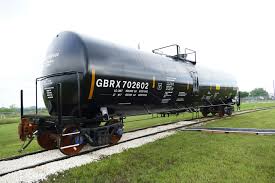
Tank Car
-Tank cars come in many different sizes and carry a variety of goods from gasses to corrosives to oil. -Range in size from a few thousand gallons to those carrying very heavy loads
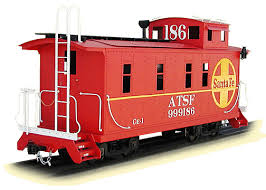
Caboose
-Used as a home for train crews and to ensure everything on the end of the train was operating well. -Very rarely used today.
-Began to disappear in the 1980s and are now replaced by the end of train device (EOT). (know this and that this device replaced the caboose)
-EOTs are a portable telemetry device mounted on the last car of a train that sends air pressure and motion information to a dashboard in the locomotive.
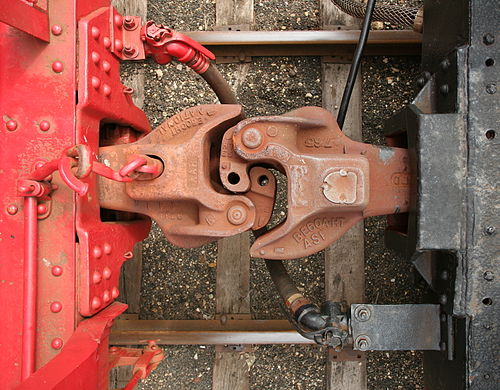
Couplers
-Join railcars together
What impact the Clean Air Act of 1970 had on railroad operations
- It said that you had to source coal from the Powder River Basin
How have coal shipments changed from 1980 until 2020?
-The shipments have gone down significantly
Be able to identify different railroad Classes
-Class 1 RR’s
Operating revenue > $475.75 MM (greater than $475.75 MM)
Class 2 RR’s
Operating Revenue $475 MM > x > $38.06 MM (between 38 MM and 475 MM)
Class 3 RR’s
Operating rev < $38.06 MM (less than $38 MM)
Who do railroads primarily compete with? Do they compete with other railroads?
-Primarily, railroads don’t compete with other railroads, but other modes of transportation.
-There is, currently, no single railroad that can move freight from one coast of the United States all the way to the other coast of the United States on track that it owns (so it has to switch to some other railroad)
Know all the railroad trivia
Railroad Trivia
-Sand is used to stop wheel slip. Trains are hybrid vehicles
Railroad Trivia
-Stanford University was founded by Leland Stanford, former governor of CA and founder of Central Pacific Railroad.
Railroad Trivia
-Cornelius Vanderbilt, founder of Vanderbilt University, made much of his fortune in RRs.
Railroad Trivia
-You will often see trains with locomotives on the end of the train. These are there to hold longer trains together. They would actually pull themselves apart without this extra power as a massive amount weight would be placed on couplers toward the front of the train.
Railroad Trivia
-UP’s 2nd largest classification yard is in NLR, AR.
What is the correlation between the amount of trash hauled by railroads and the future performance of the U.S. economy? And why?
-0.80 correlation between amount of waste hauled by RR’s and U.S. economic performance
-If people and businesses are busy and spending, they create more trash
-More trash = more rail shipments
- That usually means the economy is strong or growing
What is the number of Class 1 Railroads in North America?
-There are 7 of them, 6 pending a merger
Know the names and acronyms of each Class 1 railroad
-BNSF (Burlington Northern Santa Fe)
-UP (Union Pacific)*
-CSX
-NS (Norfolk Southern)*
-KCS (Kansas City Southern) & CPRS (Canadian Pacific)
-CN (Canadian National)
What are the two types of rail mergers and the reasons for each type?
1. Began with “side to side” mergers to reduce competition (reason)
2. Led to “end to end” mergers to increase service (reason)
What types of freight does railroad haul? And which type of freight is the largest in terms of total carloads?
-Coal, food products, lumber and wood, farm products, waste and scrap, stone, clay, glass, etc.
-In terms of total carloads, it’s Intermodal (trailers and containers)
What are the top variable costs that railroads face?
1. Fuel
2. Labor
What is a Land Bridge?
-a transportation strategy where cargo moves by ship across an ocean, then by land (usually rail) across a continent, and then by ship again to reach its final destination.
What does reefer freight most commonly go by?
-Truck
Terminal/Yard Basics Definitions
Rail yard:
-Series of tracks for storing, sorting, loading/unloading cars or locomotives
-Has many parallel tracks to keep cars off mainline
-Cars are moved by “yard switchers,” a type of locomotive.
-Cars sorted by RR company, loaded/unloaded, destination, car type, repair needs.
-Many yards are controlled by a tower
Terminal/Yard Basics Definitions
Yard types
Classification yard: used to organize railcars by destination.
Larger ones build trains using humps, artificial hills that use gravity to build trains. Also called “hump yards.” “Flat Yards” do not use humps.
Largest Classification Yards:
UP: Bailey Yard (North Platte, NE; largest in US)
BNSF: Argentine Yard (Kansas City)
NS: Robert Young Yard (Elkhart, IN)
CSXT: Waycross Yard (Waycross, GA)
Receiving yard: Also called “Arrival Yard”. Usually part of a larger yard. Cars are detached from locomotives and inspected for mechanical problems.
Transload yard: Usually part of a larger yard. Has road access and a special gate so trucks can get to the rail car and offload the railcar’s contents.
Terminal/Yard Basics
Personnel
Conductor: the guy/gal who drives the train.
Two types: Local: services local customers close to their yard Road: moves trains from one yard to another, generally a long distance.
Foreman: A conductor that is assigned jobs within a yard.
Trainmaster: A railroad employee in charge of conductors.
Yardmaster: A railroad employee in charge of yard operations. Responsible for on-time and fluid yard
operations. Usually works in the yard tower if one is present.
Switchman: Build trains by switching cars out of storage or inbound yards into departure yards.
Brakeman: Ensures cars are properly connected.
Dispatcher: Controls train departures. Often located in centralized dispatch centers.
Terminal/Yard Basics
Types of tracks:
Main line: Used for through trains and is the principal artery of the system through which branch lines, yards, sidings, and spurs are connected. May have multiple tracks.
Shop: Area tracks in the yard where cars are taken for repairs. May be RIP (Repair in Transit).
Scale: Track with a weight device built into it to
weigh rail cars.
Cleaning: Used to maintain cars appearance
Spur: Two types…
Branch line: Secondary railway line with branches off main line. A very short branch may be called a spur.
Temporary storage: A small track within a yard usually holding 20 or fewer cars.
Siding: A track off the main line used to marshal or hold cars on a temporary basis.
What is variable pricing? How is it used?
-It says that it’s better to make something than it is to make nothing; You’ll take a rate that might not cover your full cost, but as long as it covers variable costs.
Market Structure of Railroads
Principal market structures
-Pure competition
-Large number of sellers
-All sellers and buyers are of such small size that no one can influence prices or supply
-Homogeneous product or service
-Unrestricted entry
-Railroads could be considered a differentiated oligopoly. So, there's a small number of large firms differentiated by the locations that they serve.
Where will you get paid your highest rate?
-The Head haul is generally the highest rate
What four product characteristics determine a class rate?
1. Density
2. Stowability
3. Handling
4. Liability
What is price elasticity? How does it relate to transportation pricing?
-Price elasticity of demand measures how sensitive demand is to a change in price.
elastic= increase in demand= decrease in price
inelastic=decrease in demand=increase in price
-Transportation companies use elasticity to decide how much they can charge for shipping.