Slides/fetal development Unit 1 test
 Call Kai
 Learn
Learn Practice Test
 Spaced Repetition
 Match
Match Flashcards
 Knowt Play
1/42

There's no tags or description
Looks like no tags are added yet.
Name | Mastery | Learn | Test | Matching | Spaced | Call with Kai |
|---|
No analytics yet
Send a link to your students to track their progress
43 Terms
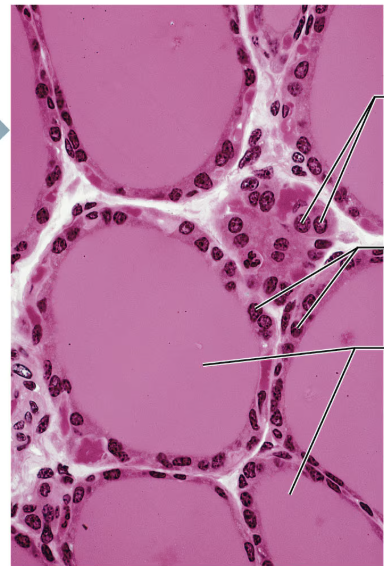
Which cell is shown
Thyroid gland follicles
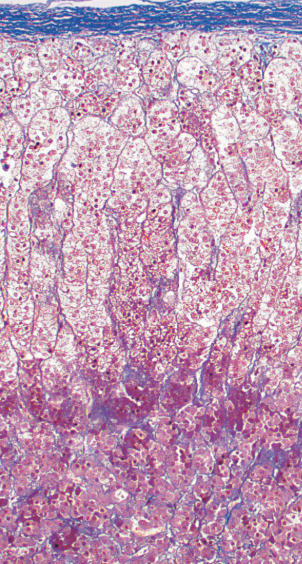
Which cell is shown
adrenal gland
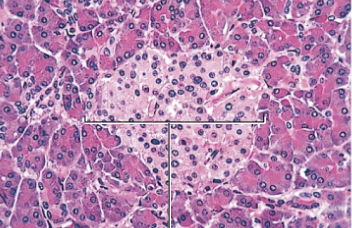
What cell is shown
pancreatic islets
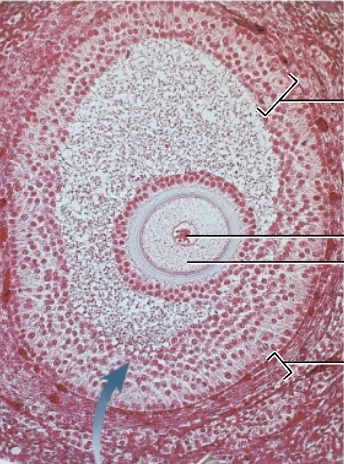
What cell is shown
ovary
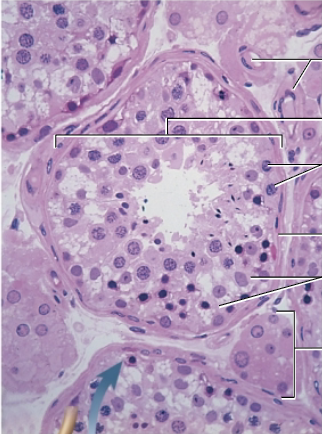
What cell is shown
testis
What is capacitation?
A process that occurs in the female reproductive tract where sperm become capable of fertilizing an egg. It takes about 7 hours and causes changes to the sperm membrane and increases tail movement.
What is the acrosomal reaction?
When a glycoprotein in the zona pellucida binds to the sperm's acrosome, causing the release of hyaluronidase, which helps the sperm digest its way through the zona pellucida.
Where does fertilization usually occur
In the uterine fallopian tube
Why is polyspermy dangerous?
It would allow multiple sperm to fertilize one egg, resulting in an abnormal chromosome number.
What is the first block to polyspermy?
Rapid depolarization of the oocyte membrane after the first sperm enters, preventing additional sperm from fusing.
What is the second block to polyspermy?
Calcium release triggers exocytosis of vesicles that harden the zona pellucida, creating a long-term barrier.
What is gestation?
Pregnancy; it lasts about 266 days from conception to birth.
What are the three major prenatal developmental stages?
Blastocyst, embryo, and fetus.
What is a blastocyst?
A hollow ball of cells present during the first 2 weeks of development.
When is an organism considered an embryo?
From approximately day 16 through week 8.
When does the fetal stage begin?
At the beginning of week 9 and continues until birth.
What is a neonate?
A newborn infant from birth to approximately 6 weeks old.
What are the functions of the placenta?
Provides:
Nutrition
Waste removal
Hormone secretion
Regulation of pregnancy
Mammary development
Fetal development
What are the five major hormones of pregnancy?
Estrogens
Progesterone
Human chorionic gonadotropin (hCG)
Human chorionic somatomammotropin (hCS)
Relaxin
Which structure produces most pregnancy hormones?
The placenta.
What endocrine structure supports pregnancy during the first several weeks?
The corpus luteum
When does the placenta take over endocrine function from the corpus luteum?
Between approximately weeks 7–17
What is hCG?
Human chorionic gonadotropin, a hormone secreted by the blastocyst and placenta.
What is the primary function of hCG?
To maintain and stimulate growth of the corpus luteum.
What hormones are produced by the corpus luteum in response to hCG?
Progesterone and estrogen.
What are the functions of estrogen during pregnancy?
Promotes fetal and maternal tissue growth
Enlarges uterus and external genitalia
Stimulates mammary duct growth
Enlarges breasts
Helps relax the pubic symphysis (with relaxin)
What are the functions of progesterone during pregnancy?
Suppresses FSH and LH
Prevents follicle development
Suppresses uterine contractions
Prevents menstruation
Maintains the endometrium
Promotes breast acini development
What is hCS?
Human chorionic somatomammotropin, a hormone produced by the placenta
What is the function of hCS?
Reduces maternal insulin sensitivity so more glucose remains available for the fetus.
Which pregnancy hormone peaks early and then declines?
hCG
Which hormones steadily rise throughout pregnancy?
Progesterone and estradiol
How many umbilical arteries are present in fetal circulation?
Two umbilical arteries
What do the umbilical arteries carry?
Deoxygenated blood and fetal wastes from the fetus to the placenta
How many umbilical veins are present in fetal circulation?
One umbilical vein
What does the umbilical vein carry?
Oxygenated, nutrient-rich blood from the placenta to the fetus
What is the ductus venosus?
A vessel that allows most oxygenated blood from the umbilical vein to bypass the liver and enter the inferior vena cava.
What is the foramen ovale?
An opening between the right and left atria that allows blood to bypass the fetal lungs.
Why is the foramen ovale necessary?
Because fetal lungs are not functioning for gas exchange before birth.
What happens to the foramen ovale after birth?
It closes
What is the ductus arteriosus?
A vessel connecting the pulmonary trunk to the aorta, allowing blood to bypass the lungs
What happens to the ductus arteriosus after birth?
It closes
What are the three major fetal shunts?
Ductus venosus
Foramen ovale
Ductus arteriosus
Trace the path of oxygenated blood from the placenta to the fetal heart
Placenta → Umbilical Vein → Ductus Venosus → Inferior Vena Cava → Right Atrium → Foramen Ovale → Left Atrium → Left Ventricle → Aorta