chapter 18: general and special sense
 Call Kai
 Learn
Learn Practice Test
 Spaced Repetition
 Match
Match Flashcards
 Knowt Play
1/102

There's no tags or description
Looks like no tags are added yet.
Name | Mastery | Learn | Test | Matching | Spaced | Call with Kai |
|---|
No analytics yet
Send a link to your students to track their progress
103 Terms
sensory receptors
specialized cells that monitor the condition in the body or the environment
General sense
temperature, pain, touch, pressure, vibration, and proprioception ( knowing where your body is in a space )
Special sense
smell, taste, balance, hearing, and vision ( goes directly to the brain )
free nerve ending
simplest receptor
dendrites of sensory neurons
responds to a variety of stimuli
receptive fields
large - receptors spread far apart, harder to localize stimuli
small - close together
Two-touch test
tonic receptors
interpretations of sensory information
always active
photoreceptor of the eye and a receptor that constantly monitors body position
Phasic receptor
interpretation of sensory information
normally inactive but become active when necessary (for short periods of time )
touch and pressure receptors of the skin
adaptation
adaptation
reductions in sensitivity due to a constant stimulus
temperature
spice
volume
exteroceptors
external environment
based on location ( general senses )
Proprioceptor
position of the body
based on location ( general senses )
Interoceptors
Monitors the internal conditions to help maintain homeostasis
based on location ( general senses)
Nociceptors
based on stimuli ( general sense )
sensation of pain
Thermoreceptors
based on stimuli ( general senses )
change in temperature
Mechanoreceptors
based on stimuli ( general senses )
physical distortion of cell membranes
chemoreceptors
based on stimuli ( general senses )
chemical composition of body fluids
Nociceptors
pain receptors
free nerve endings and large receptor fields
difficult to “ pinpoint” the origin of the pain
fast pain
slow pain
referred pain
fast pin
pricking pain or cuts
slow pain
burns or aching pains
referred pain
Visceral organ pain felt elsewhere- reaches the spinal cord via the same dorsal root
pain that’s happening in an organ is happening in another part of the body
thermoreceptors
changes in temperature
in the dermis, skeletal muscles, liver, and hypothalamus - free nerve endings
phasic receptors
thermoreceptors
more cold than hot receptors - bc cold is more dangerous for you
phasic
transmitted along pain pathways
mechanoreceptors
respond to physical disruption to the membrane, constant or pressure
There are three types
tactile receptors
baroreceptors
proprioceptors
Tactile receptors
receptors that detect touch, pressure, and vibration
Baroreceptors
pressure changes within organs and help determine if you are full or not
Proprioceptors
position of joints and muscles
tactile response
sensation of touch, pressure, and vibration
unencapsulated tactile receptors
encapsulated tactile receptors
unencapsulated tactile receptors
free nerve endings, tactile discs, and toot hair plexus
encapsulated tactile receptors
tactile (Meissner’s) corpuscles
bulbous ( ruffini ) corpuscles
lamellar ( pacinian ) corpuscles
have a layer of connective tissue covering the tip of nerve endings
pacinian corpuscles
deeper in the dermis
responds to heavy pressure, pulsing, and frequency vibration stimuli
ruffini corpuscles
in dermis, sensitive to pressure and distortion of the skin
pulling on skin
Bulbuls
meissner’s corpuscles
detect light touch, movement, and vibrations ( eyelids, nipple, finger tips, lips, external genitalia )Tactile (
Baroreceptors
stretch receptors that monitor changes in the stretch of organs, pressure changes
Monitor changes in your organ
lets you know when you need to expel your waste
proprioceptors
monitior the postition of joints
proprioceptors
monitor tension in the tendons and ligaments
proprioceptors
Monitor the length of muscle fibers upon contraction
chemoreceptors
Monitor the chemical composition of body fluid and respond to the presence of specific molecules
found in
The medulla oblongata - CSF
carotid artery and aorta - blood
olfaction
chemical sense, tastes ( taste is mostly smell)
10 - 100 million receptors
have to dissolve in something to pick up information
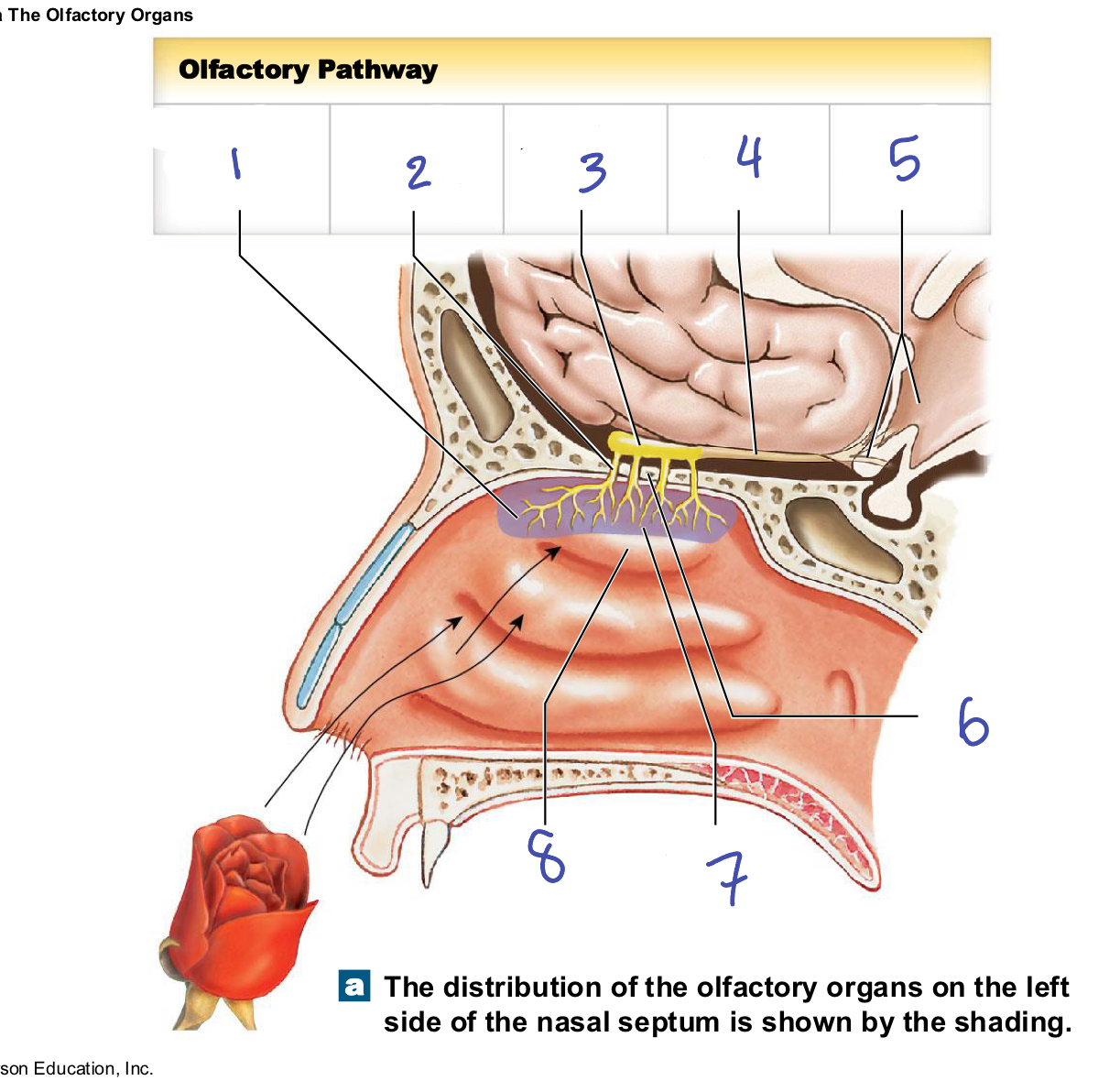
olfactory epithelium
superior portion of the nasal cavity, cribriform plate
includes
olfactory sensory neurons
supporting cells
basal epithelia cells
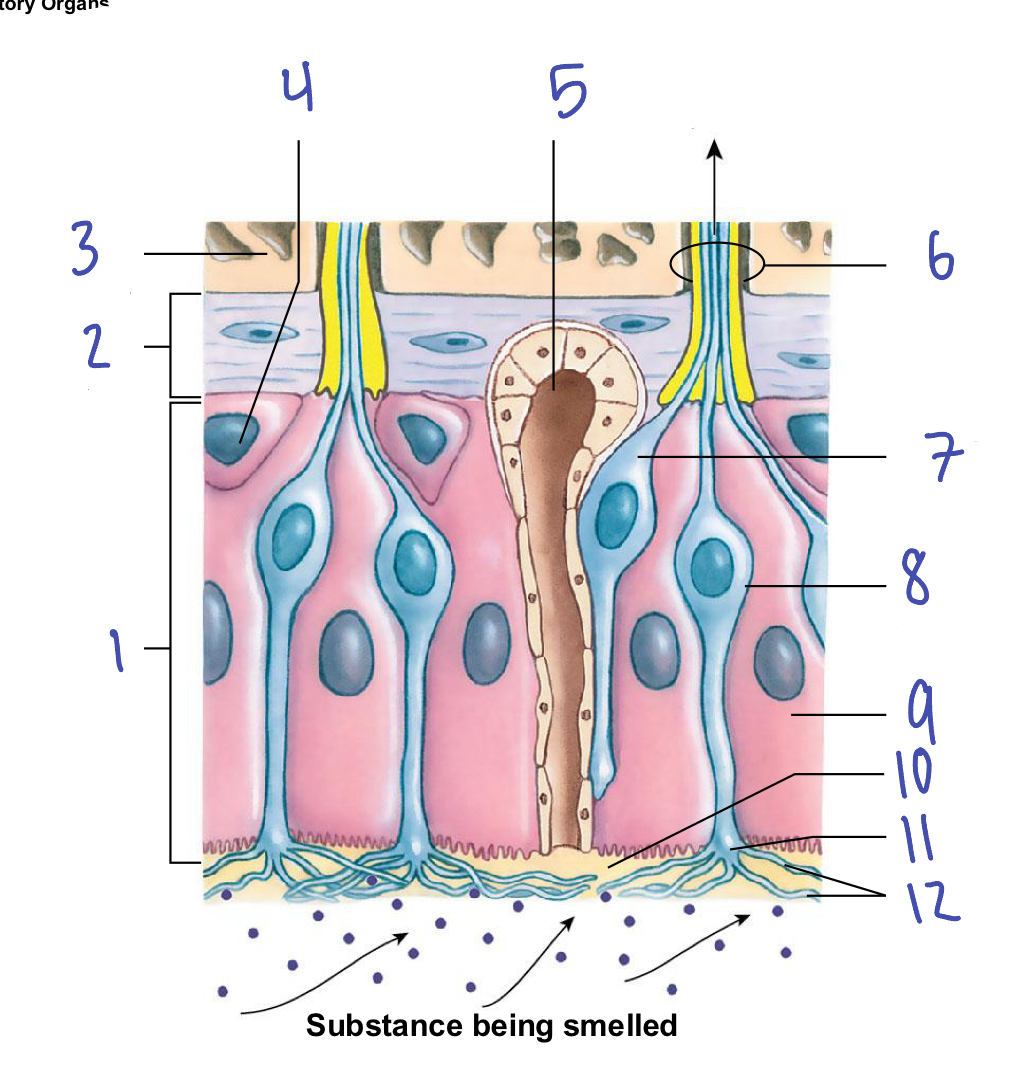
olfactory sensory neurons
____ are bipolar neurons
supporting cell
columnar epithelium
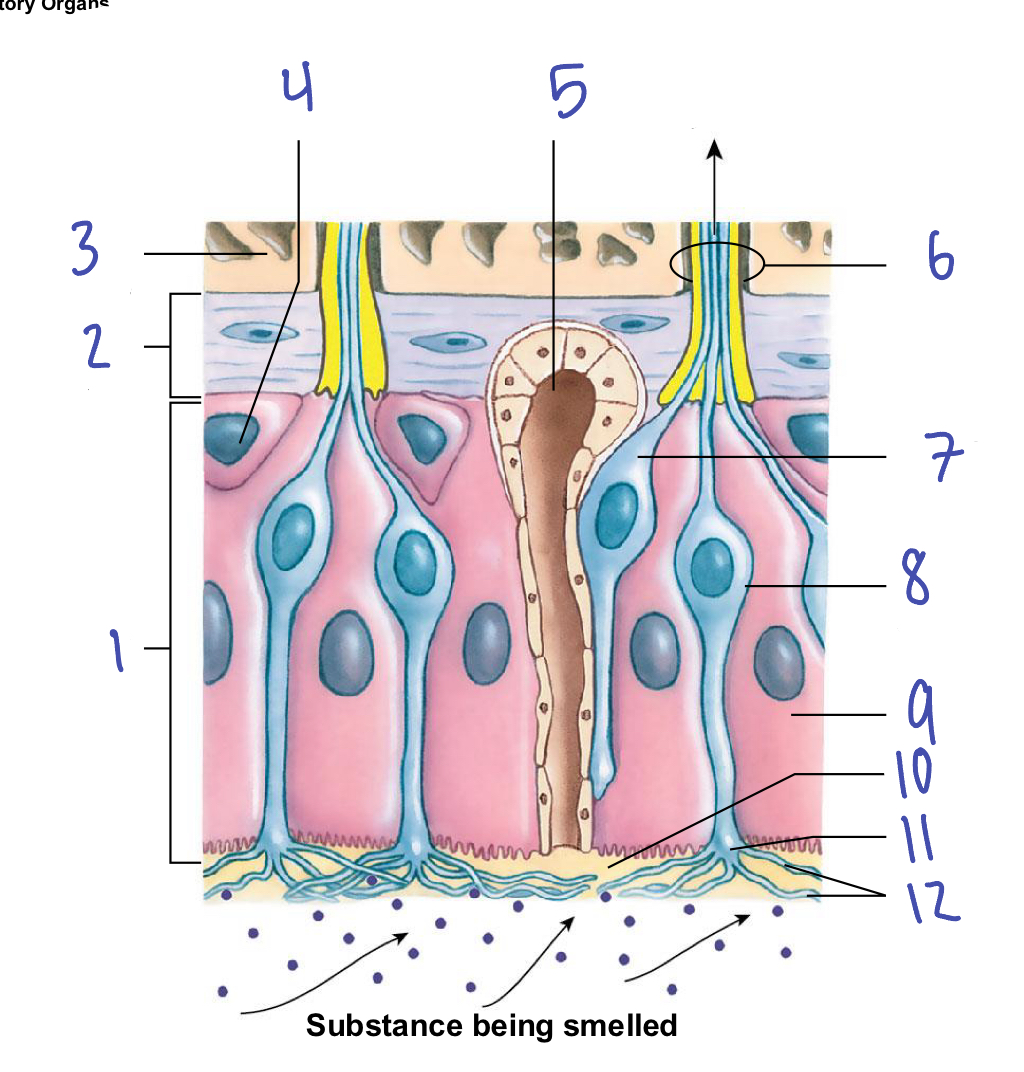
basal epithelial cells
between support cells, eventually divides to replace worn-out olfactory sensory neurons
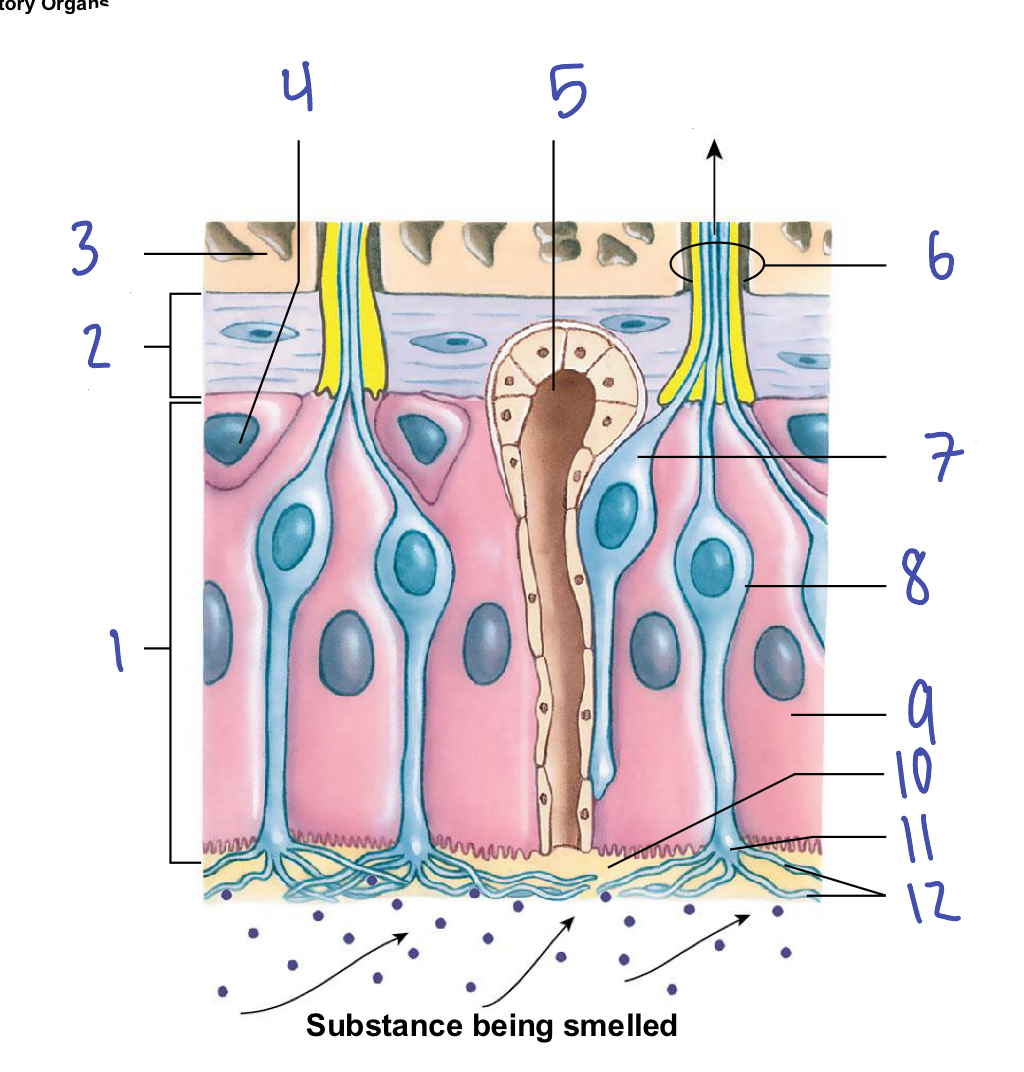
olfactory gland
produces thick mucus, dissolves odorants (Bowman’s)
olfactory discrimination
Receptors have different sensitivities
“ detect” different smells
olfactory receptors can be replaced
declines with age
adaptations to odors occur quickly
few molecules
completely insensitive after 1 minute
gustation ( taste )
chemical sense
stimulating molecules must dissolve
Receptors located in the taste buds
gustatory epithelial cells
lingual papillae
Gustatory epithelial cells
taste hair
replaced every 10 - 12 days
Lingual papillae
on the tongue
four types
filiform
fungiform
foliate
vallate
molecules have to dissolve to taste
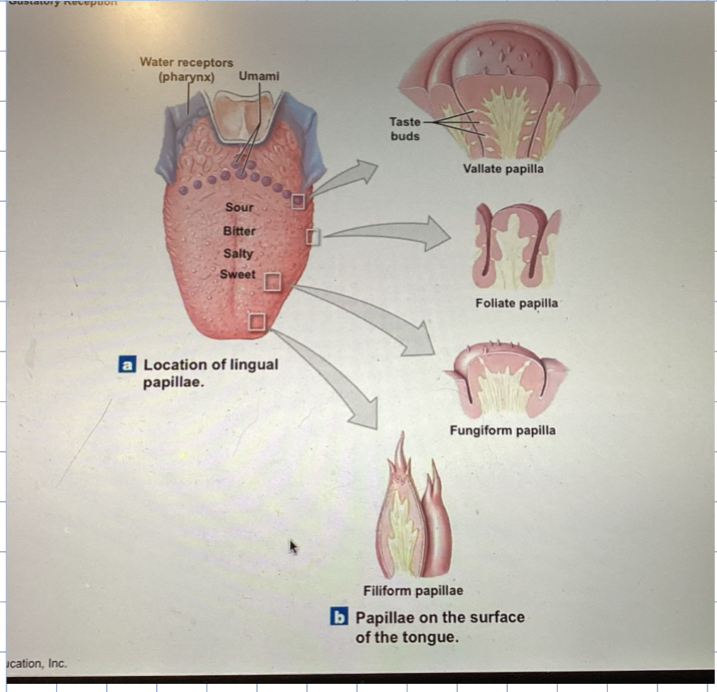
Gustatory discrimination
There are four (possibly six ) primary taste sensations
sweet, salty, sour, bitter
umami- amino acids, glutamate
water - pharynx
Taste is mostly smell
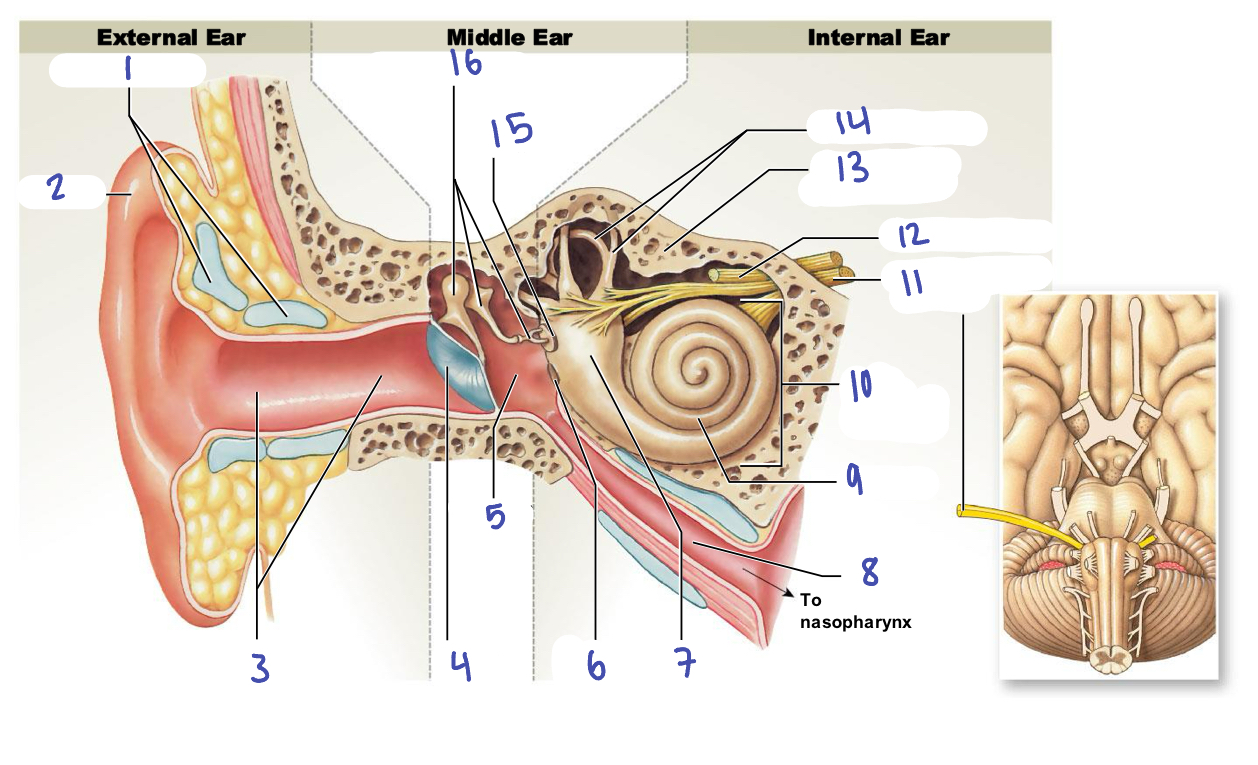
Inner ear
consists of :
bony labyrinth
vestibular complex
cochlea
membranous labyrinth
hair cells
endolymph
vestibular complex
equilibrium
cochlea
A structure in the ear used for hearing
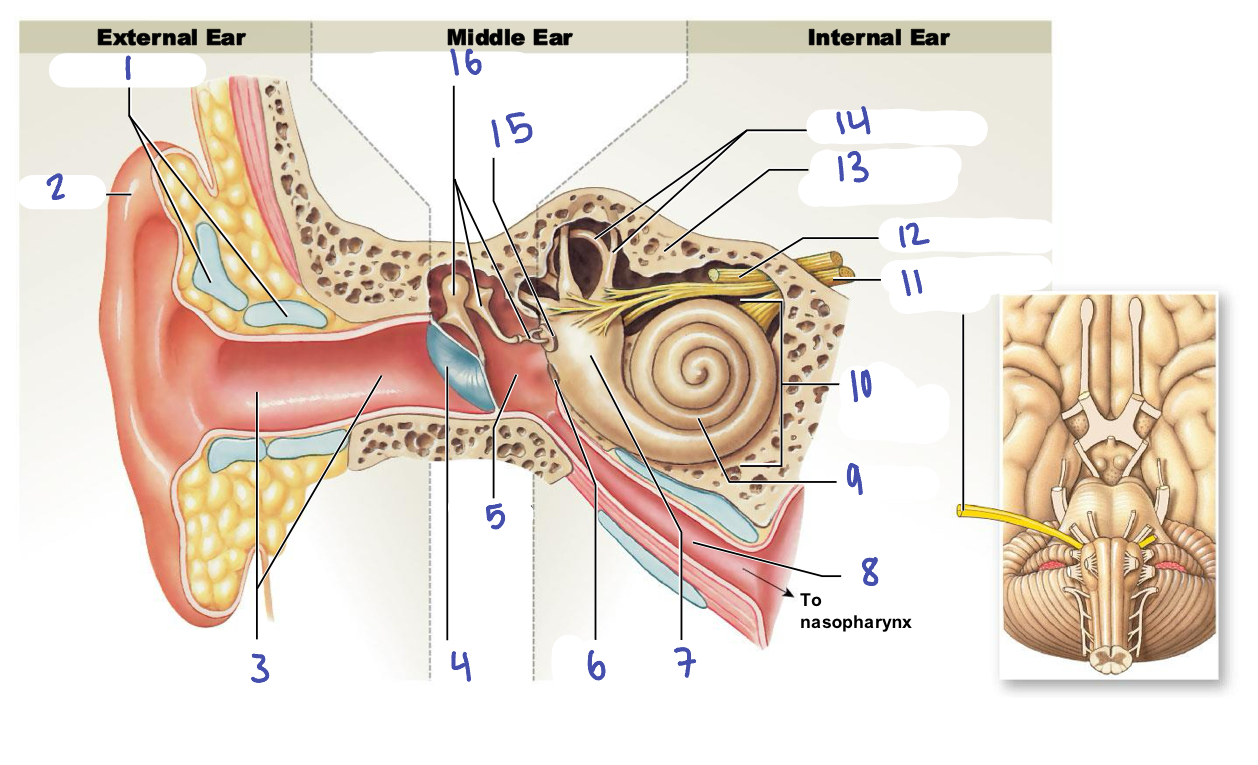
membranous labyrinth
within the boney labyrinth
hair cells
embedded in a gelatinous
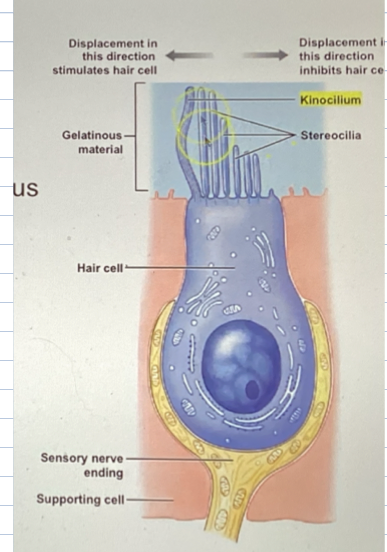
endolymph
perilymph
the vestibular complex and equilibrium
provides equilibrium sensation by detecting rotation, gravity, and acceleration
consists of :
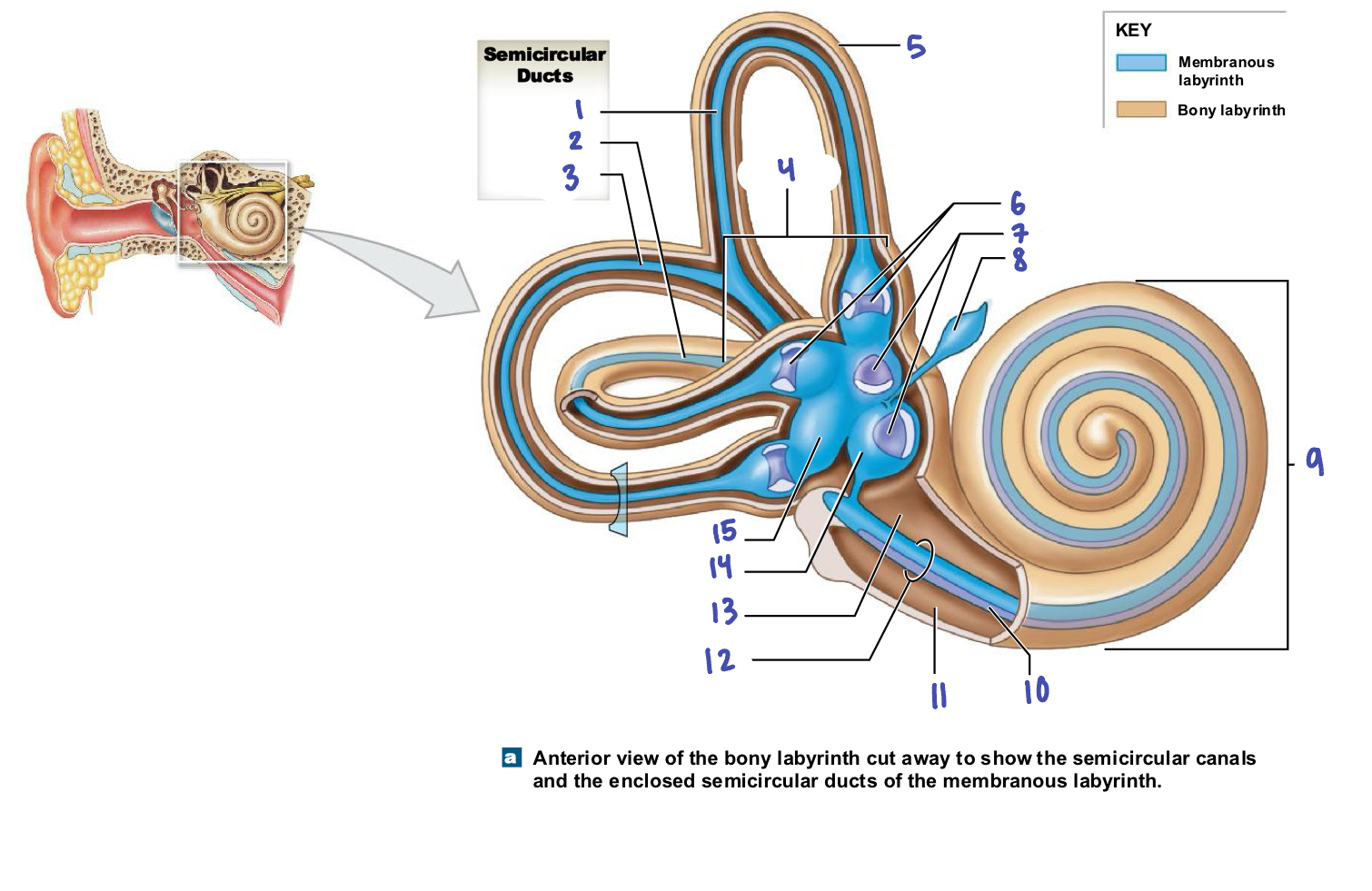
semicircular canals
utricles
saccule
the inner ear
The vestibular complex creates the :
hair cells
semicircular canals
utricle and saccule
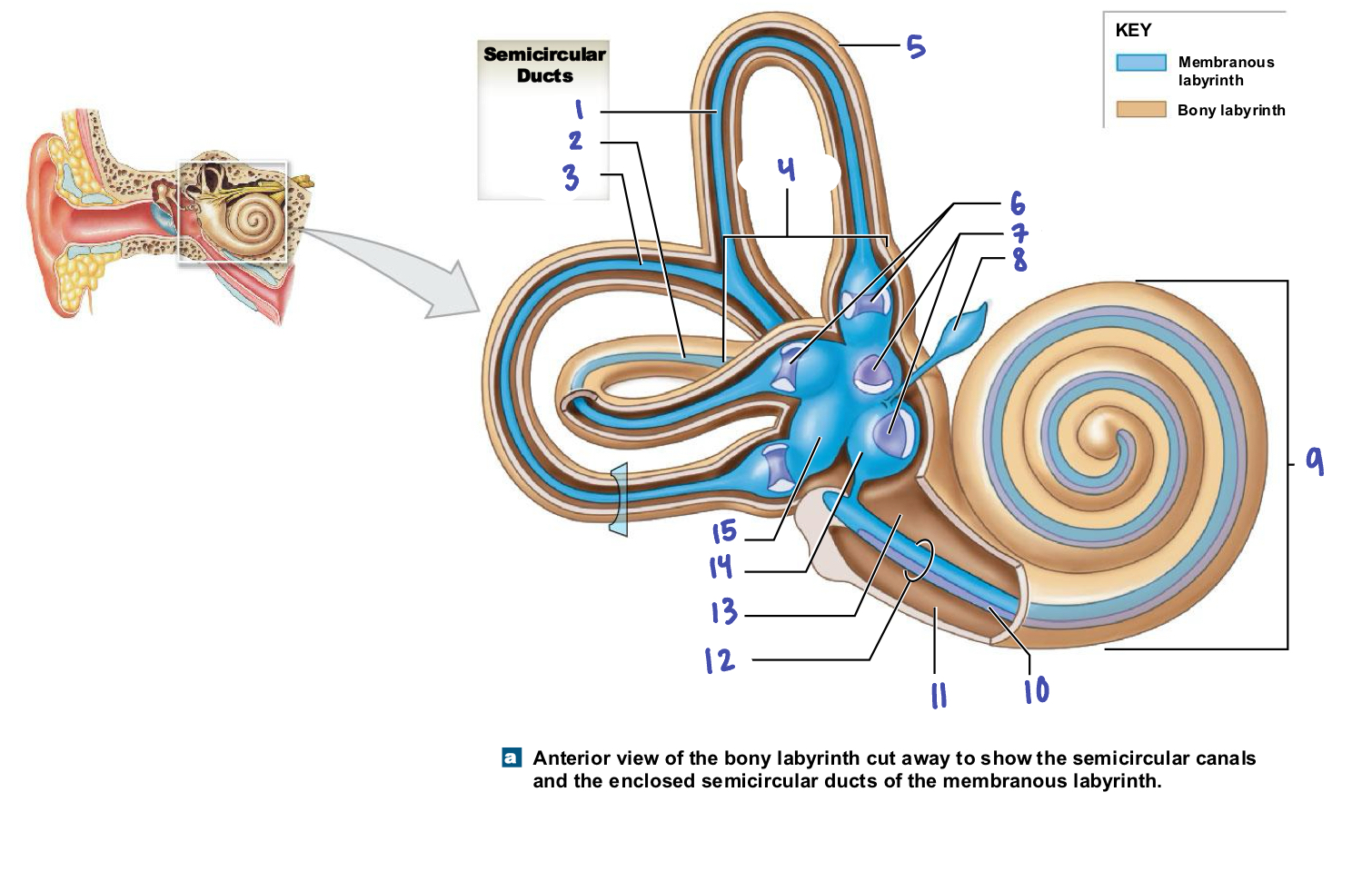
semicircular canals
this structure monitors head rotation
utricle and saccule
oval maculae
otoliths
otoliths
calcium carbonate crystals
utricle and saccule
when you move up or down ( elevator movement )
otoliths rest on top of the maculae
When moving upward, the otoliths press down on the macular surface
When moving downward, the otoliths lift off the macular surface
When you tilt side to side :
When tilting to one side, the otoliths shift to one side of the macular surface
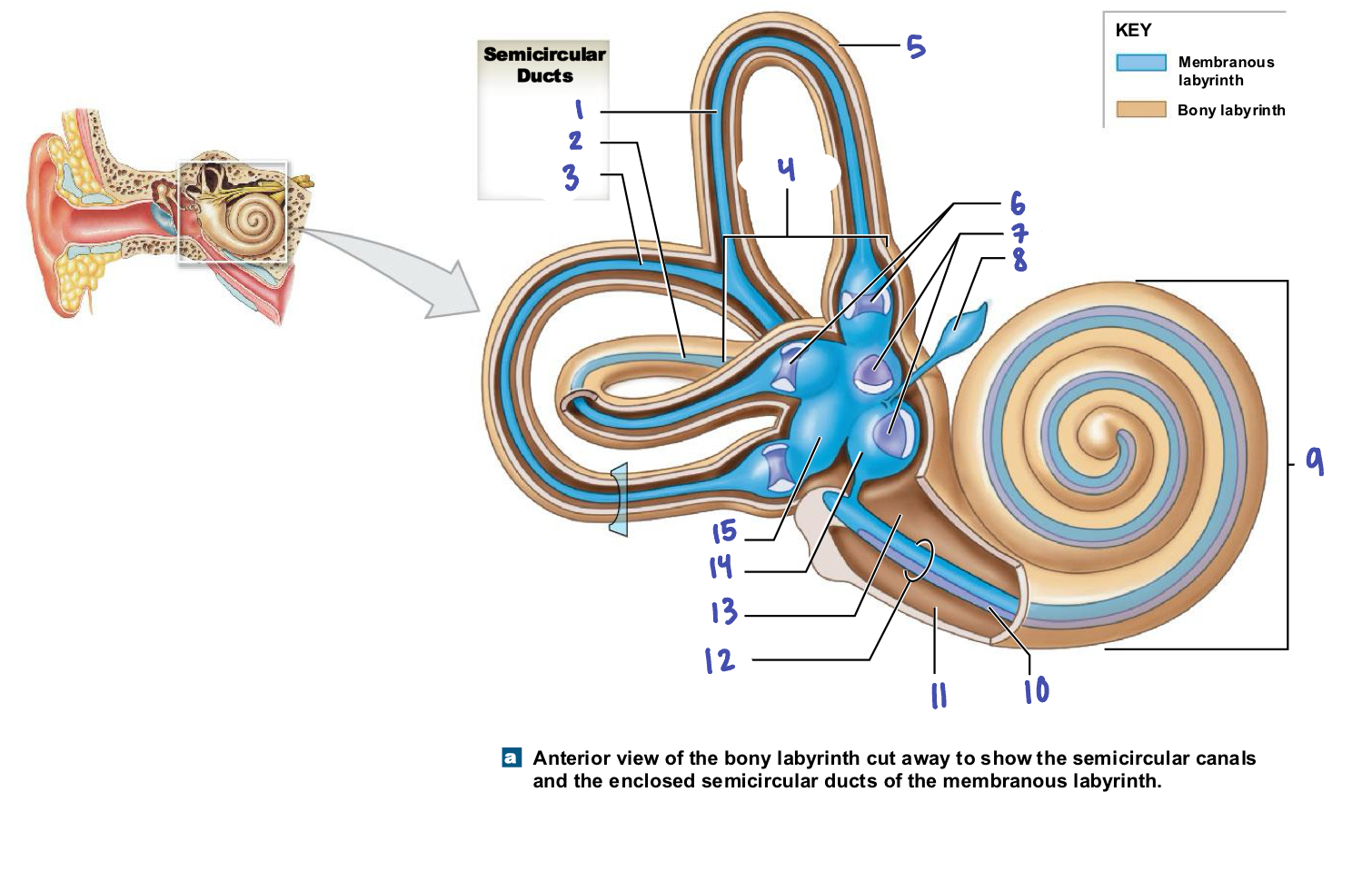
hearing
the cochlea
hair cells
tectorial membrane
all help in ___
hair cell
receptor cells
localized within the organ of Corti ( spiral organ )
Tectorial membrane
a structure in the cochlea that distorts with sound waves
detection of sound waves ( pressure waves )
sound waves enter the external acoustic meatus
vibrates the tympanic membrane → ossicles → oval window
creates pressure waves through the perilymph
distorts the tectorial membrane, stimulating the organ of Corti
sends a signal to the cochlear nerve
Vision
components of our visual system include
accessory structures
the eye
this creates our ___
accessory structures of the eye
palpebrae ( eyelids )
eyelashes
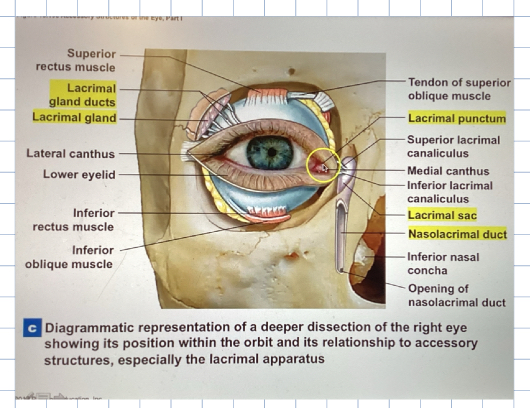
glands
palpebrae
eyelids
palpebral fissure
medial and lateral canthus
conjunctiva
palpebral fissure
area between the eyelids and the eye
medial and lateral canthus
connect the eyelids at the corners of the eye
conjunctiva
epithelial lining of the eyelids
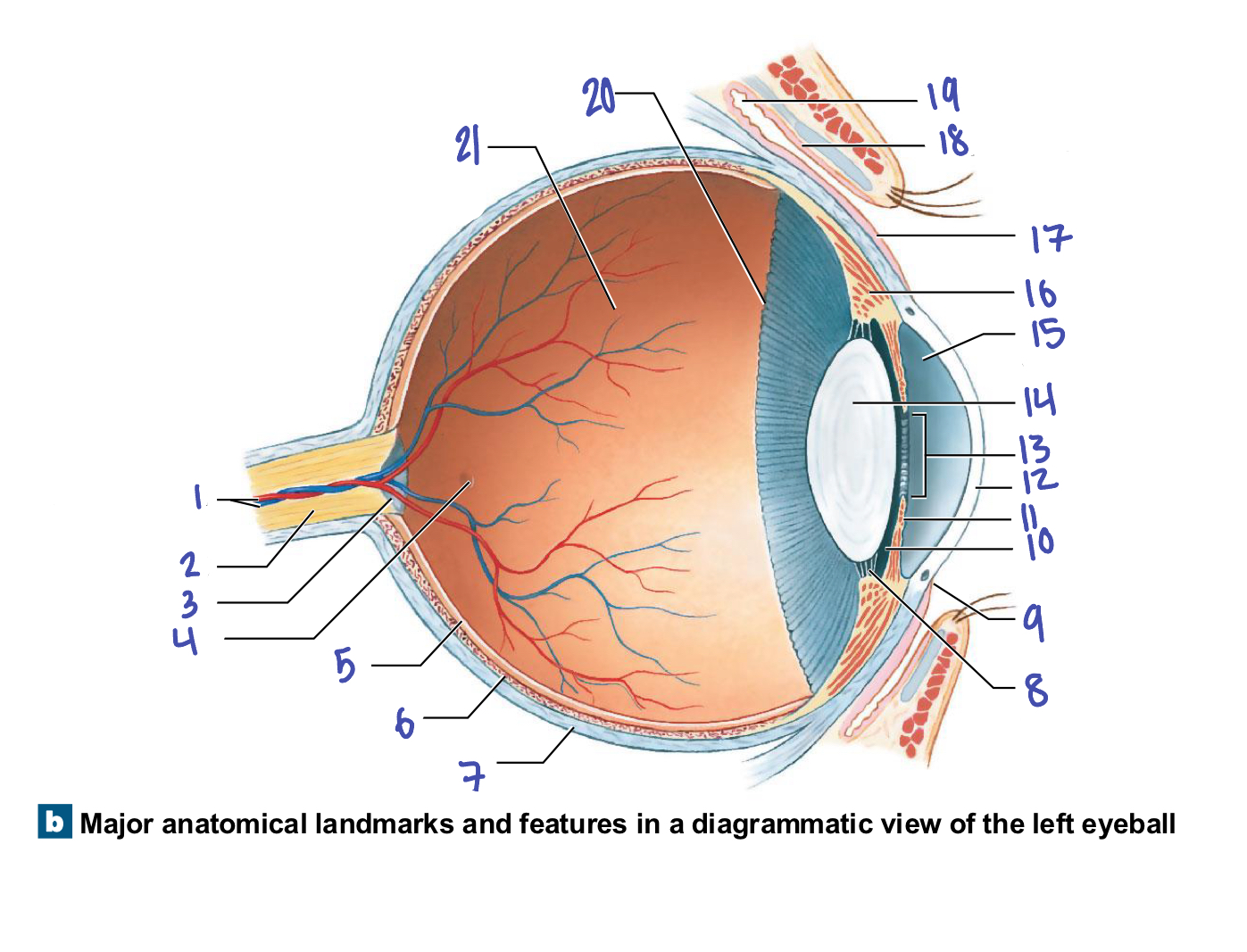
eyelashes
contain root hair plexus, which triggers the blinking reflex
glands
glands of Zeis, tarsal glands, lacrimal glands, lacrimal caruncle
the eye
consists of :
three layers
fibrous layer
vascular layers
inner layer ( retina )
anterior cavity
anterior chamber
posterior chamber
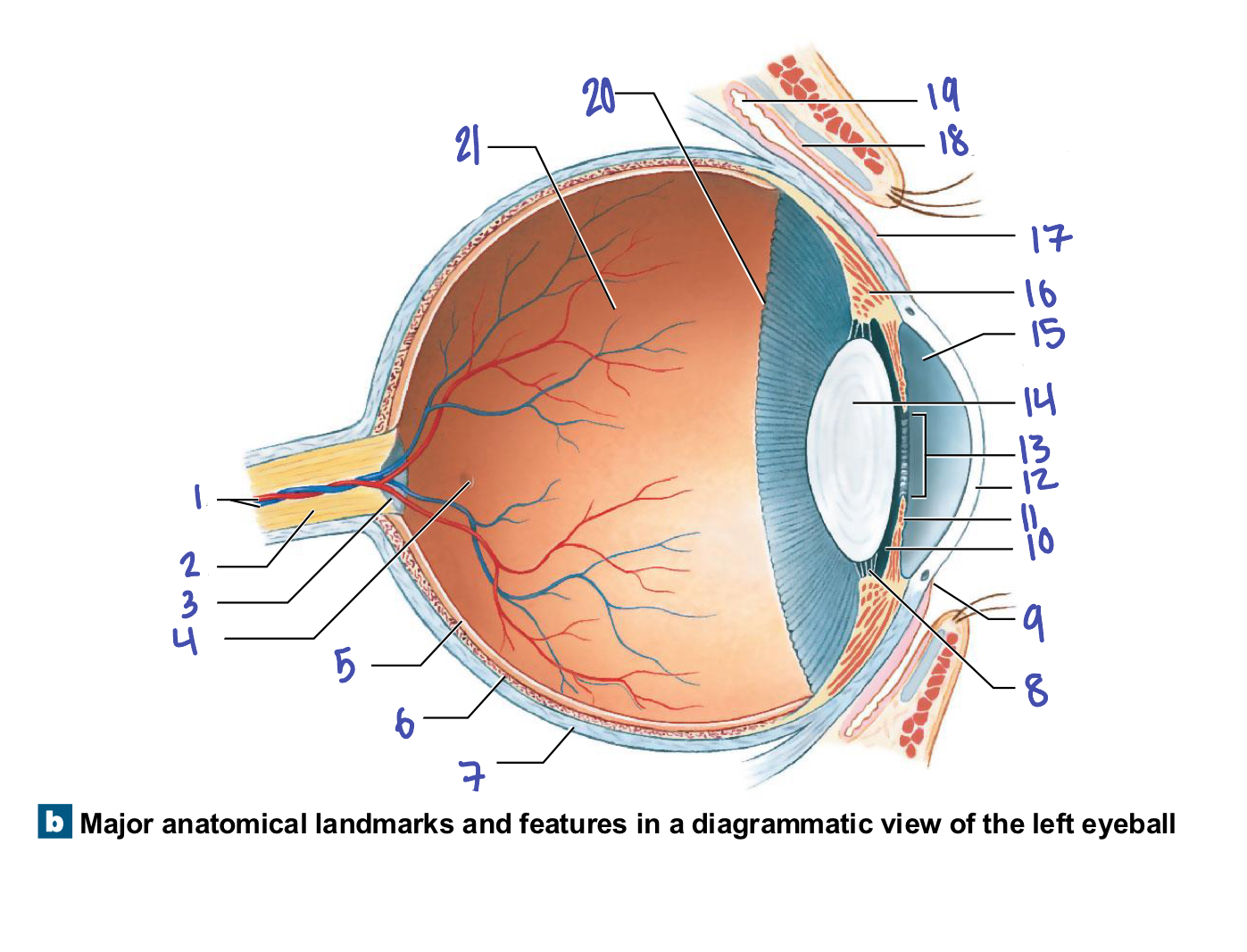
posterior cavity
fibrous layer
outer layer
consists of sclera and the cornea
The cornea is modified sclera
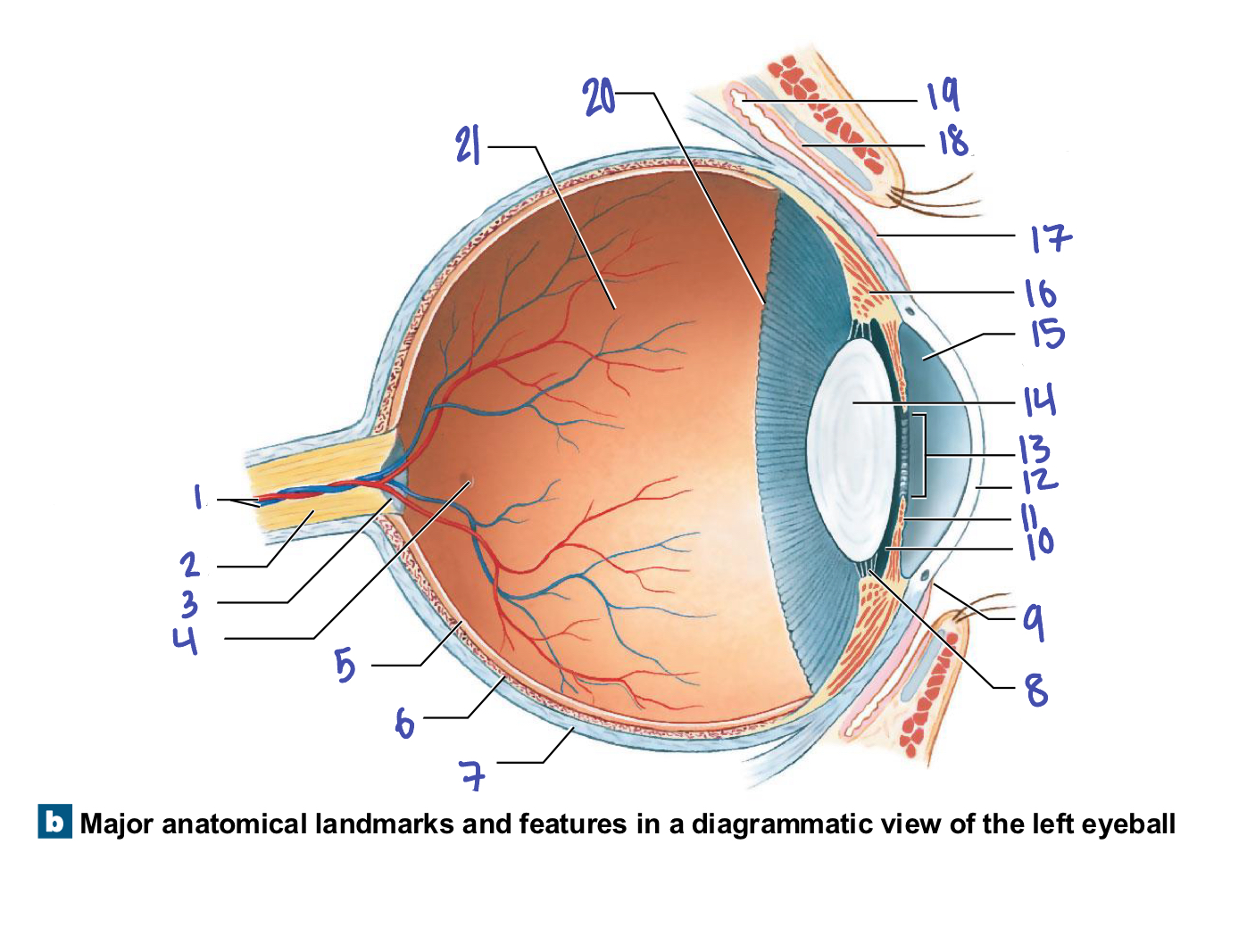
Fibrous layer
provides mechanical support and protection of the eye
sclera
attachment site for the extrinsic eye muscles
fibrous layer
cornea
contain structures that assist in eye focusing
Fibrous layer
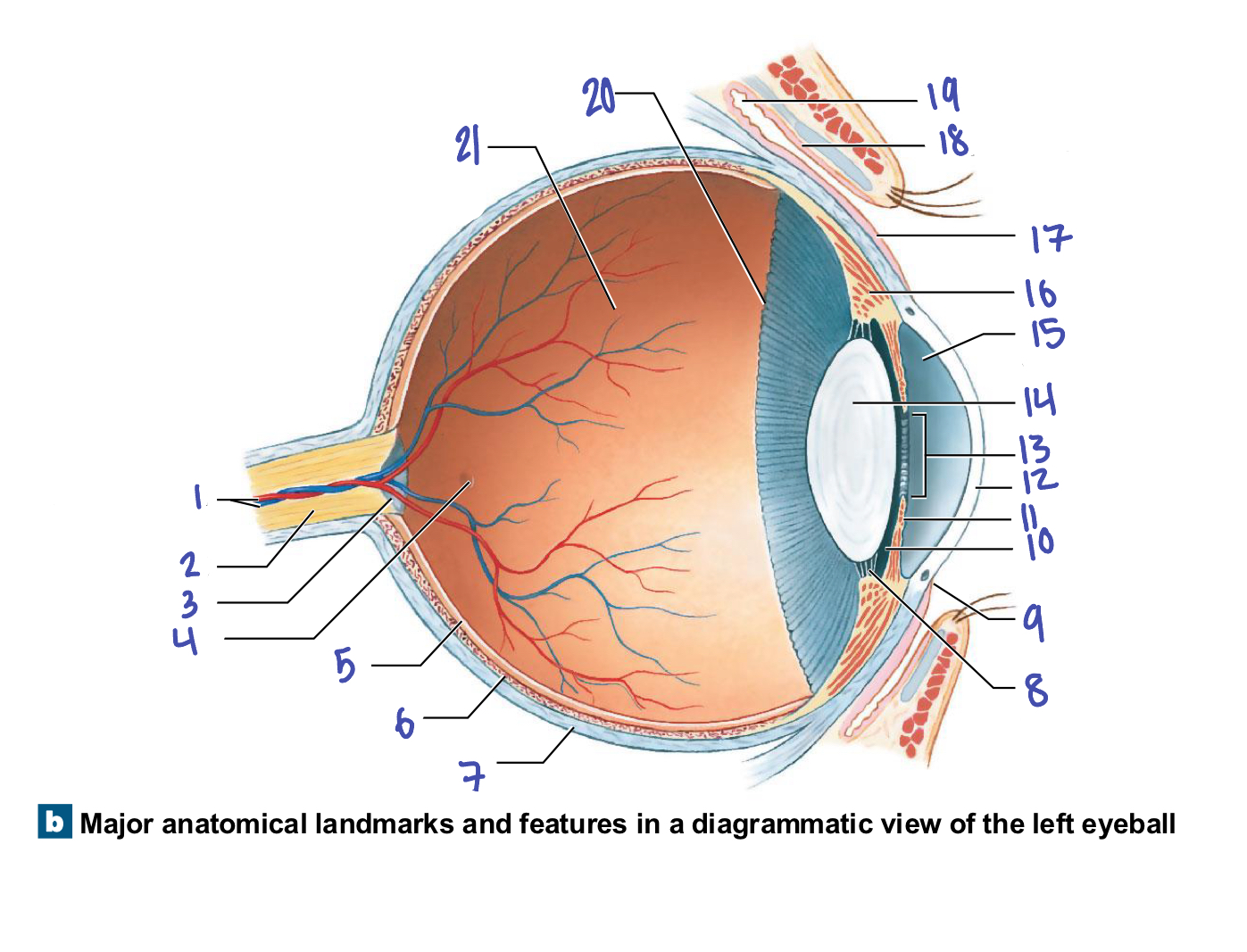
Vascular layer
a layer that contains :
iris, pupil, ciliary body, choroid
Vascular layer
provides a route for lymphatic vessels and blood vessels of the eye
Pupil
A layer regulates the amount of light entering the eye
Vascular layer
vascular layer
secretes and reabsorbs the aqueous humor
ciliary body
controls the shape of the lens
in vascular layer
Retina
contains :
macula lutea, fovea centralis, optic disks
rods and cones
inner layer
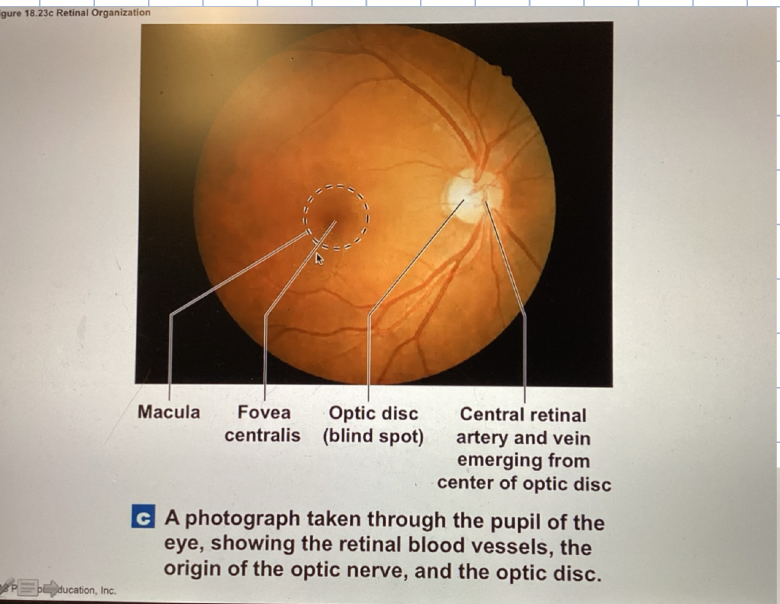
retina
where preliminary processing and integration of visual info happens
retina
contains photoreceptors that respond to light
rods
cones
inner layer
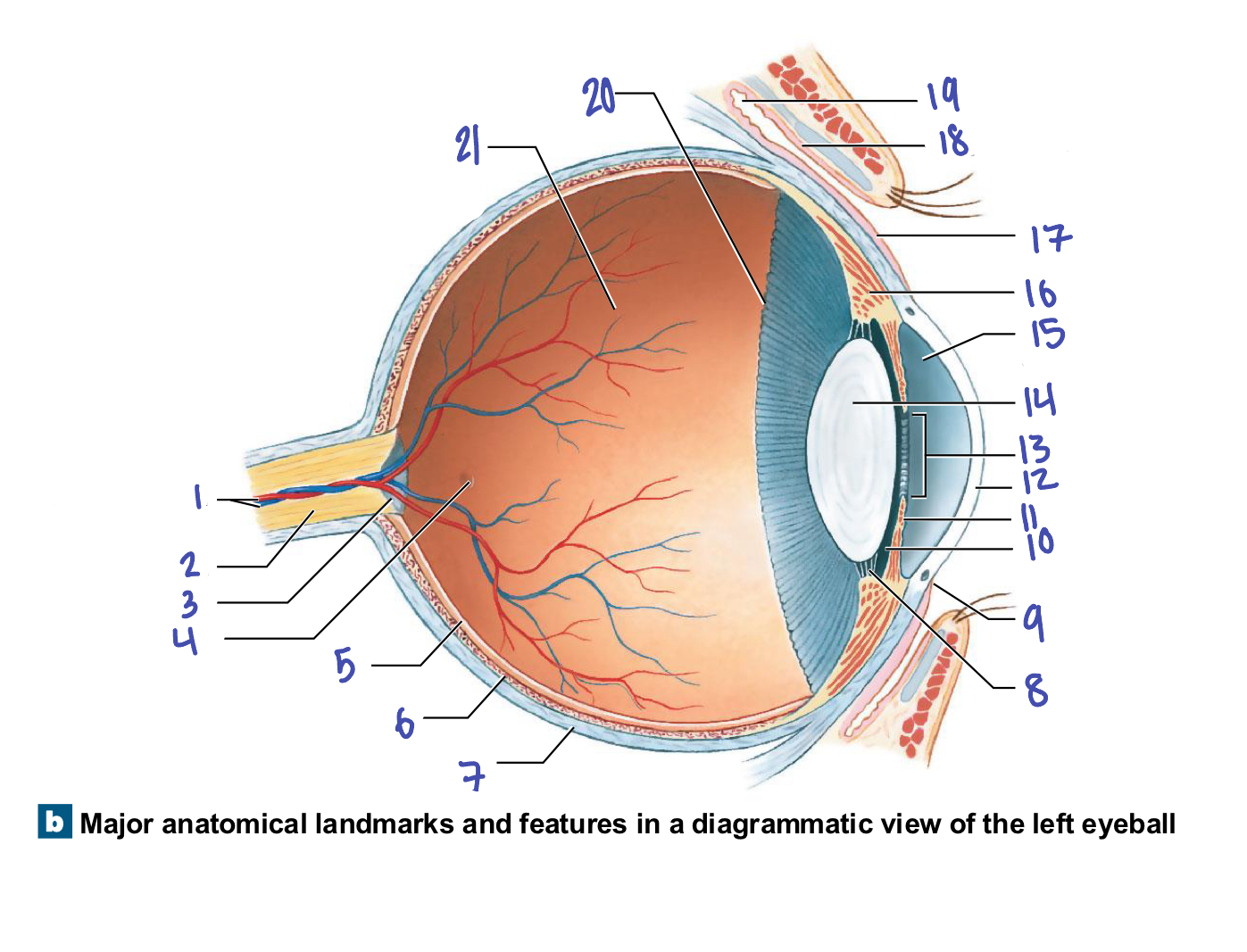
rods
light sensitive allowing vision in dim light
cones
provides color vision, gives shape, and provides clear vision
retina
supply nutrients to the tissue lining the posterior cavity
Anterior cavity
anterior chamber
posterior chamber
filled with fluids called aqueous fluid
similar to CSF
glaucoma
glaucoma
when fluid cannot drain ( puff test pressure)
Posterior cavity
vitreous chamber
filled with fluid called vitreous fluid ( humor )
vitreous humor
support the shape of the eye and position of the lens and retina
detached retina
What happens when the fluid is not the right consistency
lens
posterior to the cornea
lens
held in place by suspensory ligaments
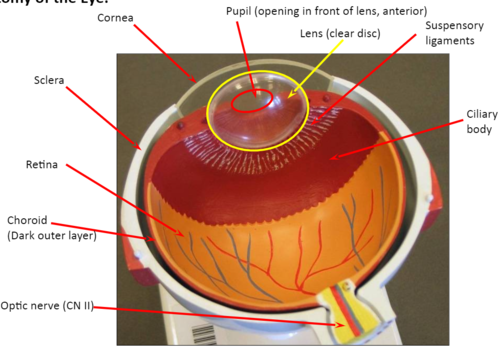
lens
Focus the visual images on the retina photoreceptors