Shoulder Special Test

0.0(0)
Studied by 0 people
call kaiCall Kai
learnLearn
examPractice Test
spaced repetitionSpaced Repetition
heart puzzleMatch
flashcardsFlashcards
GameKnowt Play
Card Sorting

1/29

encourage image

There's no tags or description

Looks like no tags are added yet.

Last updated 10:22 PM on 5/26/26
Name
Mastery
Learn
Test
Matching
Spaced
Call with Kai

No analytics yet

Send a link to your students to track their progress

30 Terms

1
New cards

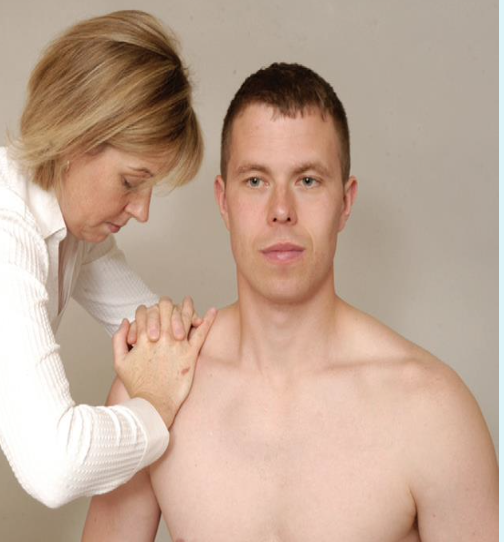
Yergason test

  • PURPOSE- Integrity of transverse ligament

  • DESCRIPTION- Patient sitting with elbow flexed to 90° and stabilized against the thorax and with the forearm pronated. Resist the supination of forearm and external rotation of shoulder

  • RESULT- Tendon of long head of biceps will pop out of the groove. Tenderness in the bicipital groove alone without the dislocation may indicate bicipital paratenonitis/tendinosis
<ul><li><p><span>PURPOSE- Integrity of transverse ligament</span></p></li><li><p><span>DESCRIPTION- Patient sitting with elbow flexed to 90° and stabilized against the thorax and with the forearm pronated. Resist the supination of forearm and external rotation of shoulder</span></p></li><li><p><span>RESULT- Tendon of long head of biceps will pop out of the groove. Tenderness in the bicipital groove alone without the dislocation may indicate bicipital paratenonitis/tendinosis</span></p></li></ul><p></p>
2
New cards

Speeds Test

  • PURPOSE- Identify bicipital tendinosis/ tendinopathy

  • DESCRIPTION- Upper limb in full extension and forearm supinated, resist shoulder flexion. Alternate – place shoulder in 90 degree flexion and push upper limb into extension

  • RESULT- Pain in long head of biceps tendon/ increased tenderness in the bicipital groove
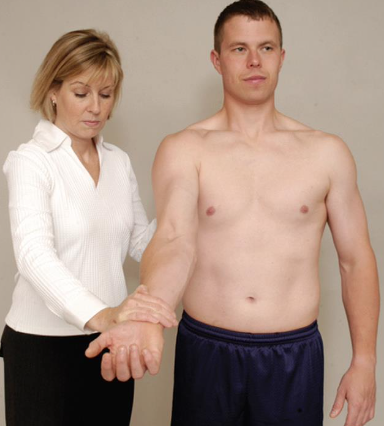
<ul><li><p><span>PURPOSE- Identify bicipital tendinosis/ tendinopathy</span></p></li><li><p><span>DESCRIPTION- Upper limb in full extension and forearm supinated, resist shoulder flexion. Alternate – place shoulder in 90 degree flexion and push upper limb into extension</span></p></li><li><p><span>RESULT- Pain in long head of biceps tendon/ increased tenderness in the bicipital groove</span></p></li></ul><p></p>
3
New cards

Neers Impingement Test

  • PURPOSE- For impingement of supraspinatus and biceps tendon

  • DESCRIPTION- The patient’s arm is passively and forcibly fully elevated in the scapular plane with the arm medially rotated by the examiner. This passive stress causes the greater tuberosity to jam against the anteroinferior border of the acromio

  • RESULT- Reproduces symptoms of pain in the shoulder region
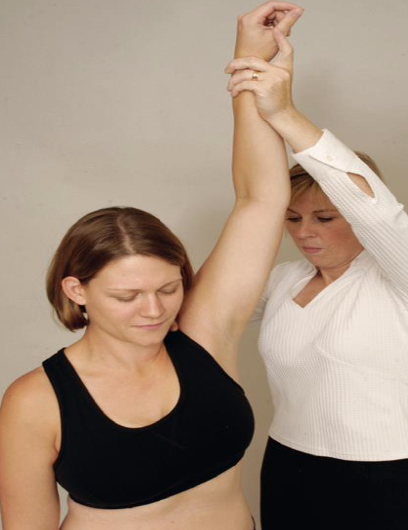
<ul><li><p><span>PURPOSE- For impingement of supraspinatus and biceps tendon</span></p></li><li><p><span>DESCRIPTION- The patient’s arm is passively and forcibly fully elevated in the scapular plane with the arm medially rotated by the examiner. This passive stress causes the greater tuberosity to jam against the anteroinferior border of the acromio</span></p></li><li><p><span>RESULT- Reproduces symptoms of pain in the shoulder region</span></p></li></ul><p></p>
4
New cards

Empty Can/Jobe Test

  • PURPOSE- Identify tear/ impingement of supraspinatus tendon or suprascapular nerve neuropathy

  • DESCRIPTION- The patient’s arm is abducted to 90° with neutral (no) rotation, and the examiner provides resistance to abduction. The shoulder is then medially rotated and angled forward 30° (“empty can” position) so that the patient’s thumbs point toward the floor in the plane of the scapula. Differentiate if pain is present between two positions

  • RESULT- Reproduces pain in supraspinatus tendon or weakness in empty can position
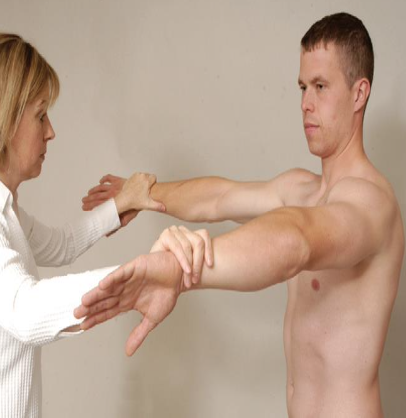
<ul><li><p><span>PURPOSE- Identify tear/ impingement of supraspinatus tendon or suprascapular nerve neuropathy</span></p></li><li><p><span>DESCRIPTION- The patient’s arm is abducted to 90° with neutral (no) rotation, and the examiner provides resistance to abduction. The shoulder is then medially rotated and angled forward 30° (“empty can” position) so that the patient’s thumbs point toward the floor in the plane of the scapula. Differentiate if pain is present between two positions</span></p></li><li><p><span>RESULT- Reproduces pain in supraspinatus tendon or weakness in empty can position</span></p></li></ul><p></p>
5
New cards

Drop Arm Test

  • PURPOSE- Also known as Codman’s test. Identify tear/ full rupture of rotator cuff

  • DESCRIPTION- The examiner abducts the patient’s shoulder to 90° and then asks the patient to slowly lower the arm to the side in the same arc of movement

  • RESULT- A positive test is indicated if the patient is unable to return the arm to the side slowly or has severe pain when attempting to do so
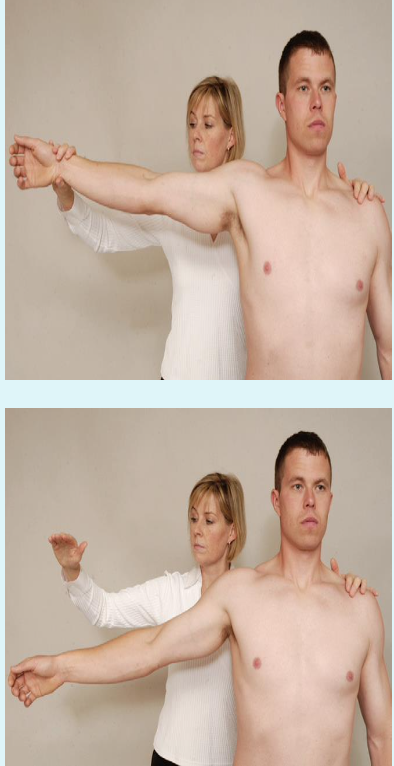
<ul><li><p><span>PURPOSE- Also known as Codman’s test. Identify tear/ full rupture of rotator cuff</span></p></li><li><p><span>DESCRIPTION- The examiner abducts the patient’s shoulder to 90° and then asks the patient to slowly lower the arm to the side in the same arc of movement</span></p></li><li><p><span>RESULT- A positive test is indicated if the patient is unable to return the arm to the side slowly or has severe pain when attempting to do so</span></p></li></ul><p></p>
6
New cards

Posterior Internal Impingement Test

  • PURPOSE- To identify impingement between rotator
    cuff and greater tuberosity or posterior glenoid and labrum

  • DESCRIPTION- The patient is placed in the supine lying position. The examiner passively abducts the shoulder to 90° to 110°, with 15° to 20° extension and maximum lateral rotation

  • RESULT- Reproduction of pain in posterior shoulder during test
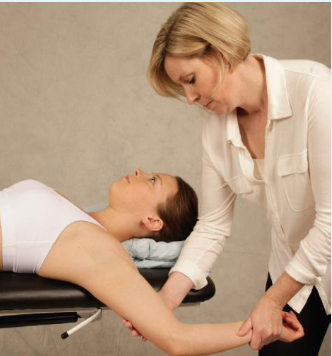
<ul><li><p><span>PURPOSE- To identify impingement between rotator<br>cuff and greater tuberosity or posterior glenoid and labrum</span></p></li><li><p><span>DESCRIPTION- The patient is placed in the supine lying position. The examiner passively abducts the shoulder to 90° to 110°, with 15° to 20° extension and maximum lateral rotation</span></p></li><li><p><span>RESULT- Reproduction of pain in posterior shoulder during test</span></p></li></ul><p></p>
7
New cards

Hawkin-Kennedy Impingement Test

  • PURPOSE: Identify sub-acromial impingement

  • DESCRIPTION: The arm of the patient is passively flexed up to 90 degrees in the

    plane of the scapula. The arm is stabilized and the forearm is forced into IR

    • RESULT: Pain indicates a positive test for supraspinatus paratenonitis/tendinosis or secondary impingement
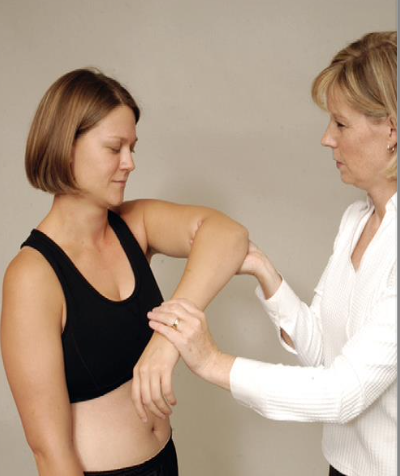
<ul><li><p><span>PURPOSE: Identify sub-acromial impingement</span></p></li><li><p><span>DESCRIPTION: The arm of the patient is passively flexed up to 90 degrees in the</span></p><p><span>plane of the scapula. The arm is stabilized and the forearm is forced into IR</span></p><ul><li><p><span>RESULT: Pain indicates a positive test for supraspinatus paratenonitis/tendinosis or secondary impingement</span></p></li></ul></li></ul><p></p>
8
New cards

Yocum

test is a modification of this test in which the patient’s hand is placed on the opposite shoulder and the examiner elevates the elbow. Pain indicates a positive test
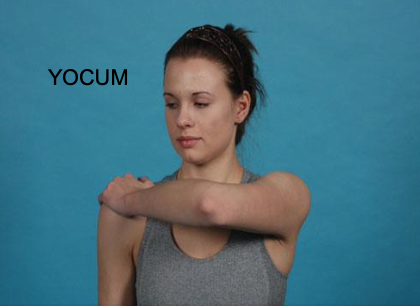
<p><span>test is a modification of this test in which the patient’s hand is placed on the opposite shoulder and the examiner elevates the elbow. Pain indicates a positive test</span></p><p></p>
9
New cards

Horn Blower Sign (Patte test)

  • PURPOSE: To detect Rotator cuff tears involving the teres minor

  • DESCRIPTION: The test is performed with the patient in the sitting or standing position. The patient’s arm is supported at 90 degrees of abduction in the scapular plane, with the elbow flexed to 90 degrees. The patient is then asked to rotate the forearm externally against the resistance of the clinician’s hand.

  • RESULT: . If the patient is unable to externally rotate the shoulder in this position, the horn-blower’s sign is said to be present
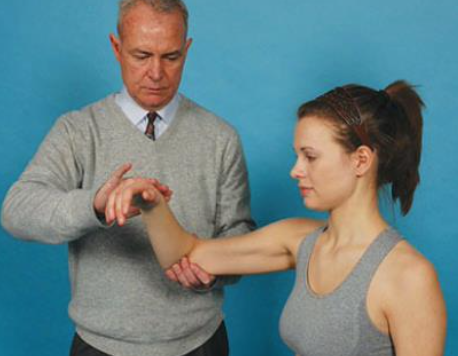
<ul><li><p><span>PURPOSE: To detect Rotator cuff tears involving the teres minor</span></p></li><li><p><span>DESCRIPTION: The test is performed with the patient in the sitting or standing position. The patient’s arm is supported at 90 degrees of abduction in the scapular plane, with the elbow flexed to 90 degrees. The patient is then asked to rotate the forearm externally against the resistance of the clinician’s hand.</span></p></li><li><p><span>RESULT: . If the patient is unable to externally rotate the shoulder in this position, the horn-blower’s sign is said to be present</span></p></li></ul><p></p>
10
New cards

Active Compression Test of O’Brien

  • PURPOSE: To detect SLAP (Type II) or superior labral lesions

  • DESCRIPTION: Two-part test. The patient stands with his or her involved shoulder at 90 degrees of flexion, 10 degrees of horizontal adduction, and maximum IR with the elbow in extension. In this position, the patient then resists a downward force applied by the clinician to the distal arm. The test is then repeated in the same manner except that the arm is positioned in maximum ER.

  • RESULT: If pain on the joint line or painful clicking is produced inside the shoulder (not over the acromioclavicular joint) in the first part of the test and eliminated or decreased in the second part, the test is considered positive for labral abnormalities.
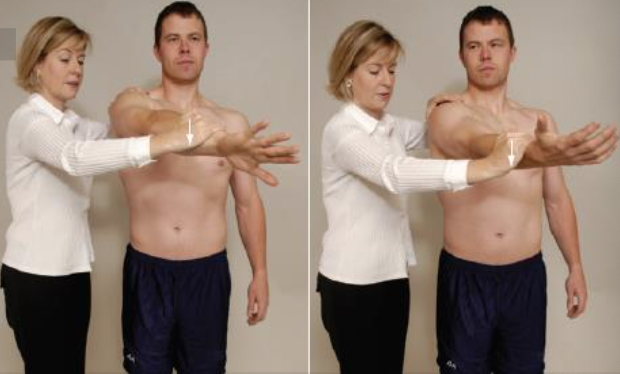
<ul><li><p><span>PURPOSE: To detect SLAP (Type II) or superior labral lesions</span></p></li><li><p><span>DESCRIPTION: Two-part test. The patient stands with his or her involved shoulder at 90 degrees of flexion, 10 degrees of horizontal adduction, and maximum IR with the elbow in extension. In this position, the patient then resists a downward force applied by the clinician to the distal arm. The test is then repeated in the same manner except that the arm is positioned in maximum ER.</span></p></li><li><p><span>RESULT: If pain on the joint line or painful clicking is produced inside the shoulder (not over the acromioclavicular joint) in the first part of the test and eliminated or decreased in the second part, the test is considered positive for labral abnormalities.</span></p></li></ul><p></p>
11
New cards

Bicep Load Test

  • PURPOSE: To check the integrity of the superior labrum.

  • DESCRIPTION: The patient is supine or seated with the shoulder abducted to 120° and laterally rotated with the elbow flexed to 90° and the forearm supinated. The examiner performs an apprehension test on the patient by taking the arm into full lateral rotation. If apprehension appears, the examiner stops lateral rotation and holds the position. The patient is then asked to flex the elbow against the examiner’s resistance at the wrist.

  • RESULT: If apprehension decreases or the patient feels more comfortable, the test is negative for a SLAP lesion. If the apprehension remains the same or the shoulder becomes more painful, the test is considered positive for SLAP lesions
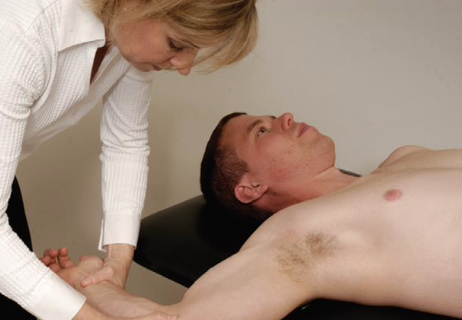
<ul><li><p><span>PURPOSE: To check the integrity of the superior labrum.</span></p></li><li><p><span>DESCRIPTION: The patient is supine or seated with the shoulder abducted to 120° and laterally rotated with the elbow flexed to 90° and the forearm supinated. The examiner performs an apprehension test on the patient by taking the arm into full lateral rotation. If apprehension appears, the examiner stops lateral rotation and holds the position. The patient is then asked to flex the elbow against the examiner’s resistance at the wrist.</span></p></li><li><p><span>RESULT: If apprehension decreases or the patient feels more comfortable, the test is negative for a SLAP lesion. If the apprehension remains the same or the shoulder becomes more painful, the test is considered positive for SLAP lesions</span></p></li></ul><p></p>
12
New cards

Clunk Test

  • PURPOSE- Identifies glenoid labrum tear

  • DESCRIPTION- Patient is supine, with shoulder in full abduction. Push humeral head anteriorly, while rotating humerus externally

  • RESULT- Audible clunk is heard while performing test
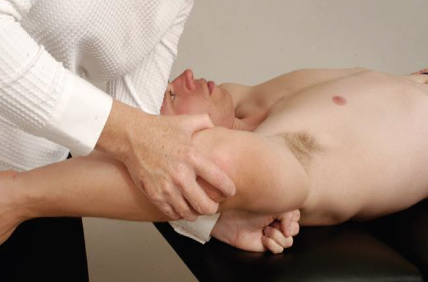
<ul><li><p><span>PURPOSE- Identifies glenoid labrum tear</span></p></li><li><p><span>DESCRIPTION- Patient is supine, with shoulder in full abduction. Push humeral head anteriorly, while rotating humerus externally</span></p></li><li><p><span>RESULT- Audible clunk is heard while performing test</span></p></li></ul><p></p>
13
New cards

Lateral Rotation Lag Sign

  • PURPOSE: To test the teres minor and infraspinatus. Also known as Infraspinatus “Spring Back” Test.

  • DESCRIPTION: The patient is seated or in standing position with the arm by the side and the elbow flexed to 90°. The examiner passively abducts the arm to 90° in the scapular plane, laterally rotates the shoulder to end range and asks the patient to hold it

  • RESULT: For a positive test, the patient cannot hold the position and the hand springs back anteriorly toward midline, indicating infraspinatus and teres minor cannot hold the position due to weakness or
    pain
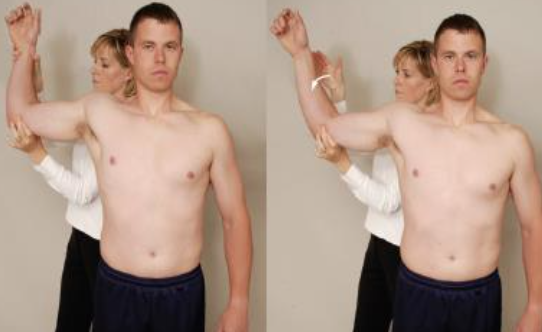
<ul><li><p><span>PURPOSE: To test the teres minor and infraspinatus. Also known as Infraspinatus “Spring Back” Test.</span></p></li><li><p><span>DESCRIPTION: The patient is seated or in standing position with the arm by the side and the elbow flexed to 90°. The examiner passively abducts the arm to 90° in the scapular plane, laterally rotates the shoulder to end range and asks the patient to hold it</span></p></li><li><p><span>RESULT: For a positive test, the patient cannot hold the position and the hand springs back anteriorly toward midline, indicating infraspinatus and teres minor cannot hold the position due to weakness or<br>pain</span></p></li></ul><p></p>
14
New cards

Abdominal Compression Test

  • PURPOSE: Checks the subscapularis muscle. Also k/a Belly-Press or Napoleon Test

  • DESCRIPTION: The patient is standing, examiner places a hand on the abdomen below the xiphoid process so that the examiner can feel how much pressure the patient is applying to the abdomen. The patient places his hand of the shoulder being tested on the examiner’s hand and pushes the hand as hard as he can into the stomach (medial shoulder rotation). While pushing the hand into the abdomen, the patient attempts to bring the elbow forward to the scapular plane, causing greater medial shoulder rotation.

  • RESULT: If the patient is unable to maintain the pressure on the examiner’s hand while moving the elbow forward, or posteriorly flexes the wrist or extends the shoulder, the test is positive for a tear of the subscapularis muscle
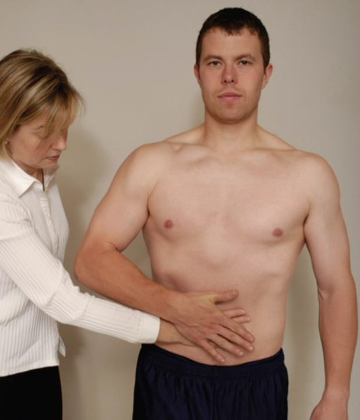
<ul><li><p><span>PURPOSE: Checks the subscapularis muscle. Also k/a Belly-Press or Napoleon Test</span></p></li><li><p><span>DESCRIPTION: The patient is standing, examiner places a hand on the abdomen below the xiphoid process so that the examiner can feel how much pressure the patient is applying to the abdomen. The patient places his hand of the shoulder being tested on the examiner’s hand and pushes the hand as hard as he can into the stomach (medial shoulder rotation). While pushing the hand into the abdomen, the patient attempts to bring the elbow forward to the scapular plane, causing greater medial shoulder rotation.</span></p></li><li><p><span>RESULT: If the patient is unable to maintain the pressure on the examiner’s hand while moving the elbow forward, or posteriorly flexes the wrist or extends the shoulder, the test is positive for a tear of the subscapularis muscle</span></p></li></ul><p></p>
15
New cards

Lift Off Sign (Gerber Test)

  • PURPOSE- To detect a lesion of the subscapularis muscle

  • DESCRIPTION- The patient places the dorsum of the hand on his back pocket or against the mid-lumbar spine. (Great subscapularis activity is shown with the second position). The patient then lifts the hand away from the back.

  • RESULT- An inability to do so indicates a lesion of the subscapularis muscle.
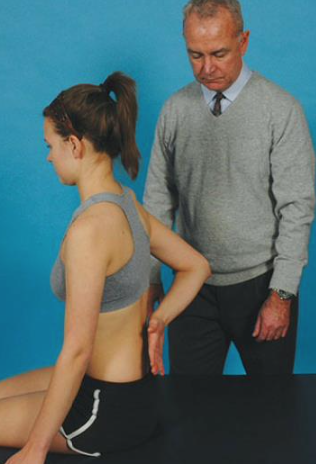
<ul><li><p><span>PURPOSE- To detect a lesion of the subscapularis muscle</span></p></li><li><p><span>DESCRIPTION- The patient places the dorsum of the hand on his back pocket or against the mid-lumbar spine. (Great subscapularis activity is shown with the second position). The patient then lifts the hand away from the back.</span></p></li><li><p><span>RESULT- An inability to do so indicates a lesion of the subscapularis muscle.</span></p></li></ul><p></p>
16
New cards

Pectoralis Major Contracture Test

  • PURPOSE: To identify tightness of pectoralis major muscle  

  • DESCRIPTION: The patient lies supine and clasps the hands together behind the

    head. The arms are then lowered until the elbows touch the examining table

  • RESULT: A positive test occurs if the elbows do not reach the table and indicates a tight pectoralis major muscle.
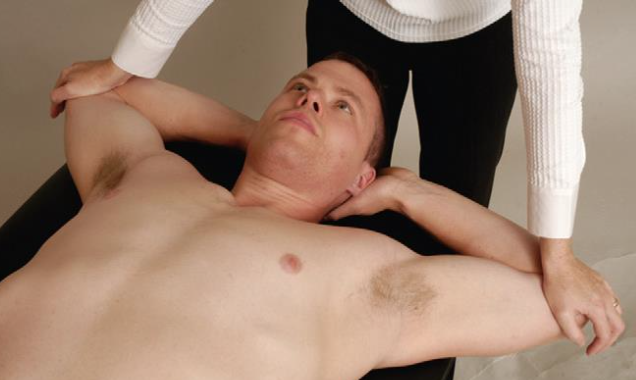
<ul><li><p><span>PURPOSE: To identify tightness of pectoralis major muscle</span><span style="color: rgb(45, 162, 191);"> &nbsp;</span></p></li><li><p><span>DESCRIPTION: The patient lies supine and clasps the hands together behind the</span></p><p><span>head. The arms are then lowered until the elbows touch the examining table</span></p></li><li><p><span>RESULT: A positive test occurs if the elbows do not reach the table and indicates a tight pectoralis major muscle.</span></p></li></ul><p></p>
17
New cards

Jerk Test

  • PURPOSE: To test recurrent posterior instability

  • DESCRIPTION: The patient sits with the arm medially rotated and forward flexed to 90°. The examiner grasps the patient’s elbow and axially loads the humerus in a proximal direction. While maintaining the axial loading, the examiner moves the arm horizontally across the body

  • RESULT: A positive test is the production of a sudden jerk or clunk as the humeral head slides off (subluxes) the back of the glenoid. When
    the arm is returned to the original 90° abduction position a second jerk may be felt as the head reduces.
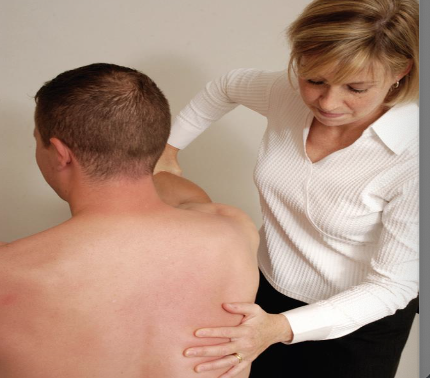
<ul><li><p><span>PURPOSE: To test recurrent posterior instability</span></p></li><li><p><span>DESCRIPTION: The patient sits with the arm medially rotated and forward flexed to 90°. The examiner grasps the patient’s elbow and axially loads the humerus in a proximal direction. While maintaining the axial loading, the examiner moves the arm horizontally across the body</span></p></li><li><p><span>RESULT: A positive test is the production of a sudden jerk or clunk as the humeral head slides off (subluxes) the back of the glenoid. When<br>the arm is returned to the original 90° abduction position a second jerk may be felt as the head reduces.</span></p></li></ul><p></p>
18
New cards

Sulcus Sign

  • PURPOSE: To test for inferior shoulder instability

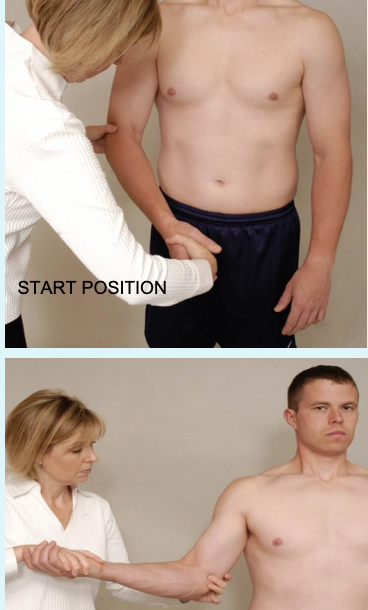
  • DESCRIPTION: The patient stands with the arm by the side and shoulder muscles relaxed. The examiner grasps the patient’s forearm below the elbow and pulls the arm distally

  • RESULT: The presence of a sulcus sign may indicate inferior instability or glenohumeral laxity but should only be considered positive for instability if the patient is symptomatic
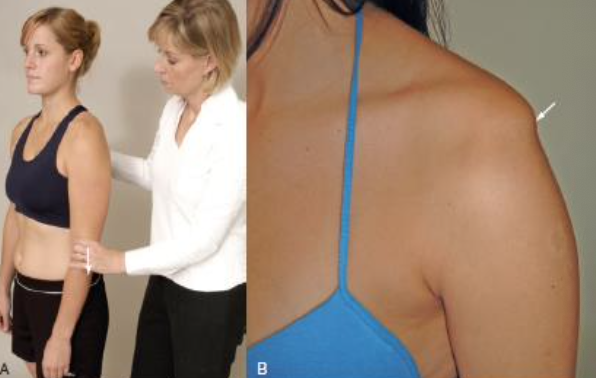
<ul><li><p><span>PURPOSE: To test for inferior shoulder instability</span></p></li><li><p><span>DESCRIPTION: The patient stands with the arm by the side and shoulder muscles relaxed. The examiner grasps the patient’s forearm below the elbow and pulls the arm distally</span></p></li><li><p><span>RESULT: The presence of a sulcus sign may indicate inferior instability or glenohumeral laxity but should only be considered positive for instability if the patient is symptomatic</span></p></li></ul><p></p>
19
New cards

Anterior Apprehension/Crank Test

  • PURPOSE- Identify past anterior dislocation of shoulder

  • DESCRIPTION- Patient supine, the examiner abducts the arm to 90° and laterally rotates the patient’s shoulder slowly. By placing a hand under the glenohumeral joint to act as a fulcrum, the apprehension test becomes the fulcrum test

  • RESULT- Patient does not allow or does not like to move shoulder into that direction to simulate anterior dislocation
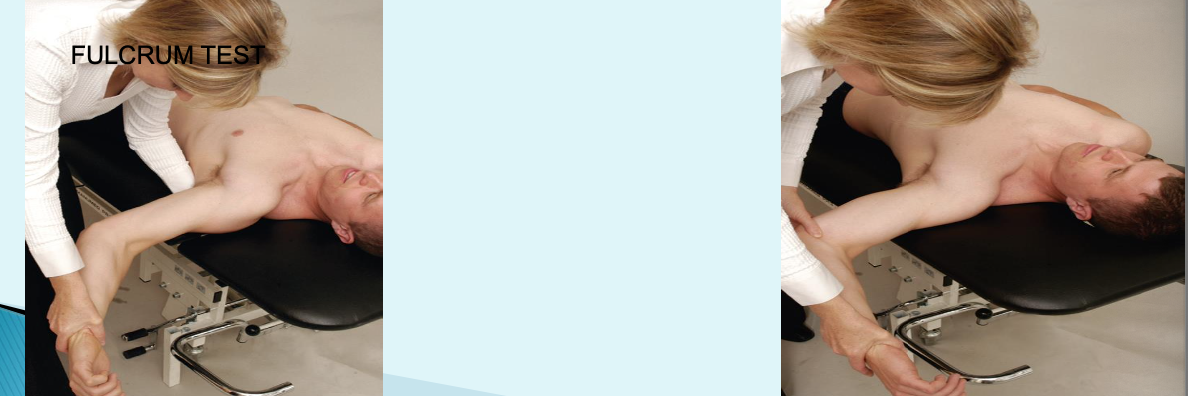
<ul><li><p><span>PURPOSE- Identify past anterior dislocation of shoulder</span></p></li><li><p><span>DESCRIPTION- Patient supine, the examiner abducts the arm to 90° and laterally rotates the patient’s shoulder slowly. By placing a hand under the glenohumeral joint to act as a fulcrum, the apprehension test becomes the <strong>fulcrum test</strong></span></p></li><li><p><span>RESULT- Patient does not allow or does not like to move shoulder into that direction to simulate anterior dislocation</span></p></li></ul><p></p>
20
New cards

Posterior Apprehension Sign

  • PURPOSE- To identify past history of posterior shoulder dislocation

  • DESCRIPTION- Patient supine/ sitting. The examiner elevates the patient’s shoulder in the plane of the scapula to 90° while stabilizing the scapula with the
    other hand, then applies a posterior force on the patient’s elbow. While applying the axial load, the examiner horizontally adducts and medially rotates the arm.

  • RESULT- RESULT- Patient does not allow or does not like to move shoulder into that direction to simulate posterior dislocation

21
New cards

Acromioclavicular Shear Test

  • PURPOSE- Identifies dysfunction of AC joint such as arthritis, separation

  • DESCRIPTION- With the patient in the sitting position, the examiner cups his or her hands over the deltoid muscle with one hand on the clavicle and one hand on the spine of the scapula. The examiner then squeezes the heels of the hands together

  • RESULT- Reproduces pain in AC joint

<ul><li><p><span>PURPOSE- Identifies dysfunction of AC joint such as arthritis, separation</span></p></li><li><p><span>DESCRIPTION- With the patient in the sitting position, the examiner cups his or her hands over the deltoid muscle with one hand on the clavicle and one hand on the spine of the scapula. The examiner then squeezes the heels of the hands together</span></p></li><li><p><span>RESULT- Reproduces pain in AC joint</span></p></li></ul><p></p>
22
New cards

Halstead Maneuver

  • PURPOSE: Identify pathology of structures that pass through thoracic inlet

  • DESCRIPTION: The examiner finds the radial pulse and applies a downward traction on the test extremity while the patient’s neck is hyperextended and the head is rotated to the opposite side

  • RESULT: Absence or disappearance of a pulse indicates a positive test for thoracic outlet syndrome.
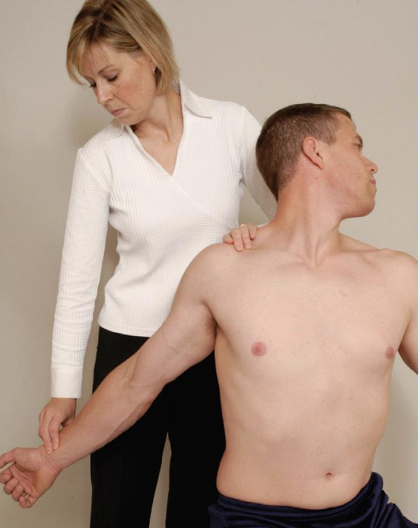
<ul><li><p><span>PURPOSE: Identify pathology of structures that pass through thoracic inlet</span></p></li><li><p><span>DESCRIPTION: The examiner finds the radial pulse and applies a downward traction on the test extremity while the patient’s neck is hyperextended and the head is rotated to the opposite side</span></p></li><li><p><span>RESULT: Absence or disappearance of a pulse indicates a positive test for thoracic outlet syndrome.</span></p></li></ul><p></p>
23
New cards

Adson Test

  • PURPOSE- Identify pathology of structures that pass through thoracic inlet

  • DESCRIPTION-The examiner locates the radial pulse. The patient’s head is rotated to face the test shoulder. The patient then extends the head while the examiner laterally rotates and extends the patient’s shoulder. The patient is instructed to take a deep breath and hold it.

  • RESULT- A disappearance of the pulse indicates a positive test.
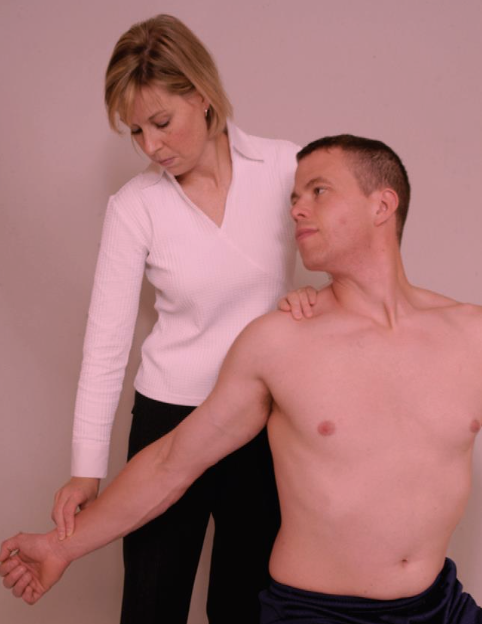
<ul><li><p><span>PURPOSE- Identify pathology of structures that pass through thoracic inlet</span></p></li><li><p><span>DESCRIPTION-The examiner locates the radial pulse. The patient’s head is rotated to face the test shoulder. The patient then extends the head while the examiner laterally rotates and extends the patient’s shoulder. The patient is instructed to take a deep breath and hold it.</span></p></li><li><p><span>RESULT- A disappearance of the pulse indicates a positive test.</span></p></li></ul><p></p>
24
New cards

Costoclavicular Syndrome (Military Brace Test)

  • PURPOSE- Identify pathology of structures that pass through thoracic inlet

  • DESCRIPTION-The examiner palpates the radial pulse and then draws the patient’s shoulder down and back

  • RESULT- A positive test is indicated by an absence of the pulse and implies possible thoracic outlet syndrome (costoclavicular syndrome). This test is particularly effective in patients who complain of symptoms while wearing a backpack or heavy coat.
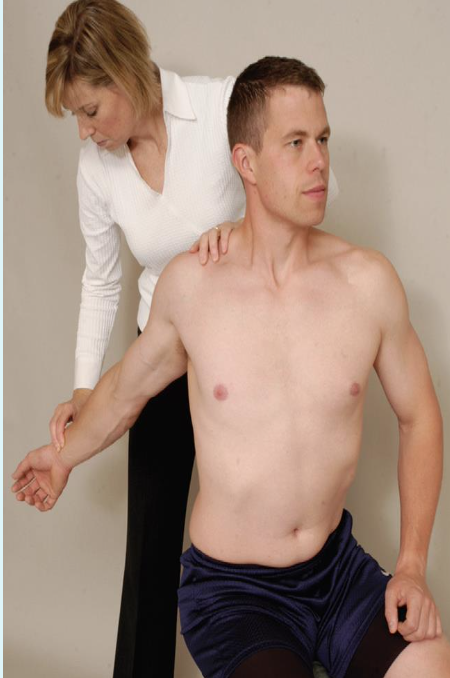
<ul><li><p><span>PURPOSE- Identify pathology of structures that pass through thoracic inlet</span></p></li><li><p><span>DESCRIPTION-The examiner palpates the radial pulse and then draws the patient’s shoulder down and back</span></p></li><li><p><span>RESULT- A positive test is indicated by an absence of the pulse and implies possible thoracic outlet syndrome (costoclavicular syndrome). This test is particularly effective in patients who complain of symptoms while wearing a backpack or heavy coat.</span></p></li></ul><p></p>
25
New cards

Wright (hyperabduction) test

  • PURPOSE- Identify pathology of structures that pass through thoracic inlet

  • DESCRIPTION- Patient sitting, locate radial pulse of the extremity being tested. Move shoulder into maximum abduction and external rotation.
    Taking deep breath and rotating head opposite to test site may accentuate symptoms.

  • RESULT- Neurological/ vascular symptoms (disappearance of pulse) will be reproduced
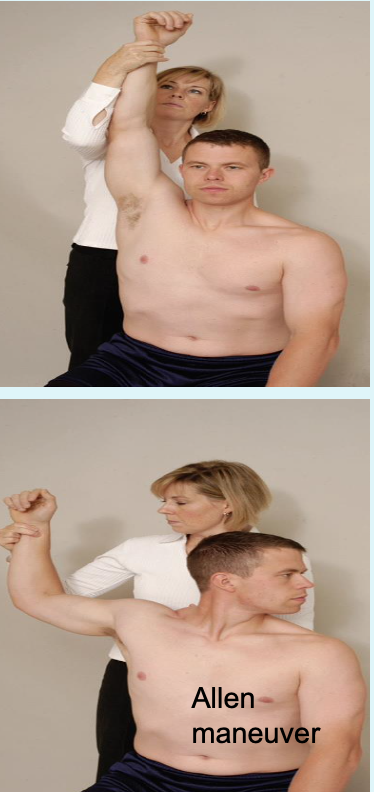
<ul><li><p><span>PURPOSE- Identify pathology of structures that pass through thoracic inlet</span></p></li><li><p><span>DESCRIPTION- Patient sitting, locate radial pulse of the extremity being tested. Move shoulder into maximum abduction and external rotation.<br>Taking deep breath and rotating head opposite to test site may accentuate symptoms.</span></p></li><li><p><span>RESULT- Neurological/ vascular symptoms (disappearance of pulse) will be reproduced</span></p></li></ul><p></p>
26
New cards

Roos Test

  • PURPOSE- Identify pathology of structures that pass through thoracic inlet

  • DESCRIPTION- The patient stands and abducts the arms to 90°, laterally rotates the shoulder, and flexes the elbows to 90° so that the elbows are slightly behind the frontal plane. The patient then opens and closes the hands slowly for 3 minutes

  • RESULT- If the patient is unable to keep the arms
    in the starting position for 3 minutes or suffers ischemic pain, heaviness or profound weakness of the arm, or numbness and tingling of the hand during the minutes, the test is considered positive for thoracic outlet syndrome on the affected side.
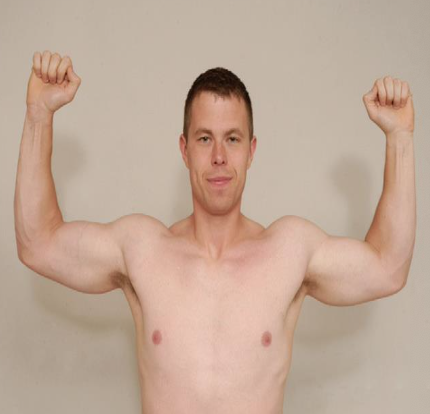
<ul><li><p><span>PURPOSE- Identify pathology of structures that pass through thoracic inlet</span></p></li><li><p><span>DESCRIPTION- The patient stands and abducts the arms to 90°, laterally rotates the shoulder, and flexes the elbows to 90° so that the elbows are slightly behind the frontal plane. The patient then opens and closes the hands slowly for 3 minutes</span></p></li><li><p><span>RESULT- If the patient is unable to keep the arms<br>in the starting position for 3 minutes or suffers ischemic pain, heaviness or profound weakness of the arm, or numbness and tingling of the hand during the minutes, the test is considered positive for thoracic outlet syndrome on the affected side.</span></p></li></ul><p></p>
27
New cards

Median Nerve, anterior interosseous N (C5, 6, 7)

shoulder: depression and abduction (110)

elbow: extension

forearm: supination

Wrist: extension

finger: extension
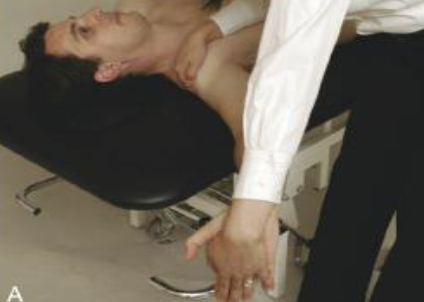
<p>shoulder: depression and abduction (110)</p><p>elbow: extension</p><p>forearm: supination </p><p>Wrist: extension</p><p>finger: extension</p>
28
New cards

Median N, musculocutaneous N, axillary N

shoulder: depression and abduction (10), ER

elbow: extension

forearm: supination

Wrist: extension

finger: extension
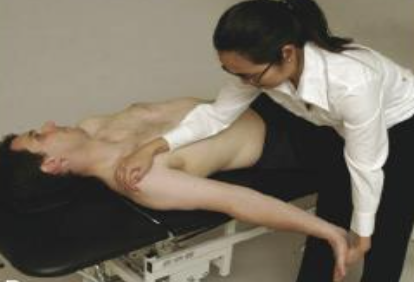
<p>shoulder: depression and abduction (10), <strong>ER</strong></p><p>elbow: extension</p><p>forearm: supination </p><p>Wrist: extension</p><p>finger: extension</p>
29
New cards

Radial N

shoulder: depression, IR, Abd (40), ext (25)

elbow: extension

forearm: pronation

Wrist: flexion and ulnar deviation

finger: flexion
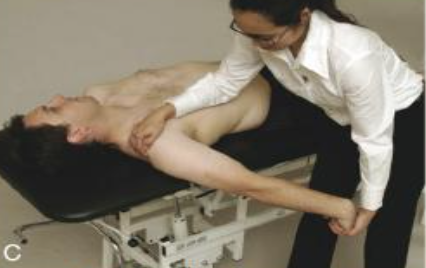
<p>shoulder: depression, IR, Abd (40), ext (25)</p><p>elbow: extension</p><p>forearm: pronation</p><p>Wrist: flexion and ulnar deviation</p><p>finger: flexion</p>
30
New cards

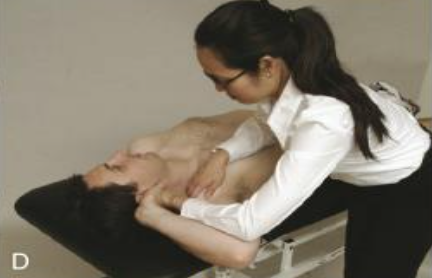
ulnar nerve (C8-T1 N root)

shoulder: depression and abduction (10-90), ER

elbow: flexion

forearm: supination or pronation

Wrist: extension and radial deviation

finger: extension
<p>shoulder: depression and abduction (10-90), ER</p><p>elbow: flexion</p><p>forearm: supination or pronation </p><p>Wrist: extension and radial deviation</p><p>finger: extension</p>