BICH 411 Exam 1
 Call Kai
 Learn
Learn Practice Test
 Spaced Repetition
 Match
Match Flashcards
 Knowt Play
1/165

There's no tags or description
Looks like no tags are added yet.
Name | Mastery | Learn | Test | Matching | Spaced | Call with Kai |
|---|
No analytics yet
Send a link to your students to track their progress
166 Terms
metabolism
sum of all chemical reactions that allow the body to obtain and use energy occurring in the cell
glycogenin
enzyme that functions as a primer for glycogenesis
why do we need metabolism?
need continuous influx of energy to battle entropy
metabolic pathway
series of connected, sequential enzymatic reactions that produce a specific product
what does an enzyme do?
lower activation energy to increase rate of reaction
what does an enzyme decidedly NOT do
impact spontaneity
why do metabolic pathways need intermediates
they couple unfavorable reactions with favorable ones and allow buildup of metabolite concentration to drive an otherwise unfavorable reaction forward
why are metabolic pathways irreversible
all steps together in a pathway create a favorable energy production that cannot be overcome by that same pathway in the reverse direction
first committed step
highly favorable reaction that easily occurs to start a pathway, often a point of regulation for the pathway
how are pathways controlled?
regulation of enzymes in committed steps, compartmentalization of pathways in different physical locations
catabolism
break down molecules to make energy, oxidation (in regards to the carbon), exergonic
anabolism
reductive biosynthesis of necessary molecules for body function, endergonic
draw inorganic phosphate
done (IP)
draw ATP
done (ATP)
draw ADP
done (ADP)
draw AMP
done (AMP)
draw PPi
done (PPi)
why is ATP hydrolysis so favorable
repulsion of negatively charged O- groups on the Pi groups, increased resonance stabilization, increased energy of solvation (more disorder)
tautomerization
conversion between 2 constitutional isomers using an investment of a proton
what are the main 3 high energy phosphate compounds
Posphoenol pyruvate (PEP), 1,3-Bisphosphoglycerate, and Phosphocreatine
what is the function of phosphocreatine
basically like fat storage but for ATP
what is the function of 1,3 BPG and PEP
substrate level phosphorylation in glycolysis
where do electrons from NADH and FADH2 go
ETC
where do electrons for anabolism come from
NADPH
what is another term for end products
waste products
what is the delta G for all ATP related reactions
-30.5
draw NADH
done (NADH)
draw NADPH
done (NADPH)
what is the part of NADH used for catabolism
the 2’ OH grouop which is the electron source for oxidative phosphorylation
what is NADH used for
catabolism
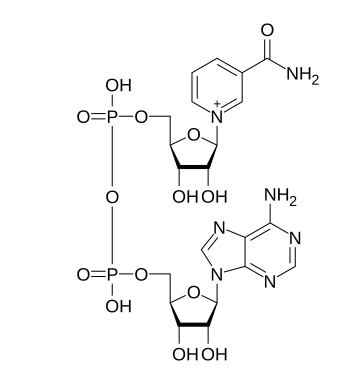
what structure is this
NAD+
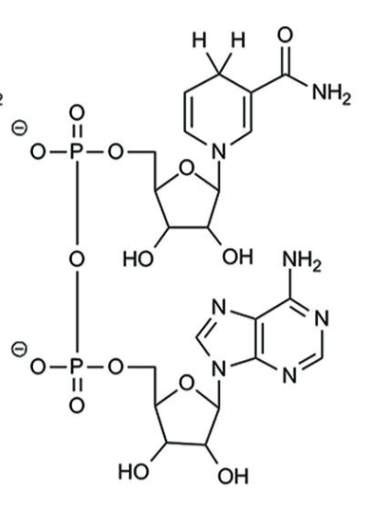
what structure is this
NADH
Draw the conversion of NAD+ to NADH that you need for the exam
done (NAD+ to NADH)
what type of metabolic process is the conversion of NAD+ to NADH?
catabolic
what is the purpose of NAD+
accepts electrons from catabolism
what type of process is the conversion of NADH to NAD+
anabolic
draw the conversion of NADH to NAD+ that you need for the exam
done (NADH to NAD+)
what is the purpose of NADPH
provides the reducing power for anabolism
biosynthetic enzymes
operate in anabolic pathways
degradative enzymes
operate in catabolic pathways
vitamins
organic molecules that assist metabolic reactions
metabolic flux
rate at which molecules turn through enzymes in a metabolic pathway
how is metabolic flux controlled
allosteric effectors, covalent modifications, substrate cycles, genetic control
what are substrate cycles
enhancing rate of reaction through one pathway while limiting rate of reaction through the opposing pathway
draw the conversion of 1,3 BPG to PPG
done (13BPG to PPG)
draw conversion of PEP to pyruvae
done (PEP to pyr)
why is PEP such a high energy intermediate
hydrolysis of a phosphate group, tautomerization
how does glycolysis differ between organisms?
points of regulation and fates of pyruvate
cellular respiration
process where energy in metabolites is harnessed for ATP production
three parts of cellular respiration
glycolysis, pyruvate, oxidative phosphorylation
what conditions can glycolysis occur under?
aerobic and anaerobic
what are the big picture, net products of glycolysis
2 NADH, 2 ATP, 2 Pyruvate
what is the big picture of the investment phase of glycolysis?
2 ATP used to convert 6C glucose to 2 3C GA3P molecules
what is the big picture of the payoff phase of glycolysis
2 3C GA3P to 2 pyruvate, 4 ATP, 2 NADH
what are the two steps that produce ATP
PPG kinase and pyruvate kinase
what is the delta G for the glycolysis pathway
-85 kJ/mol
what is the first step of glycolysis
hexokinase
what does the hexokinase step do
transfer the y phsphate of ATP to the C6 hydroxyl of glucose
why is the hexokinase step neccesary?
the addition of the Pi group to glucose keeps it inside the cell so it can be used
draw the hexokinase step mechanism
done (hexokinase)
what is the difference between hexokinase and glucokinase
glucokinase can only digest glucose, found in the liver, lower affinity but higher capacity
why does glucokinase have a lower affinity for glucose?
so liver cells can pass needed glucose on to more functional cells when energy is scarce
how is hexokinase regulated
feedback inhibition
how is glucokinase regulated
hormones! insulin (activation) and glucagon (inhibition)
what is the second step of glycolysis
phosphoglucoisomerase
what does the phosphoglucoisomerase step do
isomerize the 6C glucose to a 5C fructose ring
why is the PGI step neccesary?
so that aldolytic clevage can happen in step 4
draw the PGI step reaction mechanism
done (PGI)
what is the third step of glycolysis
Phosphofructokinase 1
what is the first committed step of glycolysis?
PFK1
what does the PFK1 step do?
add a second Pi group to C1 to form F1,6BP
why is the PFK1 step neccesary?
so that 2 identical sugars can be created via aldolytic clevage
how is PFK1 regulated
allosteric control from -ATP and +AMP, as well as concentration of +fructose 2,6 bisphosphate
what regulates PFK2/FBPase2 activity?
insulin (activate) glucagon (inhibit)
what is the fourth step of glycolysis
aldolase
draw the aldolase reaction mechanism
done (aldolase)
what does the aldolase step do?
cleave the 5C fructose into 2 3C sugars
what is the fifth step in glycolysis
triose phosphate isomerase
what does the TPI step do?
isomerize the DHAP product from step 4 to be G3P so it can continue down glycolysis
draw the TPI step of glycolysis
done (TPI)
what is the sixth step of glycolysis
glyceraldehyde 3 phosphate dehydrogenase
what does the G3PD step do?
oxidize G3P to be 1,3 BPG
draw G3PD step of glycolysis
done (G3PD)
what is the 7th step of glycolysis
phosphoglycerate kinase
what does the PPG kinase step do?
transfer a phosphate group from 1,3 BPG to ADP to produce ATP
draw the PPG kinase step
done (PPG kinase)
what is the 8th step of glycolysis?
phosphoglycerate mutase
what does the phosphoglycerate mutase step do?
move the phosphate group from 3PG to the center to create 2 PG
why does the PPG mutase step have to occur?
to set up the formation of the high energy phosphate compound in the next step
draw PPG mutase step
done (PPG mutase)
what is the 9 step of glycolysis
enolase
what does the enolase step do
catalyze dehydration of 2PG to PEP
what does enolase need to function?
Mg2+
how is enolase regulated?
inhibition by fluoride that will complex with the Mg2+ that enolase needs to function
draw the enolase reaction
done (enolase)
what is the 10 step of glycolysis
pyruvate kinase
what does the pyruvate kinase step do
catalyze substrate level phosphorylation of ADP from PEP
is the pyruvate kinase step reversible
no
draw the pyruvate kinase step
done (pyruvate kinase)
how is the pyruvate kinase step regulated?
activated by AMP and F1,6BP and inhibited by ATP, acetyl coA, alanine, and glucagon