Chapter 46 - Respiratory System
 Call Kai
 Learn
Learn Practice Test
 Spaced Repetition
 Match
Match Flashcards
 Knowt Play
1/23

There's no tags or description
Looks like no tags are added yet.
Name | Mastery | Learn | Test | Matching | Spaced | Call with Kai |
|---|
No analytics yet
Send a link to your students to track their progress
24 Terms
Why is it more energy-efficient for animals to breathe air compared to water?
Air has a higher oxygen content, lower density, and lower viscosity than water, and gas molecules diffuse faster in air.
What is the primary requirement for gas exchange across epithelial cells?
Gases must be dissolved in water; therefore, the respiratory surface must be kept moist.
How do gills differ from lungs in terms of their anatomical position?
Gills are evaginations (extending outward) of the body, while lungs are invaginations (extending inward) to prevent drying out.
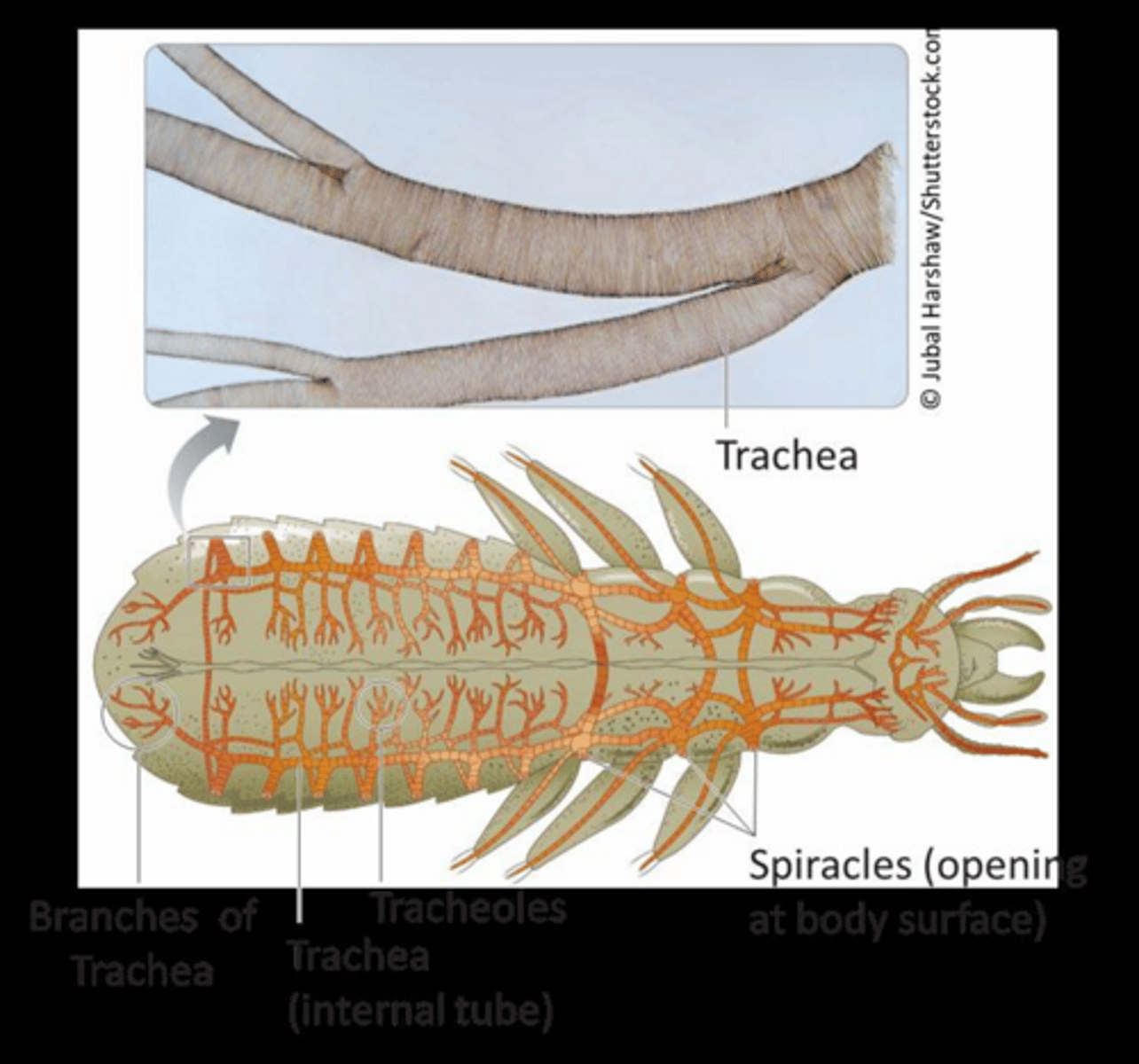
What are spiracles in the insect tracheal system?
Openings in the chitinous exoskeleton that allow air to enter and leave the tracheal system.
What is the function of tracheoles in insects?
They are the finest, fluid-filled branches of the tracheal system that contact individual cells to facilitate gas exchange.
What is positive pressure breathing?
A mechanism used by amphibians and lungfishes where a gulping motion forces air into the lungs.
What is negative pressure breathing?
A mechanism used by reptiles and mammals where muscular contractions expand the chest cavity, lowering pressure to pull air into the lungs.
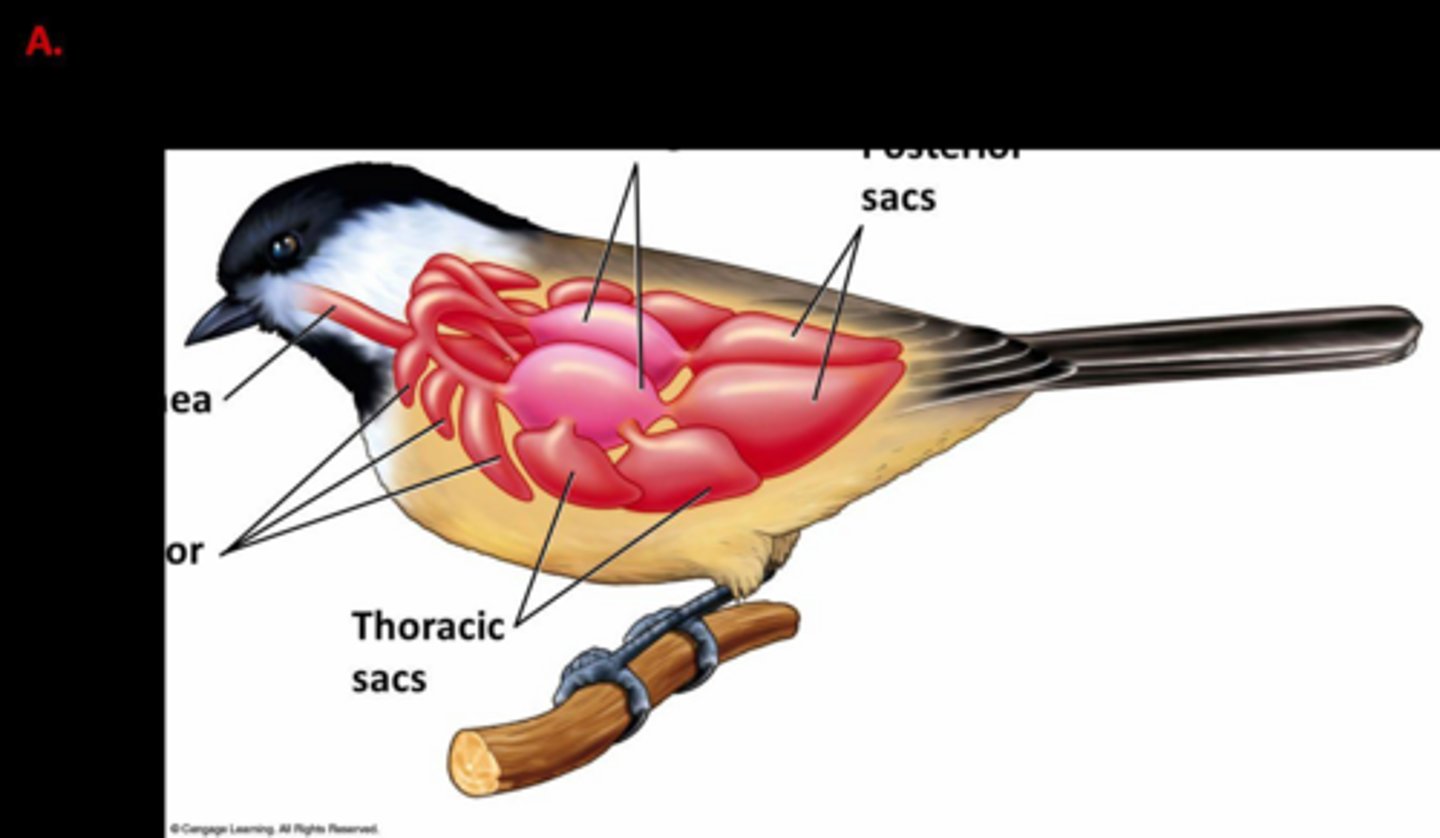
How does the avian respiratory system manage air flow?
Birds use a system of anterior and posterior air sacs that allow for a continuous, one-way flow of air through the lungs.
What is the role of cilia in the human respiratory tract?
Cilia trap bacteria and airborne particles in mucus and move them upward into the throat to be cleared.
How do smaller bronchi and bronchioles regulate airflow?
They contain smooth muscle cells that contract or relax to adjust the diameter of the airways.
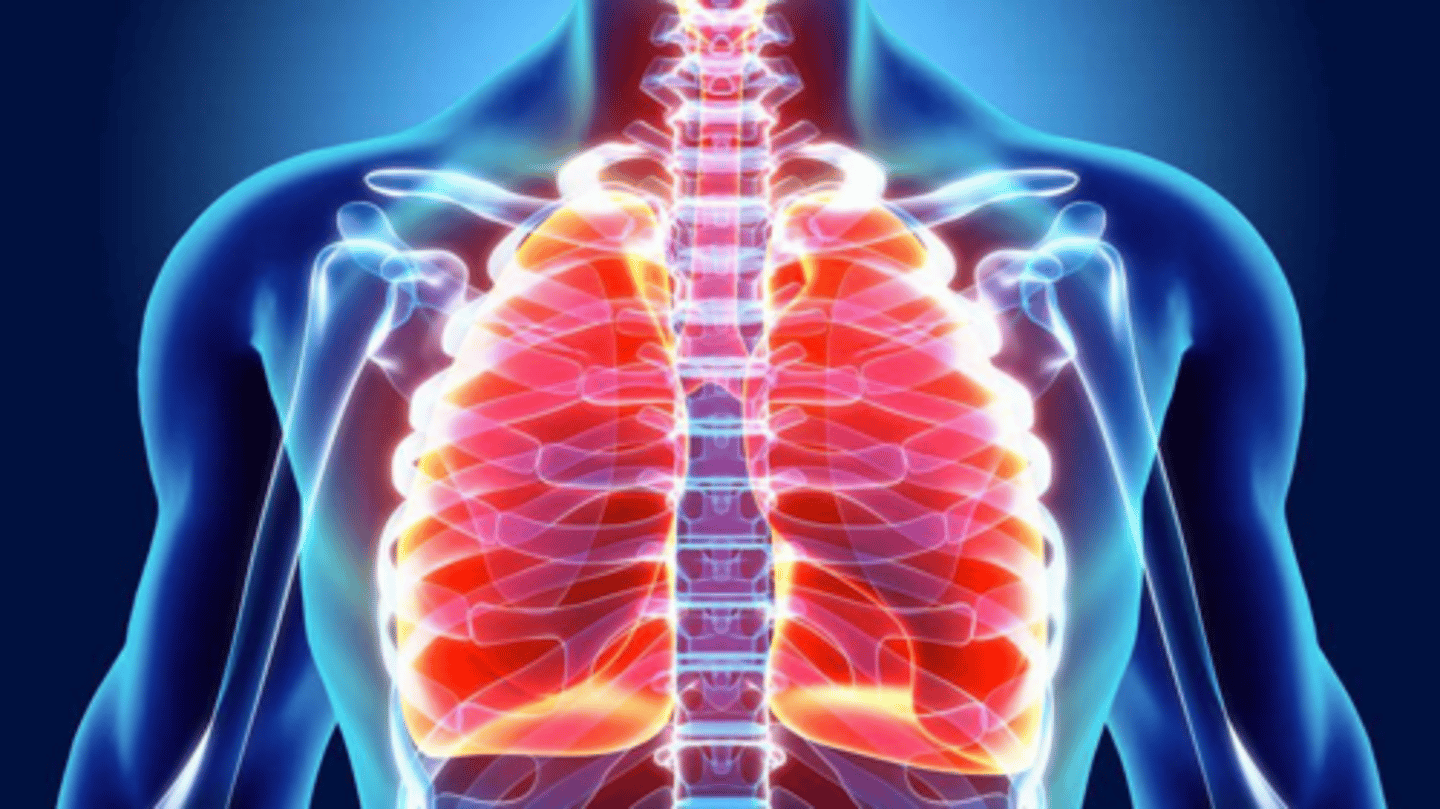
What happens to the lungs during resting exhalation?
The diaphragm and rib muscles relax, and the elastic recoil of the lungs expels the air.
Which muscles are involved in forceful exhalation?
The abdominal wall muscles and internal intercostal muscles.
What is the primary function of hemoglobin in the blood?
To bind and transport oxygen from the lungs to the body tissues.
How does pH affect hemoglobin's affinity for oxygen?
A lower pH (such as 7.2 in active tissues) reduces hemoglobin's binding affinity, causing it to release more oxygen.
What is the role of carbonic anhydrase?
It is an enzyme that facilitates the conversion of CO2 and water into carbonic acid (H2CO3) in the blood.
In what form is most carbon dioxide transported in the blood?
About 70% is transported as bicarbonate ions (HCO3-).
Why is maintaining blood pH at 7.4 critical?
Many enzymes are highly sensitive to minor changes in pH, and stability is required for proper physiological function.
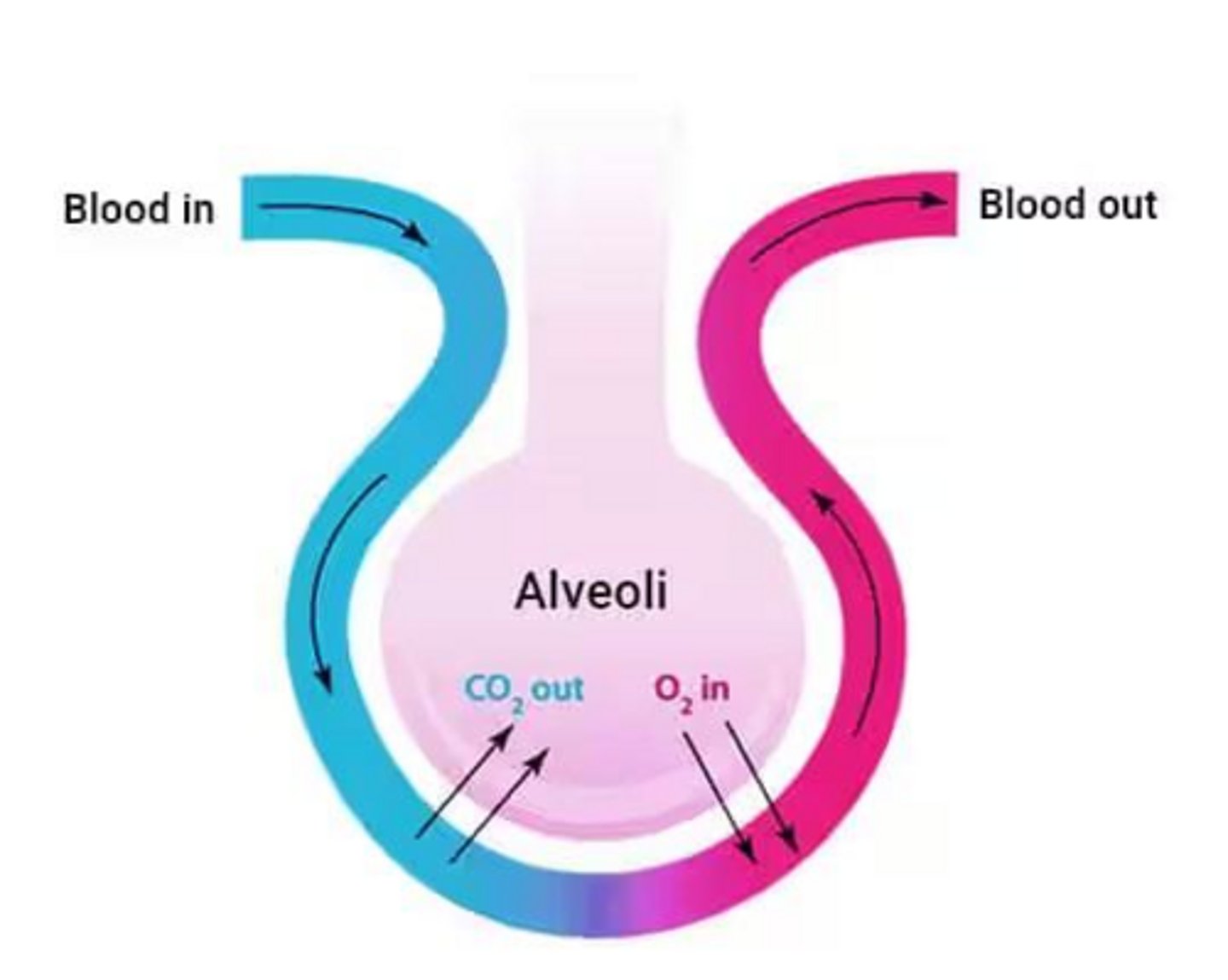
What happens to the CO2 transport process in the capillaries surrounding the alveoli?
The process is reversed: CO2 diffuses from the blood into the air in the alveoli to be exhaled.
What are the internal air sacs in insects used for?
They act as air reservoirs within the body.
What material reinforces the tracheal tubes in insects?
Rings of chitin, which is the same material found in their exoskeleton.
What is the effect of tobacco smoke on the respiratory system?
It paralyzes the cilia in the bronchi, preventing them from clearing mucus and trapped particles.
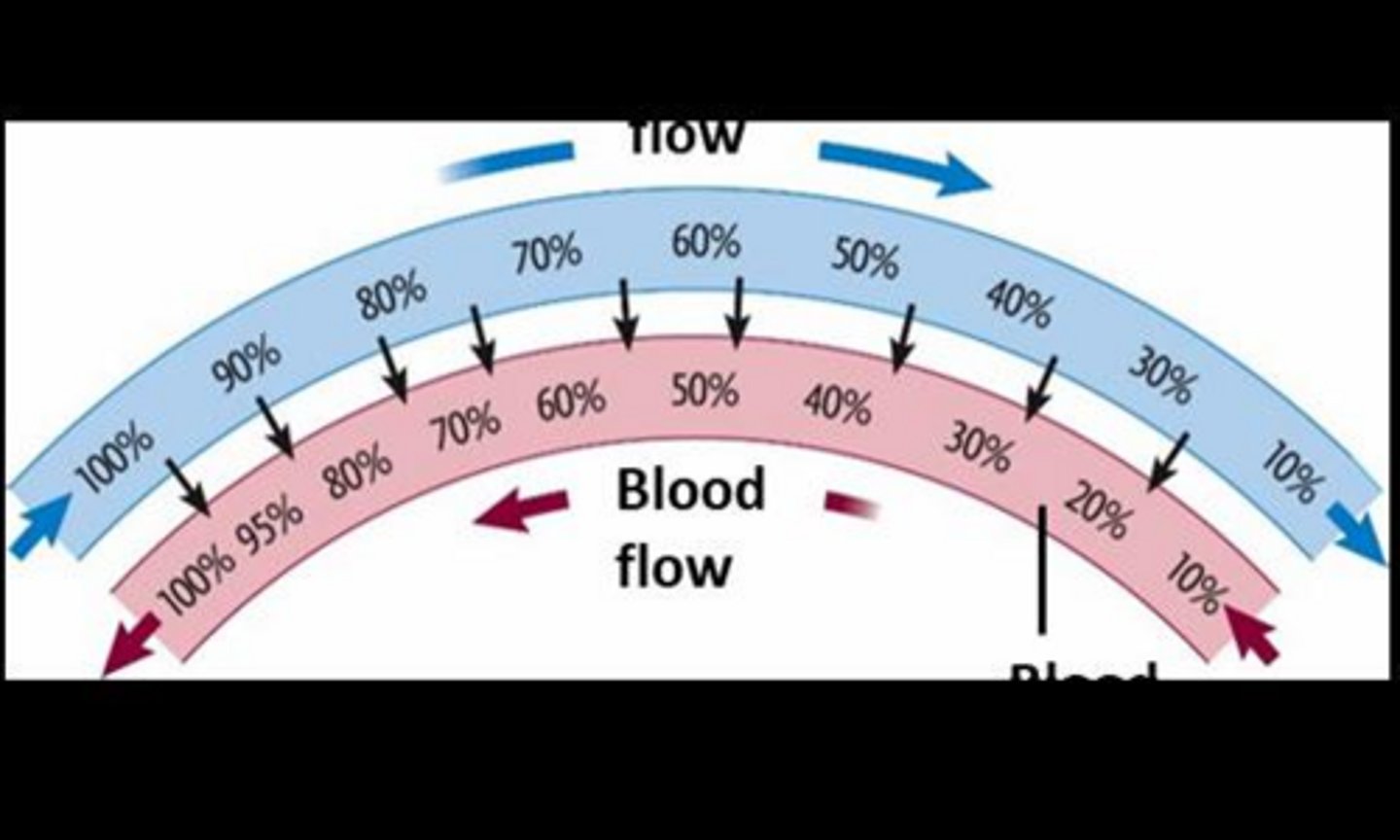
How does oxygen saturation in hemoglobin change between the lungs and active tissues?
In the lungs, hemoglobin is nearly 100% saturated; in active tissues, it drops to between 25% and 50% saturation.
What happens to the H+ ions produced by the dissociation of carbonic acid?
They combine with hemoglobin or plasma proteins, which helps buffer the blood pH.
How is air pumped through the tracheal system of an insect?
Through the alternating compression and expansion of the body.