bio 20, digestive system 8.3-4
 Call Kai
 Learn
Learn Practice Test
 Spaced Repetition
 Match
Match Flashcards
 Knowt Play
1/50

There's no tags or description
Looks like no tags are added yet.
Name | Mastery | Learn | Test | Matching | Spaced | Call with Kai |
|---|
No analytics yet
Send a link to your students to track their progress
51 Terms
what are the 4 processes of digestion
mechanical
chemical
absorption
assimilation
explain mechanical digestion
the physical breaking down of food into smaller segments, a physical change to increase surface area, allowing for better chemical digestion
explain chemical digestion
the breakdown of food by enzymes a the molecular level, prepares monomers for absorption
explain absorption
the taking in of monomers into the bloodstream and lymphatic system
explain assimilation
the use of monomers with the cells of the body. monomers can be used to build large molecules, directly as in the case of glucose or stored for later use.
please go draw the schematic for the anatomy of the digestive system. indicate what the alimentary canel is.
this is me daring the digestive system
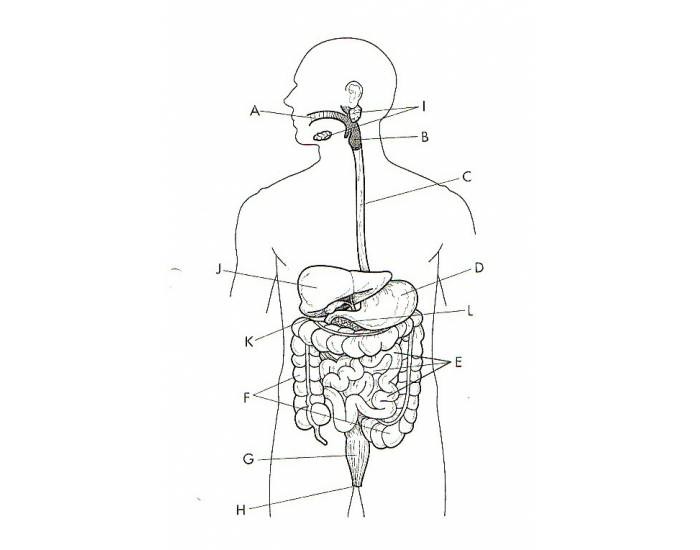
please label the anatomy of the digestive system
this is me labeling the digestive system
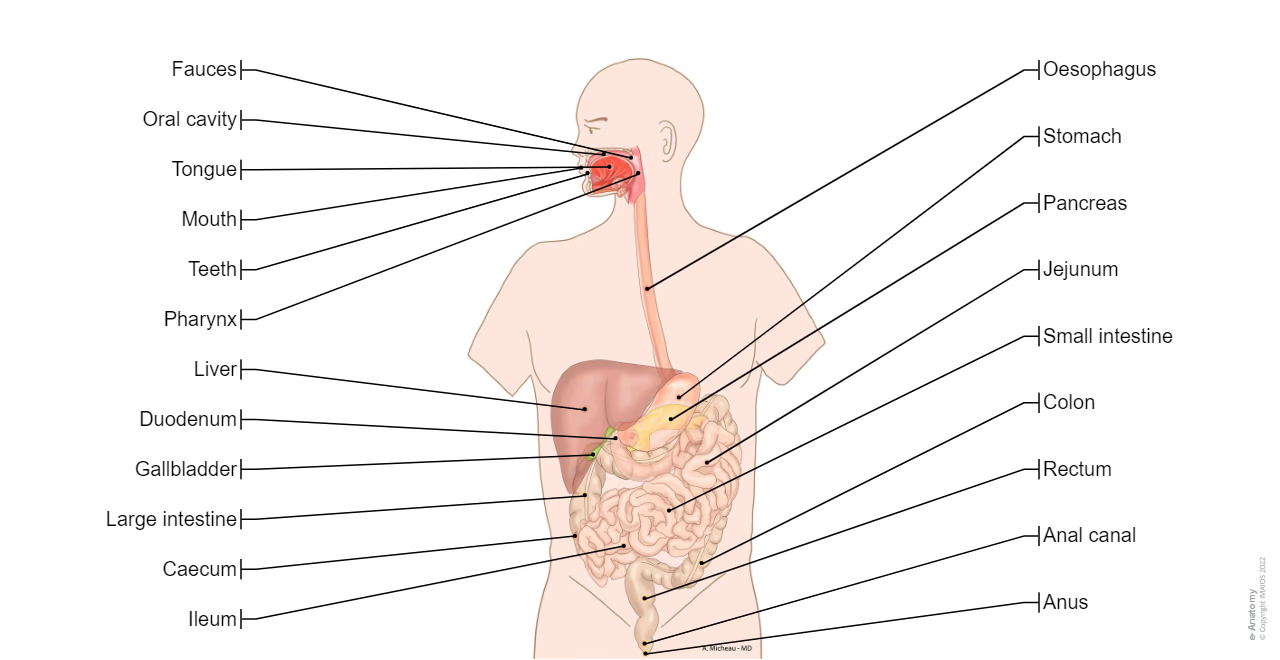
explain the role of the mouth in digestion
physically --> food is broken down by the teeth in a process called mastication and is mixed with salvia
chemically --> salivary amylase is present in salvia, which begins the digestion of starch to maltose. the pH is 7, best for this enzyme!
Explain the role of the esophagus
the food passes through the esophagus as a bolus, it is transported to the stomach by a sequence of muscles contractions know as PERISTALSIS
what is salivary amylase
enzyme that begins starch digestion in the mouth to maltose. does NOT fully digest starch.
What is peristalsis?
A sequence of muscle contractions known as peristalsis
Explain the role of the stomach in digestion.
a muscular sac that holds holds the food.
physically --> muscle contractions mix HCI, food and enzymes together, to give max contact between food and enzyme molecules to speed up chemical digestion
chemically --> site of the digestion of protein. HCI actives the enzyme pepsin, which acts on the protein molecules in the food, turning them into peptide chains
ph. 1.5-2
secretes mucus to protect interior of stomach from acid and enzymes, preventing ulcers.
NOT PRIMARY SITE OF DIGESTION
explain what pepsinogen/pepsin is in the stomach
pepsin is an enzyme that digests proteins,
present in gastric juices. It is stored in an inactive form, pepsinogen
and is activated by HCI on the stomach
lacteal
a lymph tubule located in the villus that absorbs fatty acids
capilliary
A narrow blood vessel that connects with arteries and viens
what is the small intestines role in digestion
a long thin tube in-between the stomach and intestine
primary site of digestion
made of 3 regions: the duodenum, jejunum, ileum.
what is the role of the duodenum
firest section of small intestine
main site of digestion
digestive judices are secreted from the liver, gall bladder, pancreas and duodenal walls.
some absorption occurs
What is the role of the jejunum?
primary site of absorption,
as monomers come into contact with the wall of the jejunum they are absorbed via active of passive transport into the blood or lymphatic system
some digestion occurs
what is the role of ileum
Final portion of the small intestine, absorbs B12 and bile salts and anything else not absorbed by jejunum. Empties into the large intestine.
some digestion occurs
what does the liver do in digestion
produces bile that emulsifies fats
what does the gall bladder do in digestion
stores bile before it's released into the small intestine
what does the pancreas do in digestion
Produces enzymes for breaking down food, and neutralize stomach acid by producing bicarbonate
what is chyme
a mixture of partially digested food, water, and gastric juices from the stomach
how is chyme neutralized
by bicarbonate created in the pancreas
explain why emulsification is necessary to digest lipids
lipids will form large groups called globules, since lipids are insoluble and lipase is water soluble, the lipase can only hydrolyze the outer side of the lipid globules
by combining with bile salts, many more small droplets of fat are created, increasing surface area.
this speeds up the digestion process and allows lipids to be complete digested in the small intestine
please draw the process of lipid digestion
this is me drawing the process of lipid digestion
explain the process of protein digesting
in the stomach, small polypeptide chains are created from proteins. they enter the duodenum and are broken down by proteases (pancreatic enzymes) creating even smaller poly peptides. peptidases (erepsin) are released and digest the chain to create amino acids.
please draw the process of digestion of proteins
this is me drawing the digestion of proteins
explain the digestion of carbohydrates
starch is partially broken down in the mouth, into disaccarches.
pancreatic amylase (pancreas produces) breaks down remaining starch to disaccharides
remaining starch and disaccharides enter the duoduem and are broken down by carbohydrase's (produced in pancreases).
a bunch of diff enzymes convert disaccharides to monosaccharides, they are embedded in the membrane of the duodenum.
please draw the digestion of carbohydrates
this is me drawing the digestion of carbohydrates
explain what increases the aborption of nutrients in the small intestine
By increasing SA you increase absorption
long tubes
ruggaes
villi's
micro villis
explain the absorption of glucose
monosaccharides are absorbed via active transport, through the epithelial cells, and diffuse into the blood vessels
explain the aborption of amino acids
amino acids are absorbed through the epithelial cells via active transport and are diffused into the blood vessels
explain the absorption of fatty acids and glyverol.
glycerol and fatty acids absorbed via passive transport through the eptheial cells,
they resemble back into triglycerides
they are protein coated making them more soluble,
they diffuse into the lymph vessels.
explain the anamotmt of a villi and micro villi
villi are little tentacles on the digestive walls to increase surface area. on the villi are even more tentacles called micro villi. they are composed of a one cell thick wall, the epithelium, to aid with diffusion rate. a blood capillary which transports glucose and amino acids, and lacteals which transport fats.
please draw a micro villi
this is me drawing a microvilli
what is the purpose of the large intestine
absorb water, pass undigested material, absorp minerals and create feces. also removes mucus, naturally occuring bacteria and dead cells.
what is the role of cellulose in our diets
humans cannot digest cellulose, a material that makes up the walls of plant cells. Because of this it is the ideal material for increasing the bulk of the feces passing through the digestive track, keeping the track clear and allowing for the smooth passage of waste.
what does gastrin do
stimulates the release of HCI when food enters the stomach and touches the stomach lining
what does enterogastrone do?
decreases gastric juice production in the stomach when fatty meals are detected, slowing down digestion to give time for fat emulfication/digestion
what CCK do (Cholecystokinin)
Stimulates the release of bile salts when fatty chyme is releases into the duodenum
what does secretin do
simulates the release of pancreatic enzymes and bicarbonate as acidic chyme enters the duodenum.
where are lipase from
it is secreted by the pancreas
what activates trypsinogen
enterokinase/endopeptidase
what is dehydration synthesis/condensation reaction
a chemical reaction that links molecular units by removing H2O. creating by removing water
what is hydolysis
the adding of H2O to break covalent bonds. breaking by adding water
how to detect lipids in a solotuion
paper bag test
sudan IV test
turns red in presence of lipids
how to detect starch in a solution
use iodine —> turn from orange to dark black
how to detect proteins in a solution
biuret test —> blue to violet
how to detect mono/disaccarides
benedicts solution + heat, turn from blue to red, yellow, brown, green
what are the 3 carbohydrases
lactases
maltase
sucrases