Unit 2.3 Metabolism
 Call Kai
 Learn
Learn Practice Test
 Spaced Repetition
 Match
Match Flashcards
 Knowt Play
1/14

There's no tags or description
Looks like no tags are added yet.
Name | Mastery | Learn | Test | Matching | Spaced | Call with Kai |
|---|
No analytics yet
Send a link to your students to track their progress
15 Terms
What are the two ways microorganisms are able to produce ATP
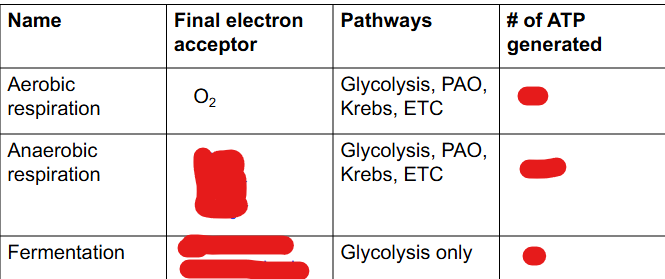
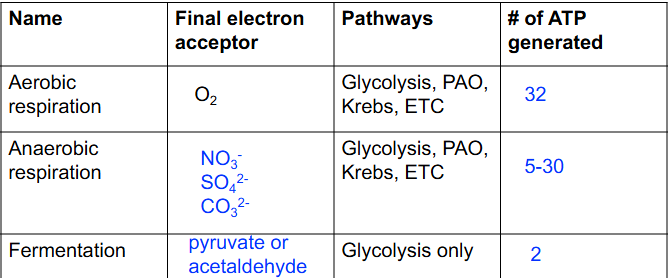
Cellular Respiration: final electron acceptor is an inorganic molecule (ex: oxygen)
Fermentation: does not involve oxygen, final electron acceptor is an organic molecule
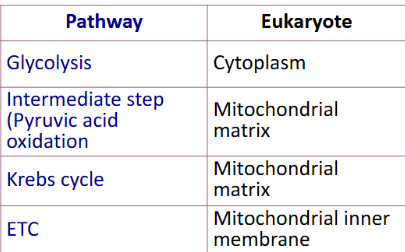
Locations of Cellular Respiration in Eukaryotes
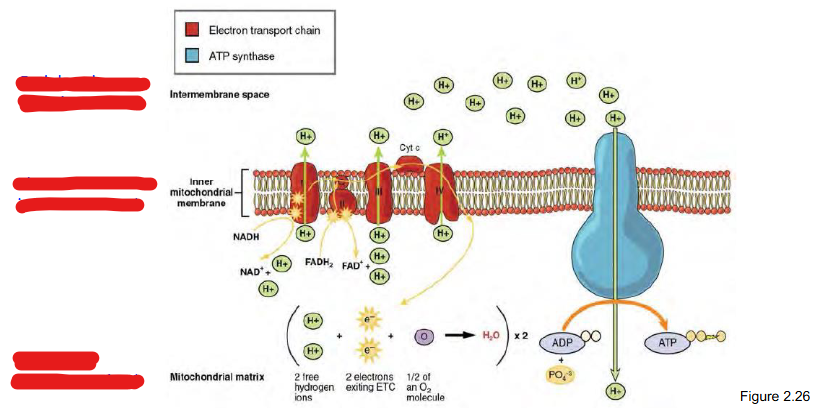
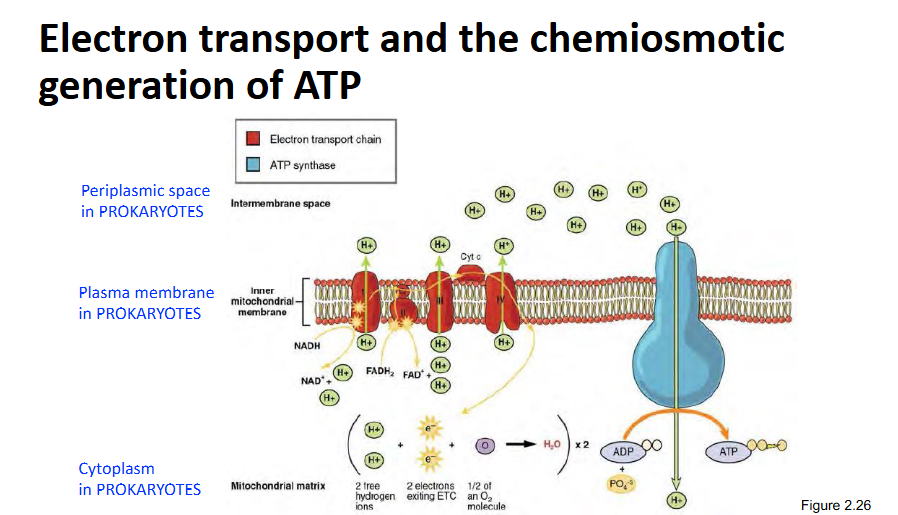
Locations of Cellular Respiration in Prokaryotes
How much ATP does aerobic respiration yield vs. anaerobic respiration in prokaryotes?
Aerobic respiration: 32 ATP
Anaerobic respiration: 5-30 ATP
What are the alternative glycolysis pathways for prokaryotes?
Entner- Doudoroff pathway: replaces glycolysis-
Per glucose molecule it produces: 2 pyruvic acid, 1 ATP, 1 NADH, 1 NADPH
Pentose-Phosphate pathway: used with glycolysis
- Per glucose molecule it produces: no ATP. 2 NADPH
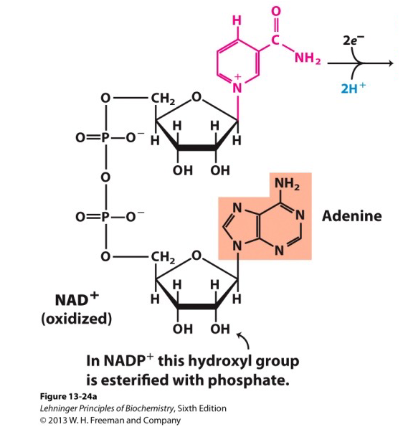
Differences between NADH and NADPH
NADH: involved in catabolic reactions
NADPH: involved in anabolic reactions
What are chemoautotrophs?
Chemoautotrophs: Chemo + Auto = Chemicals + Makes own food
What are chemoheterotrophs?
Chemoheterotrophs: Chemo + Hetero = Chemicals + Eats others
All animals, fungi and some bacteria
What are photoautotrophs?
Photoautotrophs: Photo + Auto = Sunlight + Makes own food
Algae
What are photoheterotrophs?
Photoheterotrophs: Photo + Hetero = Sunlight + Eats others
What is fermentation’s initial stage?
Fermentation’s initial stage is glycolysis
How much ATP does fermentation produce?
2 ATP