Anatomy II Exam 5 (Pharynx and Larynx)
 Call Kai
 Learn
Learn Practice Test
 Spaced Repetition
 Match
Match Flashcards
 Knowt Play
1/140

There's no tags or description
Looks like no tags are added yet.
Name | Mastery | Learn | Test | Matching | Spaced | Call with Kai |
|---|
No analytics yet
Send a link to your students to track their progress
141 Terms
What is located posterior to the nasal cavity, oral cavity, and larynx?
pharynx
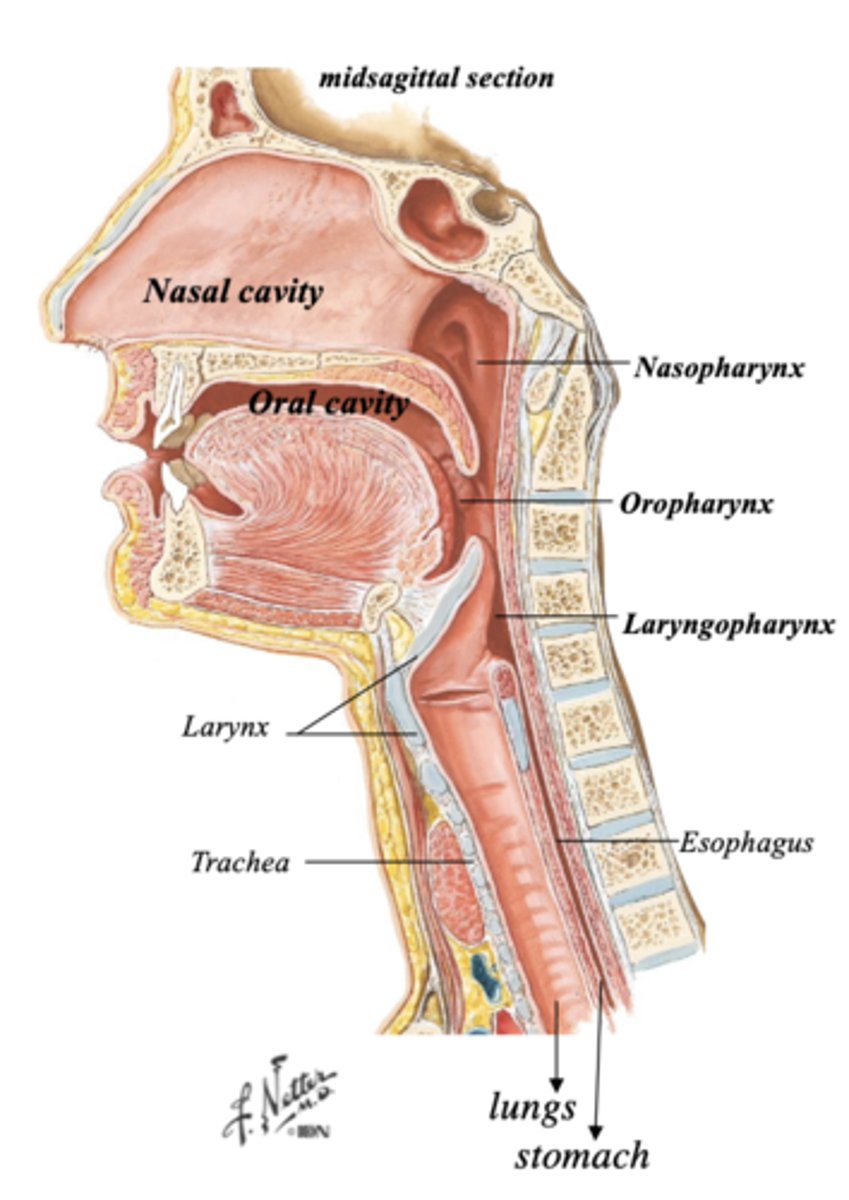
What pharynx is located posterior to the nasal cavity?
Nasopharynx
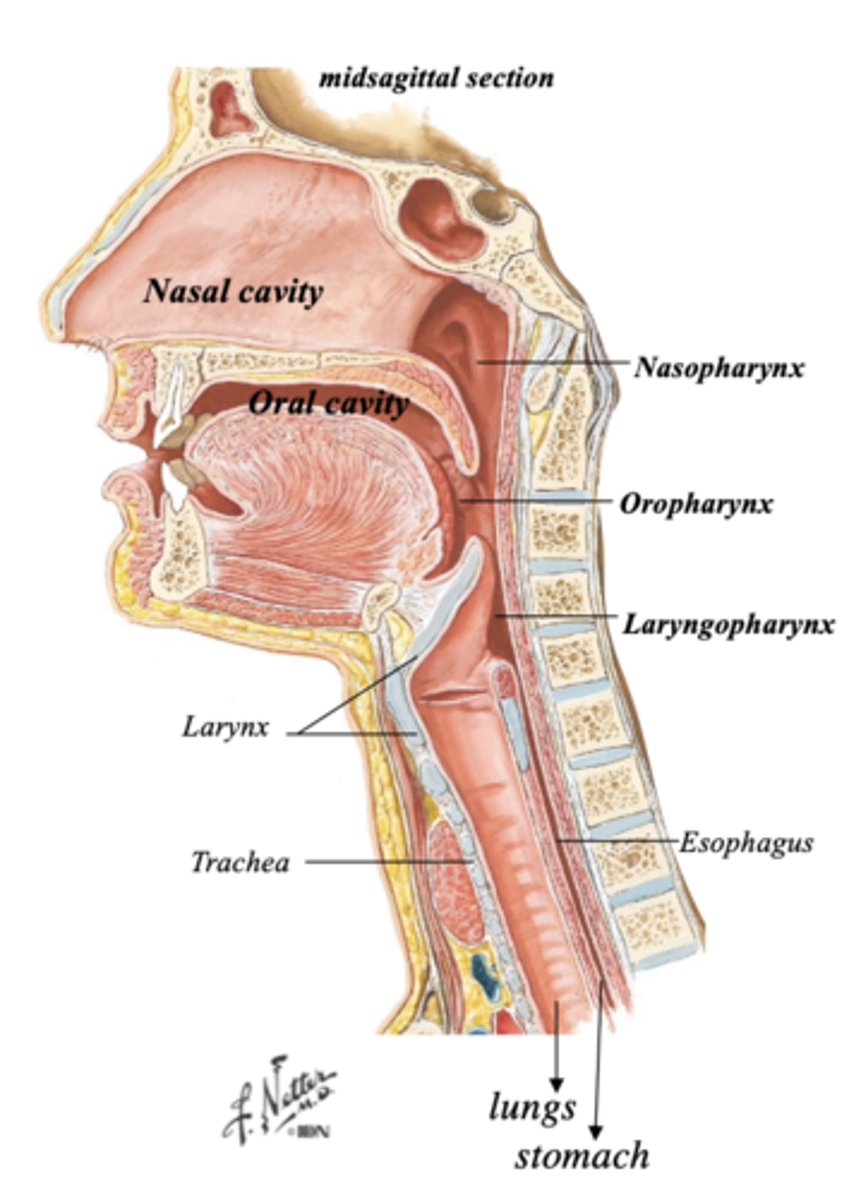
What pharynx is located posterior to the oral cavity?
Oropharynx
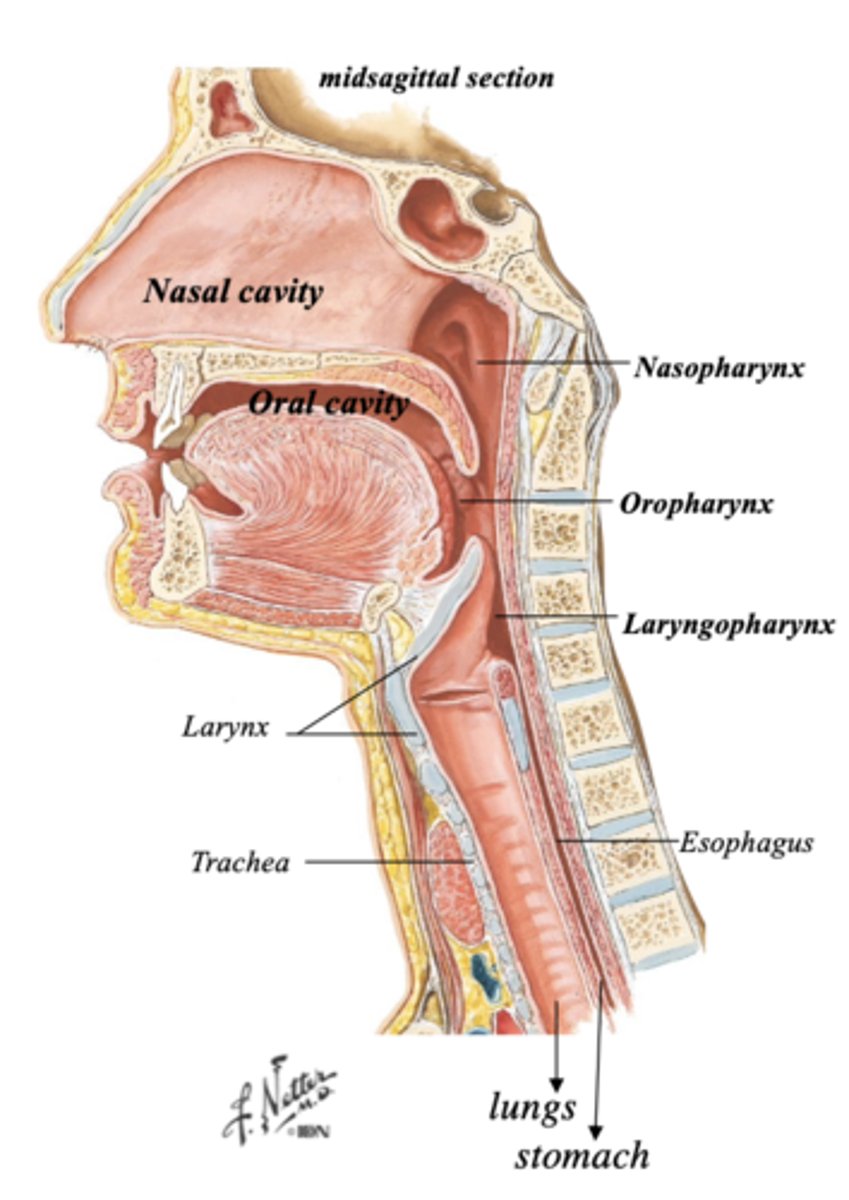
What pharynx is located posterior to the larynx?
Laryngopharynx (hypopharynx)
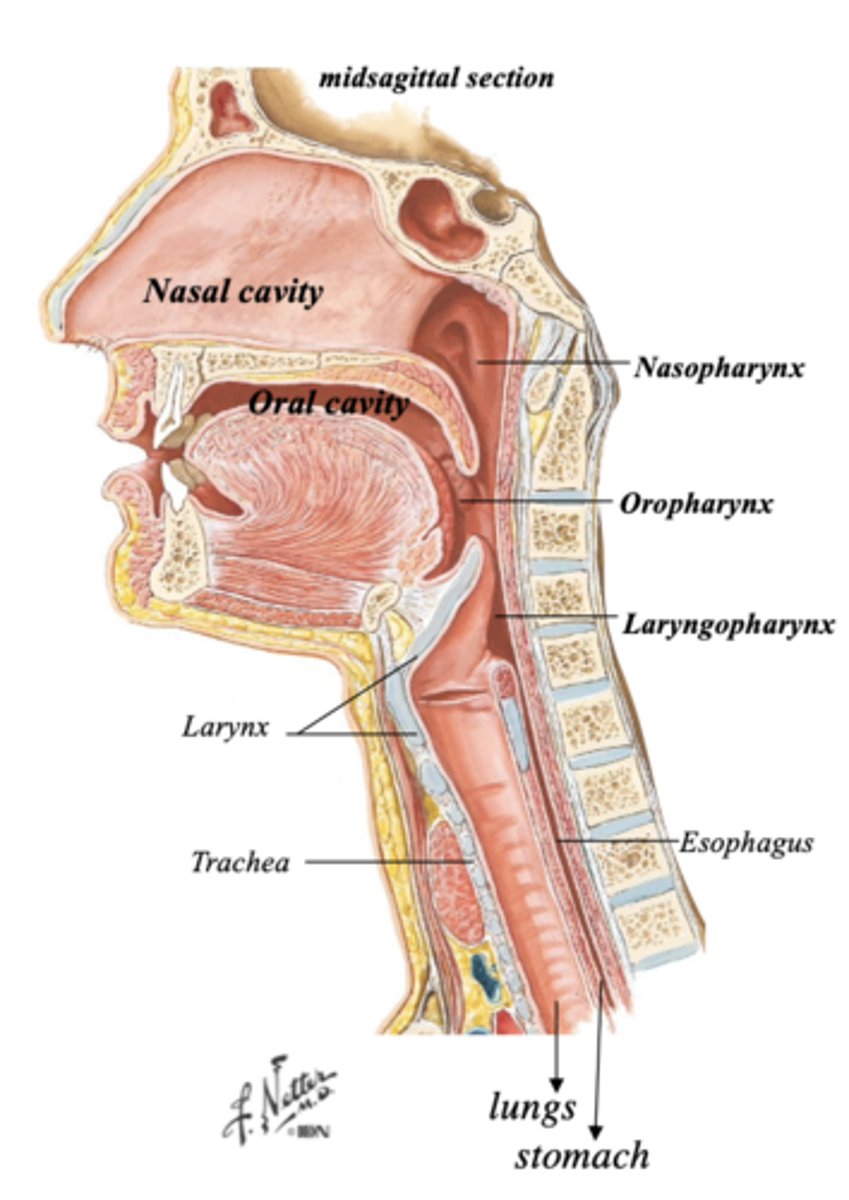
the pharynx is comprised of _______________ muscle and _____________________________ membranes.
skeletal muscle, non-contractile membranes
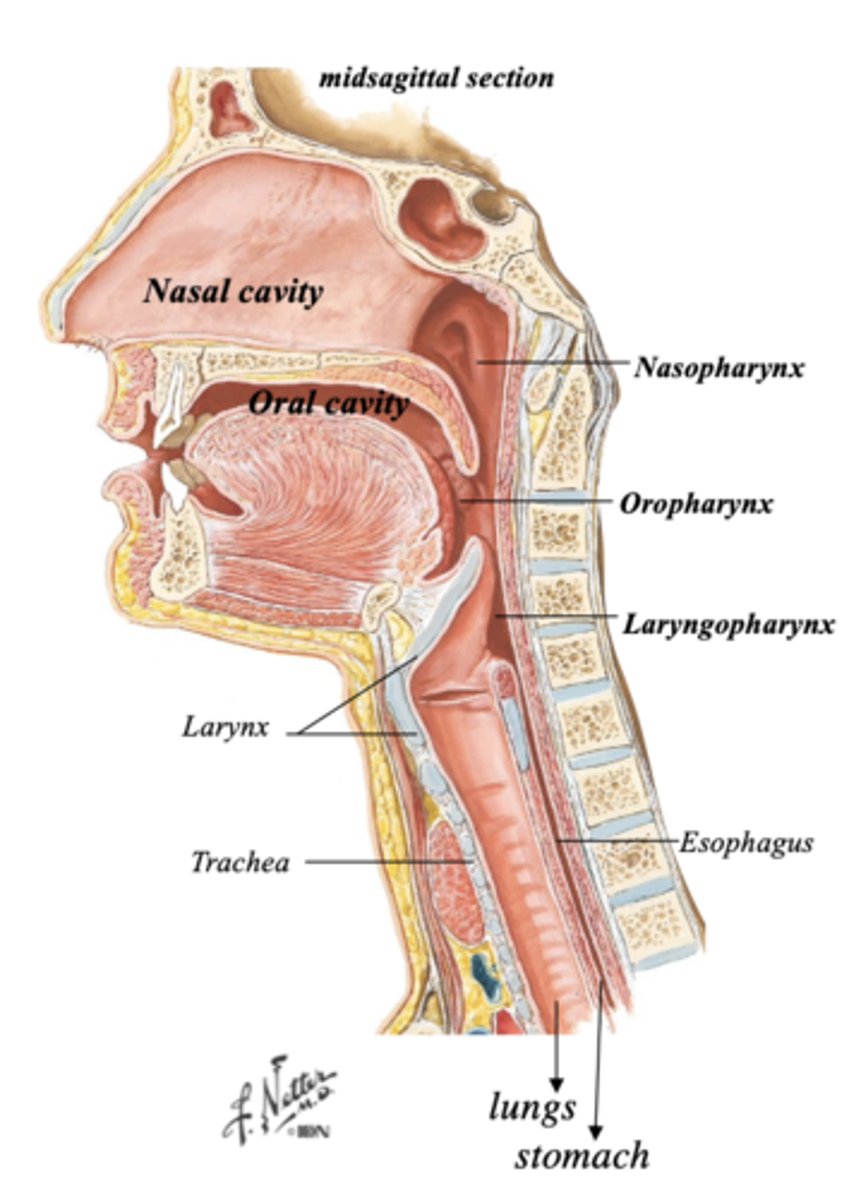
What is a passageway for air and food?
pharynx
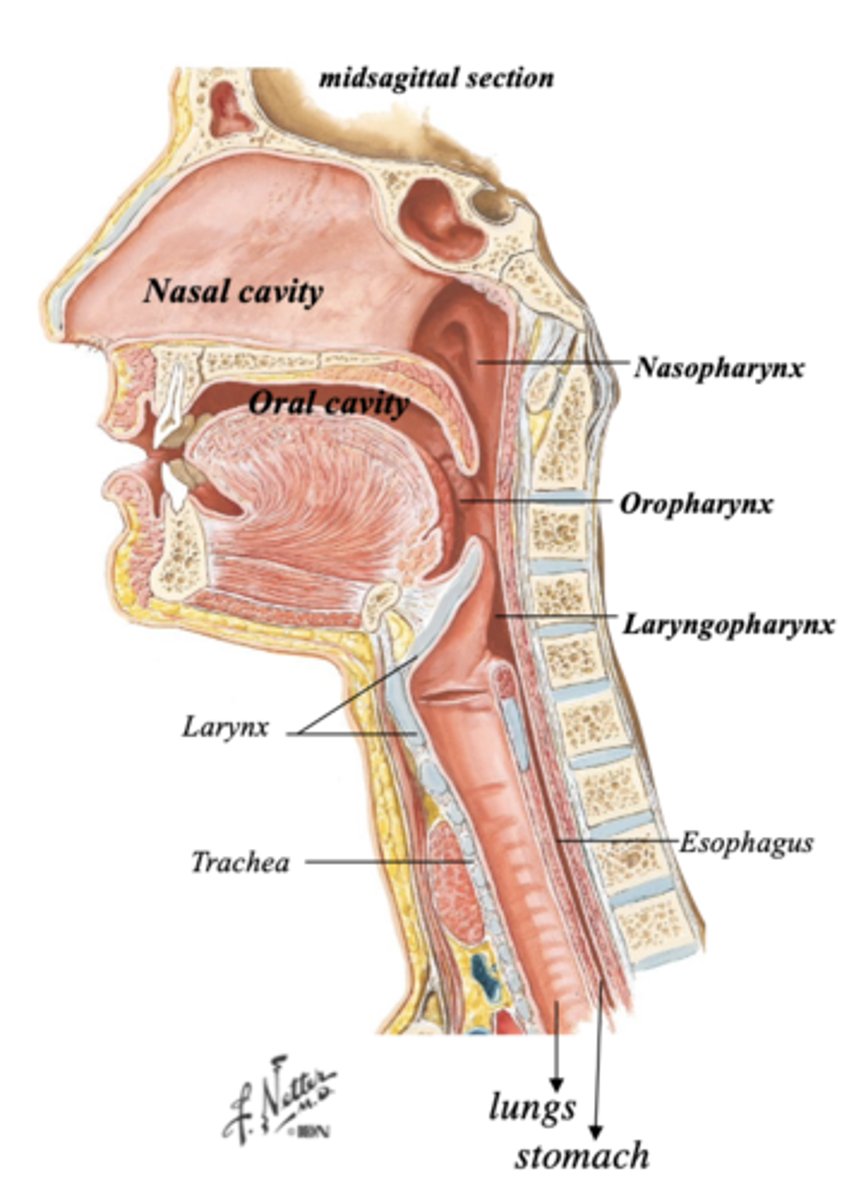
What does food/liquid pass through to get to the stomach?
1) oropharynx
2) laryngopharynx (aka: hypopharynx)
3) esophagus
4) stomach
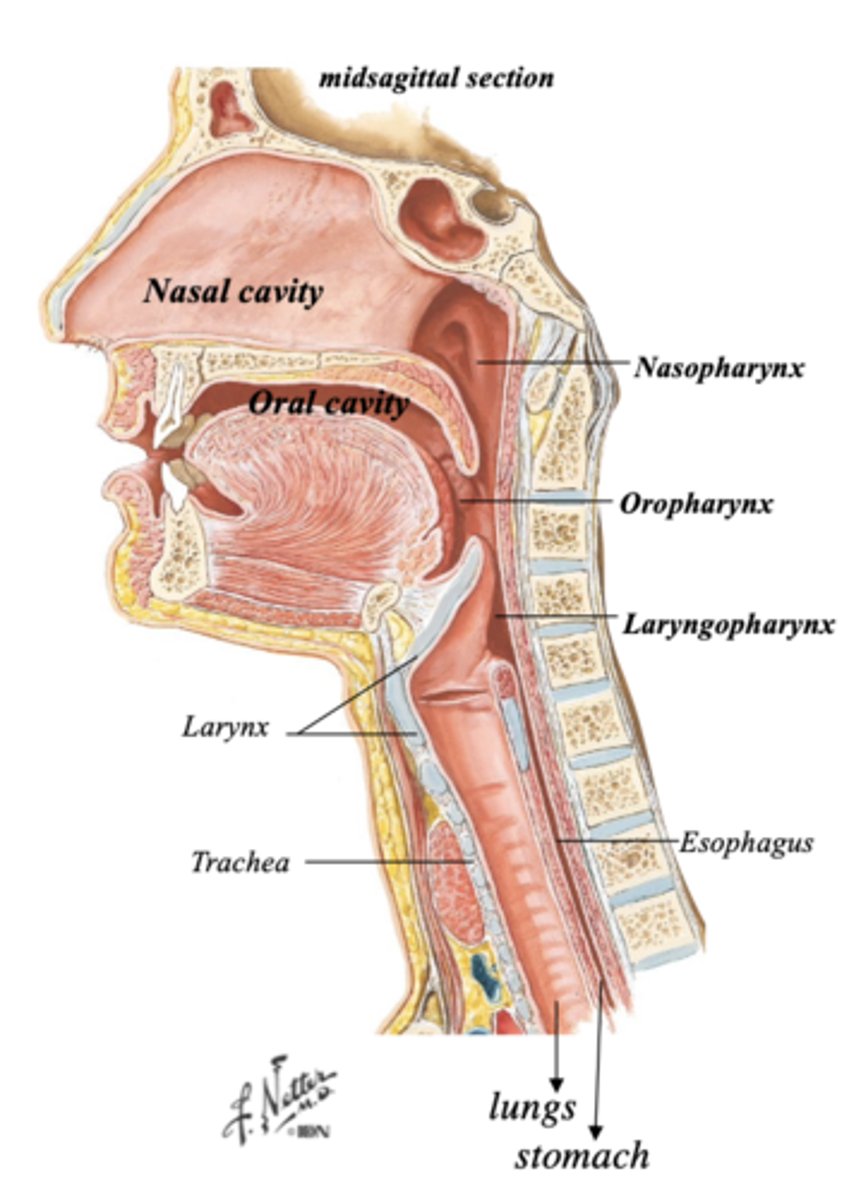
What does air pass through to get to the lungs?
1) nasopharynx
2) oropharynx
3) larynx
4) trachea
5) primary bronchi
6) lungs
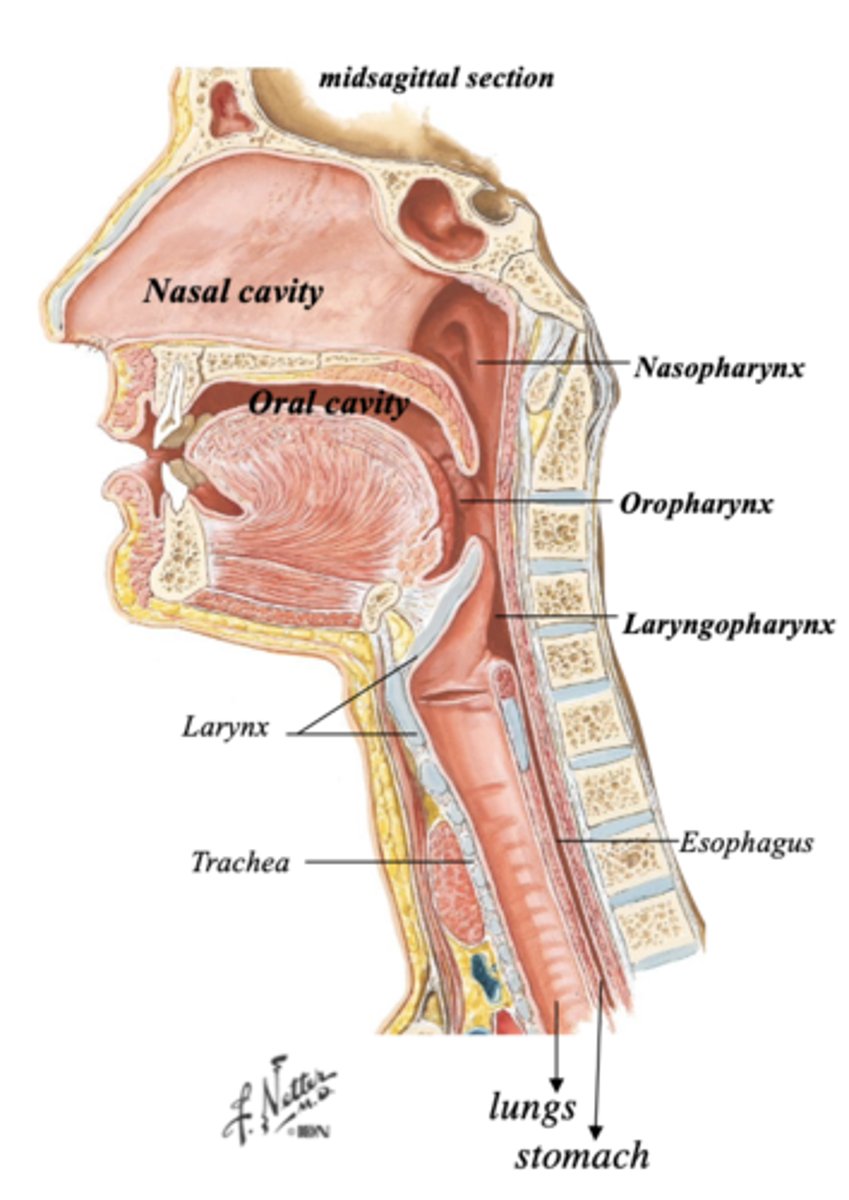
The nasopharynx extends from where to where that is marked by the palatoglossal arch?
1) base of the skull
2) soft palate
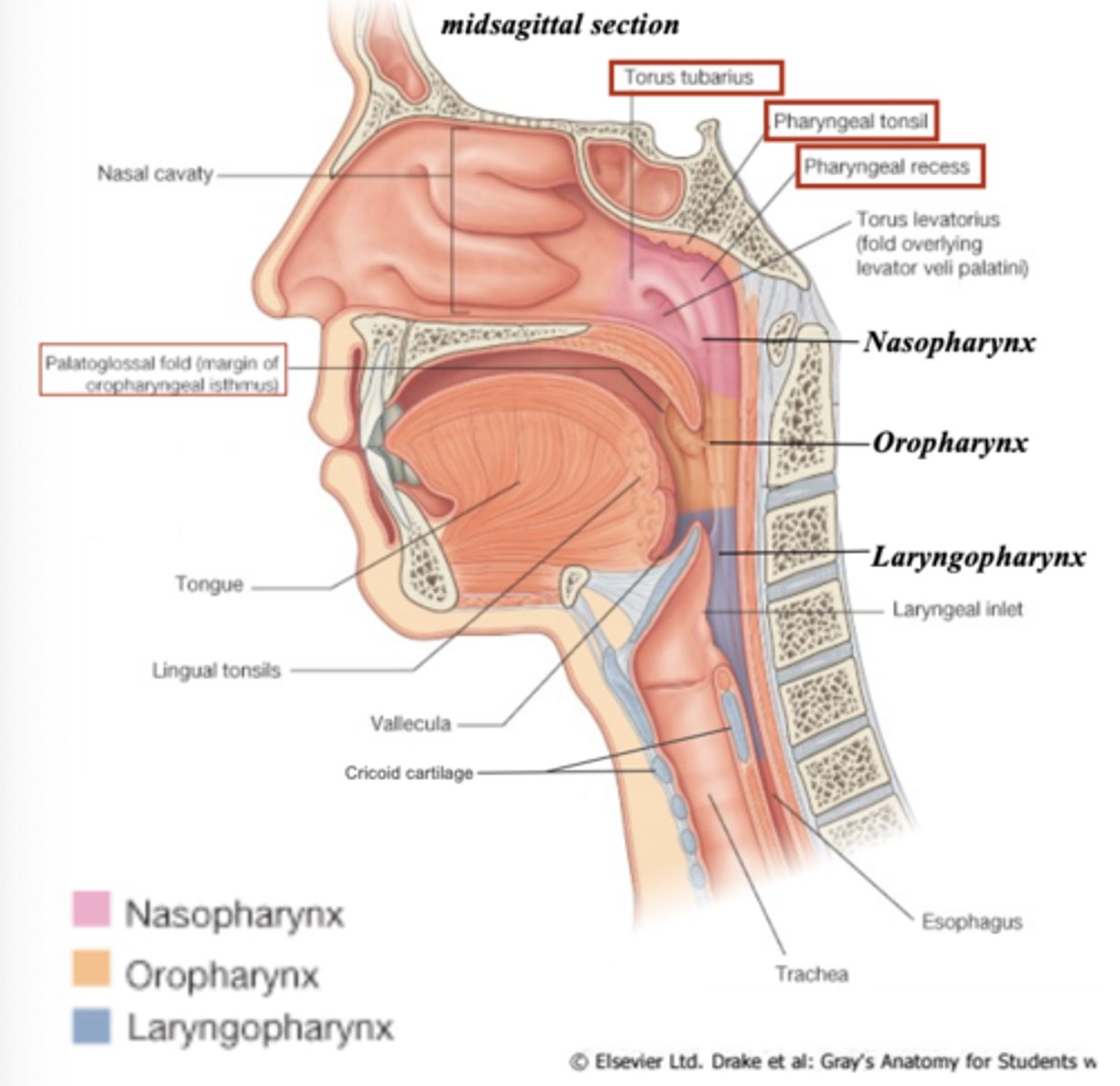
What is the opening of the pharyngotympanic tube, aka eustachian tube?
toris tubarius (lateral)
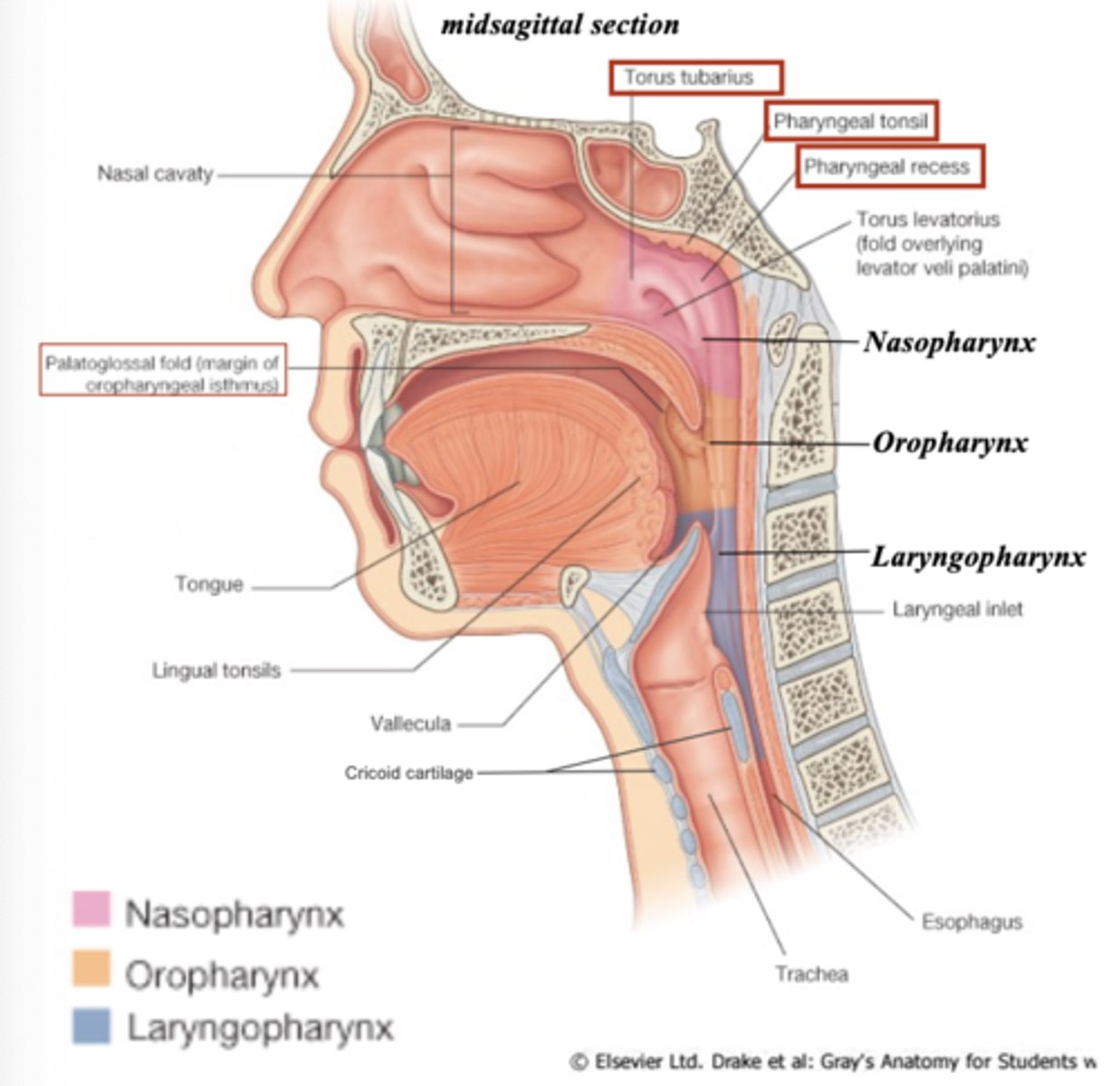
The toris tubarius allows communication between what 2 structures?
1) nasopharynx
2) middle ear cavity (tympanic cavity)
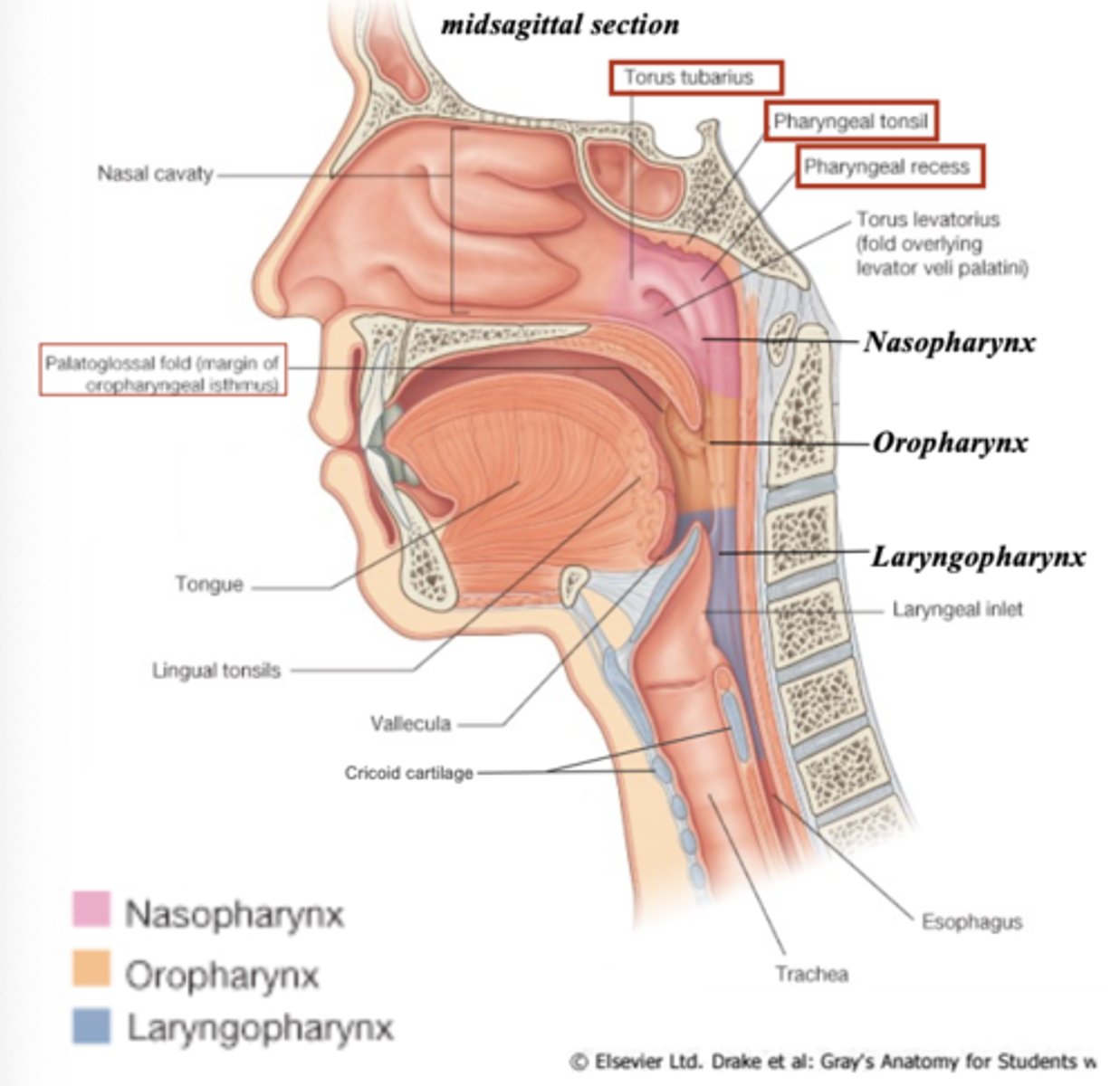
What is posterior to the torus tubarius in the nasopharynx?
pharyngeal recess
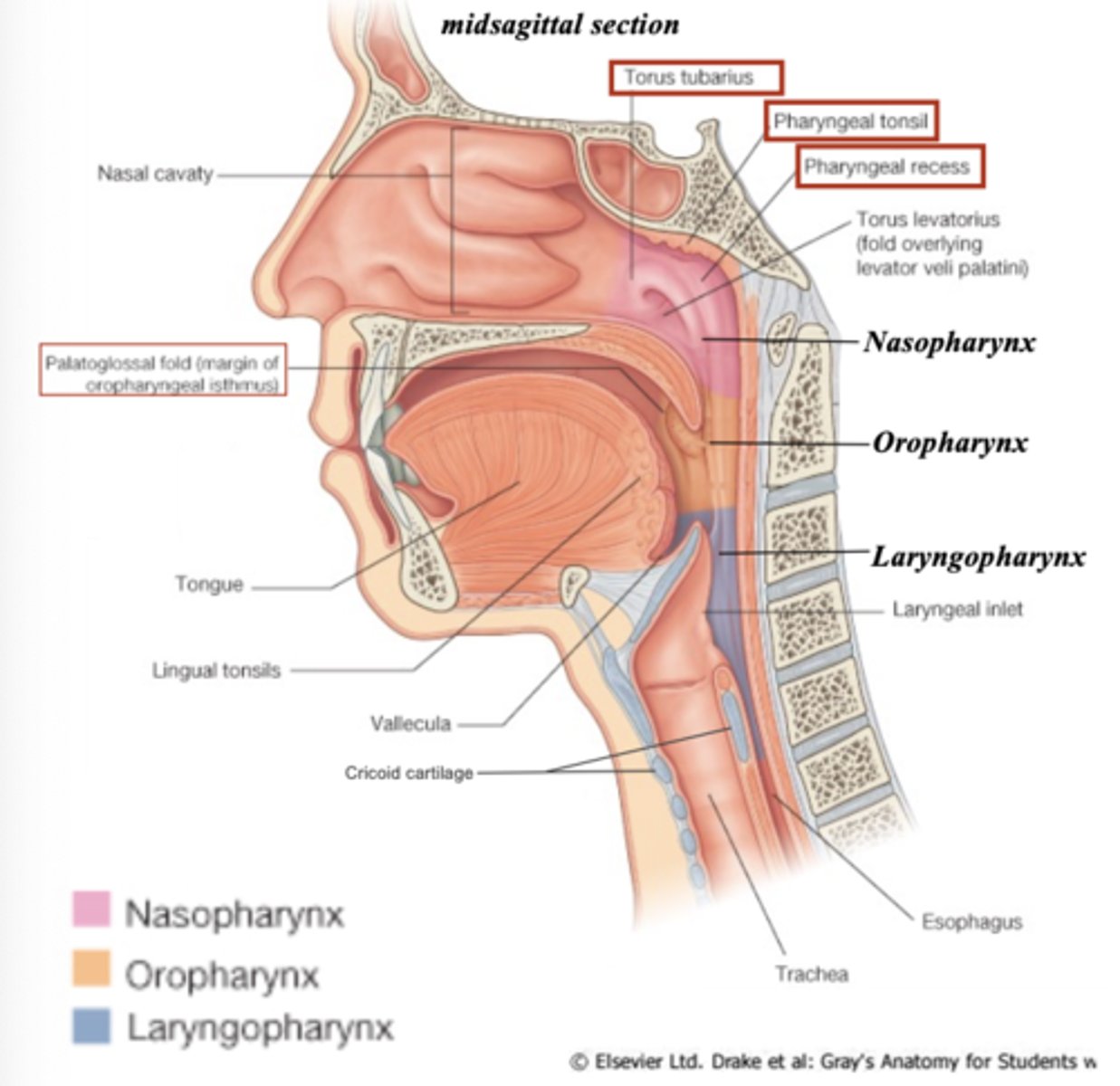
What is located in the pharyngeal recess?
pharyngeal tonsils (adenoids)
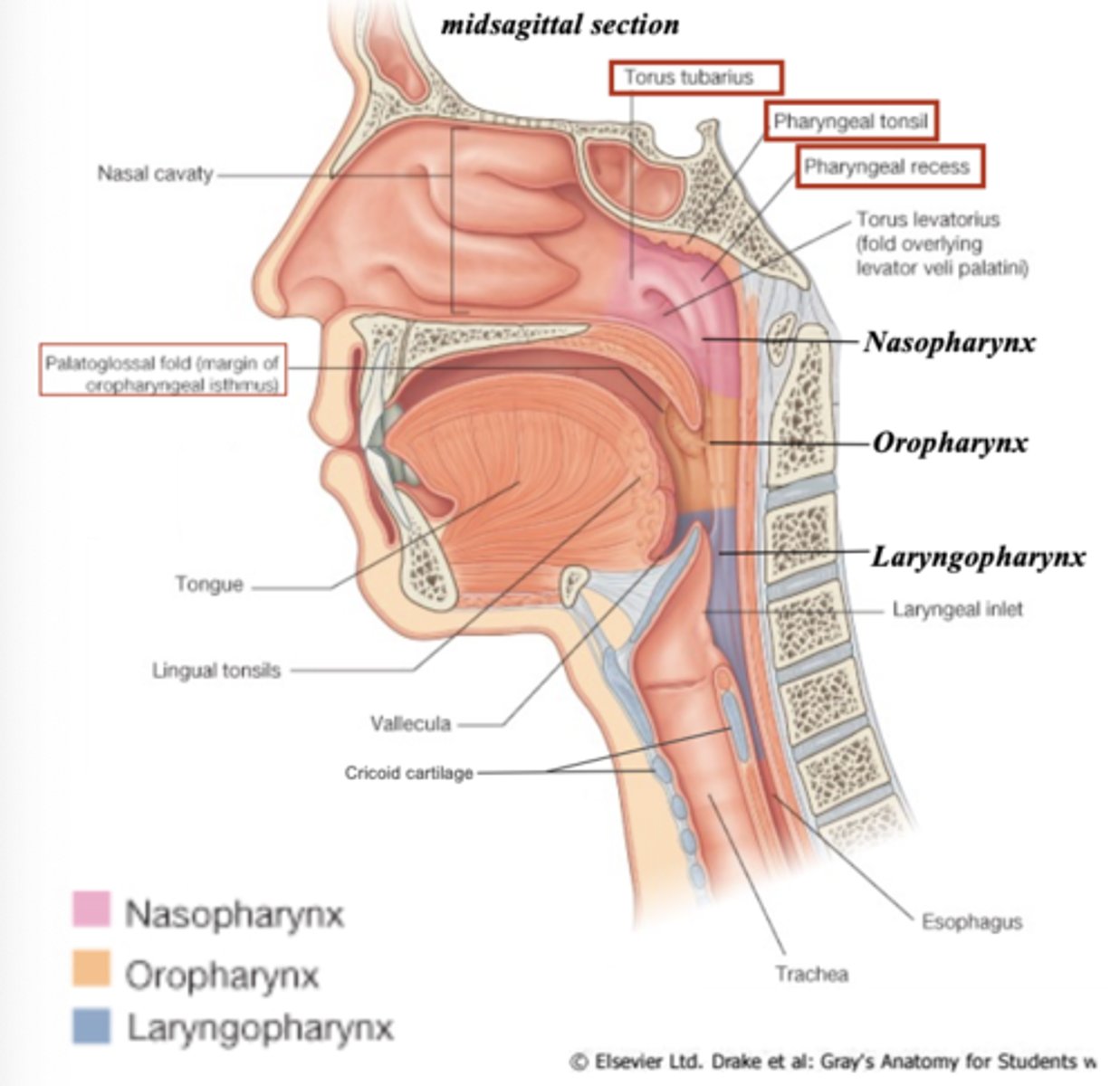
T/F Enlargement of the pharyngeal tonsils may interfere with nasal breathing.
True
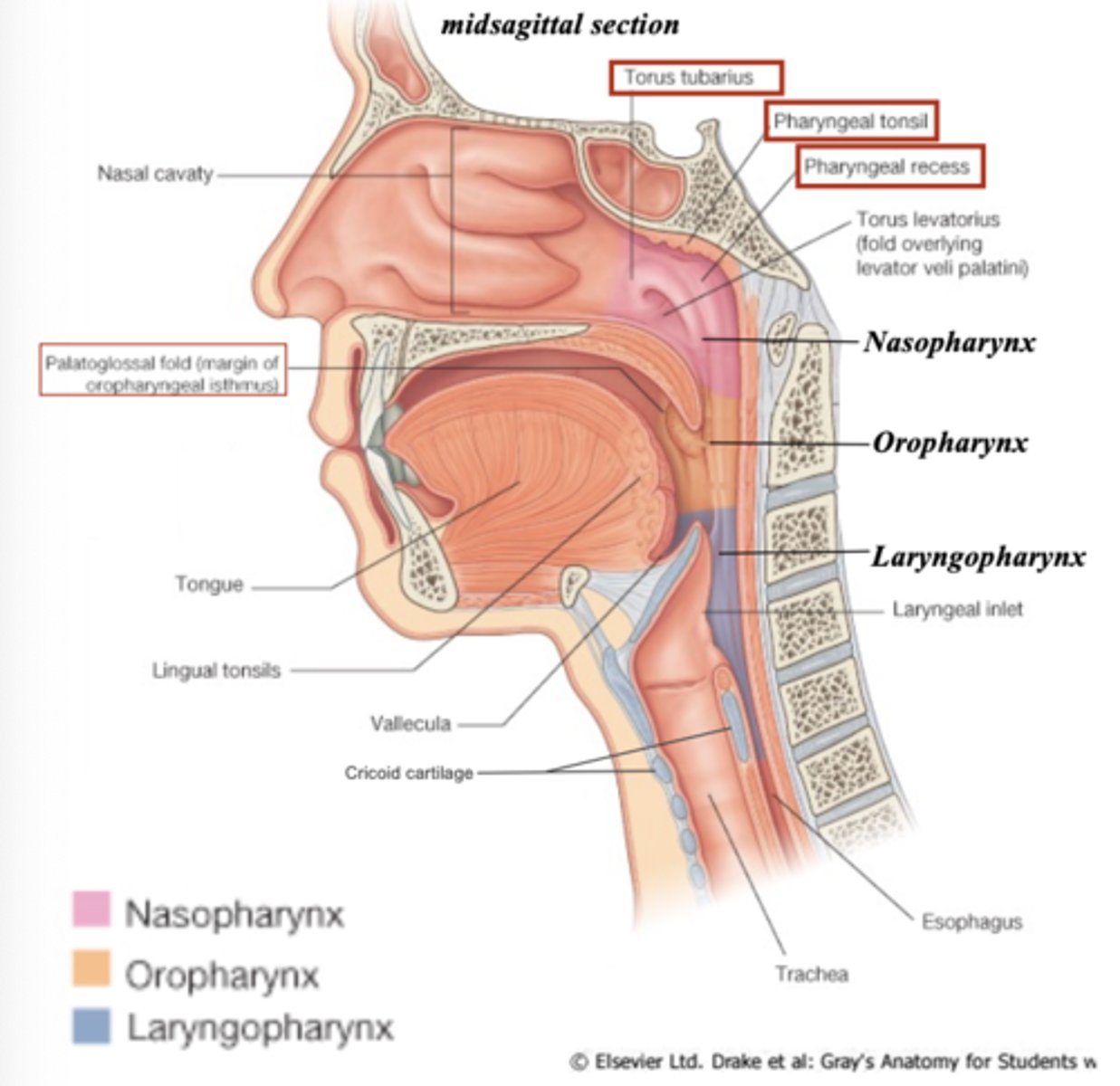
T/F There is minimal risk of injury to chorda tympani with tympanostomy tube insertion.
True
What extends from the soft palate to the superior border of the epiglottis?
Oropharynx
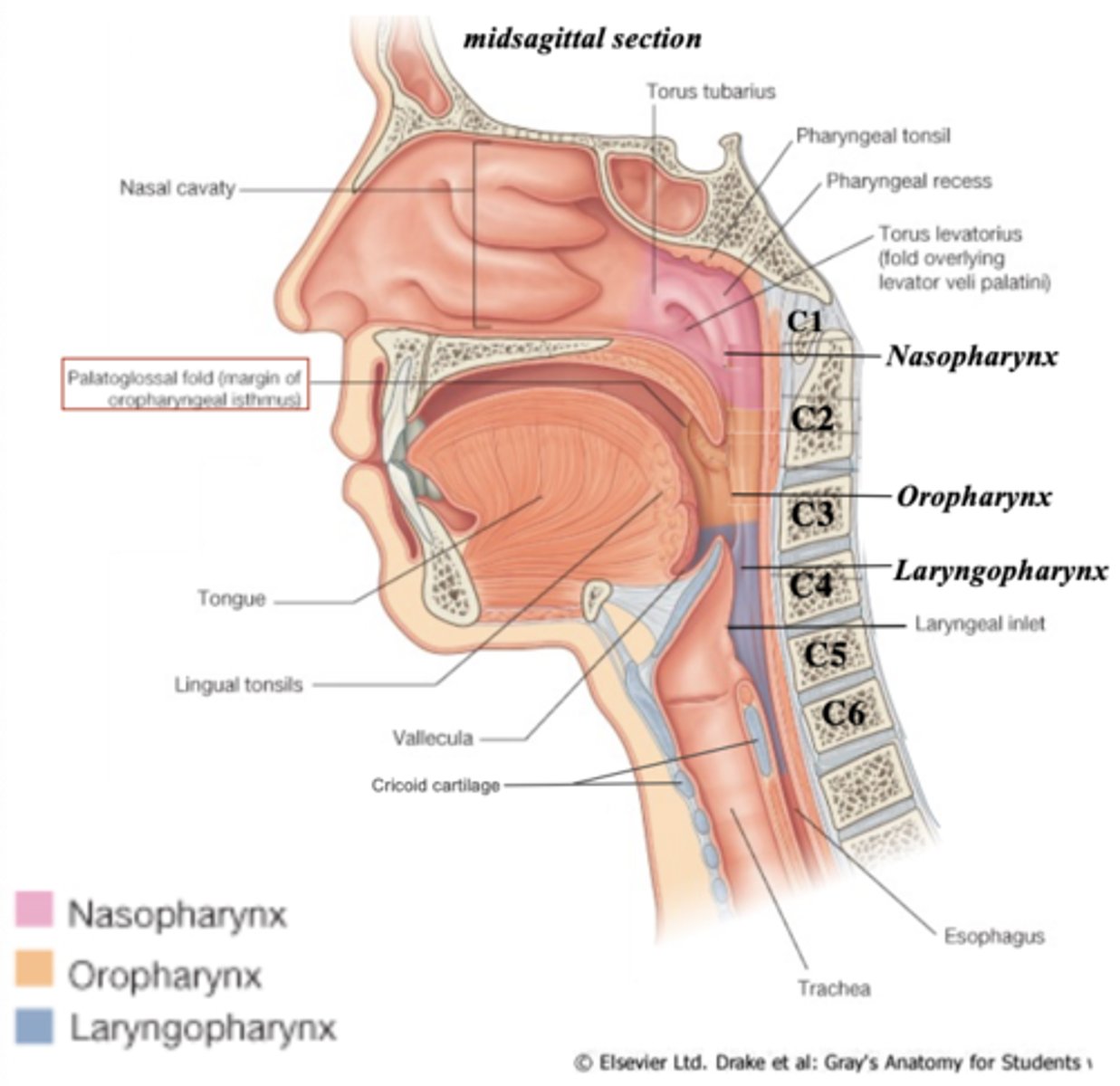
What extends from the superior border of the epiglottus to the inferior border of the cricoid cartilage?
laryngopharynx
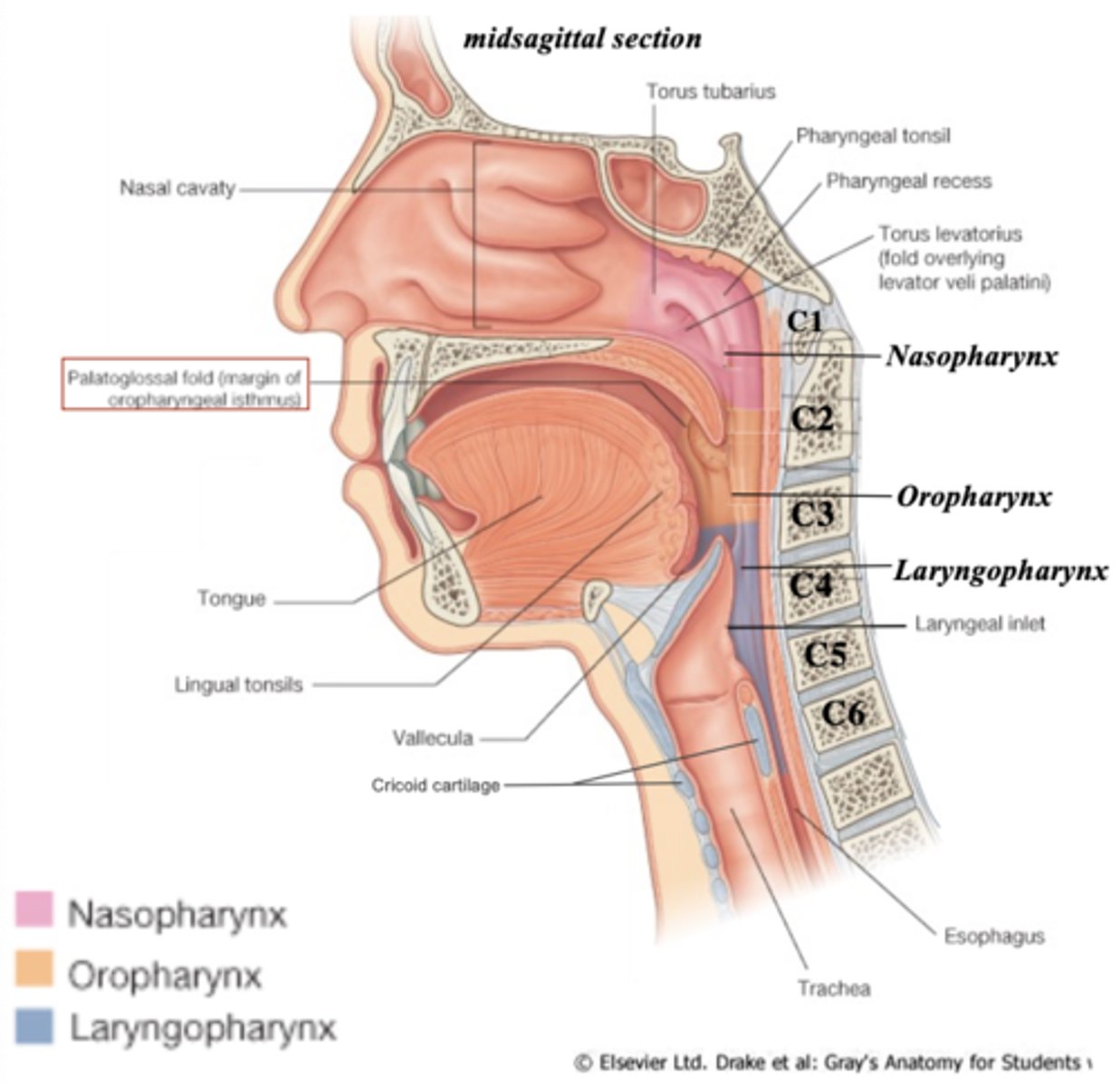
The laryngopharynx communicates with the larynx through what?
laryngeal inlet
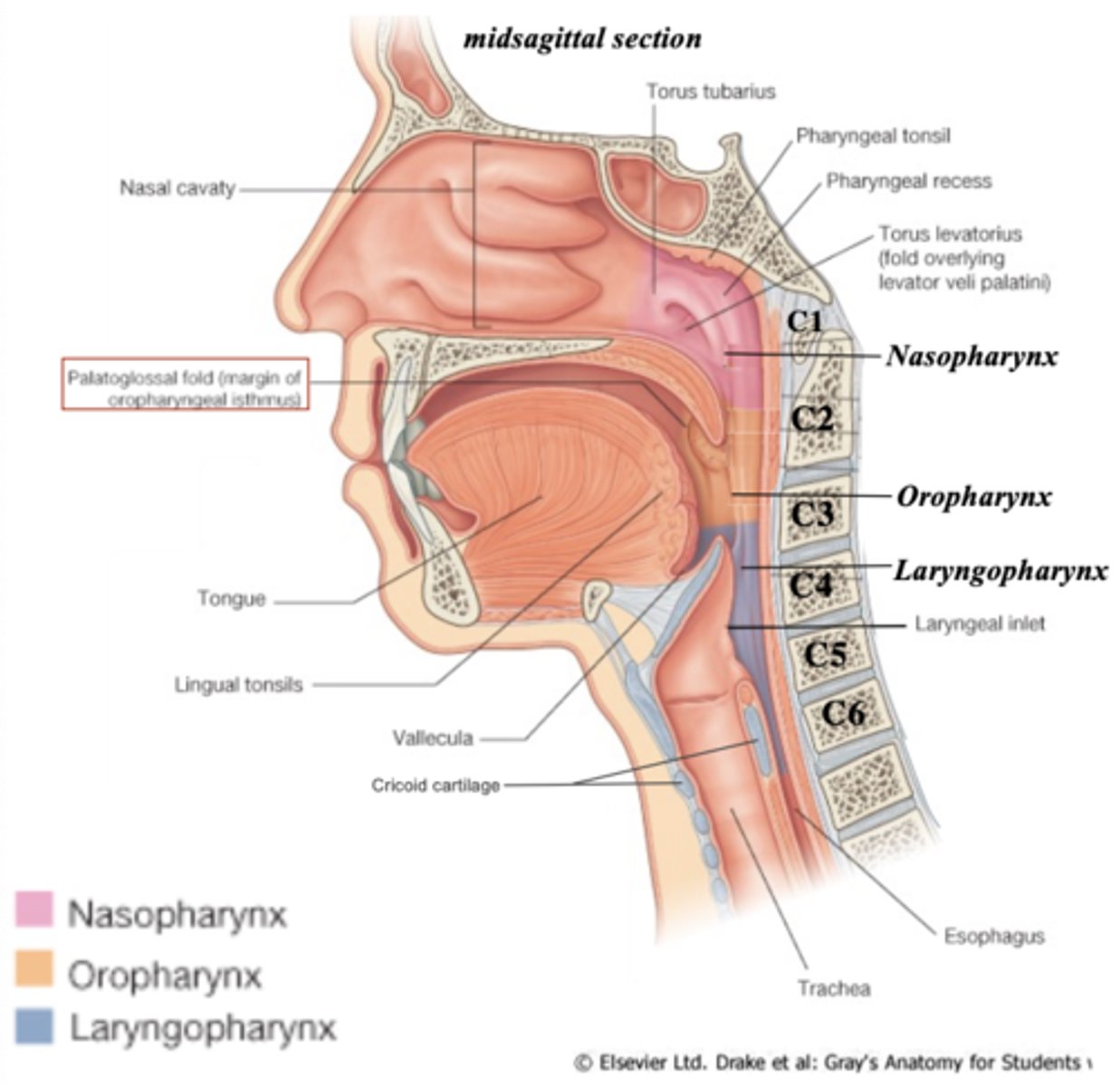
The laryngeal inlet marks the opening between what two structures?
1) larynx
2) pharynx
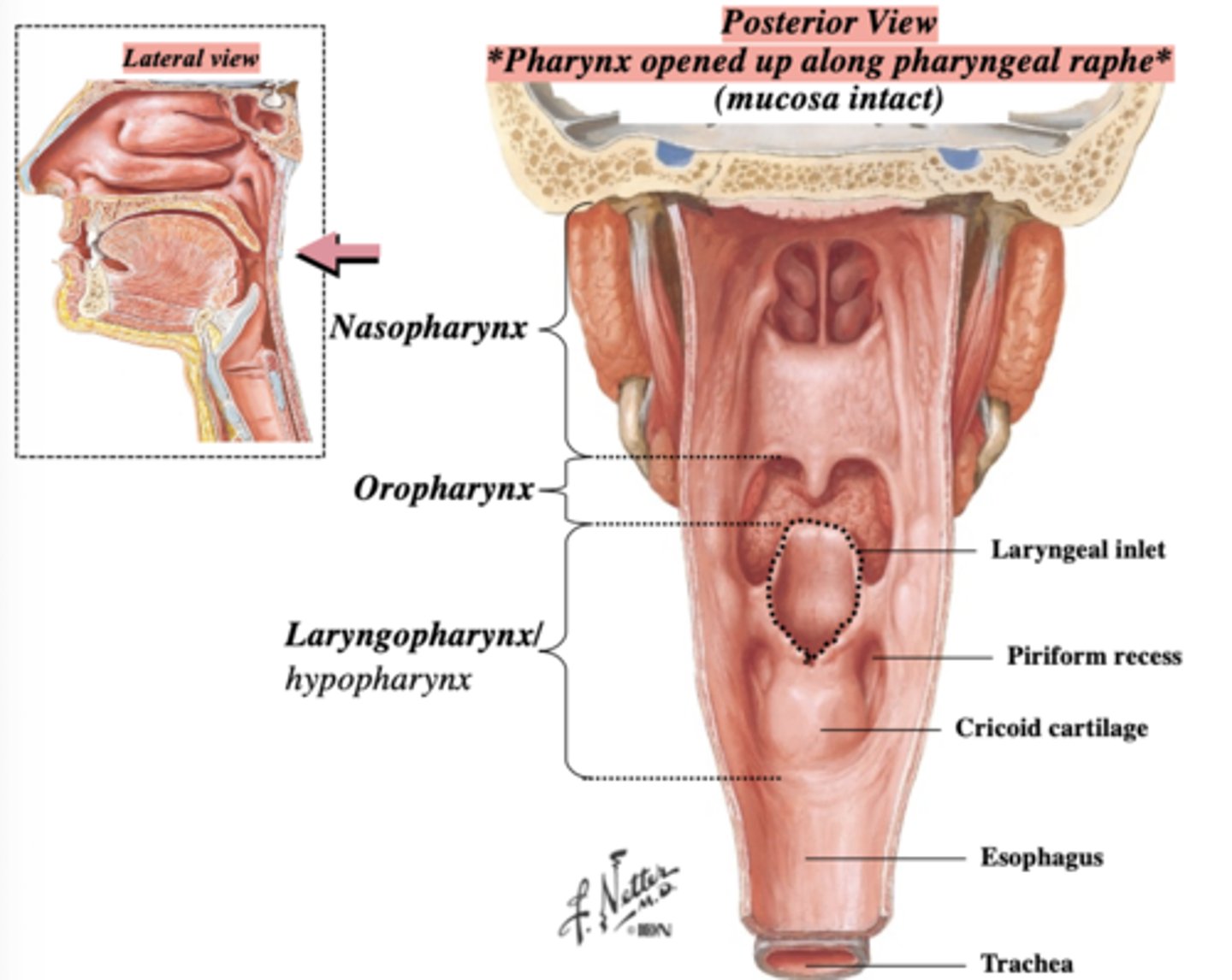
What is a depression located on either side of the laryngeal inlet where food may get trapped?
piriform recess
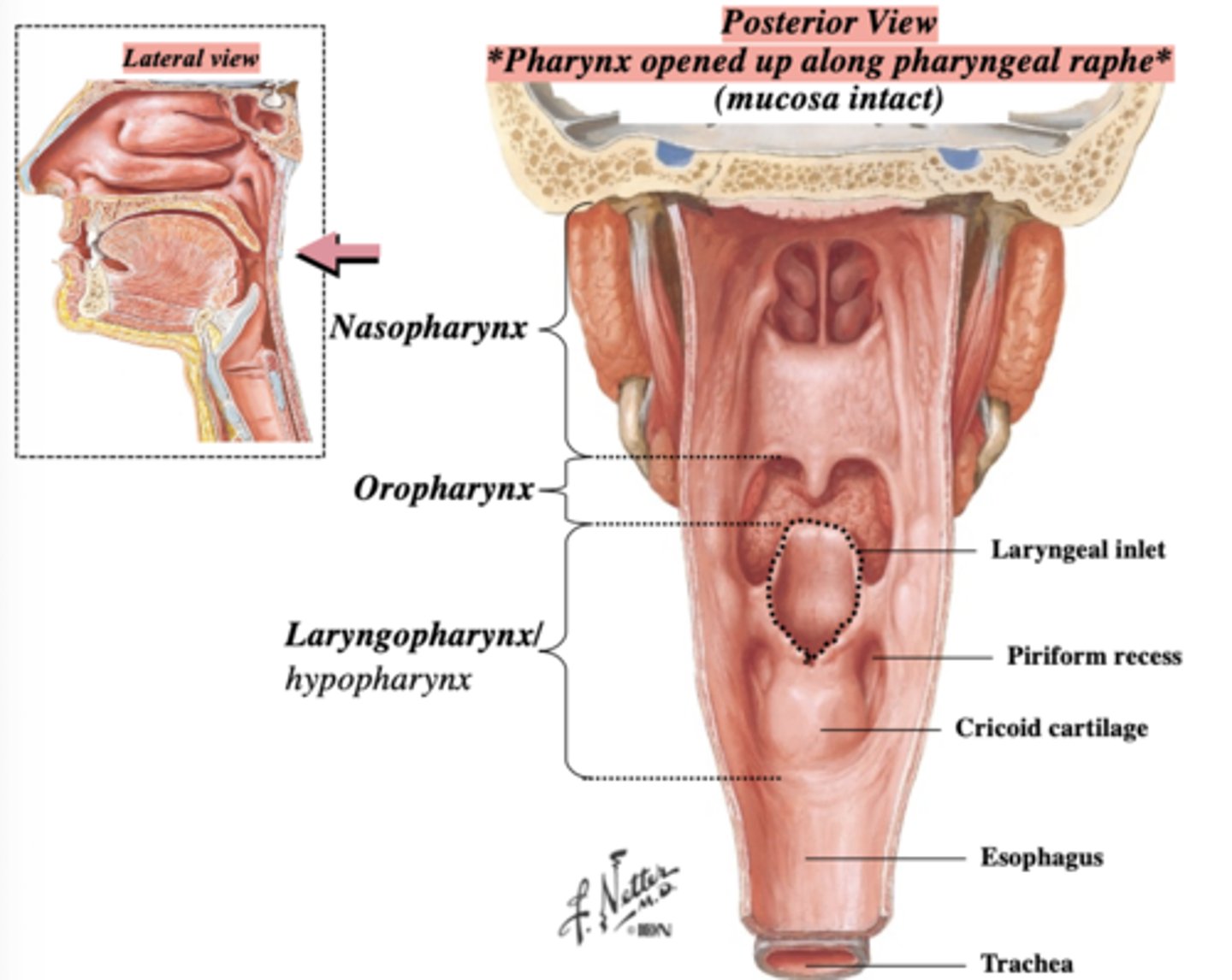
What is the most common malignancy in the oral cavity and oropharynx, accounting for 90% of cancers of the head and neck?
squamous cell carcinoma
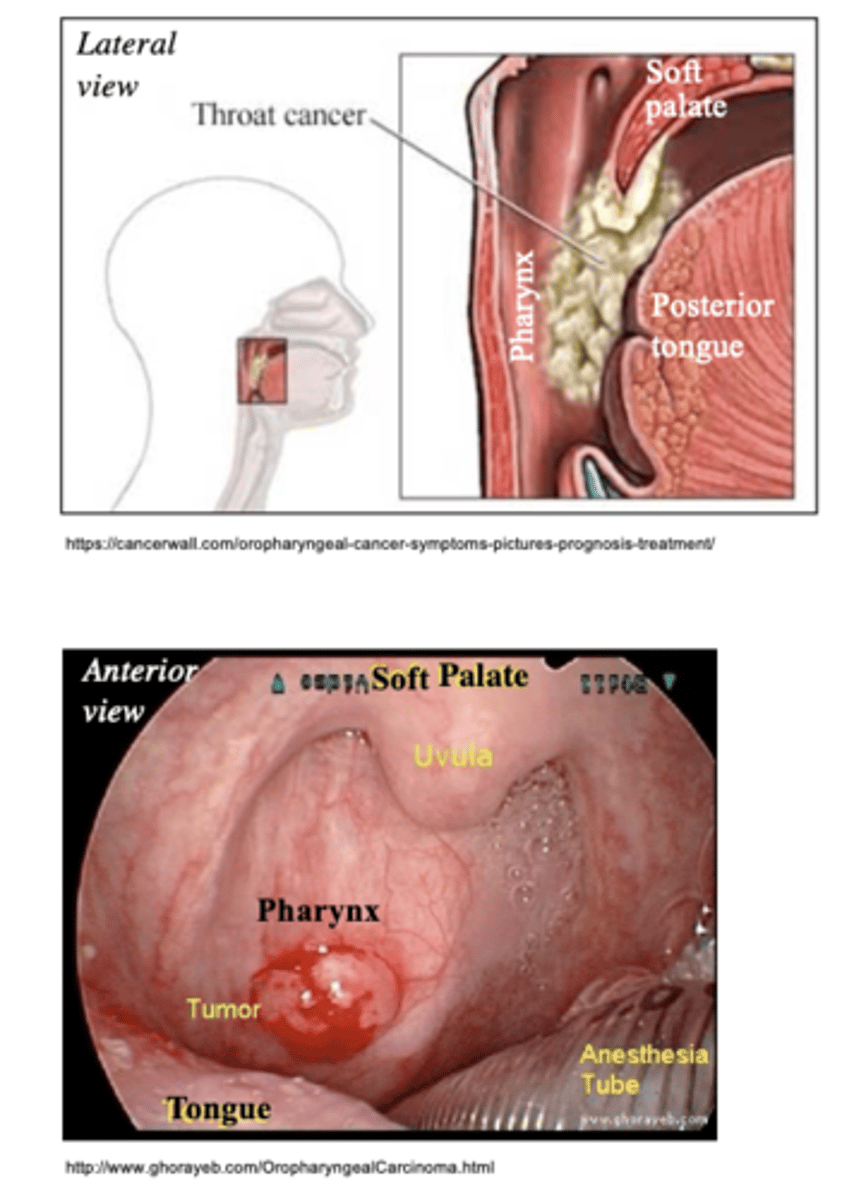
T/F Cancer that has metastasized has a lower mortality rate than cancer that remains localized.
False: Cancer that has metastasized has a HIGHER mortality rate than cancer that remains localized.
The pharynx includes both _______________ and _______________ oriented skeletal muscle?
circular, longitudinally
What are the three pharyngeal constrictor muscles of the pharynx?
1) Superior pharyngeal constrictor
2) Middle pharyngeal constrictor
3) Inferior pharyngeal constrictor
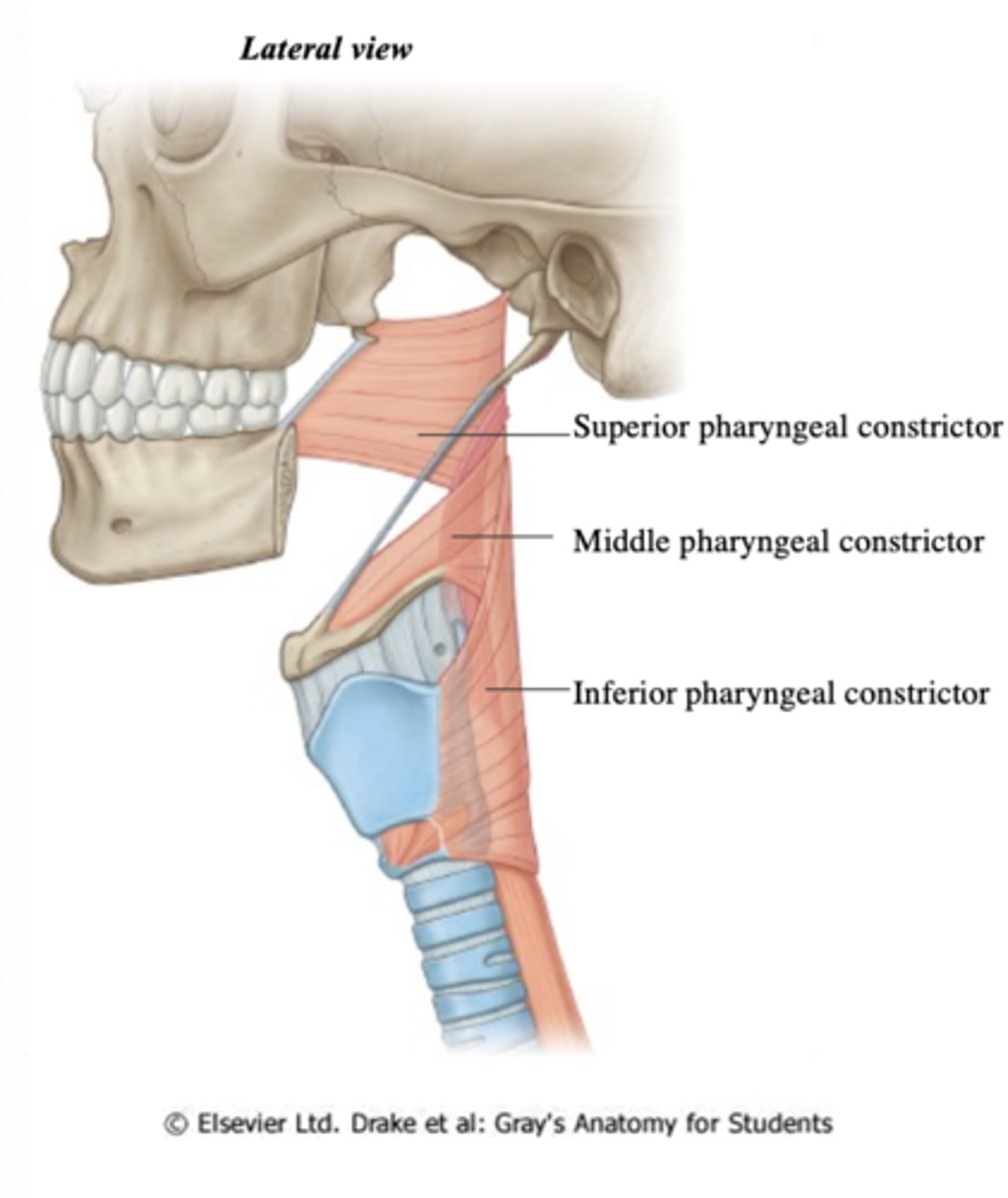
What muscle of the pharynx has attachments from the pharyngeal tubercle and pharyngeal raphe (posterior) TO THE pterygoid hamulus, pterygomandiular raphe, and mandible? (near posterior margin of mylohyoid line)
superior pharyngeal constrictor
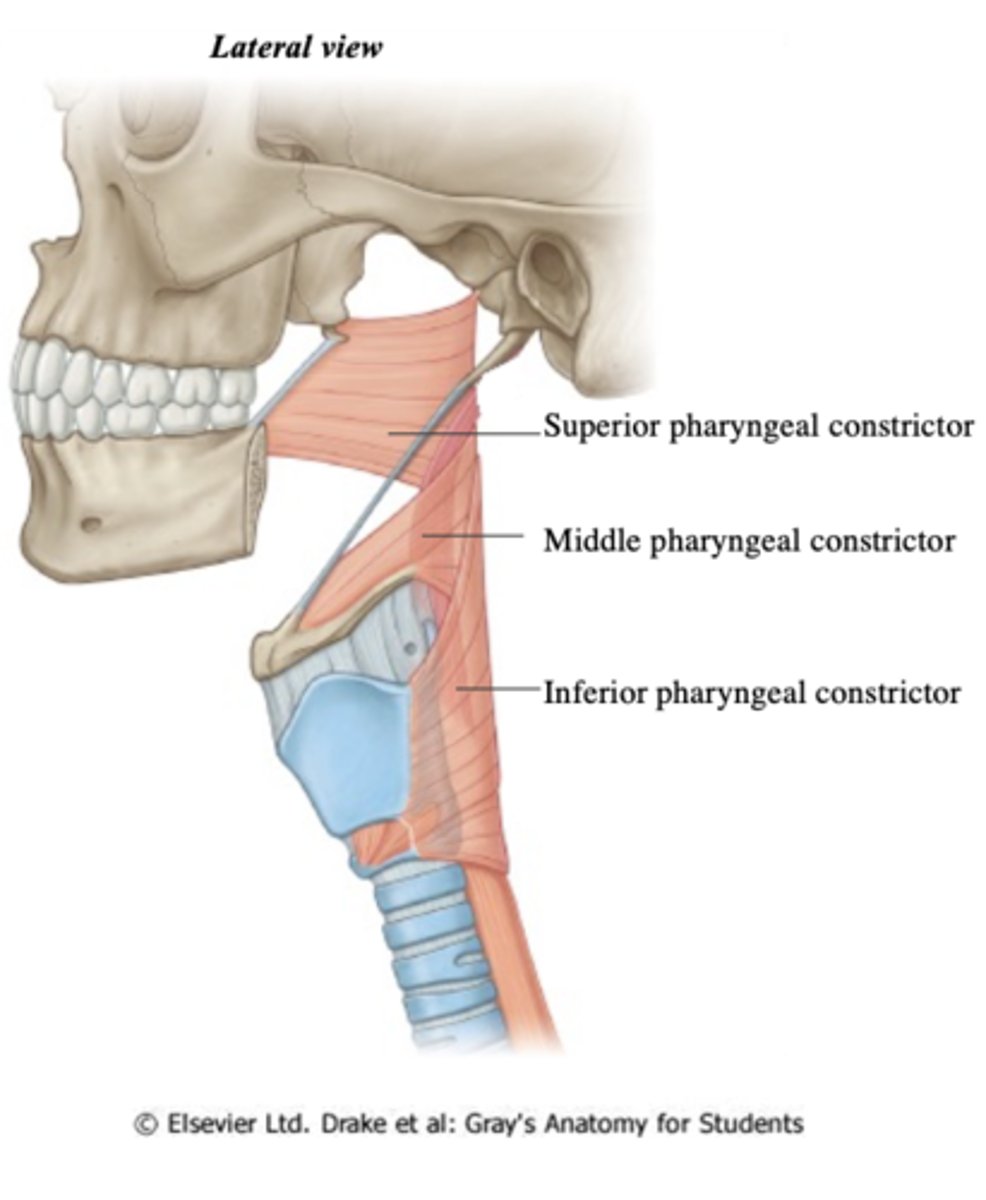
What muscle of the pharynx has attachments from the pharyngeal raphe (posterior) TO THE hyoid bone?
middle pharyngeal constrictor
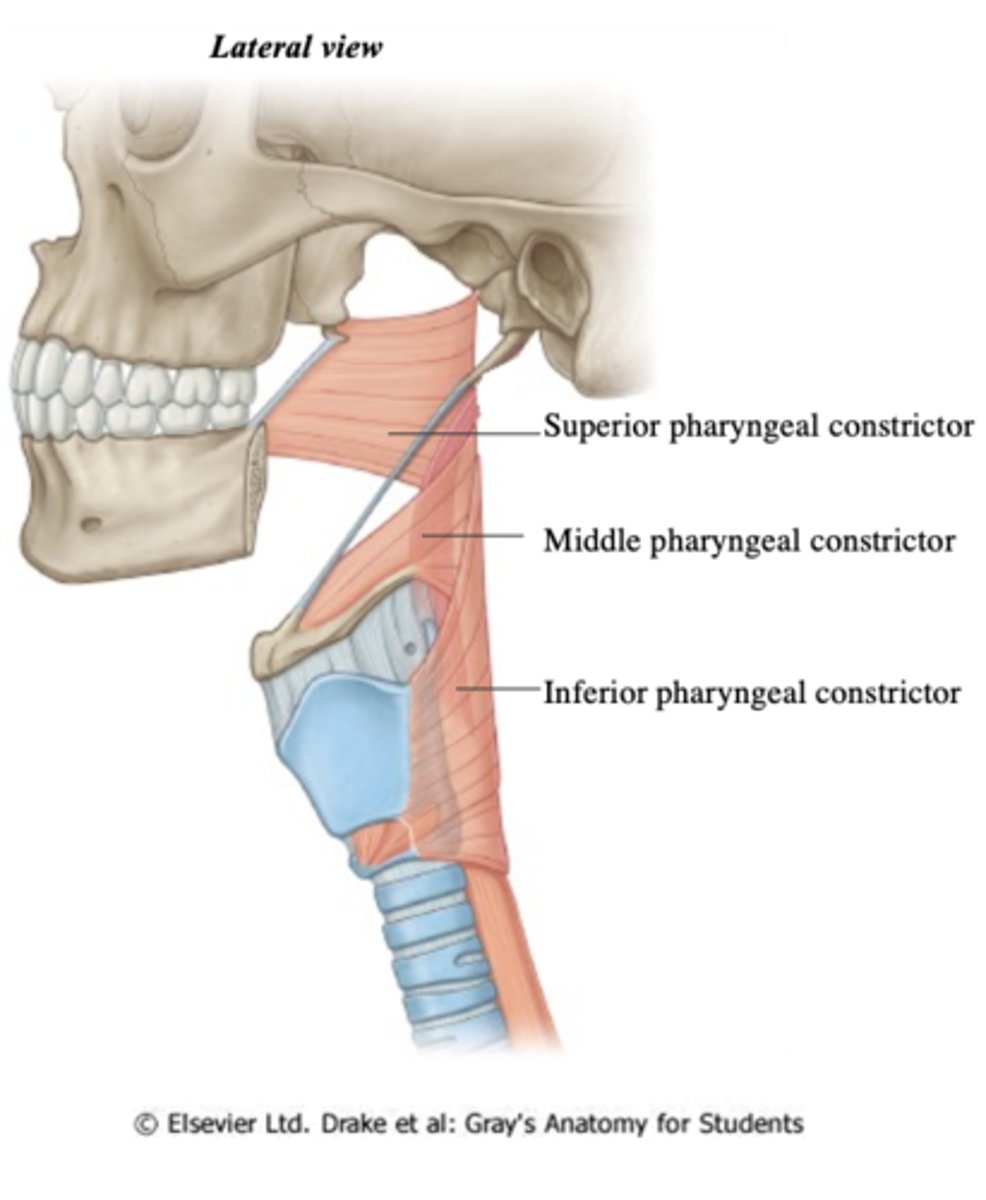
What muscle of the pharynx has attachments from the pharyngeal raphe (posterior) TO THE thyroid cartilage and cricoid cartilage?
inferior pharyngeal constrictor
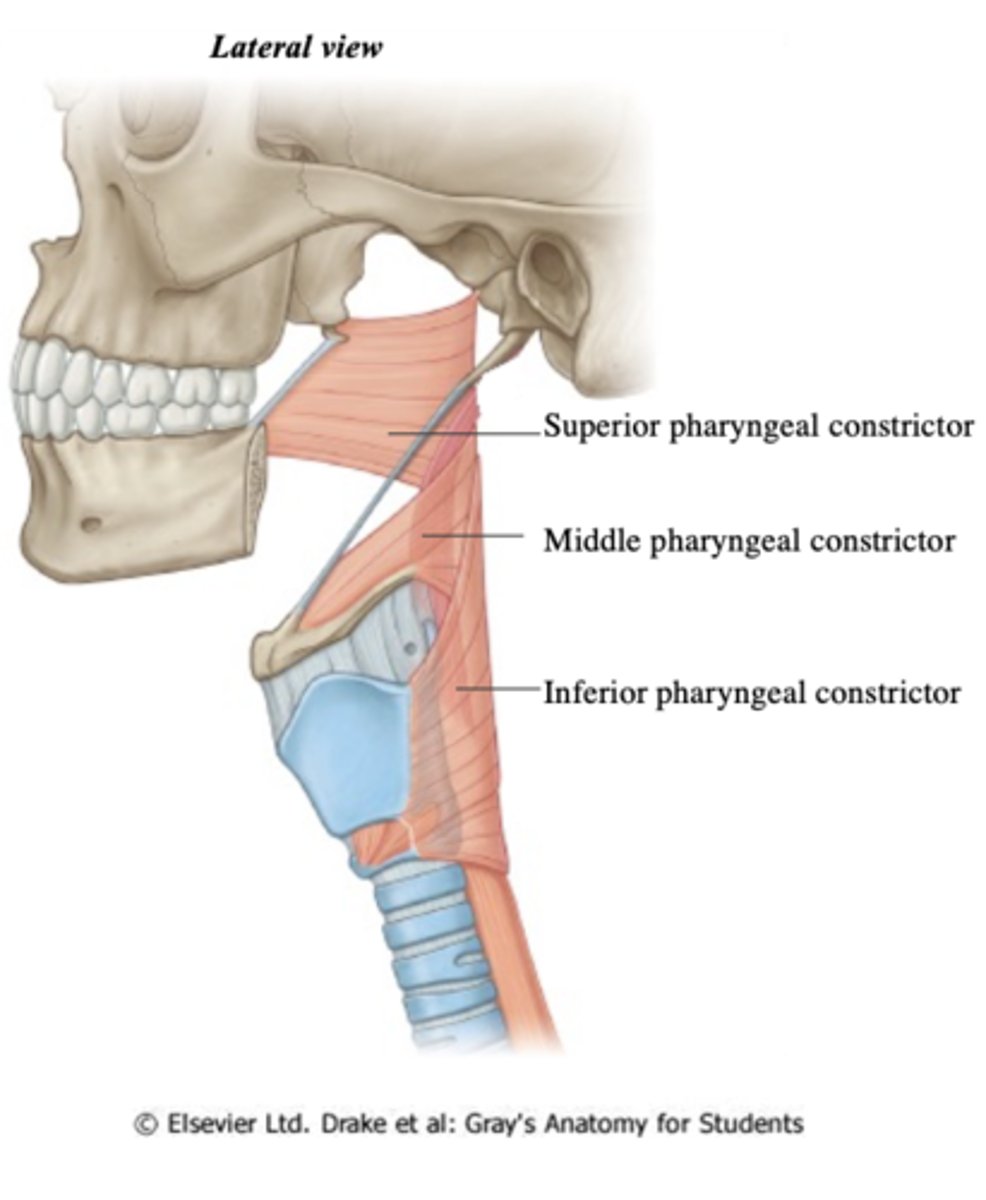
What innervates all three pharyngeal constrictor muscles via what stricture?
CN-X via pharyngeal plexus
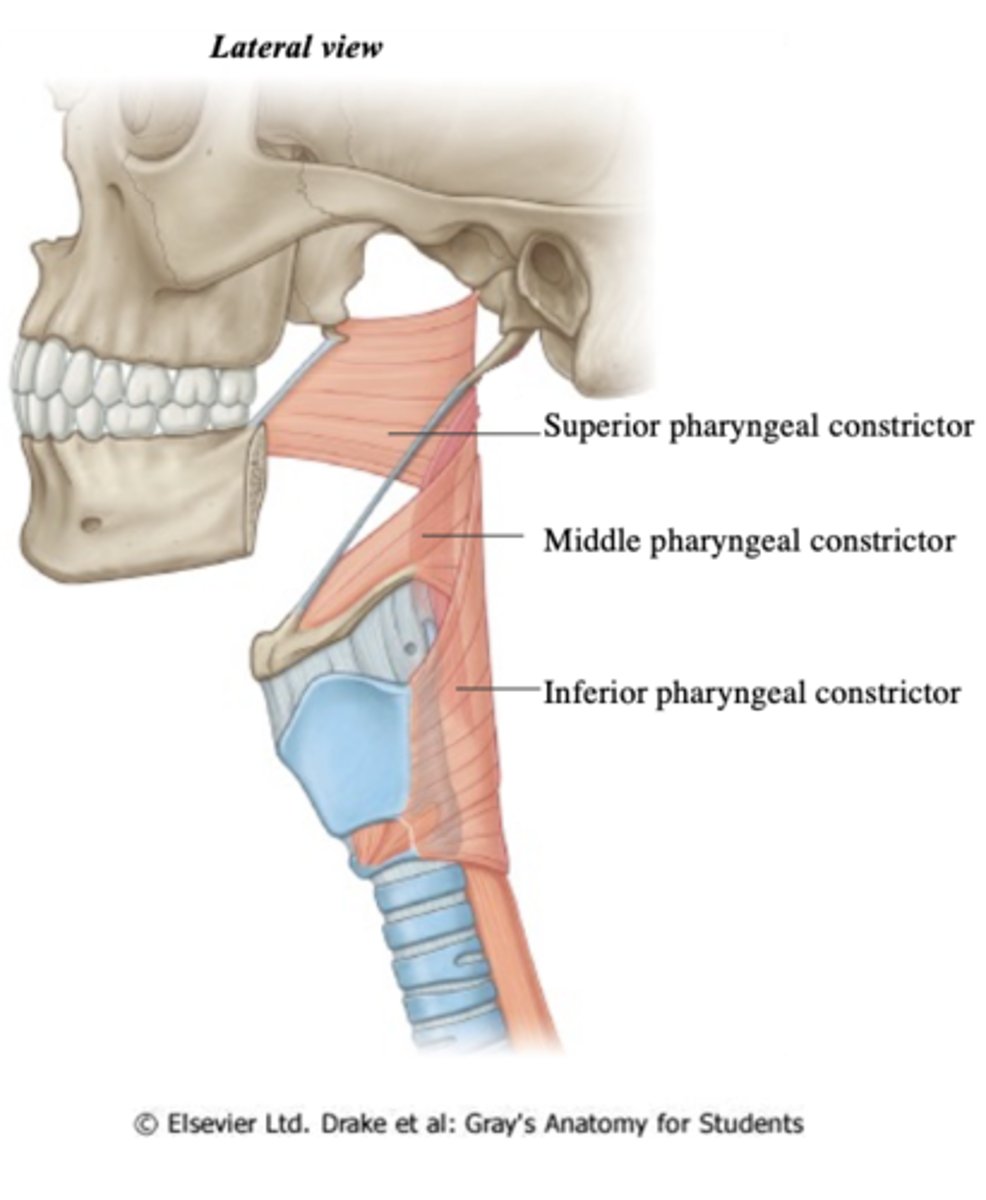
The pharyngeal constrictor muscles constrict the wall of the pharynx during _________________ and, in doing so, move the ______________ inferiorly
swallowing, bolus
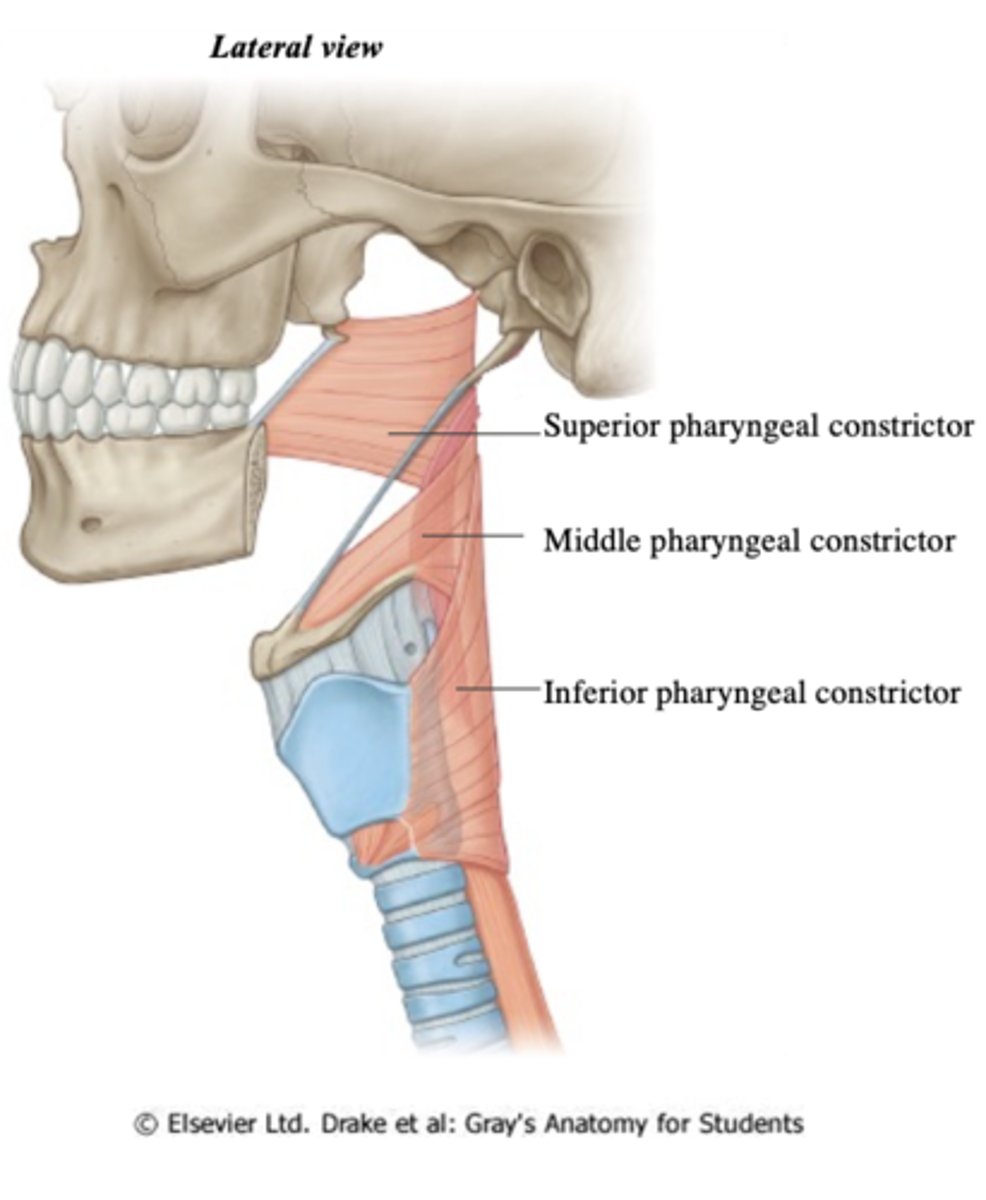
What are the bony attachments of the superior pharyngeal constrictors?
1) pharyngeal tubercle
2) pterygoid hamulus
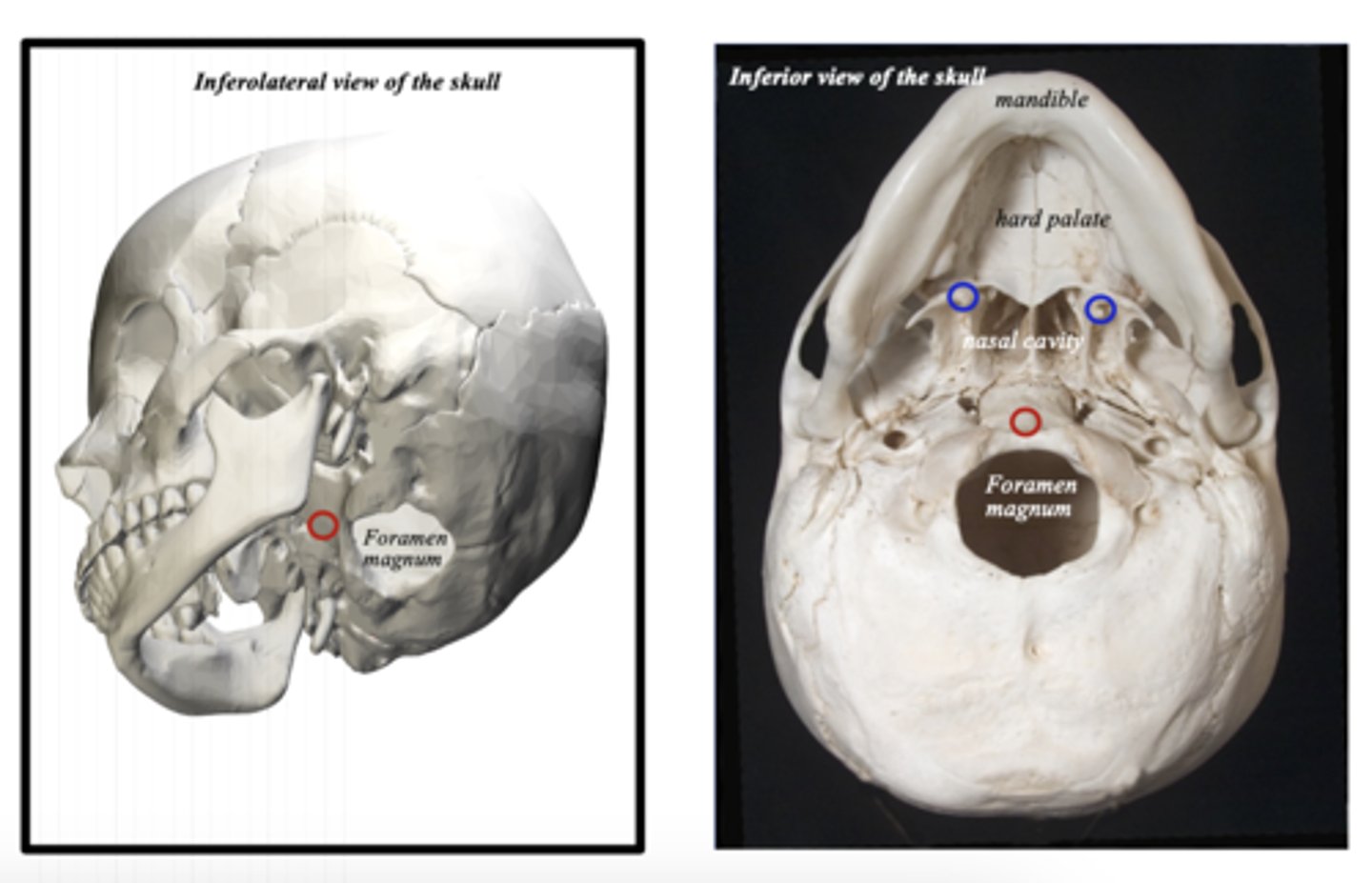
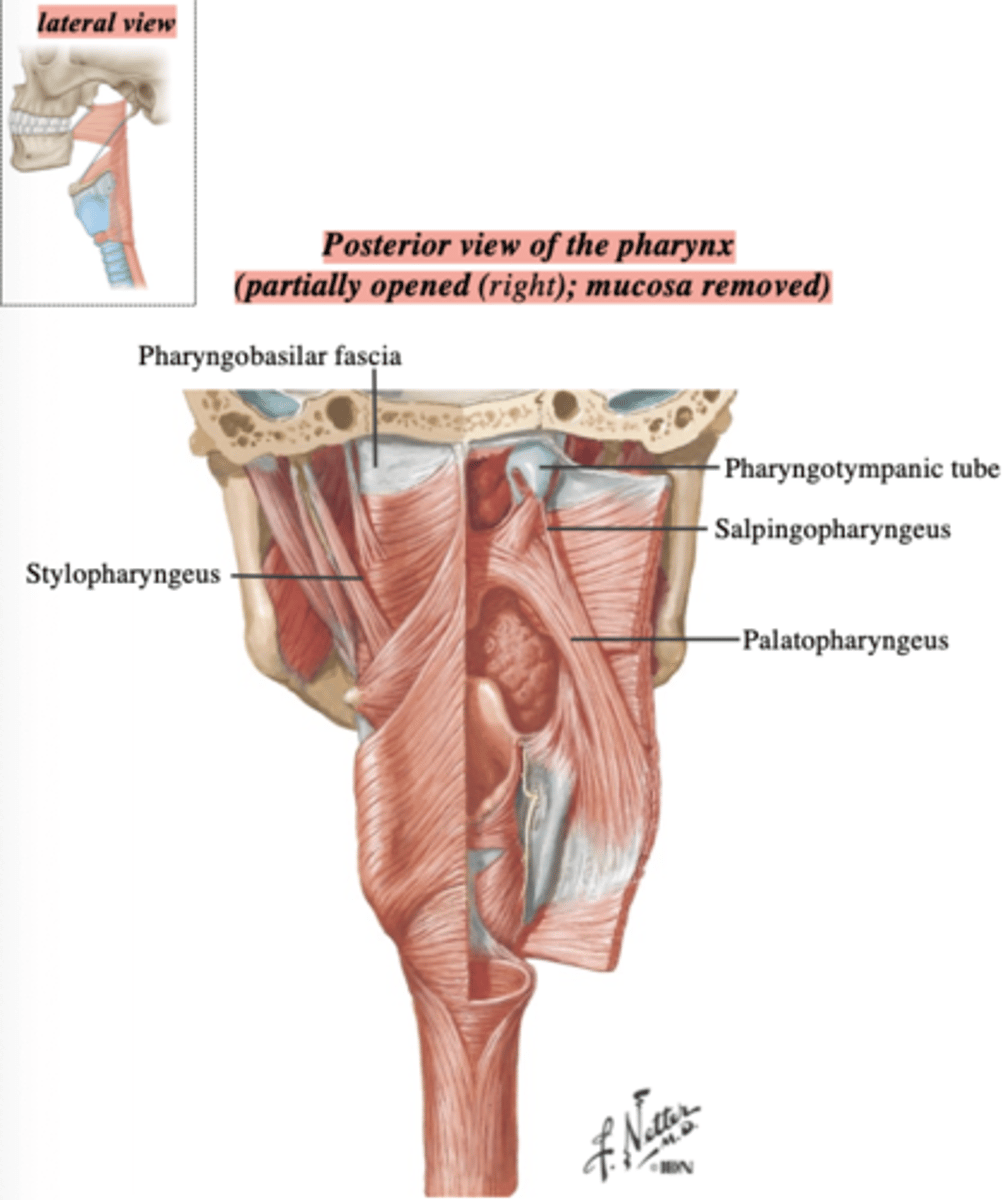
What are the three longitudinal pharyngeal muscles of the pharynx?
1) Palatopharyngeus
2) Salpingopharyngeus
3) Stylopharyngeaus
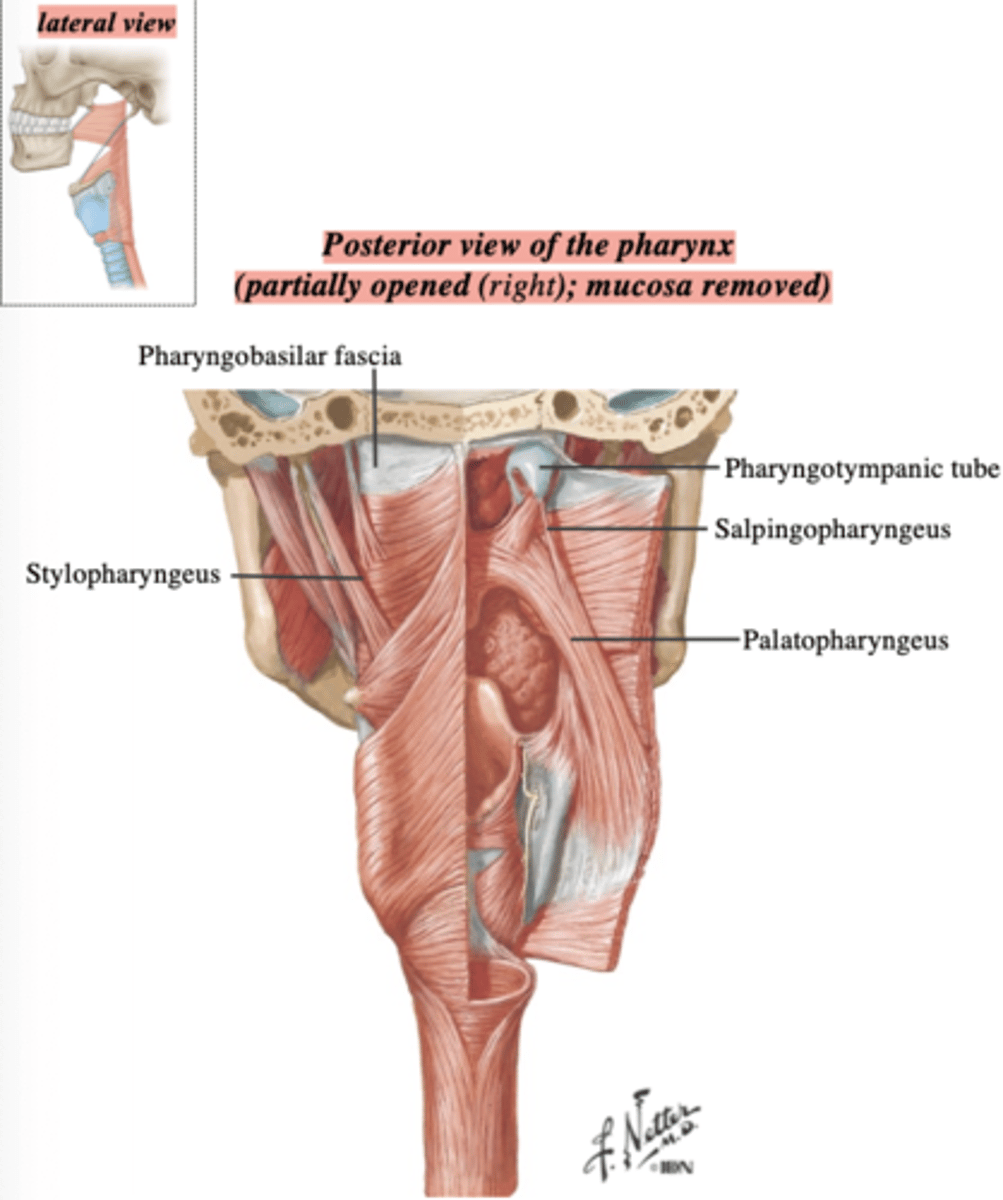
What muscle of the pharynx has attachments from the soft palate (palatine aponeurosis) - TO THE muscular wall of the pharynx and thyroid cartilage?
palatopharyngeus
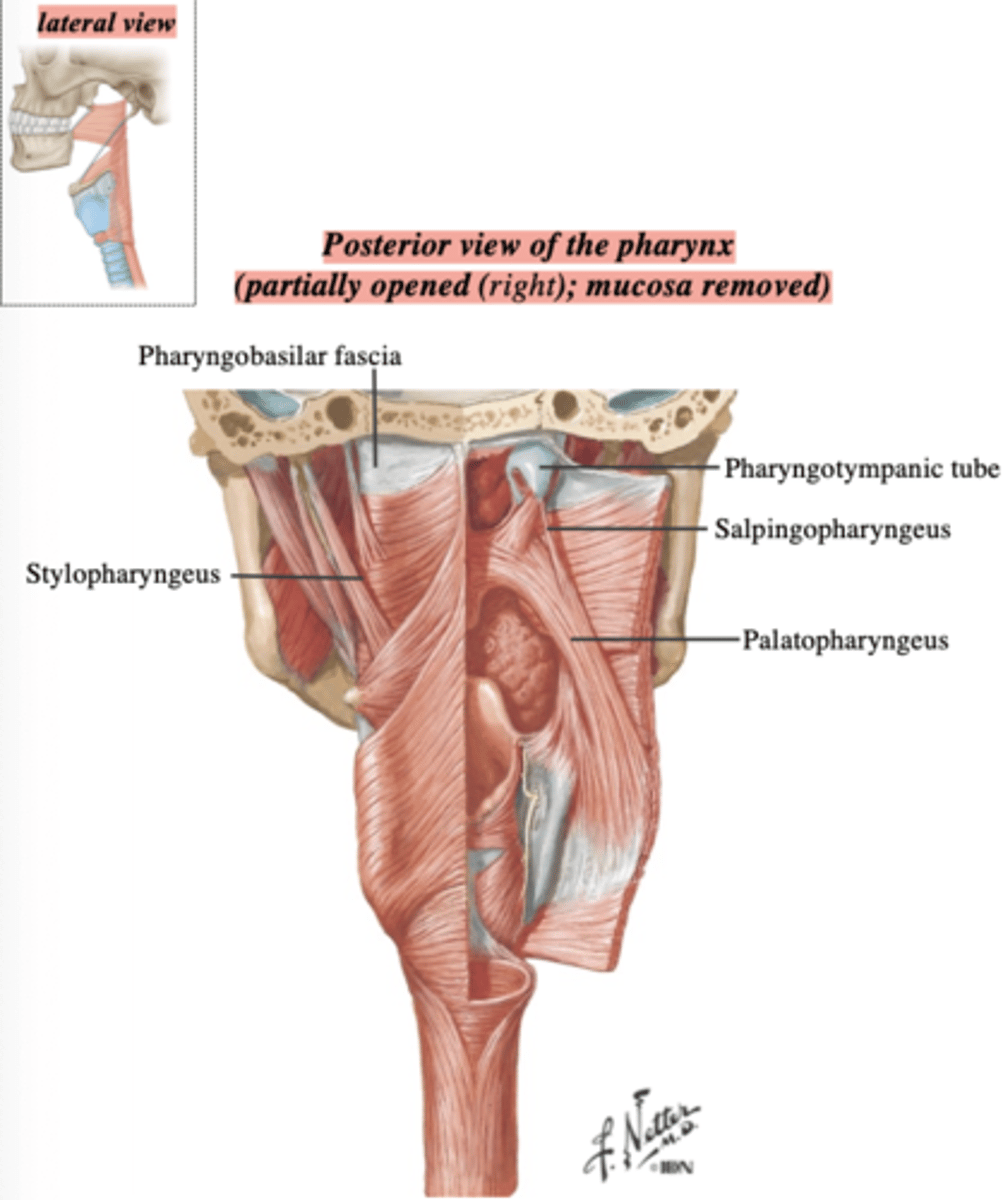
What muscle of the pharynx has attachments from the cartilaginous part of the pharyngotympanic tube TO THE muscular wall of the pharynx?
salpingopharyngeus
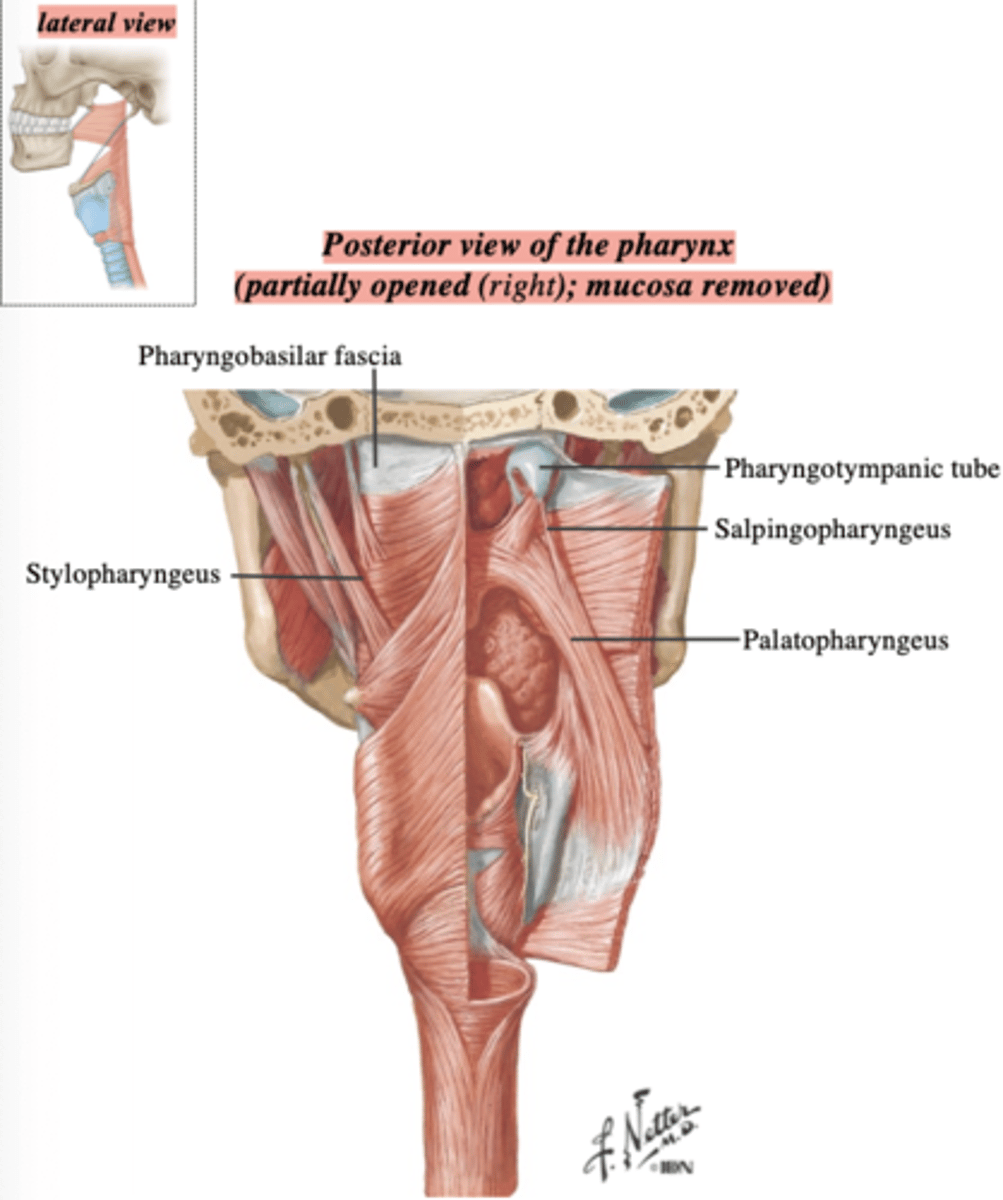
What muscle of the pharynx has attachments from the styloid process TO THE muscular wall of pharynx
stylopharyngeus
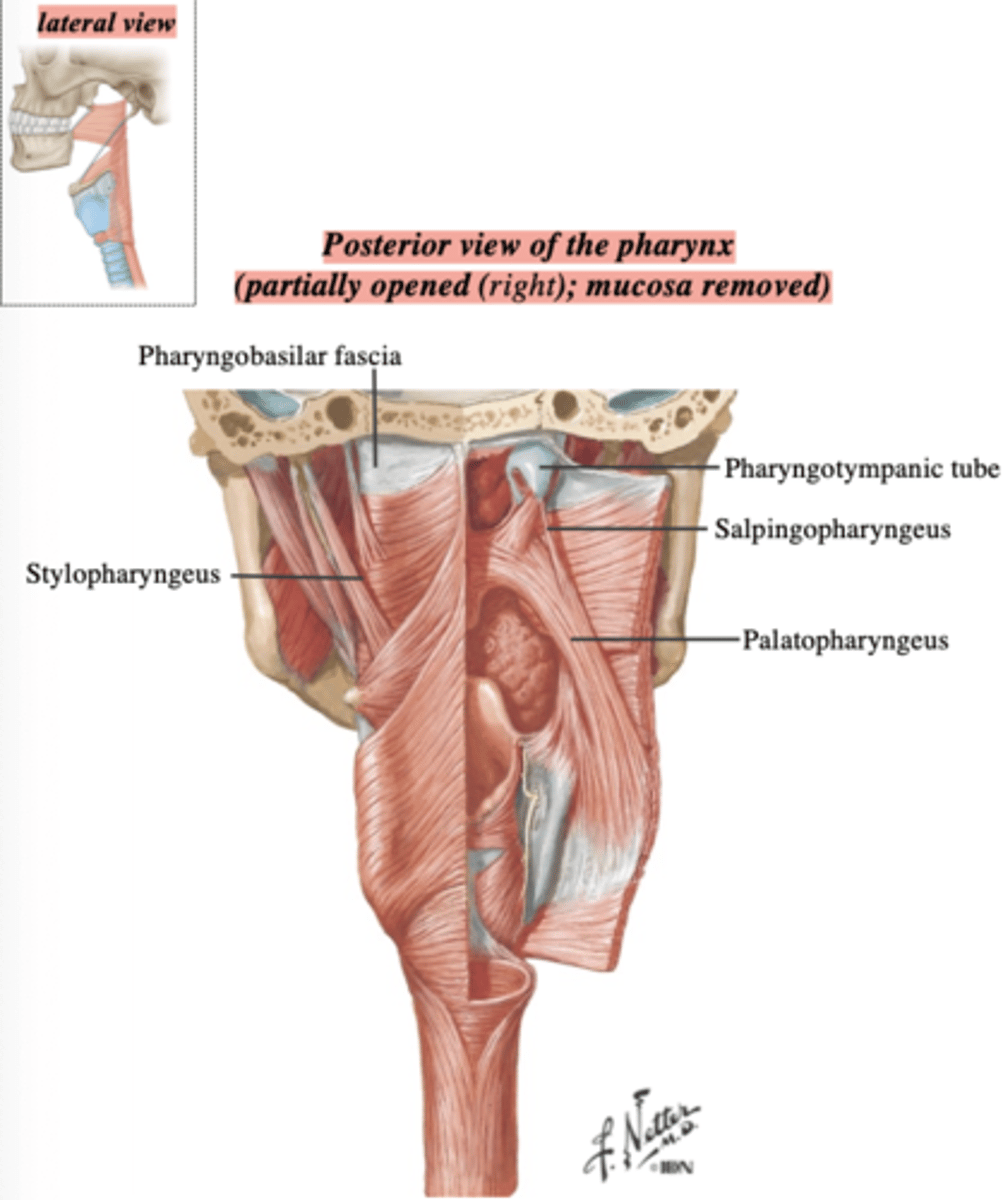
What is the innervation of the palatopharyngeus muscle via what structure?
CN-X via pharyngeal plexus
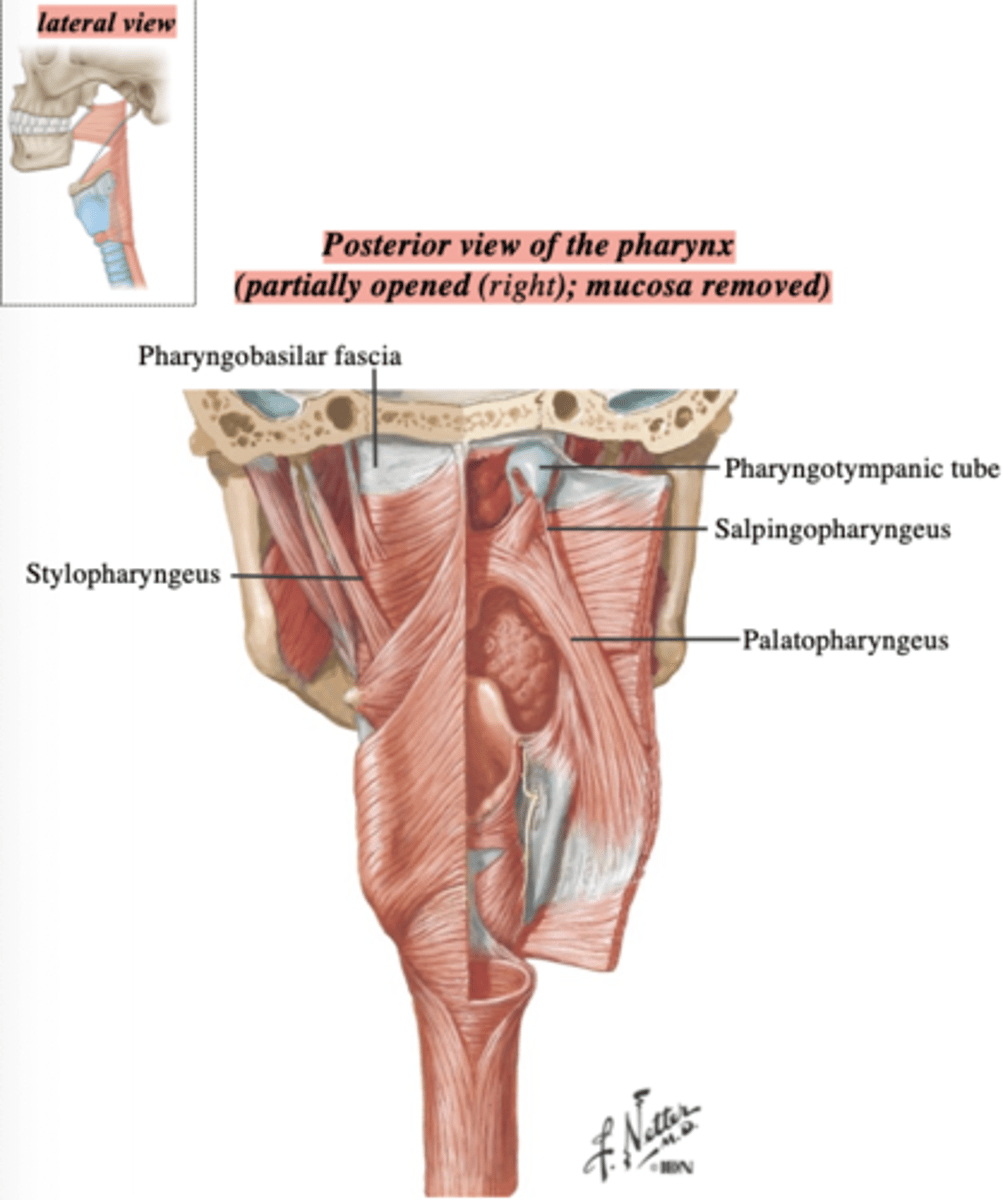
What is the innervation of the salpingopharyngeus muscle via what structure?
CN-X via pharyngeal plexus
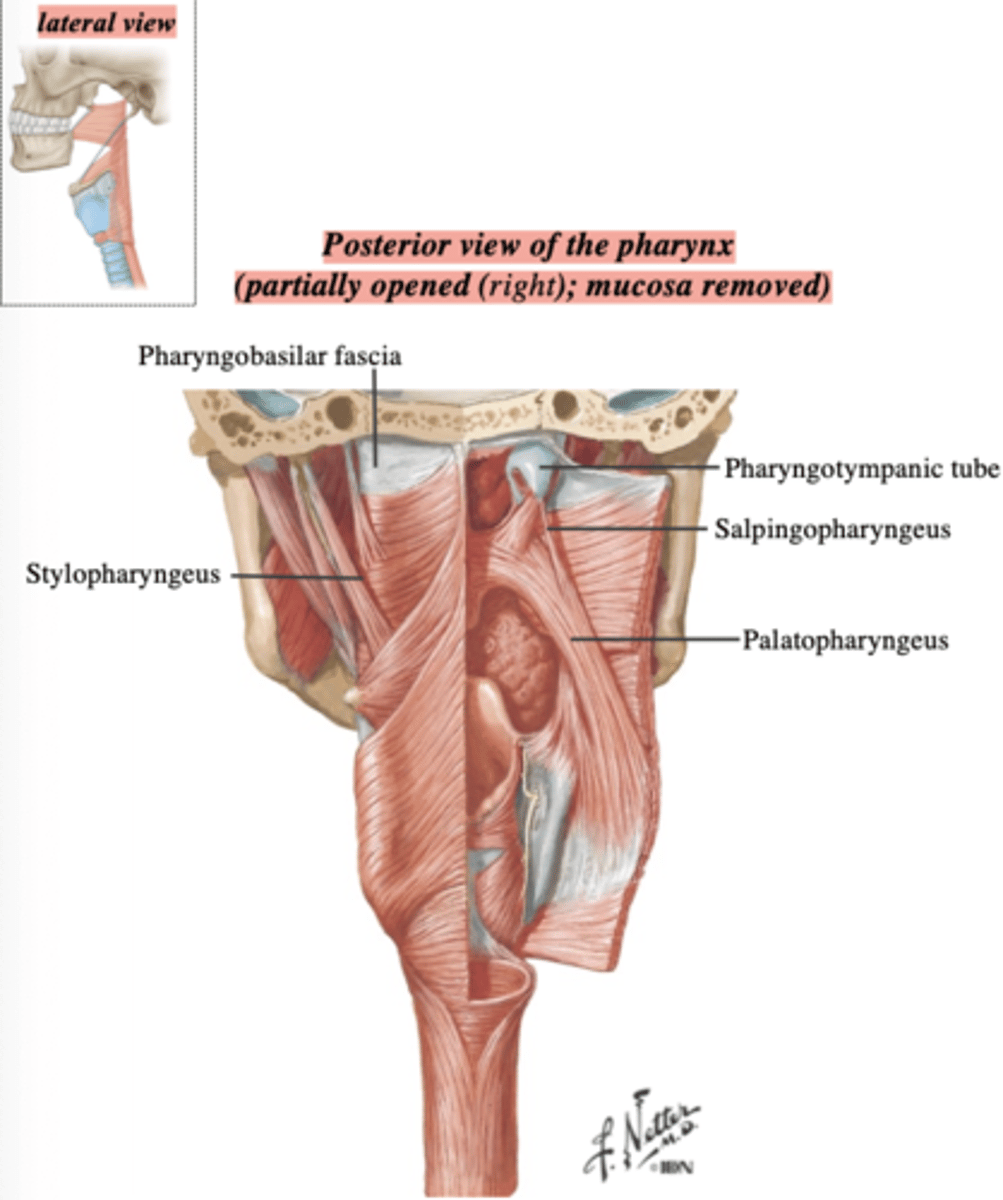
What is the innervation of the stylopharyngeus muscle?
CN-IX
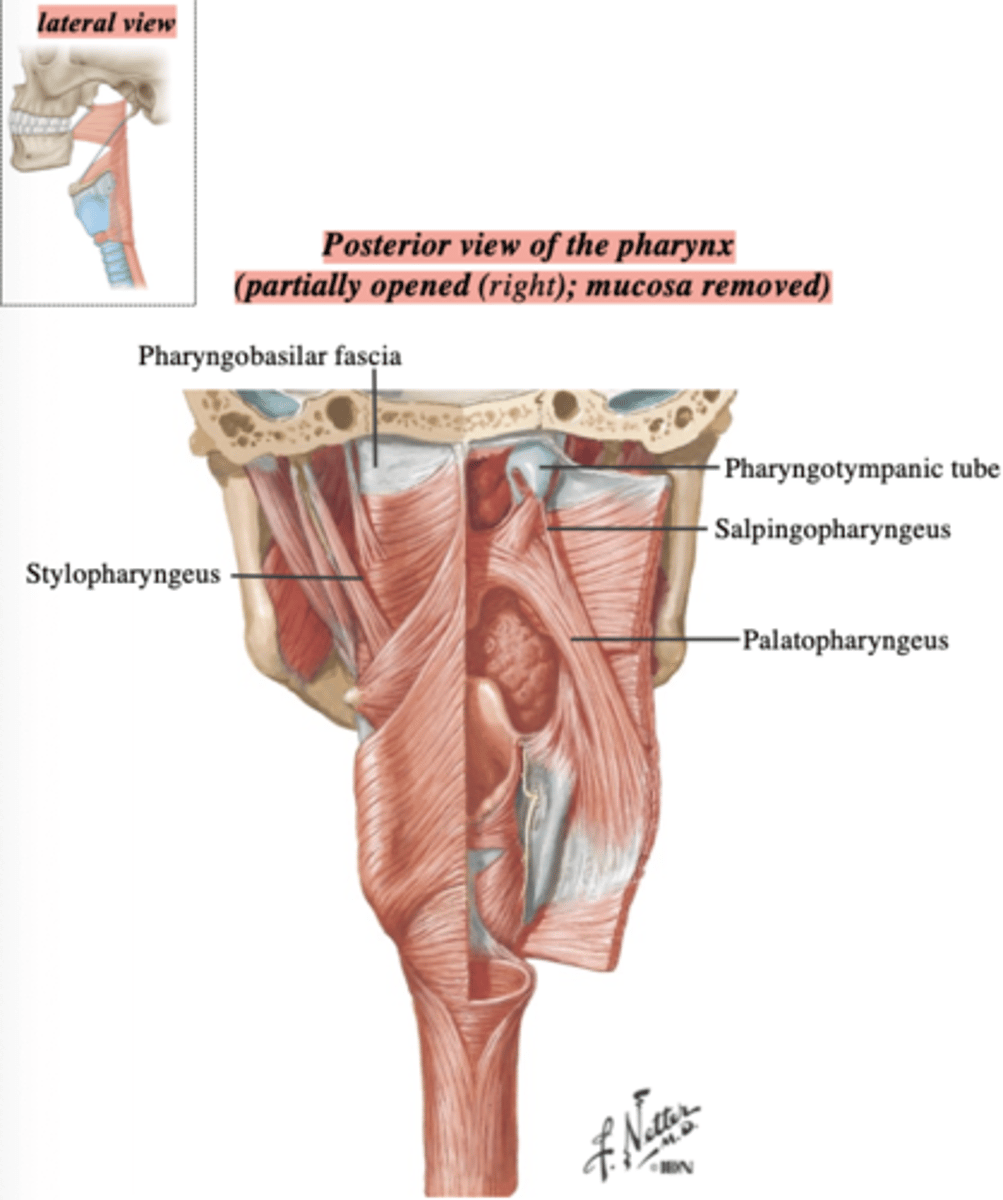
The function of all three longitudinal pharyngeal muscles is to _________________ and _______________ the pharynx during the action of _______________.
elevate and widen, swallowing
What structure passes between the superior and middle constrictor?
glossopharyngeal nerve (CN IX)
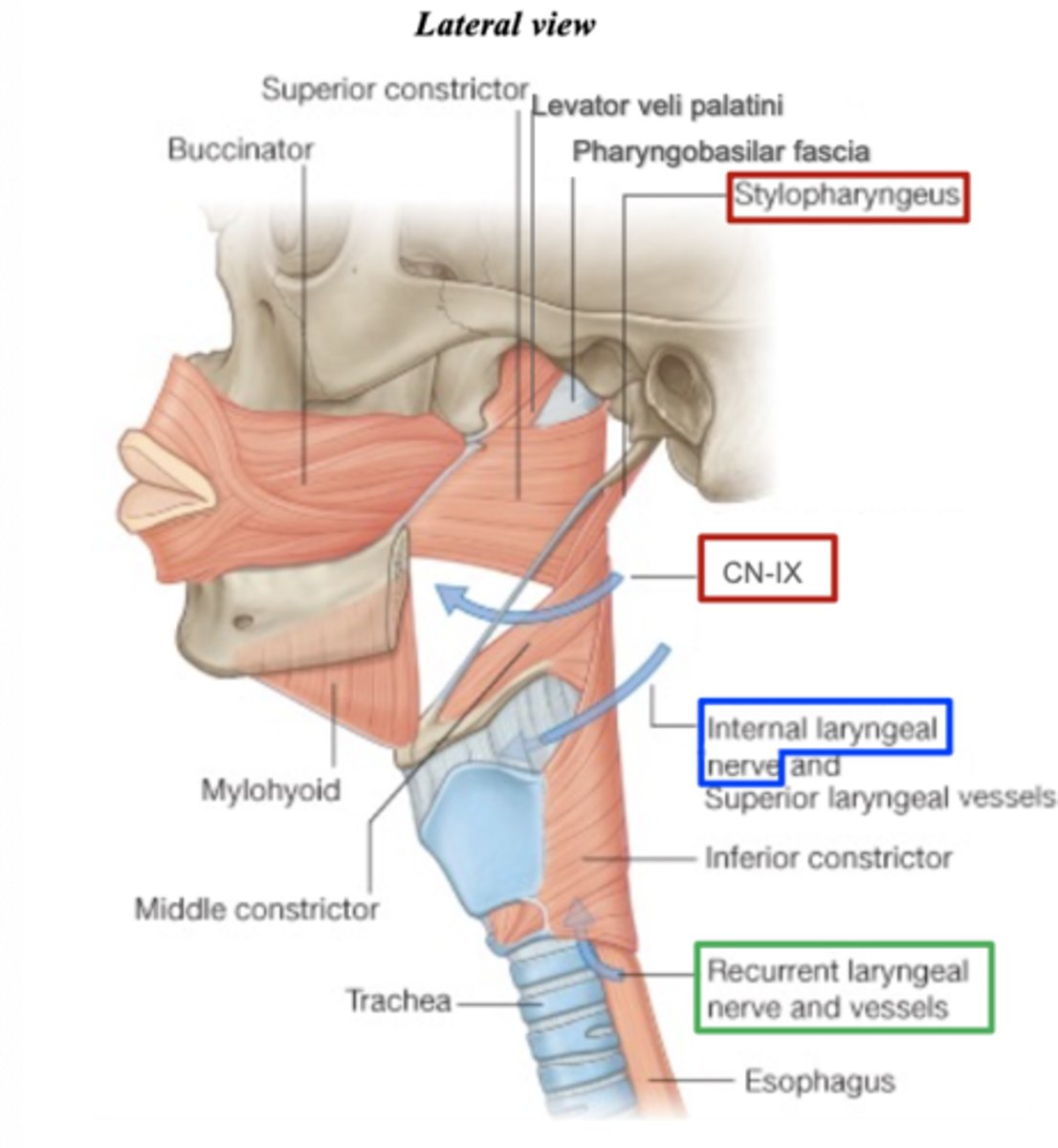
What structure passes between the middle and inferior constrictor?
internal laryngeal nerve (internal branch of superior laryngeal nerve of, branch of CN-X)
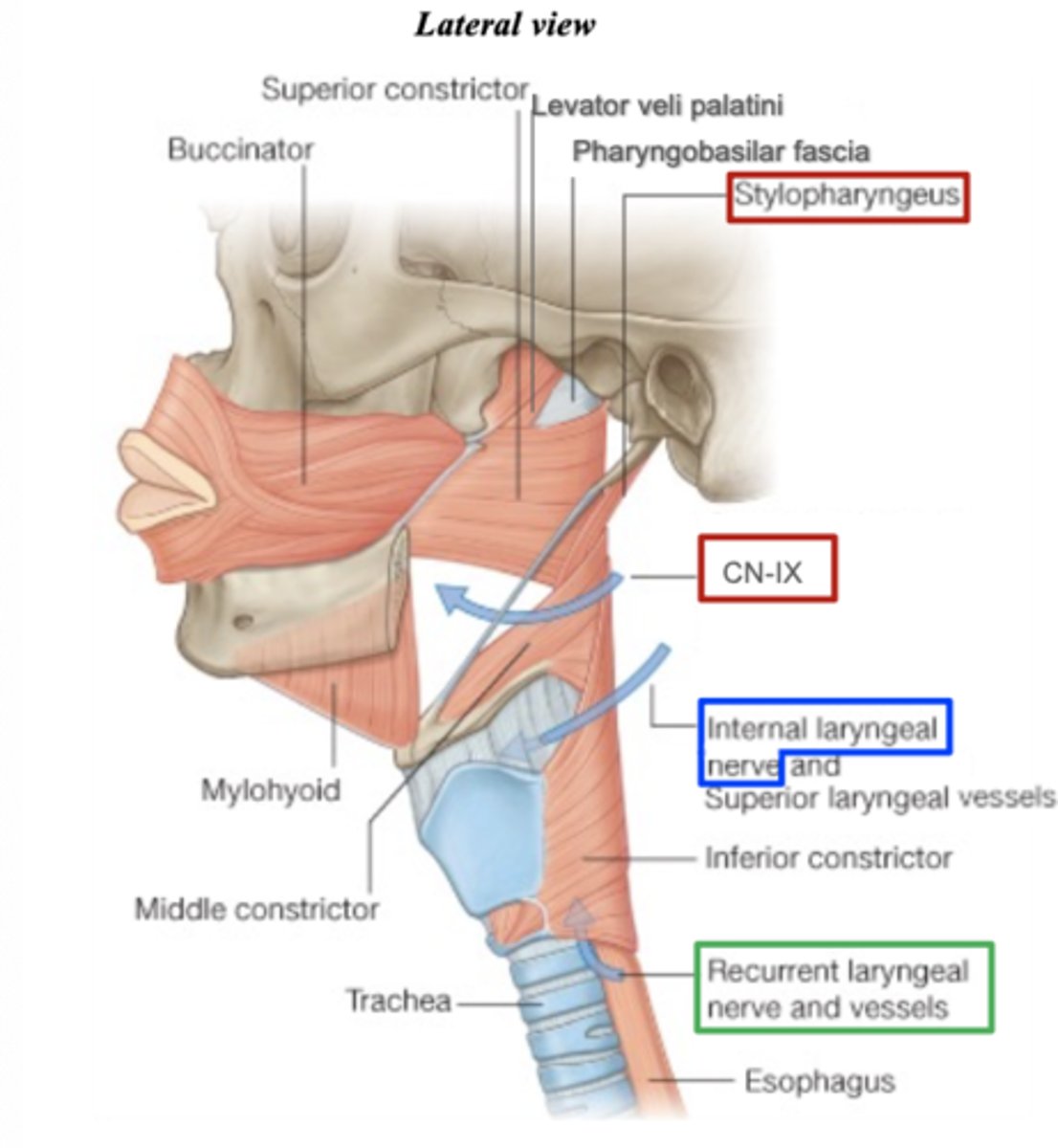
What structure passes inferior to the inferior constrictor?
recurrent laryngeal nerve (branch of CN-X)
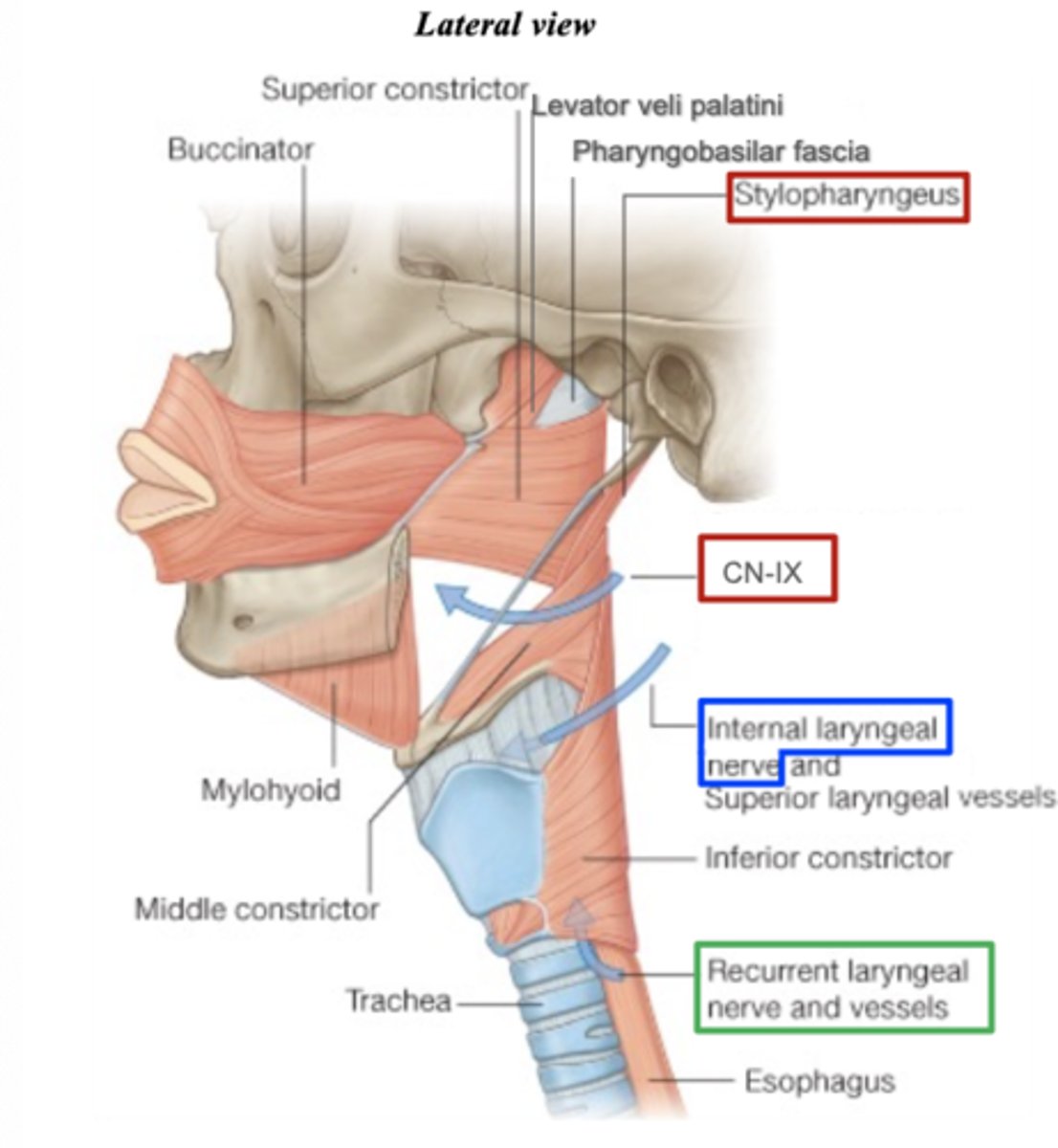
What tissue "seals off" spaces so air, liquid and food do not "leak" from the pharynx?
non-contractile pharyngeal tissue
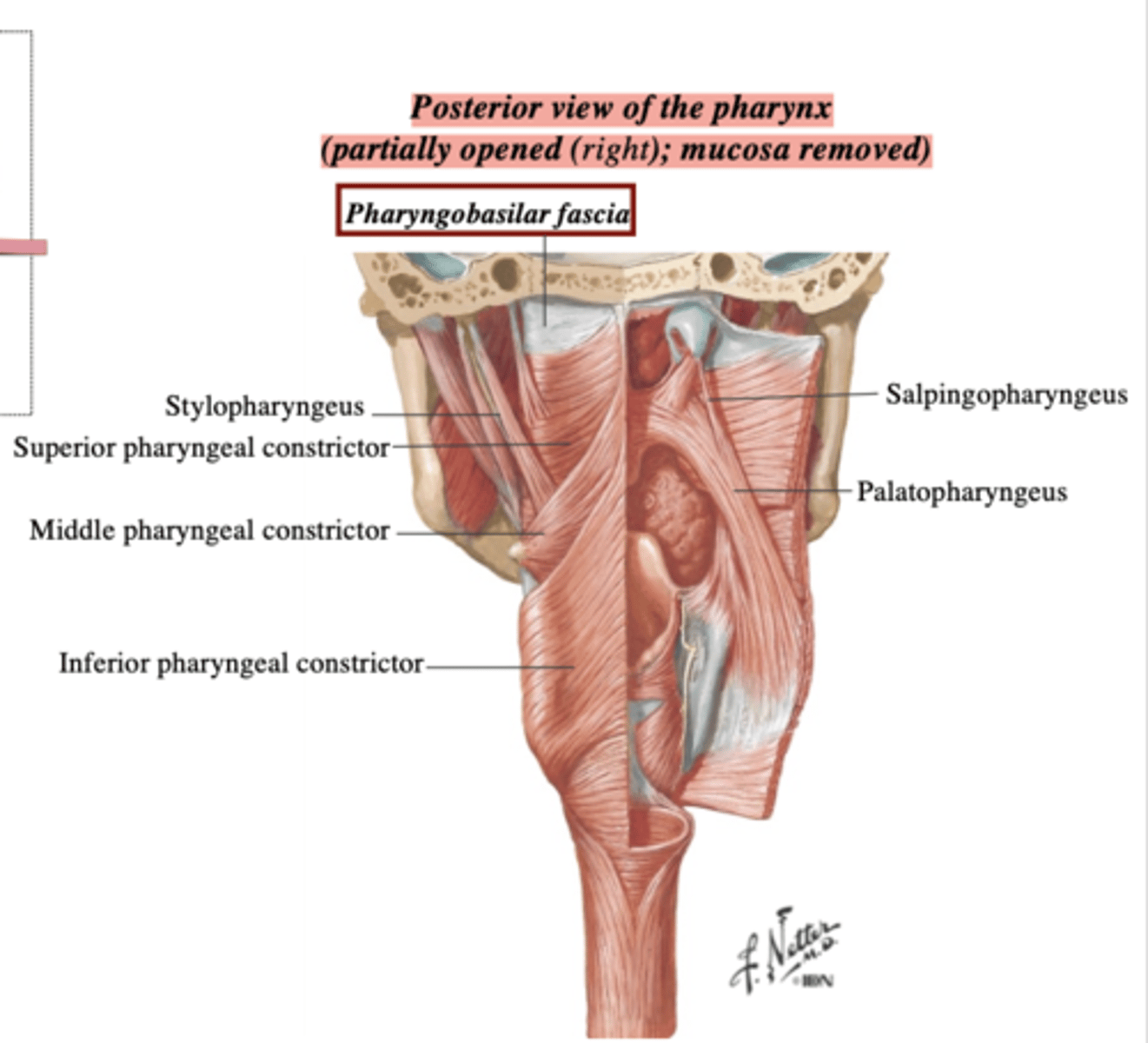
What fascia does the non-contractile pharyngeal tissue include?
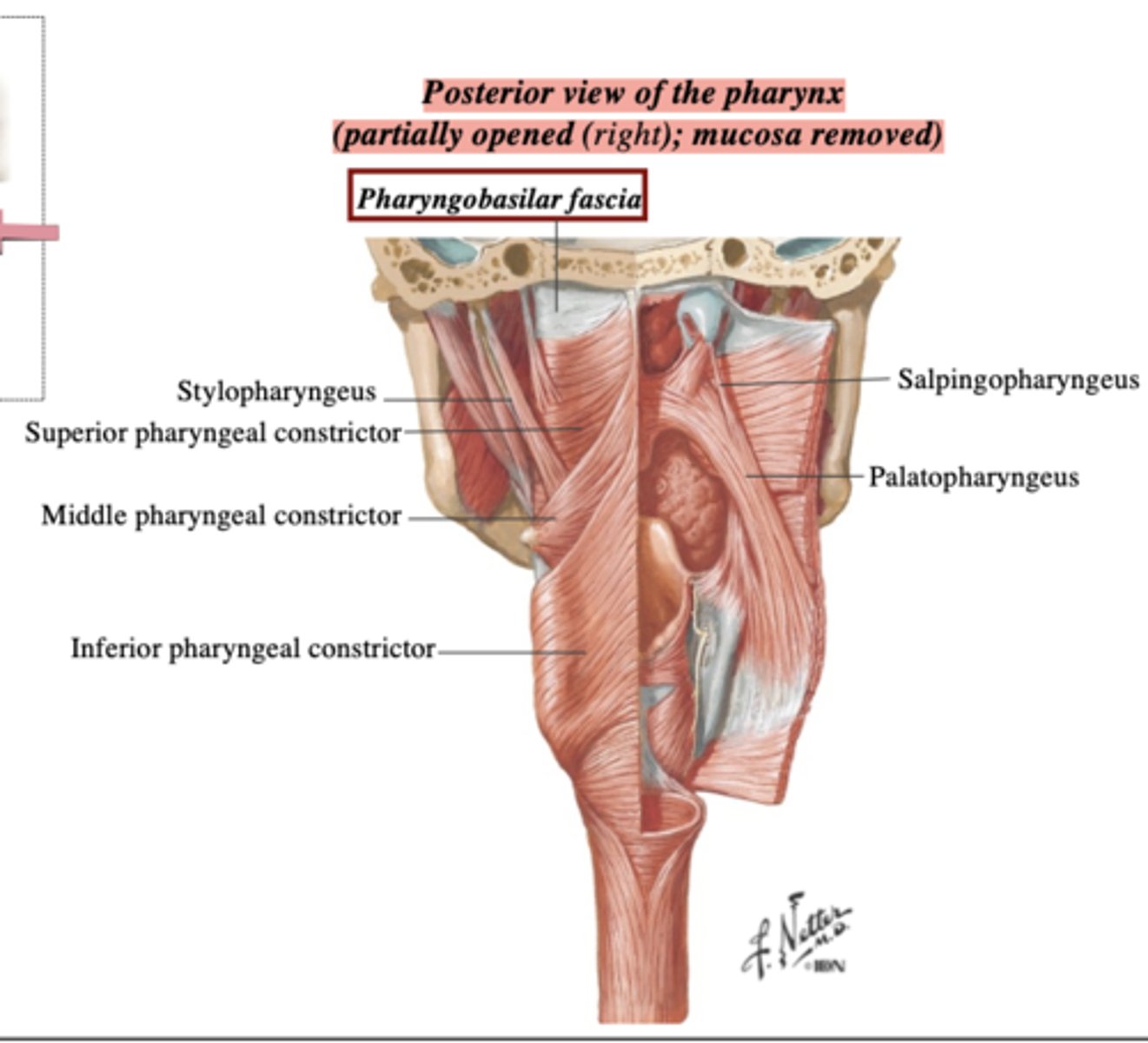
Pharyngobasilar fascia
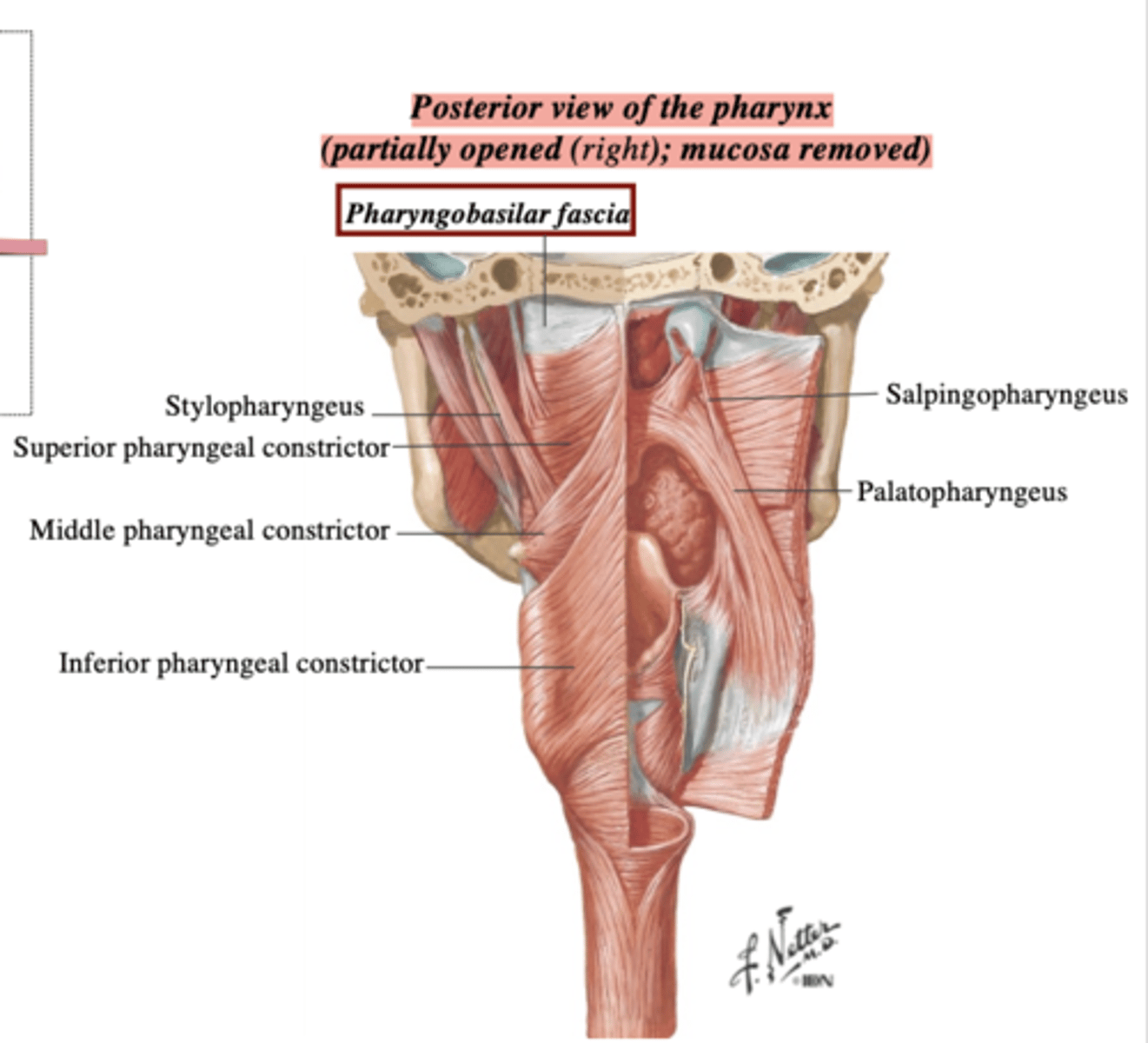
What is the internal fascial lining of the pharynx?
pharyngobasilar fascia
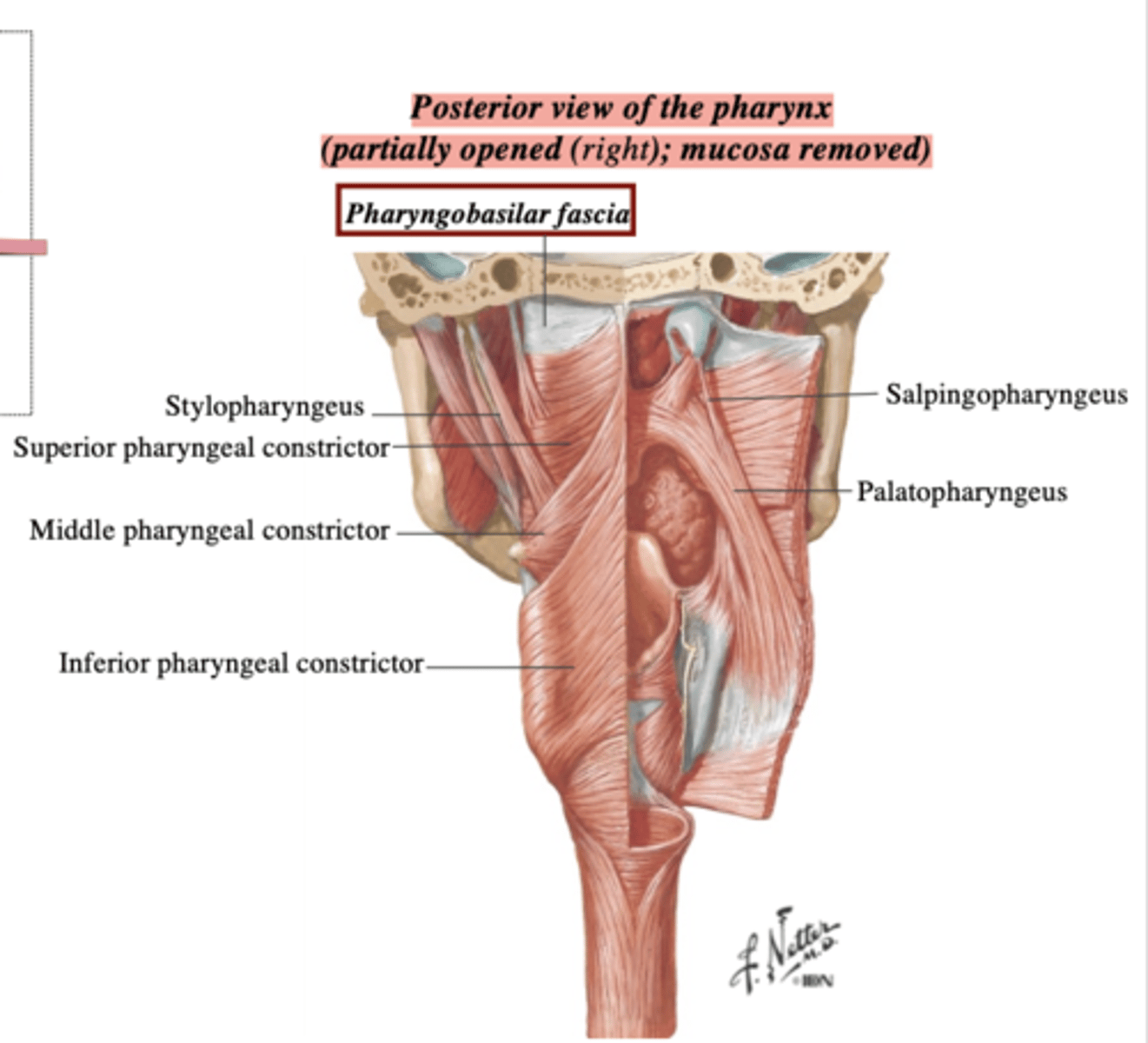
The pharyngobasilar fascia layer extends superior to the _______________ _______________, where it is thickened and most obvious.
superior constrictor
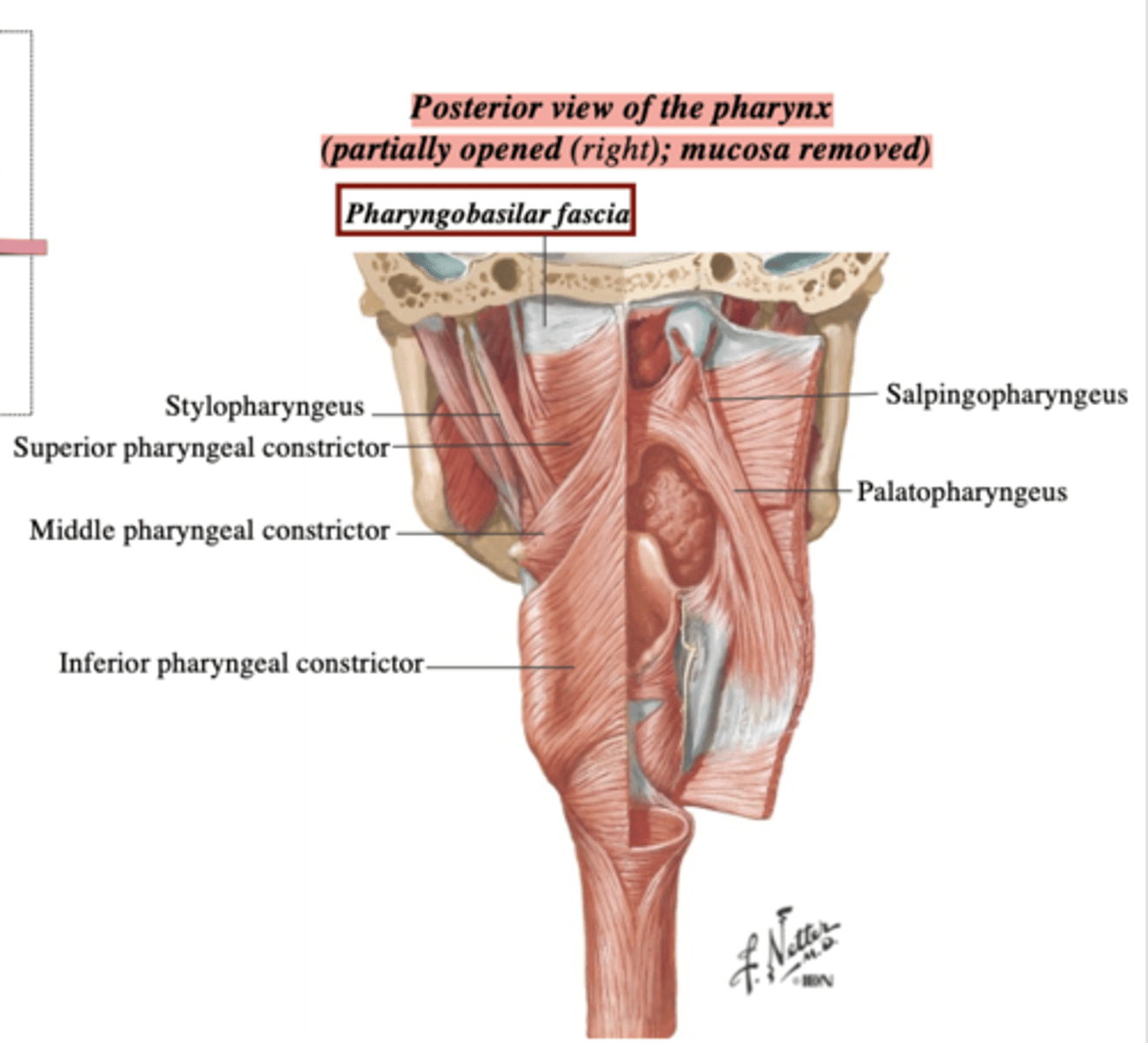
What is the internal fascial lining of the pharyngobasilar fascia covered by?
mucosa
What is another name for swallowing?
deglutition
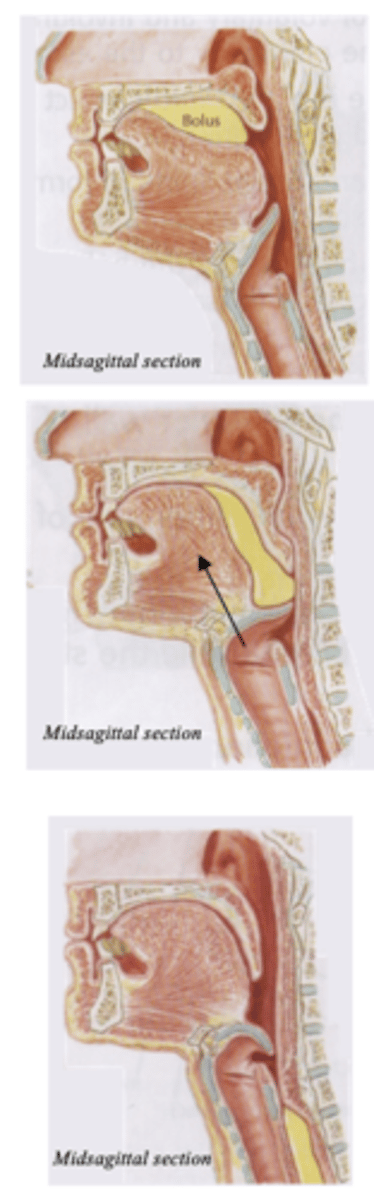
During the oral phase of deglutition, the tongue compresses the bolus successively against the _____________ and ________________ ______________ to expel it from the oral cavity.
hard and soft palate
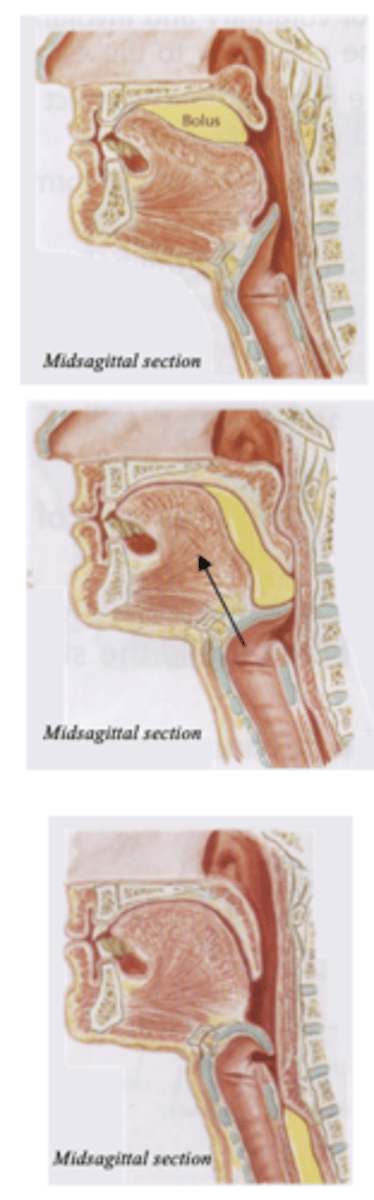
During the pharyngeal phase of deglutition, the bolus enters the oropharynx and the soft palate ______________ and _________________, thereby blocking communication between the nasal and oral cavities.
tenses and elevates
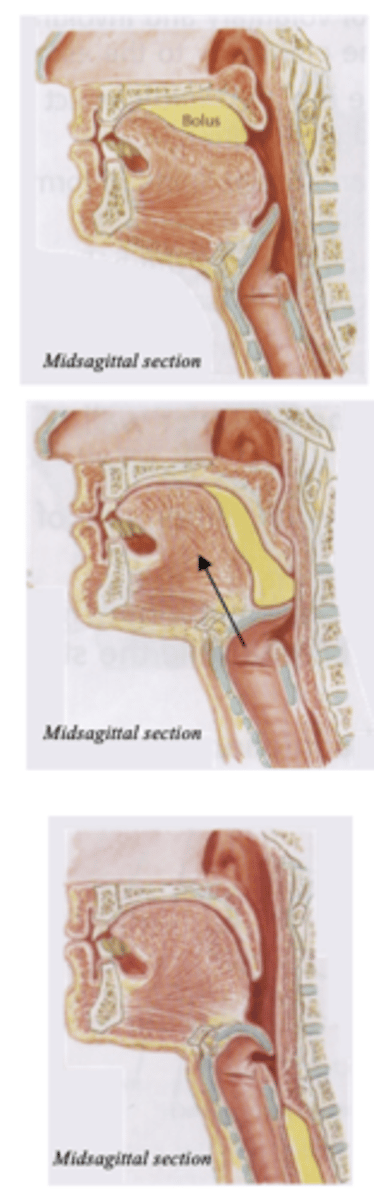
During the pharyngeal phase of deglutition, the pharynx is elevated via what 3 muscles?
1) stylopharyngeus
2) palatopharyngeus
3) salpingopharyngeus
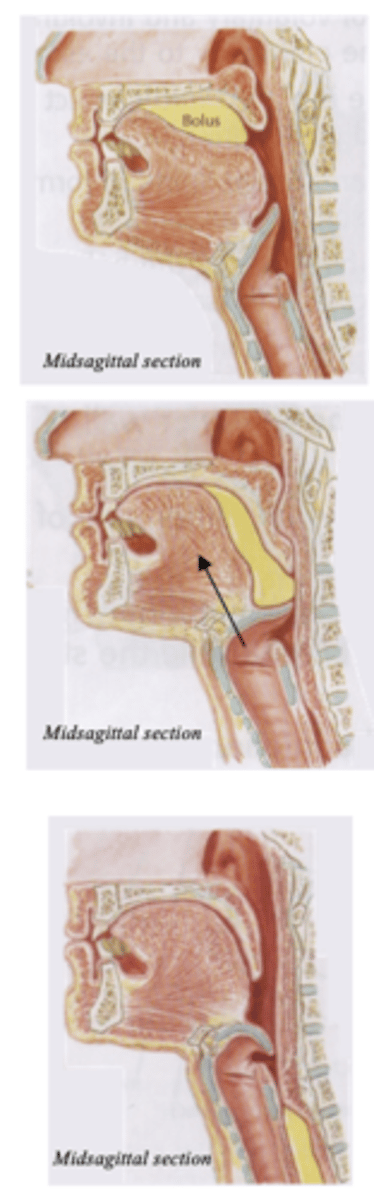
During the pharyngeal phase of deglutition, the pharynx elevates bringing the laryngopharynx toward what?
the descending bolus
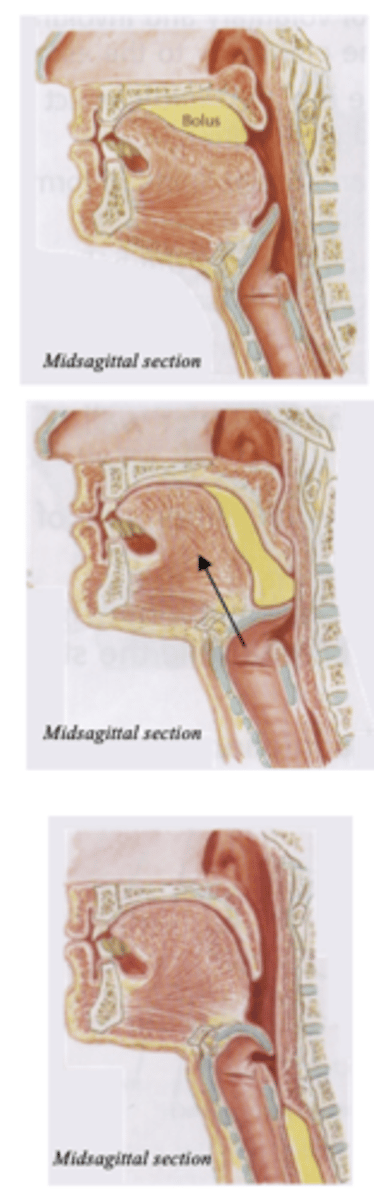
During the pharyngeal phase of deglutition, sequential contraction of the _______________ _________________ propels the bolus inferiorly to esophagus.
pharyngeal constrictors
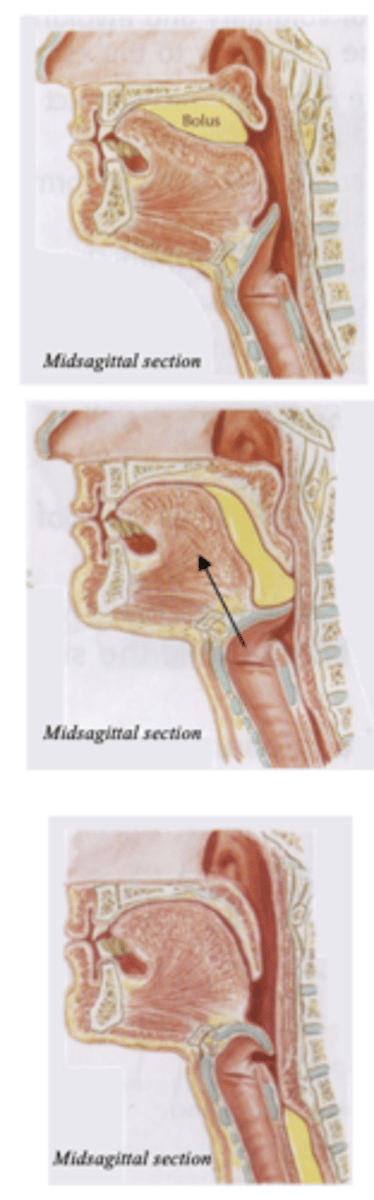
T/F During the pharyngeal phase of deglutition, the airway must also be protected.
True
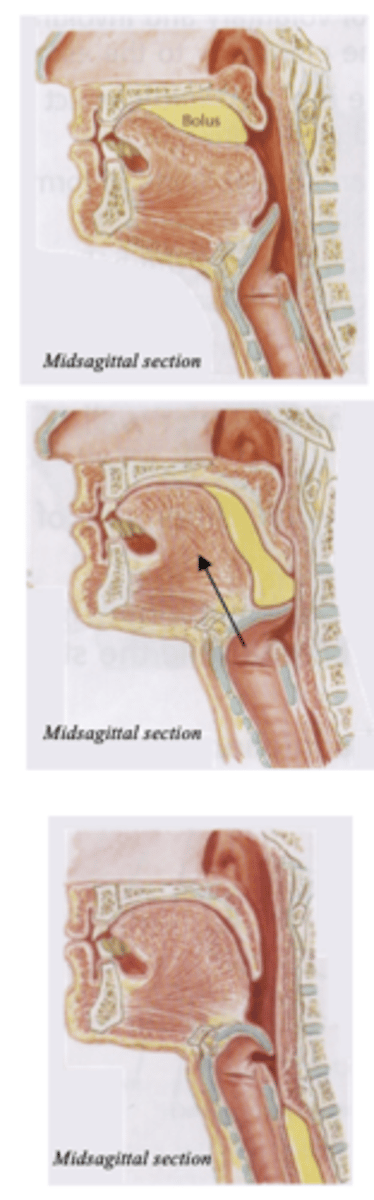
During the esophageal phase of deglutition, a sequential wave of contraction propels the bolus through the esophagus to where?
to the stomach
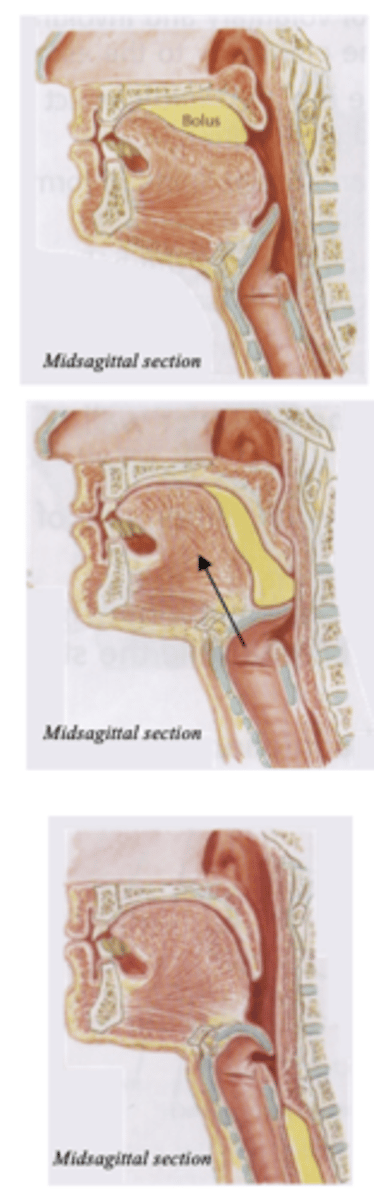
Put the following in order for the process of deglutition:
1) Sequential wave of contraction propels the bolus through to esophagus à stomach
2) sequential contraction of the pharyngeal constrictors propel the bolus inferiorly to esophagus
3) Bolus enters the oropharynx and the soft palate tenses and elevates, thereby blocking communication between the nasal and oral cavities
4) Pharynx elevates (via stylopharyngeus, palatopharyngeus, and salpingopharyngeus muscles), which brings the laryngopharynx toward the descending bolus
5) The tongue compresses the bolus successively against the hard and soft palate to expel it from the oral cavity
5 > 3 > 4 > 2 > 1
- Oral phase
1) Tongue compresses the bolus successively against the hard and soft palate to expel it from the oral cavity
- Pharyngeal phase
2) Bolus enters the oropharynx and the soft palate tenses and elevates (via tensor veli palatini and levator veli palatini), thereby blocking communication between the nasal and oral cavities
3) Pharynx elevates (via stylopharyngeus, palatopharyngeus, and salpingopharyngeus muscles), which brings the laryngopharynx toward the descending bolus
4) Sequential contraction of the pharyngeal constrictors propel the bolus inferiorly to esophagus
- Esophageal phase
5) Sequential wave of contraction propels the bolus through to esophagus à stomach
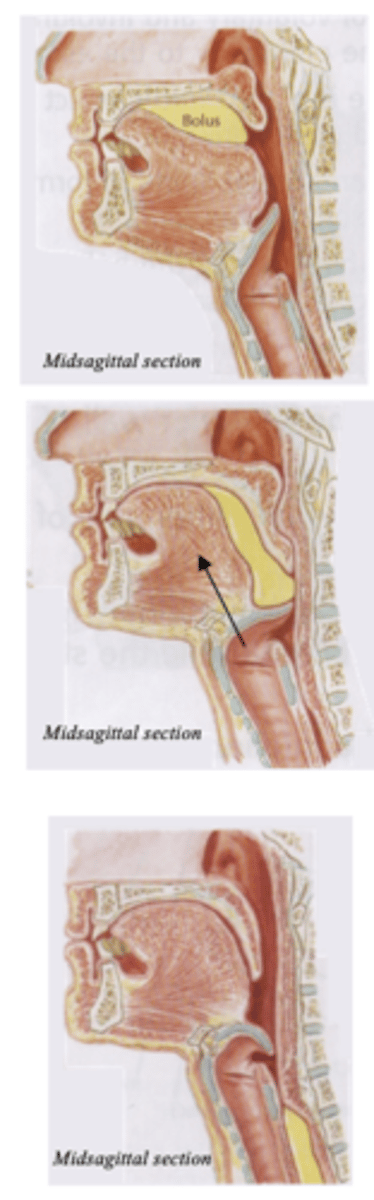
CN-IX (from the pharyngeal plexus) carries sensory information from the mucous membrane of what three structures of the pharynx?
1) nasopharyx
2) oropharynx
3) laryngopharynx
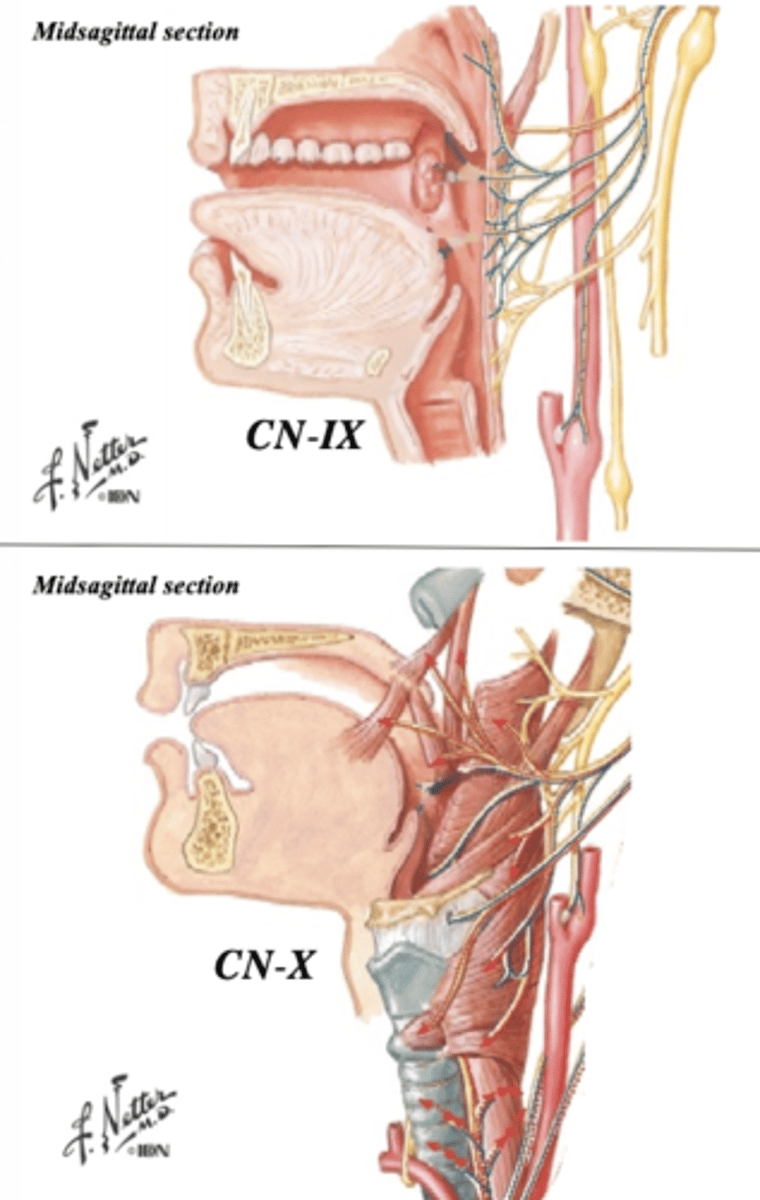
CN-X (from the pharyngeal plexus) supplies all muscles of the pharynx except the ____________________, which is supplied by CN-IX.
stylopharyngeus
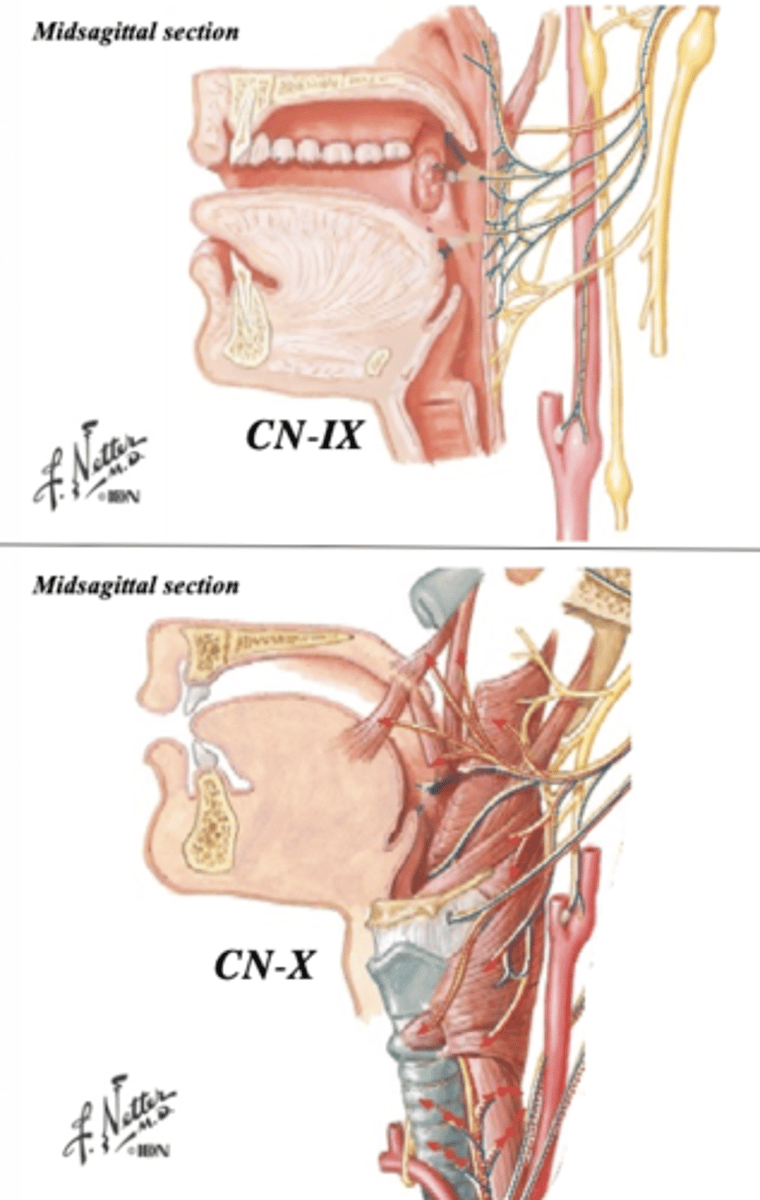
During the removal of the palatine tonsils, a branch of the glossopharyngeal nerve was damaged. The glossopharyngeal nerve enters the pharynx by passing _____________.
A) between the superior and middle pharyngeal constrictor muscles
B) between the middle and inferior pharyngeal constrictor muscles
C) inferior to the inferior constrictor muscle
D) through the thyroid cartilage
E) through the superior pharyngeal constrictor muscle
A) between the superior and middle pharyngeal constrictor muscles
B) between the middle and inferior pharyngeal constrictor muscles
C) inferior to the inferior constrictor muscle
D) through the thyroid cartilage
E) through the superior pharyngeal constrictor muscle
Following an endoscopy for possible gastritis, your patient experienced significant irritation of the pharynx. The pharynx extends from ___________.
A) C1 to C8
B) C1 to C5
C) Base of skull to C6
D) Base of skull to C3
E) C6 to stomach
A) C1 to C8
B) C1 to C5
C) Base of skull to C6
D) Base of skull to C3
E) C6 to stomach
The larynx is located in the anterior neck and is necessary for __________________ production and plays a vital role in ___________________ the airway.
voice production, protecting the airway
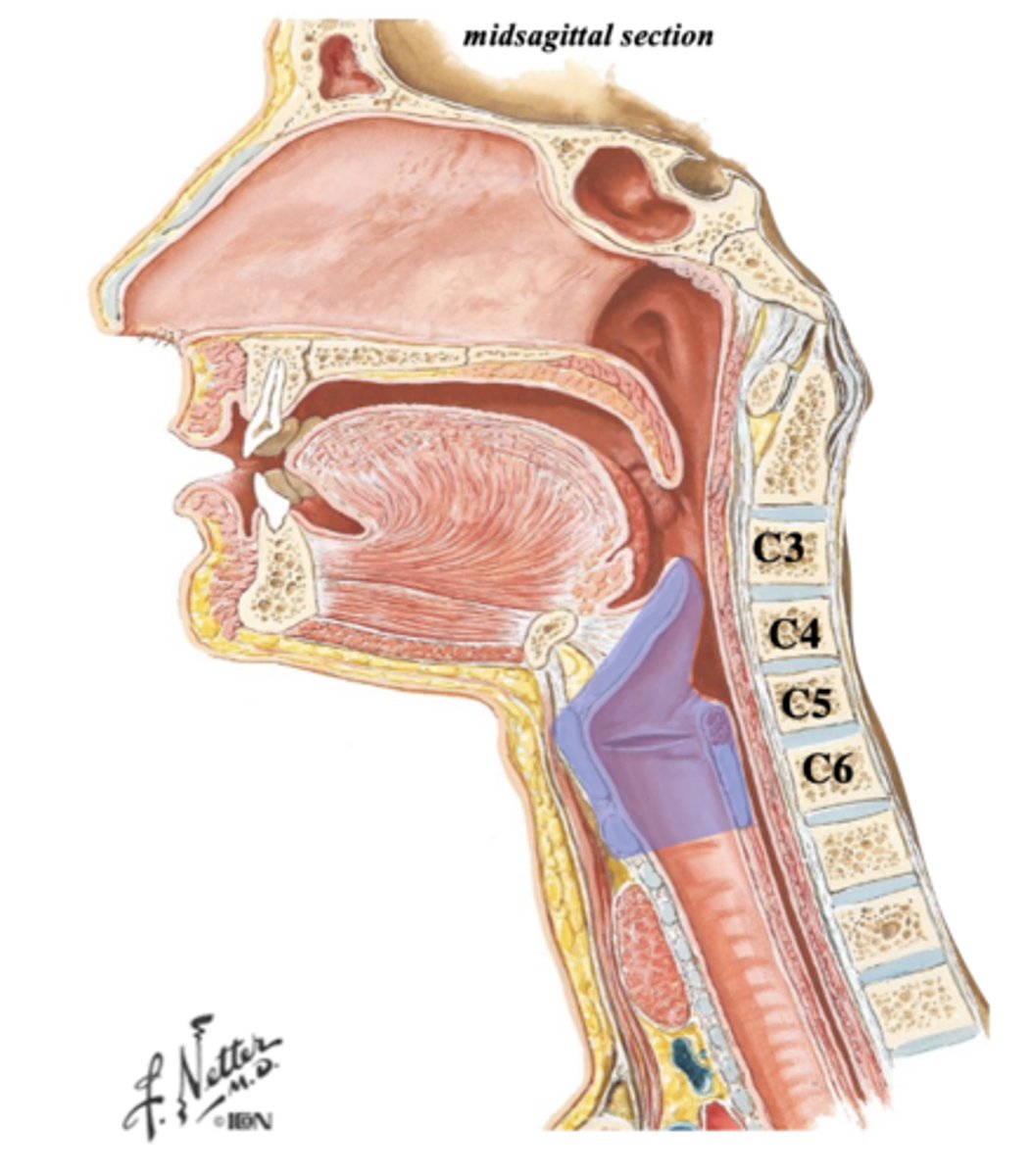
At rest, the larynx is anterior to what spinal cord levels?
C3-C6 vertebra
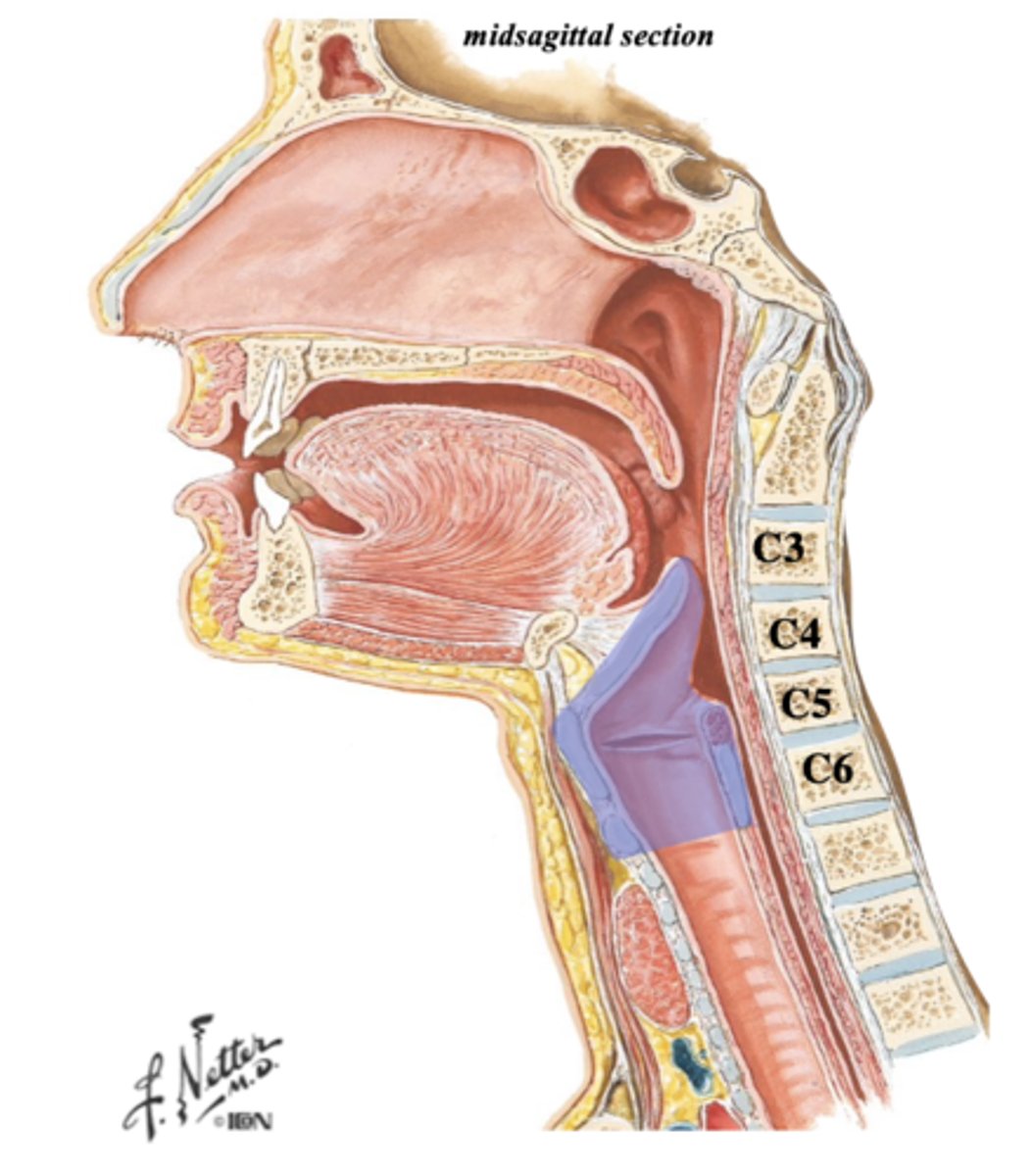
The larynx is classified as being from the superior extension of the _______________ to the inferior margin of the _____________ _____________.
epiglottis, cricoid cartilage
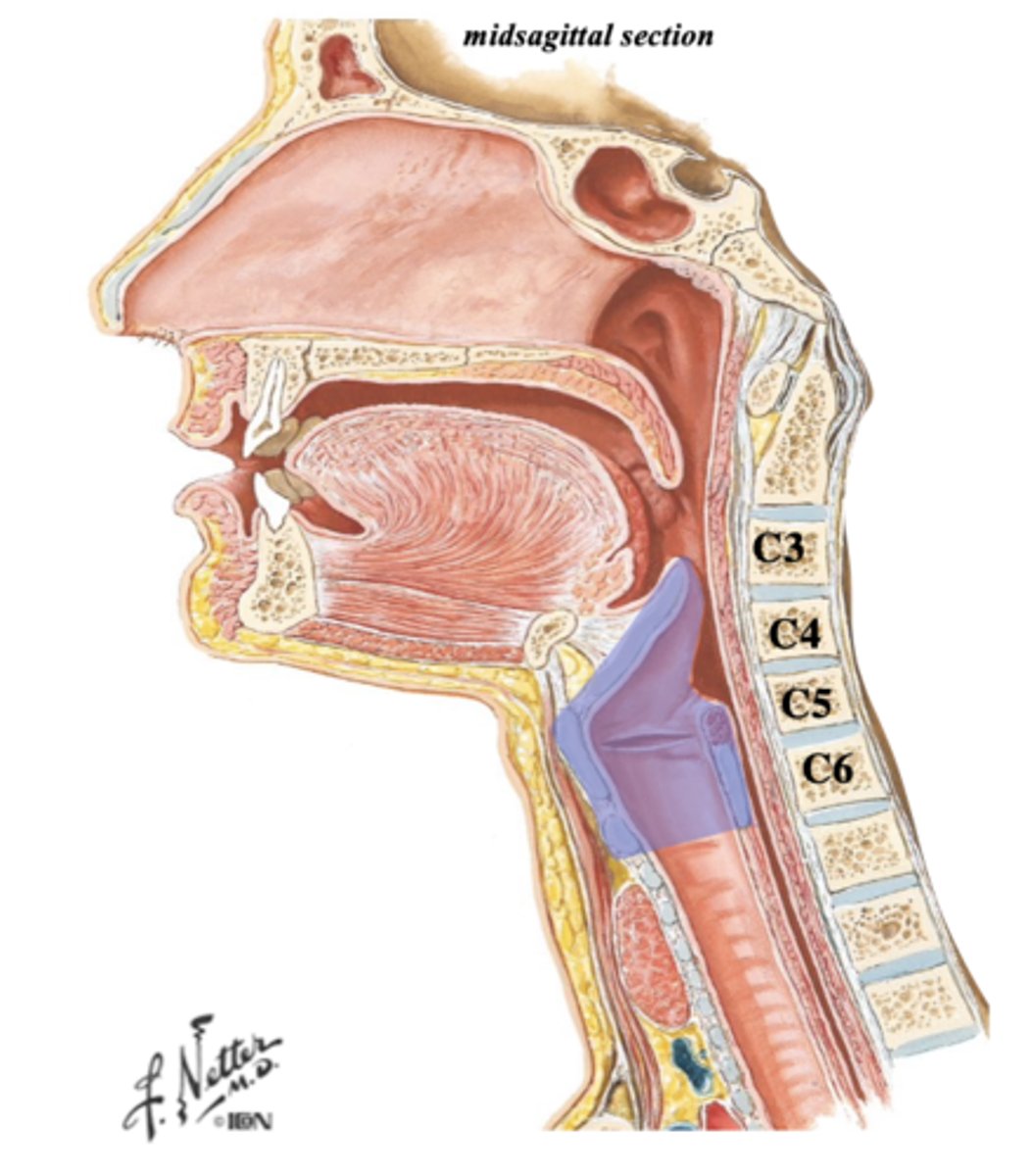
T/F The larynx is composed of cartilage, membranes, and ligaments, and is moved by several muscles.
True
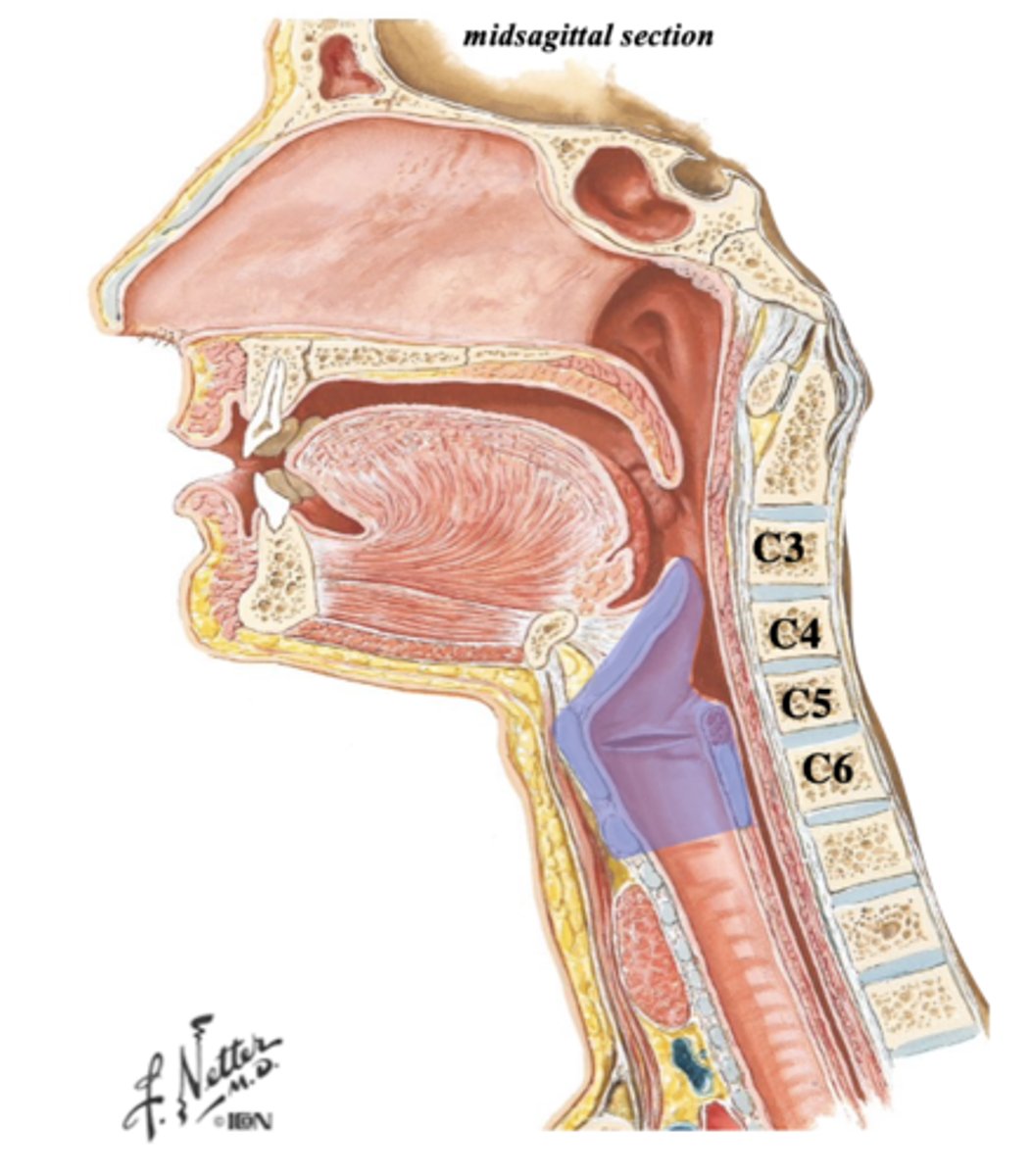
The laryngeal skeleton consists of nine cartilages. How many are paired and how many are unpaired?
3 unpaired + 3 paired (x2)
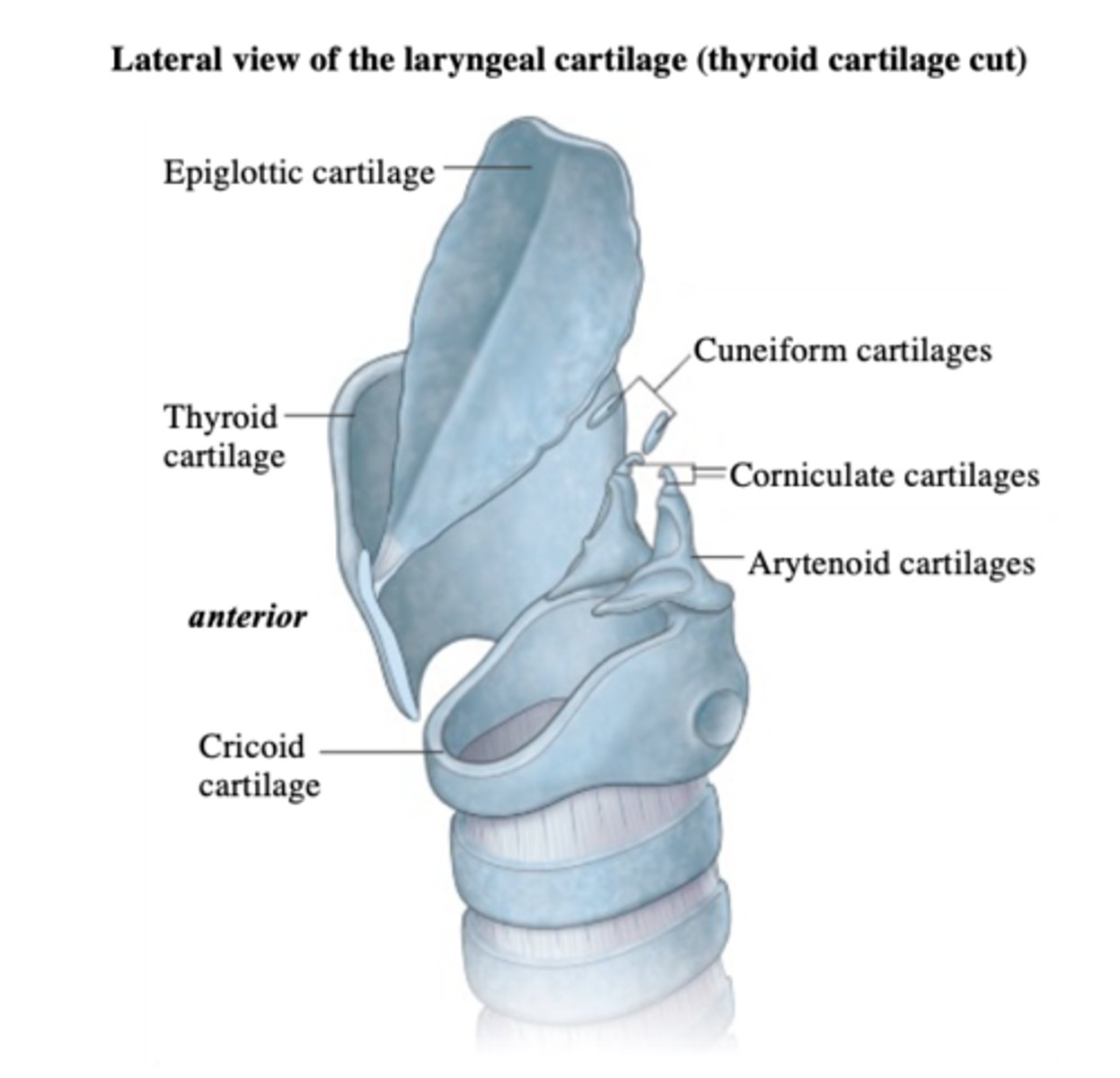
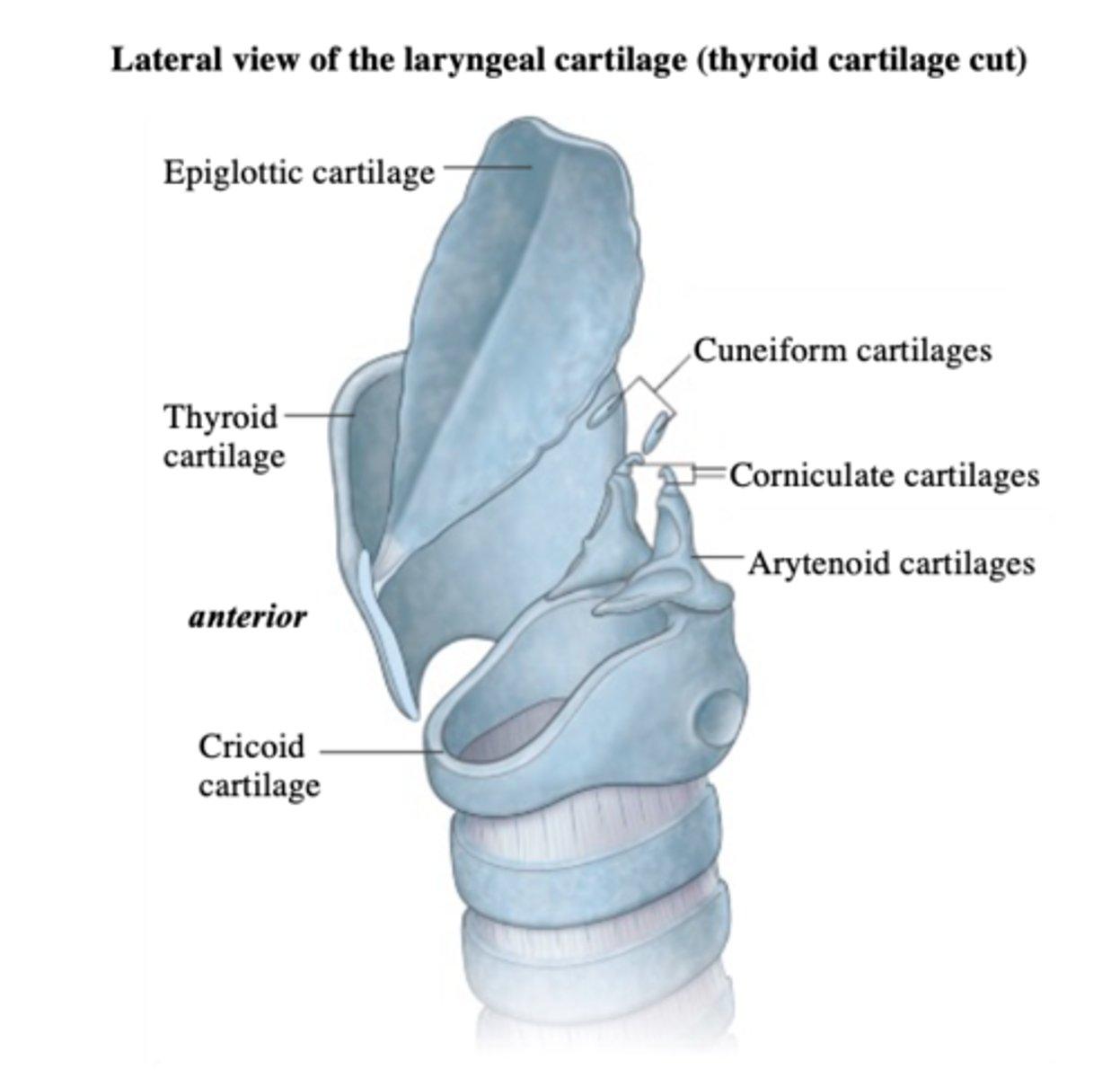
What are the 3 unpaired cartilages of the laryngeal skeleton?
1) epiglottis
2) thyroid
3) cricoid
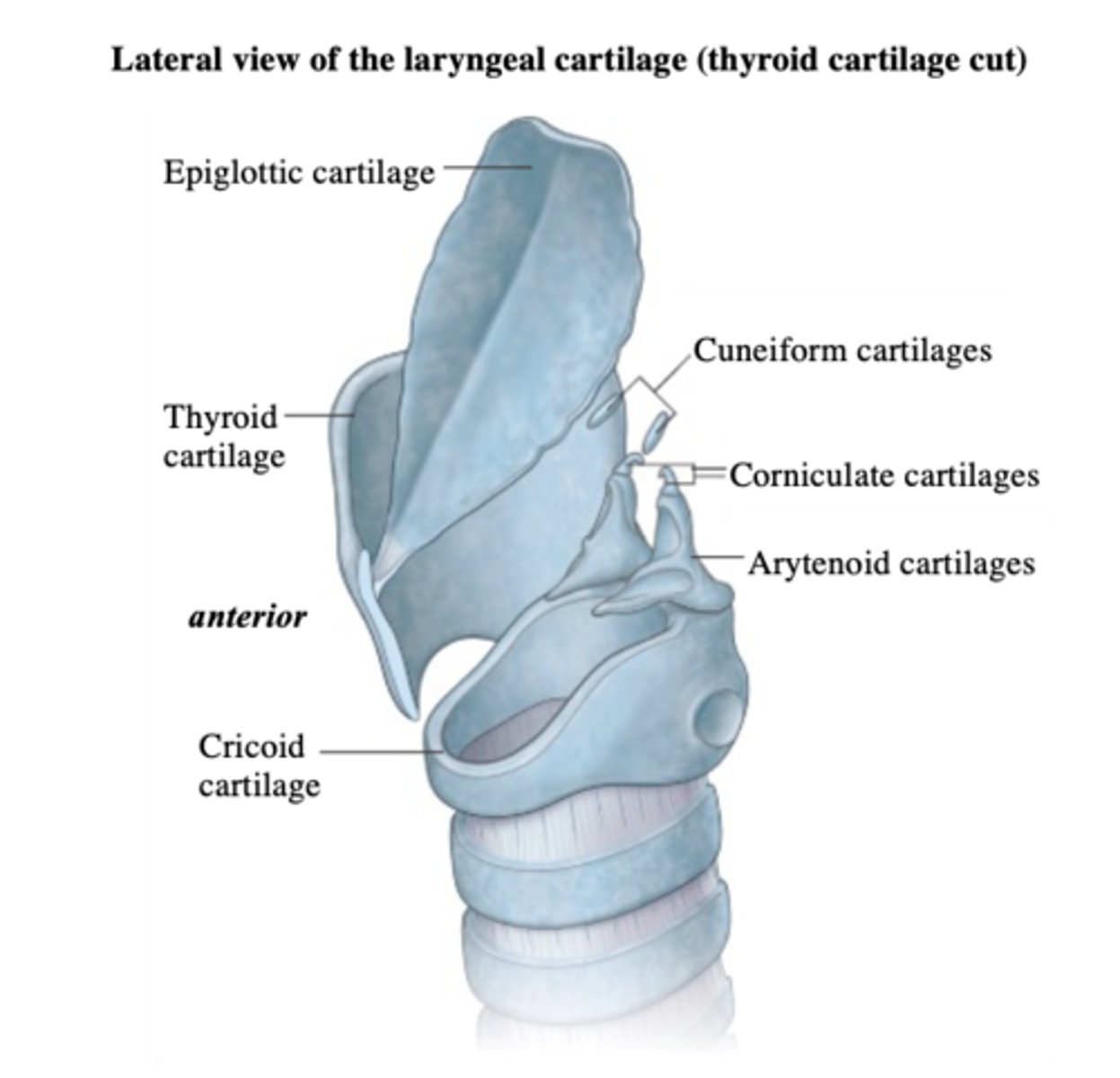
What are the 3 paired cartilages of the laryngeal skeleton?
1) arytenoid
2) corniculate
3) cuneiform
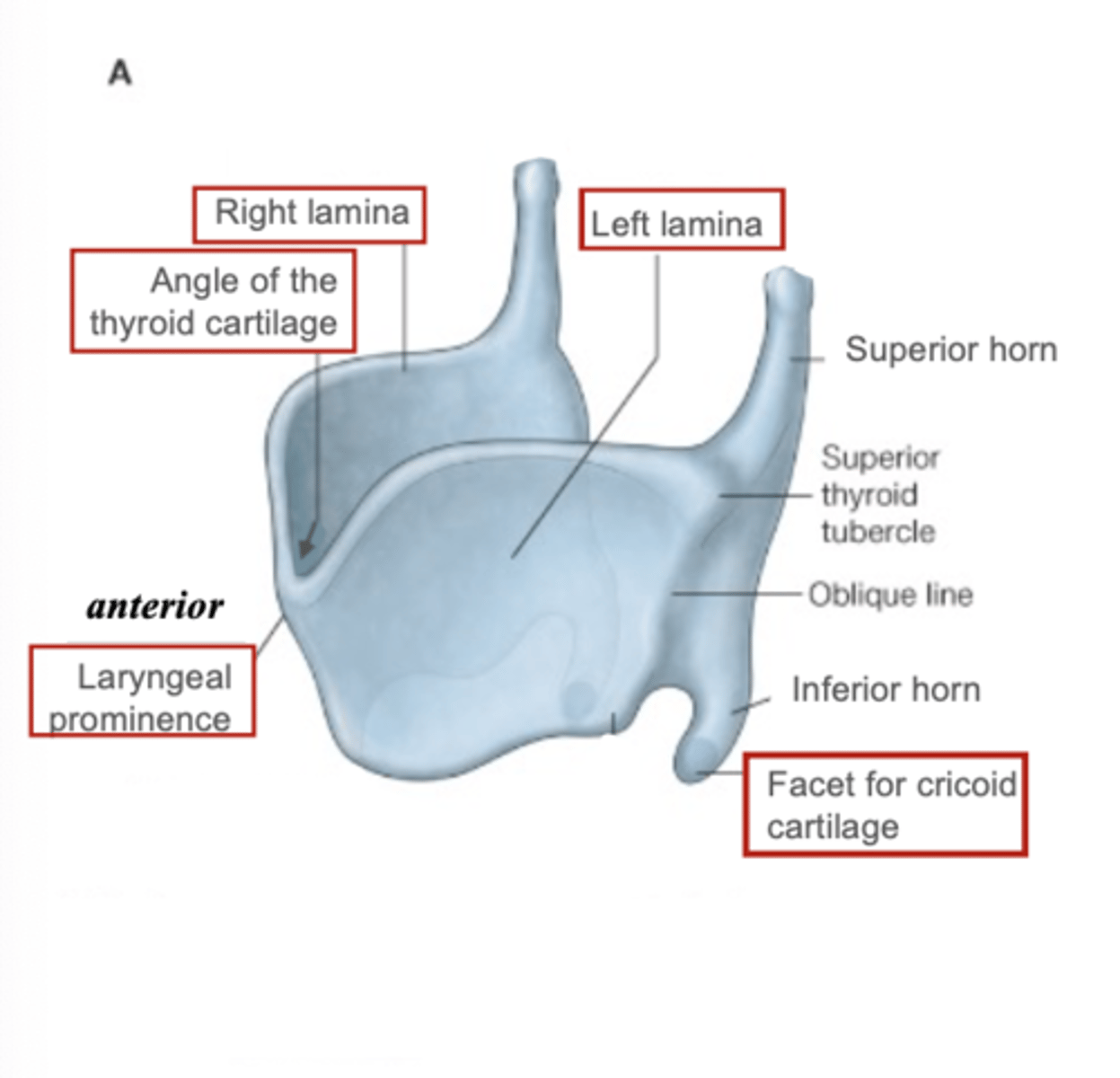
What is the largest of the laryngeal cartilages?
thyroid cartilage
What vertebral level is the thyroid cartilage located at?
C4-C5
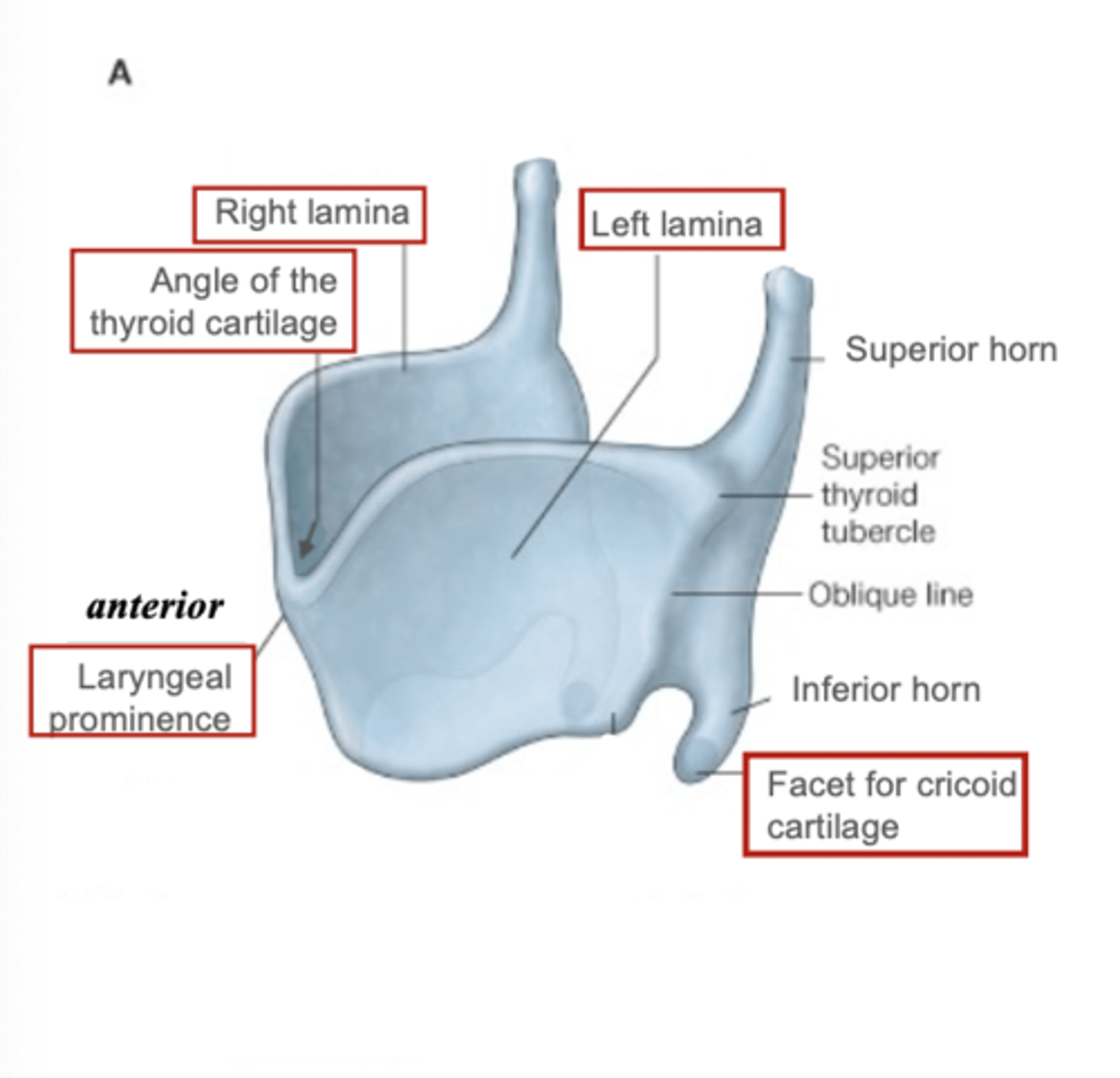
T/F There is on lamina for the thyroid cartilage.
False: There are 2 (Right and Left)
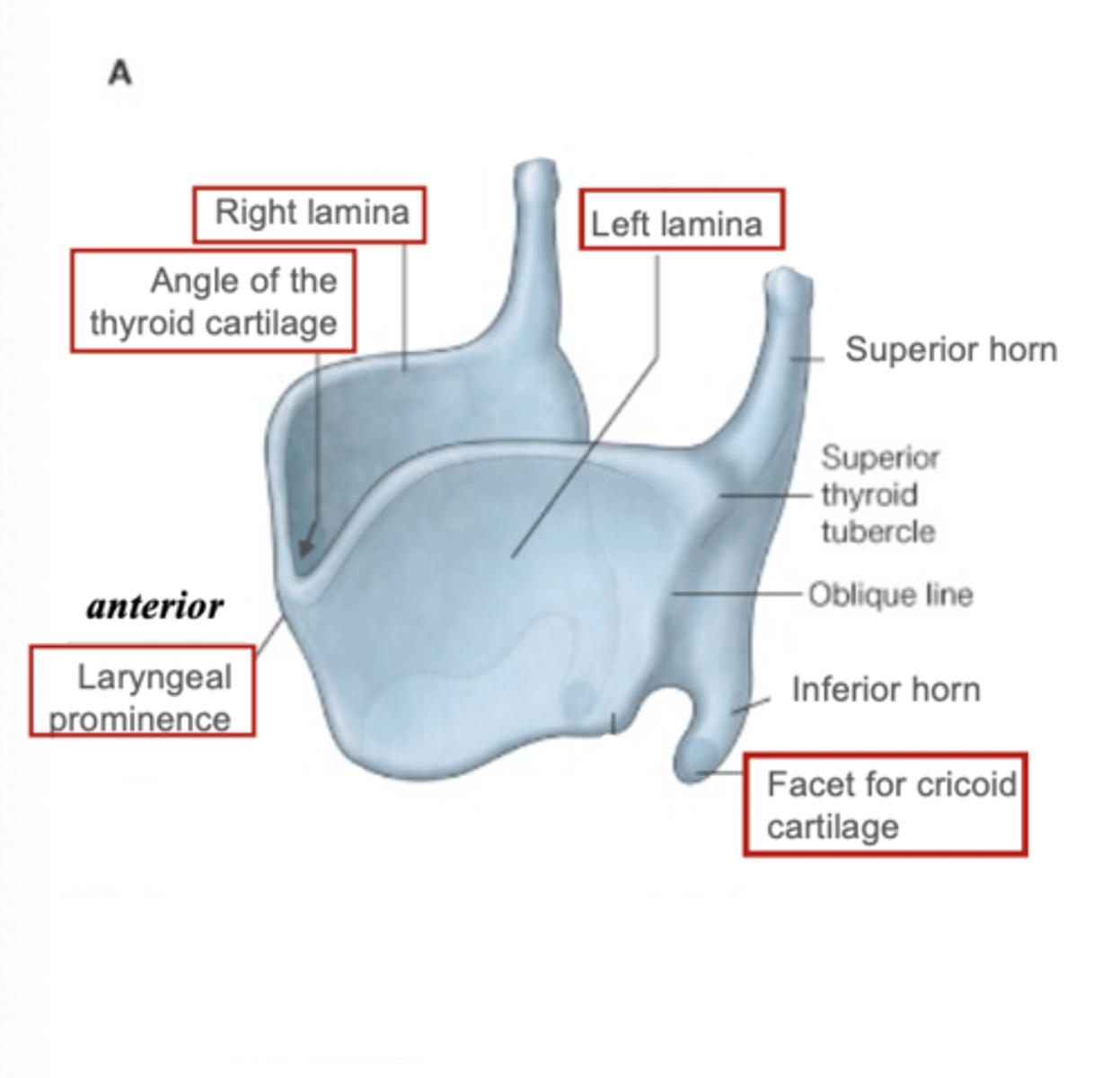
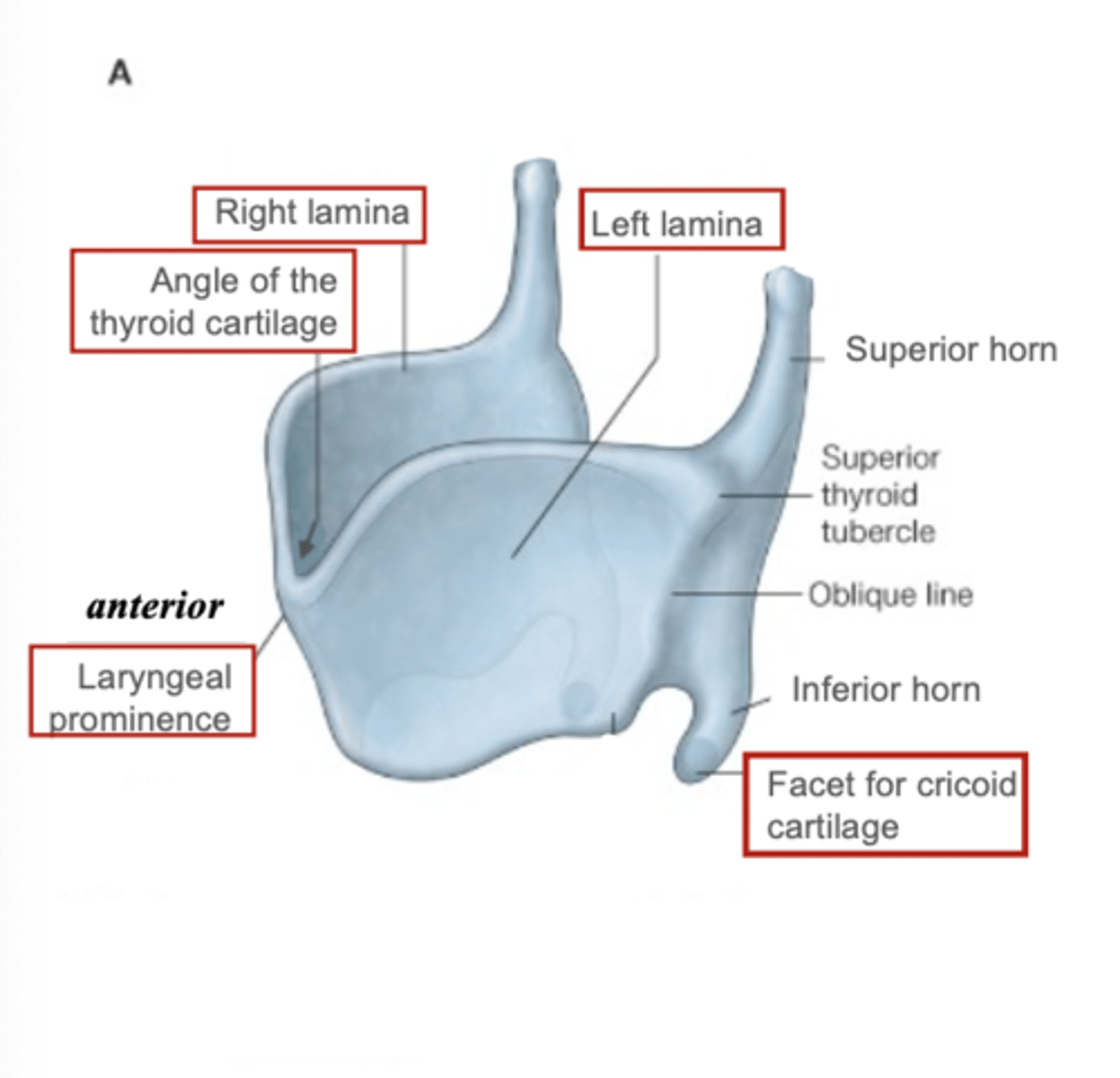
The laminae of the laryngeal skeleton unite anteriorly to form an external prominence call what?
laryngeal prominence
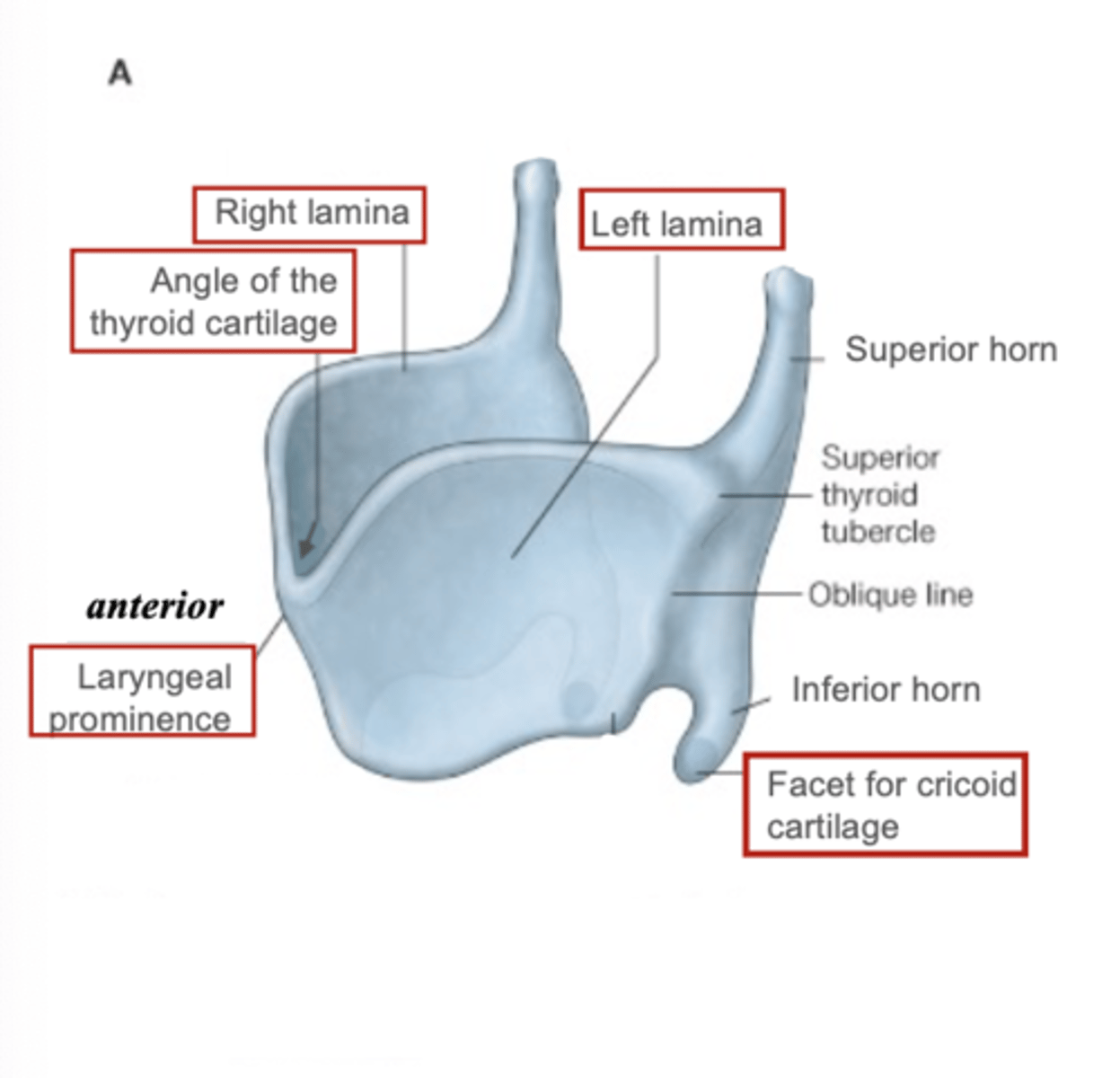
T/F Individuals that are assigned female at birth develop a relatively prominent laryngeal prominence.
False: Individuals that are assigned male at birth develop a relatively prominent laryngeal prominence due to increased testosterone during puberty.
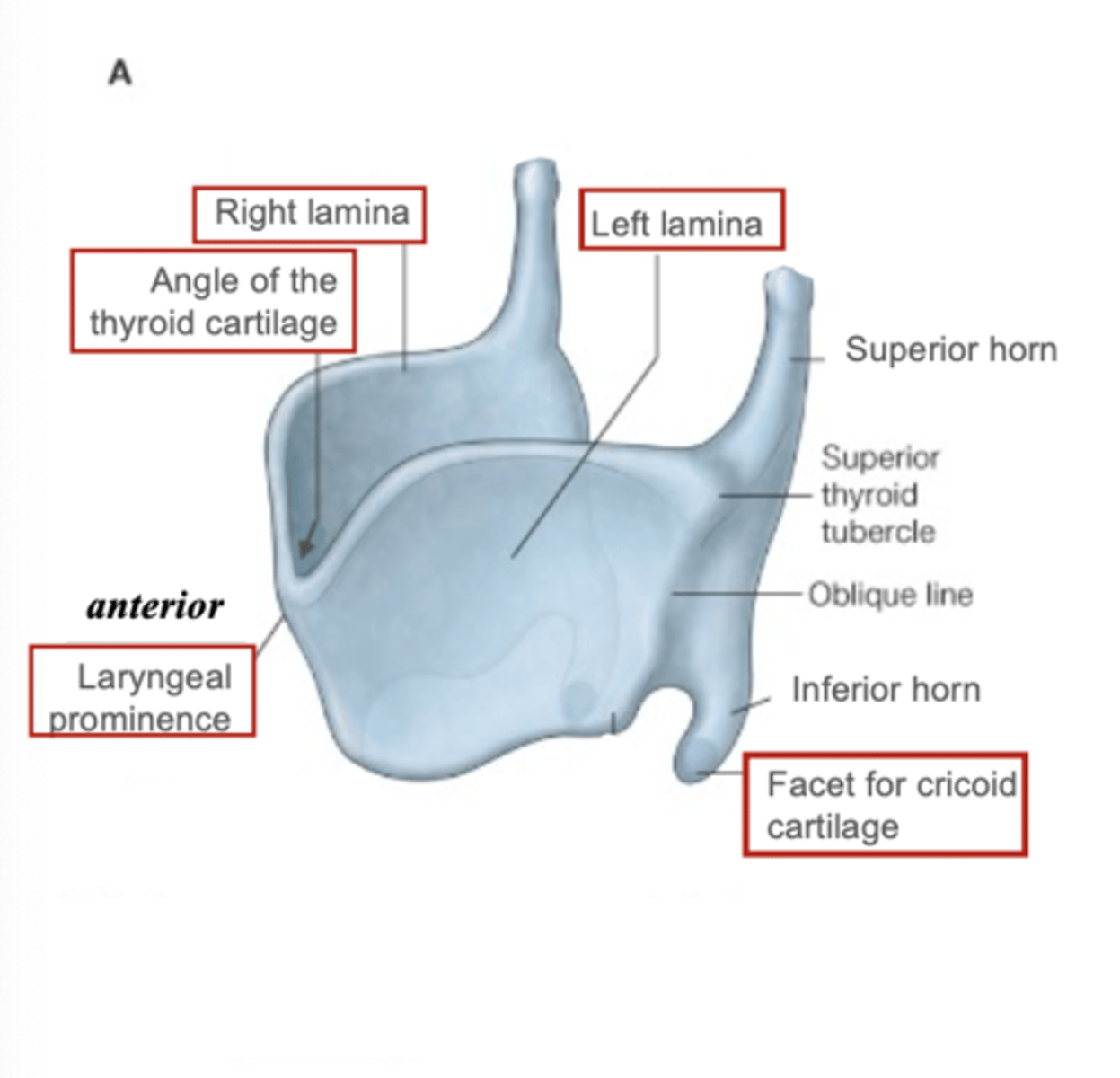
What is the anterior internal surface of the thyroid cartilage called? (located opposite the laryngeal prominence)
angle of the thyroid cartilage
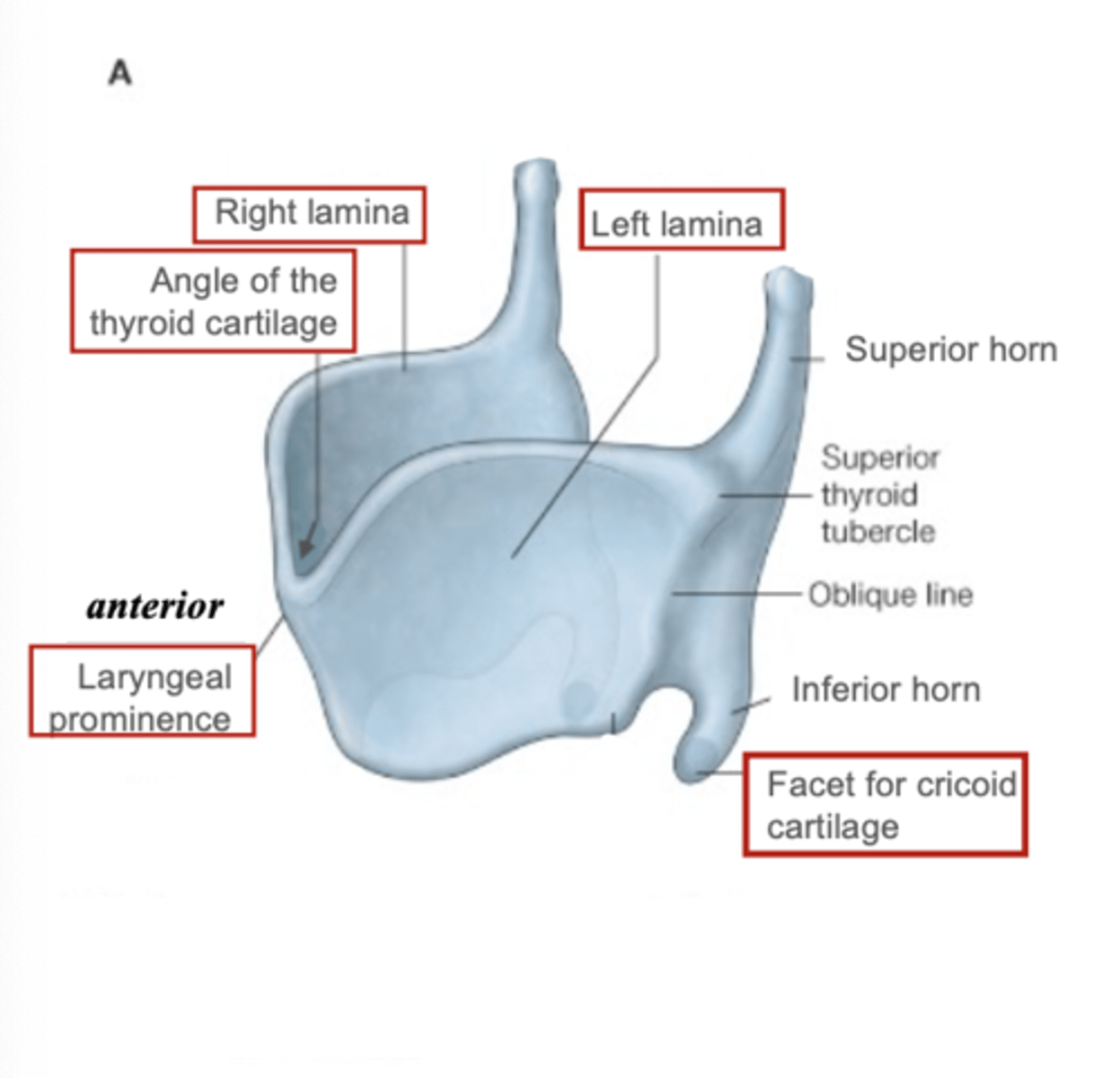
T/F There are superior and inferior horns of the thyroid cartilage. The superior horn has an articular facet for the cricoid cartilage.
False: The INFERIOR horn has an articular facet for the cricoid cartilage.
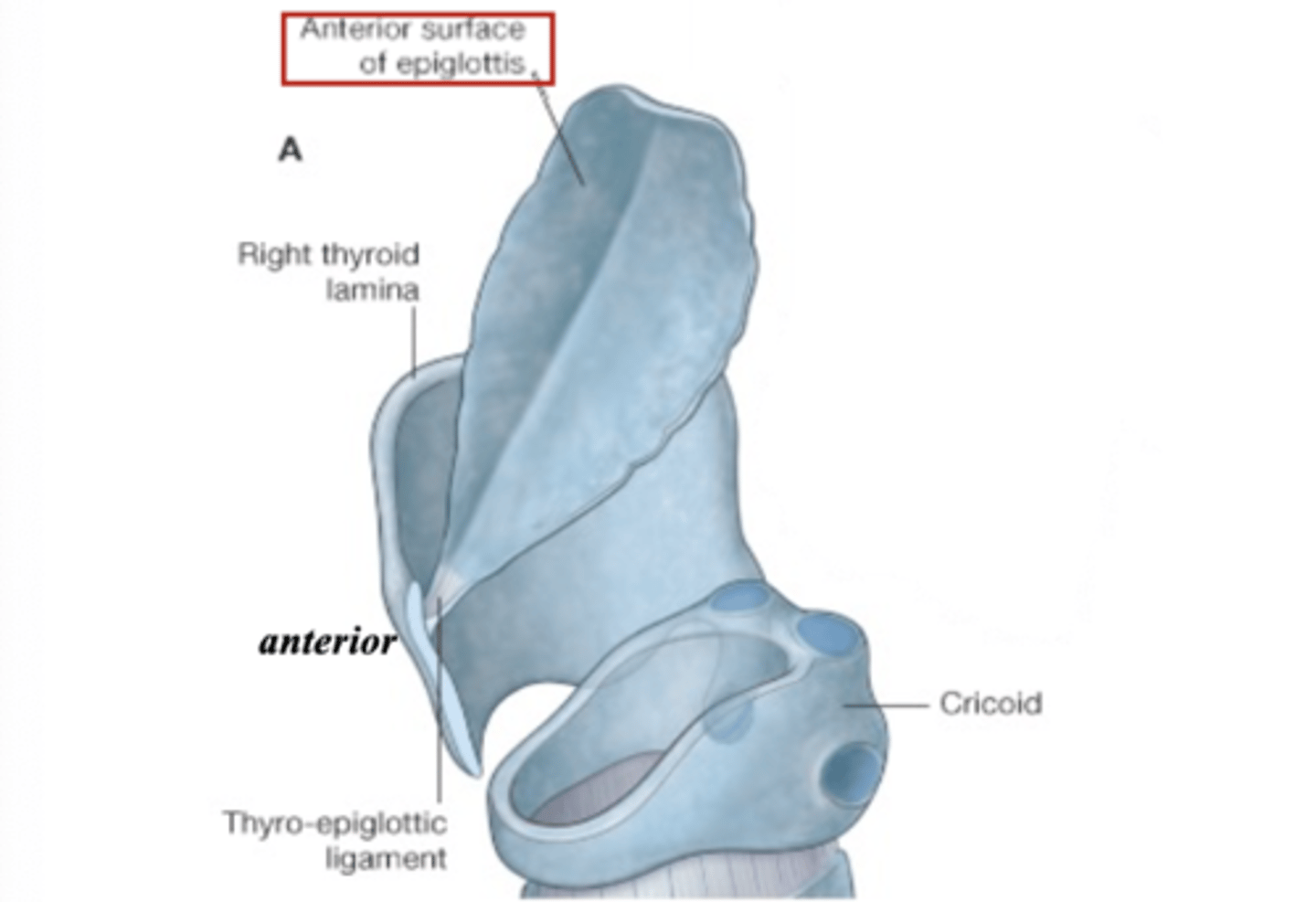
The superior margin of the epiglottic cartilage is located at what vertebral level?
C3
The epiglottic cartilage attaches inferiorly to what?
the angel of the thyroid cartilage
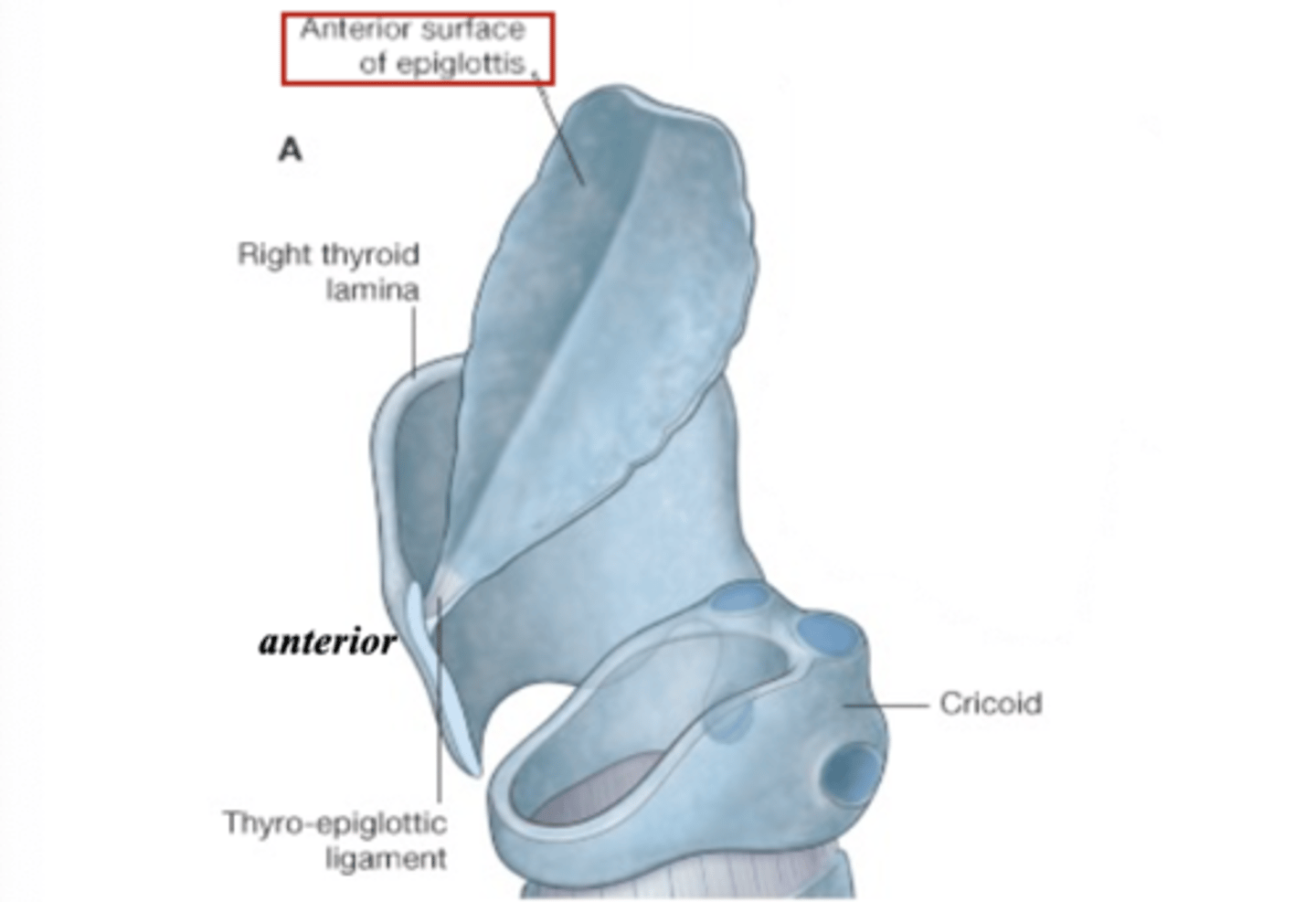
What cartilage bends over to cover the airway during swallowing?
epiglottic cartilage
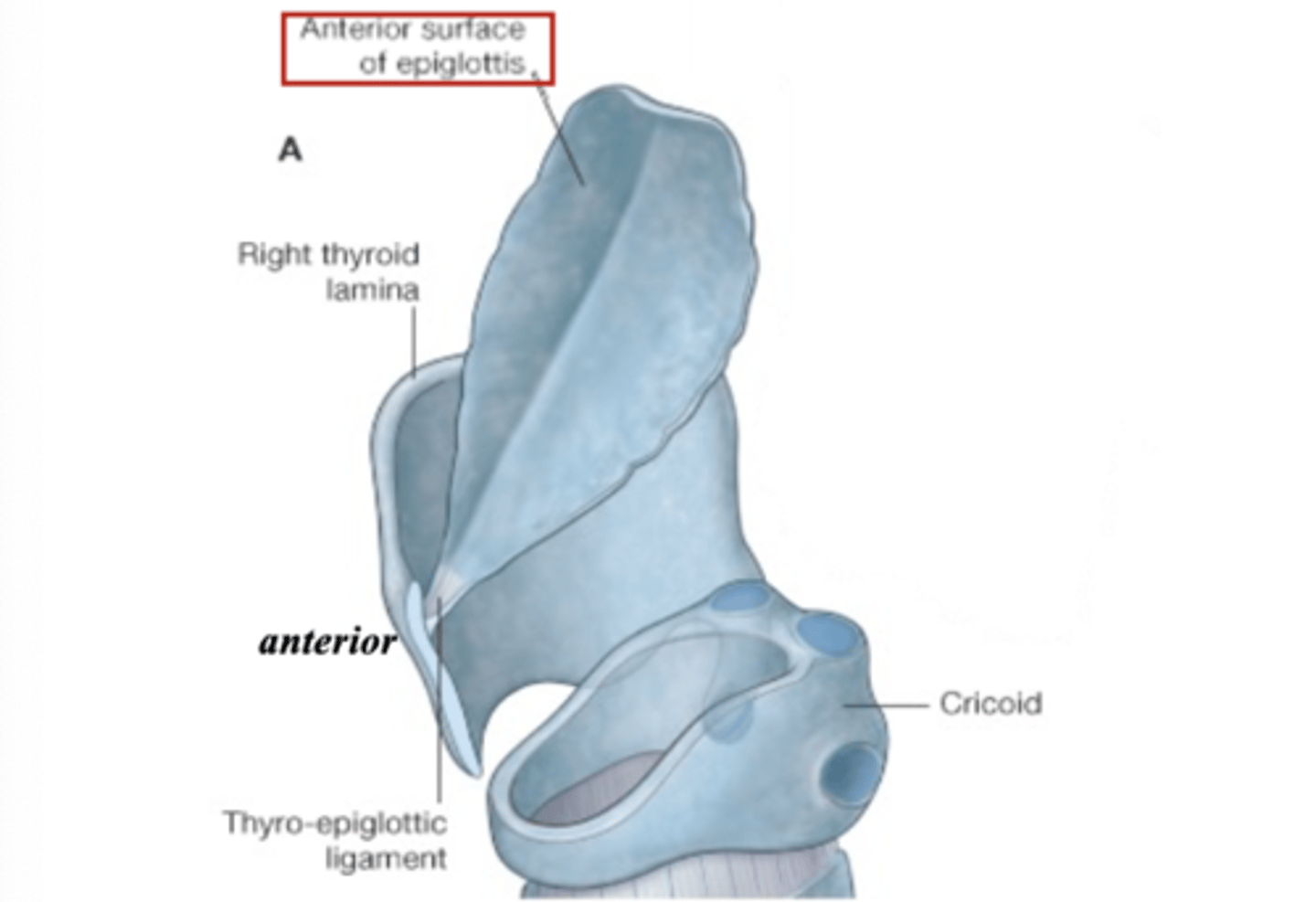
The inferior margin of the cricoid cartilage is located at what vertebral level?
C6
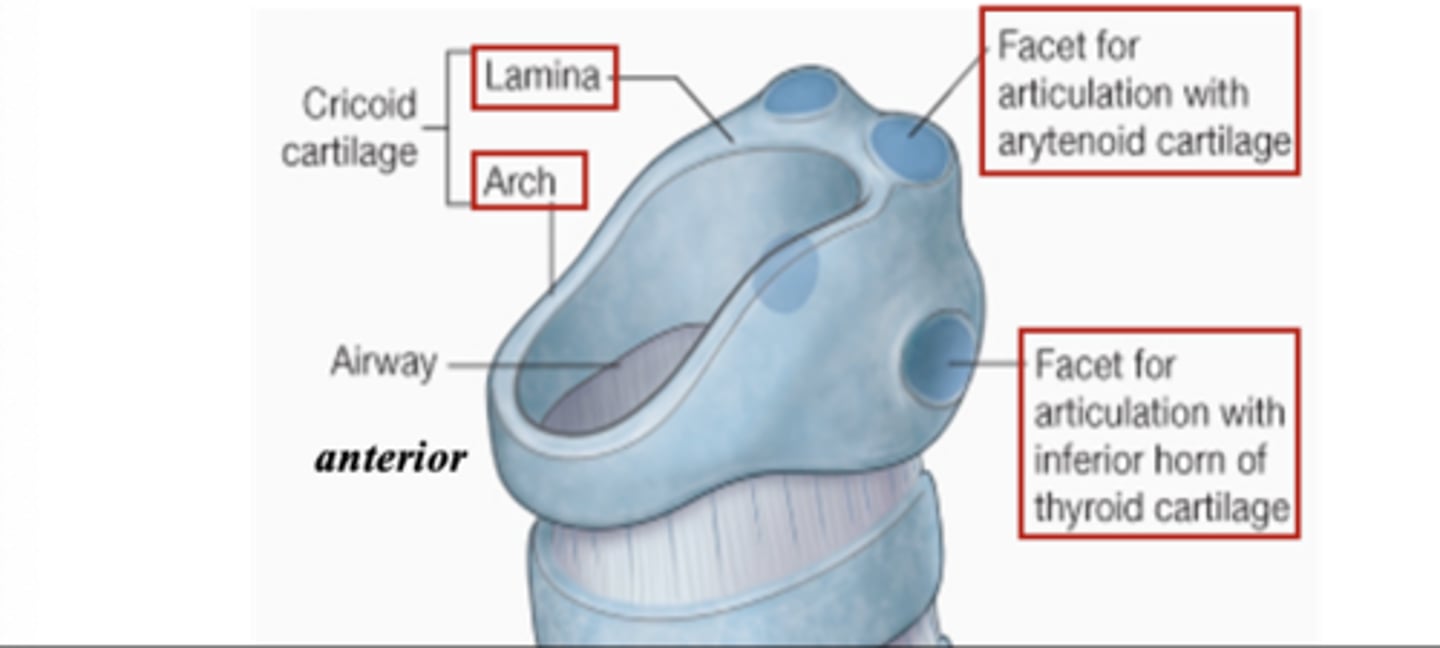
The cricoid cartilage is shaped like a signet ring, with the _____________ ______________ positioned posteriorly and the ____________ _____________ positioned anteriorly.
broad lamina, narrow arch
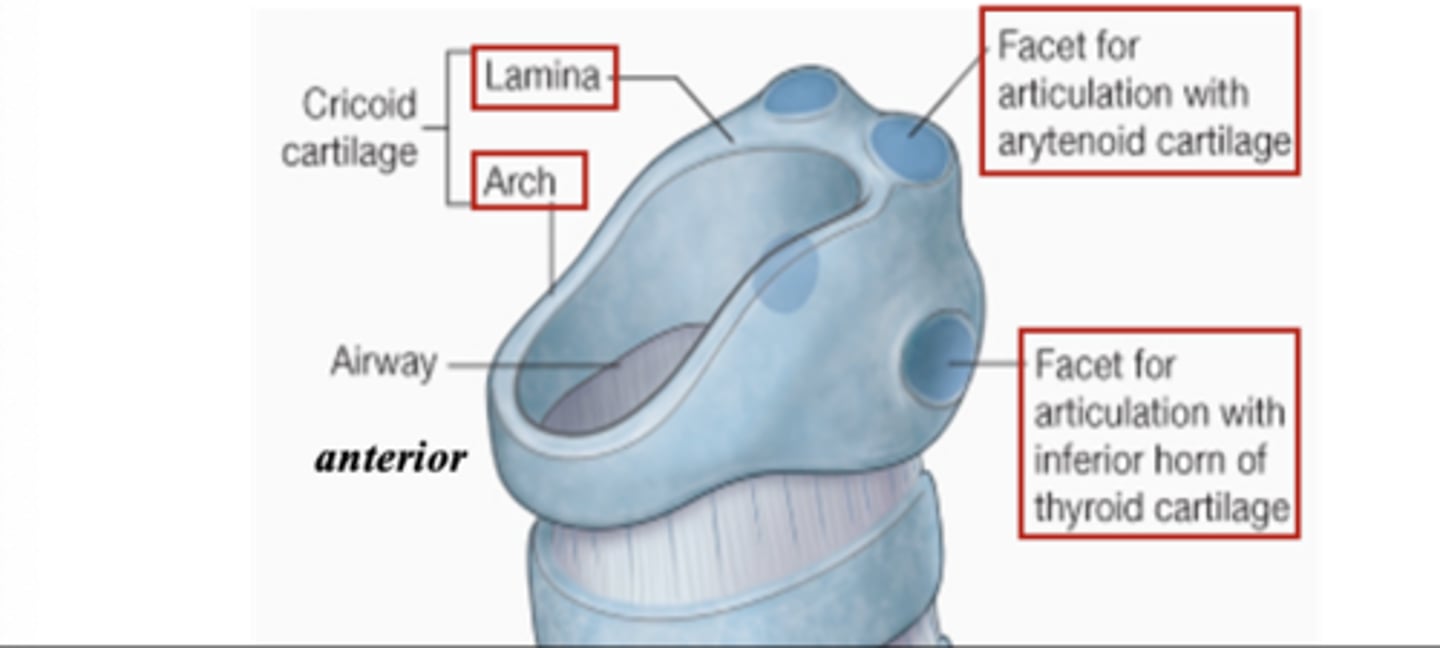
What cartilage completely encircles of the airway?
cricoid cartilage
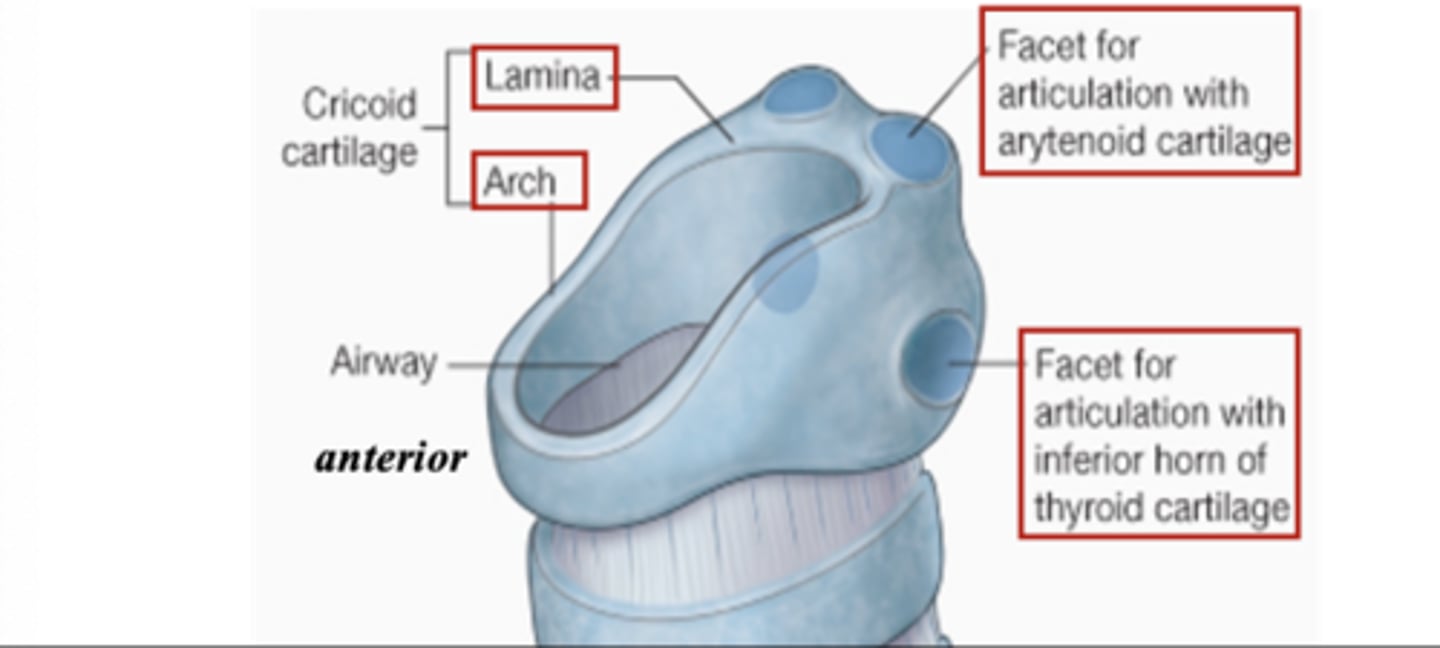
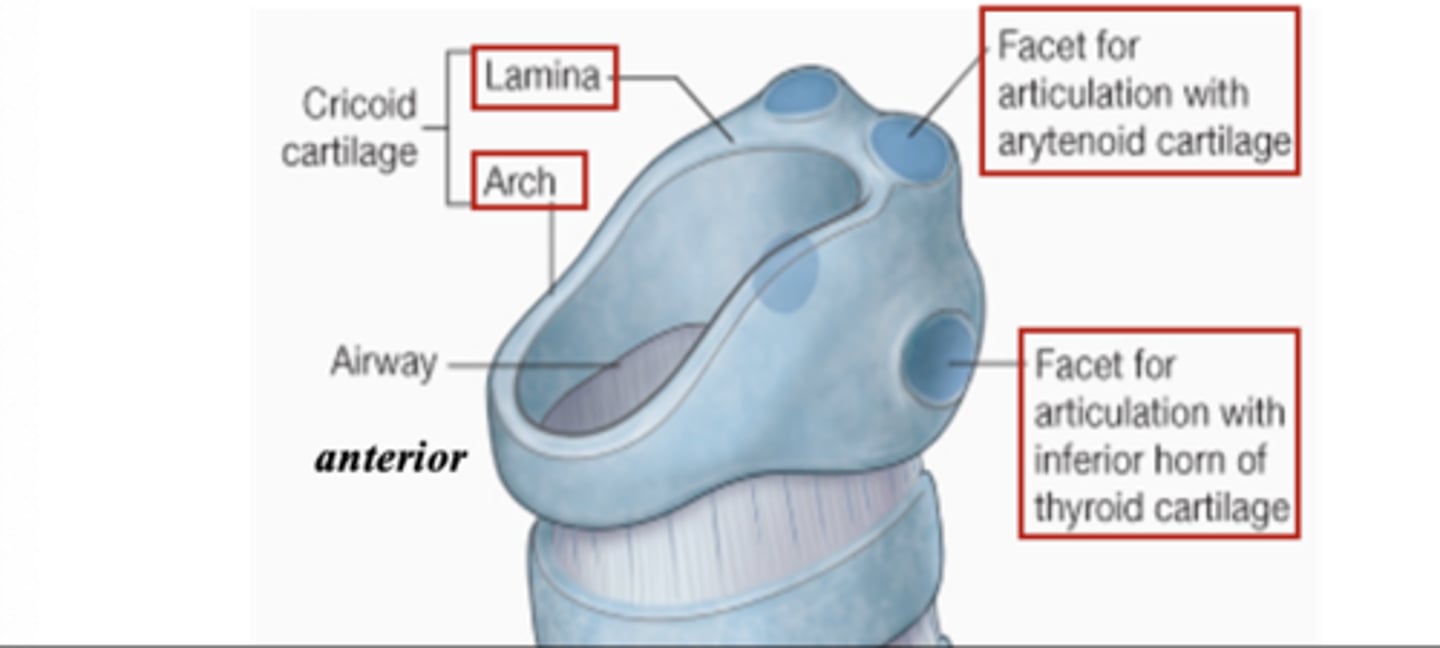
The cricoid cartilage has articular surfaces for what two cartilages?
1) thyroid cartilage (inferior horn)
2) arytenoid cartilages
What cartilage of the laryngeal skeleton is pyramidal shaped?
arytenoid cartilages
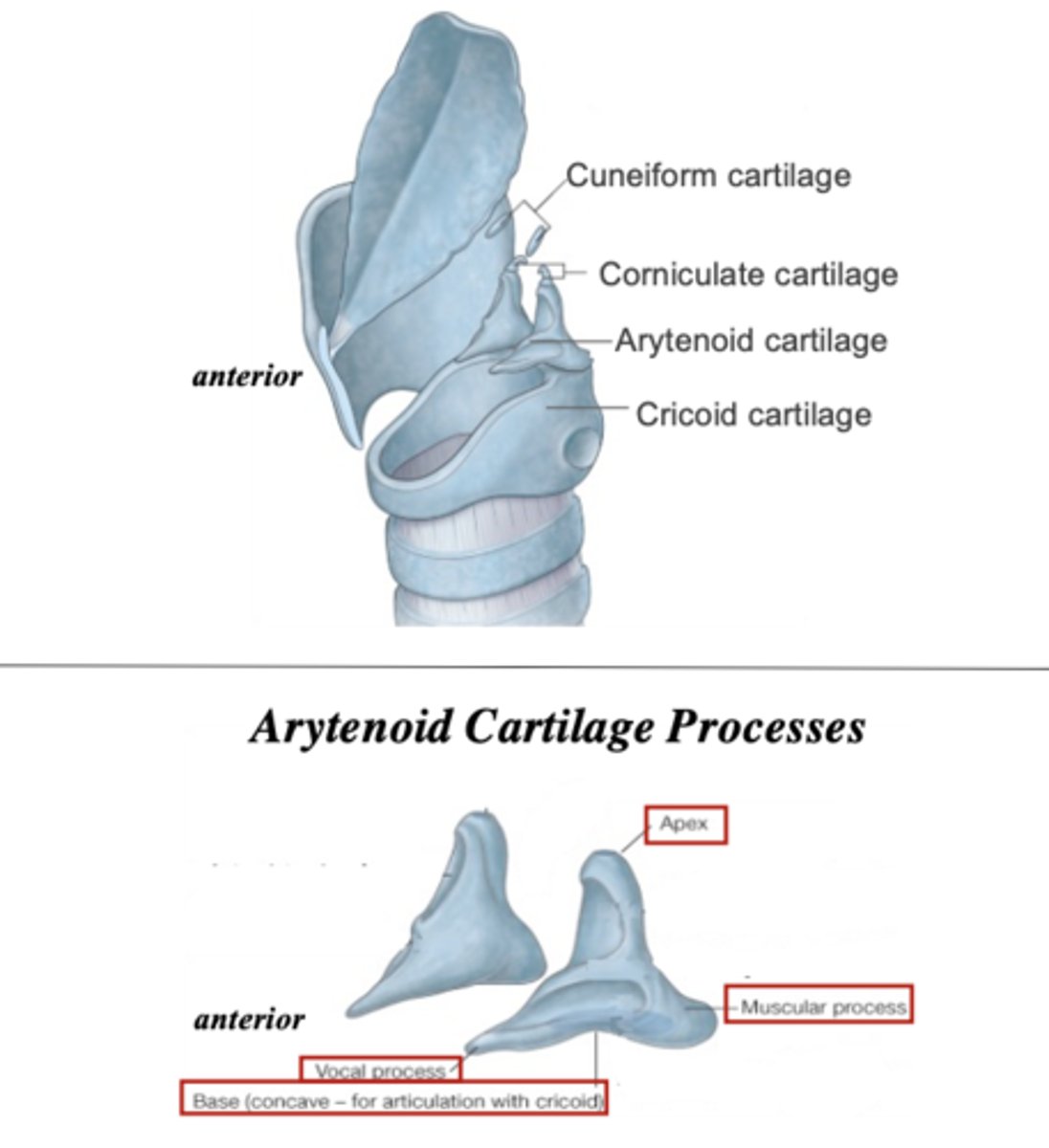
The base of the arytenoid cartilage articulates with the lamina of what cartilage?
cricoid cartilage
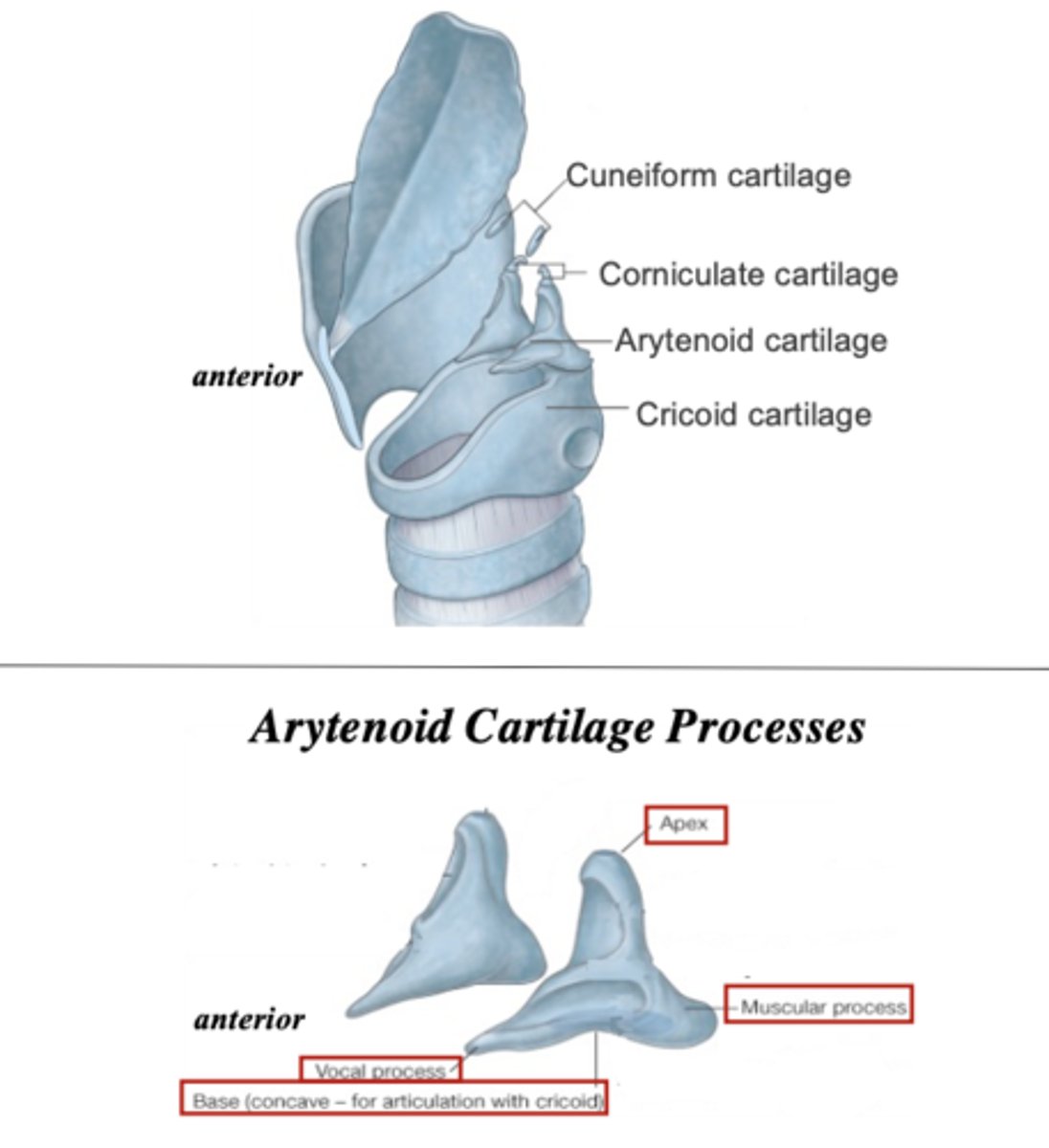
The arytenoid cartilage has a vocal process that projects anteriorly and is an attachment site for what two structures?
1) vocal ligament
2) vocalis muscle
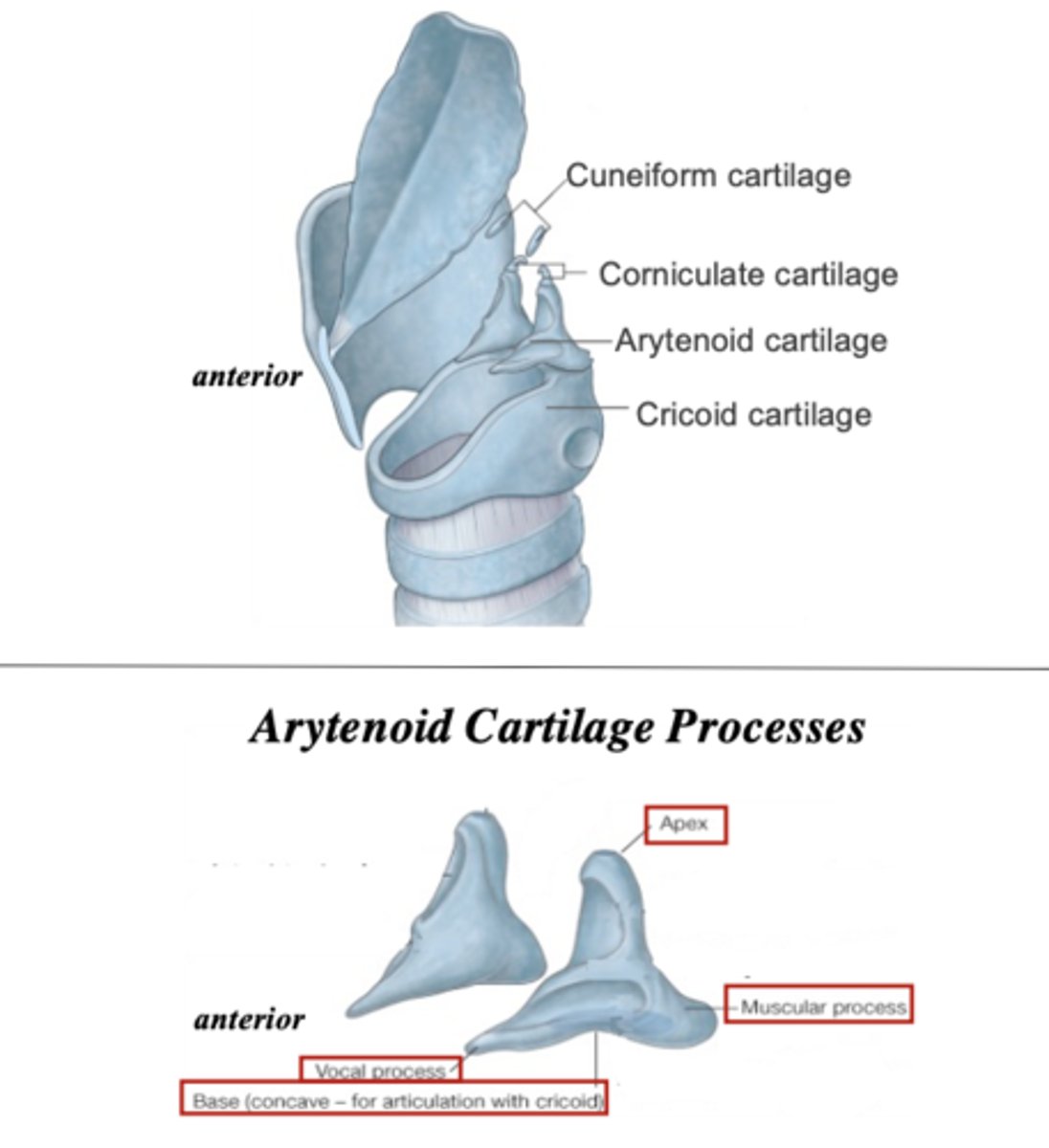
T/F The Cuneiform cartilage has a muscular process that projects laterally and is an attachment site for many muscles.
False: The Arytenoid cartilage has a muscular process that projects laterally and is an attachment site for many muscles.
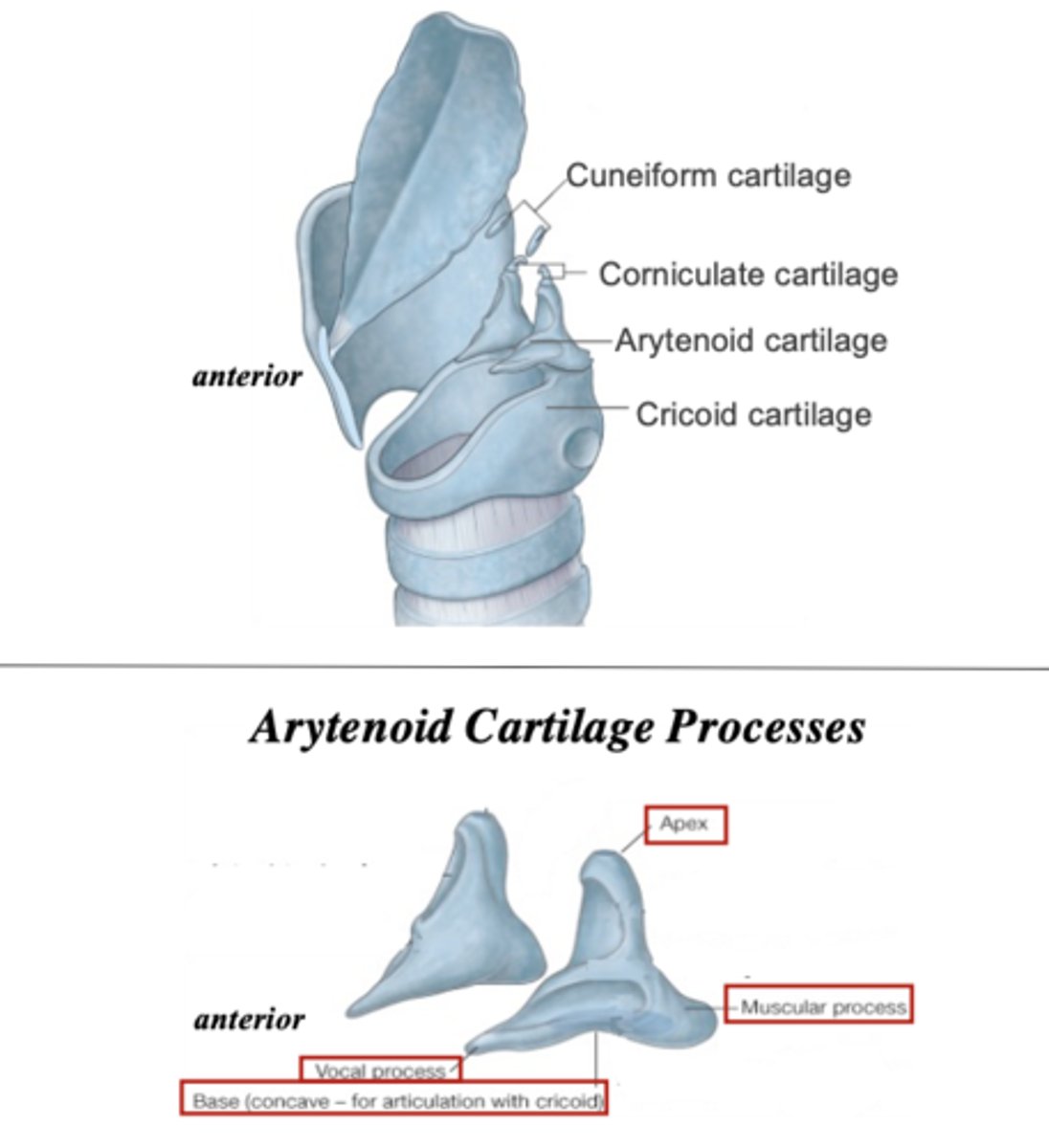
What joint of the larynx is between the inferior horn of the thyroid cartilage and cricoid cartilage?
cricothyroid joint
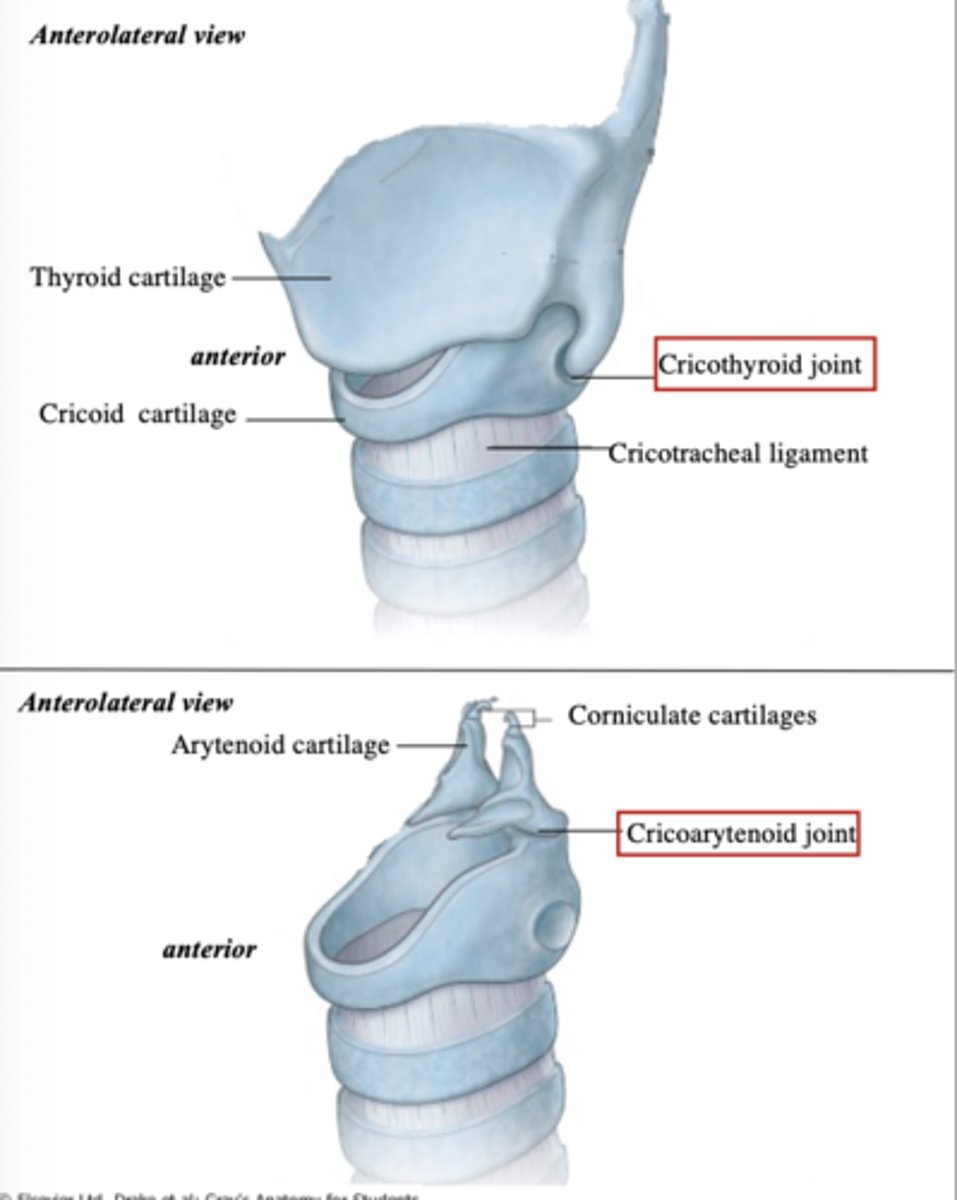
What joint of the larynx is between the arytenoid and cricoid cartilages?
cricoarytenoid joint
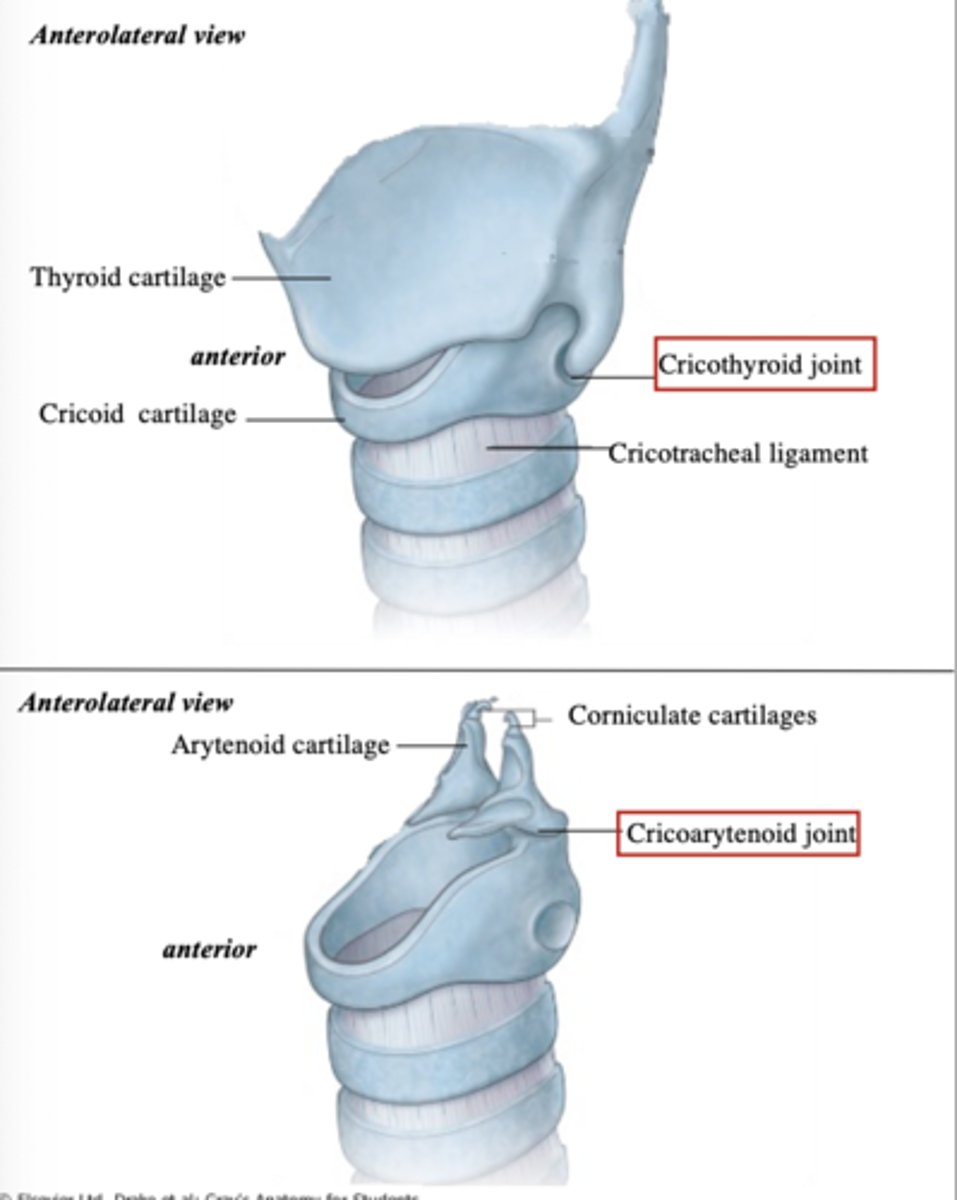
T/F The cricothyroid joint and the cricoarytenoid joint are plane joints.
False: The cricothyroid joint and the cricoarytenoid joint are synovial joints.
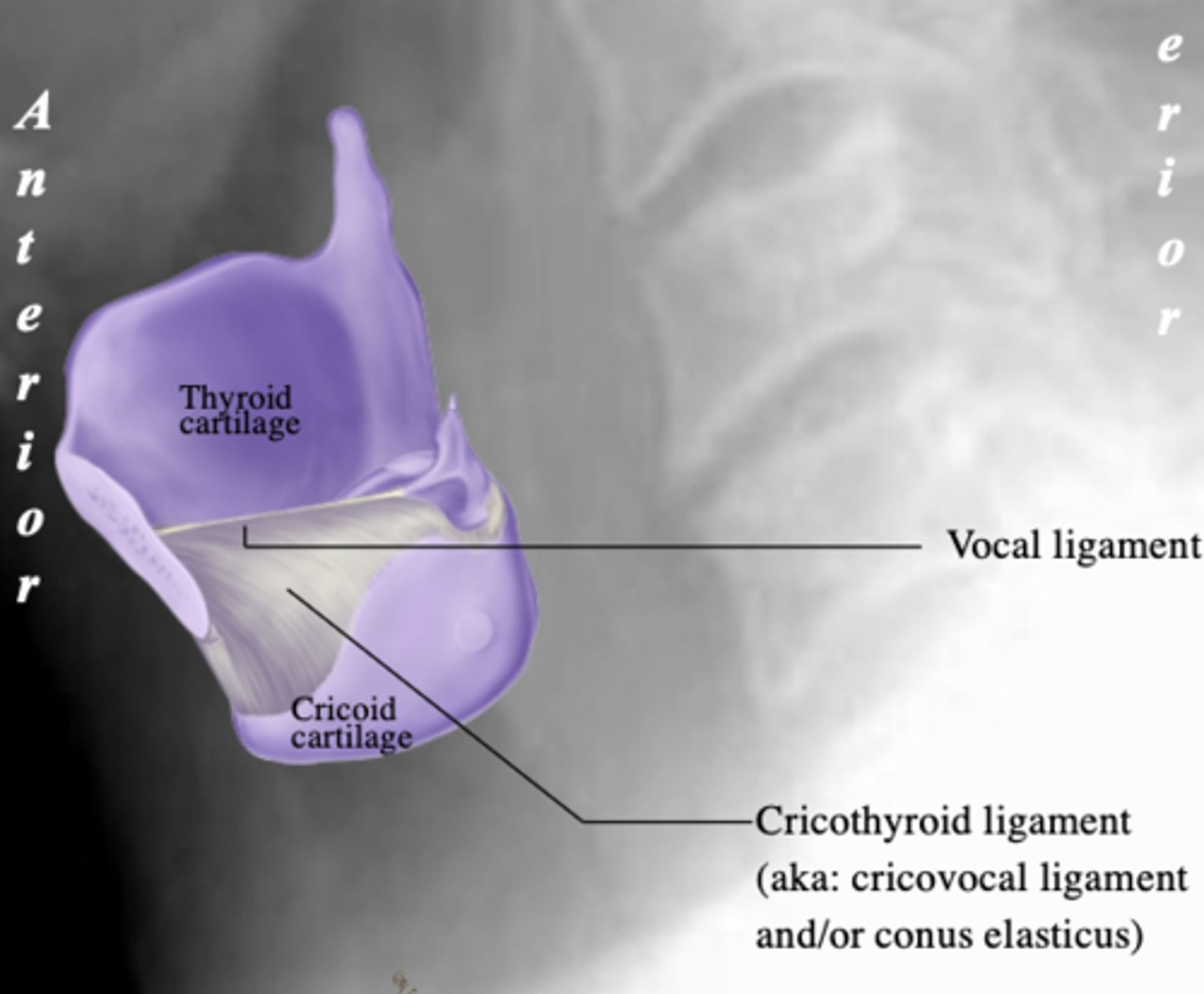
The Cricothyroid ligament extends from the cridoid cartilage to ____________ and _______________ cartilages and forms what structure?
1) thyroid and arytenoid cartilage
2) forms the vocal process
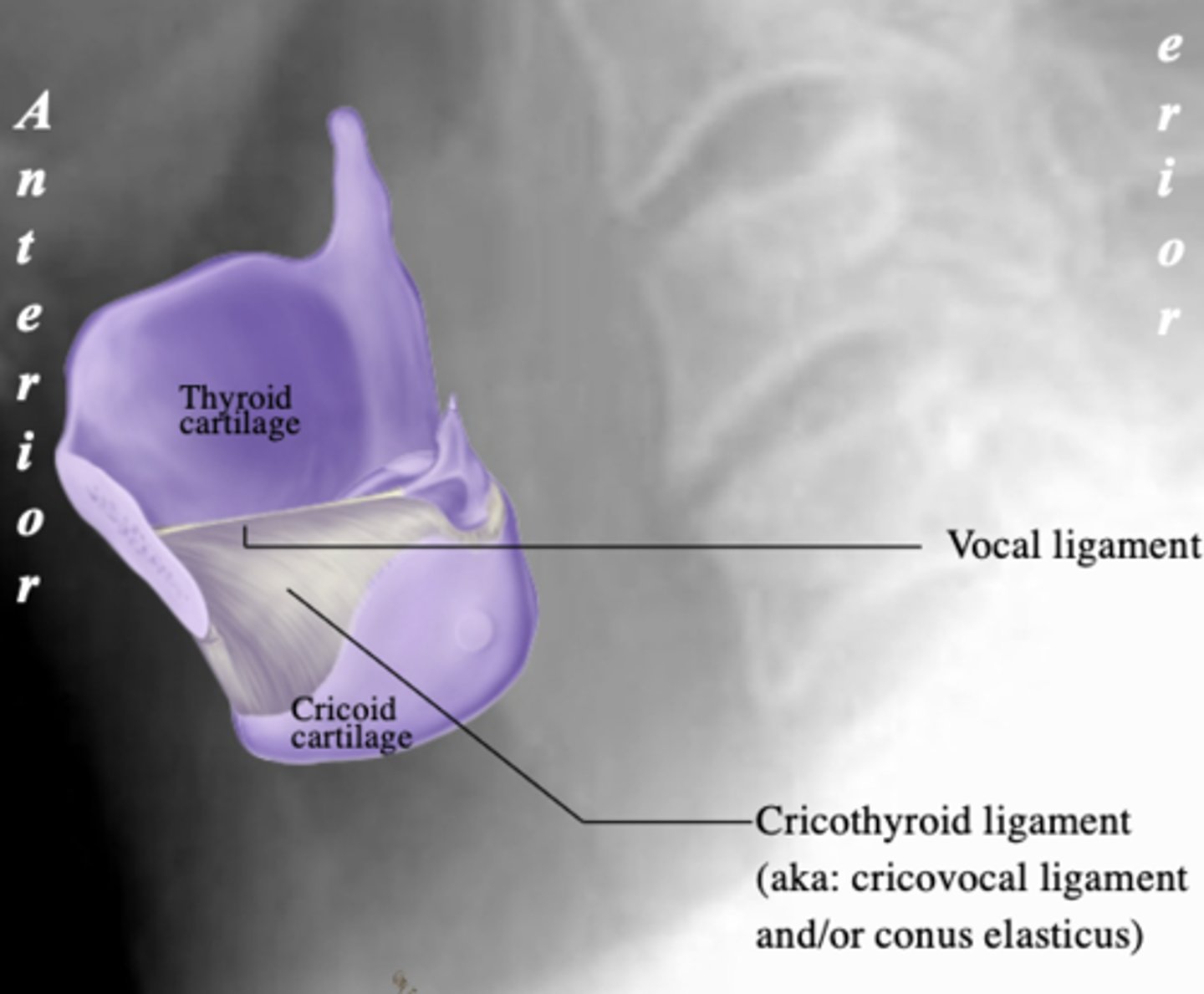
What is formed by the free superior margin of the cricothyroid ligament?
vocal ligament (vocal cord)
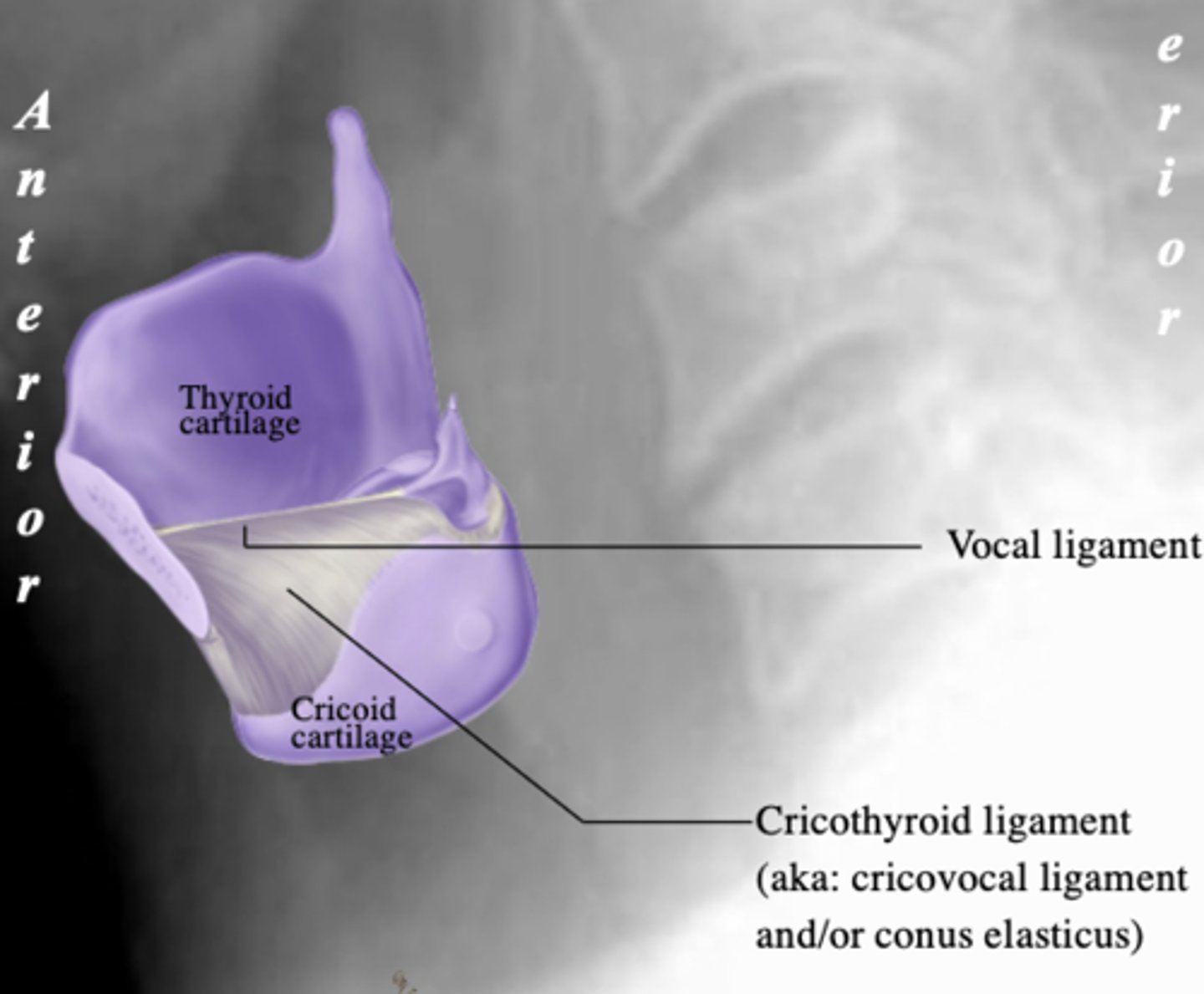
What drapes form from the epiglottis and arytenoid cartilage?
quadrangular membrane
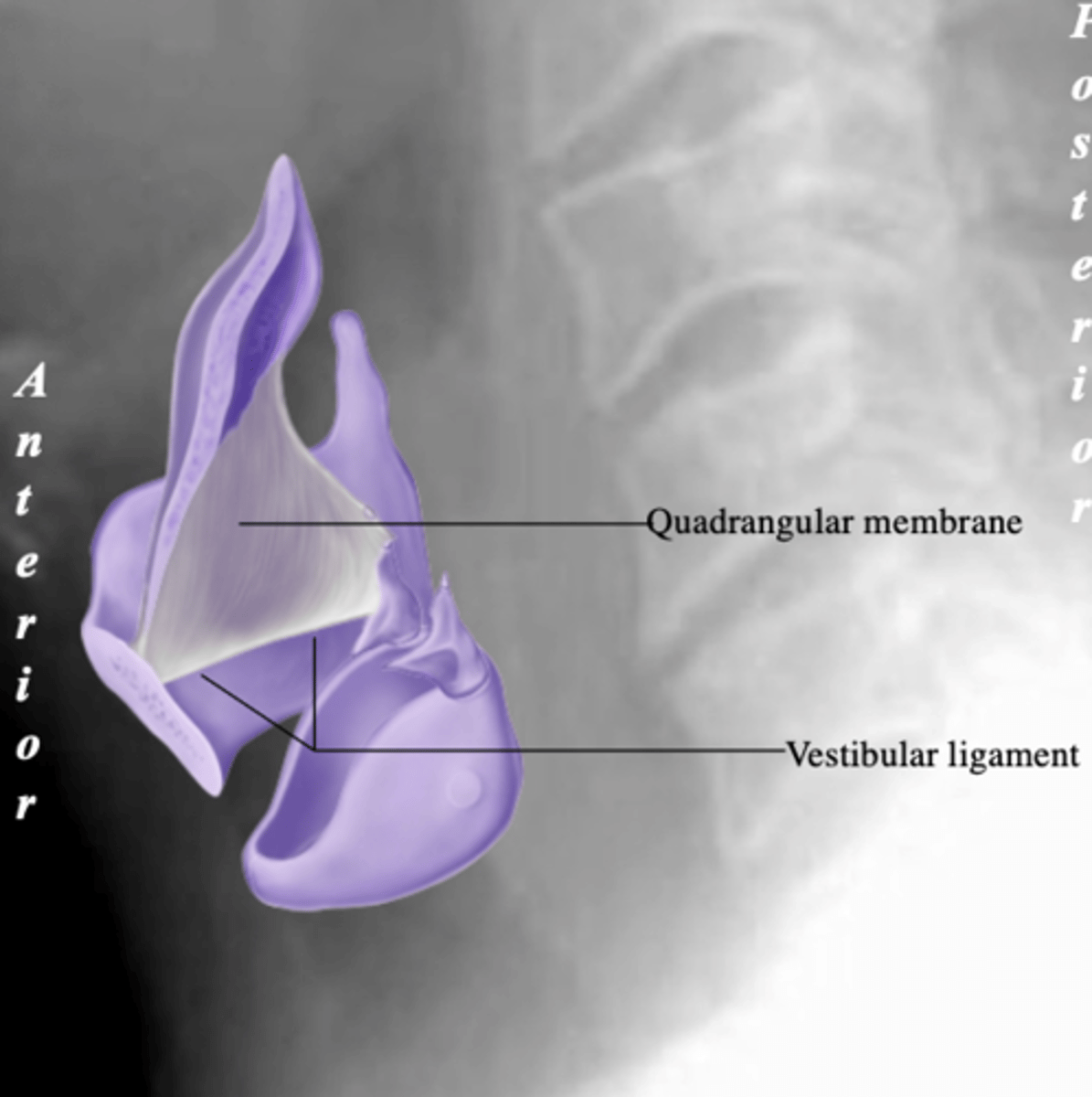
What is formed by the free inferior margin of the quadrangular membrane and extends from the thyroid cartilage TO THE arytenoid cartilage.
vestibular ligament
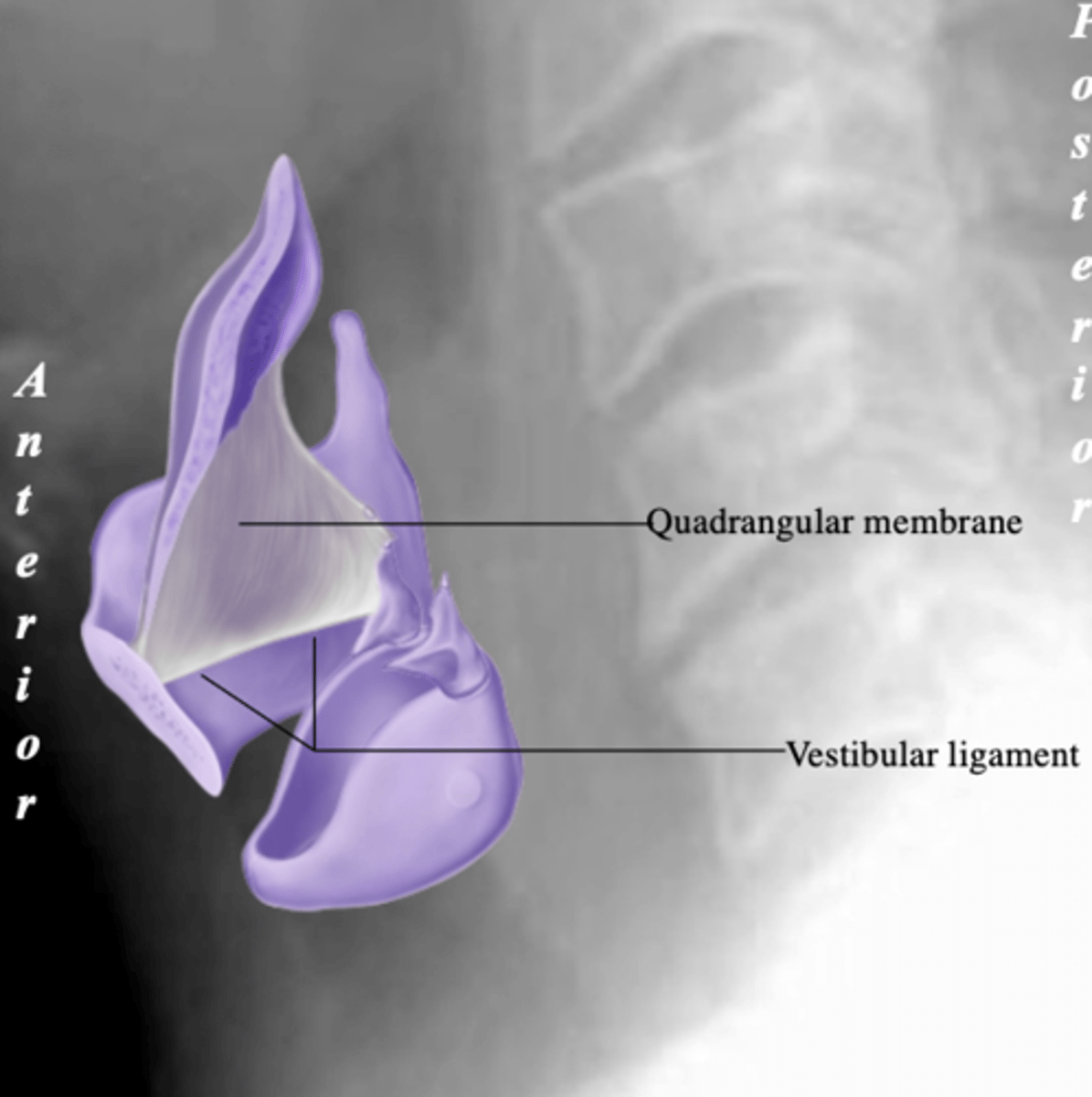
What is referred to at the false vocal cord?
vestibular ligament
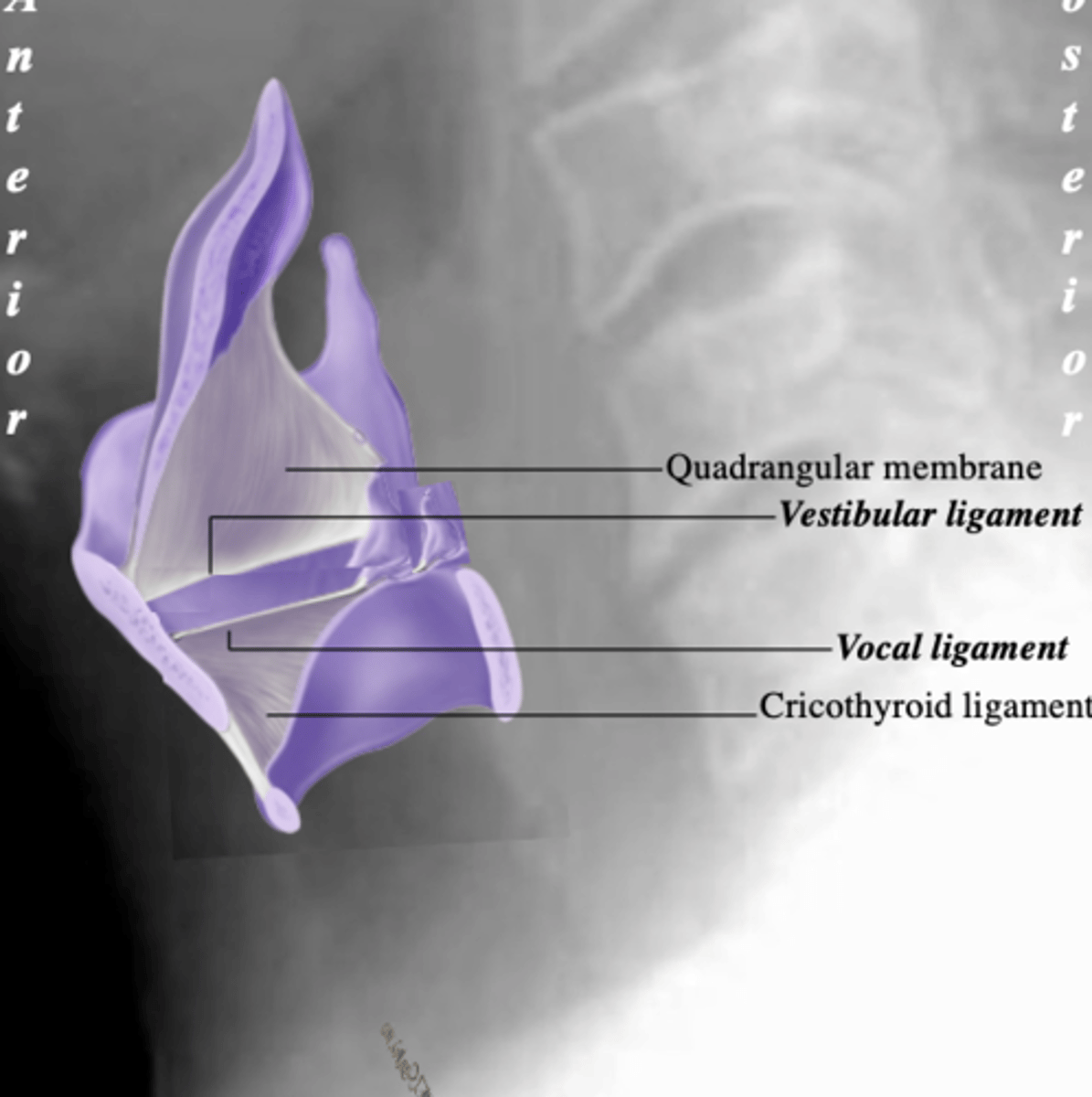
What is the opening between the vocal folds/ligament?
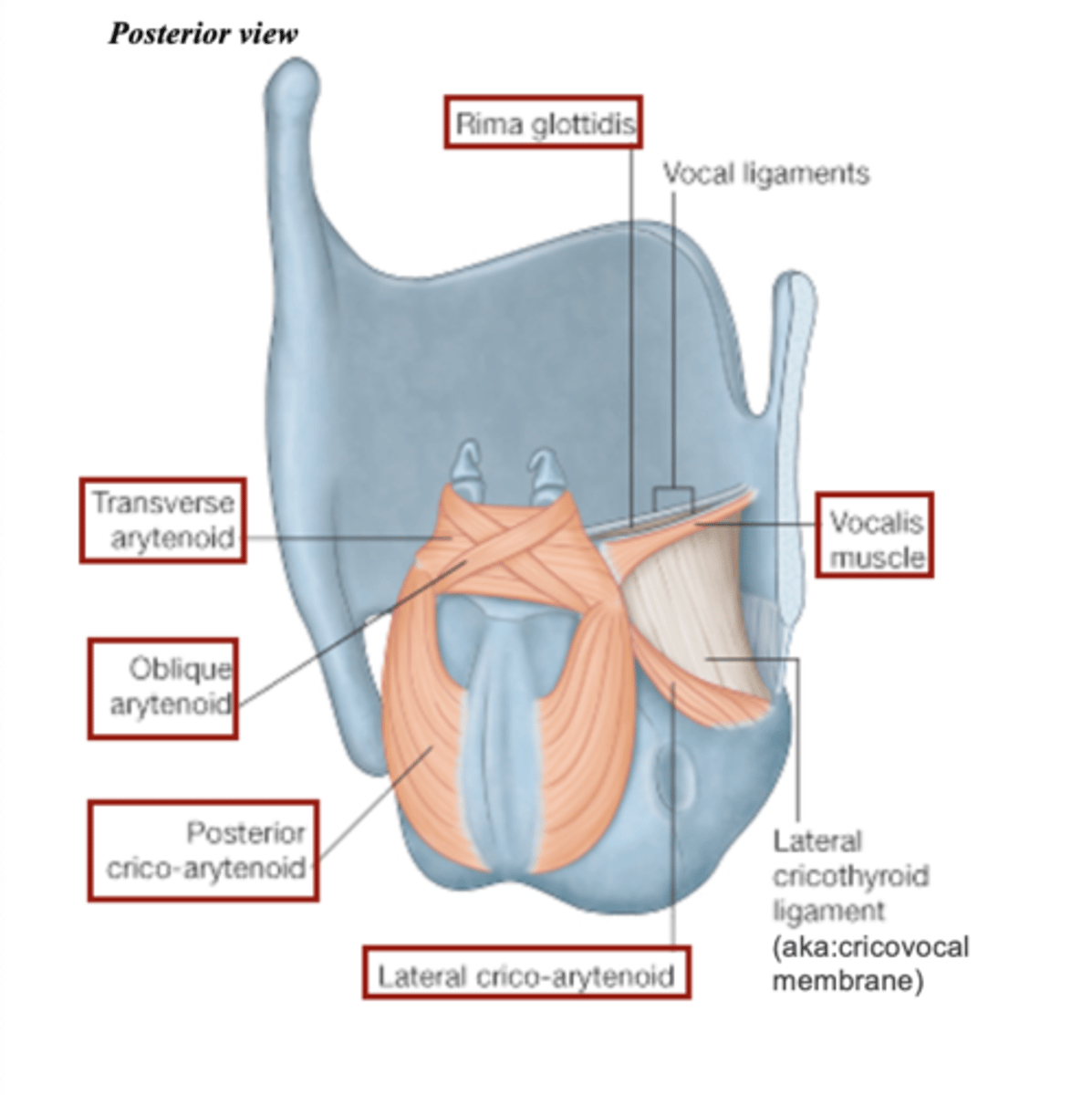
Rima glottidis
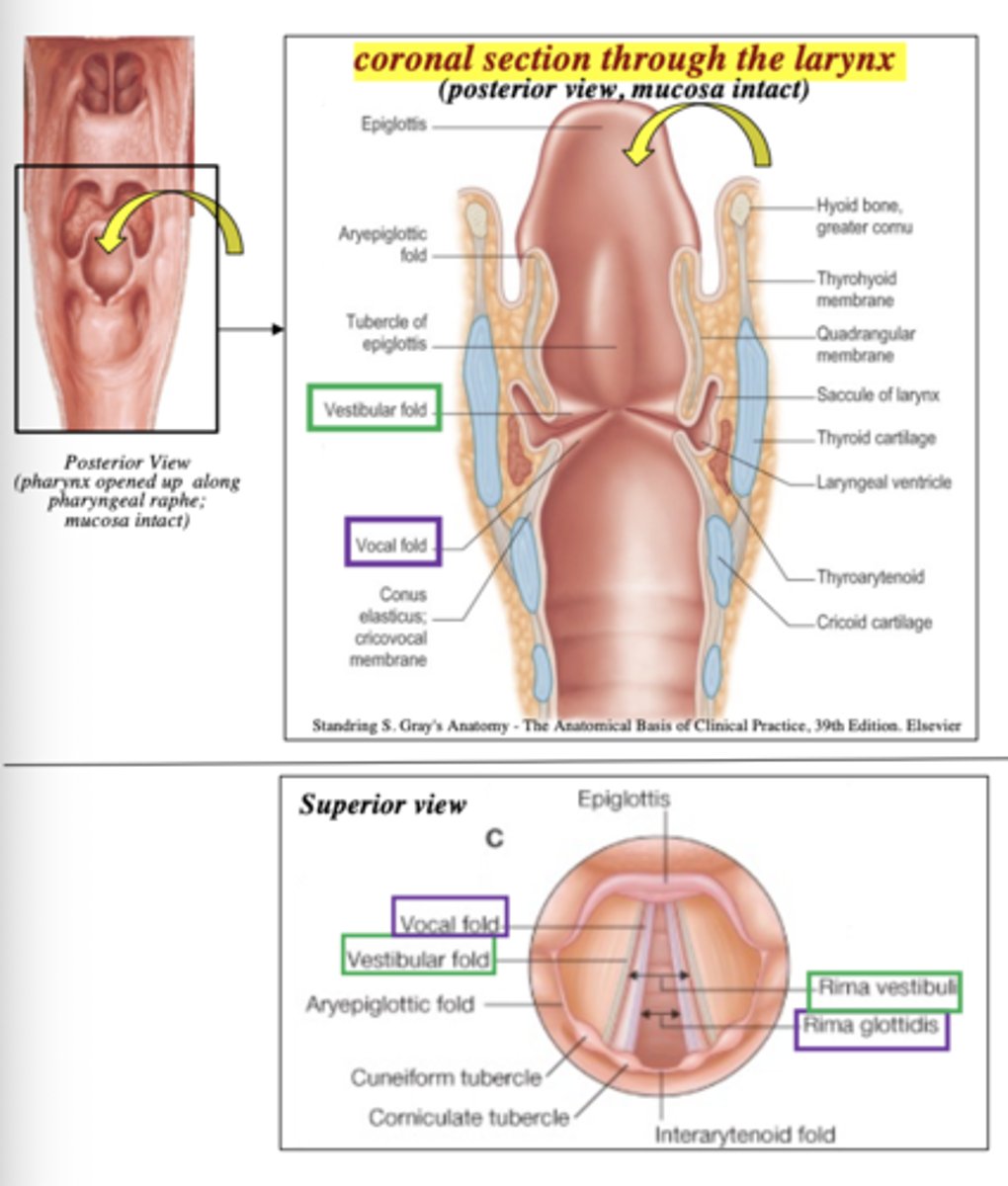
What is the opening between the vestibular folds?
Rima vestibuli
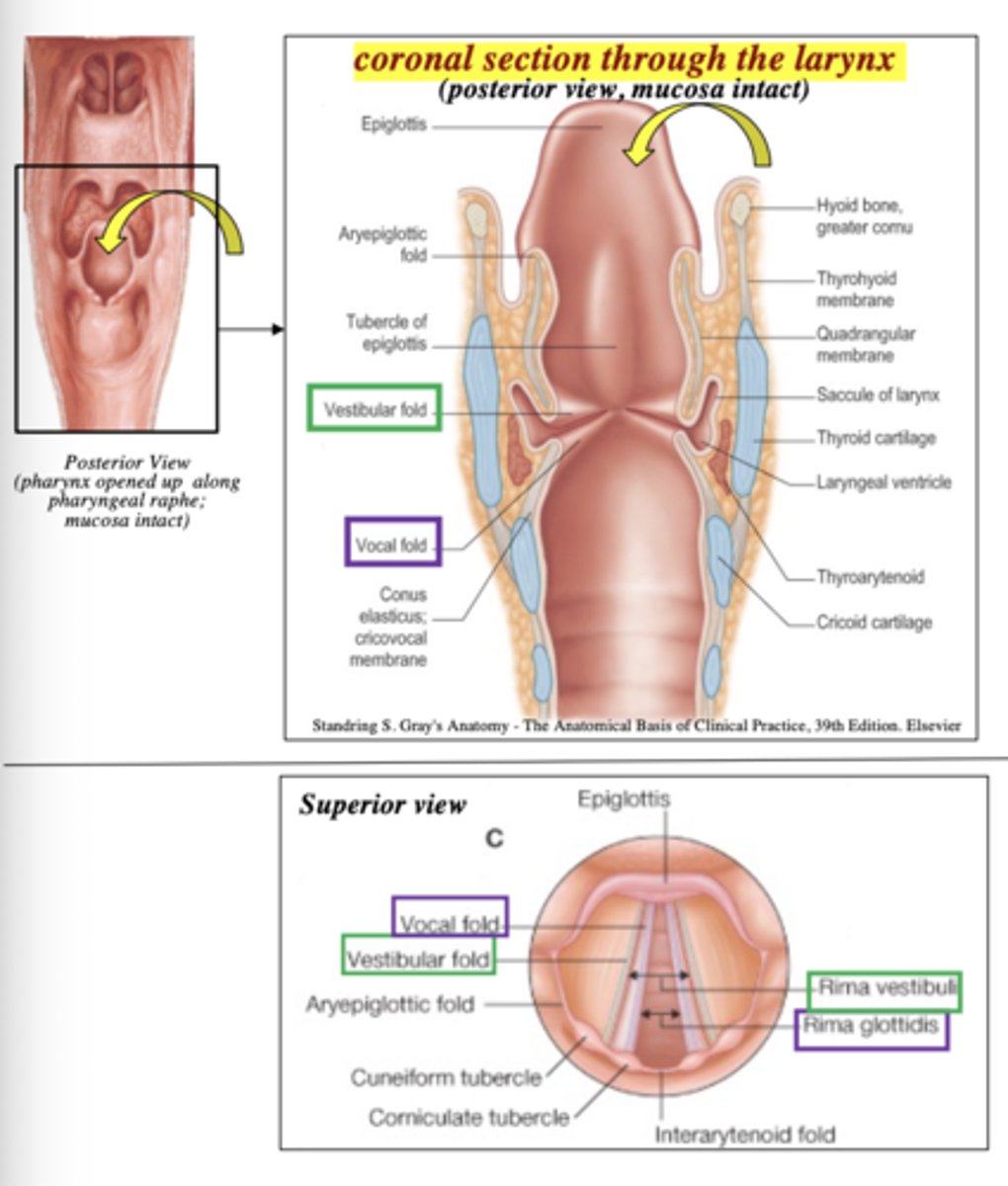
What is the vestibular fold?
Vestibular ligament covered by mucosa
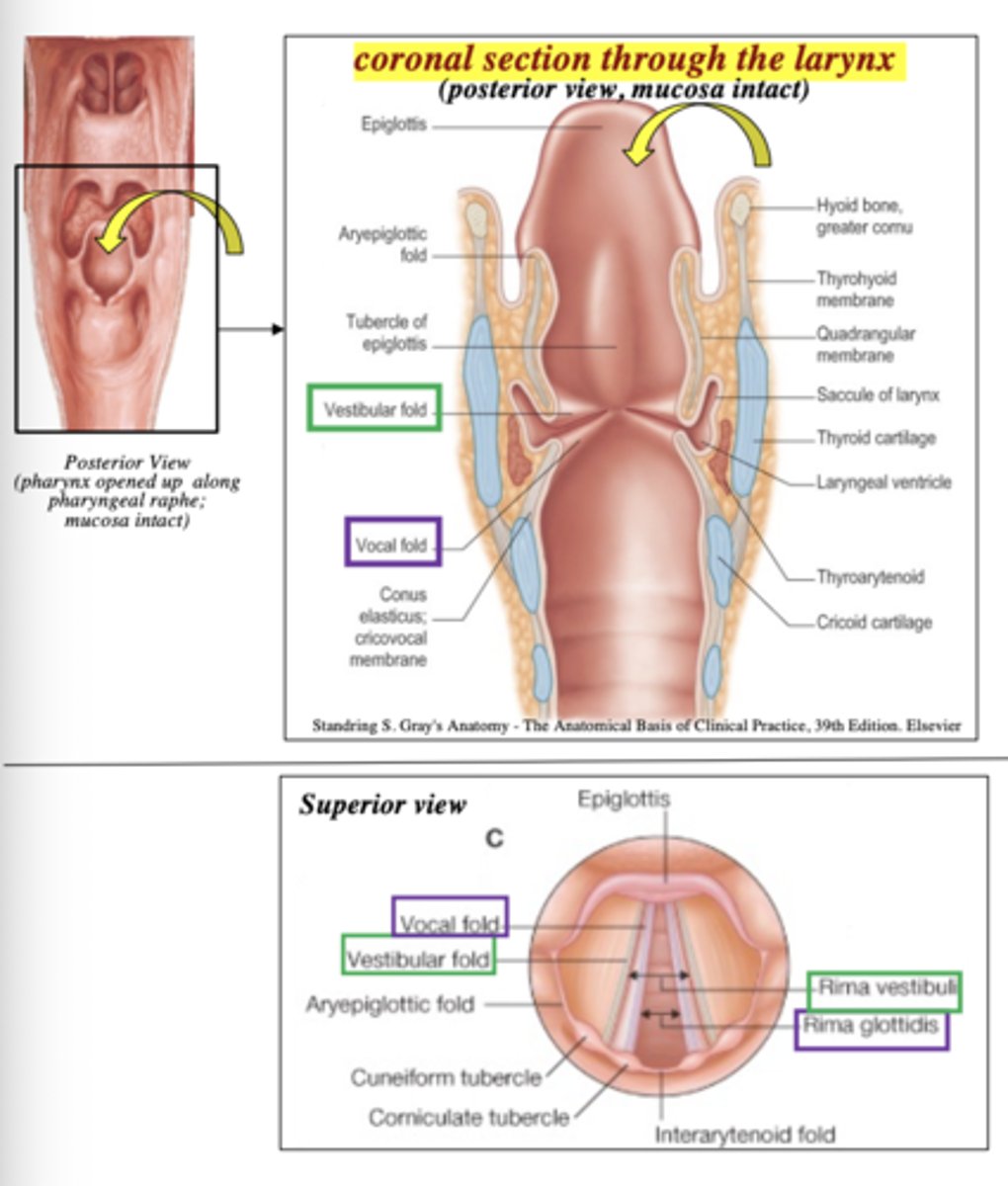
What is the vocal fold?
Vocal ligament covered by mucosa
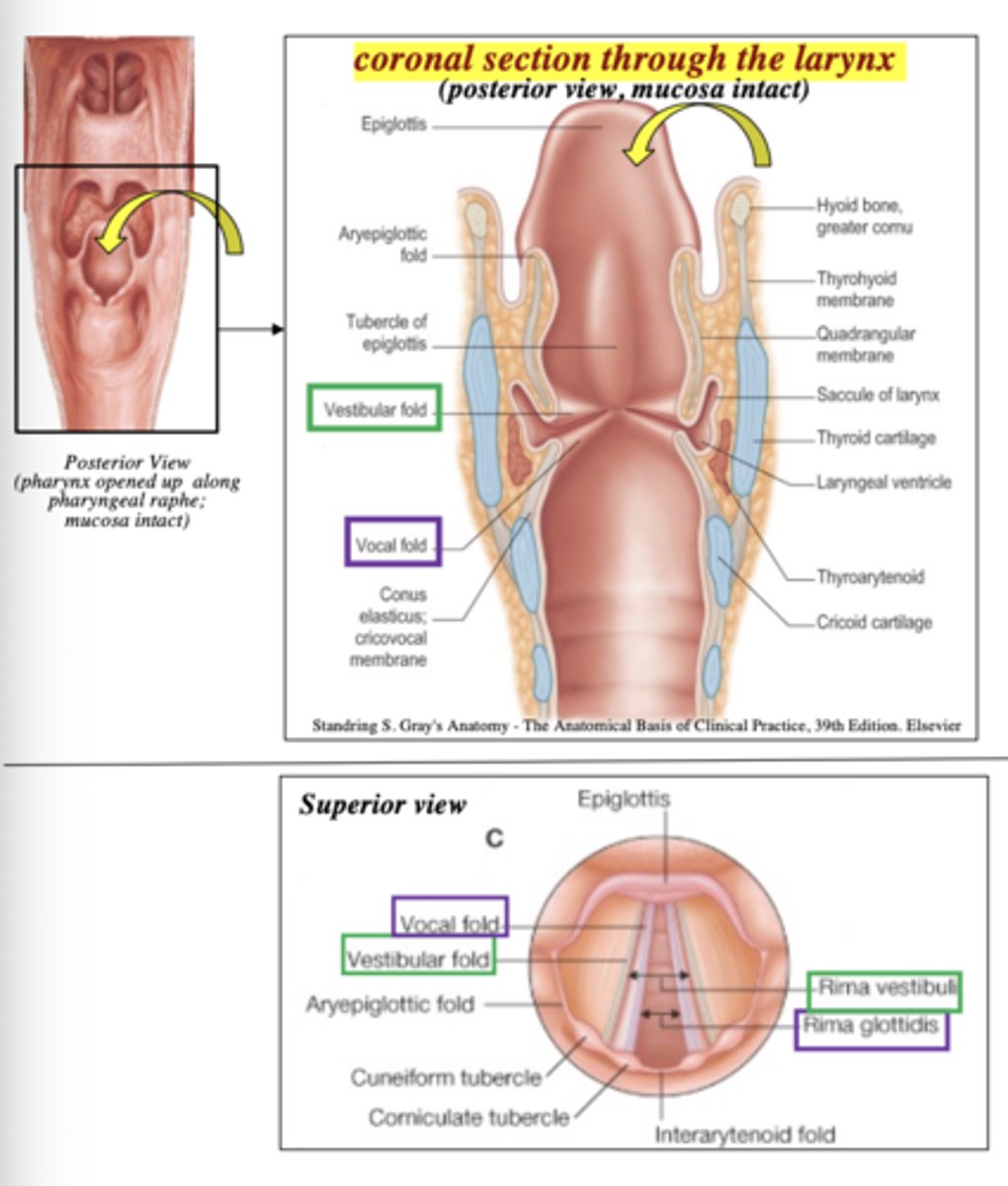
While eating popcorn, you feel that a popcorn kernel has gotten "stuck." You suspect that it is lodged in the piriform recess. The piriform recess is a feature of the ___________.
A) nasopharynx
B) oropharynx
C) larygnopharynx
D) angle of the thyroid cartilage
E) vocalfolds
A) nasopharynx
B) oropharynx
C) larygnopharynx
D) angle of the thyroid cartilage
E) vocalfolds
Extrinsic laryngeal muscles connect the larynx to neighboring structures and move the larynx as a whole. What are the 2 extrinsic laryngeal muscles?
1) infrahyoid muscles
2) suprahyoid muscles
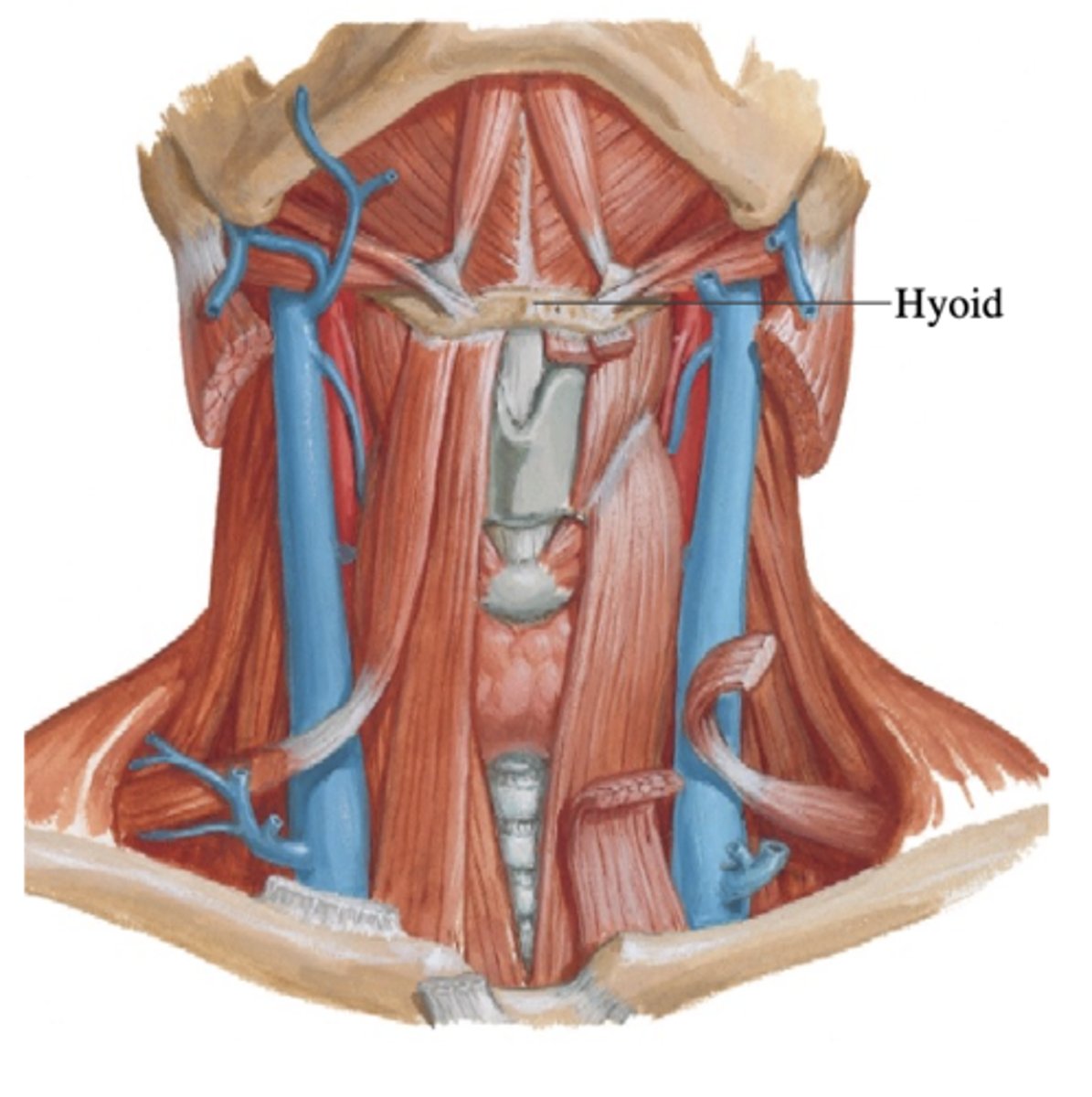
Intrinsic laryngeal muscles move individual laryngeal cartilage and, thereby:
- alter the ________________ and _______________of the vocal ligaments
- alter __________ and ______________ of the rima glottidis
- length and position
- size and shape
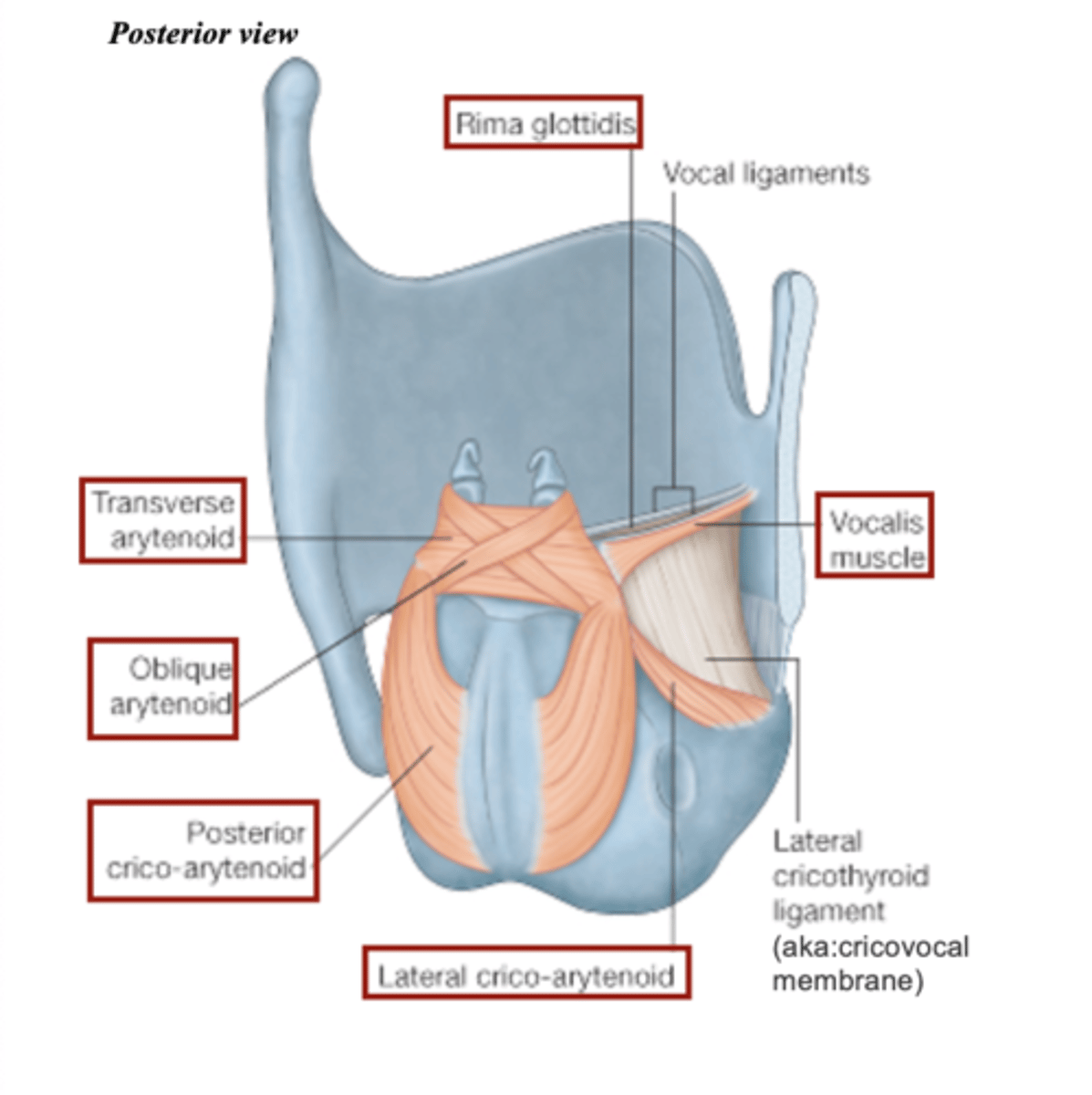
What are the 6 intrinsic laryngeal muscles?
1) Crycothyroid
2) Posterior cricoarytenoid
3) Lateral cricoarytenoid
4) Transverse and oblique arytenoids
5) Vocalis
6) Thyroarytenoid