5. Second Language Acquisition
 Call Kai
 Learn
Learn Practice Test
 Spaced Repetition
 Match
Match Flashcards
 Knowt Play
1/48

There's no tags or description
Looks like no tags are added yet.
Name | Mastery | Learn | Test | Matching | Spaced | Call with Kai |
|---|
No analytics yet
Send a link to your students to track their progress
49 Terms
The biggest difference between L1 and L2 acquisition…
______________: is not age/maturity/cognitive development, but the existence of a first language; L2 learners have a systematic interlanguage grammar (IL). Existence of a first language has the greatest impact

Interlanguage Grammar
______________: a system of mental representations influenced by both the first and the second language and has features of each
An intermediate grammar , Contains features of both L1 (ex. an accent) and L2 (target language).
Evolving, dynamic system of rules and processes (grammar) acquired while a speaker is learning L2
•When IL stops changing (improving), it is said to have fossilized, or reached a plateau
Transfer
______________: a feature or rule from L1 is carried into the IL grammar (ie. syllable- final obstruent devoicing in German)

Cree Phonological Transfer
______________: Cree children making the /f/ sound, they pronounced them as p
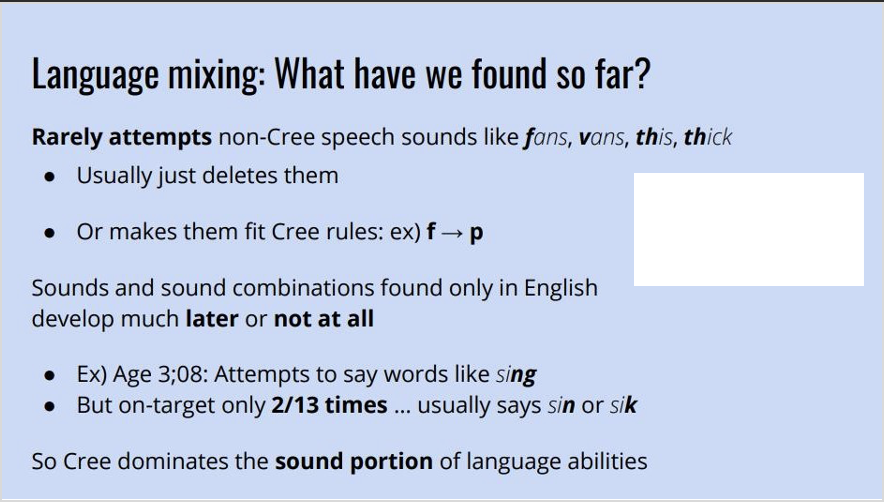
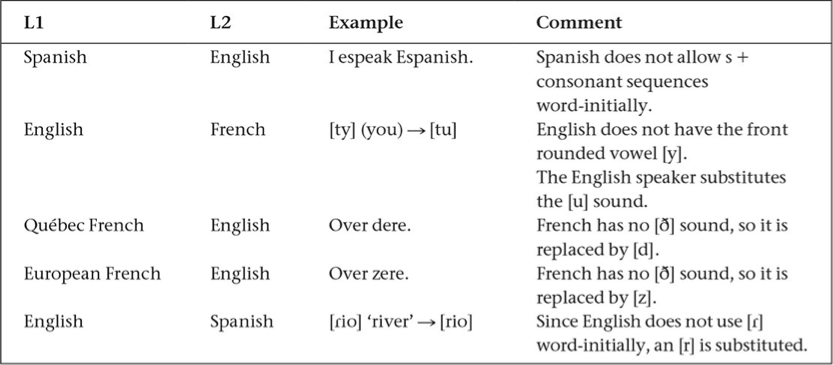
Examples of phonological transfer
______________: An L2 learner’s speech bears resemblance to their L1
The final state of the target language
______________: looks different for different speakers, but in general, the speaker should have some form of proficiency or communicative competence.
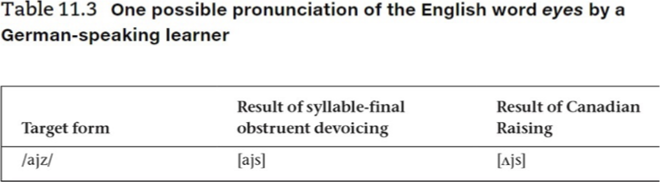
Proficiency/Competence
______________: There is more to language learning than phonetics/phonology, morphology, syntax, and semantics.
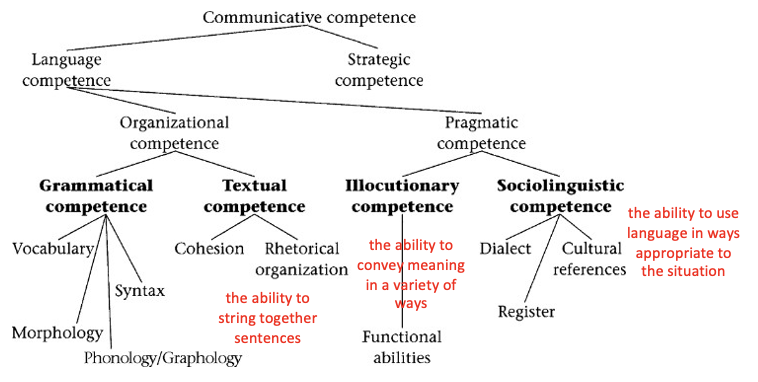
Grammatical Competence
______________: Vocabulary, Syntax, Morphology, Phonology/Graphology
Textual Competence
______________: Cohesion, Rhetorical, the ability to string sentences together
Illocutionary Competence
______________: The ability to convey meaning in a variety of ways, functional abilities (“can you pass the salt”)
Sociolinguistic Competence
______________: The ability to use language in ways appropriate to the situation. Dialect, Cultural references, Register
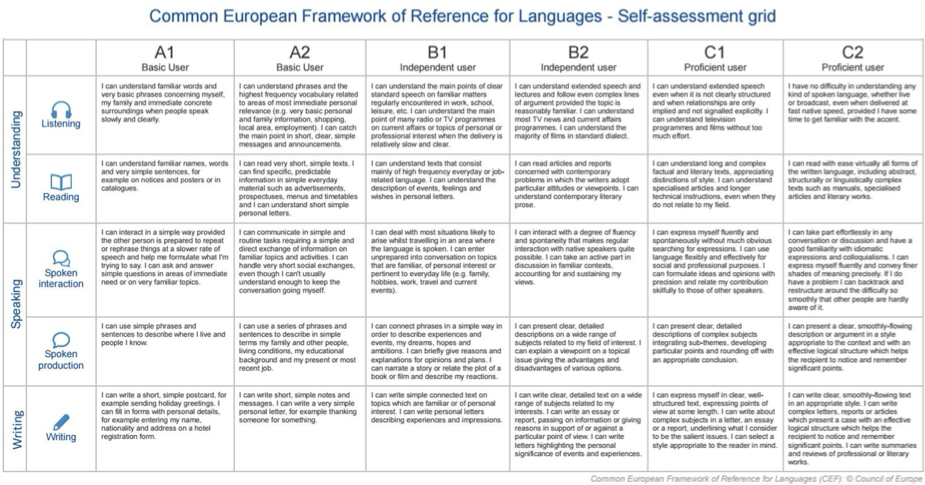
Common European Framework for Reference for Languages (CEFR)
______________: Most common self-assessment globally
Types of Non-Phonetic/Phonological Errors
____________: Found in the acquisition of English
Lexical
Morphological
Syntactic
Lexical Errors
Juana is embarrassed. (meaning ‘pregnant,’ from Spanish embarazada ‘pregnant’)
I live in a two-bedroom department.
Morphological Errors
I didn’t took the car yesterday. (marking the past tense on both auxiliary and main verbs)
She get ups late. (agreement marker on preposition instead of verb)
Syntactic Errors
He drinks frequently tea. (French places the main verb before the adverb.)
There’s the man that I saw him. (Some languages (e.g., Arabic, Turkish) allow pronouns in this position in a relative clause.)
An Accent
__________: is phonological transfer from L1
Most L2 learners will have to learn to produce and perceive some sounds that are not found in their L1
It’s rare a language has the exact same phonemic inventory
We ignore things that are unimportant (ex. aspiration)

Difficult Sounds to Acquire
Unmarked structures: simple and/or common across human languages, acquired first cross-linguistically among children. (/t/)
Marked Structures: Complex or less common, learned later (/θ/)
Marked Differential Hypothesis
Markedness Differential Hypothesis
____________: structures that are typologically marked will be more difficult than their unmarked counterparts for second language learners

Acquiring New Features
___________: Features that are absent in the L1 can be acquired in the L2
Ex. Prosodic Phonology
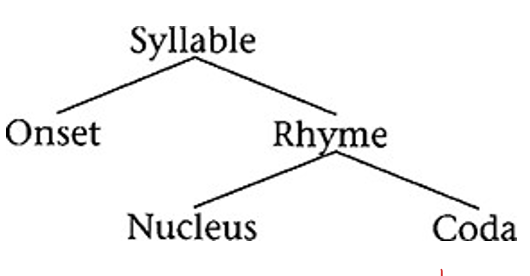
Languages vary on what segments they allow in onset, nucleus, and coda position.
English is very permissive, allowing multiple-consonant clusters in onset (spring) and coda (sixths), as well as syllabic consonants in nucleus position (mitten).
Many languages, like Hawaiian, have a strict (C)V structure (allowing no coda)
Language learners must learn to both perceive and produce L2 features absent in their L1 (illusory vowels)
Prosodic Phonology
ex. most varieties of Arabic do not allow more than one consonant at the beginning of a syllable, so that the longest possible syllable is CVC
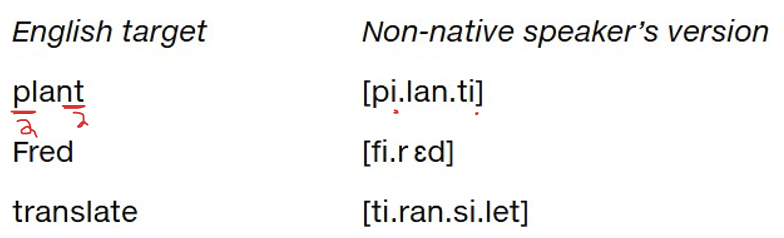
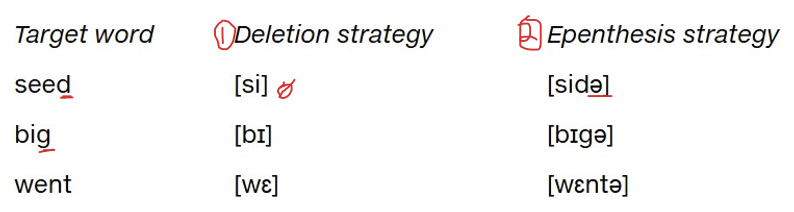
Deletion & Epenthesis Strategy
__________: As learners’ proficiency increases, they make more epenthesis repairs than deletion repairs.
Mandarin Chinese allows only /n/ and /ŋ/ in coda position
Illusory Vowels
__________: Studies done with L2 learners whose L1s do not allow [s]+consonant clusters (such as [st], [sn], [sl]) reveal that perceptual accuracy is low in experimental tasks
The Japanese, Thai, and Brazilian Portuguese subjects had error rates ranging between 50-72% in perceiving these clusters. They heard an ______________ in these stimulus items. For these subjects, it seems that their non-targetlike production stems from non-targetlike perception. And the non-targetlike perception results from a non-targetlike interlanguage grammar.
Spanish doesn’t have [sp] at the beginning, they heard the vowel when there wasn’t one.
![<p><span style="font-family: "Arial MT";"><strong>__________: </strong></span><strong>Studies done with L2 learners whose L1s do not allow [s]+consonant clusters (such as [st], [sn], [sl]) reveal that perceptual accuracy is low in experimental tasks</strong></p><ul><li><p>The Japanese, Thai, and Brazilian Portuguese subjects had <strong>error rates </strong>ranging between <strong>50</strong>-<strong>72</strong>% in perceiving these clusters. <em>They heard an ______________ in these stimulus items. </em>For these subjects, it seems that their non-targetlike production stems from non-targetlike <em>perception</em>. And the non-targetlike perception results from a non-targetlike interlanguage grammar.</p></li><li><p>Spanish doesn’t have [sp] at the beginning, they heard the vowel when there wasn’t one.</p></li></ul><p></p>](https://assets.knowt.com/user-attachments/6c71830d-a68e-4c66-80be-798474c08bc7.png)
Factors Affecting Additional Language Acquisition
Age
Individual Differences/Affective Factors
Motivation & Degree of motivation
Sex
Cognitive Style
Sensory Preference
Personality
Learning Strategies
Age Factor
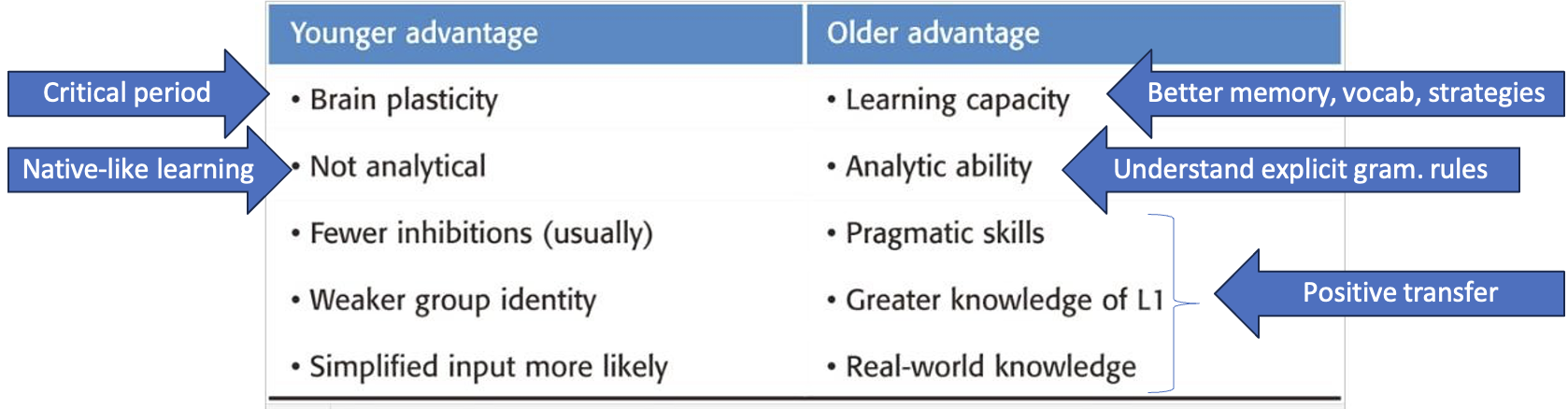
___________: In general, people who begin learning L2 before the age of 6 can achieve native-like speech and are more successful at acquiring language. The results for people who start learning between the ages of 7 and 14 are much more varied. Some end up with native-like speech, and some do not.
There is no current evidence of anything biological (like brain lateralization) that prevents adults from acquiring proficiency in a second language.
Recent research demonstrates that people who start learning their second language as adults are able to reach a final state that is indistinguishable from native speakers.
Are children more successful L2 learners than adults?
_________: The initial rate (the speed at which L2 material is learned early in the L2 learning process): adults have an advantage. Ultimate achievement (the “end” result of L2 study): children are more successful.
As a result, children may learn better in a naturalistic/informal way, while adults may learn better with formal instruction
Sex Factors
_________: Women outperform men in some verbal fluency tests (finding words that begin with a certain letter)
Women’s brains may be less asymmetrically organized than men’s for speech
Women seem to be better at memorizing complex lexical forms, while men are better at computing compositional rules
Higher androgen levels correlate with better automatized skills, while higher estrogen correlates with better semantic/interpretive skills
Women report higher levels of articulatory and motor ability when experiencing high estrogen levels during the menstrual cycle
Verbal Tasks & The Menstrual Cycles
A female advantage for verbal fluency and verbal memory is well documented. Accordingly, the predominant hypothesis for menstrual cycle studies on verbal fluency and memory has thus been that women should perform better at these tasks during time-periods of high estrogen levels, i.e., during the late follicular phase or mid-luteal phase.
The most frequently used tasks include verbal fluency and verbal recall, but tests reflecting semantic retrieval and implicit verbal memory have also been employed. Relatively few studies have documented any significant findings across the menstrual cycle and no consistent pattern, according to the above hypotheses, emerges
Two imaging studies have evaluated verbal tasks across the menstrual cycle. In line with the behavioral results, found no difference in brain activation during verb generation between women examined in the early follicular and late follicular/early luteal phase.
Dietrich, using a similar task, on the other hand reported on increased activation of a number of language related areas (BA 45/46, 6, and 40) during the late follicular phase in comparison with the early follicular phase
Aptitude Factors
_________: The hypothesis that possessing various degrees of certain abilities predicts correlated degrees of success in L2 acquisition.
L2 success may be gained by _________ in a combination or a single component
Language learning __________ “is not completely distinct from general cognitive abilities, as represented by intelligence tests, but it is far from the same thing.”
Carroll (1965) proposed four components underlying the language “talent”: Phonemic coding ability, Inductive language learning, grammatical sensitivity, associative memory capacity.
4 Components of Language “Talent” (Carol)
Phonemic coding ability: the capacity to process auditory input into segments that can be stored and retrieved; allows input to become intake (fully processable); the ability to analyze speech into phonemes
Inductive language learning ability: the capacity to discover rules, patterns, generalizations, etc. by observing examples
Grammatical sensitivity: the ability to recognize the grammatical functions of words within sentences, the awareness of syntactic patterns
Associative memory capacity: the ability to learn, store, recall, and use linguistic items, like remembering a name
The Defensive Language Aptitude Battery (DLAB)
__________: is a standardized government test, approximately two hours in length, used to determine the natural ability of armed services members to learn a foreign language.
difficult to study, as it’s designed to measure language-learning potential, not current knowledge.
Gibberish language, studying the grammatical rules that apply to each specific section of the test and knowing what to expect, will give you a definite advantage
Military, linguist, cryptographer, signal intelligence
Cognitive Style Factors
_________: Particular cognitive styles (field independence, focus on form) may lead to greater success. A learner’s preferred way of processing (perceiving, conceptualizing, organizing, recalling information)
AGE: adults tend to extend existing categories in L1 to L2, while children notice differences and tend to create new categories accordingly
English vs. Spanish [t]
![<p><strong>_________: Particular cognitive styles (field independence, focus on form) may lead to greater success.</strong> A learner’s preferred way of processing (perceiving, conceptualizing, organizing, recalling information)</p><ul><li><p><span><span>AGE: adults tend to extend existing categories in L1 to L2, while children notice differences and tend to create new categories accordingly</span></span></p><ul><li><p><span><span>English vs. Spanish [t]</span></span></p></li></ul></li></ul><p></p>](https://assets.knowt.com/user-attachments/c306f92c-06c5-4335-bf02-3f90827faf6a.png)
Perception
Cognitive Factors
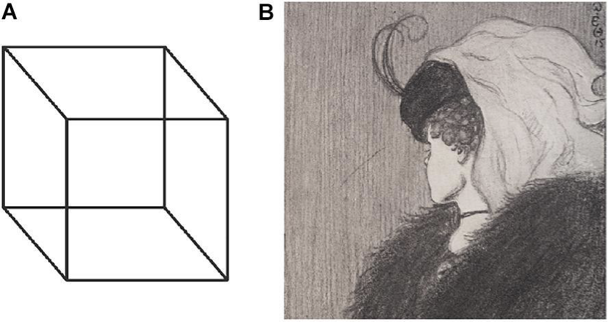
__________: Individuals who have difficulty discerning a figure apart from the ground (or field) within which it is embedded are FIELD DEPENDENT. Individuals who have no difficulty with this test are FIELD INDEPENDENT.
Learners who can easily disassemble or restructure visual stimuli and rely on internal vs. external referents (FD) are considered more global and holistic in processing new information; individuals who are FI are more particularistic and analytic, maybe better at learning language
Focus on Form
_________: Talented L2 learners may have the ability to focus more on ____ than on meaning
Form
Attention to ling. features of the language
Grammatical rules and constructs
Analyze a text in terms of how it represents the rules of the language
Meaning
No attention to formal elements of the language
Understanding the message
Focus on the text’s message
Sensory Preference
________: No means has an inherent advantage over the others, but learners feel more comfortable when the instructional strategies are congruent with their preference.
Visual: Learn through seeing
Auditory: Learn through listening
Kinesthetic (movement-oriented),
Tactical (touch-oriented)
Personality Factors
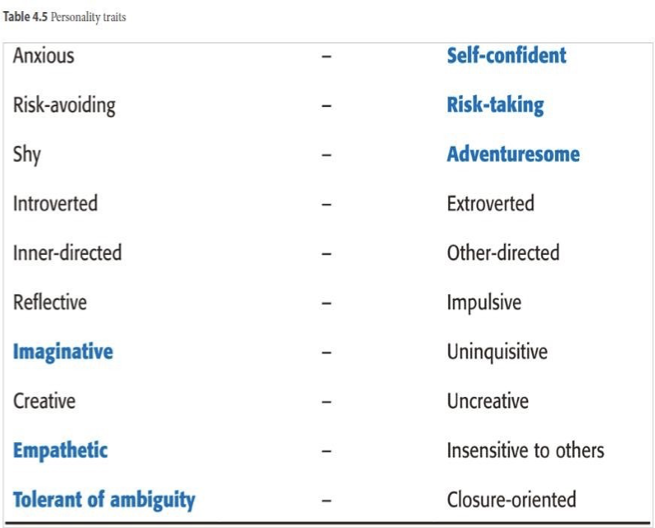
_________: Higher anxiety correlates negatively with measures of L2 proficiency, while lower anxiety correlates with self-confidence and risk-taking/adventurous traits
Successful language learners might feel less anxious in L2 situations, and thus be more self-confident
Instructional context or task influences anxiety levels (e.g. exams vs. writing exercises, whole-class vs. small group activities)
Cultural differences may influence anxiety level (e.g. oral performance may cause more anxiety in cultures like Korean which place a high value on “face” or projecting a positive self-image)
Low anxiety and high self-confidence increase motivation and social interaction, which have a positive impact on L2 learning
Learning Strategy Factors
____________: Some learning strategies (e.g., metacognition) are more effective than others, linked to motivation, cognitive style, personality, cultural-specific socialization
Metacognitive, Cognitive, Social/Affective
Good learners have the following major traits:
Concern for language form (but also attention to meaning)
Concern for communication
Active task approach (engaged in the learning process)
Awareness of the learning process (metacognition)
Capacity to use strategies flexibly in accordance with task requirements
Complexity Theory
___________: views L2 learning as a complex, interconnected and changing system that integrates linguistic, social, and psychological factors
Metacognitive Learning Style
____________: regulate language learning by planning and monitoring;
e.g. previewing a concept or principle in anticipation of a learning activity; deciding to advance to attend to specific aspects of input; rehearsing linguistic components which will be required for an upcoming language task; self- monitoring of progress and knowledge states
Cognitive Learning Style
____________: make use of direct analysis or synthesis of linguistic material;
e.g. repeating after a language model; translating from L1; remembering a new word in L2 by relating it to one that sounds the same in L1, or by creating vivid images; guessing meanings of new material through inferencing
Social/Affective Learning Style
____________: involves interaction with others;
e.g. seeking opportunities to interact with native speakers; working cooperatively with peer to obtain feedback or pool information; asking questions to obtain clarification; requesting repetition, explanation, examples
Individual Differences/Affective Factors
E.g. motivation largely determines level of effort, which learners expend at various stages in their L2 development, often a key to ultimate level of proficiency.
Instrumental or Integrative
The degree of motivation (rather than the type) correlates with the degree of success.
Significant goal or need
Desire to attain the goal
Perception that learning L2 is relevant to fulfilling the goal or meeting the need
Belief in the likely success or failure of learning L2
Value of potential outcomes/rewards
Integrative Motivation
_________: Interest because of a desire to learn about or associate with the people who use it (e.g. for romantic reasons), learning about a particular culture or fitting in
Intention to participate or integrate in the L2-using speech community
Emotional or affective factors are dominant
Instrumental Motivation
__________: wanting to learn the L2 for a specific goal or reason (pass a language requirement, get a job). Purely practical value in learning L2.
increasing occupational or business opportunities, enhancing prestige and power, accessing scientific and technical information, or just passing a course in school
Fossilization
_______________: when the interlanguage grammar “freezes” or plateaus. Tends to happen when a certain level of linguistic competency is achieved: the speaker “fluent enough” with their current knowledge, so there is not further need to perfect/correct pronunciation, form, or structure.
Reasons for it:
Motivation (complacency/desire)
Lack of opportunity/exposure
Personality, cognitive style, age, etc.
Second Language
____________: typically, an official or societally dominant language needed for education, employment, and other basic purposes
Often acquired by minority group members or immigrants who speak another language natively
Foreign Language
____________: one not widely used in the learners’ immediate social context which might be used for future travel or other cross-cultural communication situations, or studied as a curricular requirement or elective for school, but with no immediate or necessary practical application
Library Language
____________:Functions primarily as a tool for further learning through reading, especially when books or journals in a desired field of study are not commonly published in the learners’ native tongue
Auxiliary Language
____________: One which learners need to know for some official functions in their immediate political setting, or will need for purposes of wider communication
First language serves most other needs in their lives