12: Phlebotomy Practice Quiz
 Call Kai
 Learn
Learn Practice Test
 Spaced Repetition
 Match
Match Flashcards
 Knowt Play
1/14

There's no tags or description
Looks like no tags are added yet.
Name | Mastery | Learn | Test | Matching | Spaced | Call with Kai |
|---|
No analytics yet
Send a link to your students to track their progress
15 Terms
Prior to performing a phlebotomy procedure, a medical assistant should ask the patient to verify which of the following information?
A. Patient's account number
B. Patient's power of attorney
C. Patient's phone number
D. Patient's date of birth
D. CORRECT. The patient's date of birth must be verified for proper identification prior to the phlebotomy procedure.
A. The patient's account number is internal information that is provided on the requisition form. The patient is not required to verify this information.
B. The patient's power of attorney is not required information for a phlebotomy procedure.
C. The patient's phone number is not required information for a phlebotomy procedure.
A medical assistant is obtaining samples for a CBC test. Which of the following tubes should the medical assistant select?
A. Royal blue
B. Lavender
C. Yellow
D. Gray
B. CORRECT. A lavender tube is used for hematology tests. It is the appropriate tube for a CBC test.
A. A royal blue tube is used for chemistry trace elements tests.
C. A yellow tube is used for blood or bodily fluid tests.
D. A gray tube is used for chemistry tests, specifically glucose and alcohol level tests.
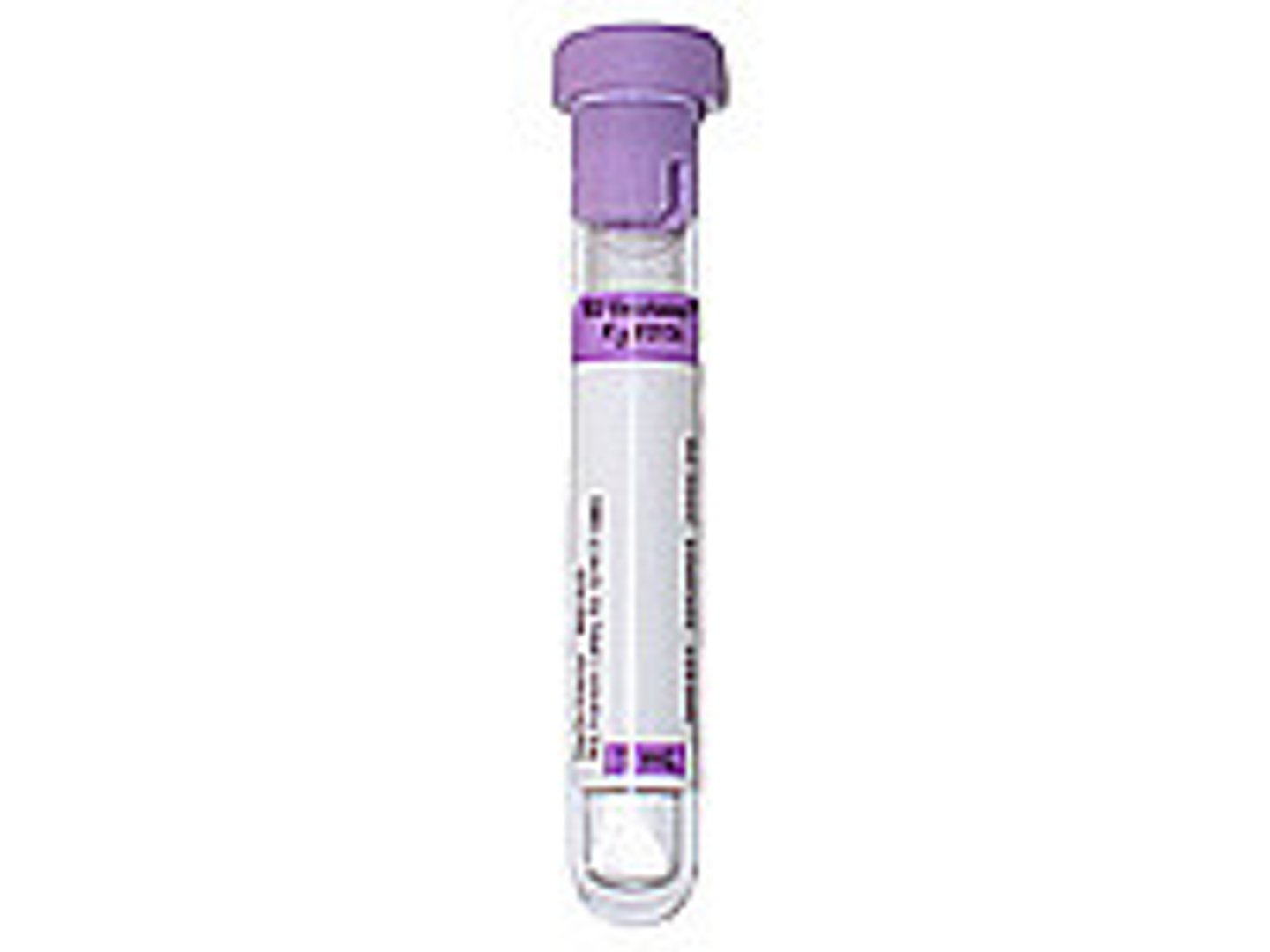
A medical assistant is obtaining a sample for an erythrocyte sedimentation rate (ESR) test. Which of the following tubes should the medical assistant use for blood collection?
A. Serum separator
B. Green
C. Lavender
D. Light blue
C. CORRECT. A sedimentation rate test requires the use of a lavender tube for proper processing. The lavender tube contains EDTA, which helps to remove calcium and prevent coagulation.
A. A serum separator tube is not the proper tube for an ESR test.
B. Green tubes contain the additive heparin, which helps prevent coagulation.
D. Light blue tubes are used for pediatric specimen collection.
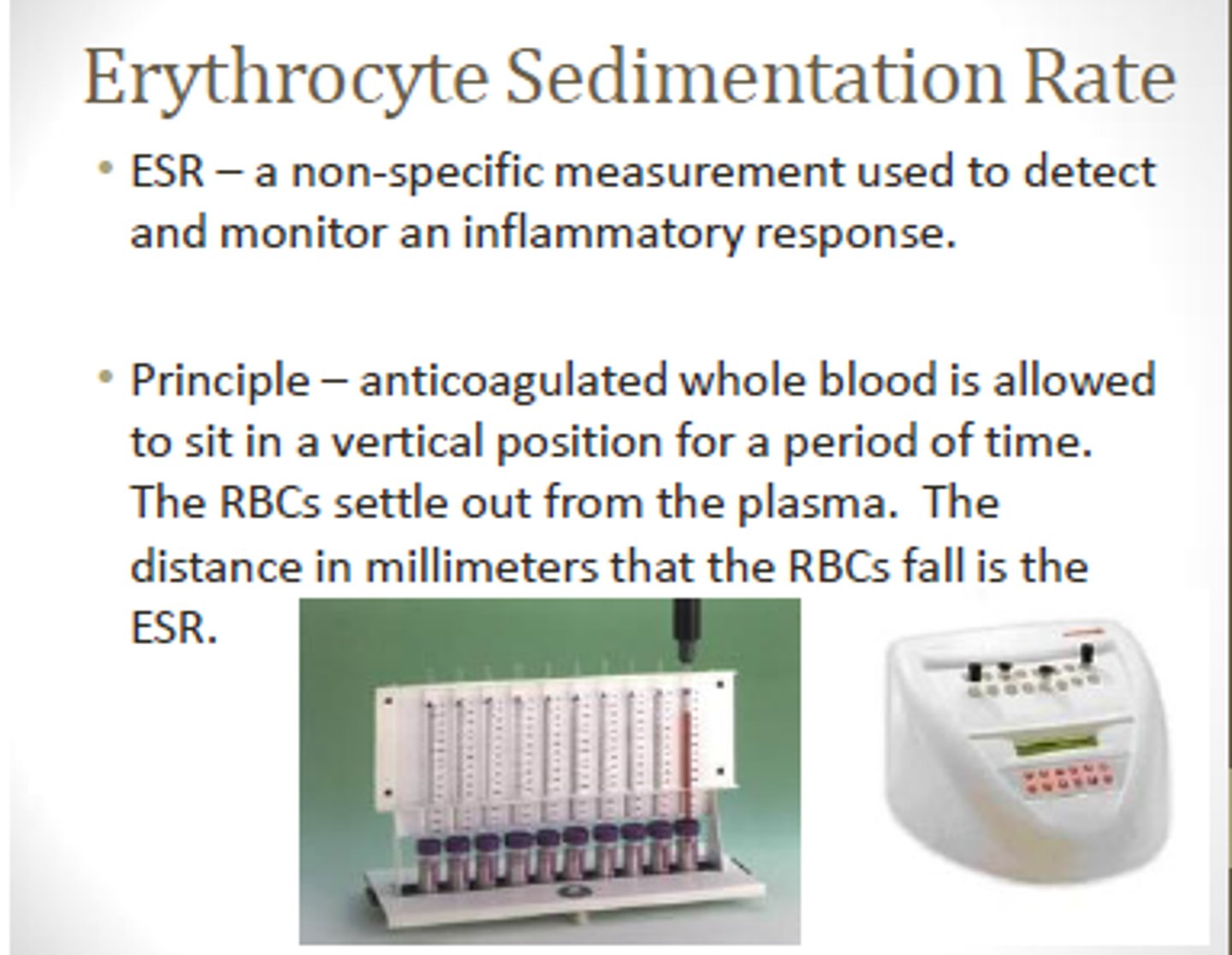
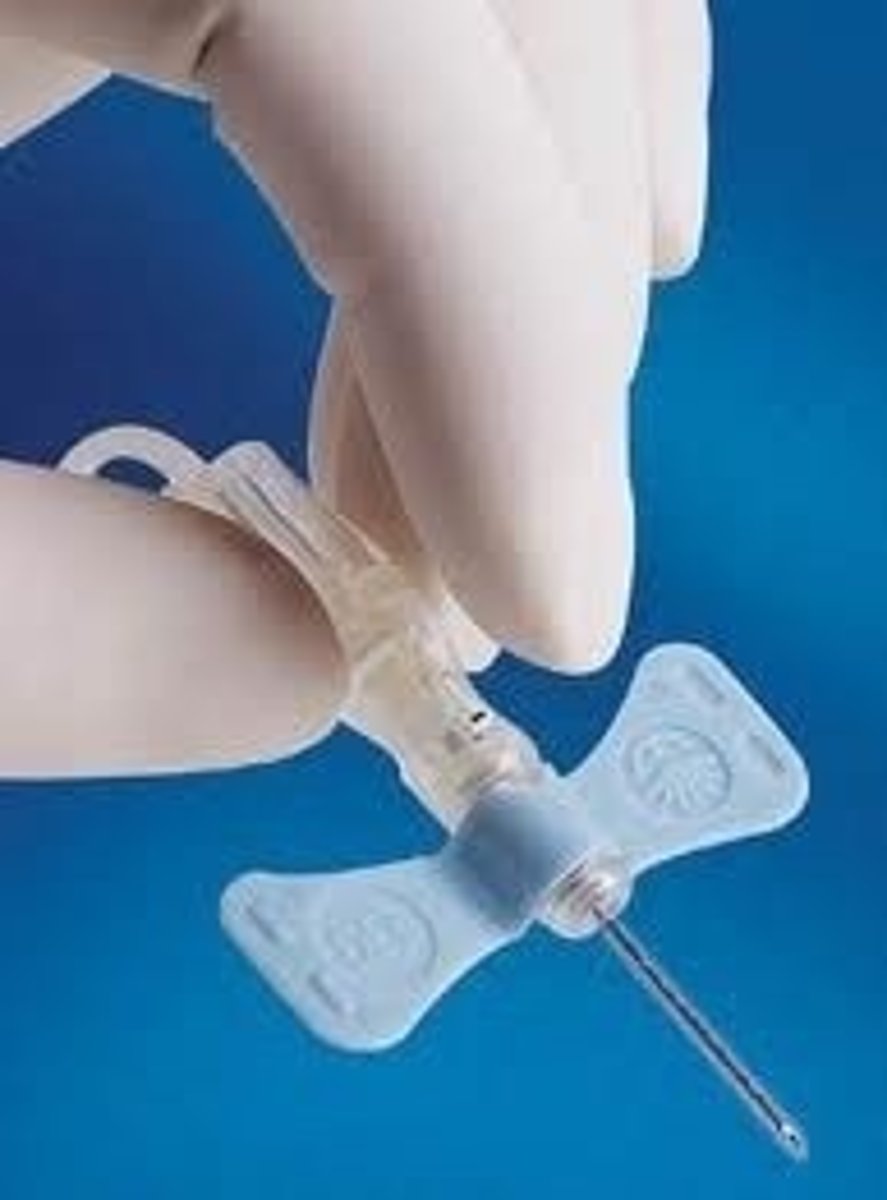
A medical assistant is performing phlebotomy on an 80-year old patient who has small veins. Which of the following venipuncture methods should the medical assistant use for this patient?
A. Finger puncture
B. Evacuated tube
C. Heel stick
D. Butterfly needle
D. CORRECT. For better control and less pressure, the medical assistant should use the butterfly needle method for an older adult patient who has small veins.
A. A finger puncture is a form of capillary puncture. It is performed when the test requires a very small sample and as a last resort for older adult patients who have no acceptable veins to use.
B. Small veins tend to collapse when using the evacuated tube method. This method is not the preferred for use on a patient who has small veins.
C. A heel stick is a form of capillary puncture. It
is performed when the test requires a very small sample and is typically used on infants who are younger than 1 year old and not walking.
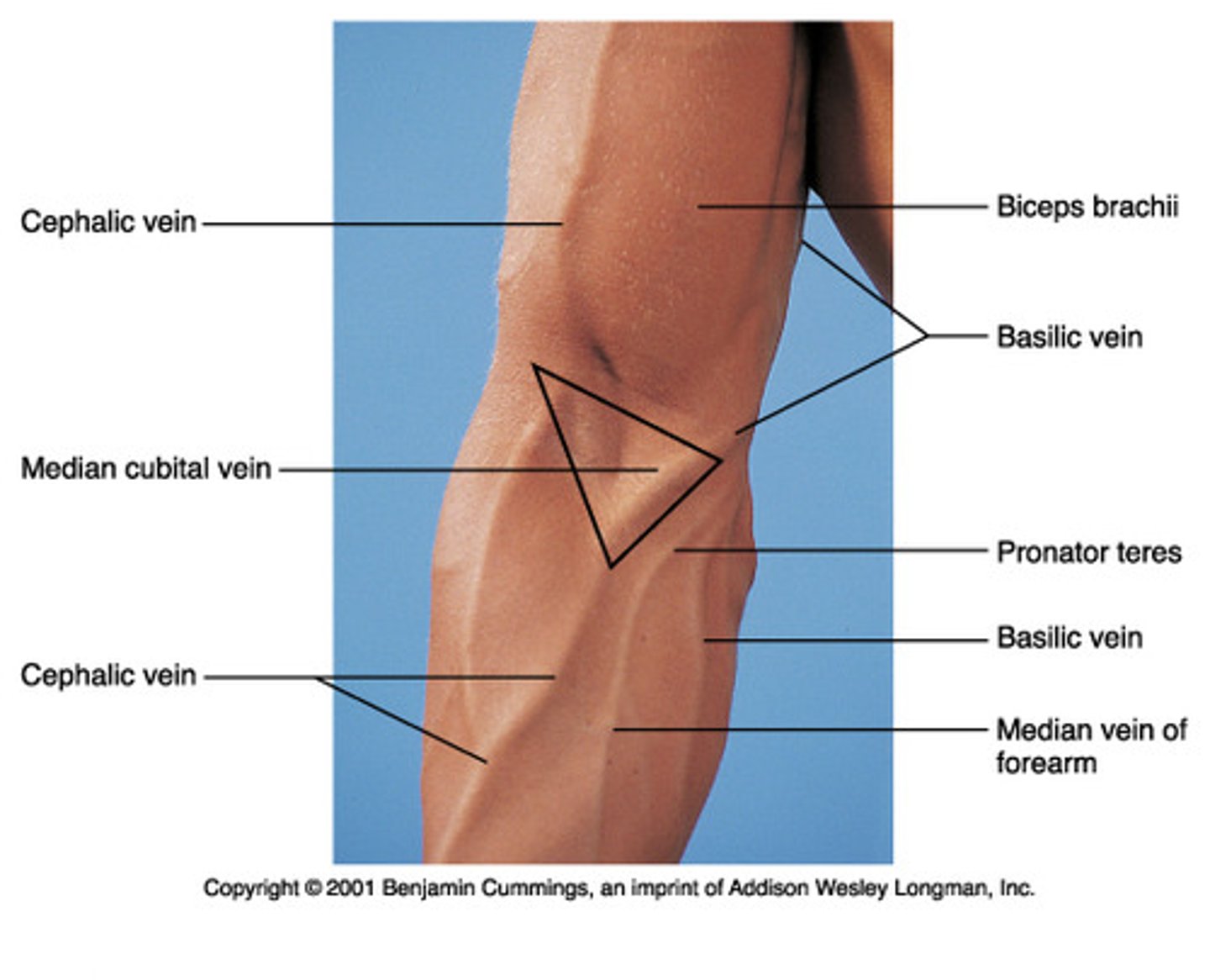
Which of the following veins is the preferred vein for routine phlebotomy?
C. CORRECT. The median cubital vein is a prominent vein in the antecubital space. The median cubital vein is the preferred vein due to it being more superficial and larger in size, thus better accessibility.
A. The basilic vein is located on the little finger side of the antecubital space. It should be used as an alternative site if the median cubital vein is not accessible, but it is not the preferred vein.
B. The cephalic vein is located on the thumb side of the antecubital space. It should be used as an alternative site if the median cubital vein is not accessible, but it is not the preferred vein.
D. The median antebrachial vein is located in the forearm. It should be used as an alternative site if the antecubital area is inaccessible, but it is not the preferred vein for routine phlebotomy.
When drawing blood cultures, a medical assistant should prepare a patient's skin using which of the following products?
A. Hydrogen peroxide
B. Isopropyl alcohol
C. Sterile water
D. Iodine solution
D. CORRECT. The medical assistant should cleanse the patient's skin with an iodine solution, which inhibits the reproduction of bacteria
that might contaminate the sample.
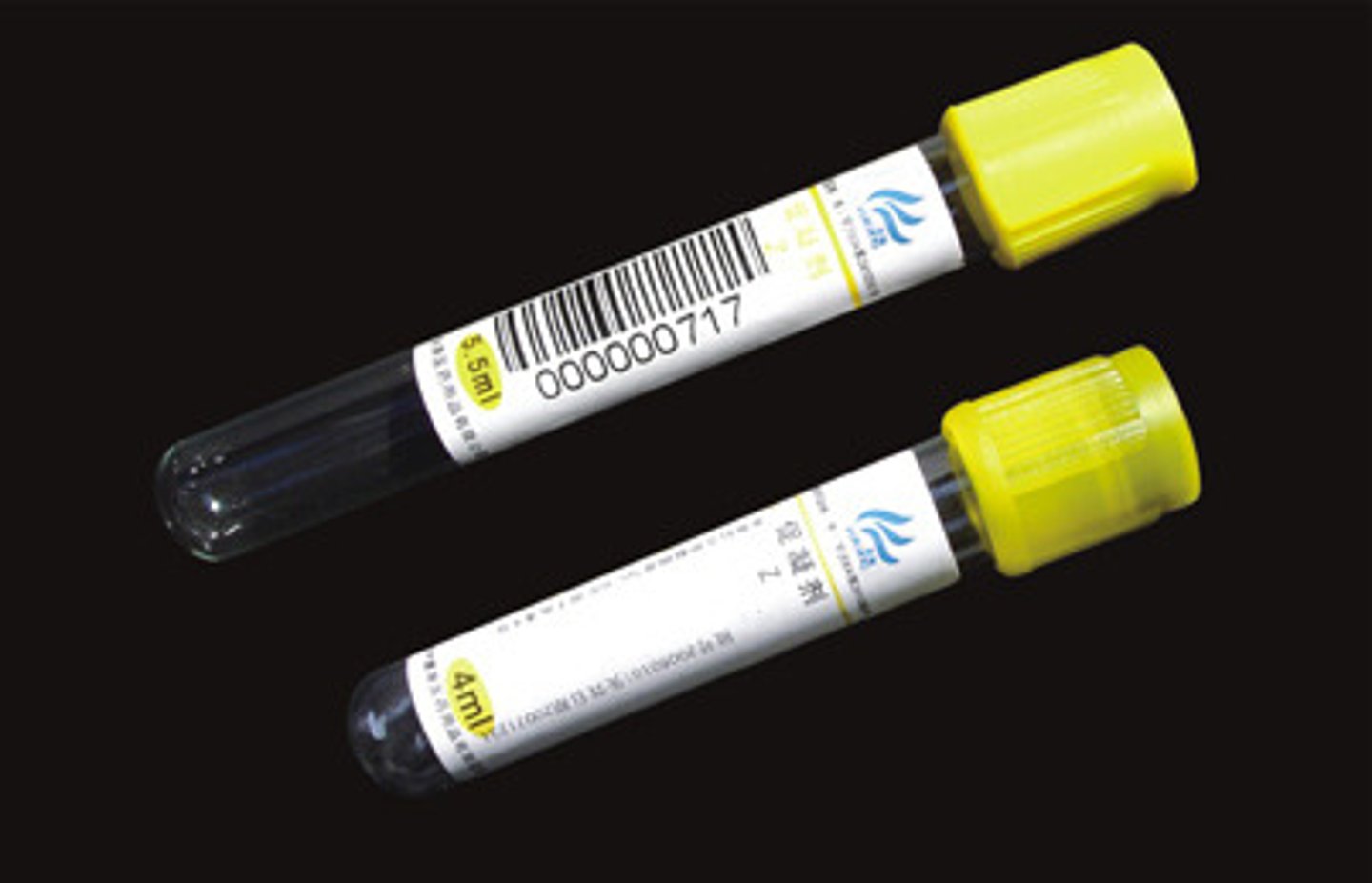
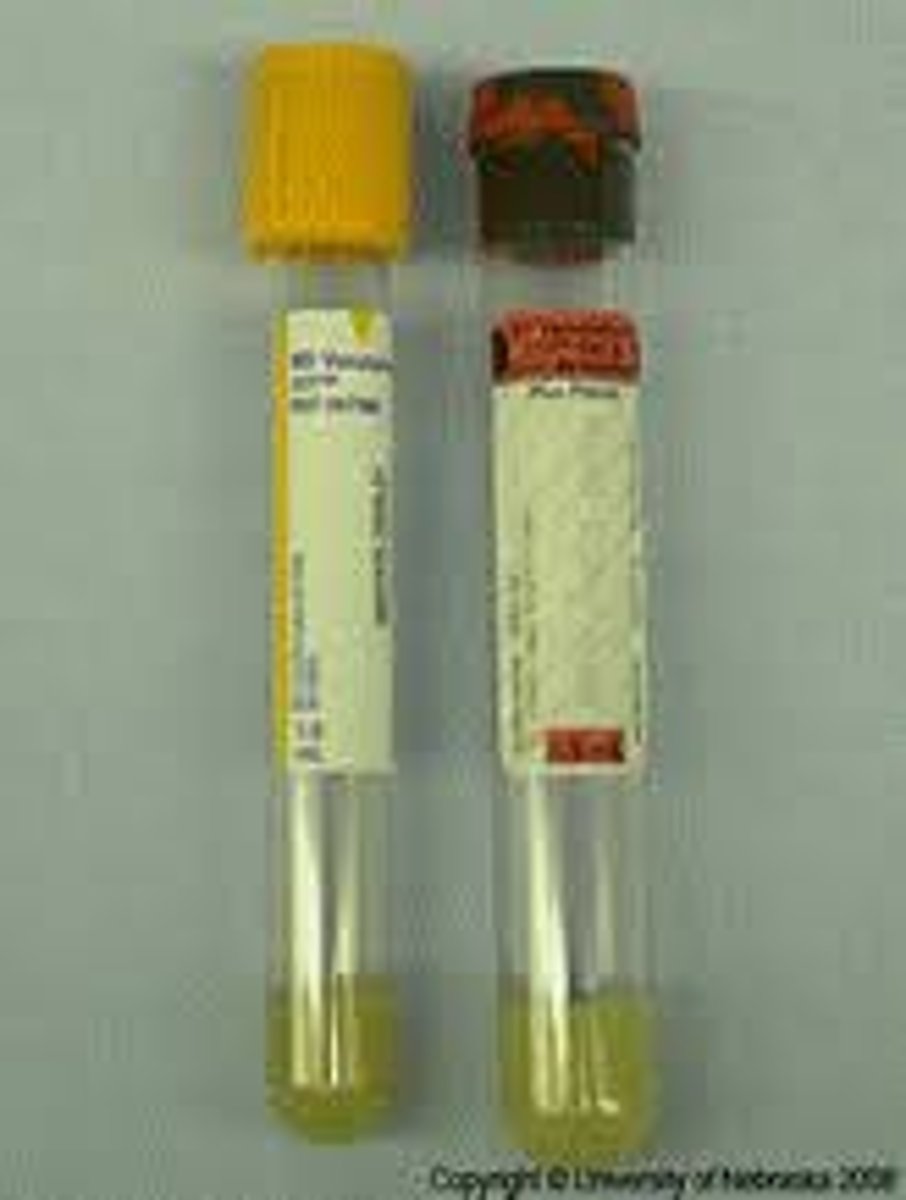
A blood culture is a medical laboratory test used to detect bacteria or fungi in a person's blood. Under normal conditions, the blood does not contain microorganisms: their presence can indicate a bloodstream infection such as bacteremia or fungemia, which in severe cases may result in sepsis. Typically, a yellow tube is used to collect blood.
A. Hydrogen peroxide is used as an oxidizer or disinfectant. It does not inhibit the reproduction of bacteria that might contaminate the sample.
B. Isopropyl alcohol is used to prepare the venipuncture site for routine procedures, not blood cultures.
C. Sterile water is not used as a cleaning agent and would not properly decontaminate the site.
To avoid hemoconcentration during venipuncture, which of the following actions should a medical assistant take?
A. Apply an ice pack
B. Apply a tourniquet
C. Instruct the patient to bend their arm
D. Insert the needle into the vein with the bevel down
B. CORRECT. A tourniquet impedes blood flow. Applying a tourniquet to a patient for longer than 1 min increases the possibility of hemoconcentration and can alter test results.
Hemoconcentration is an abnormally high concentration of blood from excessive pumping and/or prolonged tourniquet. It results in the thickening of blood and in increase in the proportion of cells and other elements of the blood. Thus, hemoconcentration may result in inaccurate test results that do not reflect patient's actual health status.
A. Applying an ice pack ot the area does not aid in the avoidance of hemoconcentration. However, if the patient is experiencing a potential hematoma, apply pressure and apply an ice pack to prevent its formation.
C. Instructing the patient to bend their arm
does not help to avoid hemoconcentration.
D. Inserting the needle into the vein with the bevel down does not help to avoid hemoconcentration.
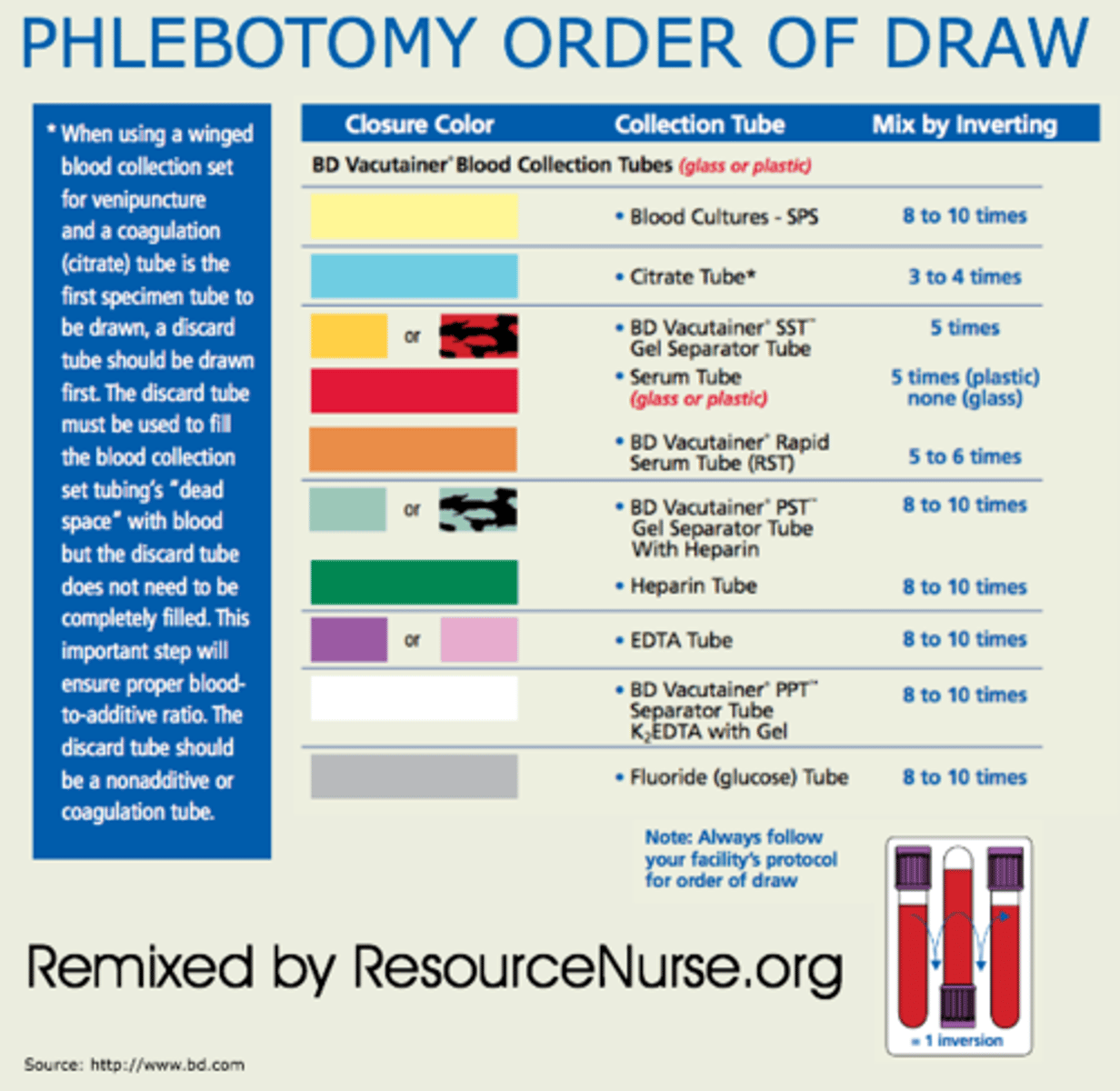
Which of the following tubes should a medical assistant select first when adhering to the proper order of draw?
A. Red
B. Yellow
C. Green
D. Gray
B. CORRECT. The yellow tube is the first tube in the order of draw. It is used for collecting sterile blood cultures.
A. The red tube is drawn after the yellow tube. It is used for collecting serum specimens
C. The green tube is drawn after the yellow tube. It is used for collecting specimens tor chemistry tests.
D. The gray tube is drawn after the yellow tube. It is used for collecting specimens for chemistry tests, especially glucose and alcohol levels.
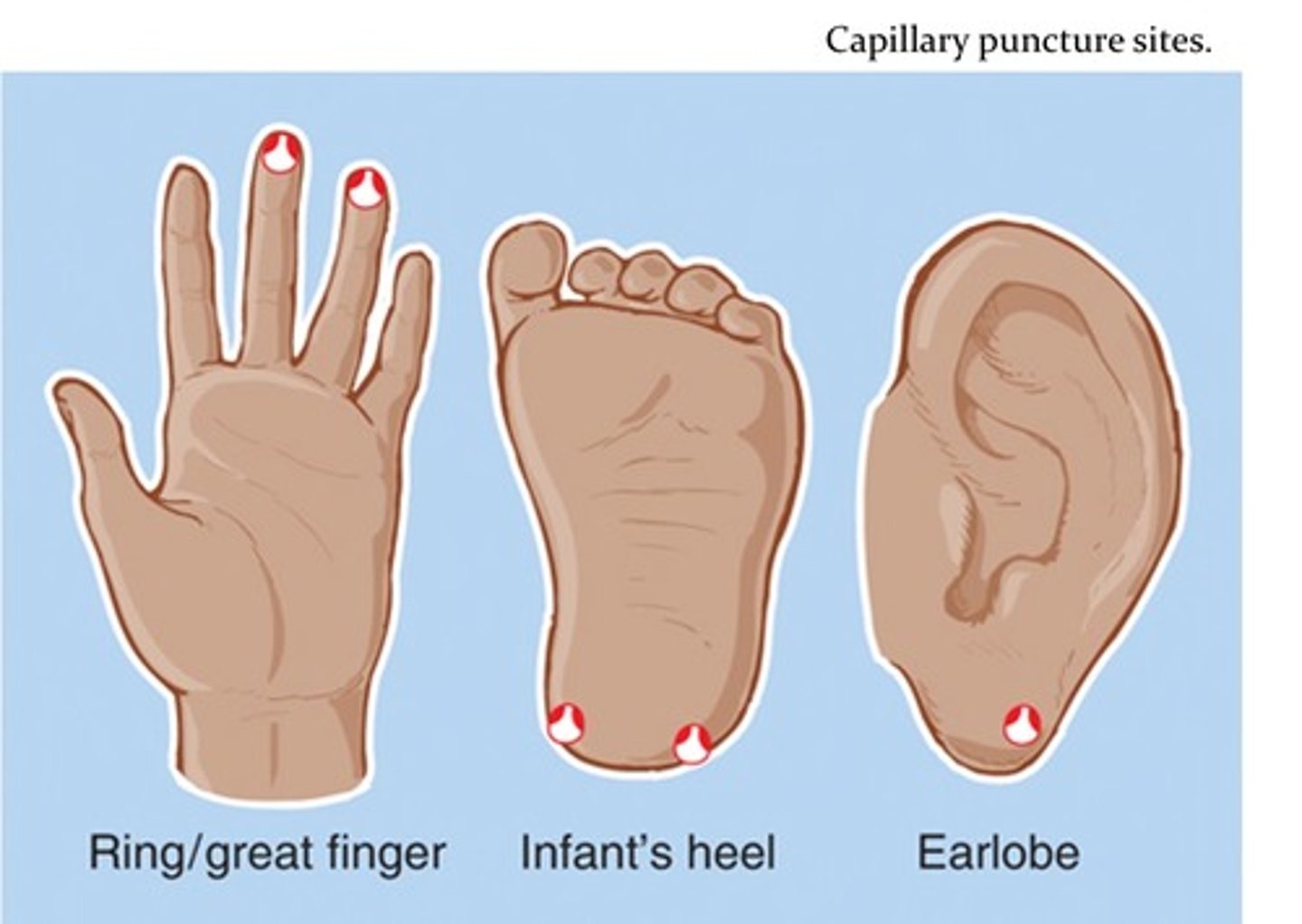
Which of the following digits is the preferred site for capillary puncture on an adult patient?
A. Fifth
B. Fourth
C. Second
D. First
B. CORRECT. The fourth digit is the preferred capillary puncture site for adults and children.
A. The fifth digit has too little tissue for a successful capillary puncture.
C. The second digit has extra nerve endings that make capillary puncture more painful.
D. The first digit is usually too callused for a successful capillary puncture.
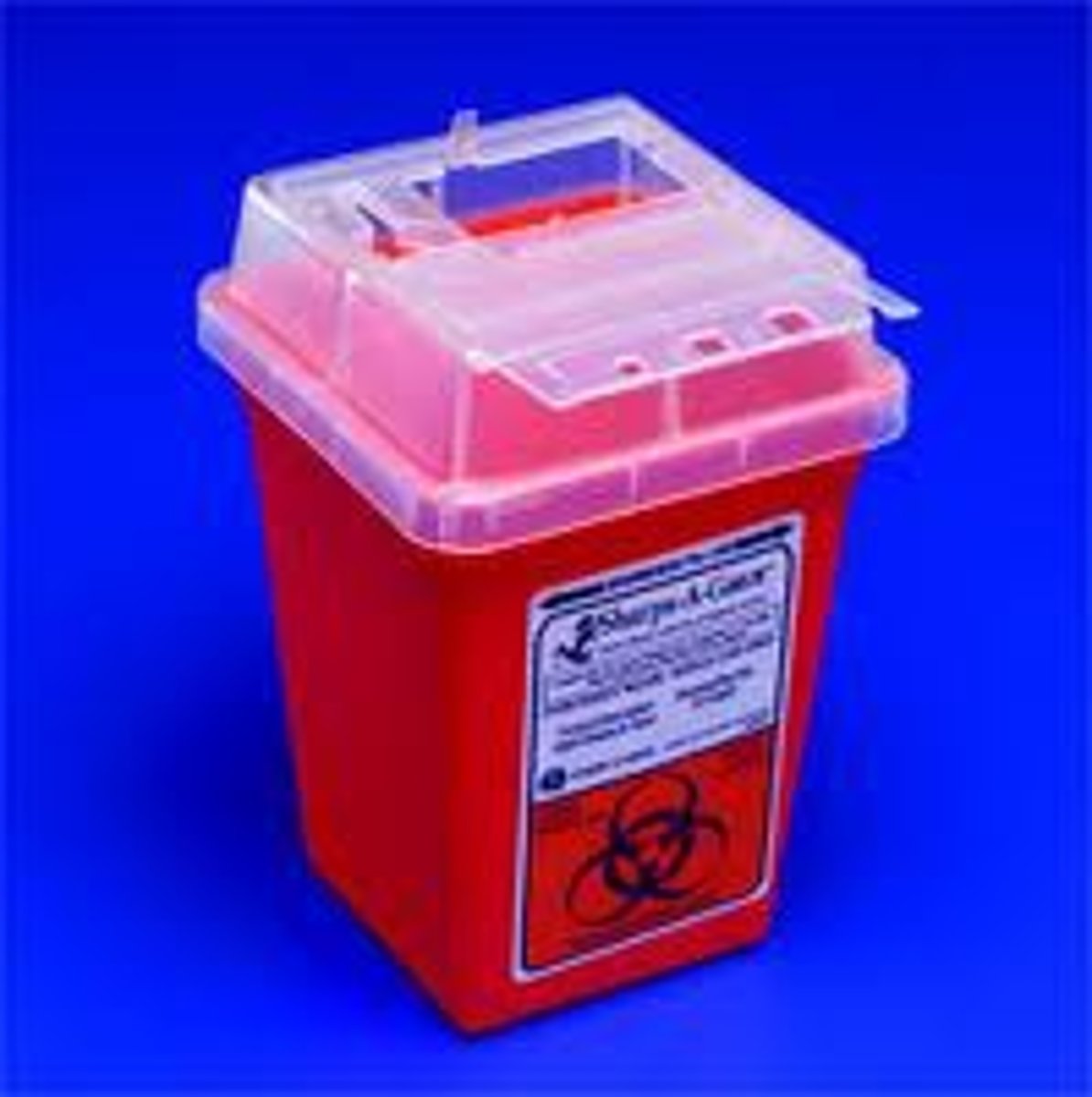
A medical assistant removes a needle from the antecubital space of a patient following a phlebotomy procedure and applies pressure. Which of the following steps should the medical assistant take next?
A. Apply a bandage
B. Label the tubes
C. Discard the needle
D. Confirm the ordered tests
C. CORRECT. Per OSHA standards and precautions, the medical assistant should
discard the needle immediately after applying pressure to the puncture site.
A. The medical assistant should apply a bandage after disposing of the needle.
B. The medical assistant should label the tubes after applying a bandage.
D. The medical assistant should confirm the ordered tests prior to performing the phlebotomy procedure.
A medical assistant should allow a red top or serum separator tube (SST) to stand for which of the following length of time prior to centrifuge?
A. 60 minutes
B. 15 minutes
C. 45 minutes
D. 20 minutes
C. CORRECT. When collecting a specimen for an SST, the medical assistant should let the tube stand for 45 min prior to centrifuge.
A. When collecting a specimen for an SST, 60 min exceeds the maximum limit of time the tube should stand prior to centrifuge.
B. When collecting a specimen for an ST, 15 min is an insufficient length of time for the tube to stand prior to centrifuge.
D. When collecting a specimen for an ST, 20 min is an insufficient length of time for the tube to stand prior to centrifuge.
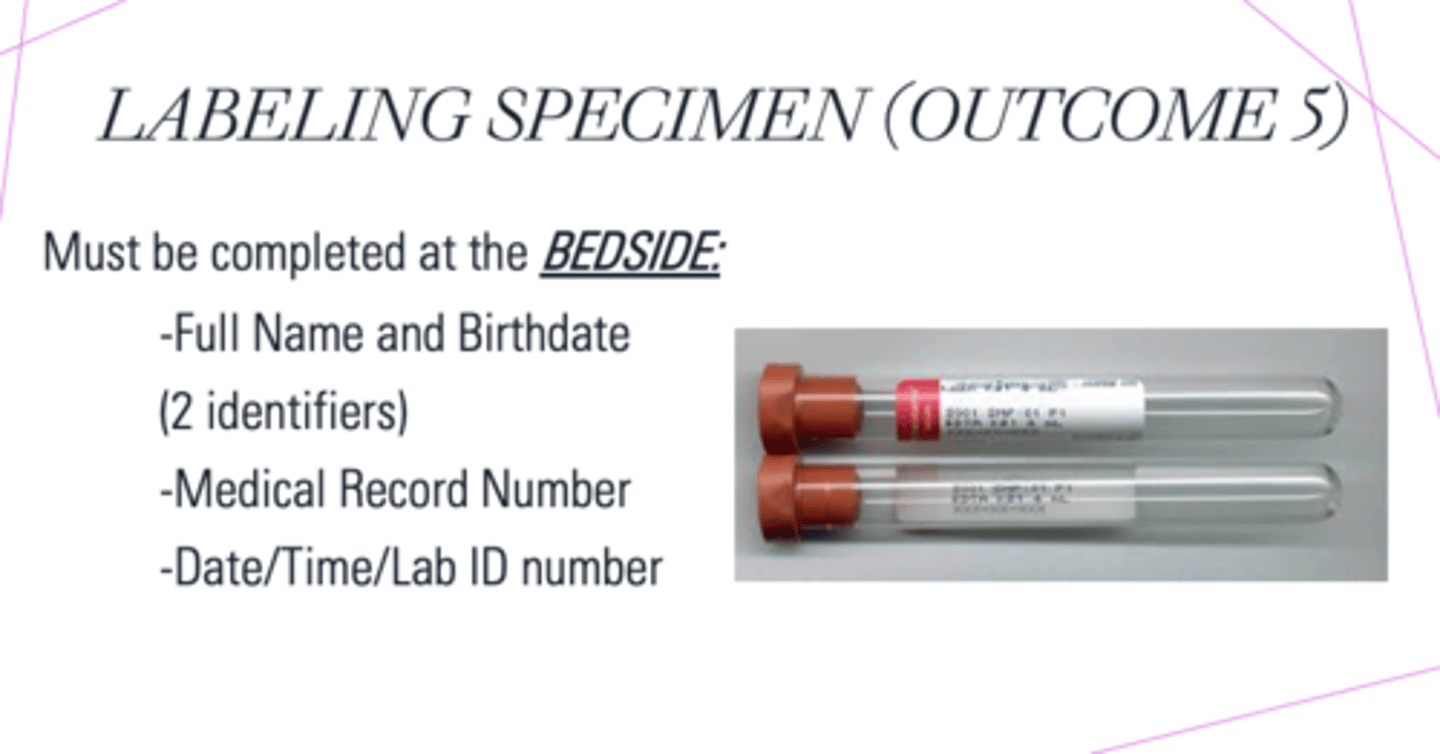
At which point during a venipuncture process should a medical assistant label the blood specimen tube?
A. After the venipuncture procedure is completed
B. After the patient is discharged
C. Prior to venipuncture
D. During venipuncture
A. CORRECT. The medical assistant should label the blood specimen tubes after the venipuncture procedure is completed, but prior to the patient being discharged.
B. Blood specimen tubes should never be labeled after the patient is discharged due to an increased risk of processing error.
C. The medical assistant should not label the tubes prior to the venipuncture due to
an increased risk of processing error.
D. The medical assistant should not label the tubes during the venipuncture. If the medical assistant's attention is shifted away from the procedure,
there is an increased risk of needlestick injury.
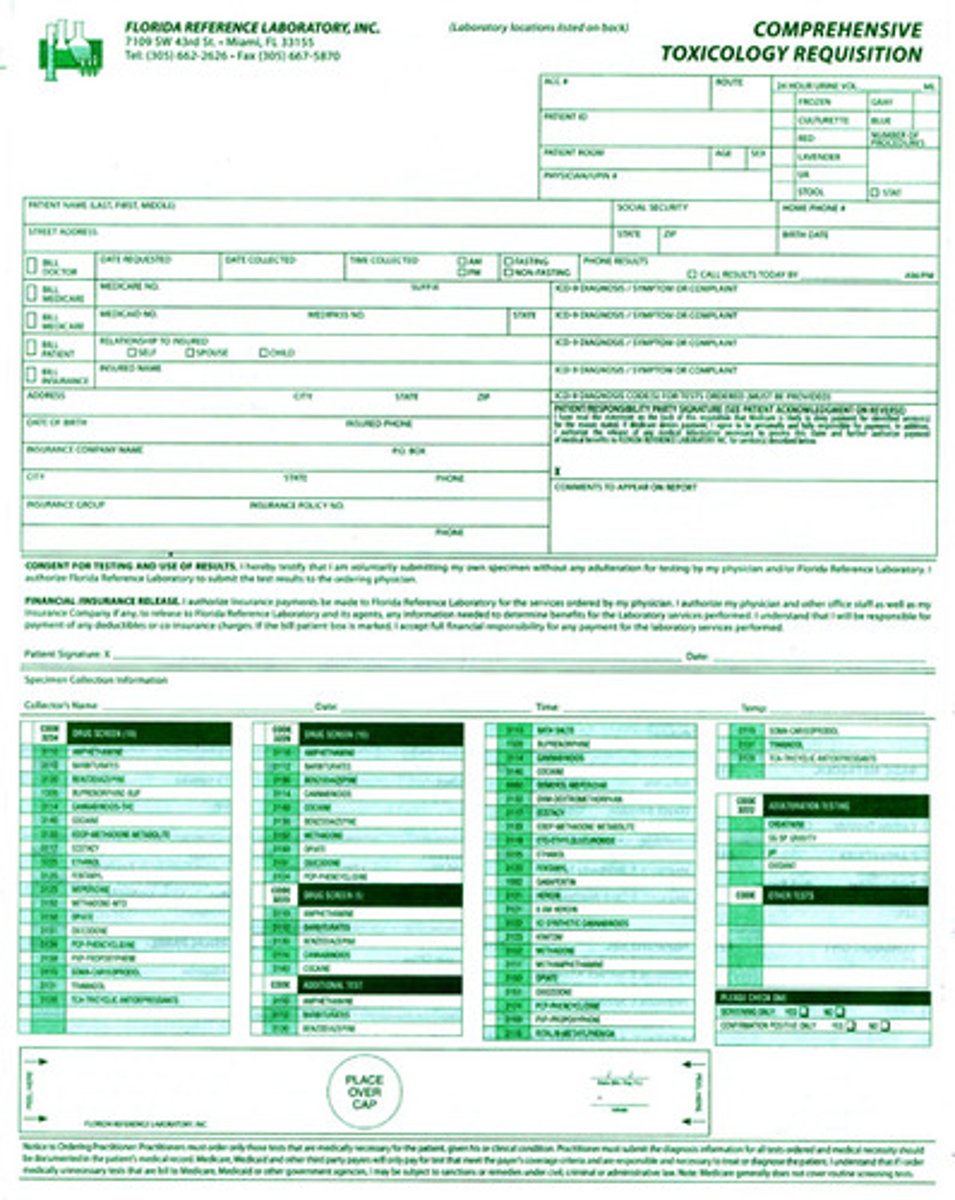
A medical assistant has completed a blood collection. Which of the following actions should the medical assistant take to ensure proper specimen processing?
A. Submit completed requisition form
B. Provide patient with post-procedure instructions
C. Refrigerate the specimen
D. Centrifuge the specimen
A. CORRECT. The medical assistant should submit a completed requisition form in accordance with the provider's prescription.
B. Although the medical assistant should provide the patient with post-procedure instructions, it is not part of the specimen handling process.
C. Storage requirements vary depending on the purpose of the specimen. Refrigeration is not appropriate for all specimens.
D. Centrifuge requirements vary depending on the purpose of the specimen. It is not appropriate to centrifuge all specimens.
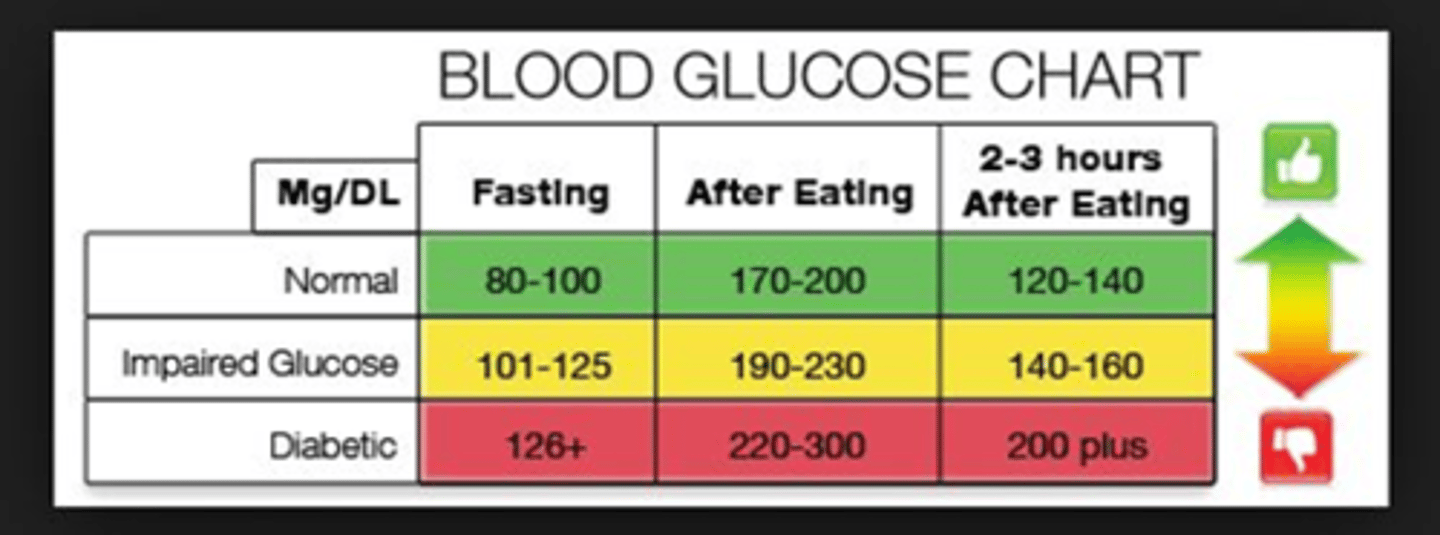
When reviewing blood work result, a medical assistant notices a fasting blood glucose of 200 mg/dL. Which of the following actions should the medical assistant take?
A. Notify the provider
B. Diagnose the patient
C. Schedule a follow-up appointment
D. Urgently call for medical attention
A. CORRECT. The medical assistant must maintain scope of practice and notify the provider that the patient's fasting blood glucose is outside the expected reference range.
REQUIRES MEDICAL ATTENTION: <50 mg/dL or >300 mg/dL
B. It is outside of the medical assistant's scope
of practice to diagnose. It is the provider's responsibility to review and confirm the diagnosis.
C. Based on the results, the fasting blood glucose is above the expected reference range, but it is not within the critical value range. The provider will determine when a follow-up appointment should be scheduled.
D. Based on the results, the fasting blood glucose is above the expected reference range, but it is not within the critical value range. The medical assistant should contact the provider about the patient's results; however, this finding does not require urgent notification.
After receiving blood test result from the reference laboratory, which of the following actions should the medical assistant take?
A. Have the provider review the results
B. Fill in the results in the patient's medical record
C. Interpret the test results
D. Determine whether the patient requires a follow-up appointment
A. CORRECT. After receiving a patient's blood test results from the reference laboratory, the medical assistant should have the provider review the results.
B. Providers are responsible for reviewing and interpreting laboratory test results prior to filing them in the patient's medical record.
C. Providers are responsible for interpreting laboratory test results.
D. Providers are responsible for interpreting laboratory test results prior to determining fi a patient requires a follow-up appointment.