topic 2 errors
 Call Kai
 Learn
Learn Practice Test
 Spaced Repetition
 Match
Match Flashcards
 Knowt Play
1/13

There's no tags or description
Looks like no tags are added yet.
Name | Mastery | Learn | Test | Matching | Spaced | Call with Kai |
|---|
No analytics yet
Send a link to your students to track their progress
14 Terms
Describe binary fission in bacteria
Replication of circular DNA
Replication of plasmids
Division of cytoplasm
How can increasing the temperature increase the growth rate of cells
Enzyme activity increases
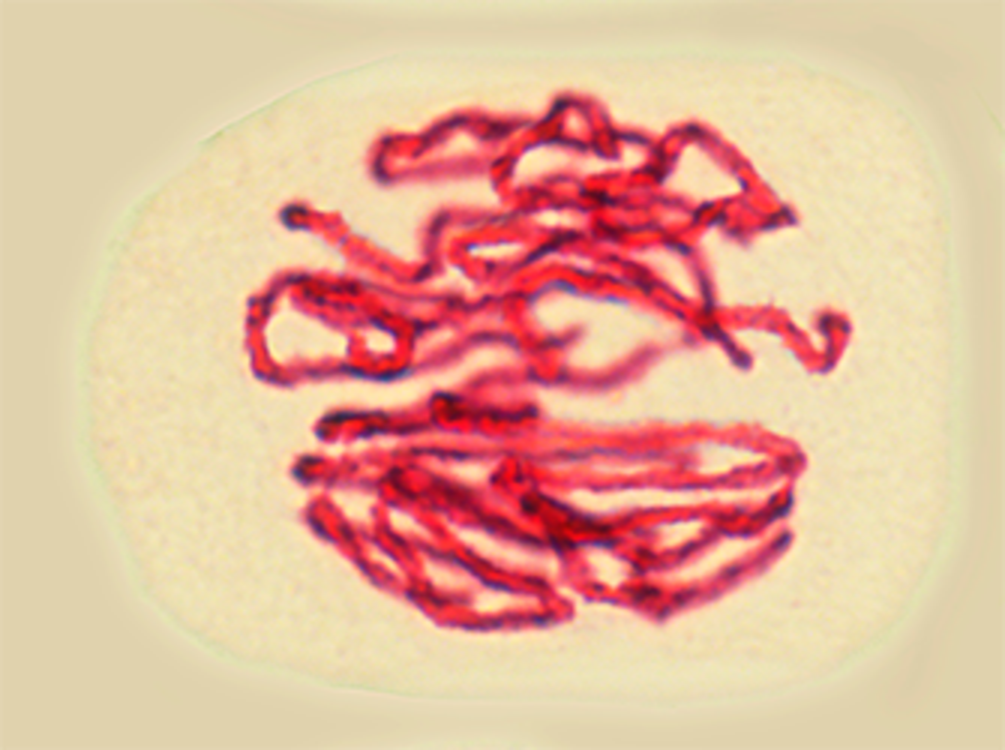
Describe in 2 different ways the arrangement of the genetic material shown in the above image
chromosomes are still becoming visible / distinct
still condensing
chromosomes not lined up
no spindle fibre activity yet
name the fixed position of a gene on a DNA molecule
Loci
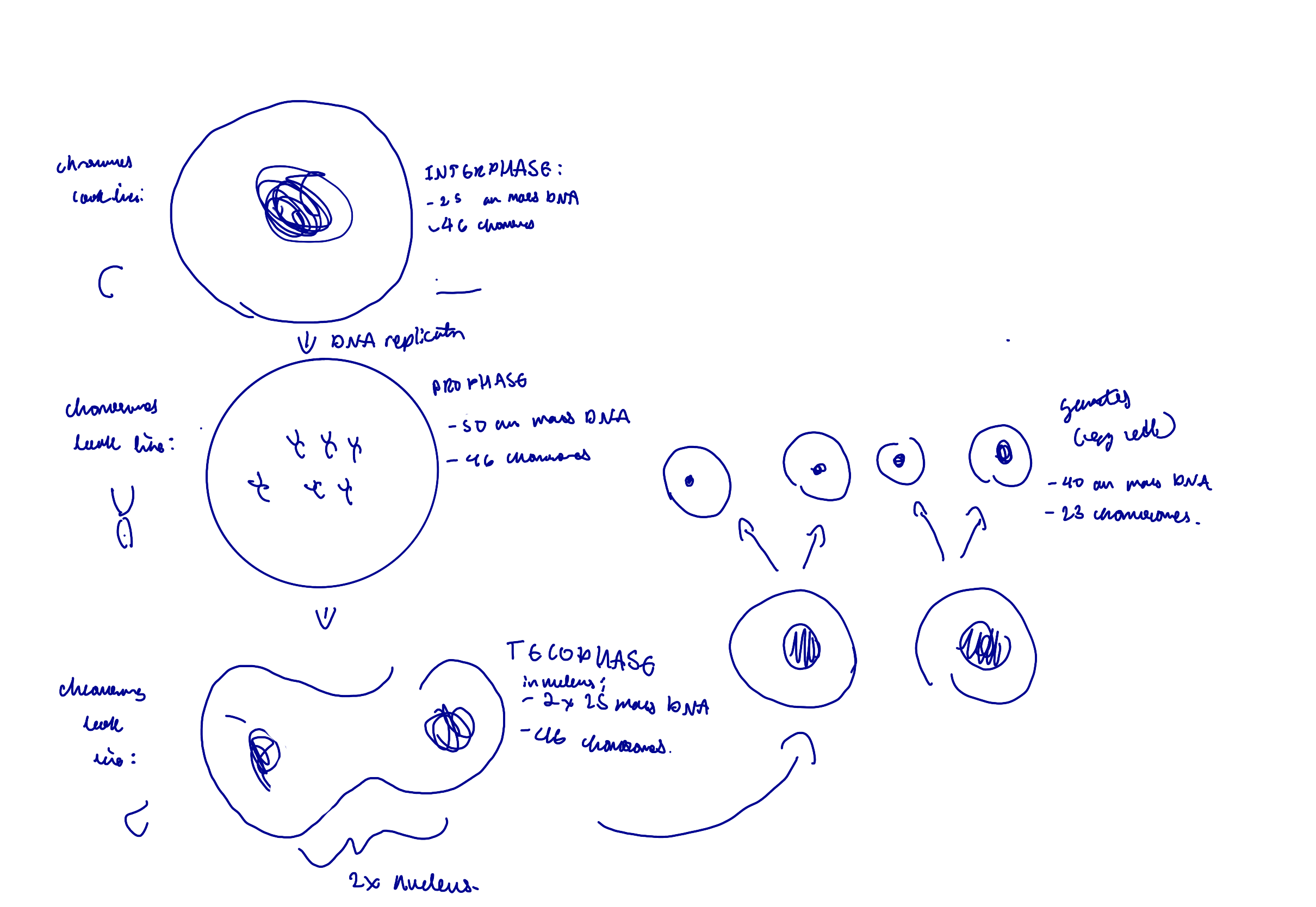
Explain the changes of chromosomes and mass of DNA in different nuclei at prophase, telophase, and in an egg cell
Explain how a phagocyte destroys a pathogen present in the blood (3)
phagocyte engulfs pathogen
forming vesicle / phagosome, and fuses with lysosome
lysosome digests / hydrolyses pathogen
Mice in Group H were injected with 2 mg kg–1 of monoclonal antibody. The monoclonal antibody was in a solution of concentration 500 mg dm–3
(a) Suggest and explain 4 further investigations that should be done before this ADC is tested on human breast cancer patients.
test on healthy humans to check safety / for side effects
test on different animal eg rat to test for side effects and safety
see if repeated doses stop tumour from regrowing
test different concentrations of ADC to find suitable /safe dosage
Describe how the human immunodeficiency virus (HIV) is replicated once inside helper T cells (TH cells). (4)
Reverse transcriptase converts viral RNA to DNA and
viral DNA is incoorperated into TH cell DNA / genome
viral DNA is transcribed to viral mRNA
viral mRNA is translated into viral proteins for the assembly of a new viral particle
Give 4 types of cell that stimulate an immune response
pathogen
cell from another organism / transplant
virus infected cell
abnormal / cancer / tumour cell
A disulfide bridge is labelled in the diagram above. What is the role of the disulfide bridge in forming the quaternary structure of an antibody? (1)
Joins two different polypeptides
Define a monoclonal antibody
antibody with the same tertiary structure
describe and explain the role of antibodies in stimulating phagocytosis (2)
antibodies bind to antigen / are markers
attract phagocytes
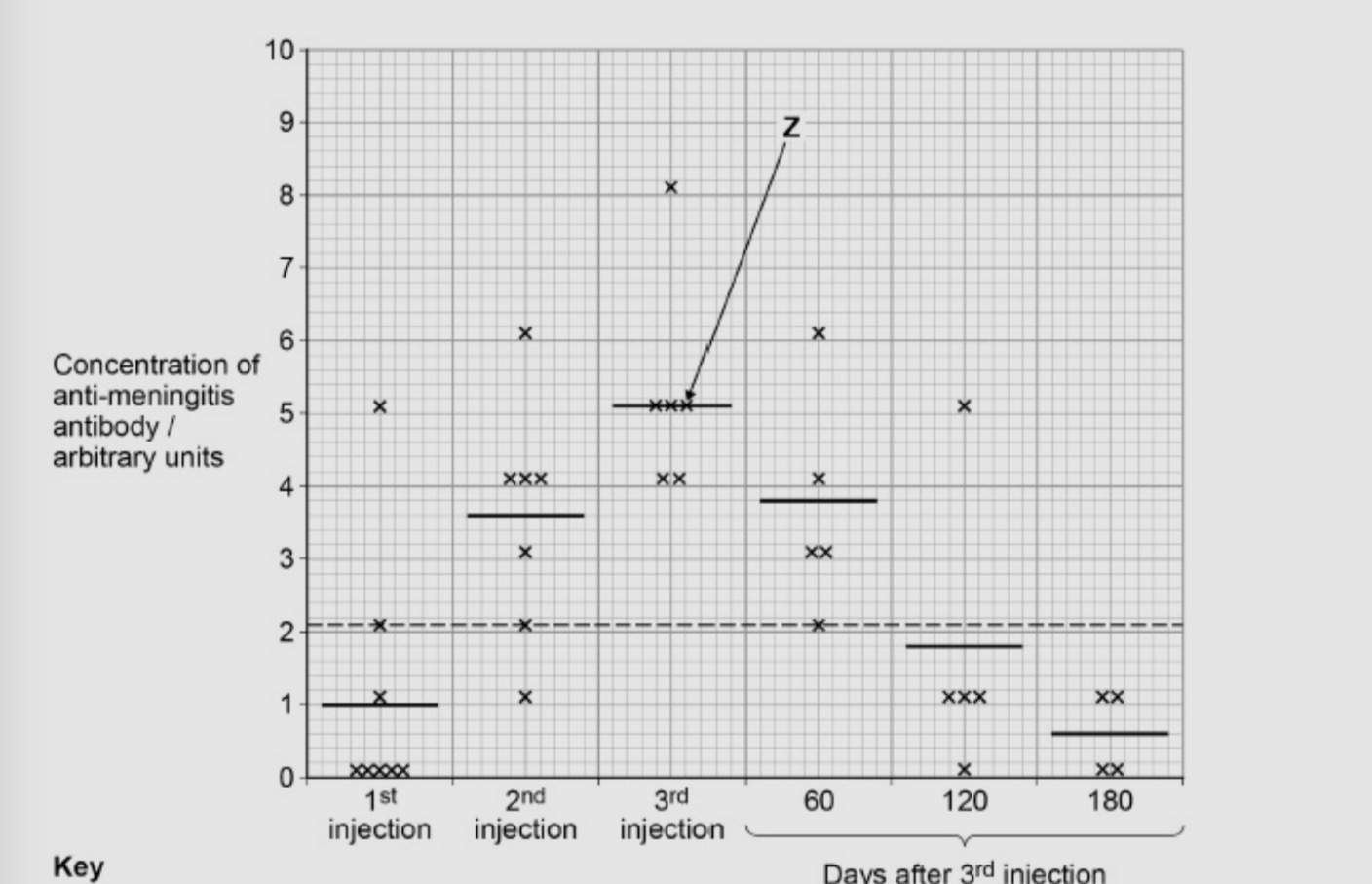
what can you conclude about the effectiveness on each injection on the immune response of these mice
1. Mean (antibody concentration) increases;
2. 1st injection protects some mice/1 mouse/2 mice OR 1st injection causes primary (immune) response/memory cell production;
2. and 3. Accept correct reference to number of unprotected mice
3. 2nd/3rd injection protects most/all mice OR 2nd/3rd injection causes secondary (immune) response OR 2nd/3rdinjection uses memory cells;
4. Because antibody at/above protective level/2.1;
Antibody decreased (rapidly after 3rd injection);
6. No mice protected after 180 days OR Injections/vaccine not effective in long term OR Booster required (when antibody below protective level/after 120/180 days);
7. One mouse (after first injection) has big response/already had meningitis/antigen;
After an injection of a meningitis vaccine, scientists hypothesised that memory B cells had formed in mice.
Suggest and explain a practical method the scientists could use to test this hypothesis (2)
inject meningitis antigens / vaccine again / inactive antigen
memory cells present if faster / more rapid production or higher concentration of antibodies, so signs / symptoms do not show