The Language of Medicine Chapter 2
 Call Kai
 Learn
Learn Practice Test
 Spaced Repetition
 Match
Match Flashcards
 Knowt Play
1/112

There's no tags or description
Looks like no tags are added yet.
Name | Mastery | Learn | Test | Matching | Spaced | Call with Kai |
|---|
No analytics yet
Send a link to your students to track their progress
113 Terms
Digestive system
mouth, pharynx (throat), esophagus, stomach, intestines (small and large), liver, gallbladder, pancreas
Urinary or excretory system
kidneys, ureters, urinary bladder, urethra
Cells—The fundamental unit of all living things
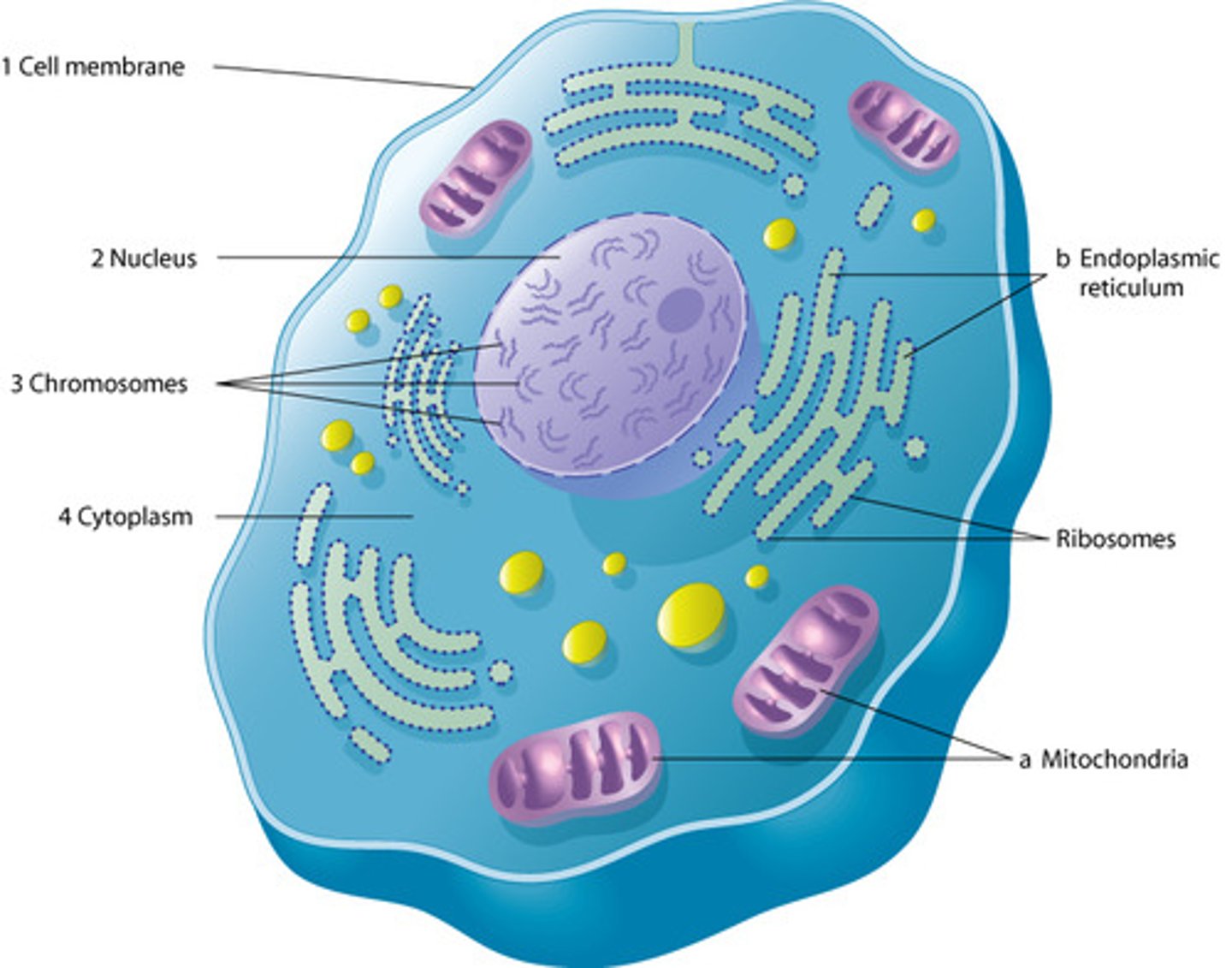
Major parts of a cell include:
Chromosomes
Nucleus
Cell membrane
Cytoplasm
Mitochondria
Endoplasmic reticulum
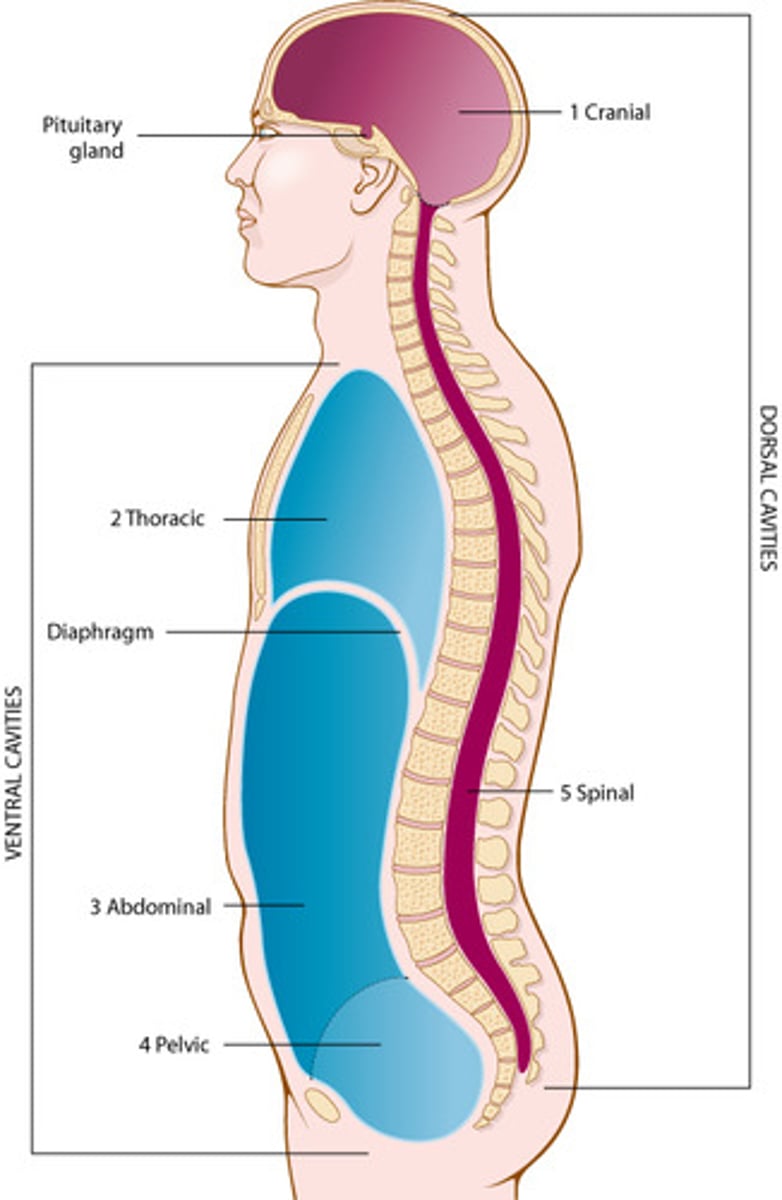
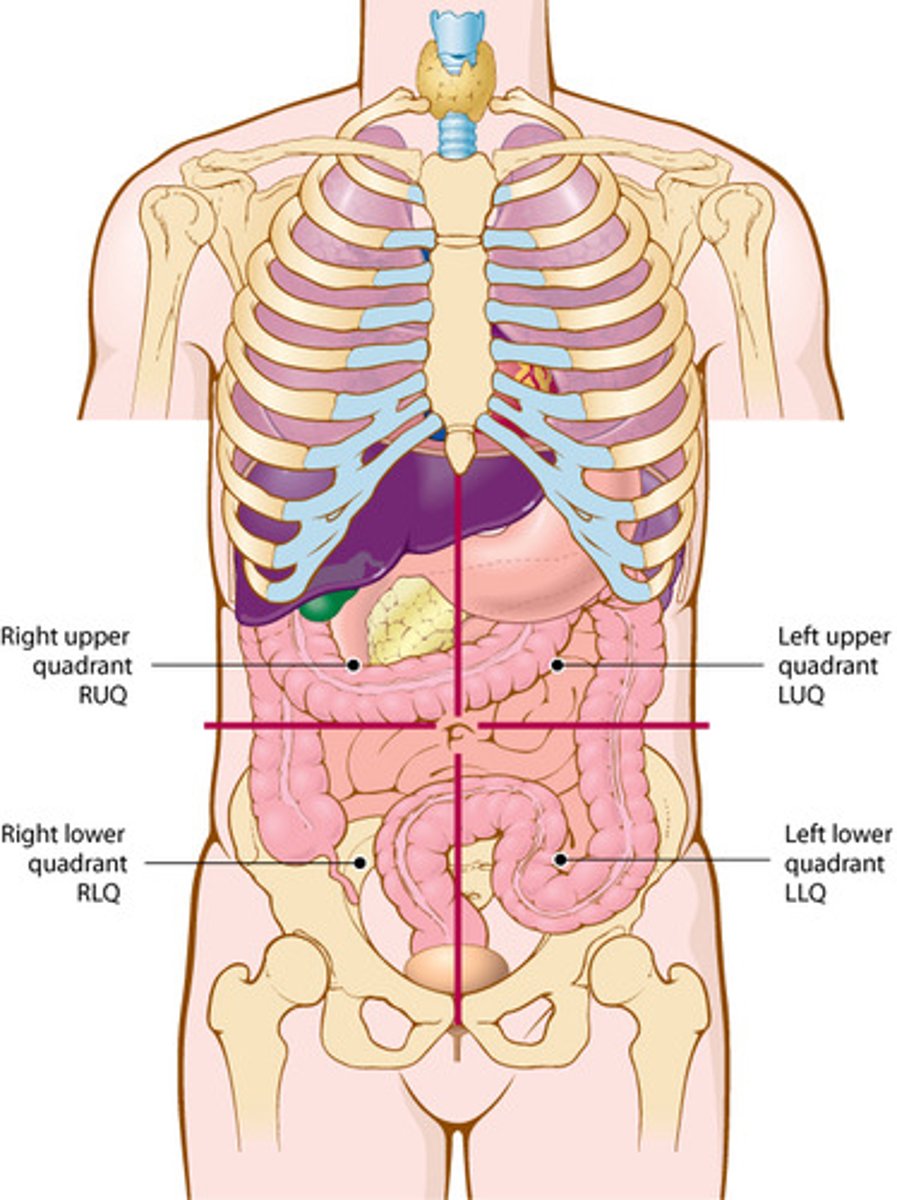
Body cavities are the spaces within the body that contain internal organs (viscera).
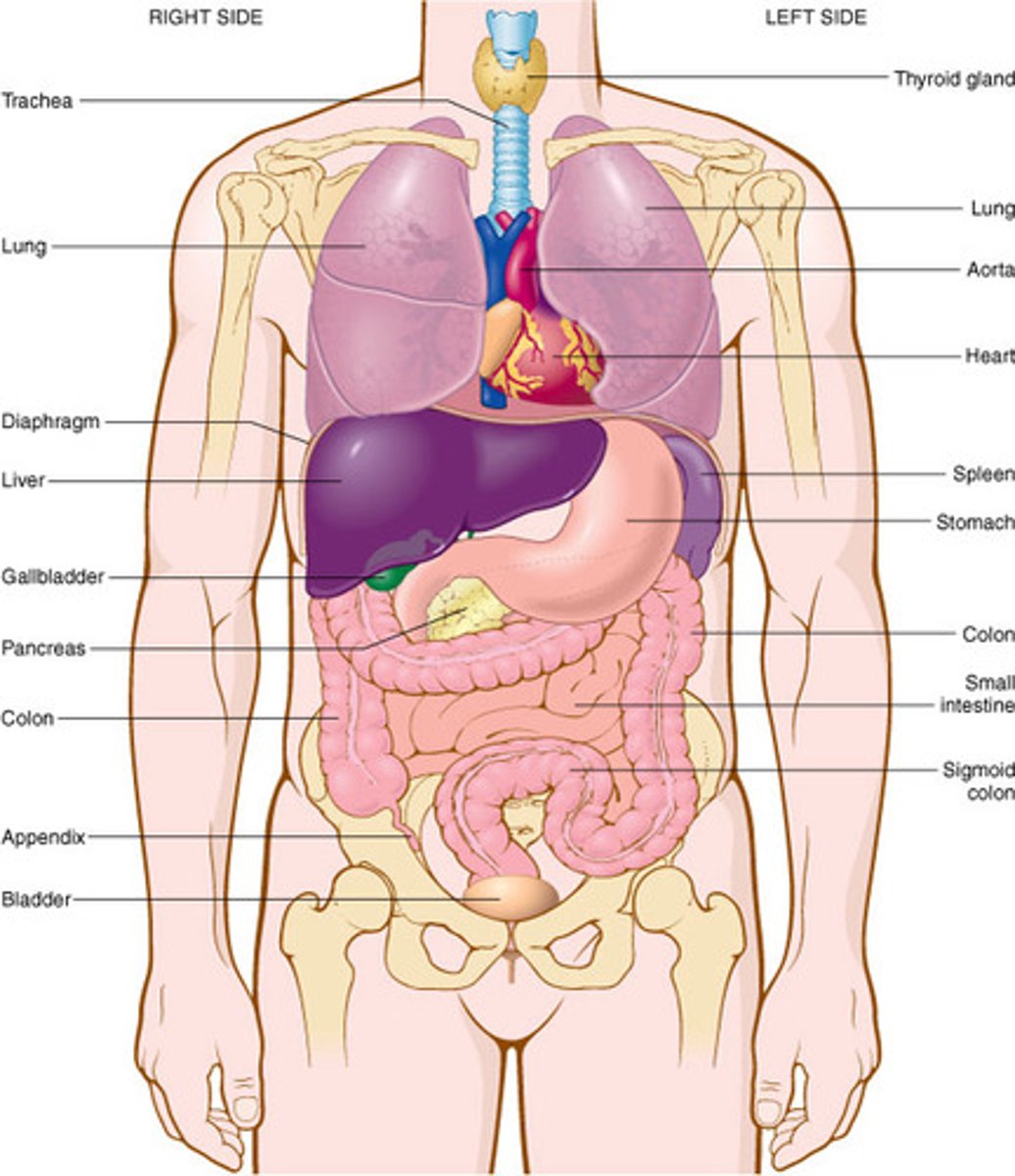
Organs of the Abdominopelvic and Thoracic Cavities
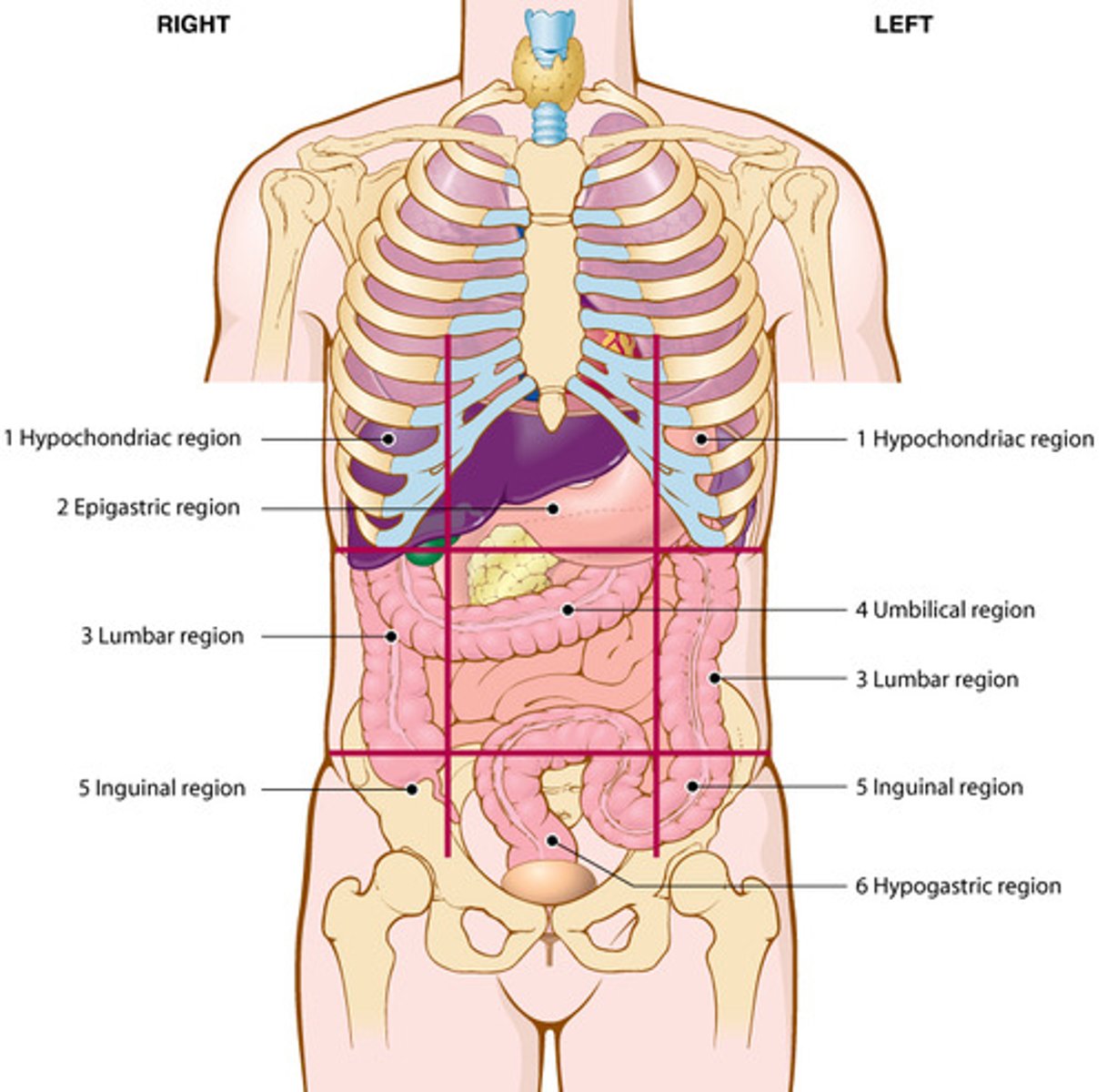
Abdominopelvic Regions
Abdominopelvic Quadrants
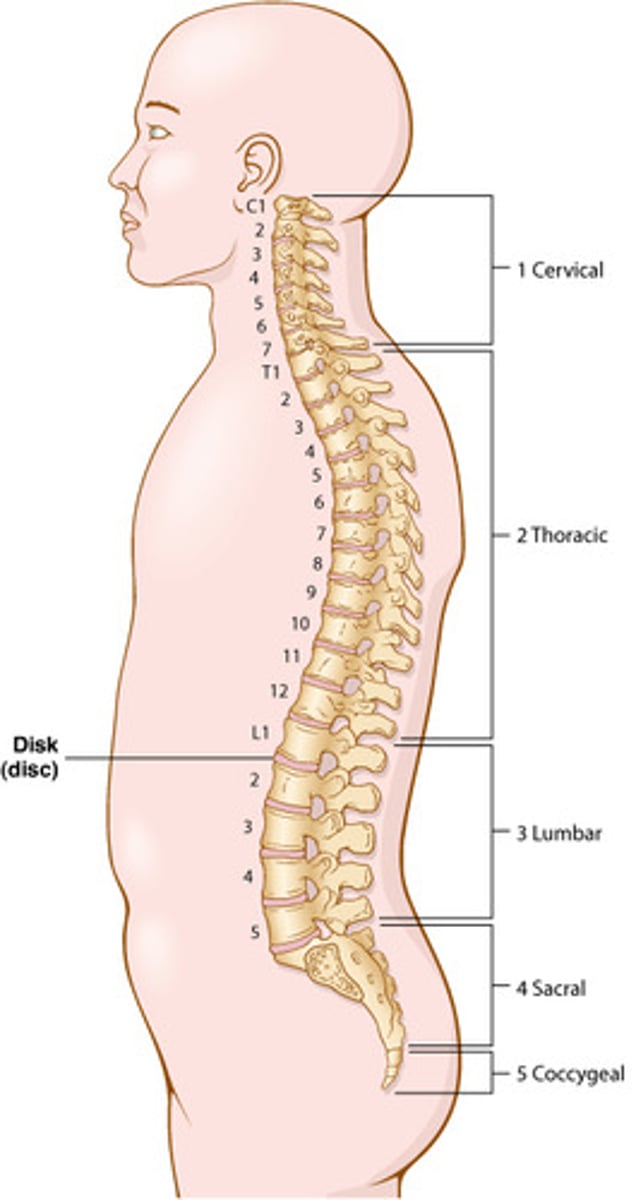
Anatomical Divisions of the Back
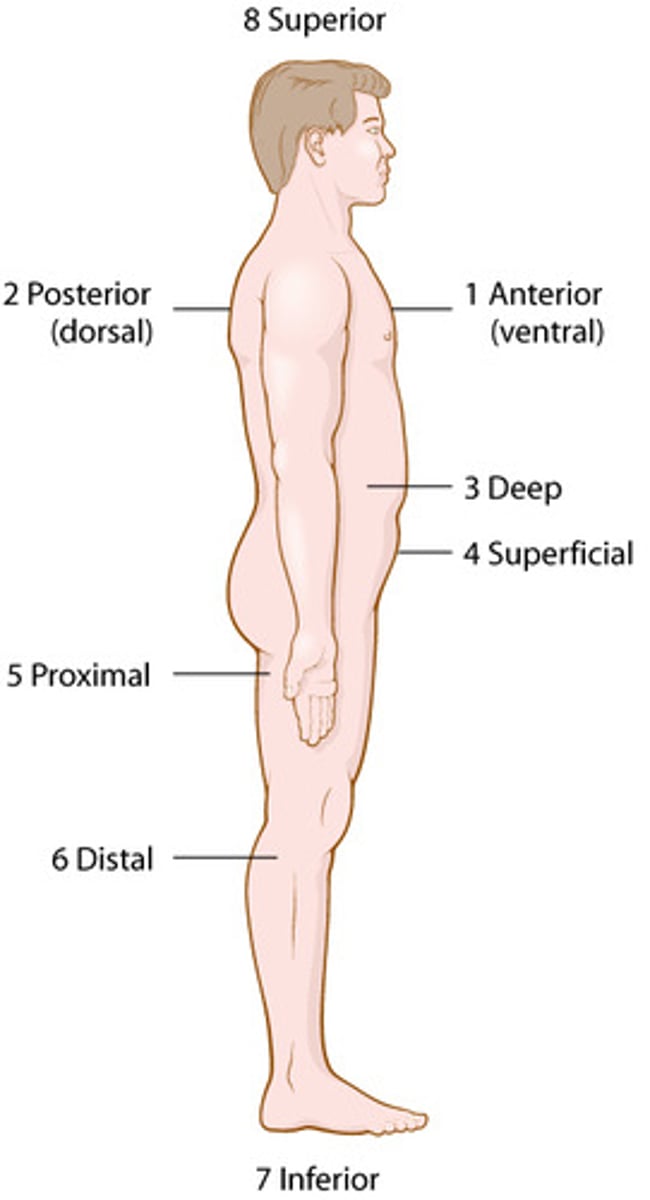
Positional and Directional Terms
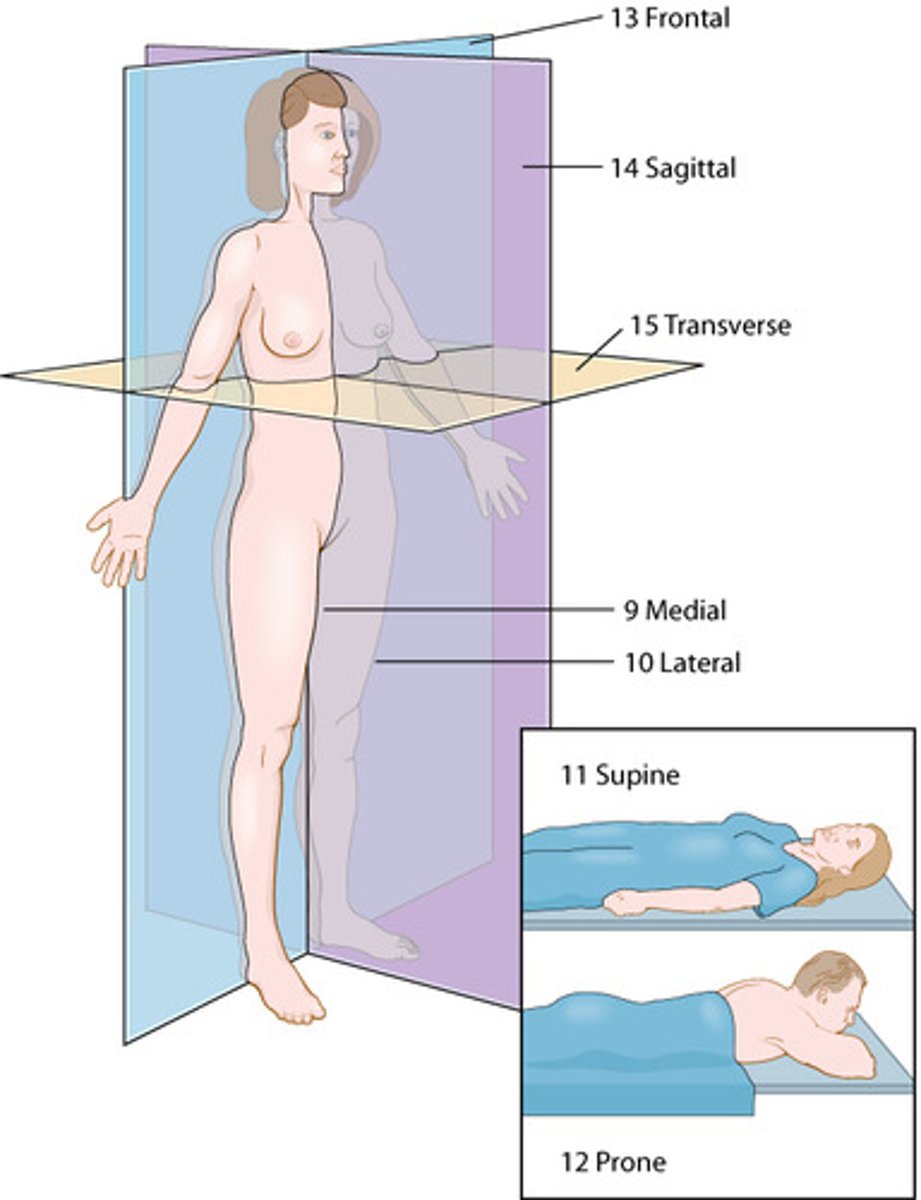
Planes of the Body
abdmin/o
abdomen
adip/o
fat
anter/o
front
bol/o
the cast (throw)
cervic/o
neck (of the body or of the uterus)
chondr/o
cartilage (type of connective tissue)
chrom/o
color
coccyg/o
coccyx (tailbone)
crani/o
skull
cyt/o
cell
dist/o
far, distant
dors/o
bck portion of the body
hist/o
tissue
ili/o
ilium (part of the pelvic bone)
inguin/o
groin
kary/o
nucleus
later/o
side
lumb/o
lower back (side and back between the ribs and the pelvis)
medi/o
middle
nucle/o
nucleus
pelv/i
pelvis, hip region
poster/o
back, behind
proxim/o
nearest
sacr/o
sacrum
sarc/o
flesh
spin/o
spine, backbone
thel/o, theli/o
nipple
thorac/o
chest
trache/o
trachea, windpipe
umbilic/o
navel, umbilicus
ventr/o
belly side of body
vertebr/o
vertebra(e), backbone(s)
viscer/o
internal organs
ana-
up
cata-
down
epi-
above
hypo-
below
inter-
between
meta-
change
-eal
pertaining to
-iac
pertaining to
-ior
pertaining to
-ism
process, condition
-ose
pertaining to, full of
-plasm
formation
-somes
bodies
-type
picture, classification
karyotype
is a photograph of an individual's chromosomes, arranged by size, shape, and number
anabolism
process of building up large proteins from small protein pieces called amino acids
cell membrane
structure surrounding and protecting the cell. It determines what enters and leaves the cell.
catabolism
process whereby complex nutrients are broken down to simpler substances and energy is released
chromosomes
rod-shaped, in the nucleus, hold genes, 46 chromosomes in every cell except sperm and egg cells
cytoplasm
everything in the cell but outside of the nucleus
DNA
chemical in each chromosome, directs activity of the cell
endoplasmic reticulum
networks of canals within the cytoplasm of the cell, large proteins are made from smaller proteins
genes
regions of DNA within each chromosome
metabolism
the change in a cell which includes cata- and ana- bolism
mitochondria
power plants of the cell where catabolism takes place
A scientist who specializes in the study of tissues
Histologist
What are 4 types of tissues
Epithelial, muscle, connective, and nerve
Examples of connective tissue
adipose (fat), cartilage (elastic, fibrous tissue attached to bones), bone and blood
Respiratory system
nose, pharynx, larynx, trachea, bronchial tubes, lungs
Reproductive system
(Female): ovaries, fallopian tubes, uterus, vagina, mammary glands. (Male): testes and associated tubes, urethra, penis, prostate glands.
Endocrine system
thyroid gland, pituitary gland, sex glands, adrenal glands, pancreas, parathyroid glands
Nervous system
brain, spinal cord, nerves, and collections of nerves
Circulatory system
heart, blood vessels, lymphatic vessels and nodes, spleen, thymus gland
Musculoskeletal system
muscles, bones, and joints
Skin and sense organs
skin, hair, nails, sweat glands, and sebaceous glands; eye,ear, nose, and tongue
adipose tissue
collection of fat cells
epithelial
skin cells that cover the outside of the body and line the internal surfaces of organs
viscera
internal organs
How many body cavities are in the body?
5; cranial, thoracic, abdominal, pelvic, and spinal
What is in the cranial cavity?
brain and pituitary gland
What is in the thoracic cavity?
lungs, heart, esophagus, trachea, bronchial tubes, thymus gland, and aorta (large artery)
Is the thoracic cavity divided into 2 smaller cavities?
Yes; pleural cavity (space between the folds of the pleura surrounding each lung) and mediastinum cavity (located space outside of and between the lungs)
mediastinum
part of the thoracic cavity; contains most of the organs (but not lungs) including heart, aorta, trachea, esophagus, thymus gland, bronchial tubes, and many lymph nodes
pleura
is a double-folded membrane that surrounds the lungs and protects them
What is in the abdominal cavity?
kidneys, stomach, small and large intestines, spleen, pancreas, liver, and gallbladder.
peritoneum
is the double-folded membrane surrounding the abdominal cavity
What is in the pelvic cavity?
portions of the small and large intestines, rectum, urinary bladder, urethra, and ureters; uterus and vagina in the female
What is in the spinal cavity?
nerves of the spinal cord
What divides the abdominal and thoracic cavities?
the diaphragm
dorsal (posterior)
pertaining to the back of the body
ventral (anterior)
pertaining to the front of the body
disk (disc)
pad of cartilage between vertebrae
deep
away from the surface
superficial
on the surface
proximal
near the point of attachment to the trunk or near the beginning of the structure
distal
far from the point of attachment to the trunk or far from the beginning of a structure
inferior
below another structure (example: the feet are inferior to the knees, below the knees)