SJSU SP24 BIOL-65 Chapter 16 - Autonomic Nervous System
 Call Kai
 Learn
Learn Practice Test
 Spaced Repetition
 Match
Match Flashcards
 Knowt Play
1/18

There's no tags or description
Looks like no tags are added yet.
Name | Mastery | Learn | Test | Matching | Spaced | Call with Kai |
|---|
No analytics yet
Send a link to your students to track their progress
19 Terms
What does the autonomic nervous system do?
a motor division of the nervous system that innervates glands, smooth muscle, and cardiac muscle; consists of sympathetic and parasympathetic divisions and functions largely without voluntary control
What does the visceral (organ) motor system control?
involuntary control of effectors: glands, cardiac muscle, smooth muscle
What are visceral reflexes?
unconscious, automatic, stereotypes responses of visceral effectors to stimuli
What does the sympathetic division do?
"fight or flight"
Increases heart rate and
blood glucose
Reduces blood flow to
skin and GI tract
What does the parasympathetic division do?
"rest and digest"
Decreases heart rate
Stimulates digestion and
waste elimination
What is autonomic tone?
The balance between activity of sympathetic and parasympathetic nervous systems
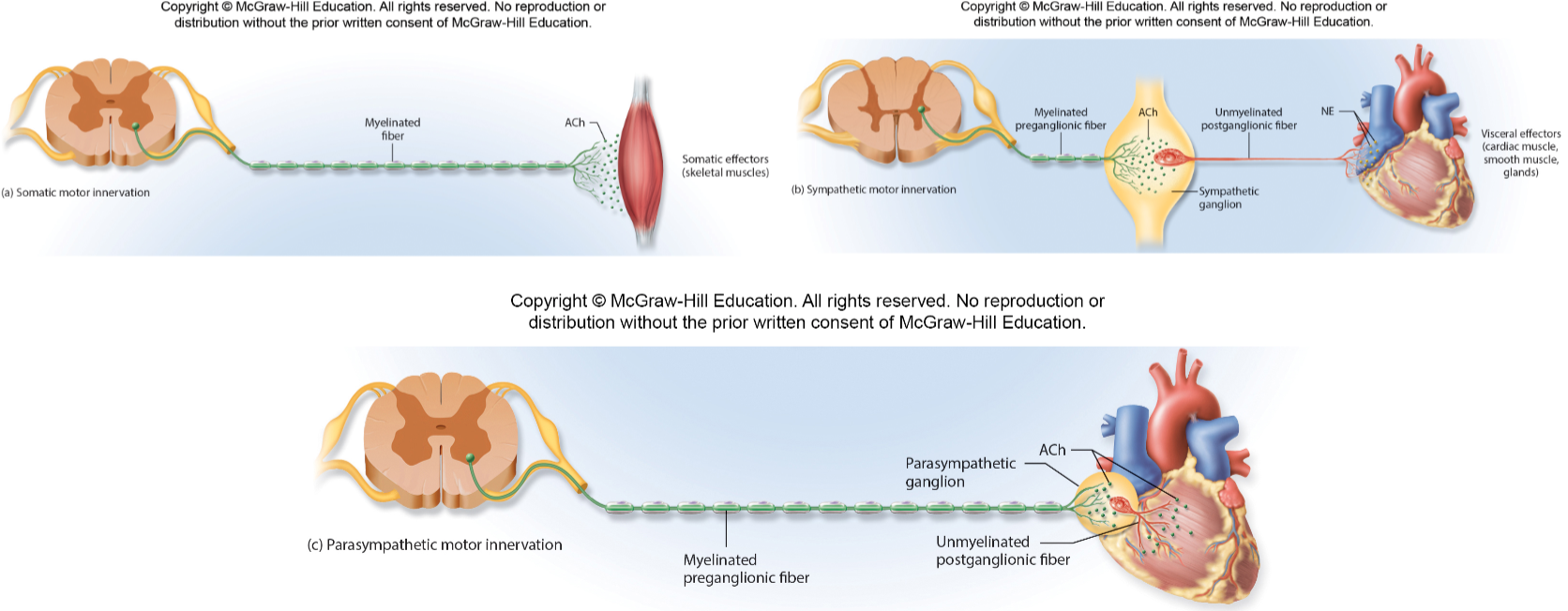
Preganglionic fiber
begins with a neurosoma in the brainstem or spinal cord; axon extends to an autonomic ganglion somewhere outside the CNS; meets the neurosoma of a second neuron and secretes the neurotransmitter acetylcholine to stimulate the latter; myelinated
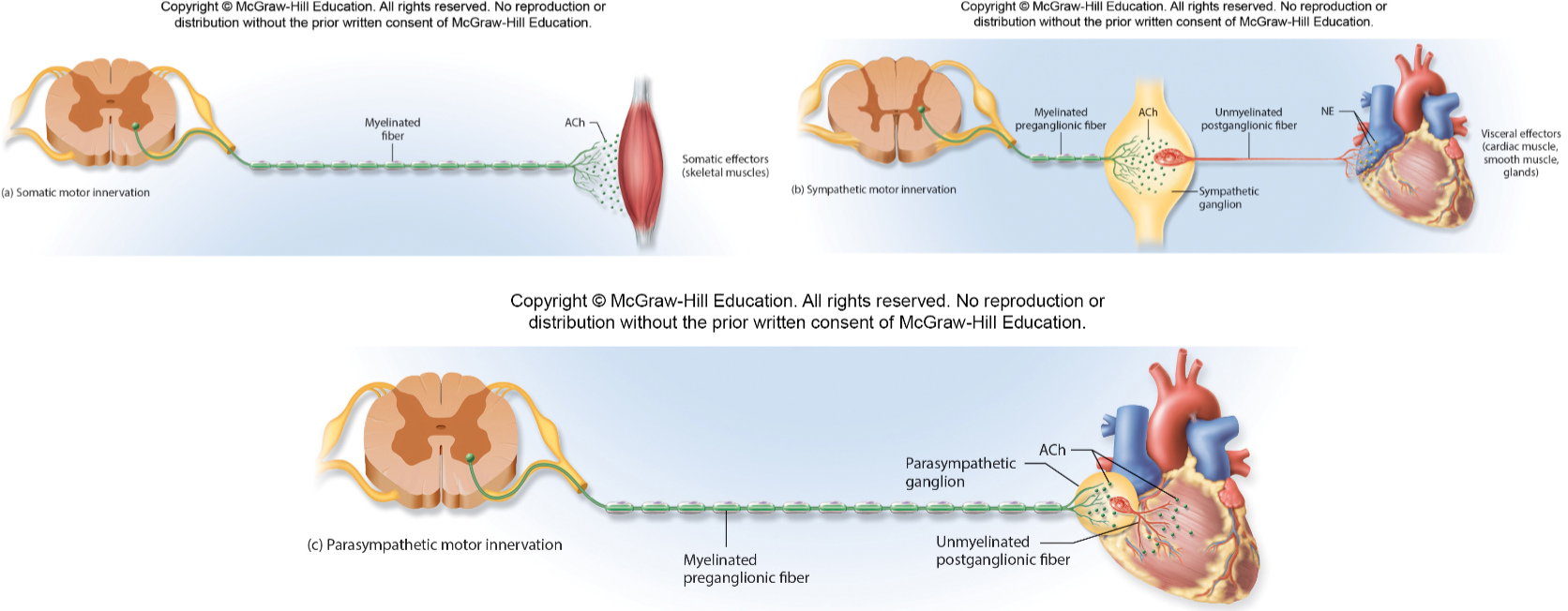
postganglionic fiber
from the axon of the second neuron, leaves the ganglion and extends the rest of the way to the target organ or cells; secretes either ACh or norepinephrine; can have excitatory or inhibitory effect on target cells; unmyelinated
What so Somatic Effectors do?
(SNS)
Move skeletal muscle
What do Autonomic Effectors do?
Involuntarily controls glands, smooth muscle, cardiac muscle
Somatic control
Voluntary
Autonomic control
Involuntary
Somatic Efferent pathways
one nerve fiber from CNS to effector; no ganglia
Autonomic Efferent pathways
two nerve fibers from CNS to effector; synapse at a ganglion
Somatic effect on target cells
Always excitatory
Autonomic Effect on target cells
Excitatory or inhibitory
Thoracolumbar division
another name for sympathetic division; arises from the thoracic and lumbar regions of the spinal cord; preganglionic neurosomas are in lateral horns of spinal cord; short preganglionic fibers and long postganglionic fibers; sympathetic chain ganglia from cervical to coccygeal levels
Craniosacral division
also known as parasympathetic division; long preganglionic fibers and short postganglionic fibers; terminal ganglia are in or near target organ
enteric nervous system
nervous system of digestive tract; innervates smooth muscle and glands; regulates motility of esophagus, stomach, and intenstines; regulates secretion of digestive enzymes and acid