Worksheet - Module 1 functional anatomy
 Call Kai
 Learn
Learn Practice Test
 Spaced Repetition
 Match
Match Flashcards
 Knowt Play
1/132

There's no tags or description
Looks like no tags are added yet.
Name | Mastery | Learn | Test | Matching | Spaced | Call with Kai |
|---|
No analytics yet
Send a link to your students to track their progress
133 Terms
When the body exerts an opposite effect with muscles, fasciae, and joints, it is called:
Strength
A bursa is a ring-shaped piece of fibrocartilage found in many joints of your body, including the temporomandibular and sternoclavicular joints.
False
A solid stance that encompasses active stability and dynamic tensions is referred to as:
kinematics
a restricted range of joint mobility
hypomobility
the small, generally unseen movements occurring between the articulating surfaces of joints
arthrokinematic motion
an injury involving the stretching or tearing of a muscle or tendon
strain
most commonly refers to a stretch or tear (or both) of a ligament or other noncontractile connective tissue
sprain
when a joint's surfaces have the least amount of contact, the ligaments are lax and the joint cavity contains the greatest volume of fluid
open-packed position
an excess range of joint motion
hypermobility
when a joint's surfaces have the greatest amount of contact and the ligaments and joint capsule are taut
close-packed position
Portions of the connective tissue network convey tension not only locally but also:
Globally through the body
A(n) ___________ is the part of animal tissue that usually provides structural support to the animal cells in addition to performing various other important functions.
extracellular matrix
A ____________ is the combined muscular and facial elements that comprise a muscle belly and its tendons
myofascial unit
A ball-and-socket joint is classified as what type of joint?
Triaxial
comprised of exactly similar parts facing each other
symmetrical
the ability to be firmly fixed or supported
stability
a movement pattern's predictable sequence
kinetic chain
the study of forces that act on the body to generate or alter motion
kinetics
the study of movement
kinesiology
the even distribution of weight
balance
aspects of moving systems
dynamics
corresponding in size to something else
proportion
the analysis of movement in terms of mechanical elements
kinematics
the ability to move
mobility
the organization of different elements
coordination
aspects of nonmoving (or virtually nonmoving) systems
statics
___________ is the ability to lengthen without being damaged
Stretch
A joint is passively restrained by what structures?
Surrounding joint capsule, ligaments, and fasciae
A joint is a point of contact between two or more:
Connective tissues of any type
_________ is the capability to be altered and retain that new configuration.
Plasticity
Active restraint is defined as contractile tissue that stabilizes a joint.
True
____________ is the ability to be pulled in two different directions
Tensile strength
Which of the following is a type of cartilage found in the majority of joints involved with motion?
Hyaline cartilage
The recipe for bone tissue includes which of the following?
60% inorganic material, 20% water
Which of the following are structural classifications of joints?
Fibrous, cartilaginous, and synovial
Erect posture with face forward, arms at sides, forearms supinated (so that palms of the hands face forward), and fingers and thumbs in extension is the definition of
anatomical position
Tendons are a bit like sophisticated ends of which type of candy?
Tootsie roll
__________ is (are) a group of naturally occurring proteins found in animals, especially the flesh and connective tissues of vertebrates.
Collagen fiber
An amorphous gel-like substance surrounding sells; formed by the non-fibrous components of the extracellular matrix is known as ___________
ground substance
Identify the plane (front and back)
frontal
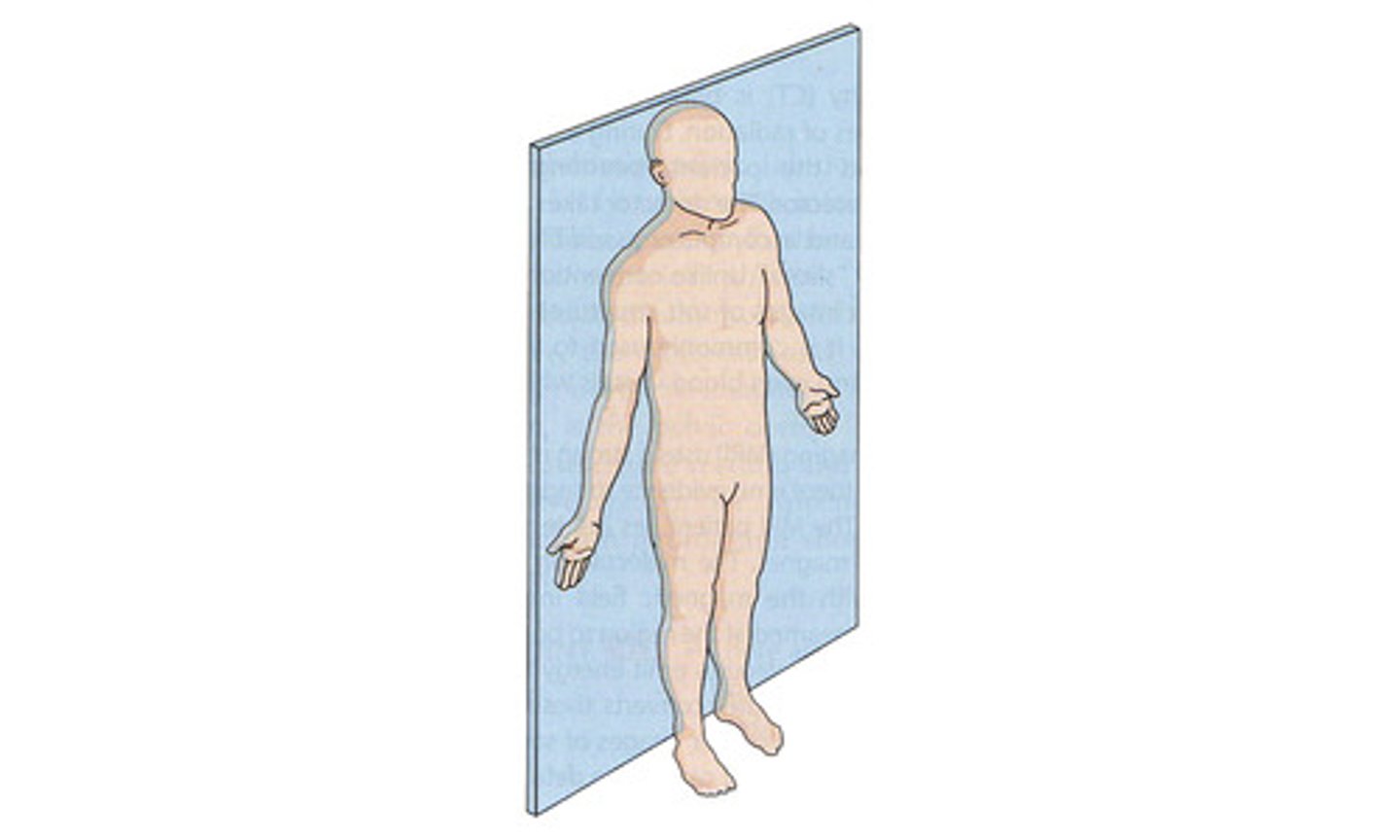
___________ means the capacity to recoil or rebound to an original length (or shape) after being stretched (or deformed).
Elastic
____________ is the gradual change in shape that occurs when tissues are subjected to a slow, continuous force from either compression, tension, or twisting.
Creep
Which of the following is an example of a compression-based connective tissue?
Cartilage
A(n) ___________ is a cell responsible for bone formation.
osteoblast
Which of the following is an infused membrane of dense connective tissue that coats the outside surfaces of bony shafts?
Periosteum
The patella is __________ to the knee joint.
anterior
A(n) _________ is a protein in connective tissue that is elastic and allows many tissues in the body to resume their shape after stretching or contracting.
elastin fiber
The axis that passes medially to laterally through the body is the:
Frontal axis
Which of the following is the protein fiber that plays a critical role in connective tissue's ability to provide functional and structural integrity?
Collagen
Connective tissue is composed of which two basic ingredients?
Cells, extracellular matrix
Which law states that bone tissue will thicken when put under stress?
Wolff's Law
Aside from tension-based structures and compression-based structures, a critical ingredient of the connective tissue network is:
Fluid
Activities of daily living such as washing the dishes require:
Mobility, stability, balance, and coordination
Approximately how many bones are involved with voluntary motion?
175
Which of the following bones are more distal? humerus or radius
radius
Which of the following is composed of loose, dense connective tissue and serves as the body's sheets, cables, and conduits?
Fascial tissues
Which of the following bones are more medial? Fibula or tibia
tibia
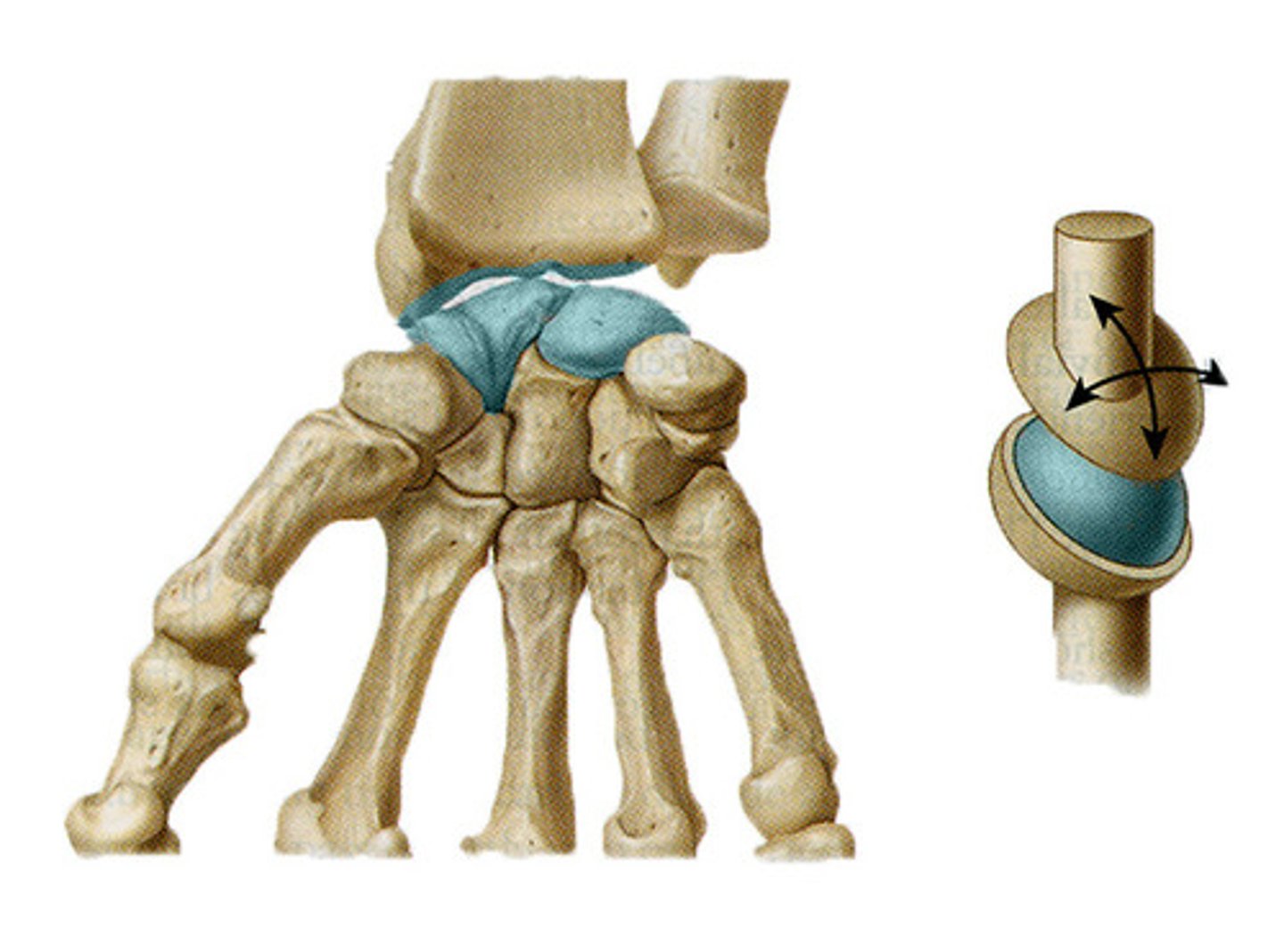
What type of joint is depicted in the image below?
synovial / ellipsoid
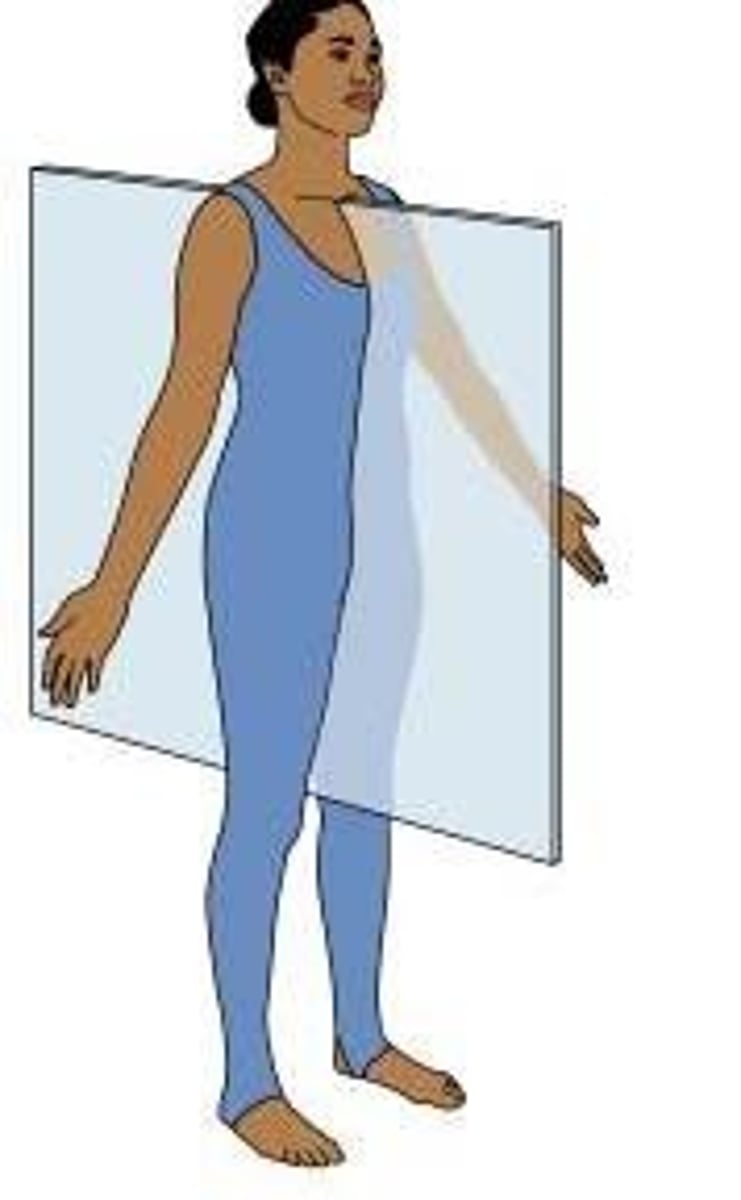
Identify the plane in the image below. (in half)
sagittal
Structurally speaking, adipose (fat) and bone are what types of connective tissue, respectively?
Loose, osseous
A sprain is defined as a:
Stretch or tear of noncontractile tissues
An oblique plane is any plane that:
Combines two or three cardinal planes
Which of the following are types of arthrokinematic motion?
Roll, glide, and spin
Synovial fluid is produced by a specific:
Membrane
Which of the following will greatly determine a joint's mobility?
The elasticity of the joint capsule
The study of human movement is called:
Kinesiology
The ___________ is the basic structural, functional, and biological unit of all known living organisms.
cell
Which term best describes the study of gravity, friction, and pressure?
Kinetics
A muscle's ability to return to its original length and shape after it is shortened or lengthened is known as _________
elasticity
Which connective tissue property has the capacity to be altered and then retain that new configuration?
Plasticity
The crescent-shaped fibrocartilage located in the tibiofemoral joint is called:
Meniscus
Which of the following are functional classifications of joints?
Synarthrotic, amphiarthrotic, and diarthrotic
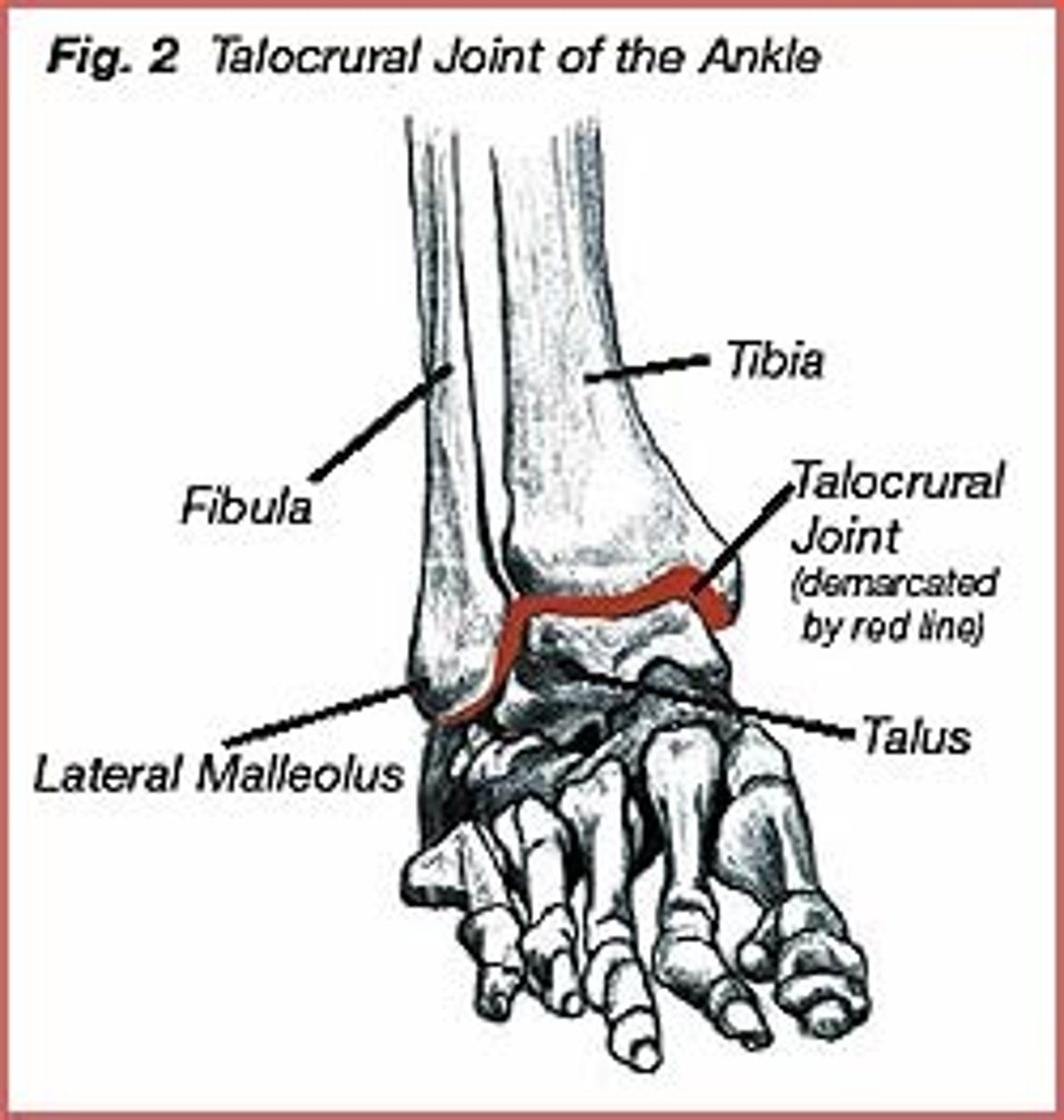
What type of joint is depicted in the image below? (ankle)
synovial / gliding
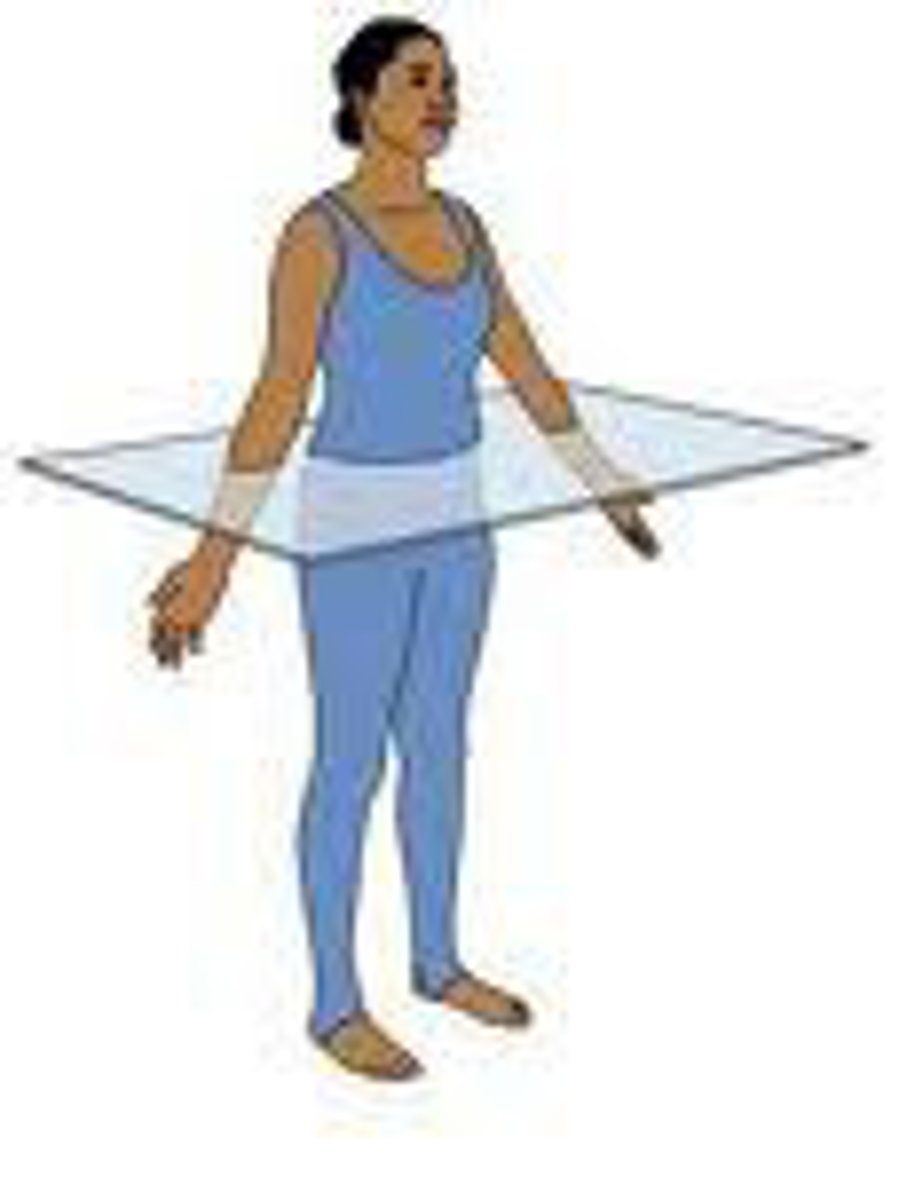
Identify the plane in the image below. (bkbkjb)
transverse
Functionally speaking, connective tissues can be divided into which two groups?
Compression and tension tissues
aponeurotic sheets that separate various muscles of the extremities
septum
the body's sheets, cables, conduits, and paddings, composed of loose or dense connective tissue
fascial tissue
one of two types of osseous tissue that form bones (wrong)
not compact bone or osteoblast
one of the two types of osseous tissue that form bones (wrong)
not spongy bone or osteoblast
a band of connective tissue that connects bones together
ligament
a cell responsible for bone formation
osteoblast
a broad, flat tendon that attaches to the end of a muscle
aponeurosis
a fibrous tissue connecting muscle to bone
tendon
a bandage-like strip of connective tissue often used to stabilize tendons
retinaculum
a type of cartilage present in the outer ear, eustachian tube, and epiglottis
elastic cartilage
a membrane that lines the outer surface of all bones, except at the joints of long bones
periosteum
a simple machine that can amplify an applied force (effort) by converting it into torque
lever
a type of bone cell that resorbs bone tissue
osteoclast
a cell commonly found in mature bone that is actively involved in the routine turnover of bony matrix
osteocyte
the portion of the skeleton composed of the arms and legs, pectoral girdle (scapulae and clavicles), and pelvic girdle (hips)
appendicular skeleton
the skeleton's center including the cranium, vertebral column, ribs, sternum, and hyoid bone
axial skeleton
a layer of loose areolar connective tissue and adipose found in the subcutaneous layer in virtually all regions of the body
superficial fascia
a mixture of white fibrous tissue and cartilaginous tissue in various proportions
fibrocartilage
a broad and thin plane of fibrous tissue that separates two bones
interosseous membrane
also known as articular cartilage, it is a type of cartilage found on many joint surfaces
hyaline cartilage
the envelope surrounding a synovial joint
joint capsule
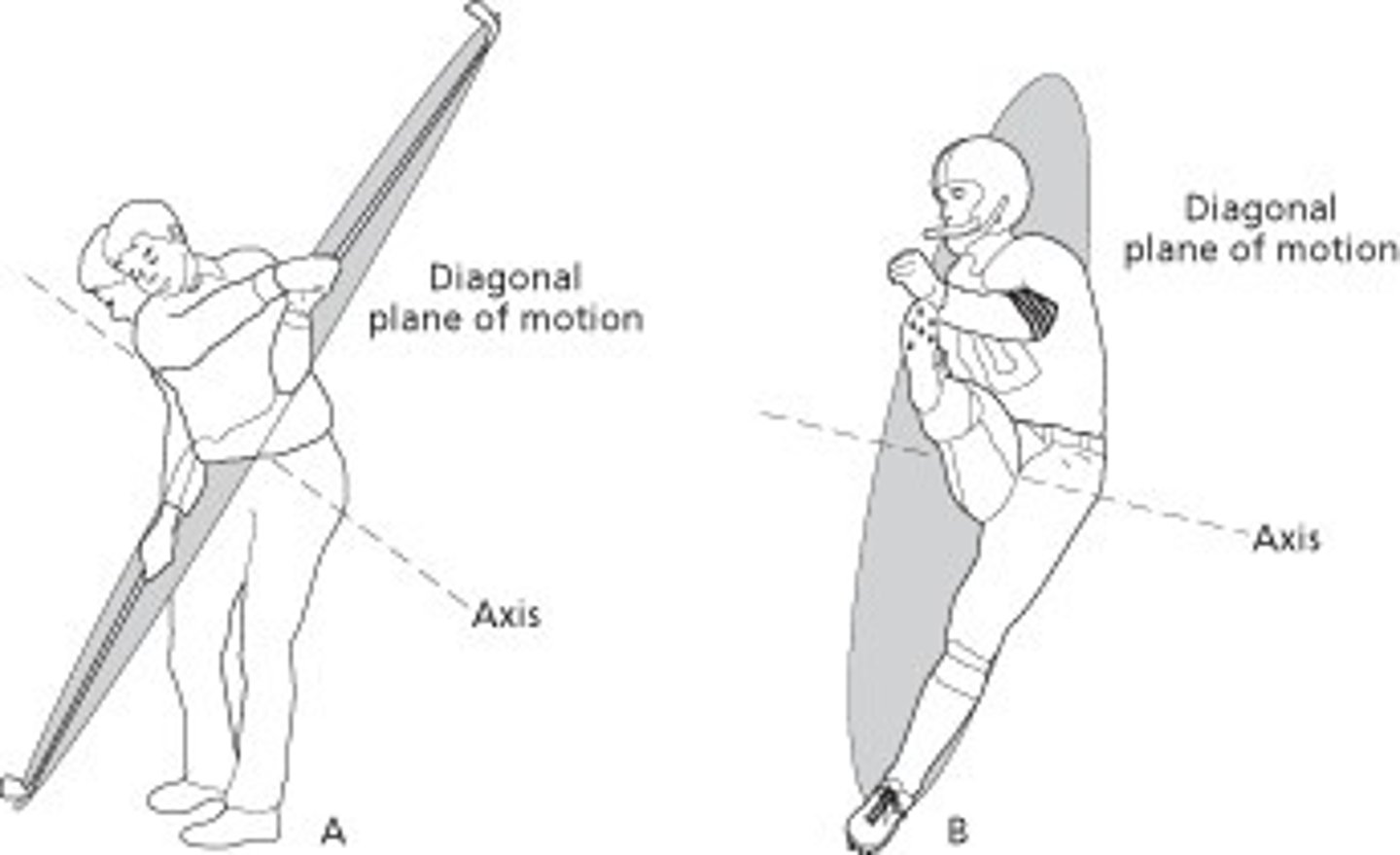
Identify the plane in the image below. (2 or more)
oblique
A joint's physiological movement is defined as the:
Movement a person can actively produce at an articulation
The proximal radioulnar joint is an example of what type of joint?
Pivot
Full extension of the knee brings the tibiofemoral joint into which position?
Close-packed