Trees 1: Common Trees
 Call Kai
 Learn
Learn Practice Test
 Spaced Repetition
 Match
Match Flashcards
 Knowt Play
1/52

Earn XP
Description and Tags
Must be well-familiarized
Name | Mastery | Learn | Test | Matching | Spaced | Call with Kai |
|---|
No analytics yet
Send a link to your students to track their progress
53 Terms
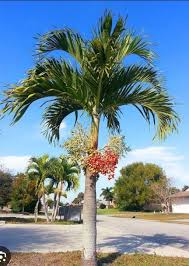
Adonidia merrillii (Manila palm)
Native to the Philippines and endemic; conservation status: not endangered. Most easily identified by its slender single-trunk palm form topped with a neat crown of arching fronds and bright red fruits clustered below the leaf crown, making it one of the most recognizable ornamental palms in urban tropical landscapes.
A small to medium evergreen palm typically growing 6–12 meters tall with a smooth, slender gray trunk about 15–30 cm in diameter. The trunk is ringed with leaf scars and slightly swollen at the base. It has a fibrous root system typical of palms, with no taproot and strong lateral anchoring roots. It does not branch; a single growing point produces a compact crown. Leaves are pinnate, arching, 2–3 meters long, with narrow leaflets arranged along a central rachis forming a graceful canopy. Flowers are small, cream to pale yellow, borne on branched inflorescences below the crownshaft. Fruits are small, ovoid drupes that turn bright red when mature and are dispersed mainly by birds.
Widely used as an ornamental palm for streets, medians, resorts, and formal landscapes due to its compact size and clean upright form; fruits are mildly toxic and not edible. In landscape applications, it is best suited for tight urban spaces, avenue planting, and formal garden designs where uniformity and vertical accent are desired; it requires full sun and well-spaced planting to maintain symmetry and avoid crowding in mature plantings.
Alstonia scholaris (Dita)
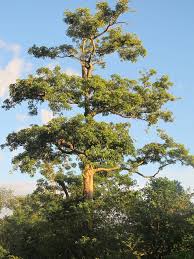
Native to the Philippines and other parts of tropical Asia; conservation status: not endangered. Most easily identified by its whorled leaf arrangement (several leaves arising from one node) and its clusters of small, strongly fragrant greenish-white flowers, making it a very distinctive tall roadside and forest tree.
A large evergreen tree typically growing 15–40 meters tall with a narrow to moderately broad crown about 8–20 meters wide. Trunk is straight and columnar, 0.5–1.5 meters in diameter, with gray to dark gray bark that becomes rough and fissured with age and exudes milky latex when cut. It develops a strong deep root system with lateral spread. Branching begins high above human height, forming an upright, columnar canopy. Leaves are simple, leathery, elliptic to oblong (10–20 cm long), arranged in whorls of 4–7 per node with pinnate venation. Flowers are small, greenish-white, highly fragrant, borne in dense terminal clusters. Fruits are paired slender pods (follicles) containing many small wind-dispersed seeds with silky hairs.
Used for light timber, plywood, traditional medicine (bark), and urban shade planting. Latex may cause mild irritation. In landscape applications, it is best suited for avenues, parks, and institutional grounds where its tall, straight form provides vertical structure and shade; it requires adequate spacing due to height and latex exudation, making it more suitable as a structural or background tree than for confined urban planting.
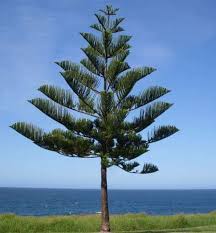
Araucaria heterophylla (Norfolk Island Pine)
Non-native to the Philippines, originating from Norfolk Island in the South Pacific; conservation status: not endangered. Most easily identified by its perfectly symmetrical, conical “Christmas tree” shape with evenly spaced horizontal whorled branches and soft needle-like foliage, making it one of the most distinctive evergreen ornamentals in tropical and subtropical landscapes.
A tall evergreen conifer typically growing 20–60 meters in its native range, but often 10–30 meters in cultivation, with a narrow to moderately broad pyramidal crown. Trunk is straight and columnar, reaching about 0.5–1.5 meters in diameter, with dark brown bark that becomes rough and vertically fissured with age. Roots are moderately deep and wide-spreading but generally non-invasive. Branches are arranged in precise whorls, forming distinct horizontal tiers above human height. Leaves are soft, scale-like to needle-like, bright green, about 1–1.5 cm long, densely covering branchlets. It is dioecious, producing separate male and female cones; female cones are large, spherical, and woody, while male cones are elongated and cylindrical.
Widely used as an ornamental specimen, indoor potted plant when young, and landscape focal tree due to its strong geometric form. Non-toxic. In landscape applications, best suited for large gardens, parks, and formal landscapes where its full symmetrical crown can develop; should be given ample vertical and horizontal space as it becomes very large and visually dominant at maturity, making it unsuitable for narrow urban streets or confined planting areas.
Artocarpus blancoi (Antipolo)
Endemic to the Philippines; conservation status: vulnerable. Most easily identified by its large, rough, sandpapery leaves and its round to slightly spiny yellow-green fruits, as well as its strong association with lowland forests and traditional Philippine landscapes.
A medium to large evergreen to semi-deciduous tree typically growing 15–25 meters tall with a broad rounded crown about 10–20 meters wide. Trunk is 0.5–1.5 meters in diameter with gray to brown bark that becomes rough and fissured with age. It develops a strong taproot with extensive lateral roots. Branching begins above human height, forming a dense, spreading canopy. Leaves are simple, alternate, very large (10–30 cm long), obovate to elliptic, with very rough sandpapery texture, prominent pinnate venation, and entire to slightly wavy margins. Flowers are small and inconspicuous, unisexual, borne in separate inflorescences on the same tree. Fruits are large, round to slightly spiny syncarps that turn yellow-green when ripe, containing edible pulp and seeds, dispersed by animals.
Fruits are edible and locally consumed; wood used for light construction and carving. No major toxicity reported. In landscape applications, it is best suited for large parks, heritage landscapes, and ecological gardens where its broad canopy and large textured leaves can be appreciated; it requires ample space due to crown spread and fruit drop, making it unsuitable for narrow streets but valuable as a native shade and biodiversity-supporting tree.
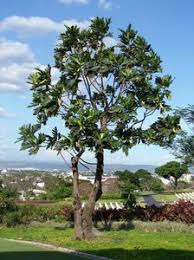
Barrington asiatica (Botong)
Native to the Philippines and other tropical Indo-Pacific coastal regions; conservation status: not endangered. Most easily identified by its very large, square-edged glossy leaves clustered at branch tips and its large white night-blooming flowers with long protruding stamens, followed by large square-shaped fibrous fruits that often float in seawater.
A medium to large evergreen coastal tree typically growing 10–20 meters tall, occasionally up to 25 meters, with a broad rounded crown about 8–15 meters wide. Trunk is 0.5–1 meter in diameter with gray to brown bark that becomes rough and fissured with age. It develops a strong deep taproot with lateral roots adapted to coastal and sandy soils. Branching begins above human height, forming a dense, spreading canopy. Leaves are simple, clustered at branch tips, obovate to oblong (20–50 cm long), thick and leathery with smooth margins and prominent pinnate venation. Flowers are large (10–15 cm wide), white, fragrant at night, with long conspicuous stamens, borne in terminal clusters. Fruits are large, square to angular fibrous drupes that float and are dispersed by seawater.
Used for coastal protection, shade, and ecological planting in beachfront and mangrove-adjacent landscapes; sometimes used in traditional medicine. Seeds and plant parts may be mildly toxic if ingested. In landscape applications, it is best suited for coastal parks, resort landscapes, and large open shoreline areas where salt tolerance and strong visual structure are needed; it requires spacing due to large leaves, fruit drop, and canopy spread, making it a strong coastal feature and ecological stabilization tree.
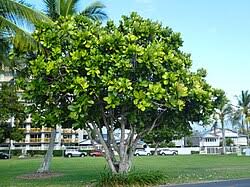
Bismarckia nobilis ‘Silver’ (Bismarckia Palm)
Massive, solitary palm with a stout trunk and an enormous symmetrical crown of rigid, fan-shaped (costapalmate) leaves that are striking silvery-blue to bluish-gray; typically grows 10–20 m tall, forming a bold architectural silhouette with wide-spreading fronds; produces small brown flower clusters and dark fruits on long inflorescences; commonly used as a dramatic focal or feature palm in modern and arid-style tropical landscapes; not native to the Philippines but widely cultivated.
Best used as a statement focal palm in full sun with well-drained soil and wide spacing for crown spread. Performs best in open, bright conditions with moderate watering; avoid crowding and waterlogged soils, which reduce vigor and emphasize leaf damage.
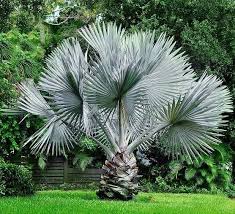
Bombax ceiba (Malabulak)
Spectacular tropical deciduous tree native to Southeast Asia and the Philippines; conservation status: not endangered. Most easily identified by its large bright red to orange-red flowers that appear before leaf flush and its thick, straight trunk often lined with conical spines, making it highly distinctive even at a distance.
A very large deciduous tree typically growing 20–40 meters tall with a broad spreading crown about 10–20 meters wide. Trunk is massive, often 1–3 meters in diameter, with gray bark and prominent conical prickles especially in younger trees. It develops a strong deep taproot with extensive lateral roots for stability. Branching begins high above human height, forming a broad, open canopy. Leaves are large, palmately compound with 5–7 lanceolate leaflets, each 10–20 cm long, smooth-margined, with pinnate venation. Flowers are large (8–12 cm), bright red to orange-red, appearing on bare branches before leaf emergence. Fruits are large, woody capsules that split open to release numerous seeds surrounded by cotton-like fibers dispersed by wind.
Widely used as an ornamental and avenue tree for its dramatic flowering display and also planted in large parks and open landscapes; fibers from seed pods are sometimes used as kapok-like stuffing material. No significant toxicity reported. In landscape applications, it is best suited for very large open spaces such as parks, boulevards, and institutional grounds where its massive size and seasonal leaf drop can be accommodated; not suitable for confined urban streets or small gardens due to its scale and aggressive seasonal litter.
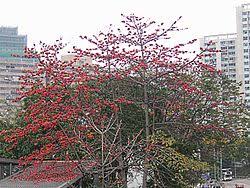
Caesalpinia pulcherrima (Caballeros)
Non-native but widely cultivated in the Philippines; conservation status: not endangered. Most easily identified by its showy clusters of red, orange, and yellow flowers with long protruding red stamens, making it one of the most striking flowering ornamental shrubs in tropical landscapes.
A large evergreen shrub to small tree typically growing 2–5 meters tall with a 2–4 meter spread. Stems are slender, often armed with small prickles. Leaves are finely textured and bipinnately compound, 20–40 cm long, with numerous small leaflets giving a fern-like appearance. Flowers are borne in upright terminal clusters, each flower about 5–8 cm across, with brightly colored petals and prominent long stamens. Fruits are flat pods containing several seeds that readily germinate.
Widely used as an ornamental accent, flowering hedge, screen, and butterfly-attracting plant. Seeds and some plant parts are considered mildly toxic if ingested and should not be consumed. In landscape applications, it is best used in shrub borders, median plantings, tropical gardens, and mass plantings where its continuous flowering display can be highlighted; regular pruning helps maintain shape and encourage blooming.
Cananga odorata (Ylang-ylang)
Strongly fragrant tropical tree native to the Philippines and Southeast Asia; conservation status: not endangered. Most easily identified by its intensely aromatic, drooping, star-shaped yellow-green flowers that produce the famous “ylang-ylang” essential oil, making it one of the most important perfume trees in the tropics.
A medium to large evergreen tree typically growing 10–20 meters tall, occasionally up to 30 meters, with a broad spreading crown about 6–15 meters wide. Trunk usually reaches 0.3–0.8 meters in diameter with gray to gray-brown bark that is smooth when young and slightly fissured with age. It develops a moderate taproot with spreading lateral roots. Branching begins above human height, forming a loose, irregular canopy with drooping branches. Leaves are simple, alternate, elliptic to oblong (10–20 cm long), smooth-margined, with prominent pinnate venation and glossy green surface. Flowers are long-petaled, narrow, twisted, greenish-yellow turning bright yellow as they mature, highly fragrant, and borne year-round in warm climates. Fruits are small clusters of black, berry-like drupes containing seeds, dispersed mainly by birds.
Widely used in perfumery, essential oil production, aromatherapy, and ornamental planting in gardens, resorts, and cultural landscapes. No significant toxicity reported. In landscape applications, it is best suited for sensory gardens, residential landscapes, and park plantings where its fragrance can be experienced; it should be placed near pathways or seating areas but protected from strong winds and excessive pruning to preserve flowering and form, making it ideal as an aromatic focal tree.
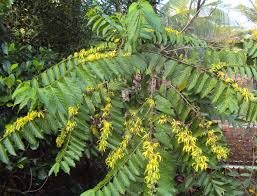
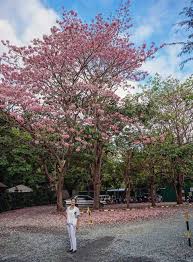
Cassia nodosa (Balayong / Palawan Cherry)
Non-native but widely cultivated in the Philippines; conservation status: not endangered. Most easily identified by its profuse clusters of soft pink flowers that can blanket nearly the entire canopy during the flowering season, creating a striking pink display often compared to cherry blossoms in tropical landscapes.
A medium-sized deciduous tree typically growing 10–20 meters tall with a rounded to spreading crown about 8–15 meters wide. Trunk usually reaches 0.3–0.8 meters in diameter, with gray to brown bark that becomes slightly rough and fissured with age. It develops a moderate root system with a central taproot and spreading lateral roots. Branching begins above human height, forming a broad open canopy. Leaves are compound and pinnate, 20–40 cm long, with several pairs of oval to elliptic leaflets having smooth margins and pinnate venation. Flowers are pink to rose-pink, sometimes fading to pale pink, borne in large pendulous clusters during the dry season or before leaf flush. Fruits are long cylindrical dark brown pods containing numerous seeds embedded in a sticky pulp.
Widely planted as an ornamental flowering tree in parks, roadsides, campuses, and residential developments. No significant toxicity is commonly reported, though seeds and pods are generally not consumed. In landscape applications, it is best used as a specimen, avenue, or seasonal accent tree where its dramatic floral display can be appreciated; suitable for medium to large landscapes and highly effective as a focal point, though seasonal leaf, flower, and pod litter should be considered near paved areas and walkways.
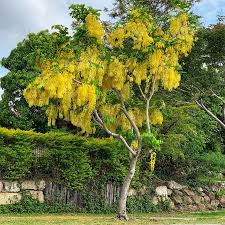
Cassia fistula (Golden Shower)
Non-native but widely cultivated in the Philippines; conservation status: not endangered. Most easily identified by its spectacular cascading clusters of bright golden-yellow flowers that can nearly cover the entire canopy when in bloom, earning it the common name "Golden Shower Tree."
A medium-sized deciduous tree typically growing 8–15 meters tall with a rounded to spreading crown about 6–12 meters wide. Trunk usually reaches 0.3–0.6 meters in diameter, with smooth gray to gray-brown bark that becomes slightly rough with age. Root system consists of a moderate taproot and spreading lateral roots. Branching begins above human height, forming an open canopy. Leaves are compound and pinnate, 20–40 cm long, with several pairs of oval leaflets having smooth margins and pinnate venation. Flowers are bright golden-yellow, borne in long pendulous racemes up to 60 cm long, typically appearing during the dry season. Fruits are long, cylindrical dark brown to black pods, often 30–60 cm long, containing numerous seeds separated by sticky pulp.
Widely used as an ornamental and flowering accent tree in parks, roadsides, and gardens. The pulp has traditional medicinal uses, particularly as a mild laxative, while seeds and other parts should not be consumed indiscriminately. In landscape applications, it is best used as a specimen, avenue, or seasonal flowering tree where its floral display can be appreciated; suitable for medium to large landscapes and effective as a visual focal point, but seasonal leaf drop and pod litter should be considered near walkways and paved areas.
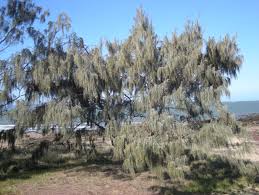
Casuarina equisetifolia (Agoho)
Native to the Philippines and other tropical Indo-Pacific coastal regions; conservation status: not endangered. Most easily identified by its fine, needle-like, pine-like appearance formed by segmented green branchlets (not true leaves), making it highly distinctive as a coastal wind-resistant tree used for shoreline stabilization.
A medium to large evergreen tree typically growing 10–30 meters tall, occasionally up to 35 meters, with a narrow to conical crown about 6–15 meters wide. Trunk is 0.5–1 meter in diameter with dark gray to brown deeply fissured bark. It develops a strong deep taproot with extensive lateral roots adapted to sandy and coastal soils. Branching is dense and begins above human height, forming a narrow, upright canopy. Leaves are reduced to minute scales at nodes, while green segmented branchlets function as photosynthetic organs. Flowers are small and inconspicuous, wind-pollinated; male flowers form slender spikes while female flowers develop into woody cone-like structures. Fruits are cone-like aggregates containing small winged seeds dispersed by wind.
Used for coastal protection, windbreaks, erosion control, and reforestation of sandy or degraded sites, with limited ornamental use in large landscapes. No significant toxicity reported. In landscape applications, it is best suited for coastal areas, highways, and large open spaces exposed to wind and salt spray; it should not be planted near buildings or confined urban spaces due to its aggressive roots, heavy litter from branchlets, and strong competition effects on nearby vegetation.
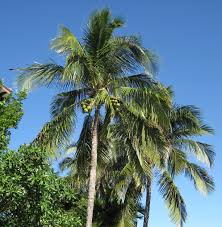
Cocos nucifera (Buko)
Native to the Philippines and widely distributed throughout tropical coasts worldwide; conservation status: not endangered. Most easily identified by its tall unbranched trunk topped with a crown of long feather-like fronds and large fibrous fruits (coconuts) that are one of the most economically important plant products in tropical regions.
A tall evergreen palm typically growing 20–30 meters tall, occasionally up to 35 meters, with a slender slightly curved trunk about 0.3–0.6 meters in diameter. The trunk is gray to brown with ringed leaf scars and may be smooth or slightly rough with age. It has a fibrous root system with no taproot, forming dense lateral anchoring roots suited for sandy coastal soils. It does not branch; a single growing point produces a crown of leaves. Leaves are pinnate, 3–6 meters long, arching and feather-like with numerous narrow leaflets arranged along a central rachis. Flowers are small, yellowish, borne in large branched inflorescences emerging from the leaf axils. Fruits are large fibrous drupes containing a hard seed with coconut water and meat, dispersed naturally by water.
One of the most important multipurpose palms, used for food (water, meat, oil), building materials, fiber (coir), and traditional crafts. No significant toxicity in edible parts, though husk and shell are indigestible. In landscape applications, it is best suited for coastal areas, parks, resorts, and large open landscapes where its tall vertical form and wind tolerance are useful; it should be spaced widely due to large crown spread, falling heavy fruits, and root competition, making it ideal as a coastal and agricultural landscape tree rather than a tight urban street tree.
Crateva religiosa (Salingbobog / Balai-lamok)
Native to the Philippines and widely distributed across tropical Asia; conservation status: not endangered. Most easily identified by its long-stalked, “spidery” pale cream flowers with long purple stamens that give a highly distinctive airy, dangling floral display.
A small to medium deciduous tree typically growing 5–15 meters tall, occasionally up to 20 meters, with an open, rounded to irregular crown about 5–12 meters wide. Trunk is 0.2–0.6 meters in diameter with gray to brown bark that becomes slightly fissured with age. It develops a moderate taproot with lateral roots adapted to moist and riparian soils. Branching begins above human height, forming a light, open canopy. Leaves are compound with three leaflets (trifoliate), each ovate to elliptic, about 5–15 cm long, smooth-margined, with pinnate venation. Flowers are pale greenish-white to cream, borne in terminal clusters on long stalks with prominent purple stamens. Fruits are round to ovoid berries (3–6 cm), turning yellowish when ripe, containing multiple seeds and dispersed by animals.
Used in traditional medicine (bark and leaves), light rural timber, and ecological riverbank planting. No significant toxicity widely reported, though medicinal use should be cautious. In landscape applications, it is best suited for riparian zones, naturalistic parks, and ecological gardens where its unique floral structure and moisture tolerance can be appreciated; not ideal for formal streetscapes due to its open canopy, seasonal leaf drop, and relatively light shade production.
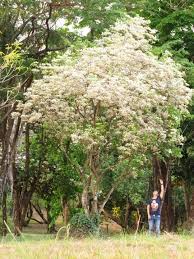
Cynometra ramiflora (Balitbitan)
Native to the Philippines and Southeast Asia; conservation status: not endangered. Most easily identified by its striking juvenile foliage flush where new leaves emerge in drooping tassels of pink, cream, beige, and white, giving a flowering-like appearance.
Small to medium evergreen to semi-deciduous tree (5–20 m) with irregular 4–10 m crown. Slender trunk 0.2–0.6 m diameter, gray-brown bark slightly fissured. Irregular branching often mid-height. Leaves compound with few leathery leaflets (4–12 cm), smooth margins. Flowers small, pale greenish-white, inconspicuous. Fruits hard curved woody pods with one seed.
Used for light timber, firewood, and ecological planting. Non-toxic. Best as specimen or accent tree in botanical gardens and naturalistic landscapes; not suitable for formal streetscapes due to irregular habit and limited shade.
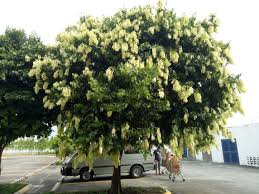
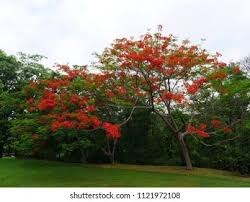
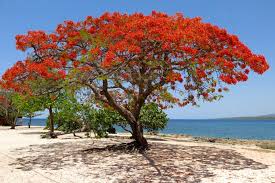
Delonix regia (Fire Tree)
Non-native but widely cultivated in the Philippines; conservation status: not endangered. Most easily identified by its spectacular canopy of brilliant scarlet-red to orange-red flowers that can almost completely cover the tree during the flowering season, making it one of the most iconic flowering trees in tropical landscapes.
A medium to large deciduous tree typically growing 8–15 meters tall with a broad umbrella-shaped crown often spreading 10–20 meters wide, sometimes wider than its height. Trunk usually reaches 0.5–1 meter in diameter, with gray-brown bark that becomes rough and slightly fissured with age. It develops a shallow but extensive lateral root system. Branching begins relatively low and spreads horizontally, creating a wide, flattened canopy. Leaves are large, feathery, and bipinnately compound, up to 30–60 cm long, with numerous tiny leaflets that give the foliage a fern-like appearance. Flowers are large (8–10 cm across), scarlet-red to orange-red with one petal often marked in white and yellow. Fruits are long, flat, dark brown woody pods that may reach 30–60 cm in length and persist on the tree.
Widely used as a flowering specimen, shade tree, and avenue tree in parks, campuses, and large open landscapes. No significant toxicity is commonly reported. In landscape applications, it is best suited for large open areas where its expansive canopy and striking floral display can be fully appreciated; it should be planted away from buildings, pavements, and underground utilities due to its wide-spreading roots, large crown, and substantial seasonal litter from flowers, leaves, and pods.
Dillenia philippinensis (Katmon)
Endemic to the Philippines; conservation status: Vulnerable. Most easily identified by its very large, glossy, corrugated leaves and its large white flowers with prominent yellow center, followed by round, green, edible but very sour fruits that are commonly used in traditional Filipino cuisine and flavoring.
A medium-sized evergreen tree typically growing 8–15 meters tall with a rounded spreading crown about 6–12 meters wide. Trunk usually reaches 0.3–0.8 meters in diameter with gray to brown bark that is slightly rough and fissured with age. It develops a strong taproot with moderate lateral roots. Branching begins above human height, forming an open and slightly irregular canopy. Leaves are simple, very large (15–40 cm long), obovate to elliptic, with strongly corrugated (wrinkled) texture, prominent pinnate venation, and serrated to slightly wavy margins. Flowers are large (10–15 cm wide), white with a prominent yellow central mass of stamens, typically short-lived and borne singly. Fruits are round, green, fleshy, and acidic, containing multiple seeds embedded in pulp.
Widely used as an ornamental shade tree and for its edible sour fruits used in traditional dishes, condiments, and beverages. No significant toxicity reported. In landscape applications, it is best suited for parks, gardens, and cultural landscapes where its bold foliage texture, large flowers, and fruit can be appreciated; requires adequate space due to its broad leaves, spreading canopy, and moderate root expansion, making it unsuitable for narrow streets or confined urban planting areas.
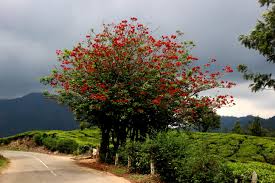
Erythrina variegata (Dap-dap)
Native to the Philippines and widely distributed across tropical Asia and the Pacific; conservation status: not endangered. Most easily identified by its bright coral-red to orange-red pea-shaped flowers borne in upright spikes and its distinctive thorny branches, making it a highly visible seasonal flowering tree in tropical landscapes.
A small to medium deciduous tree typically growing 8–15 meters tall with a spreading, irregular crown about 6–12 meters wide. Trunk is 0.3–0.8 meters in diameter with light gray bark and scattered conical thorns, especially on younger stems. It develops a moderate taproot with lateral roots and is fairly adaptable to coastal and disturbed soils. Branching begins above human height, forming an open, irregular canopy. Leaves are compound and trifoliate, with broad ovate leaflets (8–20 cm long), smooth margins, and pinnate venation. Flowers are bright red to orange-red, pea-like, arranged in dense erect racemes that appear before or during leaf emergence. Fruits are long, dark brown to black pods containing several seeds that are dispersed mainly by birds and gravity.
Widely used as a flowering ornamental, shade tree, and traditional medicinal plant; however, seeds and bark contain toxic alkaloids and should not be consumed. In landscape applications, it is best suited for parks, large gardens, and avenue planting where its dramatic flowering display can be showcased; it should be kept away from high-traffic pedestrian areas due to thorny branches and toxicity, but works well as a seasonal focal and biodiversity-supporting tree in tropical landscapes.
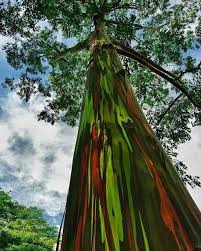
Eucalyptus deglupta (Bagras)
Native to the Philippines and parts of Indonesia and Papua New Guinea; conservation status: not endangered. Most easily identified by its striking multicolored exfoliating bark that reveals patches of green, blue, orange, purple, and brown as it sheds, giving a “rainbow” effect unlike any other tropical tree.
A very large evergreen tree typically growing 20–60 meters tall with a straight, tall trunk and narrow to moderately broad crown about 10–25 meters wide. Trunk is 0.5–2 meters in diameter with smooth bark that continuously peels in strips, exposing fresh colorful layers underneath. It develops a strong deep root system with wide lateral spread for anchorage. Branching begins high above human height, forming an upright, open canopy. Leaves are simple, lanceolate to ovate-lanceolate (7–15 cm long), with smooth margins, aromatic when crushed, and prominent pinnate venation. Flowers are small, white and inconspicuous, borne in clusters. Fruits are woody capsules containing numerous tiny seeds dispersed by wind.
Widely used as a fast-growing timber tree, pulpwood species, and highly ornamental specimen due to its unique bark coloration. No major toxicity reported, though essential oils may be irritating in concentrated form. In landscape applications, it is best suited for large parks, estates, and reforestation projects where its height and bark display can be fully appreciated; it should not be planted near structures or confined urban areas due to extreme mature size, aggressive roots, and high water demand, making it primarily a dramatic specimen or forestry landscape tree.
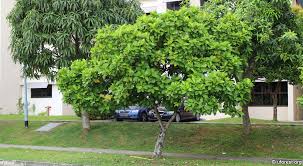
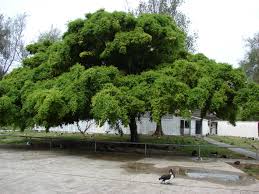
Ficus benjamina (Ficus Tree)
Non-native but widely cultivated in the Philippines; conservation status: not endangered. Most easily identified by its dense canopy of small, glossy drooping leaves and smooth branching structure, often forming a graceful weeping silhouette commonly used in parks, streetscapes, and indoor landscaping.
A medium to large evergreen tree typically growing 10–30 meters tall, sometimes larger in ideal tropical conditions, with a broad rounded to weeping crown about 6–20 meters wide. Trunk is 0.5–1.5 meters in diameter with smooth gray bark that may develop slight fissures with age. It develops a strong, wide-spreading root system with aerial roots in humid environments that can become supportive trunks over time. Branching begins above human height, forming a dense, drooping canopy. Leaves are simple, small (5–10 cm long), ovate to elliptic, glossy green with smooth margins and prominent pinnate venation. Flowers are enclosed within a syconium and are not visibly conspicuous. Fruits are small fig-like structures that turn reddish to purple-black when mature and are dispersed by birds.
Widely used as a shade tree, hedge, screen, and ornamental foliage plant in landscapes and interiors due to its dense canopy and adaptability to pruning. Latex sap may cause mild skin irritation, and roots can be aggressive in confined spaces. In landscape applications, it is best suited for parks, large gardens, and controlled streetscapes where root expansion can be managed; it should be avoided near buildings, sidewalks, and underground utilities due to invasive roots, making it more suitable as a large-scale shade or background tree rather than a tight urban street tree.
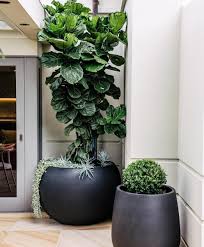
Ficus lyrata (Fiddle Leaf Fig)
Non-native but widely cultivated in the Philippines as an ornamental; conservation status: not endangered. Most easily identified by its large, violin-shaped (fiddle-like) leaves with prominent veins and thick leathery texture, making it a highly recognizable foliage plant in interiors and tropical landscaping.
A small to medium evergreen tree typically growing 5–15 meters tall outdoors, often smaller in cultivation, with a broad irregular crown about 4–10 meters wide. Trunk is 0.3–0.8 meters in diameter with light gray bark that becomes slightly rough with age. It develops a strong lateral root system, often with aerial roots in humid conditions. Branching begins relatively low, forming a spreading, open canopy. Leaves are simple, very large (20–45 cm long), obovate to lyrate in shape, thick, glossy green, with very prominent pinnate venation and wavy margins. Flowers are enclosed inside a syconium (fig structure) and are not visibly showy. Fruits are small fig-like structures that may develop in suitable outdoor conditions and are dispersed by birds.
Widely used as an ornamental foliage tree for gardens, interiors, resorts, and landscape focal planting due to its bold leaf form. Some latex may cause mild skin irritation. In landscape applications, it is best suited for protected outdoor gardens, courtyards, and large interior spaces where humidity and light are stable; it requires careful placement due to sensitive leaves, moderate root spread, and wind susceptibility, making it more suitable as a feature plant rather than a structural shade tree.
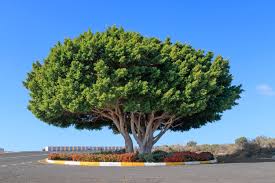
Ficus microcarpa (Golden Ficus / Baleteng-liitan)
Native to the Philippines and widely distributed across tropical Asia and the Pacific; conservation status: not endangered. Most easily identified by its dense, rounded canopy of small glossy leaves and its strong adaptability to pruning, often forming sculpted ornamental shapes or large shade trees in urban landscapes.
A medium to large evergreen tree typically growing 10–25 meters tall, sometimes more in mature conditions, with a broad rounded crown about 8–20 meters wide. Trunk is 0.5–1.5 meters in diameter with smooth gray bark that becomes slightly fissured with age. It develops an extensive, aggressive root system with aerial roots that can thicken into secondary trunks. Branching begins above human height, forming a dense, compact canopy. Leaves are simple, small (4–10 cm long), elliptic to ovate, thick and glossy green with smooth margins and prominent pinnate venation. Flowers are enclosed within a syconium and not visibly showy. Fruits are small fig-like structures that turn yellowish to reddish-purple when mature and are dispersed by birds.
Widely used as a shade tree, street tree, bonsai, and hedge due to its high tolerance for pruning and urban conditions. Latex sap may cause mild skin irritation, and roots are highly invasive in confined spaces. In landscape applications, it is best suited for large parks, plazas, and heavily managed urban landscapes where root spread can be controlled; it should be avoided near buildings, pavements, and utilities, making it more appropriate as a managed structural shade or sculpted landscape tree rather than a small residential planting.
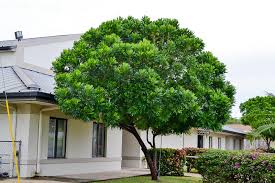
Filicium dicipiens (Fern Tree)
Non-native but widely cultivated in the Philippines; conservation status: not endangered. Most easily identified by its finely divided, fern-like pinnate leaves with a soft, lacy appearance and its naturally dense, rounded crown that gives a neat, formal ornamental look even without pruning.
A small to medium evergreen tree typically growing 6–15 meters tall with a compact, rounded crown about 4–10 meters wide. Trunk is 0.3–0.8 meters in diameter with gray to dark gray bark that becomes slightly rough and fissured with age. It develops a moderately deep root system with lateral spread. Branching begins above human height, forming a dense, symmetrical canopy. Leaves are compound and once-pinnate, with many narrow, serrated leaflets arranged along a central rachis, giving a fern-like texture; leaflets are small (1–5 cm long), glossy green, with pinnate venation. Flowers are small, greenish-white and inconspicuous, borne in clusters. Fruits are small, round drupes that turn reddish to black when mature and are dispersed by birds.
Widely used as a formal ornamental, street tree, and hedge plant due to its compact growth and refined foliage texture. No significant toxicity reported. In landscape applications, it is best suited for urban streetscapes, gardens, and institutional plantings where a neat, controlled canopy is desired; it requires minimal pruning compared to other ornamentals, making it an excellent low-maintenance structural foliage tree for formal landscape designs.
Intsia bijuga (Ipil)
Native to the Philippines and other parts of the Indo-Pacific; conservation status: vulnerable in parts of its range due to overharvesting. Most easily identified by its extremely dense, heavy hardwood and its tall forest form with a broad crown and compound leaves, making it one of the most valued native timber trees in tropical forestry and traditional construction.
A large evergreen hardwood tree typically growing 20–40 meters tall with a broad rounded crown about 10–25 meters wide. Trunk is 0.8–2 meters in diameter with dark gray to brown bark that is rough, fissured, and often flaky with age. It develops a strong deep taproot with extensive lateral roots for stability. Branching begins high above human height, forming a wide forest canopy. Leaves are compound and pinnate with 2–4 pairs of opposite oval leaflets (5–15 cm long), thick and leathery with smooth margins and pinnate venation. Flowers are small, reddish to pinkish-white, borne in loose clusters. Fruits are large, flat woody pods containing one to few seeds, dispersed mainly by gravity and water.
Highly valued for very durable hardwood used in heavy construction, marine structures, flooring, and high-end furniture; also ecologically important in native forest ecosystems. No significant toxicity reported. In landscape applications, it is best suited for large parks, institutional grounds, and conservation landscapes where long-term canopy development is acceptable; it requires wide spacing due to mature size and heavy structure, making it unsuitable for confined urban planting but excellent as a heritage and high-value native forest tree.
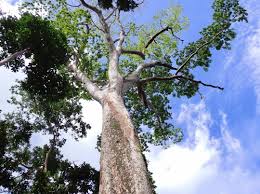
Lagerstroemia speciosa (Banaba)
Striking tropical flowering tree native to the Philippines and Southeast Asia; conservation status: not endangered. Most easily identified by its large, crinkled purple to lilac flowers that form showy panicles and its smooth, exfoliating bark that reveals a mottled, decorative trunk, making it highly ornamental even when not in bloom.
A medium to large deciduous tree typically growing 10–25 meters tall, occasionally up to 30 meters, with a broad rounded crown about 8–20 meters wide. Trunk usually reaches 0.5–1.5 meters in diameter with smooth gray bark that peels in patches, revealing pale pinkish or cream layers underneath. It develops a strong taproot with spreading lateral roots. Branching begins above human height, forming an open, spreading canopy. Leaves are simple, opposite, oblong to elliptic (10–25 cm long), with smooth margins, prominent pinnate venation, and a leathery texture that turns yellow to reddish before shedding. Flowers are large (5–7 cm), frilly, purple to lavender or pink, borne in terminal panicles during the dry season. Fruits are woody capsules containing winged seeds that are dispersed by wind.
Widely used as a flowering ornamental, shade tree, and roadside planting species; also known for medicinal use where leaves are traditionally used to help regulate blood sugar levels. No significant toxicity reported. In landscape applications, it is best suited for parks, streetscapes, campuses, and open gardens where its floral display and bark texture can be highlighted; it should be given enough spacing to allow crown expansion and seasonal leaf drop, making it an excellent specimen and avenue tree.
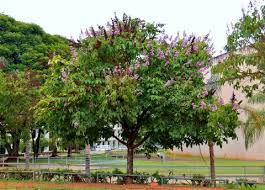
Livistona saribus (Fan Palm)
Native to the Philippines and parts of Southeast Asia; conservation status: not endangered. Most easily identified by its large, stiff, fan-shaped leaves with deeply split segments and long petioles bearing sharp marginal spines, giving it a strong architectural palm silhouette in tropical landscapes.
A medium to tall evergreen palm typically growing 10–25 meters tall with a slender, columnar trunk about 0.3–0.6 meters in diameter. The trunk is gray-brown, ringed with leaf scars and slightly rough with age. It has a fibrous root system with no taproot, forming strong lateral anchoring roots. It does not branch; a single apical meristem produces a crown of large fan leaves. Leaves are costapalmate to fan-shaped, about 1–2 meters wide, deeply divided into stiff segments with a long spiny petiole. Flowers are small, cream to yellowish, borne in large branched inflorescences emerging below the crown. Fruits are small, round drupes that turn bluish to black when mature and are dispersed by birds.
Traditionally used for thatching, weaving, and handicrafts, and also planted as an ornamental accent palm in landscapes. No significant toxicity reported. In landscape applications, it is best suited for parks, resorts, and tropical gardens where its bold fan form and vertical structure can be highlighted; it requires spacing due to its leaf span and spiny petioles, making it ideal as a structural accent or specimen palm rather than for tight urban planting.
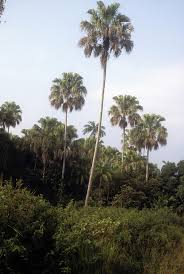
Magnolia alba (White Champaca)
Native to South and Southeast Asia including the Philippines; conservation status: not endangered. Most easily identified by its intensely sweet fragrance and creamy white, elongated flowers that open from slender buds, making it one of the most prized aromatic ornamental trees in tropical sensory and cultural landscapes.
A medium to large evergreen tree typically growing 15–25 meters tall with a straight trunk and narrow to moderately broad crown about 8–15 meters wide. Trunk is 0.5–1 meter in diameter with smooth gray bark that becomes slightly fissured with age. It develops a deep taproot with lateral roots for stability. Branching begins above human height, forming an upright, slightly pyramidal to rounded canopy. Leaves are simple, alternate, elliptic to lanceolate (10–20 cm long), with smooth margins, glossy green surface, and pinnate venation. Flowers are creamy white, very fragrant, 5–7 cm long, with narrow, ribbon-like petals that gradually open from slender buds. Fruits are aggregate clusters of small follicles that turn reddish when mature and split open to release seeds dispersed by birds.
Widely used for perfumery, essential oil extraction, religious offerings, and ornamental planting in gardens and resorts due to its strong fragrance. No significant toxicity reported. In landscape applications, it is best suited for sensory gardens, temples, and residential landscapes where fragrance is desired; it should be placed in sheltered, well-spaced areas to allow crown development and reduce wind stress, making it an excellent premium flowering and aromatic accent tree.
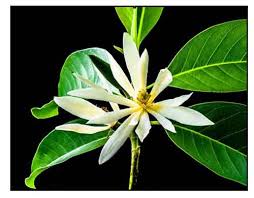
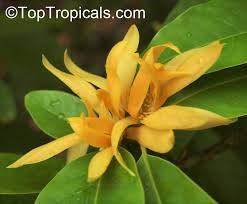
Magnolia champaca (Champaca)
Native to South and Southeast Asia including the Philippines; conservation status: not endangered. Most easily identified by its intensely fragrant, creamy yellow to orange flowers that are highly valued in perfumery and religious offerings, along with its tall, elegant form and evergreen glossy foliage.
A medium to large evergreen tree typically growing 15–30 meters tall with a straight trunk and narrow to moderately broad crown about 8–15 meters wide. Trunk is 0.5–1 meter in diameter with gray to brown bark that is smooth when young and becomes slightly fissured with age. It develops a deep taproot with lateral roots for stability. Branching begins above human height, forming an upright, columnar to rounded canopy. Leaves are simple, alternate, elliptic to lanceolate (10–25 cm long), with smooth margins, glossy surface, and pinnate venation. Flowers are solitary to few, creamy yellow to orange, highly fragrant, 5–7 cm wide, with narrow elongated petals. Fruits are aggregate clusters of small follicles containing seeds, turning reddish when mature and opening to release seeds dispersed by birds.
Widely used for perfumery (essential oil production), religious offerings, ornamental planting, and cultural landscaping due to its strong fragrance. No significant toxicity reported. In landscape applications, it is best suited for gardens, temples, resorts, and sensory landscapes where fragrance is a key feature; it should be placed in sheltered, spacious areas to allow full crown development and reduce wind damage, making it an excellent premium accent and heritage ornamental tree.
Milletia pinnata (Bani)
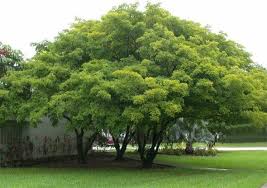
Native to the Philippines and widely distributed across tropical Asia and the Pacific; conservation status: not endangered. Most easily identified by its dense rounded crown, glossy pinnate leaves, and clusters of pale pink to lavender pea-like flowers, along with its reputation as a highly resilient coastal and drought-tolerant tree often used for soil improvement and biofuel potential.
A medium-sized evergreen to semi-deciduous tree typically growing 8–15 meters tall, occasionally up to 20 meters, with a crown spread of about 6–12 meters. Trunk usually reaches 0.3–0.8 meters in diameter with gray-brown bark that is smooth when young and becomes slightly fissured with age. It develops a strong taproot with extensive lateral roots and is highly tolerant of poor, sandy, and saline soils. Branching begins above human height, forming a rounded to slightly irregular canopy. Leaves are compound and pinnate, with 5–9 oval to elliptic leaflets about 5–15 cm long, smooth margins, and glossy green surfaces with pinnate venation. Flowers are fragrant, pea-like, pink to lavender or white, borne in loose clusters. Fruits are flat, woody pods containing one or two seeds, dispersed mainly by gravity.
Widely used for coastal protection, windbreaks, shade, soil stabilization, and green manure due to its nitrogen-fixing ability; also studied for biodiesel from its seeds. Seeds are toxic if ingested in raw form and should not be consumed. In landscape applications, it is best suited for coastal zones, roadside plantings, and large open landscapes where its salt tolerance and soil-improving properties are beneficial; it should be spaced properly to accommodate its spreading roots and canopy, making it ideal as an ecological and functional shade tree rather than a highly formal ornamental.
Muntingia calabura (Aratiles)
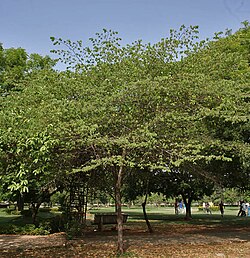
Not native to Philippines; conservation status: not endangered. Most easily identified by its small red cherry-like sweet fruits and its delicate, spreading branches with fine serrated leaves, making it a common “wild fruit” tree in rural and urban areas that attracts birds and children.
A small fast-growing evergreen to semi-deciduous tree typically growing 5–12 meters tall with a wide, irregular crown about 6–10 meters wide. Trunk is 0.2–0.5 meters in diameter with light gray to brown smooth bark that may become slightly fissured with age. It develops a shallow, wide-spreading root system. Branching begins low, forming a loose, open, and often leaning canopy. Leaves are simple, alternate, ovate to lanceolate (5–12 cm long), with serrated margins, soft texture, and pinnate venation. Flowers are small, white, five-petaled with yellow stamens, borne singly or in clusters and present nearly year-round. Fruits are small round berries (1–1.5 cm), turning bright red when ripe, sweet and juicy, containing many tiny seeds dispersed by birds.
Widely used as a shade, fruit, and ecological tree in home gardens, roadsides, and vacant lots due to its fast growth and wildlife value; fruits are edible and commonly eaten fresh. No significant toxicity reported. In landscape applications, it is best suited for informal gardens, ecological plantings, and urban greening where quick canopy cover and biodiversity support are desired; it should be managed due to weak branches, fruit litter, and short lifespan, making it more suitable as a pioneer or temporary shade tree rather than a permanent structural landscape tree.
Mussaenda philippica ‘Doña Luz‘ (Doña Luz)
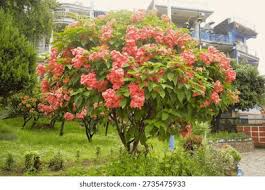
Native to the Philippines and a cultivated ornamental selection derived from Philippine mussaenda; conservation status: not endangered. Most easily identified by its large, vivid pink to rose-colored petaloid bracts surrounding small yellow tubular flowers, creating a highly showy “bouquet-like” appearance that makes it one of the most recognizable ornamental shrubs in tropical landscapes.
A large evergreen shrub to small tree typically growing 2–4 meters tall, occasionally up to 5 meters, with a spreading, loosely branched crown about 2–4 meters wide. Stems are woody with multiple branches and a somewhat open, arching habit. Branching begins low, forming a bushy structure that responds well to pruning. Leaves are simple, opposite, ovate to elliptic (8–20 cm long), with smooth margins, prominent pinnate venation, and soft green texture. True flowers are small, tubular, yellow, and clustered at the center of large showy bracts that are bright pink to rose-red in this cultivar. Fruits are small berry-like drupes that darken when mature and are dispersed by birds.
Widely used as an ornamental shrub in gardens, resorts, parks, and residential landscapes due to its intense floral display and long blooming period. No significant toxicity reported. In landscape applications, it is best suited for hedges, mass planting, and focal accents in tropical gardens; it requires regular pruning and fertilization to maintain dense flowering and compact form, and is best placed in sunny, sheltered locations for optimal bract development and color intensity.
Mussaenda philippica var. aurorae (Doña Aurora)
Native to the Philippines and endemic to Luzon; conservation status: not endangered. Most easily identified by its showy enlarged white to pale pink bracts (often mistaken as petals) that surround small true flowers, giving a soft “floral cloud” appearance that makes it a popular ornamental shrub in tropical gardens.
A large evergreen shrub to small tree typically growing 2–5 meters tall, occasionally up to 6 meters, with a spreading crown about 2–4 meters wide. Stems are woody and multi-branched with a relatively open habit. Branching begins low, forming a bushy structure. Leaves are simple, opposite, elliptic to ovate (10–20 cm long), with smooth margins, prominent pinnate venation, and a soft to slightly rough texture. True flowers are small, tubular, yellow to orange, clustered at the center of large petal-like bracts which are white to pale pink in this variety. Fruits are small berries that turn dark when mature and are dispersed by birds.
Widely used as an ornamental accent shrub in gardens, parks, resorts, and residential landscapes due to its long flowering period and high visual impact. No significant toxicity reported. In landscape applications, it is best suited for shrub borders, mass planting, and focal accents in tropical gardens; it requires regular pruning to maintain form and encourage bract production, and is not suited for harsh exposed sites or very tight spaces where airflow and growth spread are restricted.
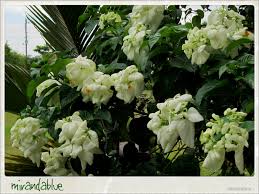
Parkia timoriana (Kupang)
Native to Southeast Asia including the Philippines; conservation status: not endangered. Most easily identified by its large hanging clusters of elongated, bean-like pods and its distinctive “powder-puff” yellow-green spherical flower heads that appear in large numbers on the canopy.
A large evergreen to semi-deciduous tree typically growing 20–30 meters tall with a broad rounded crown about 15–25 meters wide. Trunk is 0.6–1.5 meters in diameter with gray to brown bark that becomes rough and fissured with age. It develops a strong taproot with spreading lateral roots and is nitrogen-fixing. Branching begins high above human height, forming a wide, open canopy. Leaves are bipinnately compound, 30–60 cm long, with many small oval leaflets giving a fine-textured foliage appearance. Flowers are small and packed into spherical heads (cream to yellow-green), borne on long stalks that hang below the canopy. Fruits are very long, flat, twisted pods (up to 30–50 cm), containing several seeds embedded in a soft pulp, dispersed by gravity and animals.
Used for edible seeds (in some regions), shade, agroforestry, and soil improvement due to nitrogen fixation. Seeds and pods are generally edible when properly prepared, though not commonly consumed raw. In landscape applications, it is best suited for large open parks, agroforestry systems, and institutional landscapes where its broad canopy and unusual fruiting display can be appreciated; it requires wide spacing due to crown spread and pod litter, making it more suitable as a functional shade and ecological tree than for confined urban planting.
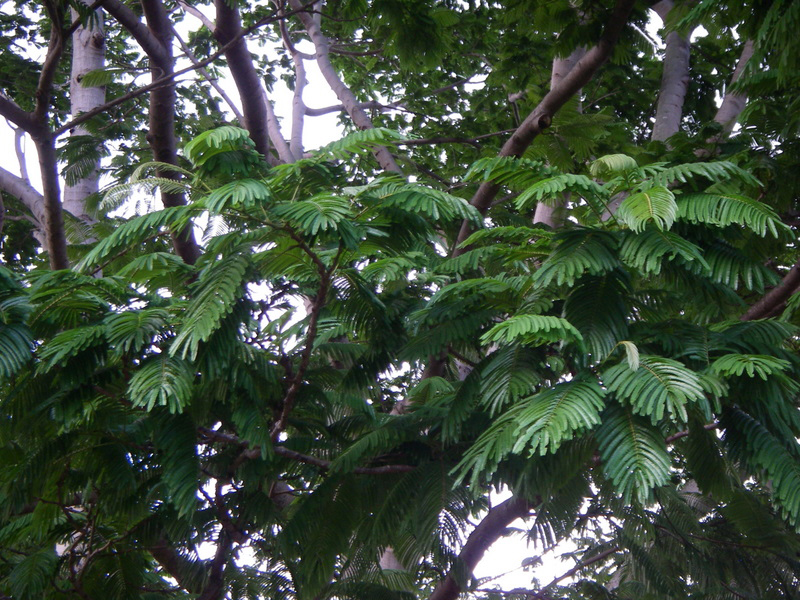
Peltophorum pterocarpum (Siar)
Native in the Philippines; conservation status: not endangered. Most easily identified by its large, bright golden-yellow flower clusters that form a dense canopy display, combined with finely divided fern-like foliage that gives the tree a light, feathery appearance when not in bloom.
A large deciduous tree typically growing 15–25 meters tall with a broad spreading umbrella-shaped crown about 10–20 meters wide. Trunk reaches about 0.5–1 meter in diameter with gray to brown bark that becomes rough and slightly fissured with age. It develops a strong taproot with spreading lateral roots. Branching begins above human height, forming a wide, open canopy. Leaves are bipinnately compound, 20–50 cm long, with many small oval leaflets (about 5–15 mm), giving a delicate fern-like texture. Flowers are bright yellow, about 2–3 cm wide, borne in large terminal clusters that cover the canopy during flowering season. Fruits are flat, winged, brown pods containing one to a few seeds.
Widely used as a shade tree, avenue tree, and ornamental flowering species in parks, roadsides, campuses, and large landscapes. No significant toxicity reported. In landscape applications, it is best suited for large open spaces where its wide canopy and heavy flowering display can develop fully; it requires spacing from structures due to crown spread and seasonal litter, making it an excellent focal and shade tree for tropical urban landscapes.
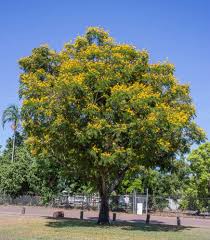
Phoenix dactylifera (Date Palm)
Solitary, tall evergreen palm with a rough, diamond-patterned trunk and a crown of stiff, arching pinnate fronds composed of narrow, sharp-pointed leaflets; typically grows 10–20 m tall, forming a strong vertical silhouette; produces large hanging clusters of edible dates that turn orange to dark brown when mature; commonly used as a landmark, avenue, or desert-style ornamental palm; not native to the Philippines but widely cultivated in arid and tropical landscapes.
Best used as a focal, avenue, or architectural palm in full sun with well-drained soil. Performs best in hot, dry conditions and is highly drought tolerant once established; avoid waterlogged soils and dense shade, which reduce vigor and fruiting potential.
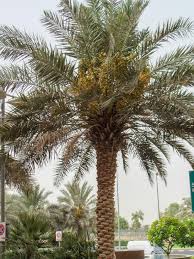
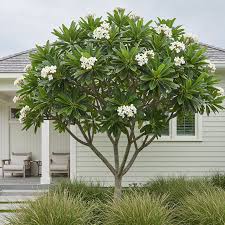
Plumeria obtusa (White Kalachuchi)
Native to the Caribbean and Central America but widely cultivated in the Philippines; conservation status: not endangered. Most easily identified by its thick, succulent branches and clusters of fragrant white flowers with rounded petals and a yellow center, commonly associated with temple gardens, cemeteries, and tropical ornamental landscapes.
A small deciduous to semi-deciduous tree typically growing 3–8 meters tall with a spreading, open crown about 3–6 meters wide. Trunk is relatively short, 0.2–0.5 meters in diameter, with smooth gray bark and fleshy, succulent branches that may exude milky sap when cut. It develops a shallow, spreading root system. Branching is irregular and begins low, forming a sculptural, open canopy. Leaves are simple, clustered at branch tips, oblong to obovate (15–30 cm long), thick and leathery with smooth margins and prominent pinnate venation. Flowers are white with a yellow center, 5–8 cm wide, highly fragrant, and borne in terminal clusters. Fruits are paired narrow follicles containing winged seeds dispersed by wind.
Widely used as an ornamental accent, cemetery tree, and landscape feature in tropical gardens due to its fragrance and sculptural form. The sap is mildly toxic and may cause skin irritation in some individuals, and plant parts are not edible. In landscape applications, it is best suited for courtyards, meditative gardens, resorts, and low-maintenance landscapes where its form and fragrance can be appreciated; it should be spaced away from high-traffic areas due to falling flowers, sticky sap, and brittle branches.
Plumeria rubra (Red Kalachuchi)
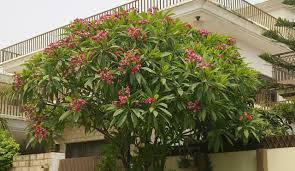
Native to Central America and Mexico but widely cultivated in the Philippines; conservation status: not endangered. Most easily identified by its intensely fragrant, showy clusters of red, pink, yellow, or multi-colored pinwheel-like flowers and thick, succulent branching form that produces a distinctive sculptural silhouette in tropical landscapes.
A small deciduous to semi-deciduous tree typically growing 4–10 meters tall with a spreading, open crown about 3–7 meters wide. Trunk is 0.2–0.6 meters in diameter with smooth gray bark and thick, fleshy branches that exude milky sap when cut. It develops a shallow, spreading root system. Branching is irregular and starts low, forming a sculptural, architectural canopy. Leaves are simple, clustered at branch tips, oblong to elliptic (20–40 cm long), thick and leathery with smooth margins and prominent pinnate venation, usually shed during the dry season. Flowers are 5–10 cm wide, fragrant, and variable in color (red, pink, yellow, white, or mixed), borne in terminal clusters. Fruits are paired slender follicles containing winged seeds dispersed by wind.
Widely used as an ornamental, cemetery, and resort landscape tree due to its strong fragrance and symbolic cultural value in tropical settings. The sap is mildly toxic and can cause skin irritation, and plant parts are not edible. In landscape applications, it is best suited for courtyards, temples, resorts, and accent planting where its sculptural branching and seasonal flowering can be highlighted; it should be spaced properly due to brittle branches, litter from leaves and flowers, and sensitivity to root disturbance.
Polyalthia longifolia (Indian Tree)
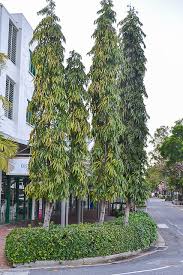
Non-native but widely cultivated in the Philippines; conservation status: not endangered. Most easily identified by its extremely narrow, drooping “willow-like” leaves and tall, columnar, fastigiate form that creates a strong vertical accent, commonly used to line roads, fences, and institutional boundaries.
A medium to large evergreen tree typically growing 10–25 meters tall with a very narrow crown about 2–5 meters wide. Trunk is 0.3–0.8 meters in diameter with gray bark that is smooth when young and becomes slightly rough with age. It develops a deep taproot with moderate lateral roots. Branching begins above human height, forming a strict upright, columnar canopy with downward-hanging branches. Leaves are simple, alternate, very long and narrow (10–25 cm long, 1–3 cm wide), with smooth margins, glossy green surface, and prominent pinnate venation. Flowers are small, greenish-yellow and inconspicuous, borne in clusters along branches. Fruits are small ovoid to ellipsoid drupes that turn purple-black when mature and are dispersed by birds.
Widely used as a screening tree, boundary planting, and vertical accent in urban landscapes due to its narrow form and fast growth. No significant toxicity reported. In landscape applications, it is best suited for tight spaces such as roadsides, property lines, and institutional plantings where vertical screening is needed; it requires regular spacing and maintenance to maintain form and is not suitable for providing broad shade or open canopy functions.
Pterocarpus indicus (Narra)
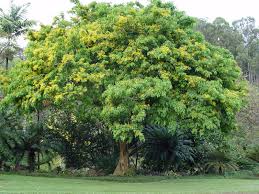
Native to the Philippines and Southeast Asia; conservation status: vulnerable in parts of its range. Most easily identified by its broad umbrella-shaped canopy, fragrant yellow flowers, durable reddish hardwood, and its cultural importance as the national tree of the Philippines.
Large deciduous to semi-deciduous hardwood tree growing 15–35 meters tall with a 10–25 meter crown. Trunk 0.8–2 m diameter, dark gray-brown rough fissured bark exuding reddish resin when cut. Strong taproot and lateral roots; nitrogen-fixing. Branching high above human height forming a dense dome canopy. Leaves compound pinnate with oval leaflets (3–12 cm). Flowers small, fragrant, yellow-orange clusters. Fruits are flat winged pods.
Premium hardwood used for furniture, flooring, carving, cabinetry, and instruments; widely planted for shade. Non-toxic. Best for large open landscapes such as parks, campuses, and boulevards; requires wide spacing due to canopy and roots.
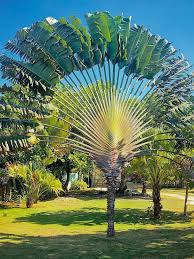
Ravenala madagascariensis (Traveller’s Palm)
Native to Madagascar and widely cultivated in tropical regions including the Philippines; conservation status: not endangered. Most easily identified by its massive fan-shaped arrangement of large paddle-like leaves aligned in a single plane, creating a striking “giant fan” silhouette often mistaken for a palm but actually a bird-of-paradise relative.
A large evergreen monocot typically growing 7–20 meters tall with a broad, fan-like crown spreading about 5–10 meters wide. Trunk is 0.3–0.8 meters in diameter, upright and unbranched, with leaf scars forming a rough surface. It has a fibrous root system with no taproot and strong anchoring lateral roots. It does not branch; new leaves emerge from a central growing point arranged in a strict two-row fan pattern. Leaves are very large (2–4 meters long), paddle-shaped, with a strong midrib and parallel venation. Flowers are white to bluish and arise in large bracted inflorescences at the base of the leaf fan. Fruits are woody capsules containing blue seeds with a fleshy aril, dispersed by animals.
Widely used as a dramatic architectural specimen plant in parks, resorts, and tropical gardens due to its strong geometric form and sculptural presence. No significant toxicity reported. In landscape applications, it is best suited for spacious open landscapes where its full fan spread can be appreciated; it requires wide clearance from structures and pathways due to leaf size and shedding, making it ideal as a focal or feature plant rather than a functional shade tree.
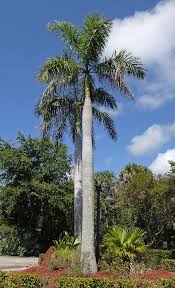
Roystonea regia (Royal Palm)
Tall, smooth-trunked tropical palm with a prominent green crownshaft and a symmetrical canopy of arching pinnate fronds with evenly arranged leaflets; typically grows 15–25 m tall, forming a strong formal vertical silhouette; produces large hanging clusters of small purple-black fruits beneath the crown; commonly used as an avenue, landmark, or formal tropical accent palm; not native to the Philippines but widely cultivated.
Best used as an avenue or focal specimen in full sun with deep, well-drained soil. Performs best in open landscapes with regular moisture; avoid cramped sites or shallow soils, and ensure space for full crown development and height expression.
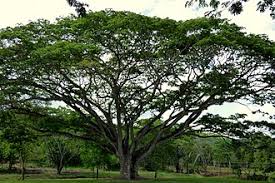
Samanea saman (Acacia)
Native to tropical America but widely cultivated and naturalized throughout the Philippines; conservation status: not endangered. Most easily identified by its massive umbrella-shaped canopy, one of the broadest of any tropical tree, providing exceptional shade and making it a landmark tree in parks, roadsides, and open landscapes.
A large semi-deciduous tree typically growing 15–25 meters tall, occasionally reaching 30 meters, with a crown spread of 20–40 meters or more. Trunk is stout, often 1–2 meters in diameter, with dark gray to brown bark that becomes rough and fissured with age. It develops a deep root system with extensive lateral roots and is capable of nitrogen fixation. Branching begins well above human height and spreads horizontally to form a broad dome-shaped canopy. Leaves are large, bipinnately compound, with numerous small leaflets that fold during rain and at night. Flowers are pink to pinkish-white, powderpuff-like, and borne in clusters. Fruits are thick, dark brown, elongated pods containing hard seeds embedded in a sweet, sticky pulp.
Widely used as a shade tree in parks, campuses, pasturelands, highways, and large open spaces. The sweet pulp surrounding the seeds is edible and consumed by livestock and occasionally by people. Generally non-toxic. In landscape applications, it is best reserved for very large sites where its enormous canopy can develop freely; unsuitable for small gardens, narrow streets, or areas near buildings and utilities due to its extensive crown spread, large surface roots, and potential branch weight.
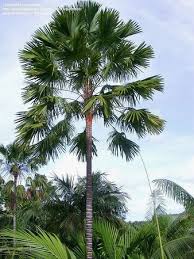
Saribus rotundifolius (Anahaw)
Native to the Philippines and endemic; conservation status: not endangered. Most easily identified by its large, perfectly round fan-shaped leaves with radiating pleated segments and long spiny petioles, making it one of the most iconic native palm species and a national cultural symbol often associated with Filipino identity and traditional use.
A medium to tall evergreen palm typically growing 15–25 meters tall with a narrow, columnar trunk about 0.3–0.6 meters in diameter. The trunk is gray to brown, ringed with leaf scars and relatively smooth with age. It develops a fibrous, non-taproot system typical of palms, with strong lateral anchoring roots. It has no true branching; a single terminal growing point produces leaves that form a rounded crown. Leaves are large, costapalmate to fan-shaped, about 1–2 meters wide, deeply segmented into stiff radiating lobes, with long petioles bearing marginal spines. Flowers are small, cream to yellowish, borne in large branched inflorescences emerging below the leaf crown. Fruits are small, spherical to ovoid drupes that turn dark purple to black when mature and are dispersed mainly by birds.
Traditionally used for roofing, weaving, fans, and other handicrafts; also widely planted as an ornamental and cultural landscape tree. No significant toxicity reported. In landscape applications, it is best suited for parks, cultural landscapes, and roadside planting where its strong vertical form and iconic fan leaves can be showcased; it requires spacing to allow full crown spread and is highly effective as a formal or cultural identity tree in tropical landscapes.
Shorea contorta (White Lauan)
Native to the Philippines and endemic; conservation status: vulnerable due to logging and habitat loss. Most easily identified by its tall emergent rainforest form, straight massive trunk, and clustered small pale yellow flowers, representing one of the dominant native dipterocarp timber trees in Philippine lowland forests.
A very large evergreen emergent tree typically growing 30–60 meters tall with a narrow to broad high canopy about 10–25 meters wide. Trunk is 1–2.5 meters in diameter, exceptionally straight and columnar, with gray to brown bark that is rough, thick, and deeply fissured with age. It develops a very strong deep taproot with extensive lateral buttressing roots for stability. Branching begins very high above human height, forming a high forest crown. Leaves are simple, alternate, elliptic to ovate (6–15 cm long), leathery, with smooth margins and prominent pinnate venation. Flowers are small, pale yellow to cream, fragrant, borne in loose clusters. Fruits are winged nuts (dipterocarp “nuts”) with elongated calyx wings that aid in wind dispersal.
Highly valued for premium hardwood used in construction, flooring, veneer, and structural timber, and ecologically critical as a canopy-forming rainforest species. No significant toxicity reported. In landscape applications, it is best suited for large conservation areas, botanical gardens, and reforestation or heritage forest landscapes where extreme mature size can be accommodated; not suitable for urban planting due to height, root system, and long-term spatial requirements, but important as a native ecological cornerstone species.
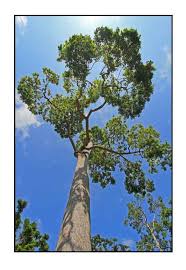
Spathodea campanulata (African Tulip)
Non-native but widely cultivated in the Philippines; conservation status: not endangered. Most easily identified by its large, tulip-shaped orange to red-orange flowers that hold water in bud form and its fast-growing, upright crown that becomes densely flowering during peak bloom, making it a very conspicuous ornamental tree.
A medium to large evergreen tree typically growing 10–25 meters tall with a broad rounded crown about 8–15 meters wide. Trunk is 0.3–1 meter in diameter with gray to brown bark that becomes rough and fissured with age. It develops a strong taproot with spreading lateral roots. Branching begins above human height, forming a dense, rounded canopy. Leaves are pinnate, opposite, 20–50 cm long, with several pairs of oval to elliptic leaflets with smooth margins and pinnate venation. Flowers are large (8–12 cm), tulip-shaped, orange to red-orange, thick and waxy, often containing water in unopened buds. Fruits are long, woody capsules that split open to release many winged seeds dispersed by wind.
Widely used as a fast-growing ornamental, shade, and avenue tree in tropical landscapes due to its striking floral display. No significant toxicity reported, though flowers may attract insects heavily and produce litter. In landscape applications, it is best suited for parks, large gardens, and roadside plantings where its strong flowering impact can be showcased; it should be spaced properly due to aggressive growth, surface roots, and heavy flower/fruit litter, making it more suitable as a bold accent or avenue tree than for small residential spaces.
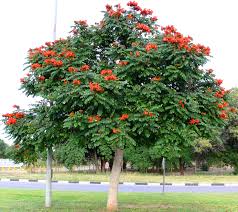
Tabebuia pallida (Tabebuia)
Non-native but widely cultivated in the Philippines; conservation status: not endangered. Most easily identified by its profuse pale pink to whitish trumpet-shaped flowers that bloom in large synchronized flushes, often when the tree is nearly leafless, creating a striking seasonal canopy display.
A small to medium deciduous tree typically growing 6–15 meters tall with a rounded to open crown about 4–10 meters wide. Trunk is 0.2–0.6 meters in diameter with gray to light brown bark that becomes slightly rough with age. It develops a moderate taproot with spreading lateral roots. Branching begins above human height, forming an open, airy canopy. Leaves are palmately compound, usually with 5 leaflets, each 5–12 cm long, with smooth margins and pinnate venation. Flowers are trumpet-shaped, 5–8 cm wide, pale pink to white, borne in dense terminal clusters during dry season or leaf-shedding periods. Fruits are long, slender capsules containing numerous winged seeds dispersed by wind.
Widely used as a flowering ornamental and avenue tree in parks, roadsides, and large gardens due to its dramatic seasonal bloom. No significant toxicity reported. In landscape applications, it is best suited for open spaces where its flowering display can be emphasized; it requires full sun, adequate spacing, and seasonal litter tolerance, making it ideal as a specimen or boulevard accent tree rather than for confined urban planting.
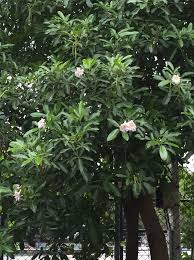
Tamarindus indica (Sampaloc)
Native to Africa but widely naturalized and cultivated throughout the Philippines; conservation status: not endangered. Most easily identified by its feathery, finely divided leaves and its long, curved brown pods filled with sticky sour pulp widely used in Filipino cuisine as a souring agent.
A large evergreen to semi-deciduous tree typically growing 15–25 meters tall, occasionally up to 30 meters, with a broad rounded crown about 10–20 meters wide. Trunk is 0.5–1.5 meters in diameter with dark gray, rough, deeply fissured bark. It develops a strong deep taproot with extensive lateral roots, making it highly drought tolerant. Branching begins above human height, forming a wide, dense canopy. Leaves are compound and pinnate with many small opposite leaflets (1–2 cm long), giving a fine, fern-like appearance. Flowers are small, yellowish with red streaks, borne in short clusters. Fruits are long, curved brown pods containing sticky sour pulp surrounding several hard seeds, dispersed mainly by gravity and human/animal use.
Widely used for edible fruit pulp (souring agent in cooking), shade, and urban roadside planting; also used in traditional medicine and wood for fuel and light construction. No significant toxicity reported for pulp, though seeds are not commonly eaten raw. In landscape applications, it is best suited for parks, campuses, and large residential or roadside plantings where its wide canopy and drought tolerance are valuable; it should be spaced properly due to large crown spread and surface roots, making it an excellent long-lived shade and multipurpose food tree.
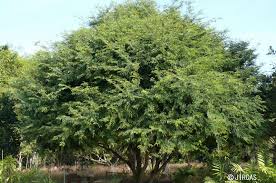
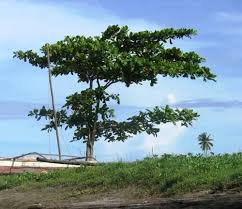
Terminalia catappa (Talisay)
Native to Philippines; conservation status: not endangered. Most easily identified by its layered horizontal branching forming a pagoda-like crown and its leaves that turn bright red before shedding.
Large deciduous to semi-deciduous tree (15–35 m) with 10–25 m tiered crown. Trunk 1–1.5 m diameter, gray-brown bark slightly fissured. Strong taproot with coastal-adapted lateral roots. Whorled branching above human height. Leaves large (15–30 cm), obovate, smooth margins, turning red/yellow before drop. Flowers small greenish-white spikes. Fruits are flattened almond-like drupes.
Used for coastal protection, shade, ornamentals, and edible processed seeds. Raw seeds mildly astringent. Best for coastal parks, campuses, and waterfronts; needs space due to wide crown, root spread, and heavy seasonal leaf drop.
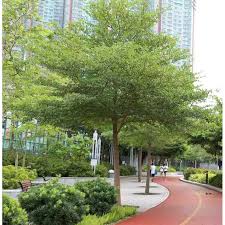
Terminalia mantaly (African Talisay)
Non-native but widely cultivated in the Philippines; conservation status: not endangered. Most easily identified by its symmetrical, whorled, pagoda-like branching and compact layered crown.
Medium to large evergreen tree (10–25 m) with 5–15 m crown. Trunk 0.3–0.8 m diameter, gray bark smooth to slightly fissured. Moderate roots, less aggressive than large hardwoods. Strong whorled branching above human height. Leaves small (3–10 cm), obovate, clustered at branch tips. Flowers small greenish-white. Fruits small woody drupes.
Used as ornamental shade tree for streets, medians, and campuses due to neat form and tolerance to pruning. Non-toxic. Best for urban streets and controlled landscapes; suitable for narrow spaces but requires spacing to maintain tiered structure.
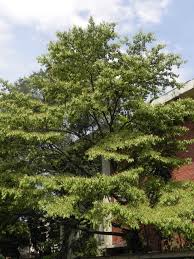
Terminalia microcarpa (Kalumpit)
Native to the Philippines and Southeast Asia; conservation status: not endangered. Most easily identified by its small round edible fruits that turn yellow to red and its wide irregular riverbank canopy.
Large deciduous to semi-deciduous tree (20–35 m) with 15–30 m crown. Trunk 1–2 m diameter, dark gray fissured bark. Deep taproot and lateral roots adapted to riparian zones. Branching high above human height forming dome canopy. Leaves simple (6–15 cm), obovate, smooth margins. Flowers small greenish-white spikes. Fruits small round drupes (1–2 cm), bird- and water-dispersed.
Used for shade, riverbank stabilization, wildlife food, and edible sour fruits. Non-toxic. Best for riparian buffers, parks, and ecological restoration; not suited for confined urban spaces due to size and fruit drop.
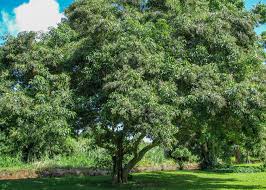
Vitex parviflora (Molave)
Endemic to the Philippines; conservation status: vulnerable. Most easily identified by its dense, heavy hardwood form with a broad rounded crown, small aromatic leaves, and its reputation as one of the hardest and most durable timbers in the country, historically valued in traditional Filipino construction and furniture. This is a tough tree and suitable for coastal areas
A medium to large evergreen tree typically growing 15–25 meters tall, occasionally up to 30 meters, with a crown spread of about 10–20 meters. Trunk usually reaches 0.6–1.5 meters in diameter, with gray to dark gray bark that is rough, fissured, and becomes scaly with age. It develops a strong deep taproot with extensive lateral roots, giving excellent wind resistance. Branching begins above human height, forming a dense, rounded to slightly irregular canopy. Leaves are compound (trifoliate), with elliptic to oblong leaflets about 4–12 cm long, smooth margins, and aromatic when crushed, with pinnate venation. Flowers are small, pale lavender to bluish-purple, borne in loose terminal clusters. Fruits are small, globose drupes that turn dark purple to black when ripe, each containing a single seed, dispersed mainly by birds.
Highly valued for extremely durable hardwood used in construction, flooring, furniture, and traditional architecture, and also planted as a shade and avenue tree in some landscapes. No significant toxicity reported. In landscape applications, it is best suited for parks, heritage sites, and large institutional grounds where its long-lived, sturdy structure can develop; it requires ample spacing due to its mature size and dense crown, and performs best as a long-term structural shade tree rather than a fast ornamental accent.
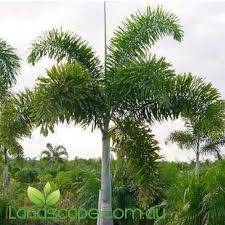
Wudyetia bifurcata (Foxtail Palm)
Solitary, fast-growing palm with a smooth gray trunk and a full crown of arching pinnate fronds made up of dense, evenly spaced leaflets that give a “foxtail” appearance; typically grows 6–12 m tall, forming a clean, self-supporting upright silhouette; produces large clusters of orange-red fruits along the trunk beneath the crown; commonly used as a statement avenue or focal palm in tropical landscapes; not native to the Philippines but widely cultivated.
Best used as a focal, avenue, or feature palm in full sun with well-drained soil. Performs best in open, bright conditions with moderate watering; avoid deep shade, which weakens crown density, and ensure enough space for mature trunk and crown spread.
Xanthostemon verdugonianus (Mangkono)
Endemic to the Philippines; conservation status: endangered. Most easily identified by its extremely dense, slow-growing “ironwood” nature and its bright red bottlebrush-like flower clusters, combined with a compact crown and very heavy, hard timber, making it one of the most ecologically and economically significant native hardwood trees.
A small to medium evergreen tree typically growing 5–15 meters tall with a dense rounded crown about 4–10 meters wide. Trunk is 0.2–0.6 meters in diameter with dark gray to brown bark that is rough and tightly fissured. It develops a strong deep root system adapted to poor and ultramafic soils. Branching begins low to mid-height, forming a compact, dense canopy. Leaves are simple, opposite to subopposite, elliptic to oblong (5–12 cm long), thick, leathery, and glossy green with smooth margins and pinnate venation. Flowers are bright red, arranged in dense brush-like (staminal) clusters. Fruits are small woody capsules containing tiny seeds dispersed by wind and gravity.
Extremely valued for its very hard, heavy timber used in heavy construction, tool handles, and specialty woodcraft, and also important in native forest ecosystems. No significant toxicity reported. In landscape applications, it is best suited for conservation areas, native plant collections, and specimen planting in large gardens where slow growth and limited size are acceptable; it is unsuitable for rapid landscaping or tight urban spaces but excellent as a heritage and biodiversity conservation tree.