IAC II Final Exam
 Call Kai
 Learn
Learn Practice Test
 Spaced Repetition
 Match
Match Flashcards
 Knowt Play
1/81

There's no tags or description
Looks like no tags are added yet.
Name | Mastery | Learn | Test | Matching | Spaced | Call with Kai |
|---|
No analytics yet
Send a link to your students to track their progress
82 Terms
What kind of digestive tract does a rabbit have?
Hindgut fermenters; herbivores
What type of teeth do rabbits have?
Hypsodont teeth
What specific GI disease are rabbits prone to getting?
Hepatic lipidosis (also ketoacidosis during pregnancy)
What specific nutritional requirements do rabbits need?
High fiber diet (15-20%), 12-13 percent protein, 510mg calcium per day for a medium adult rabbit
What is the recommended amount of hya and pellet feed recommended for an adult rabbit?
¼ c per 5 lbs and free choice grass hay (unless they have medical dietary requirements)
What are ceacotrophs?
Animals that eat feces directly from the anus to get necessary B vtiamins and a good source of protein at night
What is the most practical location for catheter placement in a rabbit?
Cephalic and lateral saphenous, epaxial muscles for IM injections
What does the normal WBC and PCV count for a rabbit look like?
30-50% PCV volume is normal but rabbits usually have 30-40%. Can be lymphocytic on WBC count. Diabetes mellitus is rare but hyperglycemia is a common result due to stress.
What are the most sensitive periods for dogs?
4-12 weeks
What are the most sensitive periods for cats?
2-7 weeks
What is the recommended duration for training for animals?
10-15 minutes at a time, 2-3 times per day with breaks
When do fear postures develop in dogs?
6-8 weeks of age
What are the intermediate hosts for heartworm disease?
Mosquitoes
When do heartworms start producing microfilaria?
Begin producing microfilaria around 6 months post-infection, entire life cycle is complete in 7-9 months, can live for 5-7 years in dogs
What is Wolbachia? How does it aid in the life cycle of heartworm?
Wolbachia is an obligate, intracellular, gram-negative bacterium. It lives symbiotically in filarial nematodes and contributes to the reproductive ability of the heartworm and inflammatory lesions in hosts.
What is the scientific name for small strongyles?
Cythanostomin
What is the scientific name for ascarids?
Parascaris equorum
What is the scientific name for bots?
Gasterophilus
What is the scientific name for pinworms?
Oxyuris equi
What is the scientific name for tapeworms?
Anocephala perfoliata
What are common signs seen with horses that have a parasitic infection?
Dull rough coat, decreased stamina and lethargy, loss of condition, poor growers, pot belly, colic, diarrhea
What is the mechanism of action for Benzimidazoles?
Inhibits microtubule formation and glucose transport
What is a disadvantage of Benzimidazoles? What are some brand names of this drug?
There is lots of resistance to it. Fenbendazoles include safeguard, panacur, and oxibendazoles like athelcide
What is the mechanism of action for avermectins?
increased cellular permeability due to glutamate-gated channels, GABA agonist
What are some exampples of brand-name avermectins?
Zimectrin, Ivercare, Strongylcare
What is the mechanism of action for praziquantel?
Increased permeability to Ca muscle paralysis
What are some examples of praziquantel?
Quest plus Zimectrin gold
What is the mechanism of action for pyrantel?
Depolarizing neuromuscular blocker and nicotinic stimulation
Describe the life cycle of small strongyles
Larvae start out in the grass, larvae go into the large intestine and imbed themselves in wall (possibly for years). Become adults and shed eggs, which are passed through the feces and cycle continues
What are clinical signs of small strongyle parasitism?
Hypoproteinemia, weight loss/poor BCS, colic/diarrhea
How long can small strongyle larvae encyst in the large intestine? Are dewormers effective in this stage?
Most can encyst from 4 months to two years, most dewormers in ineffective
What are some stimuli for emergence of encysted small strongyles?
Not too hot or cold, low luminal population, stress
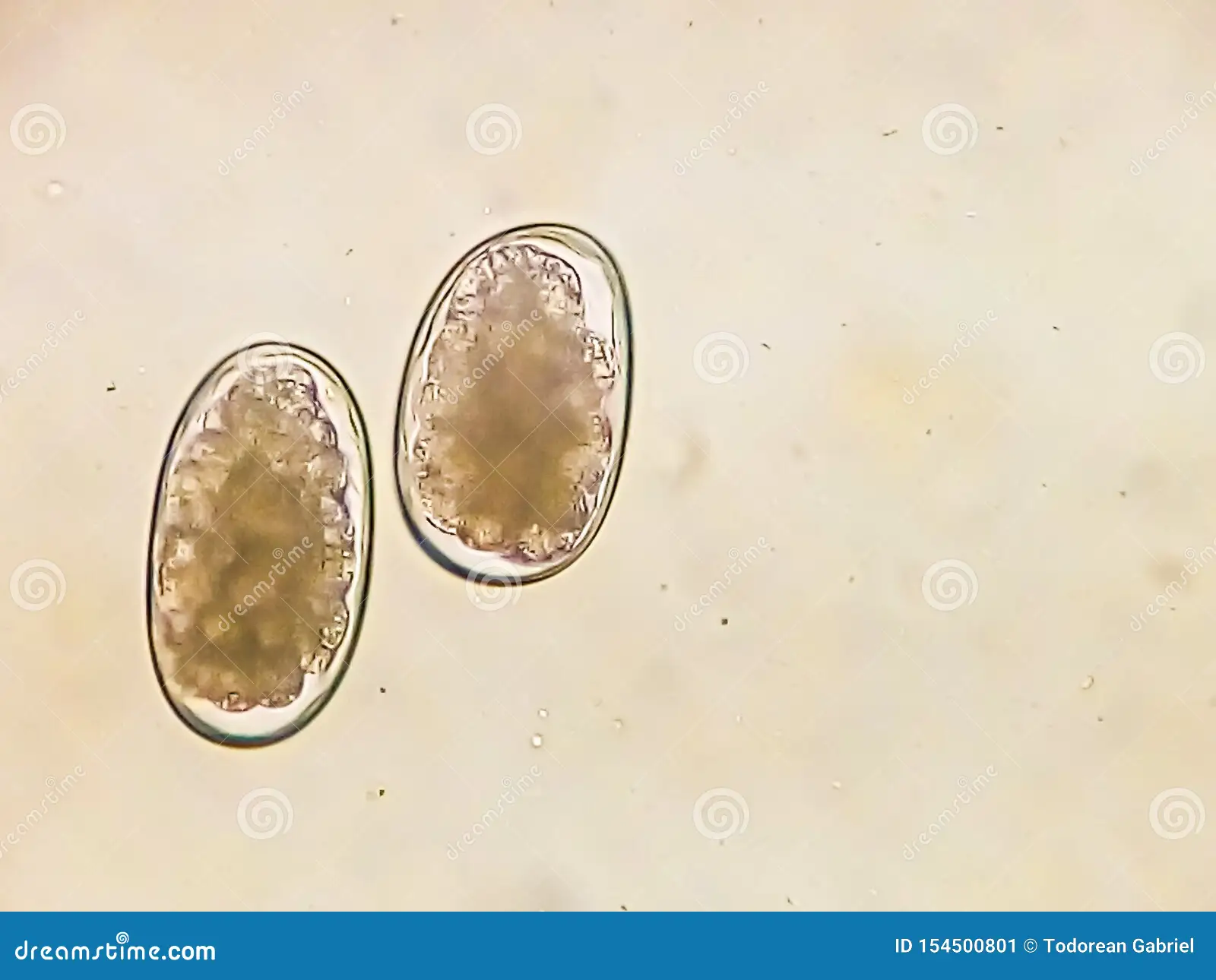
Strongyle eggs
What is the usual treatment for small strongyles?
Moxidectin and fenbendazole
What do we care about large strongyles, although they are relatively rare?
They can be fatal and was one of the reasons we dewormed so agressively in the 1960’s, causing resistance
How are large strongyles transmitted? (General, not life cycle)
Fecal-oral
What is the prepatent period of large strongyles?
seven months
Is ivermectin still effective towards large strongyles?
Yes
Large strongyles cause a blockage in which structure?
Cranial mesenteric artery
What are common clinical signs of large strongyle parasitism?
Parasitic aneurysm, cranial mesenteric artery blockage, blood loss, colic
What are clinical signs of ascarids?
Ill thrift, colic, pot-belly, pneumonia
What is ascarid impaction?
It is when deworming in a foal paralyzes worms, which then leads to them all getting balled up and stuck in the intestine, leading to a surgical correction
How do you treat ascarids?
Fenbendazoles. HIGH RESISTANCE TO AVERMECTINS
What is the life cycle of tapeworms?
Eggs are laid in the grass, then oribatid mites eat them. Eggs develop into larval tapeworms in the mite and then mites are eaten by the horse. The larval tapeworms then develop into adults in the cecum and are shed in packets in the feces
What are clinical signs of tapeworms?
Colic from intussception (which tapeworms telescope inot cecum and causes a blockage)
What is treatment for tapes?
Praziquantel (once a year in the fall)
Explain the life cycle of a bot
Papae in the grass, adult flies emerge mid to late summer, fly lays eggs, eggs are laid on the hairs of the horse, horse eats eggs on the hairs and bots live inside of the horse for 8-10 months
What are clinical signs of pinworms?
Pruritic rear (tree butt rubbing), fraying at tail head, can possibly see them
What is the main detection method to look for pinworms?
Scotch Tape Test
What is the treatment for pins on horses?
Ivermectin, fenbenzadole
How do horses come into contact with lungworm?
Horses are paired with donkeys and get it from them
What are some clinical signs of lungworm?
Mucus production, coughing, wheezing/crackles, secondary bacterial infection
How do you diagnose lungworms in a horse?
Transtracheal wash (put a tube in the trachea, collect sample and culture or cytology). Will see worms and eosinophils on sample.
What are some clinical management areas for parasitism in ruminants?
Genetics, refugia, de-worming strategies and tools, environment, husbandry, nutrition, drugs
What is refugia?
The population of parasites not exposed to a dewormer
How do you perform a fecal egg count reduction test?
Take a fecal egg count. Two weeks later, obtain another fecal egg count from the same animal. If the reduction of egg count is at least 90 percent, than the treatment is effective.
What are the key pasture management practices we want for small ruminants?
Sufficient rest for a minimum of four weeks, and taller forage (80 percent of larvae are on the bottom two inches)
What are parasites that we treat routinely for companion animals?
roundworms, hookworms and whipworms
What are some parasites that we see commonly, but only treat as needed in companion animals?
Giardia, coccidia and tapeworms
What are the scientific names for ascarids in comapnion animals?
toxocara canis (dogs), toxocara cati (cats), toascaris leonina (cats and dogs), bayliscaris procyonis (raccoons)
What are scientific names for hookworms we see in companion animals?
Ancylostoma caninum (dogs), acylostoma tubaeforme (cats), acylostoma brazilienze (dogs and cats), uncinara stenocephala (dogs)
what is the scientific name for tapeworms in companion animals?
Dipylidium caninum
What is the most common way that companion animals get infected with parasites?
ingestion of infective environmental stage
What is a common parasite that can be transmitted transplacentally?
Toxocara canis
What are some parasites that can be infect companion animals transmammary?
Toxocara canis and cati, acylostoma caninum
What parasites can infect a companion animal via predation of a paratenic host?
Roundworms, hookworms, coccidia
What parasites can infect a companion animal via ingestion of an intermediate host?
Tapeworms
Which [parasite can infect companion animals percutaneously?
hookworms
What are the clinical signs of roundworms?
Pot-bellied, thin BCS, veruminous pneumonia
What are some clinical signs of hookworms?
Anemia, tarry stools, dermatitis
What are clinical signs associated with whipworms
Electrolyte changes
What are the clinical signs associated with coccidia?
Watery, light diarrhea with possible blood in the stool, mucoid
What are some clinical signs associated with giardia
uncontrollable, severe, potent diarrhea with maldigestion and malabsorption
What is the primary clinical sign of tapeworms in companion animals?
Perianal irritation
What diagnostic test is used to detect giardia?
Direct smear to detect motile trophozoites’ (falling leaf movement) or fecal float with centrifugation
How long does it take for ascarids to become an infective egg?
4 weeks
How long does it take for hookworms to become an infective egg?
7 days or less
How long does it take for whipworms to become an infective egg?
30 days
How long does it take for coccidia to become an infective egg?
less than 16 hours
How long does it take for giardia to become an infective egg?
cysts are immediately infective
What are some treatment options for roundworms, hookworms and whipworms?
Pyrantel (doesn’t treat whipworms tho), fenbendazole, moxidectin, interceptor, selamectin (cats only, rounds and hooks)