BIOL 225 - Basic Microbiology - Exam 1 Flashcards
 Call Kai
 Learn
Learn Practice Test
 Spaced Repetition
 Match
Match Flashcards
1/33

Earn XP
Description and Tags
Vocabulary practice flashcards covering basic microbiology topics including history, cell structure, staining, metabolism, and microbial growth, derived from Exam 1 materials.
Name | Mastery | Learn | Test | Matching | Spaced | Call with Kai |
|---|
No analytics yet
Send a link to your students to track their progress
34 Terms
Semmelweis
Early microbiologist who advocated handwashing as a specific method for preventing Puerperal Fever.
Jenner and Pasteur
Individuals whose work laid the foundations of immunology specifically through the development of vaccines.
Koch's Postulates
A four-step process for identifying disease-causing agents, following the order: III. Find agent in every case; II. Isolate/culture agent; I. Inoculate test subject; IV. Recover and isolate agent from test subject.
Bioremediation
The process of using living organisms to detoxify polluted environments.
Viruses
Microbes that are generally the smallest compared to algae, archaea, bacteria, and fungi.
Eukaryotic cell nucleus
The primary structural difference between a prokaryotic cell and a eukaryotic cell is the presence of this organelle in eukaryotes.
Protozoan
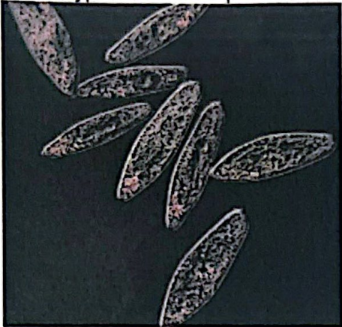
Microbial cells that are most similar to animal cells (like humans) regarding their structure and nutrition.
Lophotrichous and monotrichous
Bacterial cell types that have flagella located at only one end of the cell.
Negative chemotaxis
The term used when a bacterium moves away from a chemical signal.
Axial filaments
Specialized flagella specifically found on spirochetes.
Teichoic acids
Components of the Gram-positive bacterial cell wall that serve to stabilize the cell wall and hold it in place.
Symport
A type of active transport protein that moves two molecules into the cell at the same time.
Hami
Structures found on some archaea used specifically for attachment.
Outer membrane
A prokaryotic cell component found in Gram-negative bacteria only.
Peptidoglycan
A bacterial cell wall structure composed of NAG, NAM, and tetra-peptide cross-bridges; it does not contain LPS.
Numerical aperture
The ability of a microscope lens to gather light.
Smear
A thin film of microorganisms on a slide intended for microscopic viewing.
Mycoplasma pneumonia
A bacterium that lacks a cell wall and is known to cause atypical pneumonia.
Gram stain
A type of differential stain used to distinguish between different types of bacterial cell walls, such as Gram-positive and Gram-negative.
Anabolism
The metabolic process of polymerizing individual molecules, such as amino acids, to make longer chains like proteins.
Feedback inhibition
Regulating enzymatic pathways where the accumulation of an end product, like isoleucine, shuts down the pathway used for its synthesis.
Holoenzyme
A complete, active enzyme.
Amphibolic reactions
Metabolic reactions that can be either catabolic or anabolic depending on the metabolic state of the organism.
GTP
A nucleotide that serves as an energy carrying molecule within the Kreb's cycle.
Molecular oxygen
The final electron acceptor during aerobic respiration in eukaryotes.
Decarboxylation
The conversion of pyruvic acid to acetyl-CoA, named because a molecule of CO2 is produced as a by-product.
Beta-oxidation
The process by which fatty acids are catabolized into two-carbon molecules.
Facultative anaerobe
Organisms that can grow with or without oxygen, but grow better when oxygen is present.
Differential media
A medium designed to change color in response to the growth of certain types of bacteria.
Biofilms
Complex communities of various types of microbes that adhere to surfaces.
Hyperthermophile
A microorganism, often found in deep ocean volcanic vents, that has an optimal growth temperature over 100∘C.
Total magnification calculation
The product of the objective lens magnification and the ocular lens magnification; for example, 100× objective multiplied by 10× ocular equals 1000×.
Bacterial growth calculation
The final number of cells in a culture; starting with 5 cells and a generation time of 30 minutes, after 6 hours (12 generations) there will be 20,480 cells.
Taxonomical hierarchical groups
Ordered from largest to smallest: Domain, Kingdom, Phylum, Class, Order, Family, Genus, Species.