PSY:2811 Research Methods & Data Analysis in Psychology I: Exam #1 questions and answers 2026-2027(A+ GRADED)
 Call Kai
 Learn
Learn Practice Test
 Spaced Repetition
 Match
Match Flashcards
1/191

There's no tags or description
Looks like no tags are added yet.
Name | Mastery | Learn | Test | Matching | Spaced | Call with Kai |
|---|
No analytics yet
Send a link to your students to track their progress
192 Terms
Theory-Data Cycle
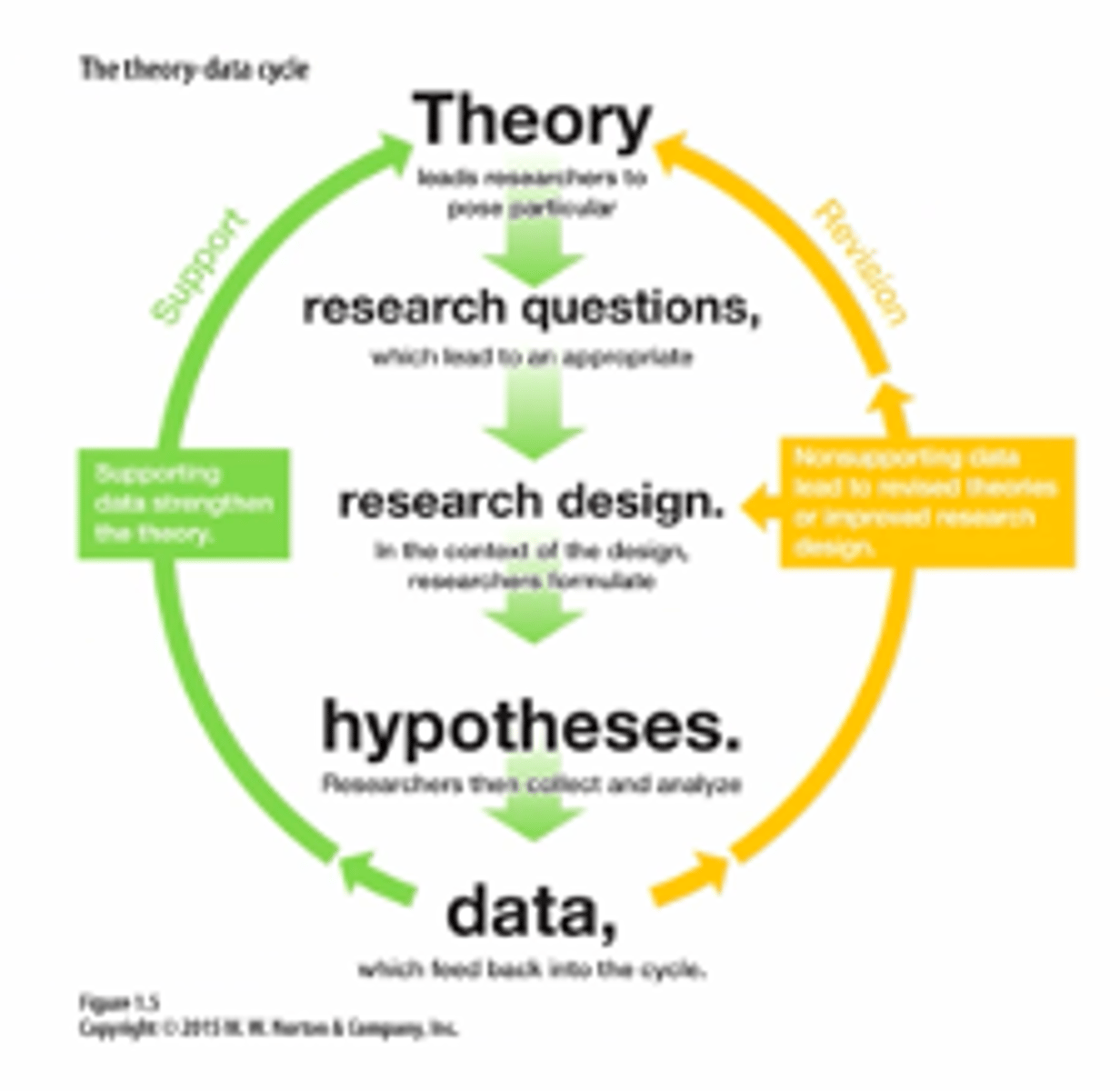
theory, research questions, research design, hypothesis, data --> from here either go through revision or support
Theory
proposal or expanding of how something works
Psychological science tries to do what?
understand why people think, feel, and behave the way they do
-- understanding give us the tools to predict and improve outcomes --> ex: developing work out program to increase memory from research studies
Psychology as an empirical science
use data
science is an approach to understanding nature and ourselves
requires observation of people's thoughts and behavior
we often need to turn concepts of the mind into something we can measure and analyze
-- "happiness", "stress", "intelligence"
observation is difficult because people vary from each other and from moment-to-moment
-- different stress of happiness levels
data
observations or computation of other measures in the real world
Benefits of understanding methods of psychological science
producer vs consumer role
Producer role
doing actual research or creating new knowledge in psychology
-- coursework for upper-level classes
-- graduate school
-- working in a research lab (academics, research institutes, industry)
consumer role
using knowledge from psychology even though we are not directly creating new knowledge
-- fields that require studying the minds
-- reading printed or online news stories based on research
-- talk shows and podcasts
-- applying findings to your own life --> ex: how should i study - study/rest strategy has better outcome according to research
-- research helps shape public policy and evidence-based practices
Examples of how research shape public policy and evidence-based practices
what criterion should we use to determine if someone is an unsafe driver?
what are the best way to use technology in the classroom
Psychologists are _____ and ______
theorist; empiricist
psychologists as theorist
develop theories to explain how humans think, feel, and behave
psychologists as empiricist
rely on empiricism to test the theories
Empiricism
deriving knowledge from observation and experimentation
pSychological science: empiricism
psychological science relies on observing and measuring phenomena to test theories
psychologists test theories with data
Can psychological science only depend on theories and use logic/reasoning to develop new theories?
Logic/reasoning is not enough, as they rely on assumptions, which needs data to support
we need observation and data
What are the components of the theory-data cycle
theory, hypothesis/prediction, and data
theory
a statement or set of statements that describes general principles about how variables relate to one another
hypothesis/prediction
a way of stating the specific outcome the researcher expects to observe if the theory is accurate
Data
a set of observations representing the values of some variable, collected from one or more research studies
Example of the theory-data cycle
theory: children learn better from their teachers than a computer because children pay more attention to their teachers, and attention supports learning
question: would children learn new words better from their teacher or a computer game teaching the same words?
Hypothesis: children will learn new words better when taught by their teacher, compared to a computer game
data: number of words that the child can correctly match
-- if the data agrees with the hypothesis, then it supports the theory
-- if the data disagrees with the hypothesis, revision is required
Theories: further explored
theories build upon measured observations and accumulated knowledge from testing prediction; they're not uninformed guesses
theories cannot be proven, but data can suggest whether theories should be changed/replaced
continued refinement of theories in science
Another example of theory-data cycle: Hippocampal memory
Theory: the hippocampus is necessary for the brain to form new memories
Hypothesis: people who lose their hippocampus have difficulties forming new memories
Data: Patient H.M. Suffered severe seizures when he was young – surgeon removed both hippocampus; Quickly after the surgery, he struggled to form new memories
-- Shocked every time he heard about JFK assassinations
-- Theory is supported
But could there be alternative explanations for why my data supported my theory?
New data: people with hippocampus damage retain their motor memory, they can learn new skills
-- Trace star that is being mirrored (cannot see the star directly in front of you – only on the mirror)
-- Decrease in effort after practice and even sleep – people remembered how to perform the task correctly
-- Theory needs to be revised because of the non-supporting data
Revised theory: the hippocampus is necessary for the brain to from new episodic memories. Procedural (motor skills) memories are formed elsewhere in the brain
-- Additional studies test this theory further, allowing continued refinement
What are qualities of a good theory?
supported by data, falsifiable, parsimony,
Supported by data: qualities of a good theory
without support from data, no evidence that the explanation accounts for something real
a single piece of evidence is poor support
supporting data from multiple studies, from multiple labs, and replication are crucial
Falsifiable: qualities of a good theory
a theory must be testable, such that imaginable pattern of data can prove it wrong
allows for new information
-- example: this slide may or may not be on the exam --> answer renders useless
Does a theory explain every possible outcome of a good theory?
No because the theory in not falsifiable
Ex of poor falsifiability: Freud's Unconscious motivation theory
behavior is shaped by unconscious psychological forces
-- explains both outcomes to it is useless
Other examples of poor falsifiability
Humans have precognitive abilities (ESP) such that they can predict upcoming stimuli, even when random. Failure to see evidence of such results may arise because of experimenter's lack of belief blocks the effect
-- problem: no way to falsify. counter evidence can be explained away
"he is into you" vs "he is not that into you"
Parsimony: qualities of a good theory
When two theories both explain data equally well, the simpler theory is preferred (Ockham's razor)
-- "Everything should be made as simple as possible, but not simpler"
used as a tie breaker
Which theory is simpler/more parsimonious?
Data: Children learn words quicker when listening to their teacher compared to a computer game
Children learn words better from their teachers than a computer
Theory 1: because children pay more attention to their teacher’s voice and attention supports learning
Theory 2: because a human can be more responsive to facial affect and emotion of the child. This makes learning less stressful and more fun. Lower stress increases attention, which supports better learning.
Theory 1
How do we test predicitions
through falsification
modus tollens, affirming the consequent
Modus Tollens
testing a theory through falsification
if P, then Q
-- if theory is correct (P), then predicted data (Q)
not Q therefore, not P
-- did not get the predicted data (Q) therefore, theory is not correct (not P)
Affiriming the consequent
invalid way to affirm
If P, then Q
-- if it rains (P), then it is wet (Q)
-- if theory is correct (P), then predicted data (Q)
Q therefore P
-- It is wet (Q), therefore it rained (P)
-- get the predicted data (Q), therefore theory is correct (P)
Problem with affirming the consequent
there are other reasons to cause Q
-- spilled water, snowed, etc.
-- need to test ALL data --> this is why data can't prove theory
if P, then Q
-- if it snows (P), then it is wet or snowy (Q)
not Q, therefore not P
-- it is not wet (Q), therefore it doesn't snow (P)
Is having good data more important than a good theory
No! We need both
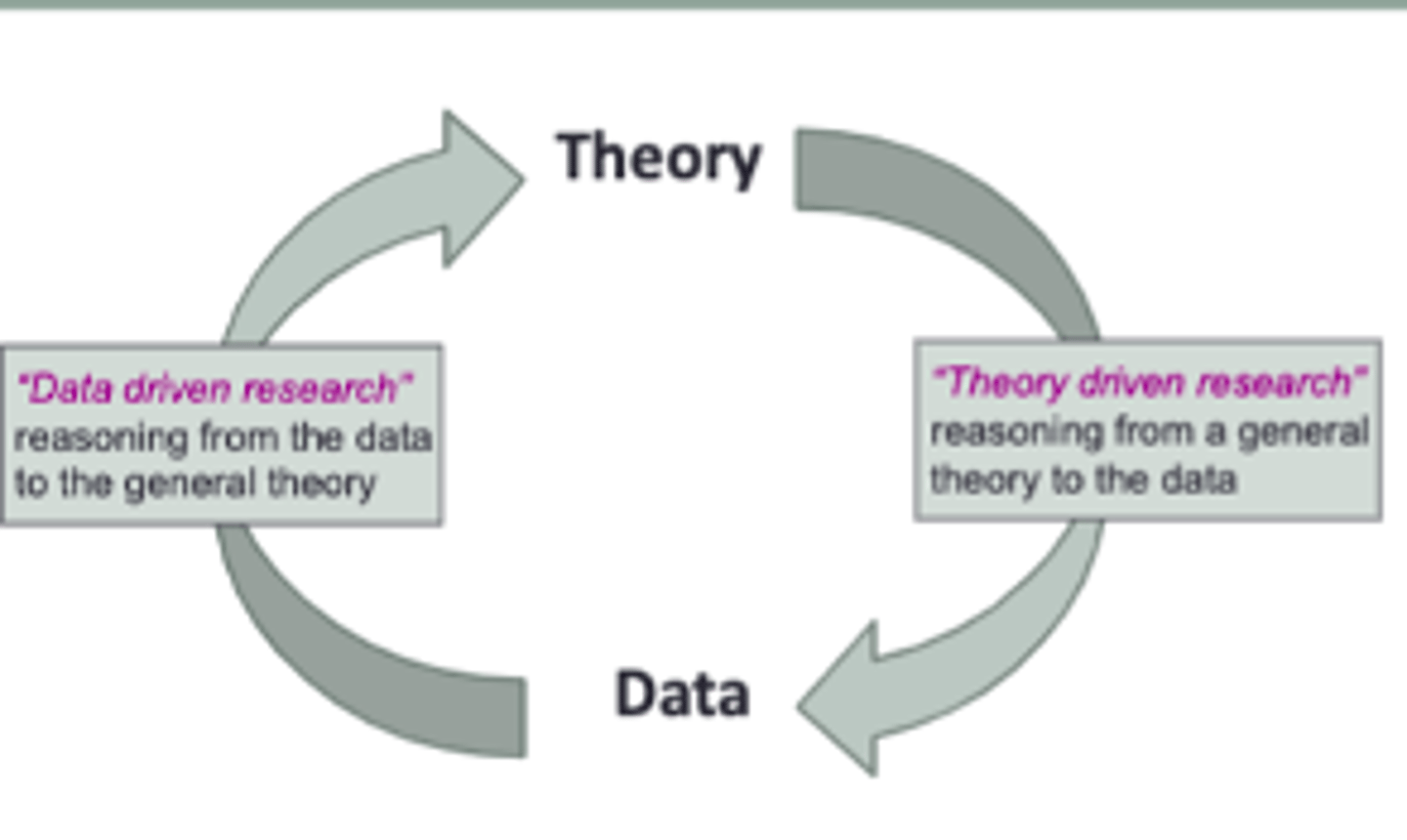
-- we need "Data driven research" reasoning from the data to the general theory to influence our theories and we need "Theory drive research" reasoning from a general theory to the data to predict data
Sources of information
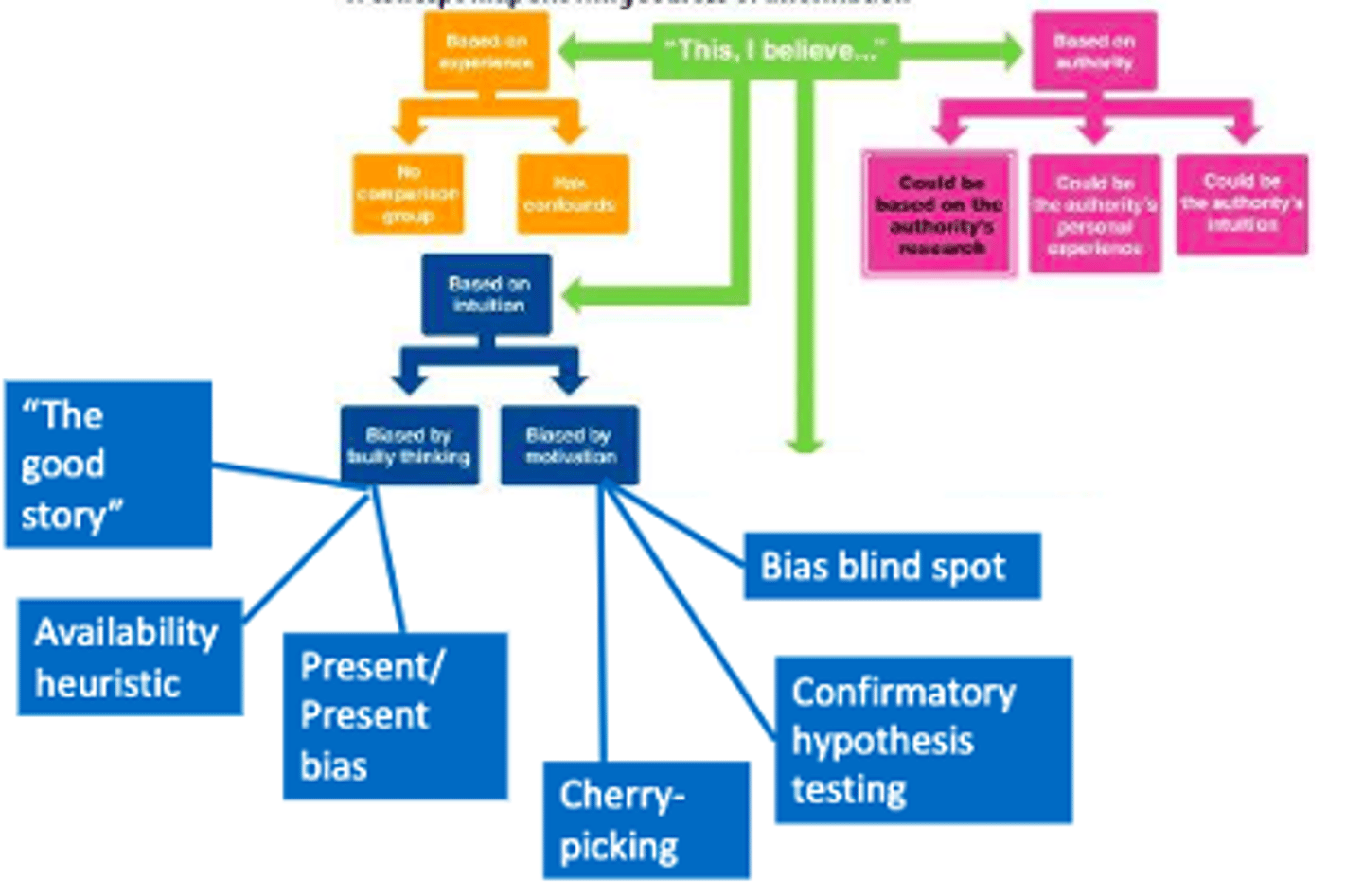
experience, intuition, authority, research
Experience
basing decisions on past experiences as a sole source of "knowing"
Some problems with experience
small set of possibilities with no comparison group
-- ex: I text all the time when I drive, and I haven't gotten in a crash yet
-- ex: never wear a mask, and I've never gotten sick
little control on environment and other variables --> confounds
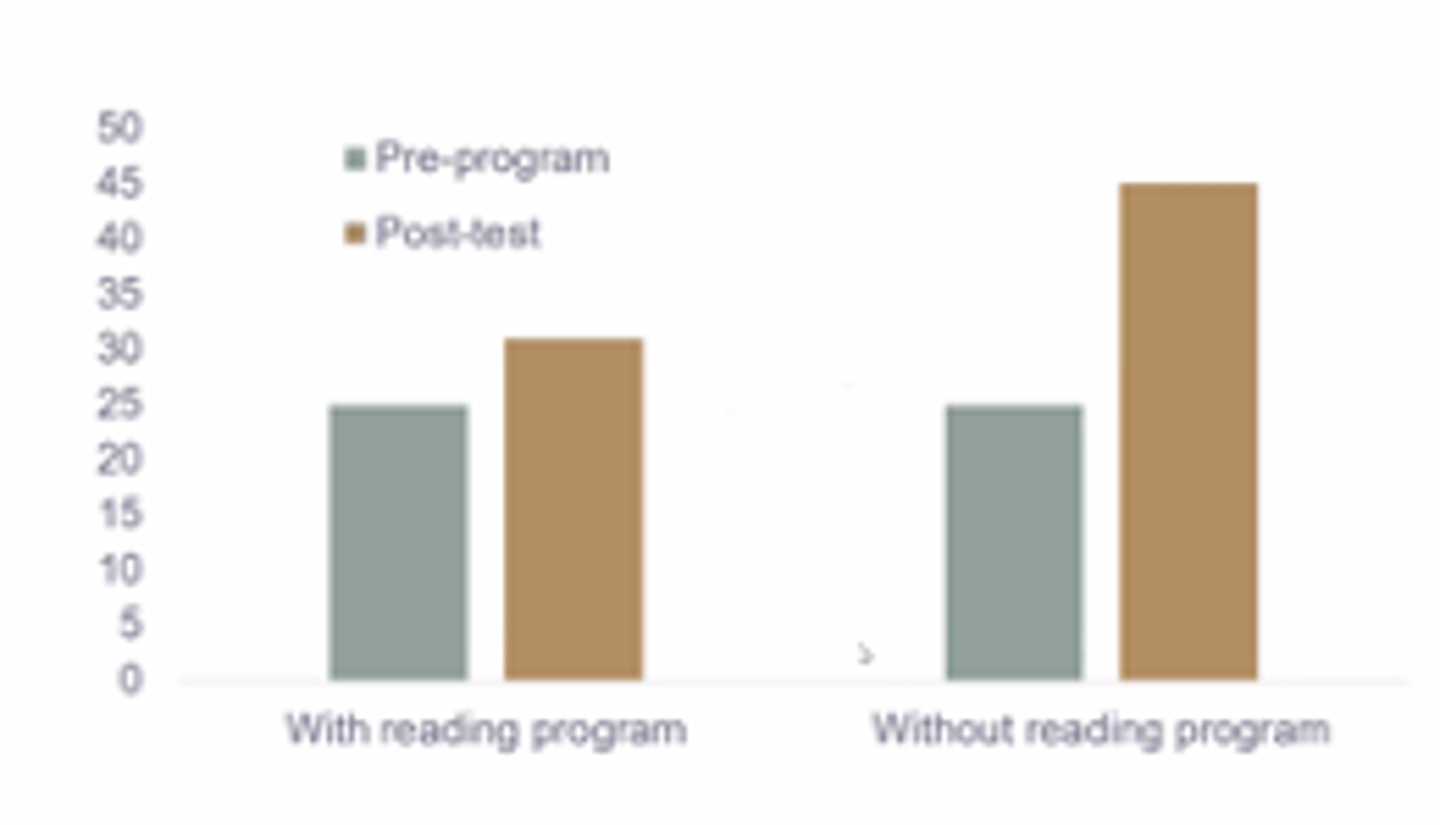
Experience does not have a _____
comparison group
-- we can never truly compare only our experience to an alternate experience in the same time and circumstance
-- ex: reading program really helped --> study shows that reading program actually hinders reading skill
Experience is full of?
confounds
Confound
when more than one thing changes at a time that may have caused an outcome, and because they happened together, and could've both caused the outcome ... you don't know the cause!
Confounds with the reading program example
Ex: "... at the reading program, my son met other kids, they became very good friends and read together"
Ex: "... at the reading program, my son really liked his new teacher, so he is reading more to impress her"
Confounds with diets
Ex: "...when your friend started going keto, they also started running more regularly"
Ex: "... when your friend started going keto, it was summertime and they ate mor local foods too"
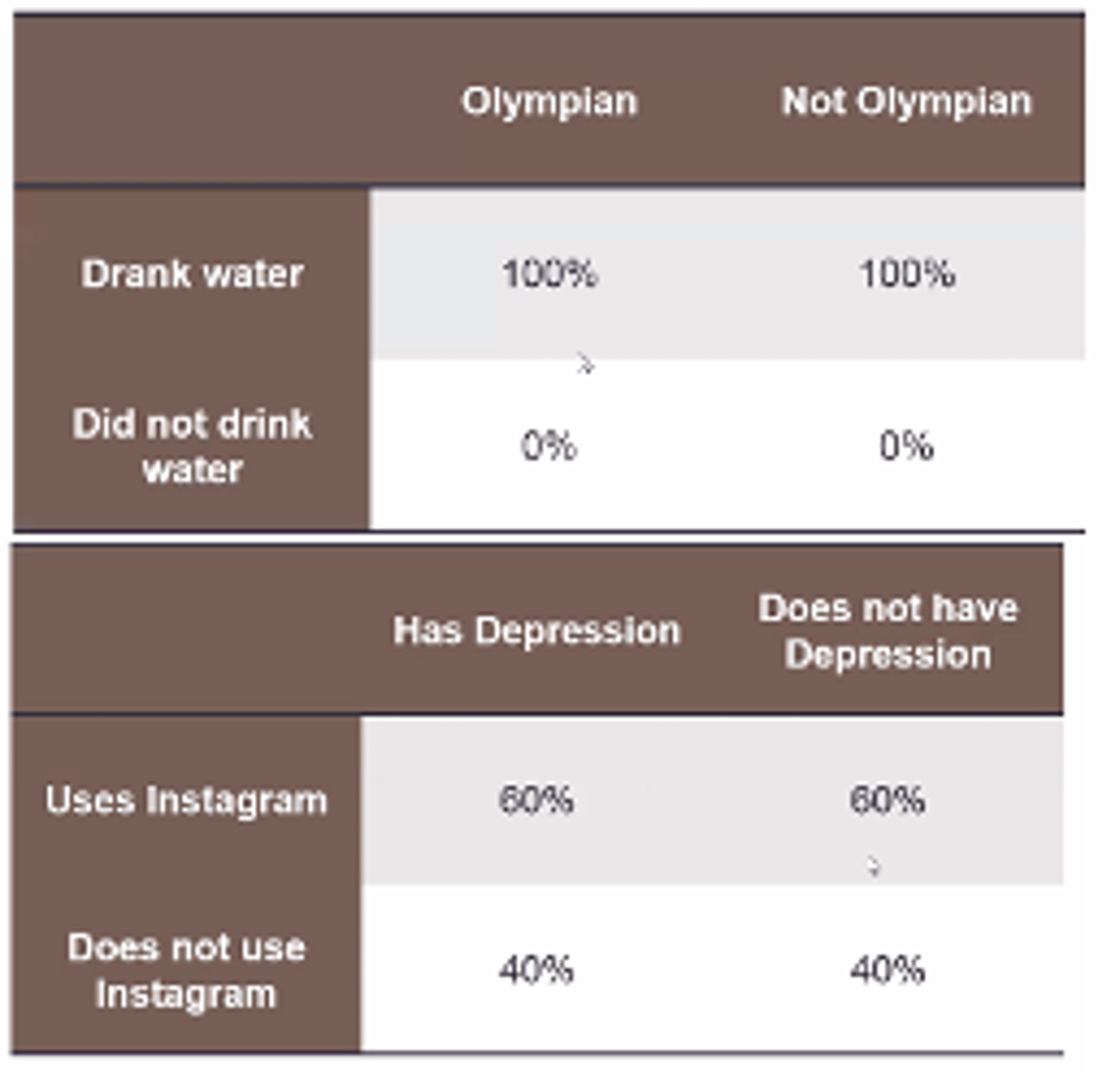
Data needs to be considered ____
comparatively
ex: 100% of Olympians drink water so you'll be an olympian
-- drinking water makes no changes in become an Olympians
ex: using instagram causes depression
-- instagram usage makes no change in depression
Intuition
a sense of knowing without direct evidence or experience, such that the information feel like it is known instinctively (often implicit - you cannot explain how you know or why you feel the way you do)
Some problems with intuition
shortcuts from intuition can lead us astray (i.e. faulty thinking)
-- the power of stories and metaphors (ex. difference between left and right brain)
-- availability heuristics
-- present/present bias
biased by motivation for what we want to believe
-- confirmation bias
-- biased blind spot
availability heuristic
things that pop up easily in our mind tend to guide our thinking/have a stronger influence on our thinking and behavior
examples: shark attacks, toilet paper hoarding (COVID)
Present/present bias
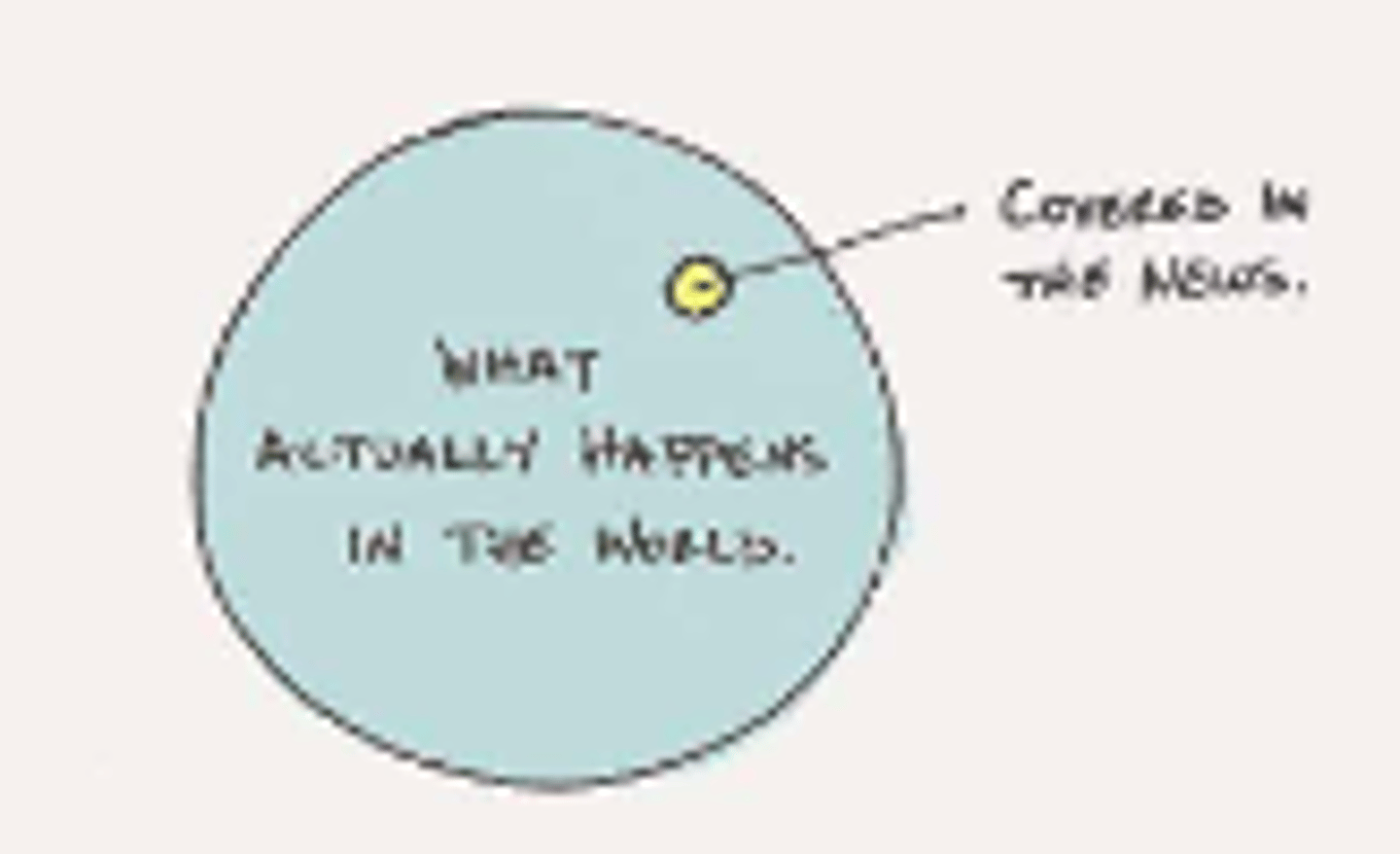
failure to consider appropriate comparison groups
-- when examining relations between events, we tend to not see absences, but easily notice what is present
Examples of present/present bias
ex: thinking your friend lives in a city because you remember the time when you were bother there at the same time (forgetting about other experiences where you both weren't there)
ex: who is doing more housework --> remember when they did it but not when their SO does it
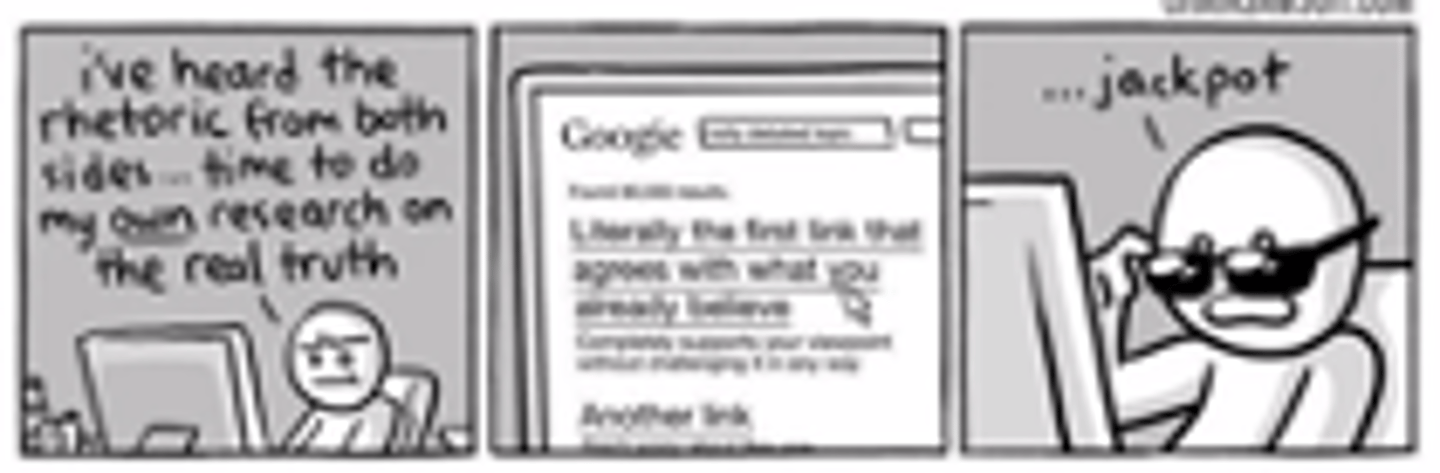
Confirmation bias includes
cherry-picking and confirmatory hypothesis testing
cherry-picking
selecting information that supports a particular position, usually a controversial one
Confirmatory hypothesis testing
tendency of human beings to (unintentionally) ignore any evidence that refutes already-held beliefs
-- your existing opinion changes how you view/perceive information
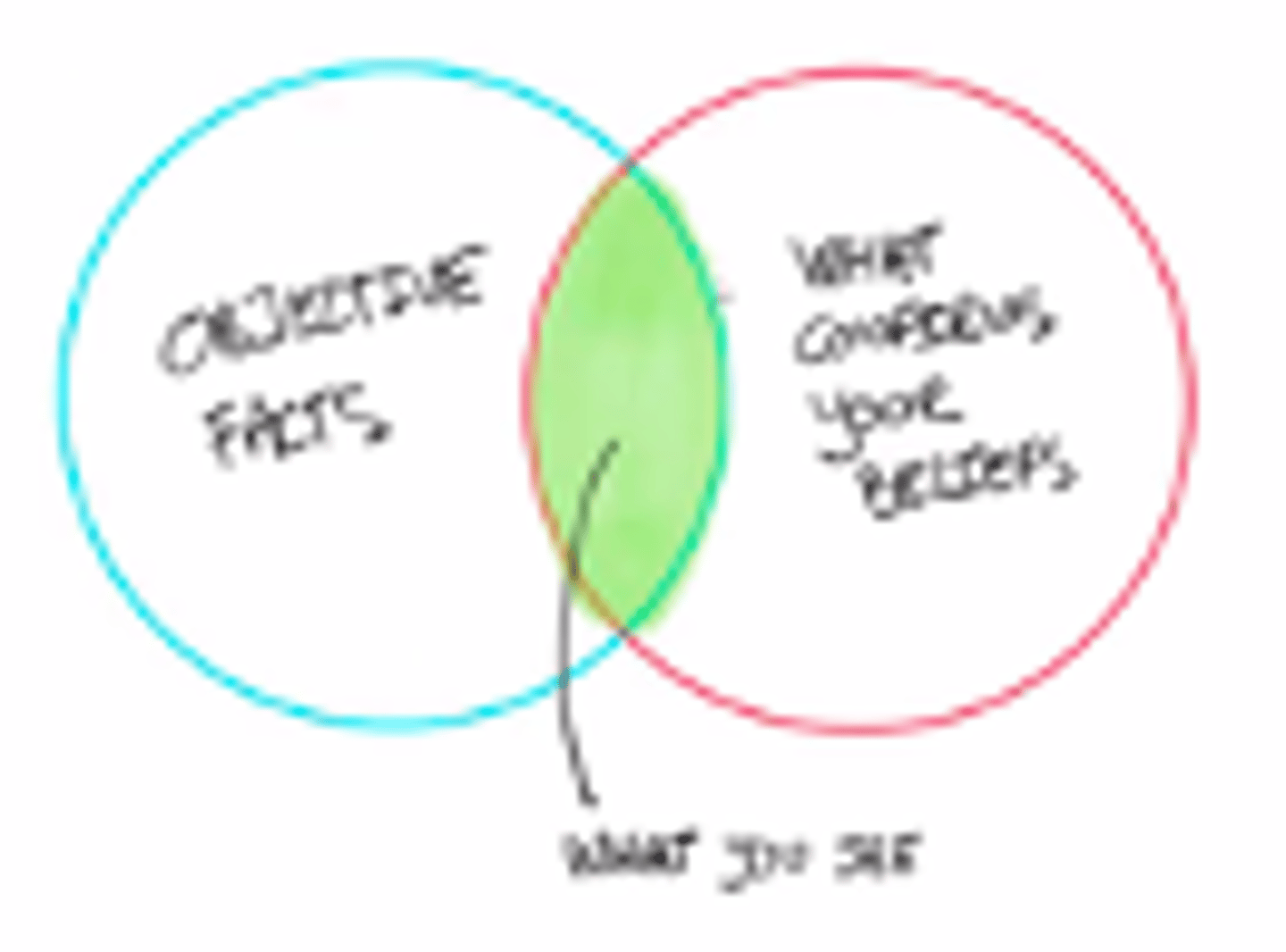
Biased blind spot
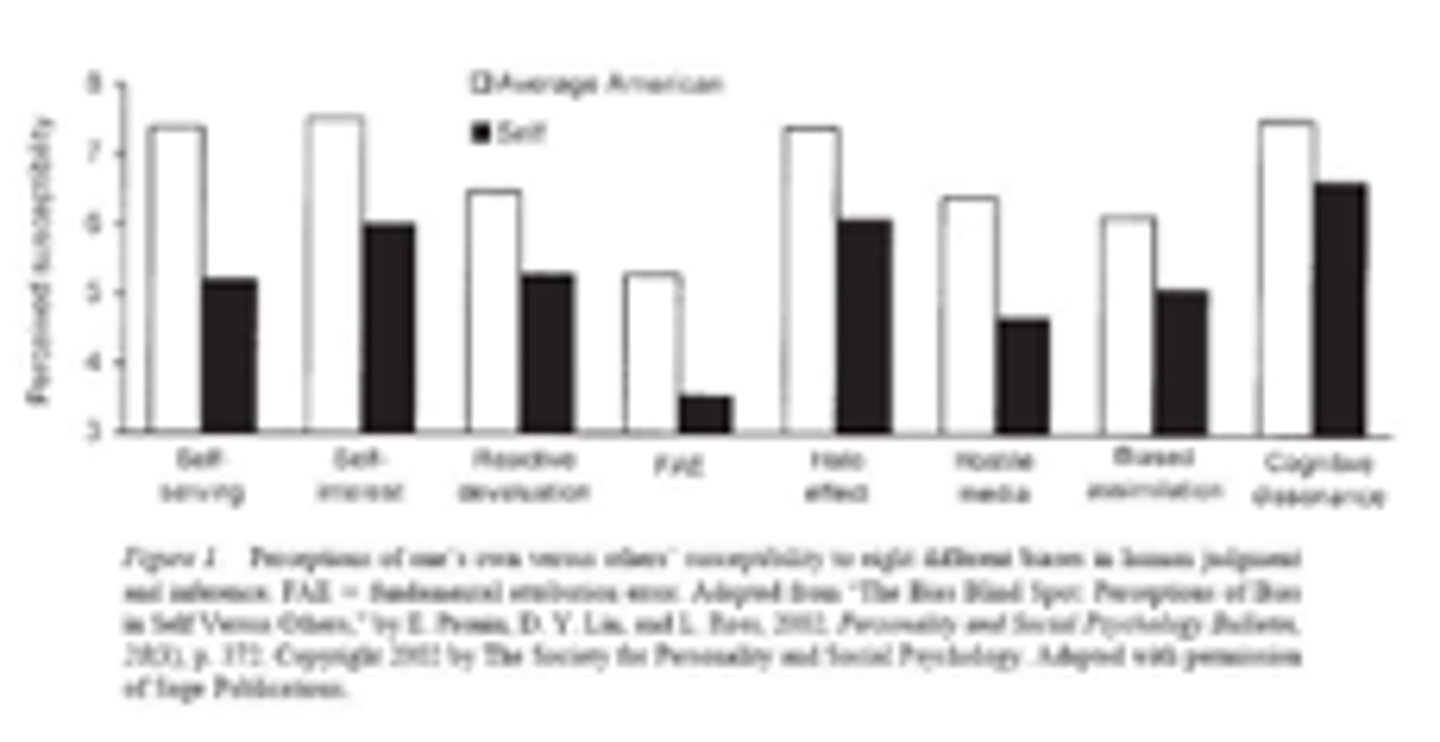
the belief that we are unlikely to be biased by the problems above
-- test showing how likely participants will be susceptible to biases (white is their perception of average American and black bar is individual)
---- Americans think they as individuals are less susceptible
Authority
someone in a position of authority tells you something is true, thus it must be true (textbooks, news sites, teachers, etc.)
problems with authority
authorities can be biased (intuition, experience, other authorities)
what is "expert" enough for truth?
authority is one domain doesn't often transfer to others, but this can trick us!
On biases
be aware of biases
look for ways to challenge what you think you see
seek information from a wide range of sources and perceptions
Journal articles
the gold standard for psychological research
peer-reviewed process
peer-review process
experts in the field read and critique a paper before it's published
vetted research means more trustworthy
purpose: communication is coherent, understanding, and statistics are proper with correct sample to answer the question; the conclusion matches what the study was about
What are some good sources for psychology articles
University of Iowa library
google scholar
PubMed
Social Sciences Citation Index
Web of Science
PsychINFO and PsychARTICLES
How to evaluate journal articles
is the study presenting new data and results?
-- replication crisis right now
have they cited other original scientific sources?
Does the article get cited by others in the field?
Journal metrics
Journal metrics
was it published in a high-end journal or crappy one
-- Impact factor: measure of how often your work is cited in other's work
-- caution: not always sound proof
Books for psychologist/scientist audience
good because they are peer reviewed but not as much as a journal article
purpose is to teach about broad/general information from summary of other studies through a theoretical method
-- does not present new data
-- helpful for teaching difficult topics
examples: textbooks
Trade books for popular audience
way more susceptible to personal opinion
present scientific studies in a more relaxed style for a layman
often reference actual studies they are talking about
reading for entertainment rather than broader scientific piece of it like a textbook
Popular press
purpose is to sell something (advertisements) --> need exciting and interesting stories
-- press releases, news reports, and podcasts
Press releases
can be pretty good
-- New York Times articles
News reports
not great (GMA)
-- catchy slogans; don't typically go into detail about the study
-- spins the results to gain clicks ---> personal bias
podcasts
purpose: doesn't go into small details --> make it entertaining for an audience
Finding research in other places: science writing in journalism (not primary resources)
use your critical thinking skills!
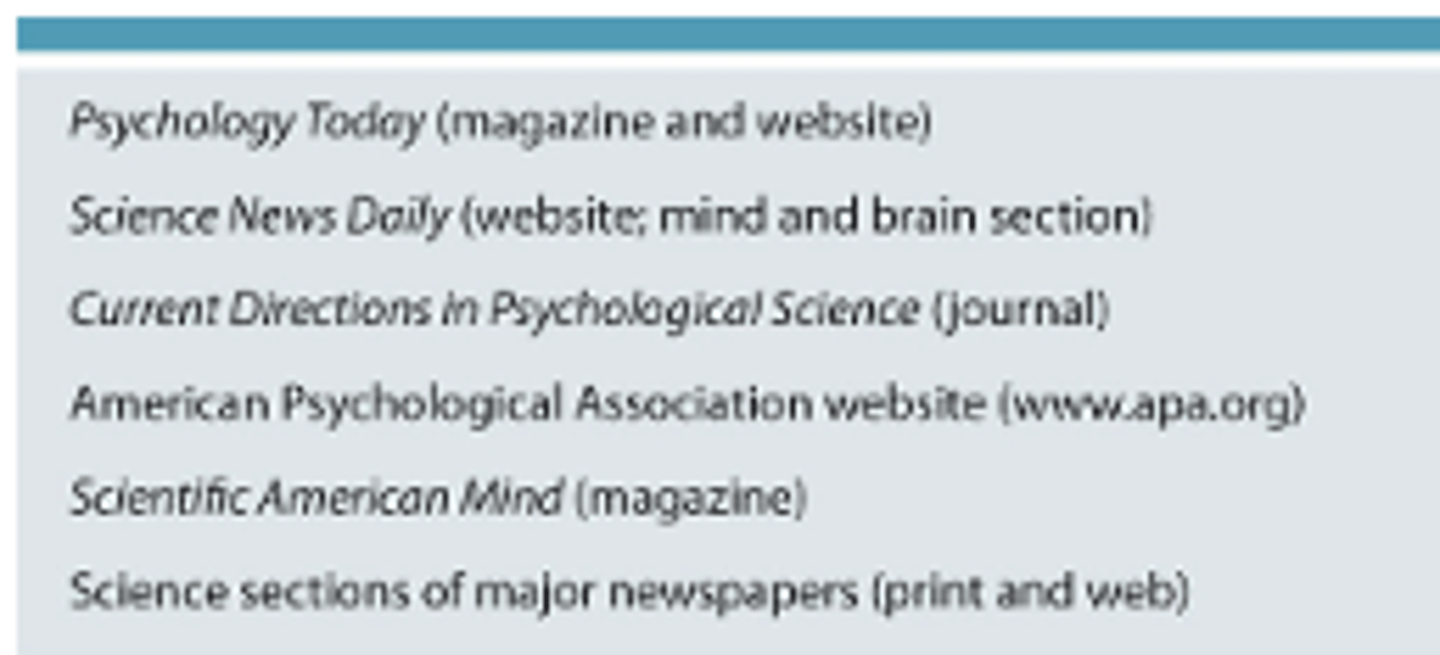
Primary sources are ideal when
You’ve had some introduction and training towards the terms and procedures used in the field
Critically assess testability of their question, operational definitions, and the data
Review articles and edited books can be a good place to get “big picture” historical view of the topic
When primary source is unavailable or way outside our expertise:
Consider good sources for a popular audience as an introduction, then (if still interested) move to review articles and edited volumes for those with more expertise
Evaluating sources for popular audiences: reputable news source? Experienced science reporter?
How much detail is provided about the studies?
Do they cite their sources?
Do they present alternative sides?
How to read an academic article
First, read the abstract and skim the paper to get a general sense of the topic, sample, and what they did
Then, underline and make notes in the margins as you ask yourself these questions ...
Ask yourself: introduction
What is the problem or question that motivated the study?
What are the constructs of interest?
What is the specific hypothesis or hypotheses being tested?
-- e.g., do the authors make specific predictions regarding how analyses with their data will turn out? This should appear at the end of the introduction
Ask yourself: methods
what is the general methodological approach (experimental, observational, or statistical like a meta-analysis)?
How does the experimental design test the specific hypotheses?
-- How did they operationalize constructs of interest?
What possible outcomes would be consistent with their hypotheses and what outcomes would falsify their hypotheses?
Ask yourself: results
What was the actual outcome?
Which data are most convincing?
Which data are weak?
Ask yourself: Discussion
What are the authors' conclusions? Can the reported data be clearly related to the proposed qualitative conclusions?
Are there alternative explanations? For instance, is there a confound that could account for their results that are considered?
What additional steps could be taken to strengthen the results?
What are some further questions and how might you address them?
What are the parts of an empirical journal article?
abstract, introduction, methods, results, discussion, references
What is an empirical article
describes a study in which data are collected from participants
Scientific claims
after collecting data to test theories, we want to make reasonable claims about psychological processes
challenge: claims in psychological science often depend on indirect measurements of the things we are interest in
-- ex: the more facebook usage --> worse you feel --> focusing on emotions
Claim
statement or argument about some psychological process/construct
operationalizing a concept
psychological theories often concern un-observables
-- mental states/thoughts
-- need ways to translate unobservable and abstract into observable and concrete data
behavior may also need translation from abstract concepts to measures and data
-- e.g. Facebook use
Operational definitions turn ______ ______ into ______ _______.
abstract concepts into measurable variables
-- ex: delayed gratification marshmallow test
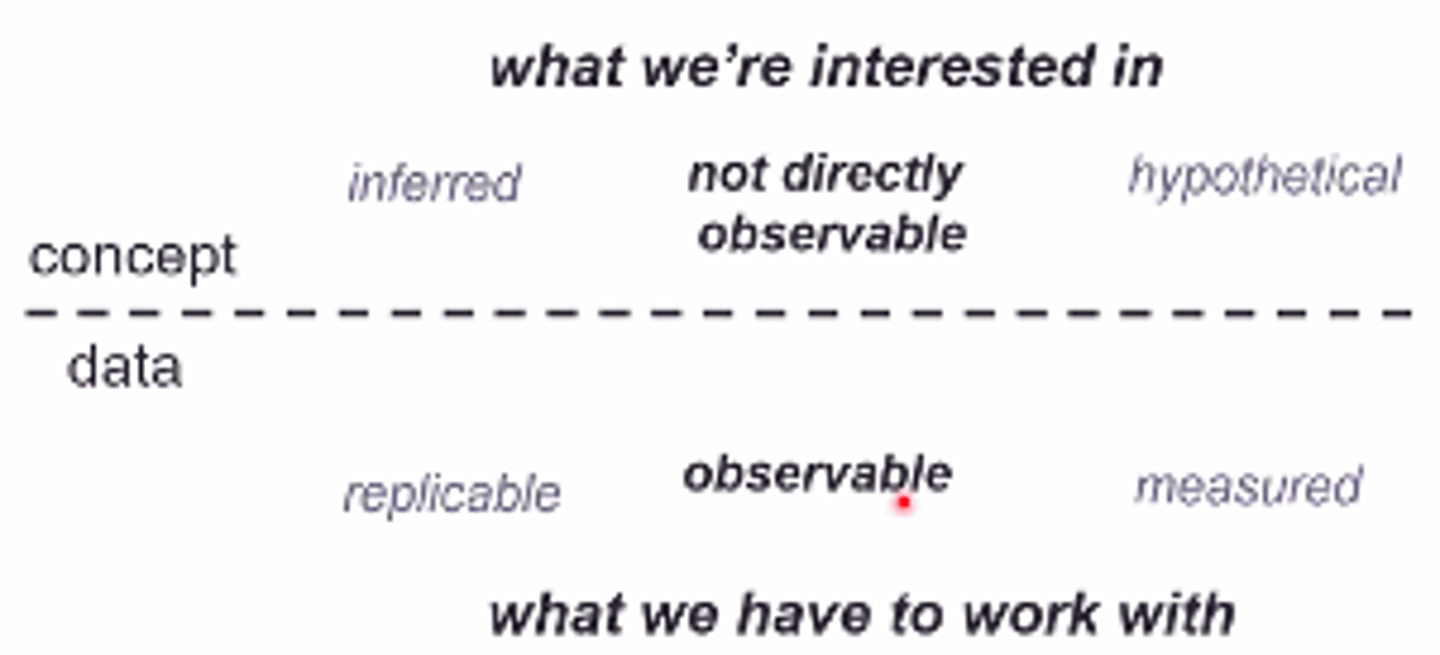
Operationalizing translates an ______ _______ into some ______ ______
unobservable concept; observable measure
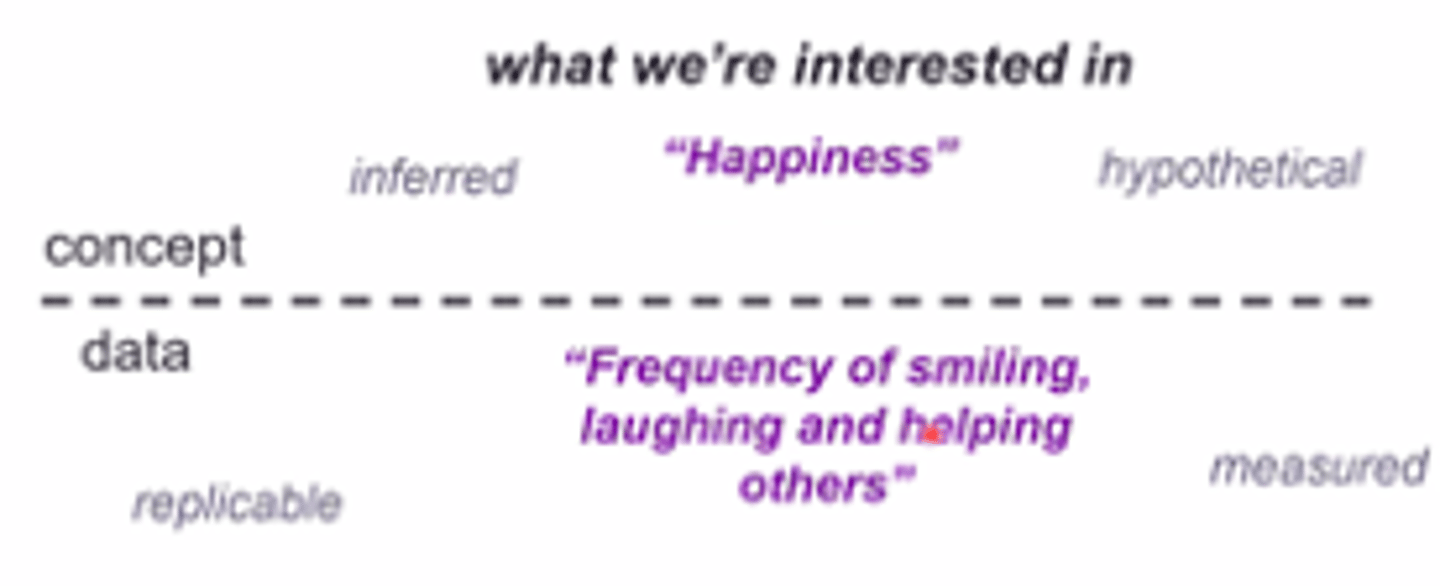
Example of operationalizing: claim from delay of gratification in children
Pre-school children with more self-control are more likely to have higher grades, score higher on the SAT a decade later, and are more able to cope with social and personal problems
Types of claims
1. frequency claims
-- how often does something happen?
-- e.g. How happy are college students?
2. association claims
-- what types of things happen together?
-- e.g. what is the relation between Facebook use and happiness?
3. causal claims
-- what causes something to happen
-- e.g. Does Facebook use cause happiness to decrease?
The type of claim that can be made depends on what?
the type of study conducted, the data collected, and the theory being investigated
More on types of claims
research on a theory often produces multiples types of claims
theories can make predictions that involve each of the three types of claims
The more diverse is the support, the stronger the claim
Frequency claims
How often does something happen?
statements of how common a behavior, occurrence, etc. is
collect data: do you have a twitter account?
-- frequency claim: __% of students in class have a twitter account
frequency claims are about a single variable
no attempt to say what causes that level of variable; merely a statement of how often something is --> freshman retention rate
often used to draw attention to prevalence --> 1 in 68 children are identified with ASD
A frequency claim is a description of data collected
-- often need to infer from frequency in a sample to the population (depression rates in the world)
-- only as useful as the operation definition used to collect the data (depressed mood must last longer than two weeks and requires four other changes in functioning)
A researcher claims that 5% of the children in the world are happy. The researcher defines a child’s happiness as whether or not a child laughs when they tickle themselves. Why is this a useless claim?
Association claims
suggest that there is a link between two variables
pair of frequency claims. The frequency of one variable is somehow tied to the frequency of another
does not argue for causality; there is no claim of a direction of the relations
use words like is linked to, is associated with, goes with, may predict
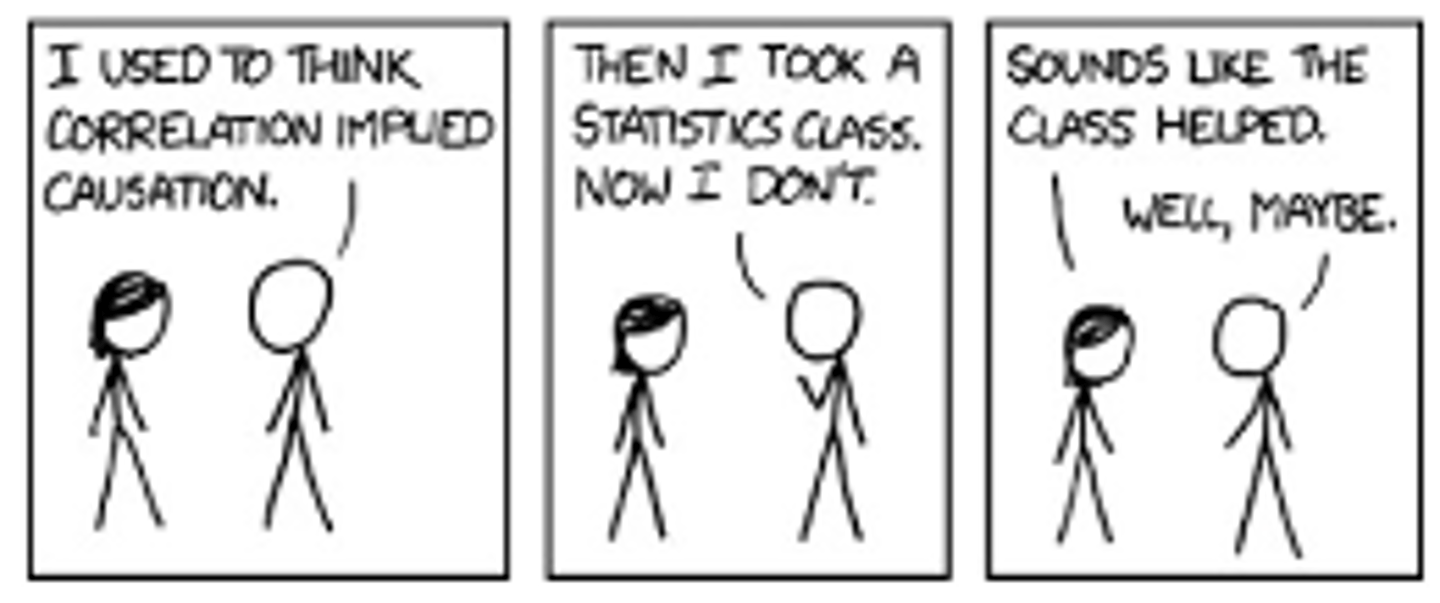
examples of associated claims
people who stay awake in class are more likely to receive high grades; cute dogs receive more treats; reading to your kids is linked to better school performance; Facebook use may predict happiness
How are association claims represented
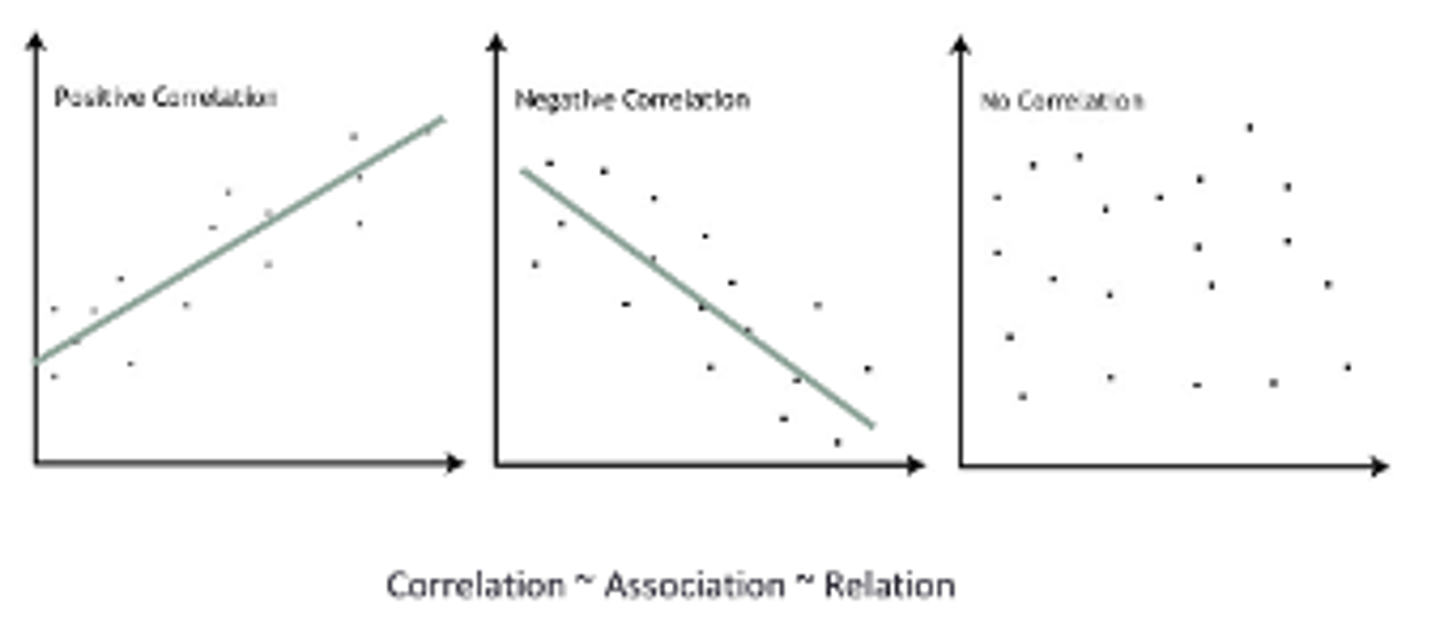
by scatterplots
overall pattern of a scatterplot can be described by its form, direction, and strength
-- form: we mostly focus on linear relationships
-- direction: positive, negative, no relation
The way a variable is ____ can affect the direction of the correlation
operationalized
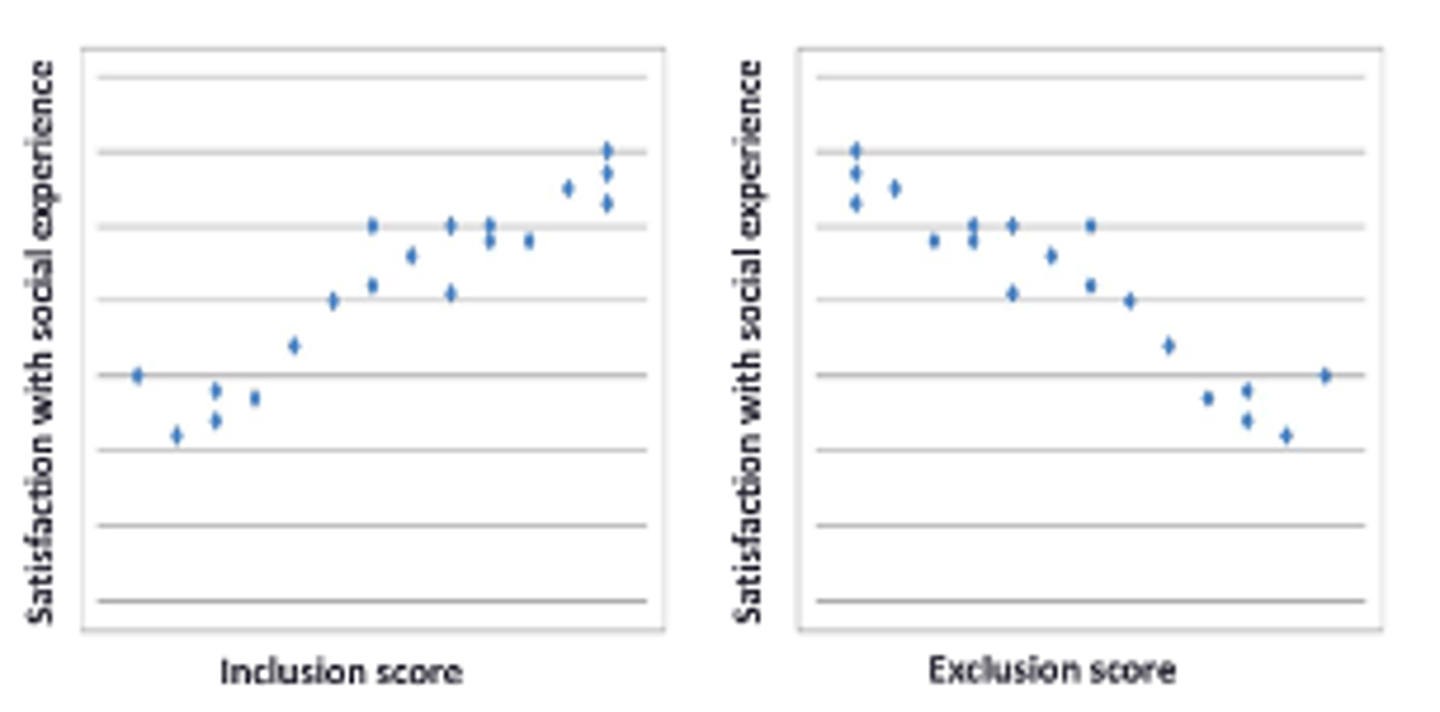
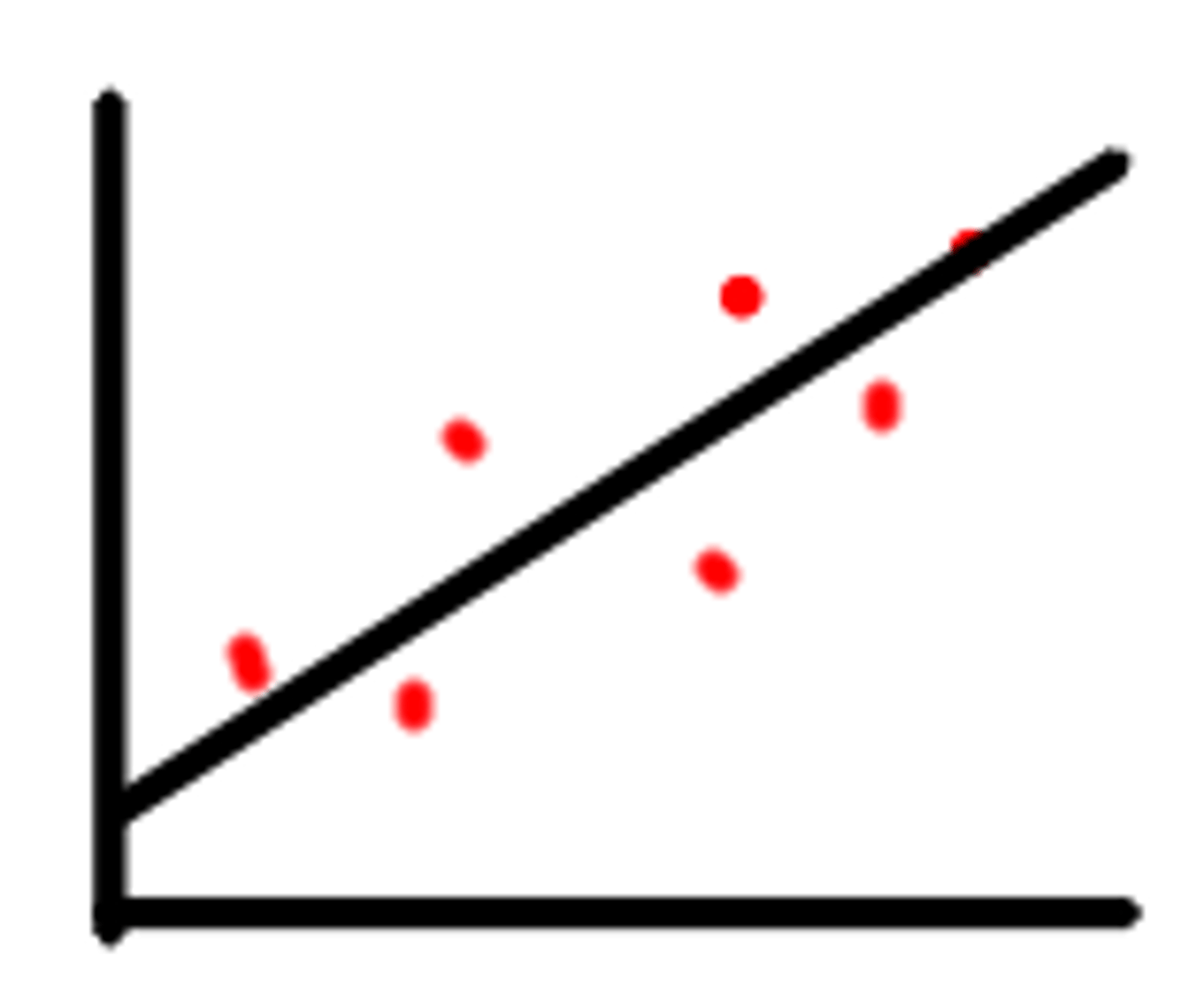
positive correlation
A correlation where as one variable increases, the other also increases, or as one decreases so does the other. Both variables move in the same direction.
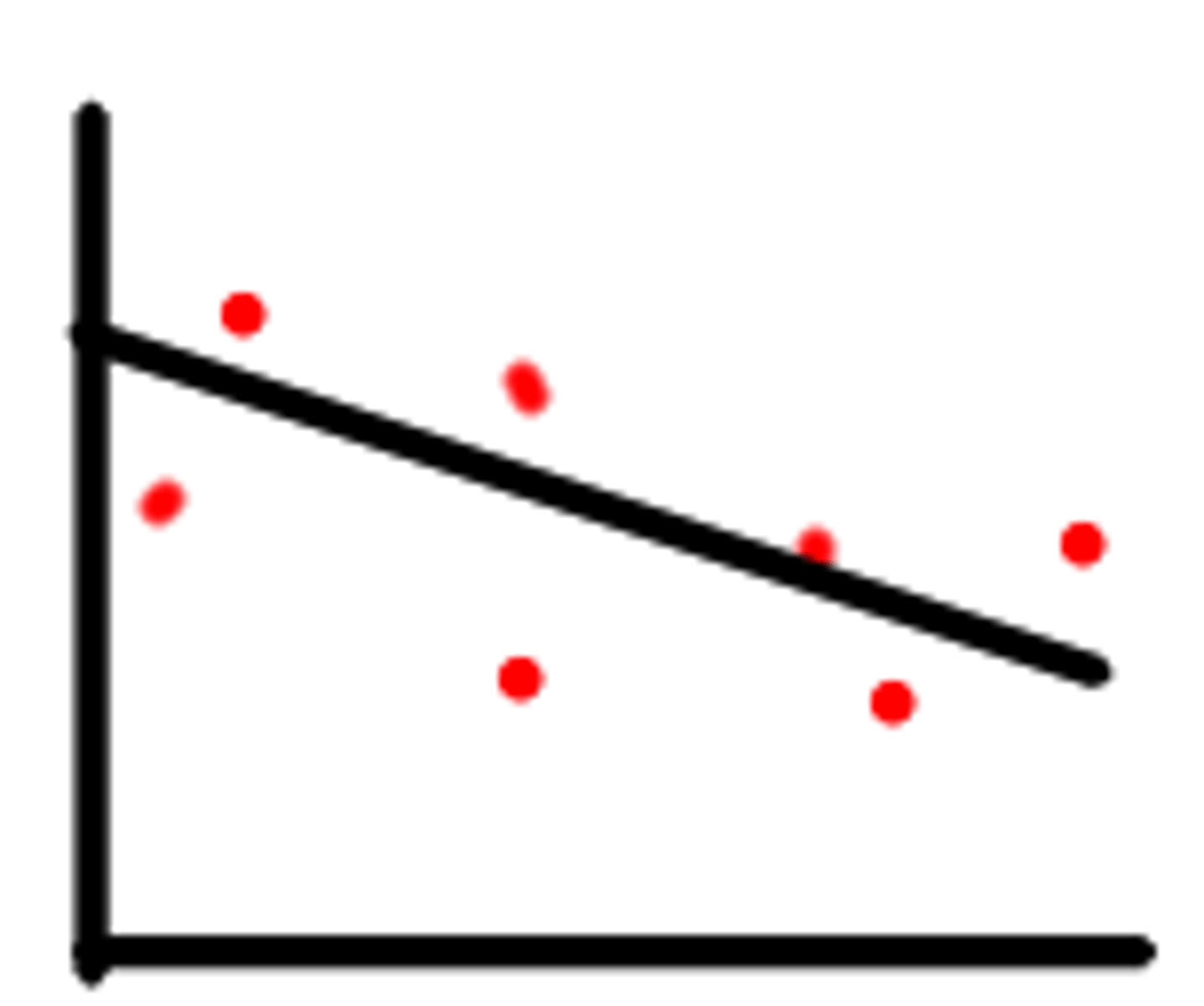
negative correlation
the relationship between two variables in which one variable increases as the other variable decreases. Both variables move in opposite directions
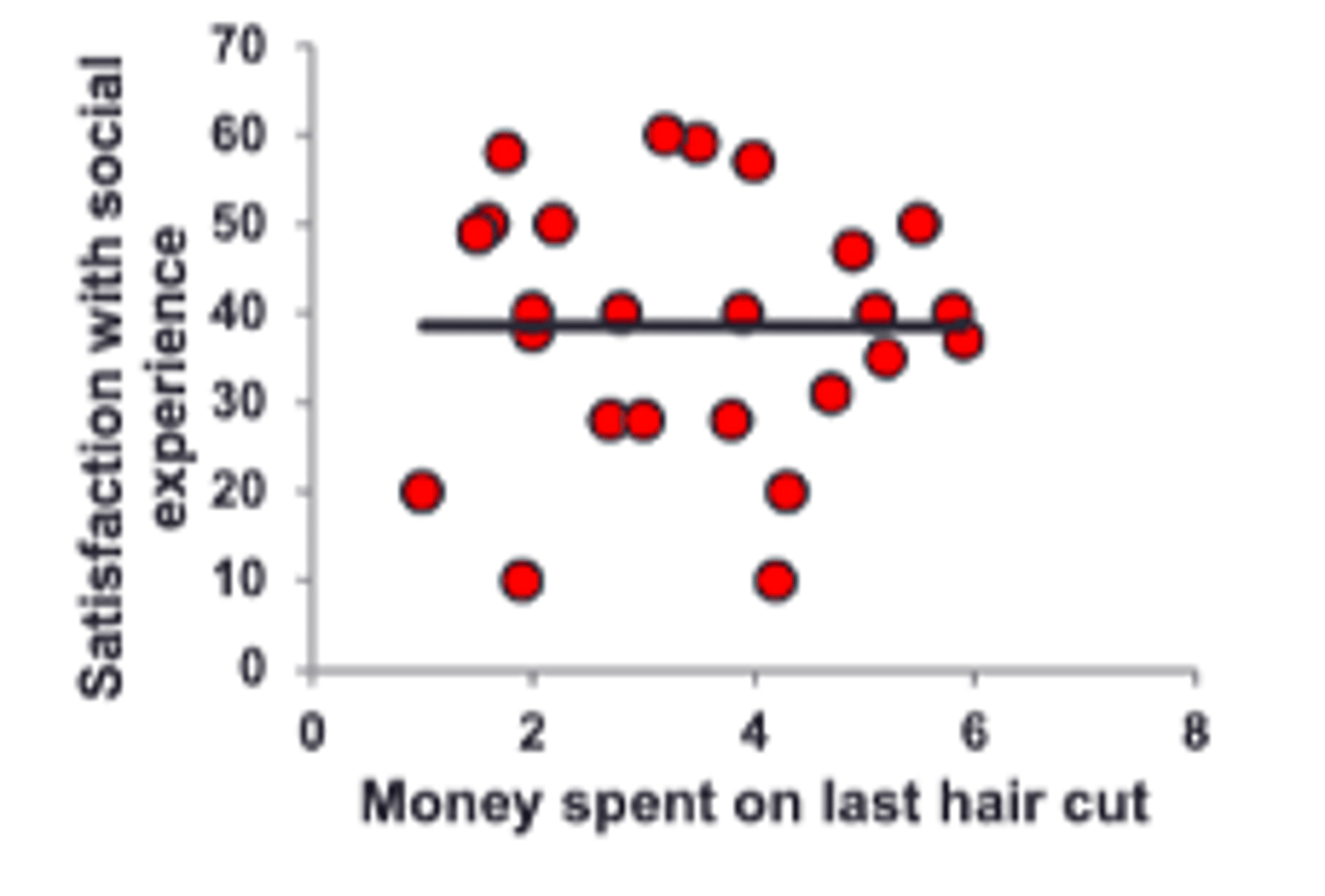
No correlation
the value of one variable gives us no information about the value of the other variable
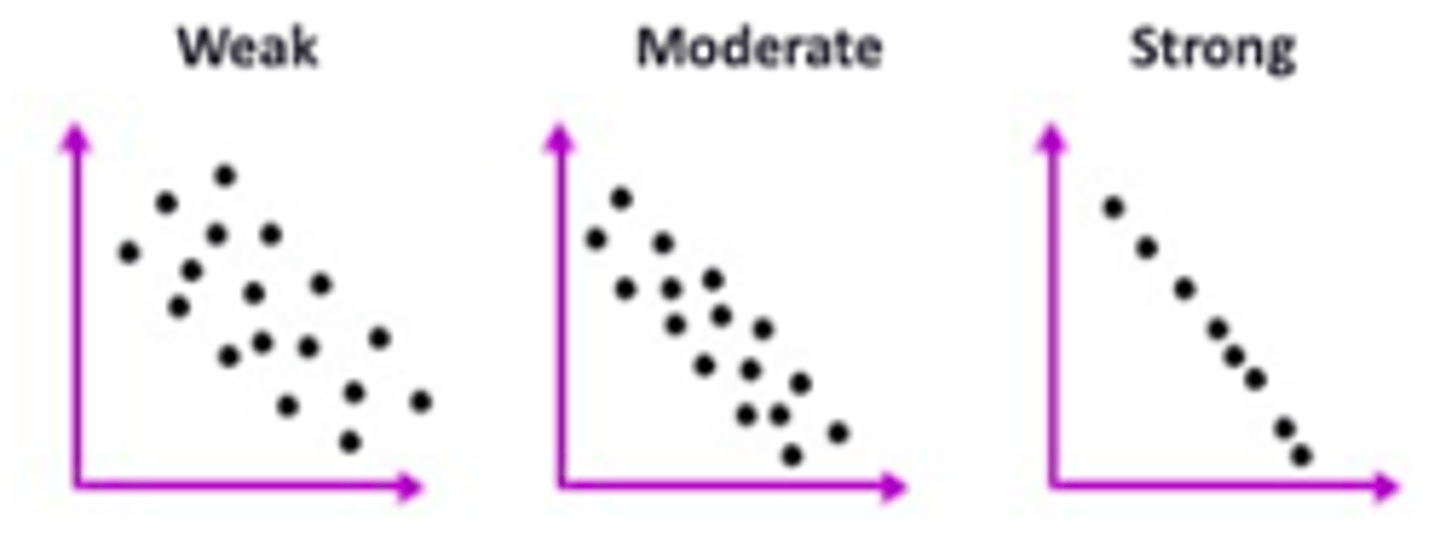
Strength
the strength of a correlation is determined by its consistency (how noisy), not by the slope of the line (how steep) or direction
How is strength measured?
by Pearson's r (or r^2)
-- a greater absolute value of r signals a stronger correlation
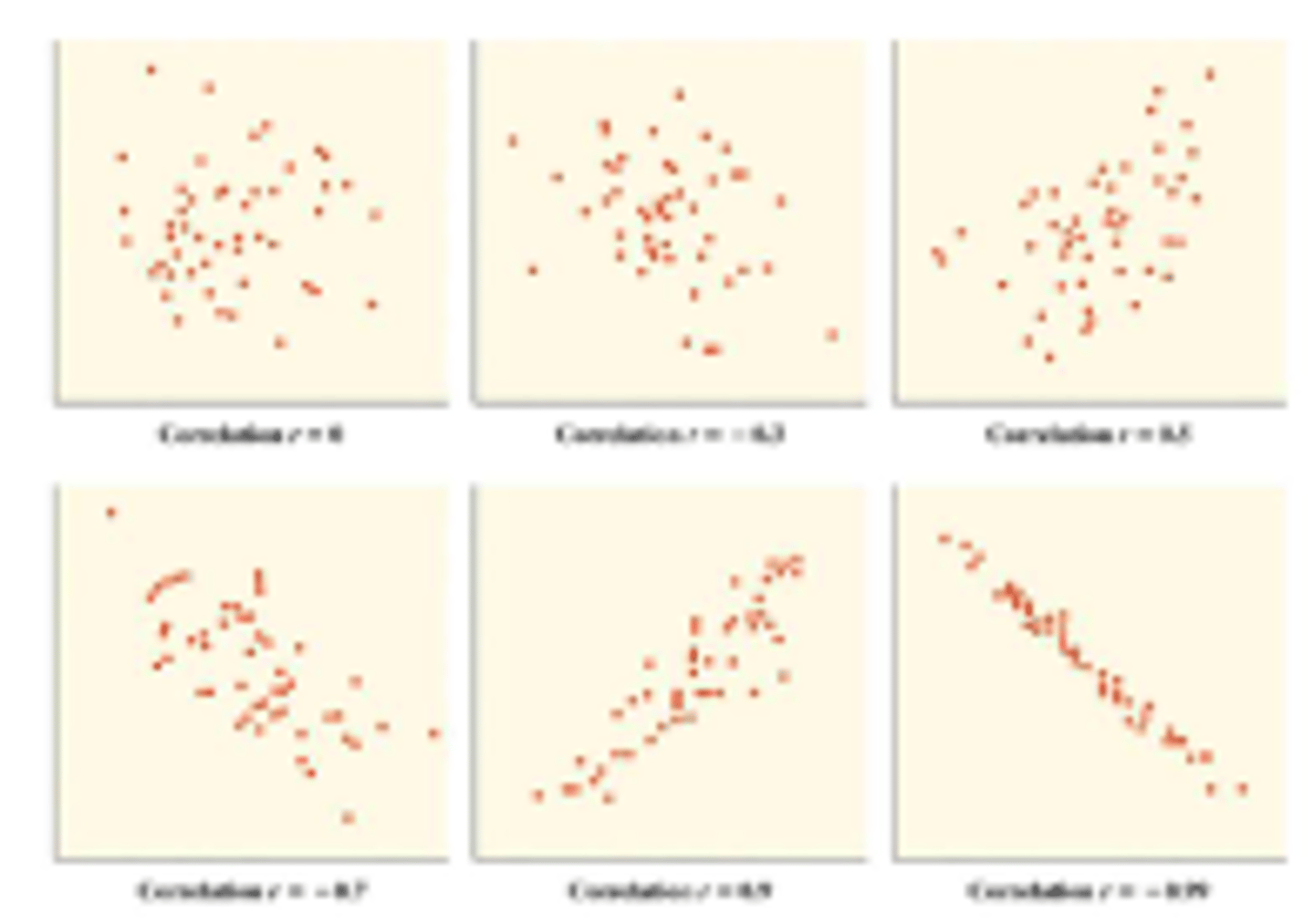
Associations claims do not always state why the relationship exists.
several possibilities:
-- 1. one variable causes the other
-- 2. both variables caused by a third factor
-- 3. coincidental relationship (or unexplained third factor)
One variable causes the other
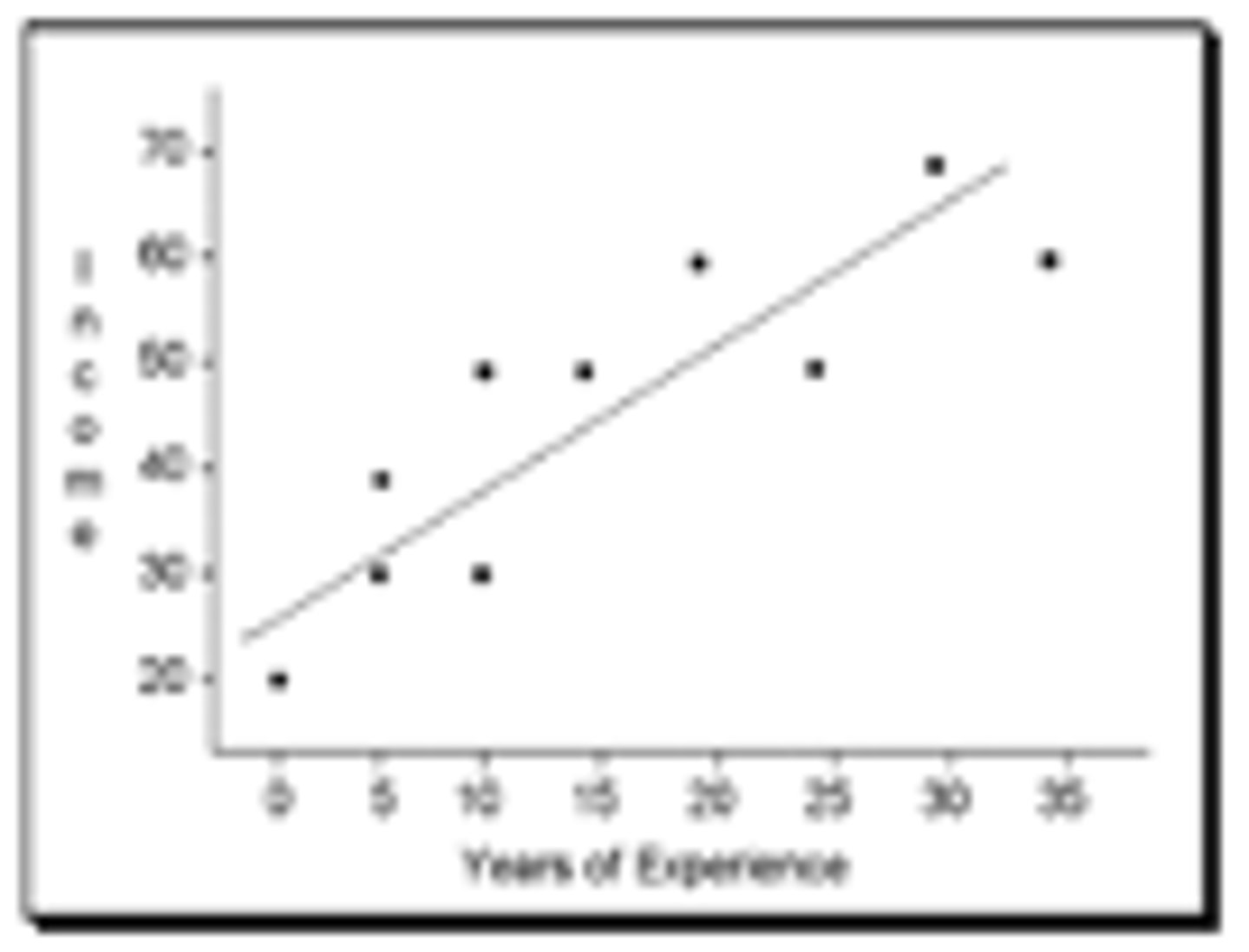
Both variables caused by a third factor
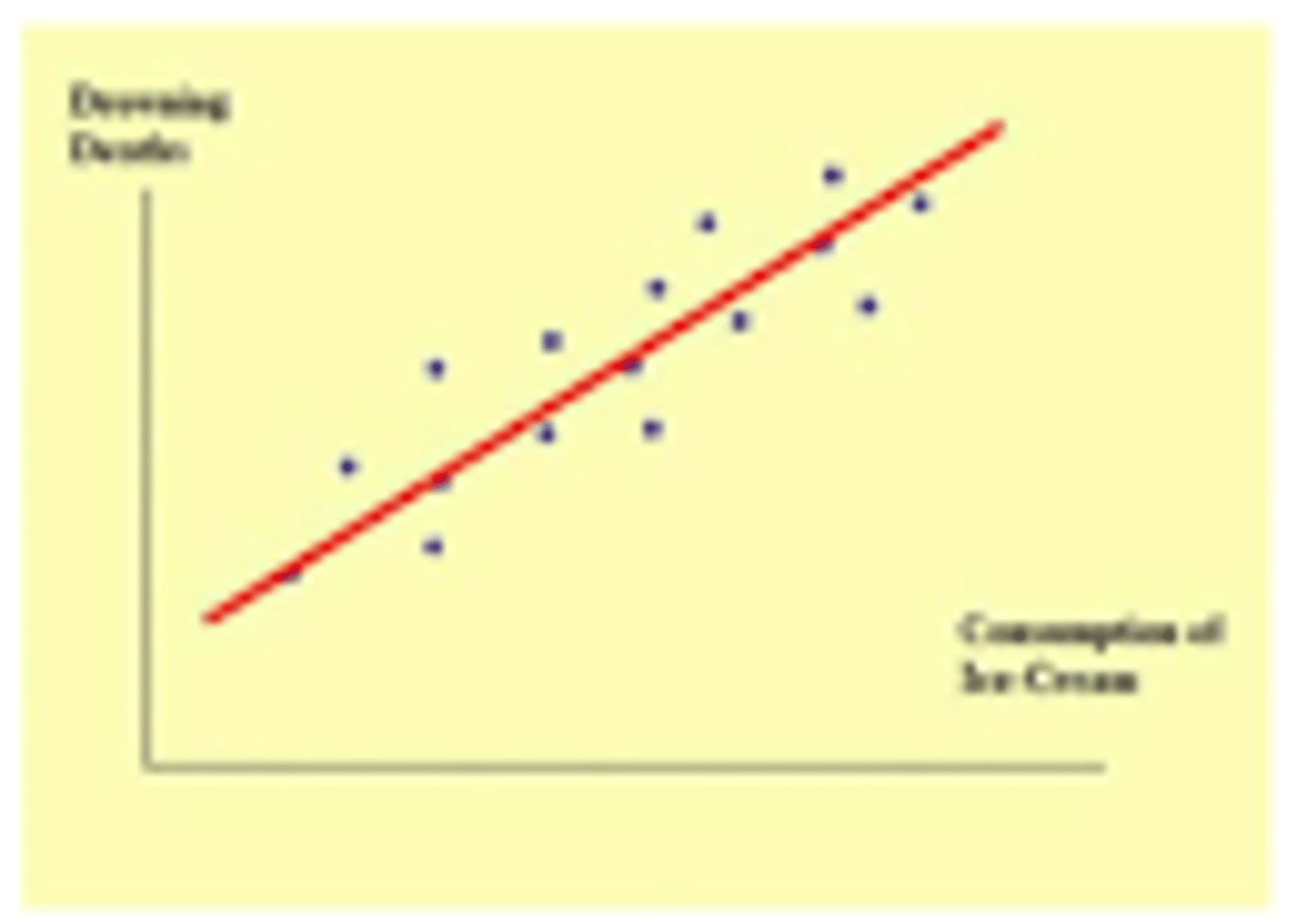
Number of hot summer days is the third factor
-- not a direct relationship between ice cream consumption and number of drowning deaths
Another example: third variable in this relationship: hair length and height
-- men vs. women