Lab final; echinodermata and chordata
 Call Kai
 Learn
Learn Practice Test
 Spaced Repetition
 Match
Match Flashcards
 Knowt Play
1/17

There's no tags or description
Looks like no tags are added yet.
Name | Mastery | Learn | Test | Matching | Spaced | Call with Kai |
|---|
No analytics yet
Send a link to your students to track their progress
18 Terms
Phylum Echinodermata
Spiny skin”
•Triploblastic, deuterostomes
•(Penta-) radial symmetry
•Oral and aboral axis
•All marine and sedentary
•CaCO3 endoskeleton
surrounded by skin
-Madreporite for water
intake
•Water-vascular system for
locomotion/prey capture
•Tube feet
madreportie
sieve like structure where the water vascular system opens out to
water vascular system
A system of fluid-filled tubes in an echinoderm's body.
tube feet
branches of water vascular system that function in locomotion, feeding and respiration
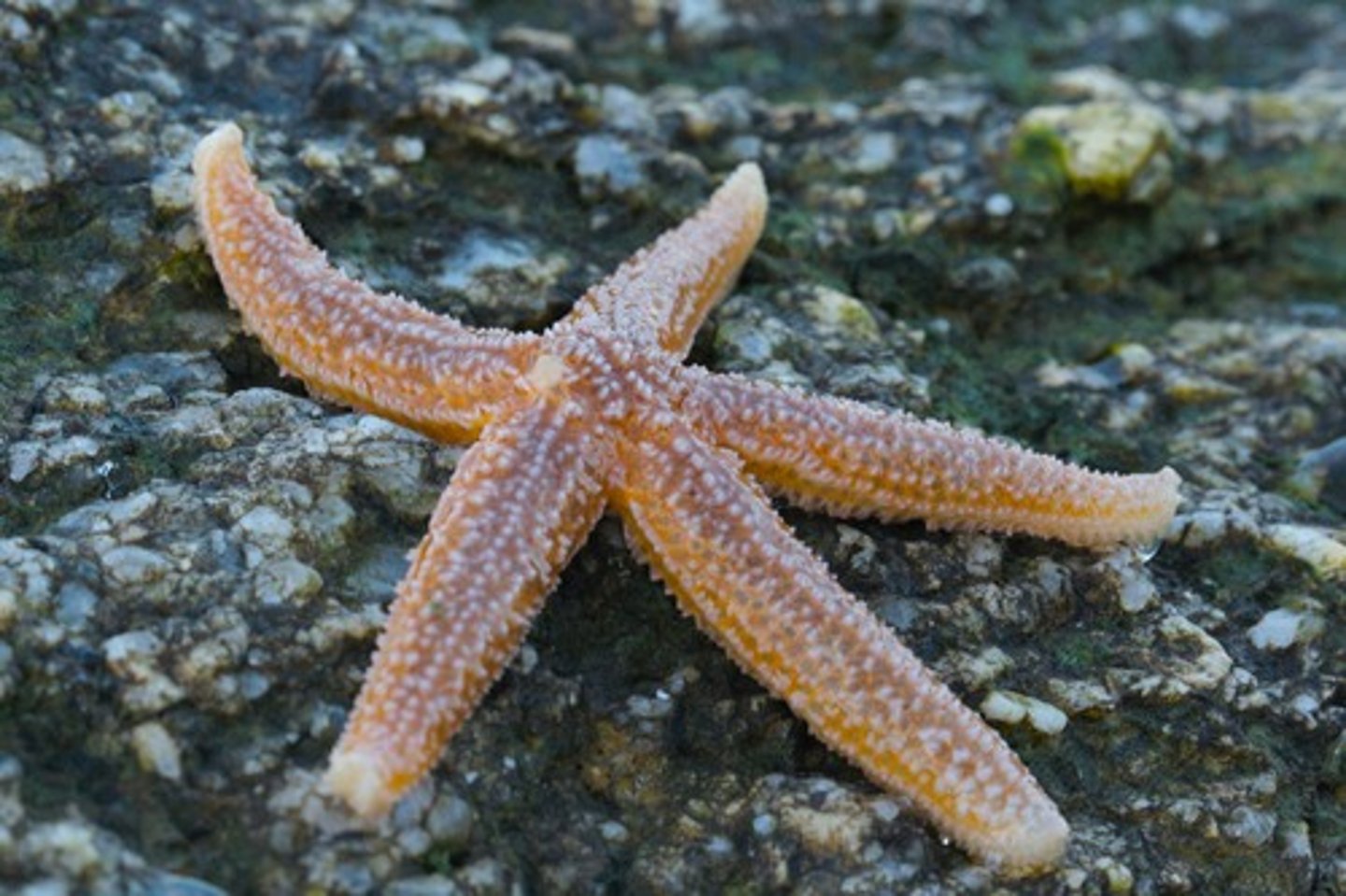
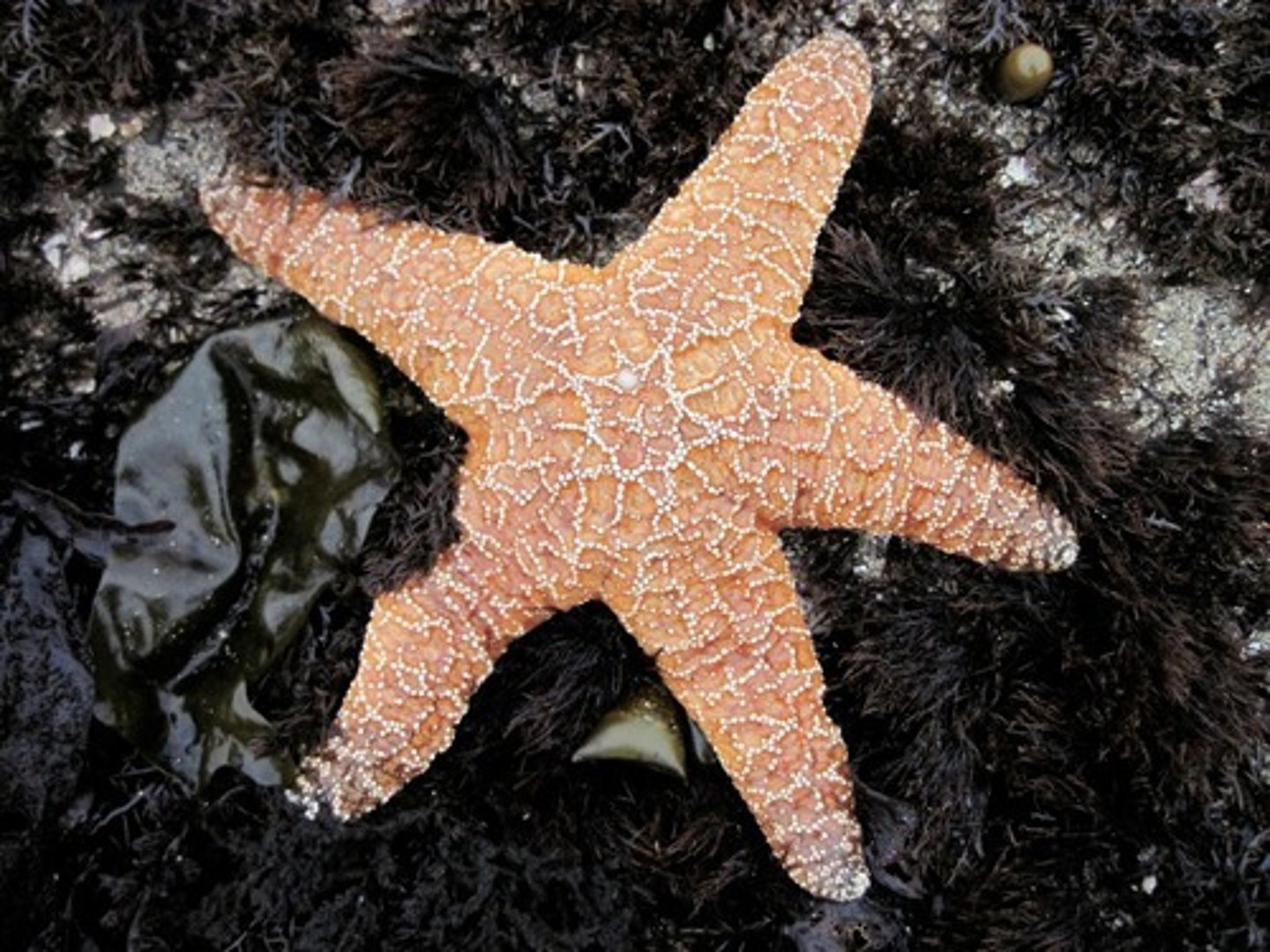
Phylum Echinodermata, Class Asteroidea
"Star like"
•Sea stars; star-shaped with
broad arms
•Tube feet with suckers for
movement
•Anus and madreporite on
aboral surface
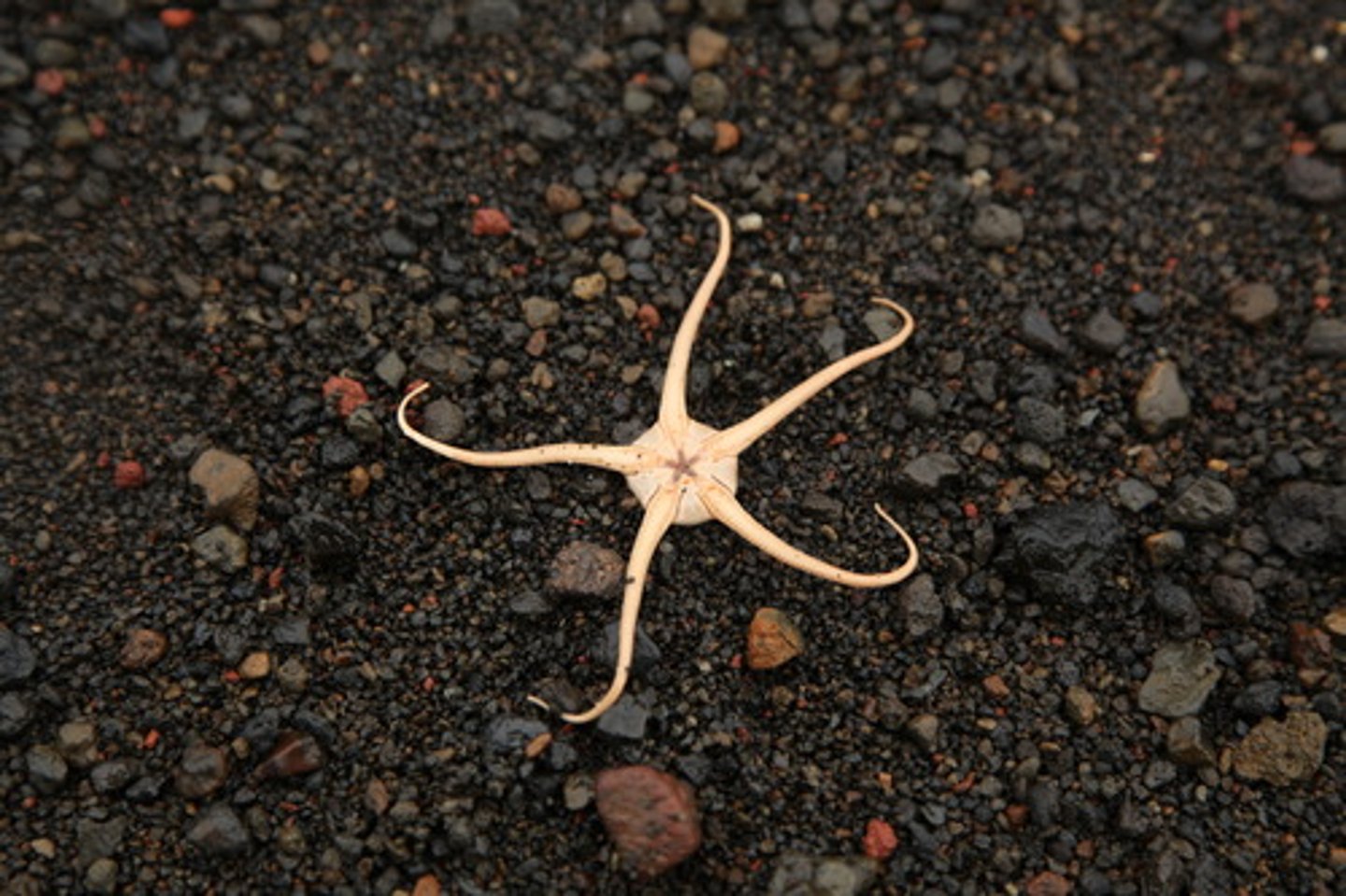
Phylum Echinodermata, Class Ophiuroidea
"Snake tail"
•Brittle stars; long, slender
arms
•Tube feet lack suckers, not
used for movement
•Madreporite on oral surface
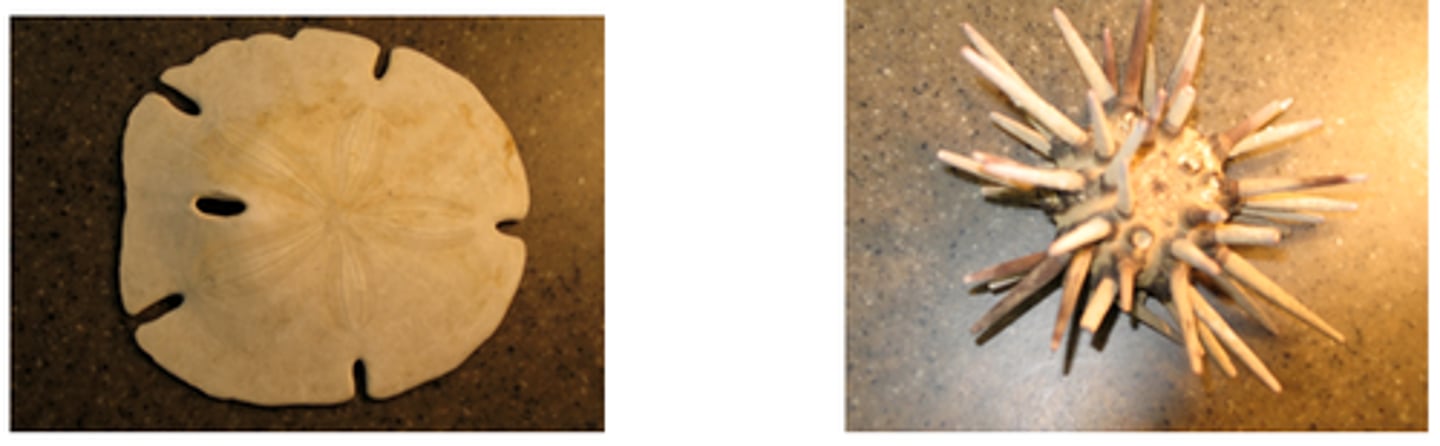
Phylum Echinodermata, Class Echinoidea
"Spiny"
•Sand dollars and sea urchins
•Spherical or disc-shaped; no
arms
•Compact endoskeleton (test)
•Tube feet with suckers
•Aristotle's lantern
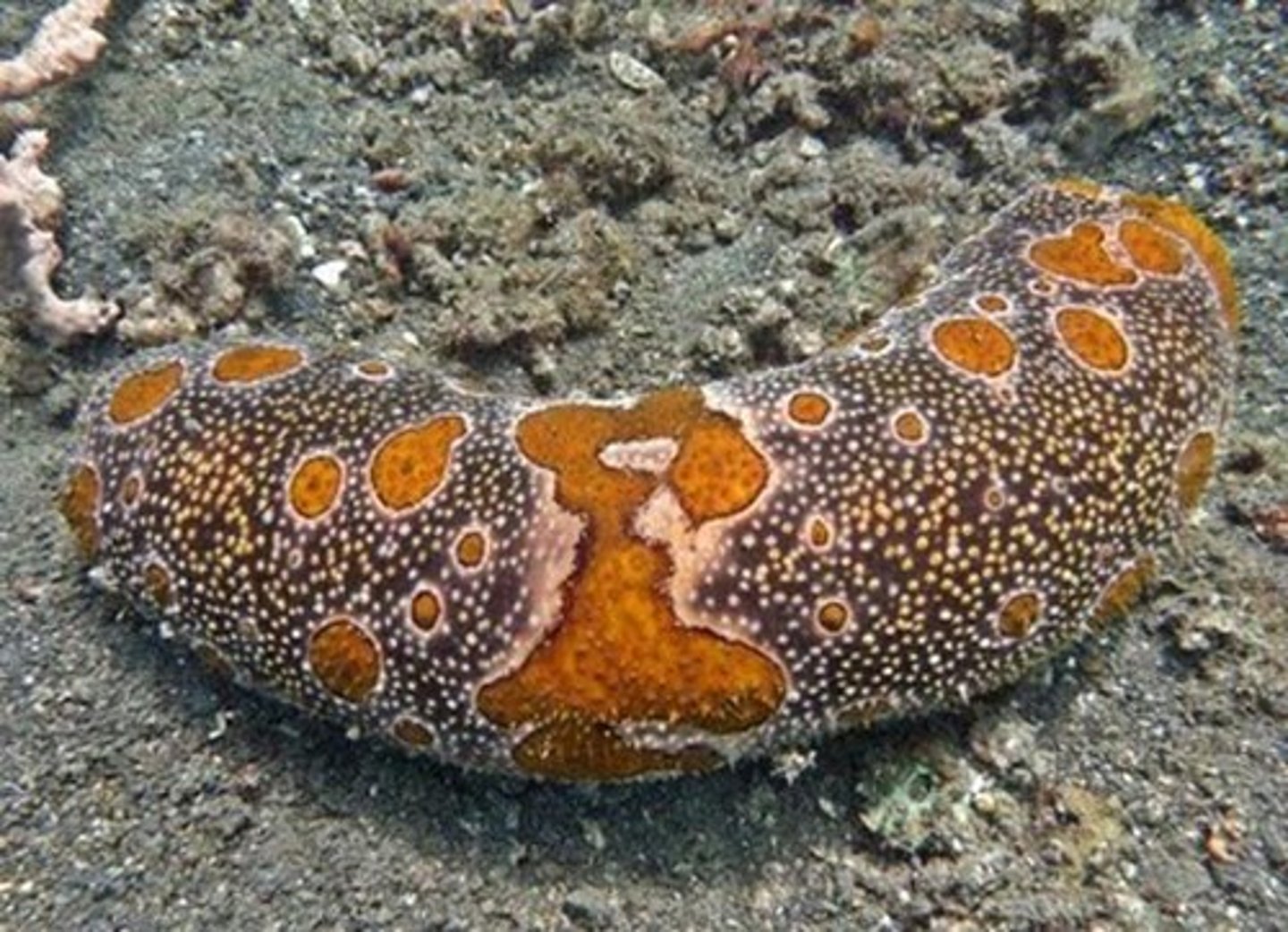
Phylum Echinodermata, Class Holothuroidea
"Violent expulsion"
•Sea cucumbers
•Soft, cylindrical body with no
arms or spines
•Internal madreporite
•Respiratory tree
•Tube feet w/ suckers
Phylum Chordata
Four defining characteristics:
•Notochord
•Dorsal, hollow nerve cord
•Pharyngeal gill slits
•Post-anal tail
•All representatives have a
closed circulatory system
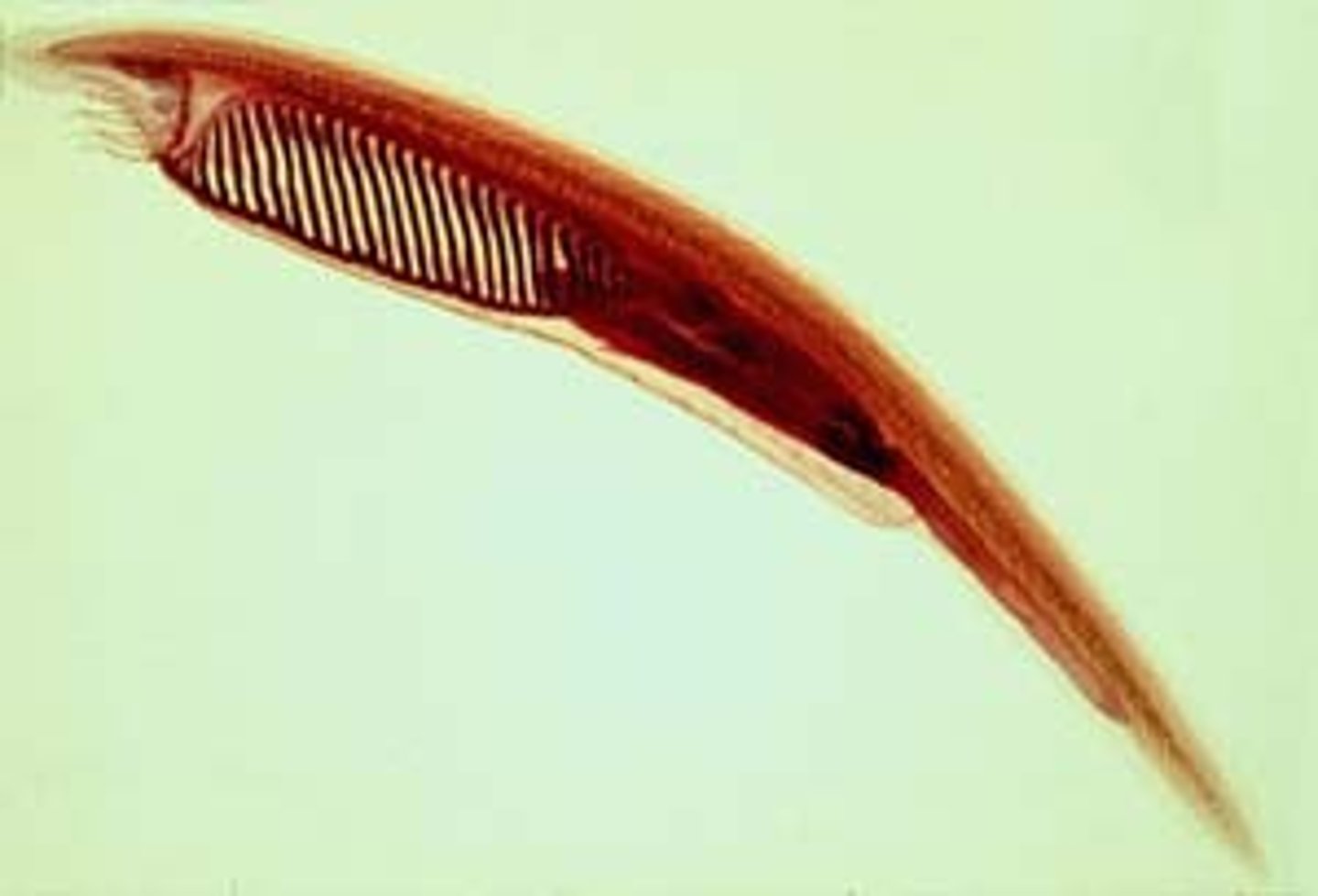
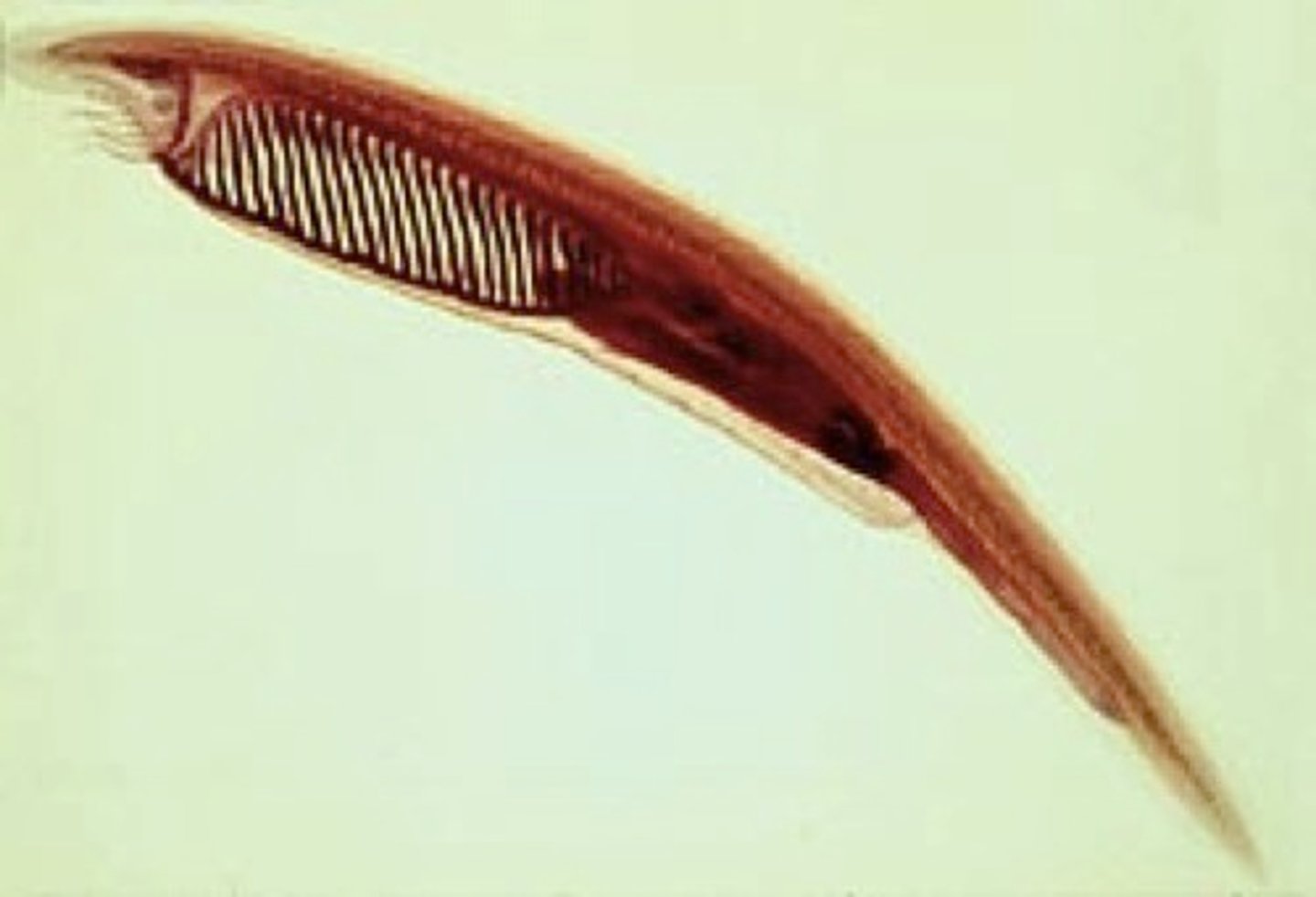
Phylum Chordata, Subphylum Cephalochordata
Lancelets (amphioxus)
•Benthic, marine, filter
feeders
•Feed similarly to tunicates
Phylum Chordata Sublphylum Tunicata
Tunicates (sea squirts)
•Sessile, marine, filter
feeders
•Hard tunic made of
cellulose
•Water pumped into pharynx
and trapped in gill slits
Subphylum Vertebrata
Clade Craniata
•Cranium - a skull
surrounding the brain
•Endoskeleton (cartilage
or bone), including
vertebrae
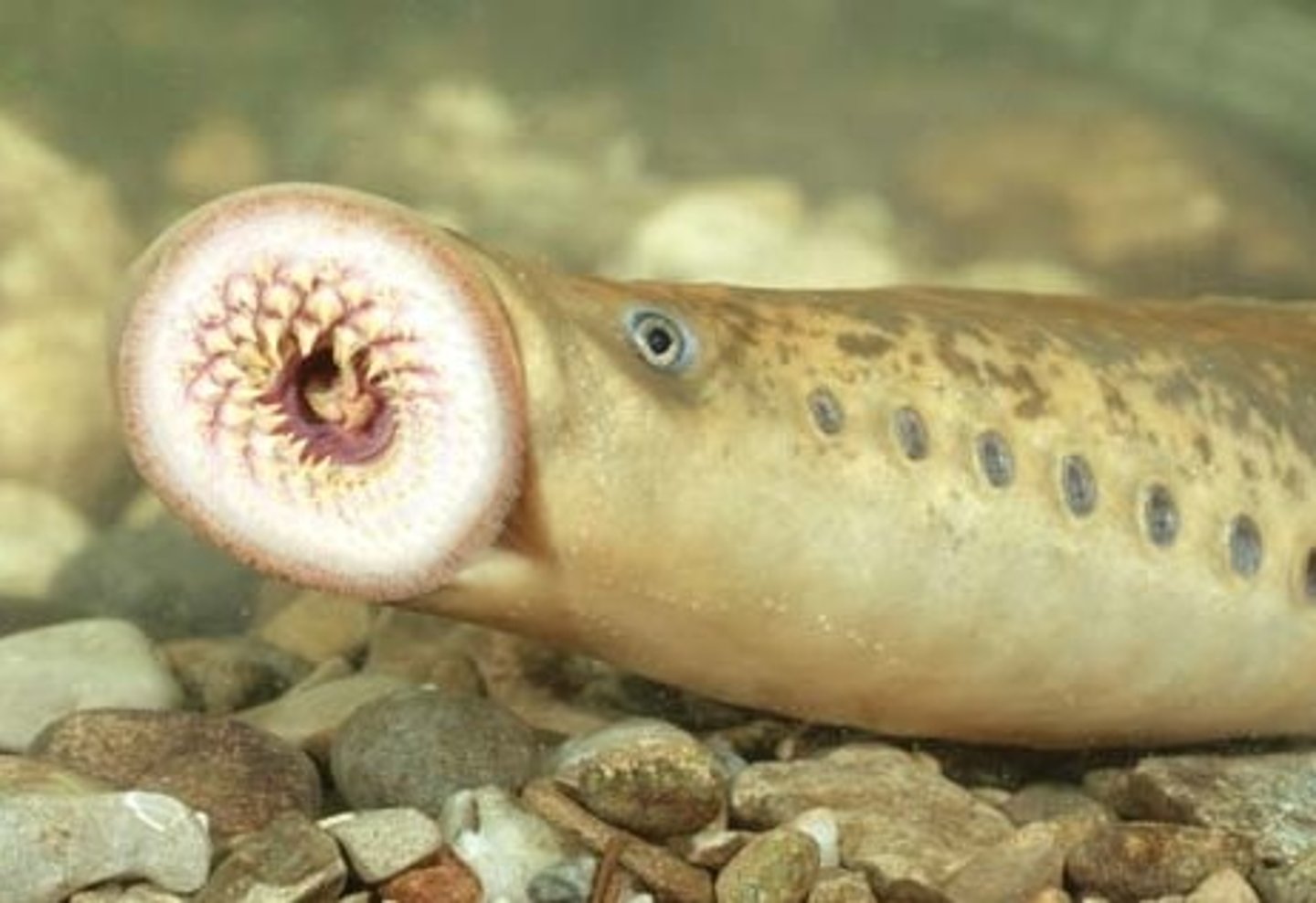
Phylum Chordata, Subphylum Vertebrata, Class Agnatha
•Lampreys and hagfish
•Jawless fish
•Funnel-shaped mouth lined
with keratinized "teeth" and
protrusible tongue
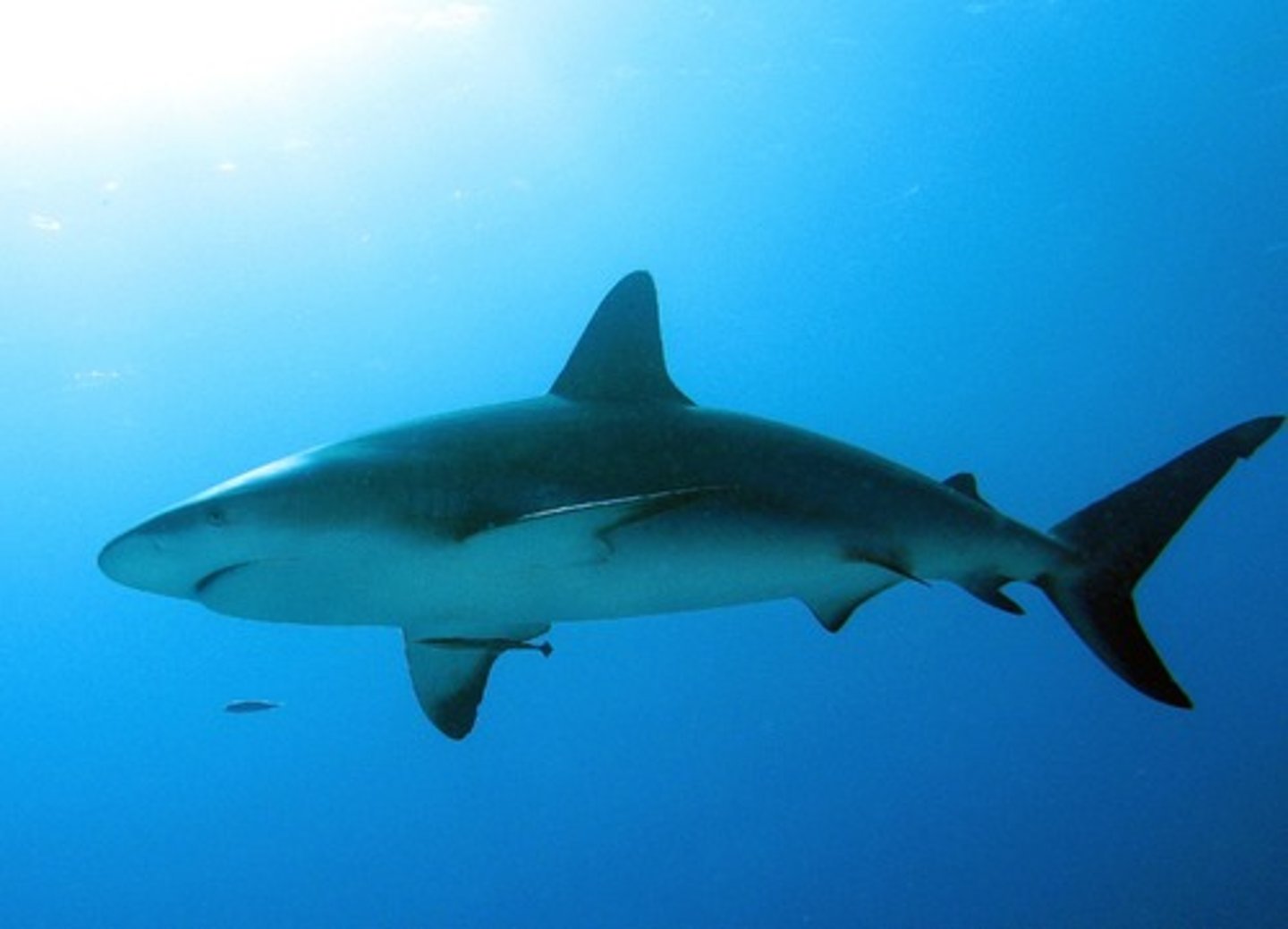
Phylum Chordata, Subphylum Vertebrata, class Chondrichthyes
•"Cartilage fish"
•Sharks, rays, skates
•Cartilaginous skeleton
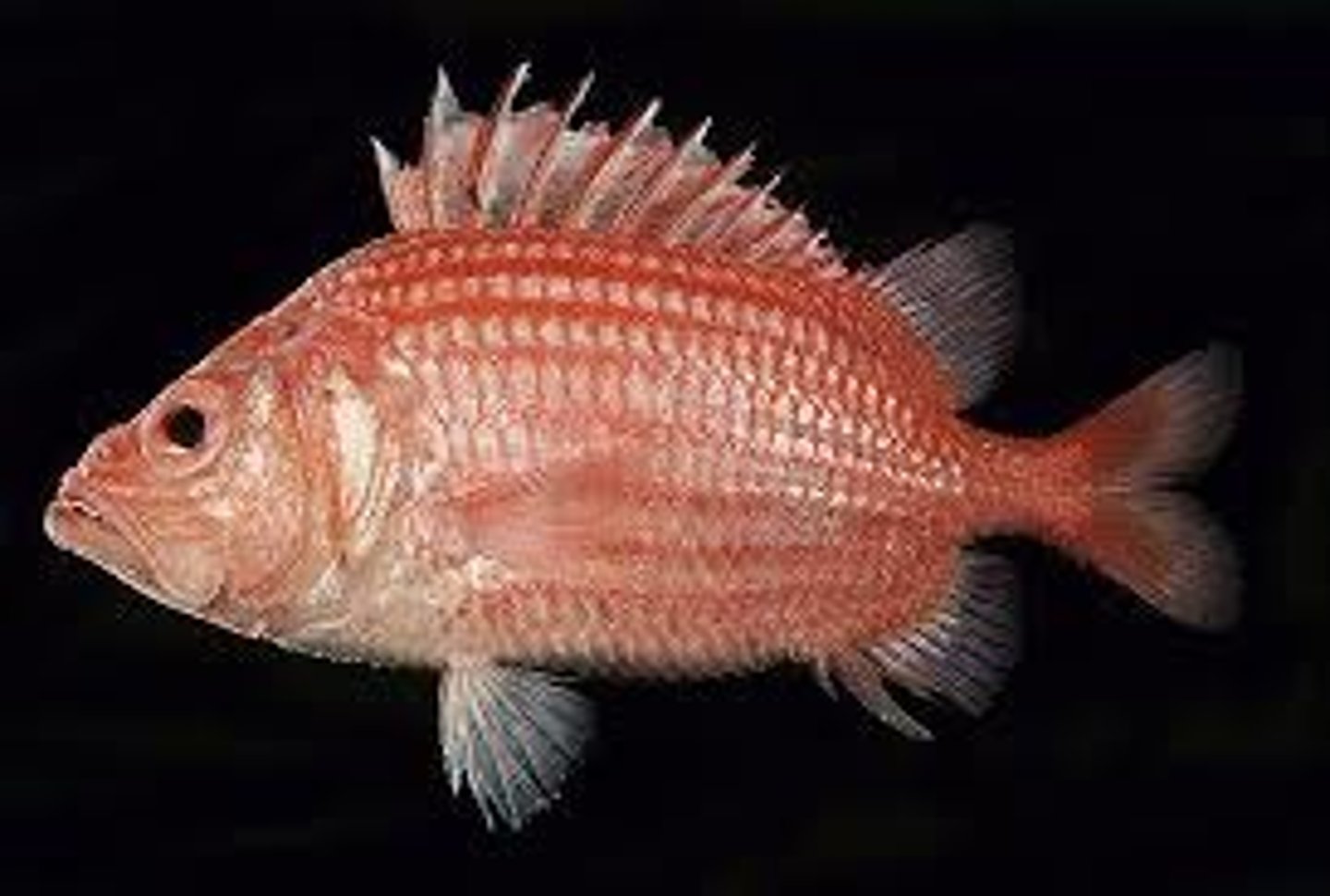
Phylum Chordata, subphylum vertebrata, class actinopterygii
•"Having ray fins"
•Ray-finned fishes
•Skeleton of endochondral
bone
•Scales of dermal origin
•Webbing between bony fin
rays
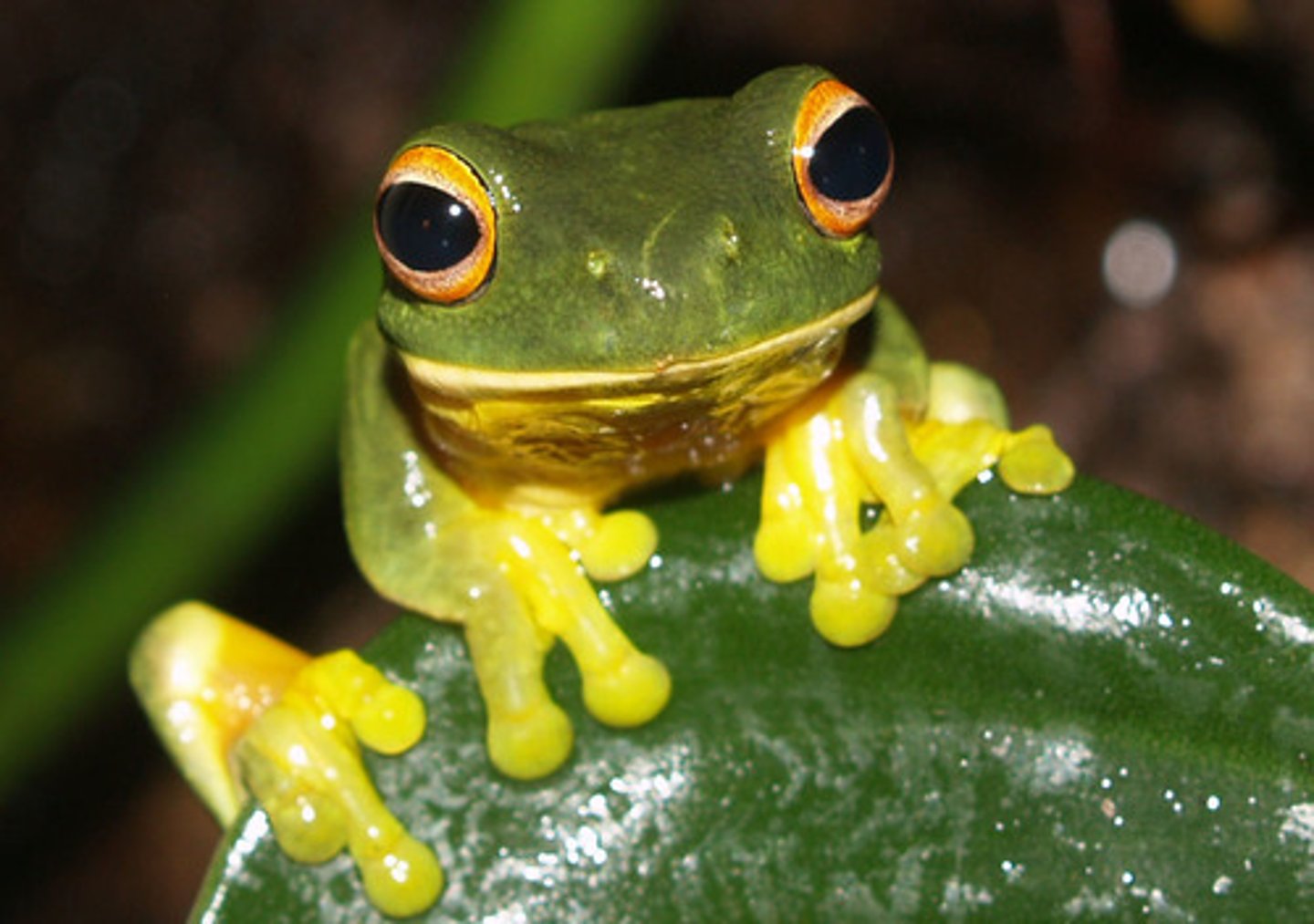
Phylum Chordata, Subphylum Vertebrata, Class Amphibia
•"Double life"
•Frogs, salamanders
•Typically have a larval form
•No covering on skin, but
mucous and toxic glands
•Lungs and limbs present
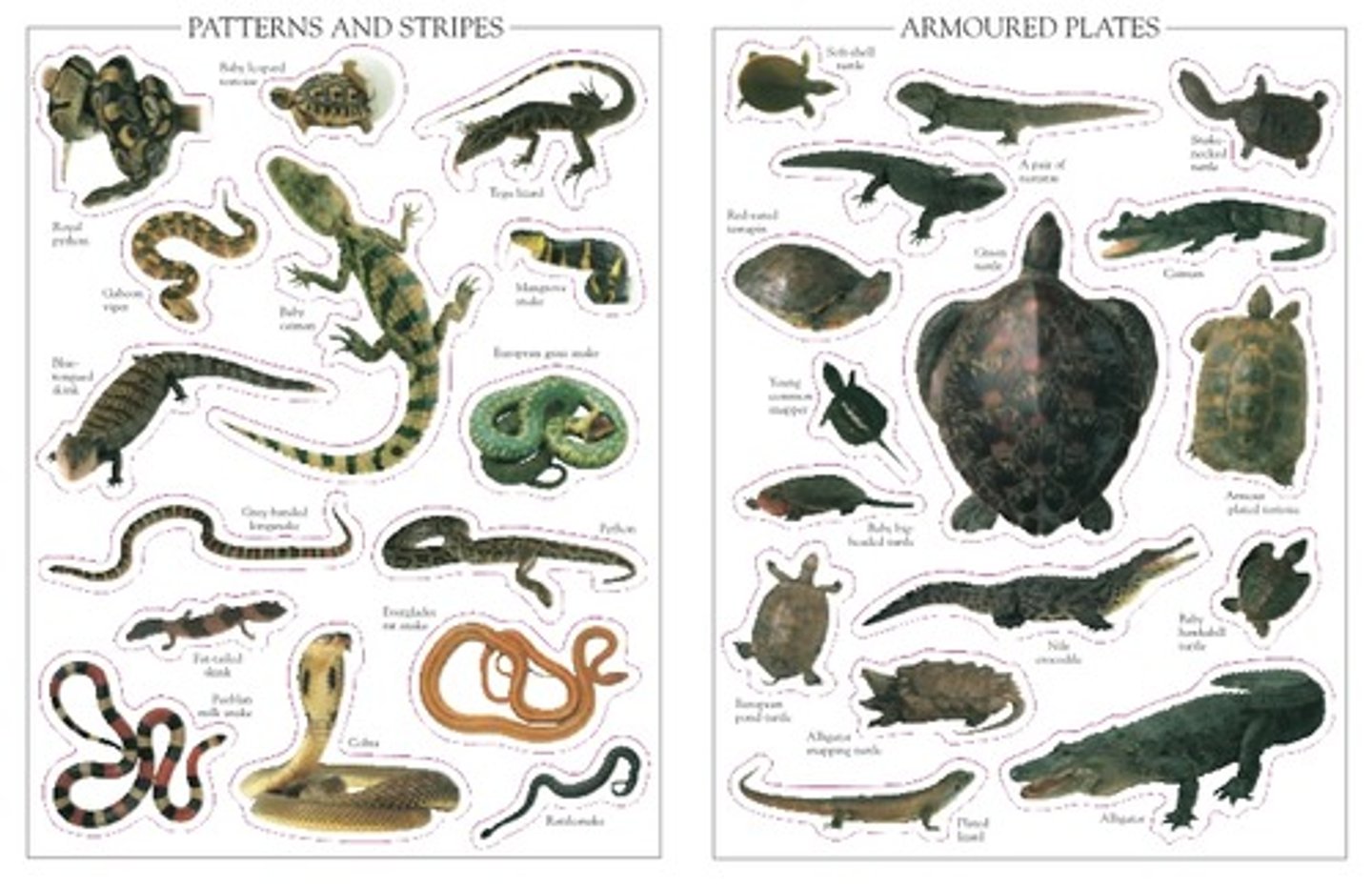
Phylum Chordata, Subphylum Vertebrata, Class Reptilia
•"Creeping"
•Snakes, lizards, turtles,
birds, tuatara, crocodilians
•Skin covered with structures
of epidermal origin
•No larval stage
•Complex nervous system
Phylum Chordata, Subphylum Vertebrata, Class Mammalia
•Endothermic with insulation
of hair (epidermal covering
of skin)
•Mammary and sweat glands
•Biconcave erythrocytes
•Largest relative brain
size/complexity