ADMET: Absorption Mechanisms
 Call Kai
 Learn
Learn Practice Test
 Spaced Repetition
 Match
Match Flashcards
 Knowt Play
1/17

There's no tags or description
Looks like no tags are added yet.
Name | Mastery | Learn | Test | Matching | Spaced | Call with Kai | Chat |
|---|
No analytics yet
Send a link to your students to track their progress
18 Terms
Why do we care about mechanisms of administration? (2)
- ensuring that the drug gets to the site of action
- knowledge of transport proteins can help us improve BA in drug development, lowering doses needed to achieve therapeutic benefits
Objective
Pharmacokinetics
the study of the absorption, distribution, metabolism, and elimination of drug in or from body
- What the BODY does to the DRUG
Objective
Pharmacodynamics
describes the effects of a drug on the body
T/F: Toxicity and drug-drug interactions (DDIs) are only pharmacokinetic
FALSE
toxicity can be either pharmacokinetic (ex. inhibition of metabolism) or pharmacodynamic (ex. synergistic pharmacological effects)
Objective
What is bioavailability? BA
the fraction or percentage of the amount of drug administered that enters systemic circulation
Objective
First-pass effect
the removal of a fraction or % of drug before it reaches the systemic circulation
Enteral
- oral (PO), by mouth
- delivered via the alimentary canal
Parenteral
- non-oral
- includes administration routes such as IV/IA, IM, IT, SC
Objective
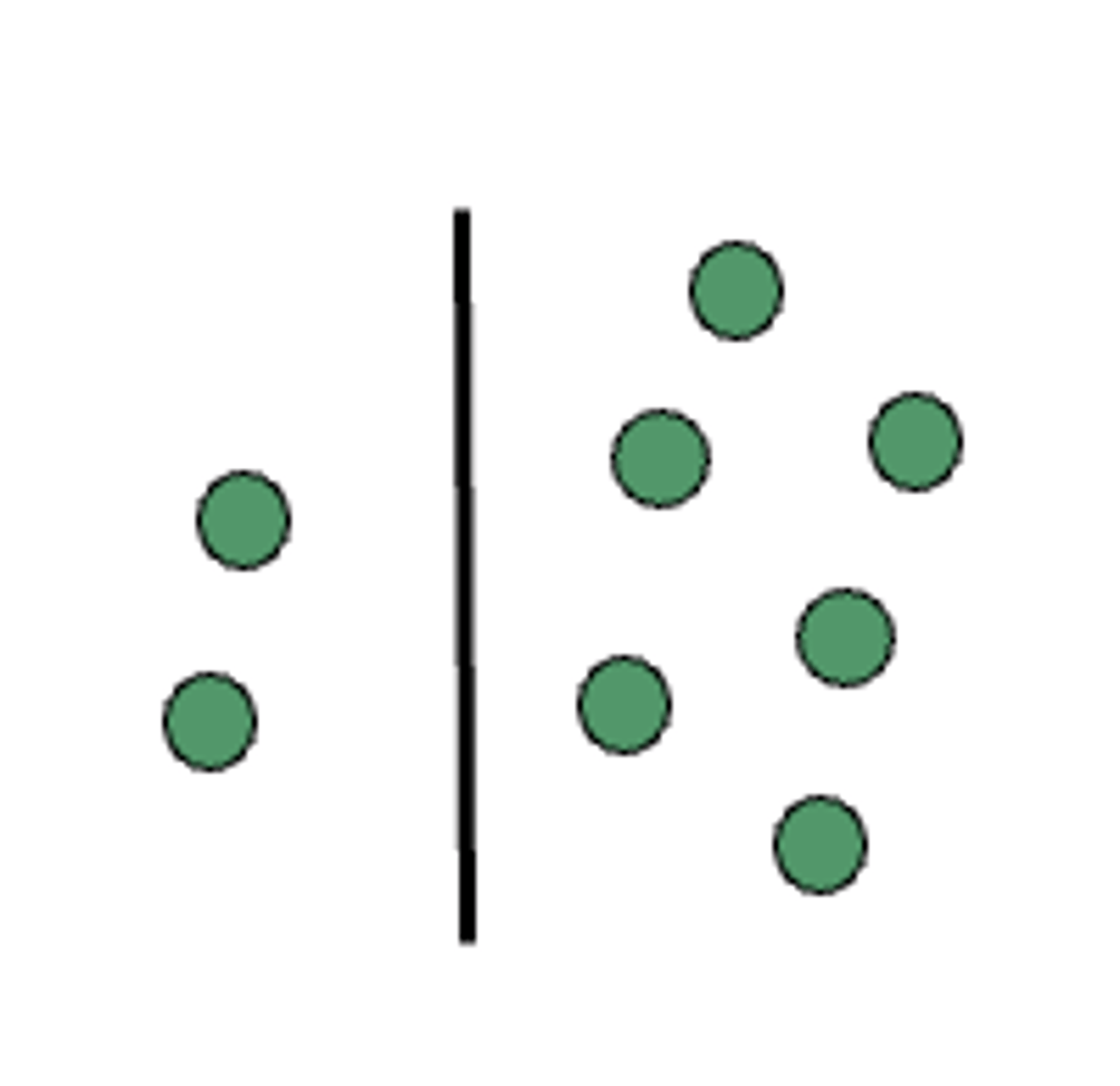
Passive diffusion is believed to be the primary mechanism of....
absorption for most drugs and biomolecules
Objective
The amount of drug absorbed is directly proportional to the magnitude of: (4)
- concentration gradient across membrane
- partition coefficient (logP) of drug
- cell/membrane surface area
- pH and pKa (for ionizable compounds)
Objective
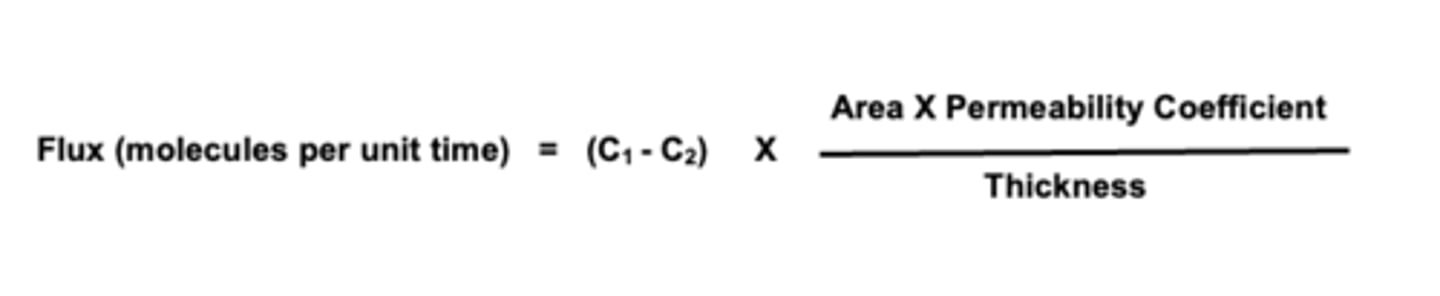
Fick's law of diffusion equation
Flux (molecules per unit time) = (C1-C2) x Area X Permeability Coefficient/Thickness
Objective
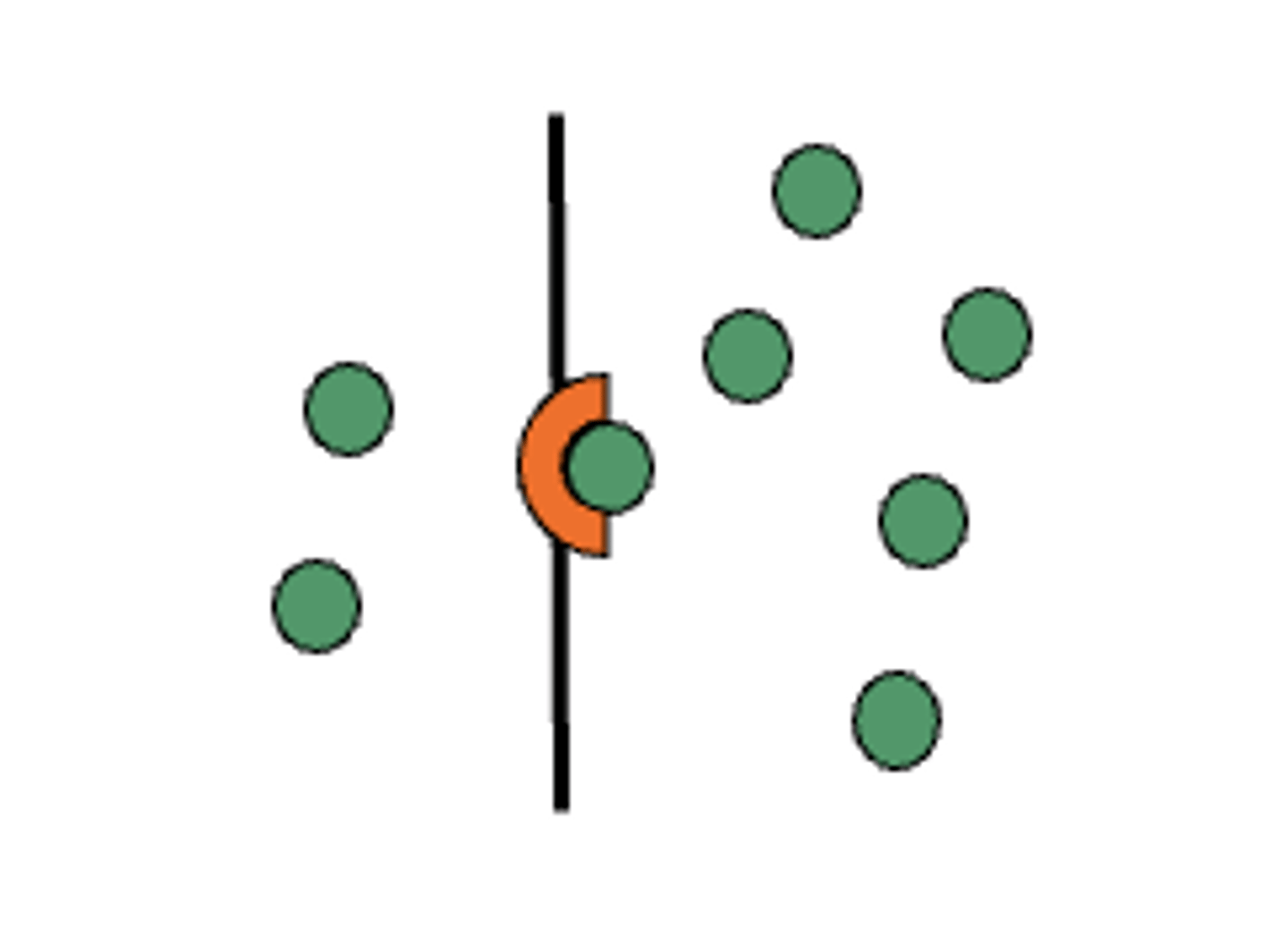
Active transport (facilitated diffusion) is characterized by: (5)
- Requirement for energy
- Movement against an (electro) chemical gradient
- saturable kinetics
- Selectivity (in some cases)
- Competitive inhibition (drugs may act as substrates, inhibitors, or both)
Objective
T/F: In active transport, many transporters only work in one direction
FALSE
many transporters can work in either direction (import or export)
Because many transporters can work in either direction, this means these proteins are involved in....
both drug absorption and drug elimination
Objective
Many transporters are ____________ or ___________ drug targets
- existing or potential drug targets
Objective
The 2 known drug transporters in humans
- Solute carrier (SLC) protein superfamily
- ATP-binding cassette (ABC) superfanily
Objective
Solute carrier (SLC) protein superfamily
- organic anion-transporting polypeptides (OATPs)
- Proton-dependent oligopeptide transporters (POTs)
Objective
ATP-binding cassette (ABC) superfamily
- P-glycoprotein (PGP/MDR) efflux pumps
- Multidrug resistance (MRP) efflux pumps
- Breast cancer resistance protein (BCRP)