Topic 2: Biotechnology
 Call Kai
 Learn
Learn Practice Test
 Spaced Repetition
 Match
Match Flashcards
 Knowt Play
1/9

There's no tags or description
Looks like no tags are added yet.
Name | Mastery | Learn | Test | Matching | Spaced | Call with Kai |
|---|
No analytics yet
Send a link to your students to track their progress
10 Terms
What is Biotechnology
the study and manipulation of living things or their component molecules, cells, tissues, or organs for the benefit of humans (or other animals)
Process of DNA Fingerprint Analysis
1. Collect DNA
2. Amplify using PCR (thermal cycle)
3. Cut using restriction endonucleases
4. Load and run gel through electrophoresis
5. Analyse the number of fragments and location in gel to approximate the size and compare suspects and crime scene DNA
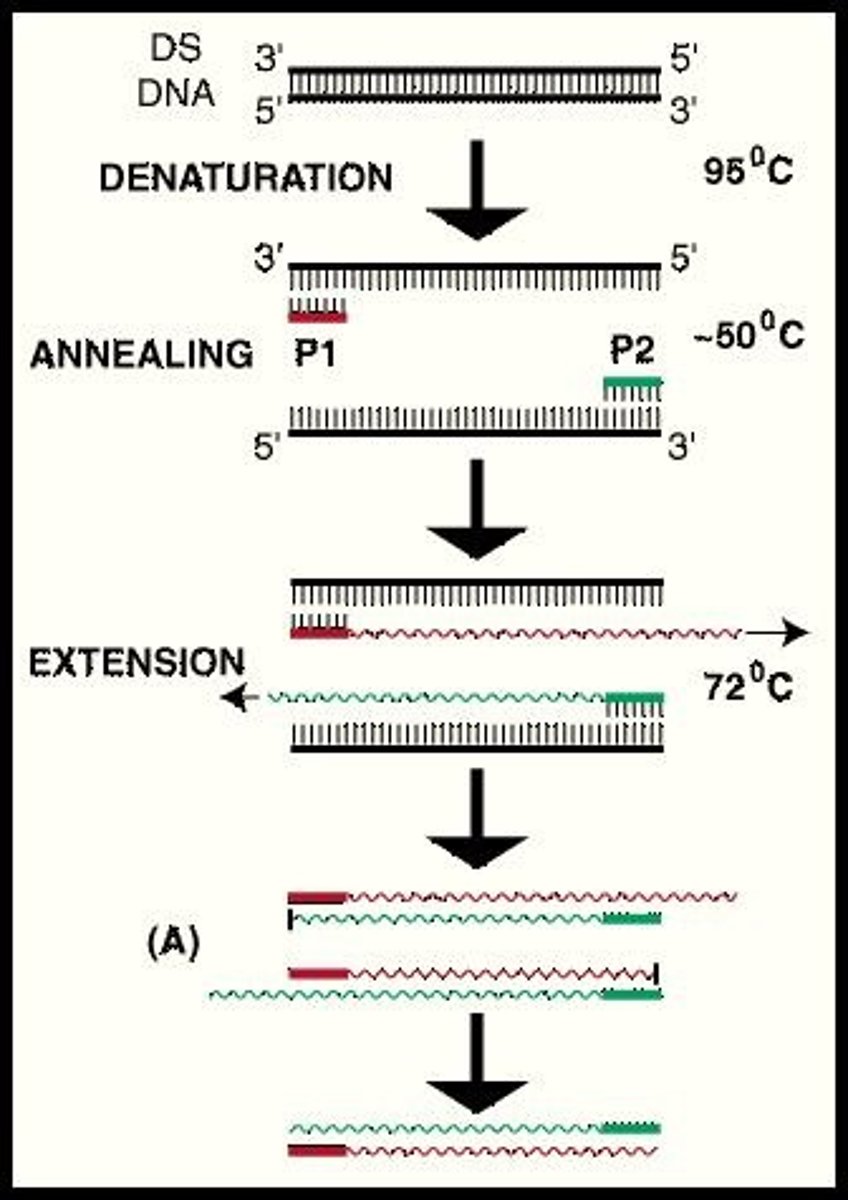
DNA Fingerprinting: Thermal Cycler Process
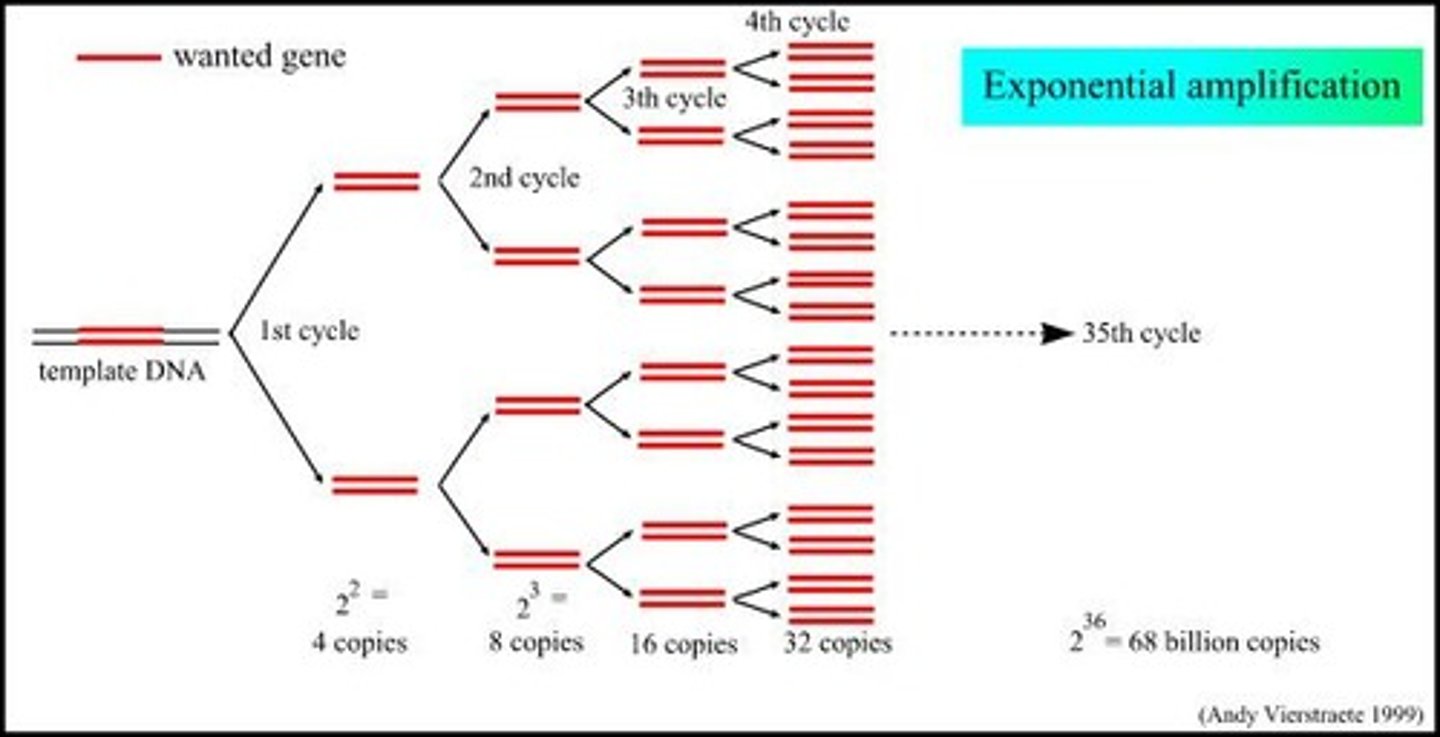
Run DNA thru Thermal cycler to make more copies of DNA (polymerase chain reaction aka DNA replication)
1. Denaturing (separate strands)
>95C strands separate bc H-bonds brk
2. Annealing (stick to)
>55C primers binding template
3. Extension
>72C synthesis of new strand
*taq polymerase reads template and makes new strand
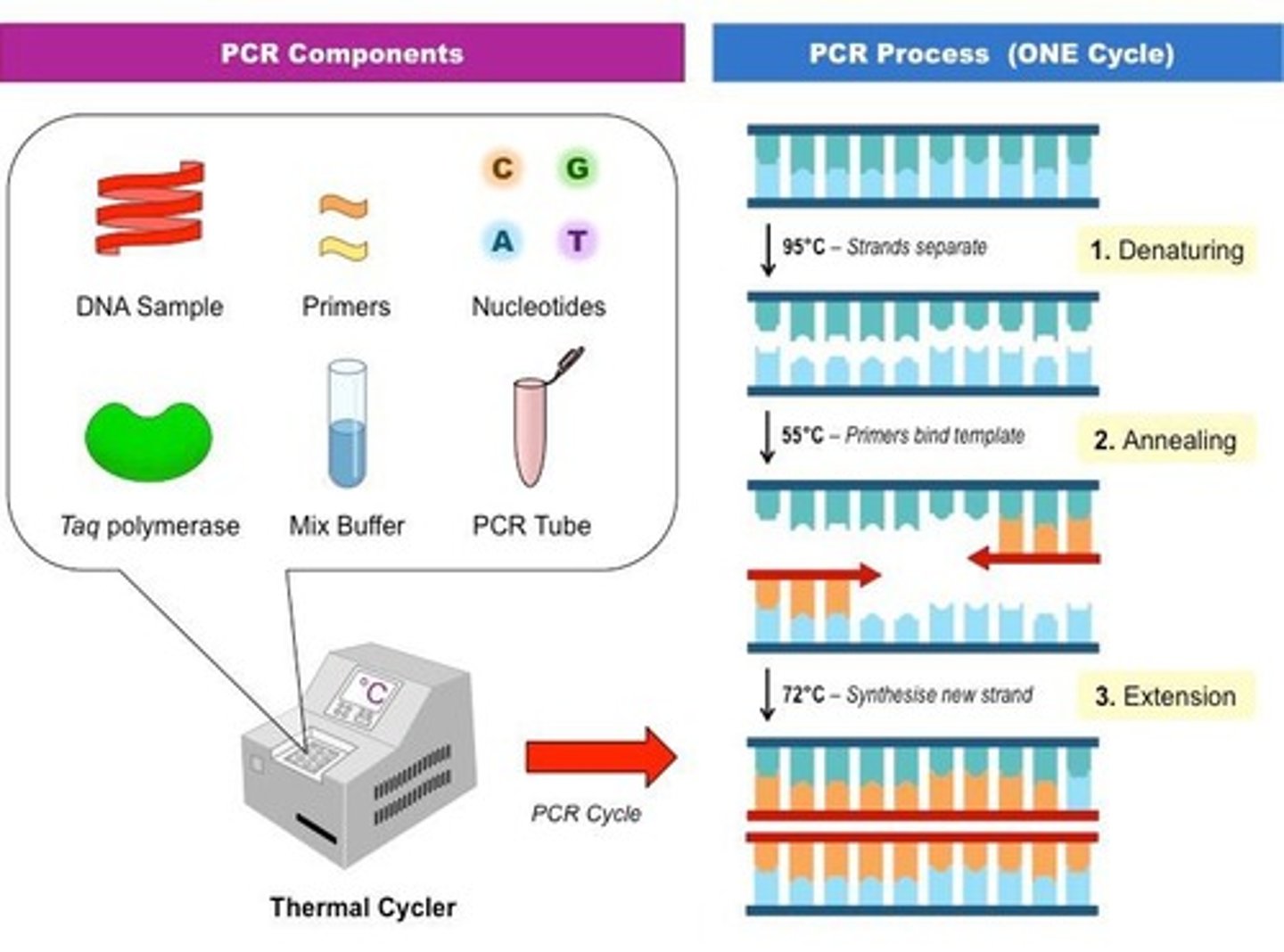
DNA Fingerprinting: Thermal cycler Components
1. DNA sample
2. primers
3. nucleotides
4. taq polymerase (can live in hot temps w/o brking so used to make new strands)
5. mix buffer
6. PCR Tube
Exponential amplification (image)
How can you cut DNA?
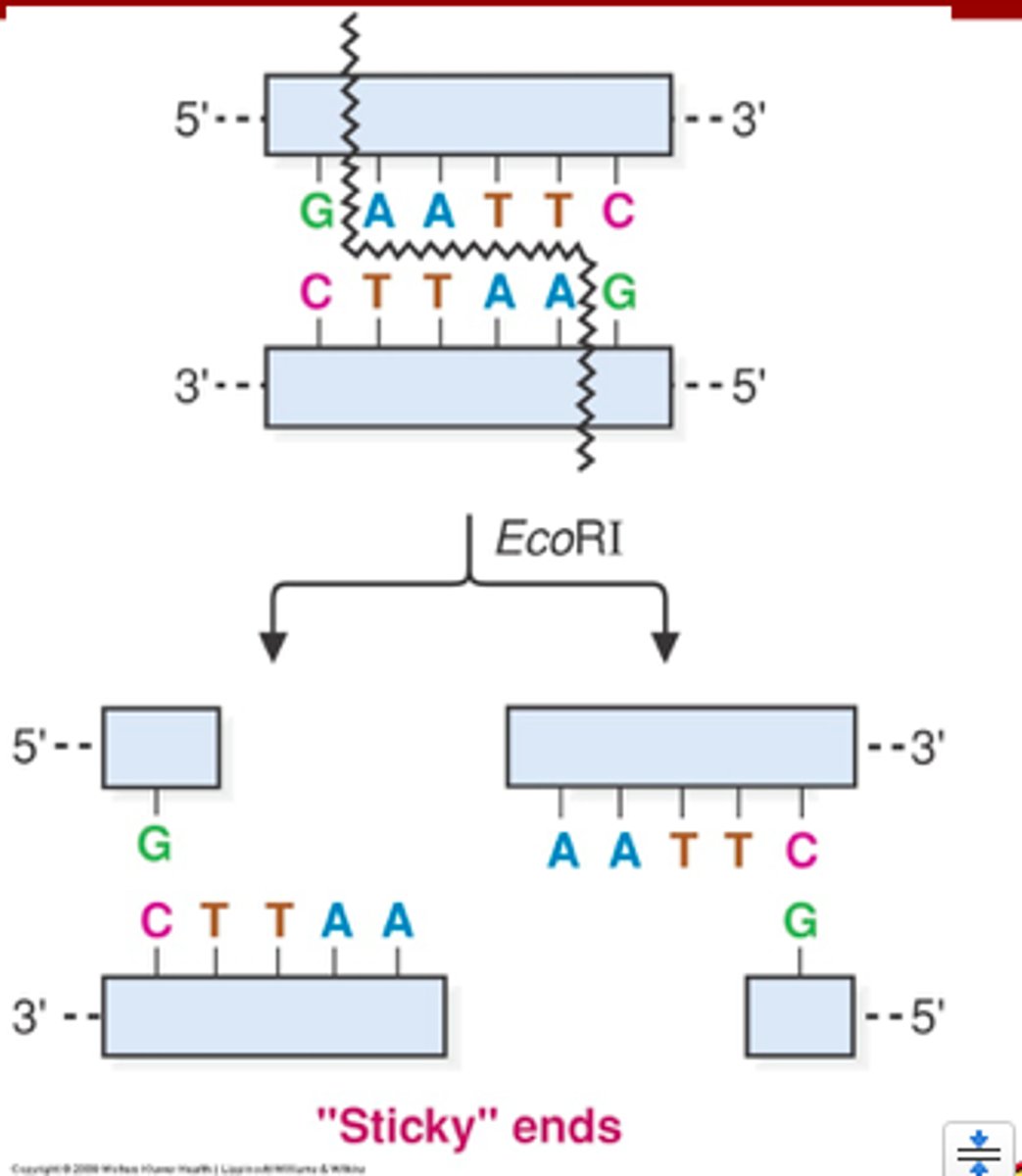
-We can cut DNA using We can cut DNA using restriction endonucleases to create DNA fragments termed RFLPs (restriction fragment length polymorphism)
>restriction endonucleases: enzymes that cut within certain sequences of DNA
What are Endonucleases
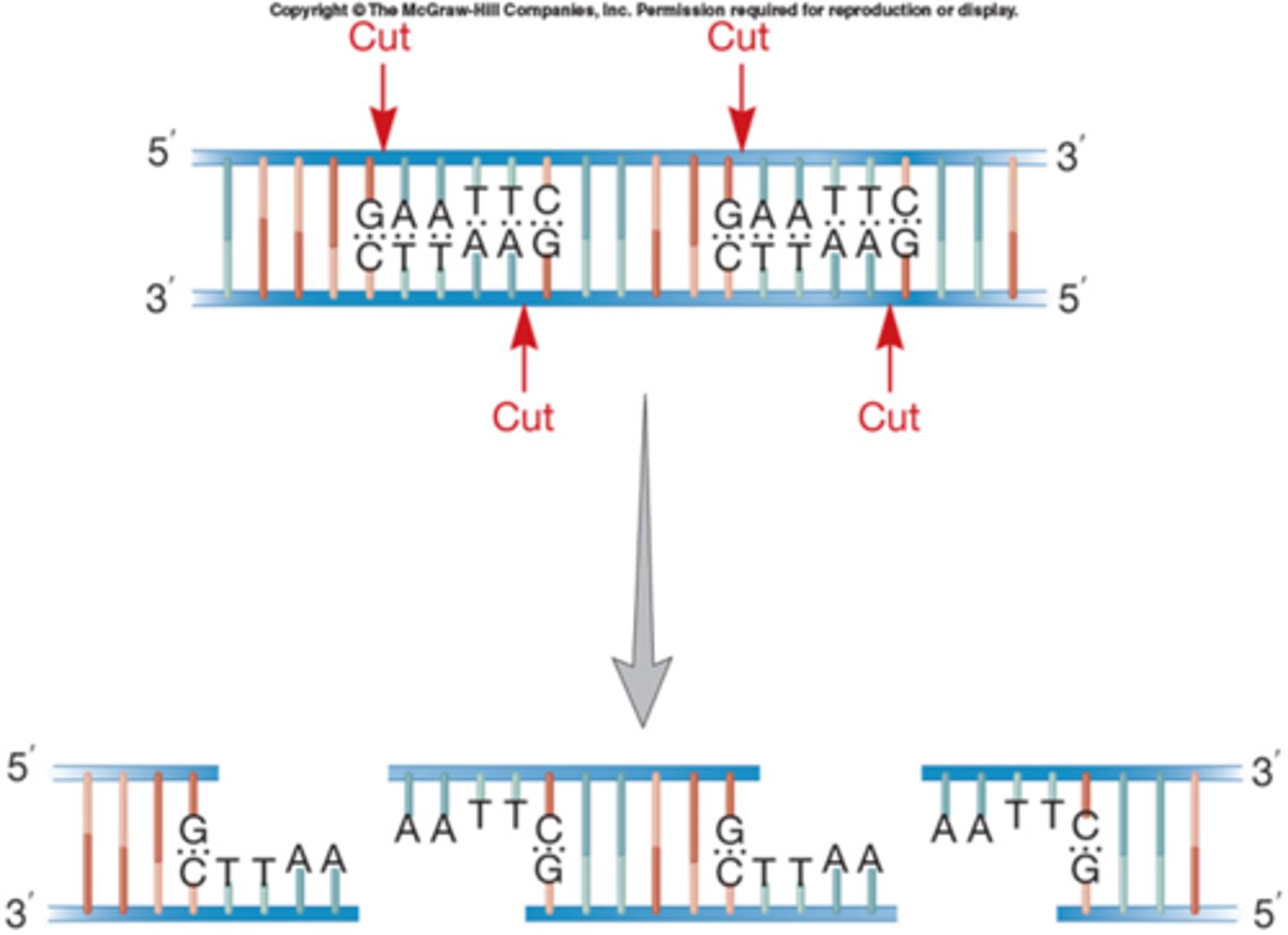
-each cut a specific sequence of DNA and create fragments of DNA
-Depending on how many cut sites there are in the whole DNA piece
*work in palindrome (sequence that reads the same forwards and backward)
Types of Ends of Restriction Endonucleases
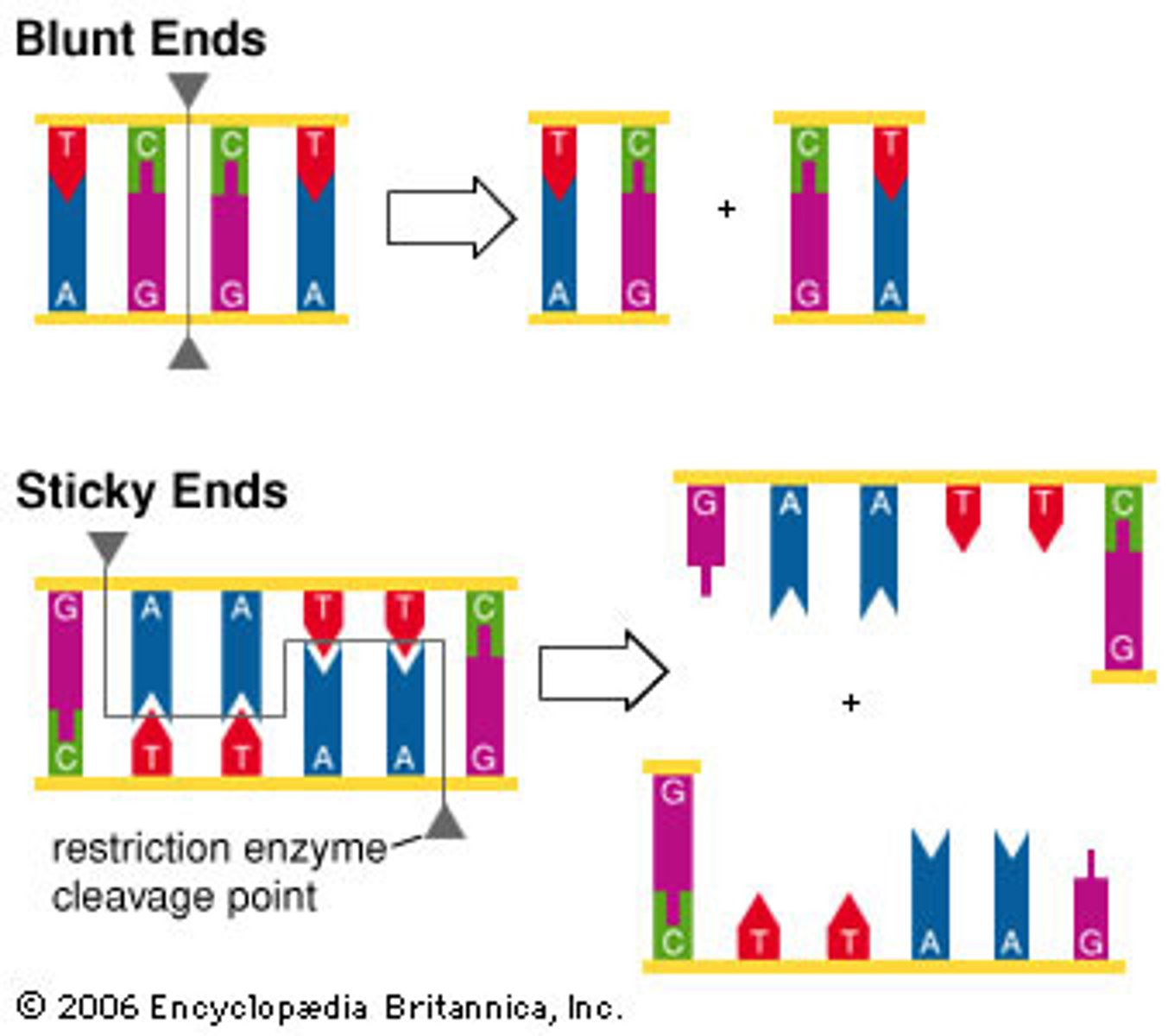
Sticky ends - overhands (complementary bases)
Blunt ends - uniform edges and no overhangs
Electrophoresis
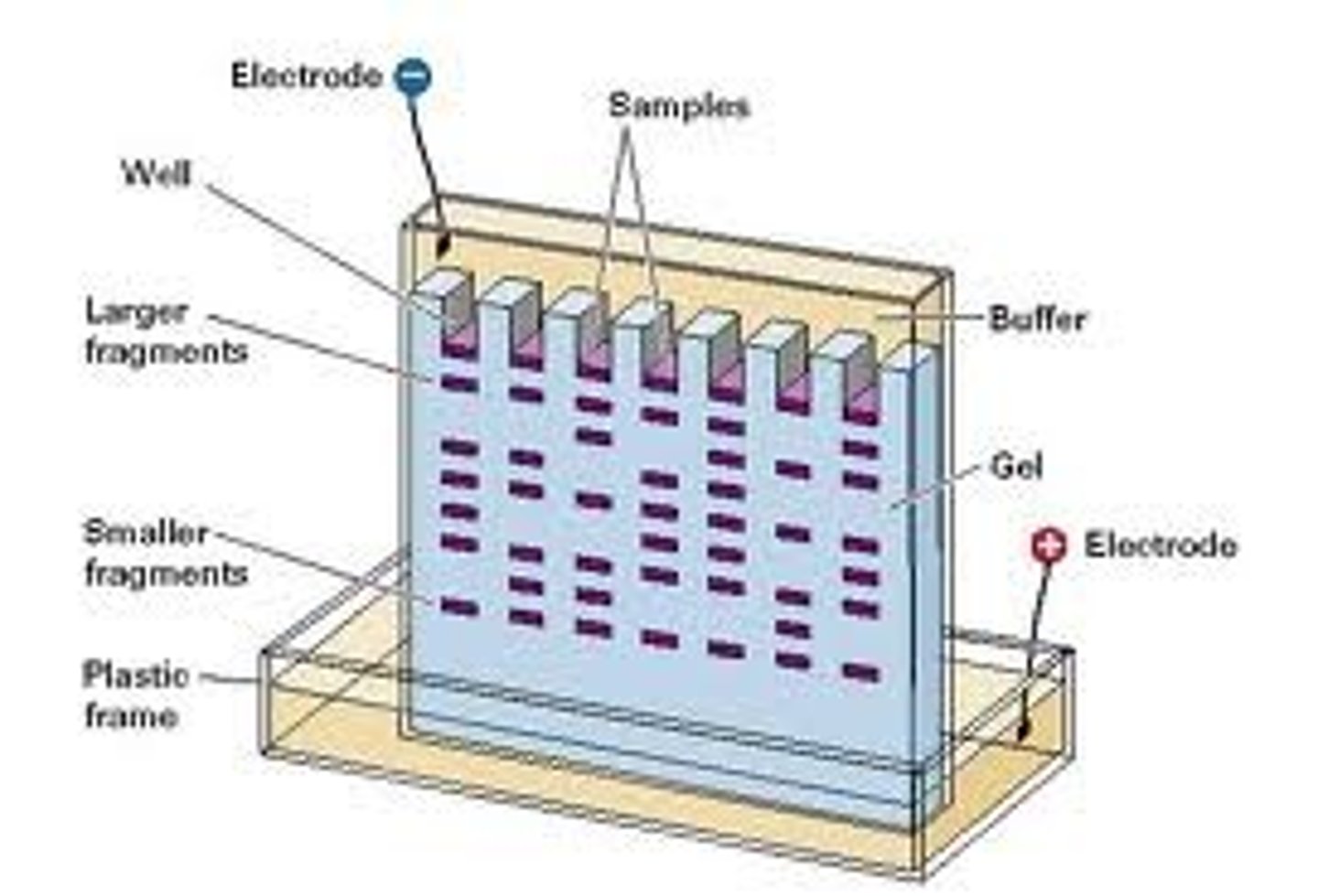
A process where DNA fragments are separated according to size using electrical charges
*this is used to compare DNA fragment pieces after cutting the DNA
>DNA is neg charge so run DNA from neg to positive side of the chamber
>gel uses electricity to separate DNA fragments based on number of base pairs
-larger size (more base pairs) fragments on top
-smaller fragments on bottom
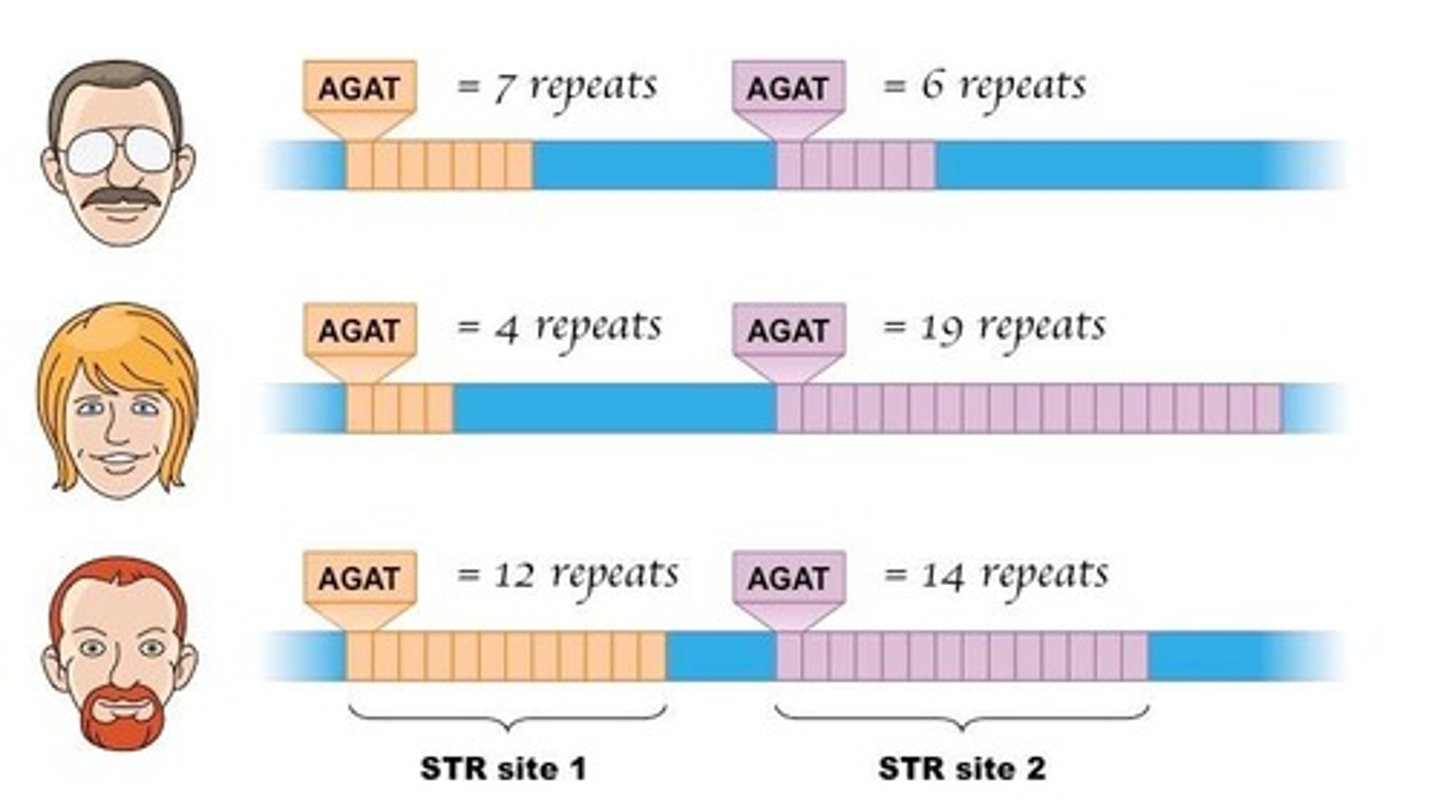
What are STRs
Short Tandem Repeats are locations on the chromosome that contain short sequences that repeat themselves within the DNA molecule
*everyone's DNA is slightly different
-can use STR's to determine person by seeing if they match (same # and length)