Med and Vet Entomology final exam review (ch 1-7)
 Call Kai
 Learn
Learn Practice Test
 Spaced Repetition
 Match
Match Flashcards
 Knowt Play
1/113

There's no tags or description
Looks like no tags are added yet.
Name | Mastery | Learn | Test | Matching | Spaced | Call with Kai |
|---|
No analytics yet
Send a link to your students to track their progress
114 Terms
What is a vector?
an blood-sucking arthropod species that acquires, maintains, and transmits a pathogen
Morgellon’s disease is
a delusional disease
What are the 3 basic characteristics of arthropods?
1) segmentation
2) jointed appendages
3) exoskeleton
Are scorpions arachnids?
yes
Who discovered the agent of Texas Cattle Fever?
Theobald Smith
What is true about the cyclopropagive transmission of malaria?
the agent reproduces and undergoes cyclical changes within the vector
What is the most important order of insects in medical and veterinary entomology?
diptera
Who was involved in the discovery of the agent of Lyme Disease?
Jorge Benach
Aedes, Mansonia, Culex are all examples of?
mosquitoes
Tissue damage in myiasis infestation is caused by:
fly larvae feeding
What are the types of problems caused by arthropods?
Annoyance/nuisance (flies, mosquitoes)
- Toxins & venoms (Black Widow, Scorpions, Centipedes)
o Toxins=> chemicals that interfere with the normal physiological functions
o Venoms=> poisons that are injected by morphological structures (fangs/stingers)
- Diseases:
Vector-borne
Food contamination
Allergic reactions (toxins/venoms or centipedes & mosquitoes (dust mites))
Psychological stress
Fear (ex: fear of spiders (arachnophobia)) /delusional disorders (ex: Morgellons disease)
What are diseases? Vector borne diseases?
Diseases: destruction of host tissues; called “myiasis,” infestation of fly larvae feed on the host (wildlife, pets, & farm animals)
- Vector-borne disease: A disease that is transmitted from one host to another; by a vector
What is the history behind vector borne diseases?
Robert Koch (Germ theory vs Miasma Theory) Koch’s postulates (1884)
- Patrick Manson (found tropical medicine; played a role in mosquitoes in human elephantiasis) *what GG got! (1877)
- Theobald Smith (discovered Texas Cattle Fever was being vector-borned by the cattle tick!) (1893)
- Ronald Ross (described the life-cycle of the parasistes that is responsible for malaria) (1897)
- Walter Reed (demonstrated the role of Aededs mosquitoes are responsible for yellow fever) (1900)
- William Burgdorfer, Alan Barbour & Jorge L Benach (discovered the agent to Lyme Disease (1982)
How does vector transmission happen?
Pathogen needs to be maintained in mid-gut, infect and then get to the salivary glands; then mosquito transmits disease into a new host
What are the 2 different types of mode of vector transmission?
Mechanical
a. picks up the infectious agent outside of the body (ex: flie goes on poop then goes on soup =food poisoning) *acquire, maintain and transmit
2) Biological
a. Propagative transmission (plague)-> pathogen gets into vector and multiplies
b. Cyclodevelopmental transmission-> pathogen gets into vector and changes from one stage to another
c. Cyclopropagtive transmission (malaria)-> pathogen multiples and also changes in the vector
How do we identify vectors?
Putative vector must:
o Feed on host/ vertebrate infection *have to be present (seasonality) in order for vector to be responsible for disease
o Found infected w/ disease agent (feeding on host)
o Infected experimentally (infected misquote should transmit pathogen to host)
o Transmits the disease to uninfected host (under controlled conditions)
What is vector competence?
Vector competence: the ability of the arthropod to acquire, maintain and transmit a pathogen (ex: malaria, mosquitoes that feed on host w/malaria pathogen would not be able to get out of the mid-gut) *pathogen will be maintained/transmitted=> goes to salivary glands to be transmitted to next host
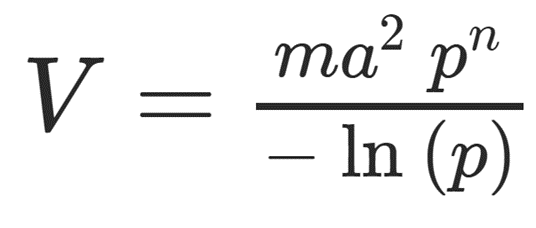
What is the formula for vectorial capacity? What does it mean?
V= ma2pn/-ln(p) m= ratio of mosquitoes to humans a= human biting rates p= mosquito survival throughout 1 day n= pathogen latent period (pathogen to salivary glands) in days
Vectorial Capacity: equation that accounts for the major factors of pathogen transmission (by mosquitoes) defined as the average
What is the most important component of vectorial capacity?
vector competence
Vectorial capacity depends on 4 components. What are they?
1) # of mosquitoes/ people (more mosquitoes u have per person) *average number of new infections can increase or decrease
2) Feeding frequency & types (important types!!!) (type of host and how much feeding is done by mosquitoes)
3) Survivorship (through 1 day!!!)
4) Vector competence (most important!) *acquire, maintain, and transmit pathogen
What is the risk (probability of human infection?)
Risk= A X Fm X P X Cv
o A= vector abundance
o Fm= fraction of human blood cells
o P= infection prevalence in the vector
o Cv= fraction of infected mosquitoes that will transmit disease by vector competence
Epizootic disease? Enzootic disease? Enzootic vector?
epizootic disease: similar to epidemic except w/animals; large # of animals among a given population within an area (constant and or steady over time)
enzootic disease: a disease involving non-human animals in a specific geographical area where the disease is constantly present in low incidence
enzootic vector: a vector that maintains pathogen transmission among animal hosts (ONLY) NOT TO HUMANS!!!
Bridge vector?
maintains pathogen transmission from animals to humans
Endemic? Epidemic? Pandemic?
1) Endemic: (Greek endemios= native Demos=people) refers to a disease occurring in people within an area or community
2) Epidemic: (Greek epi=upon or above and demos= people) is the rapid spread of disease to a large # of patients among a given population within an area in a short time (certain area)
3) Pandemic: (Greek pan= all demos= people) is an epidemic of an infectious disease that has spread all over the world *COVID-19
What are invasive mosquitoes? What type of mosquitoes are considered invasive?
Invasive mosquitoes: are the drivers to most recent epidemics of mosquito-borne diseases
Culex pipiens
- Culex quinquefasciatus
- Aedes aegypti (tropical)
- Aedes albopictus (temperate & tropical)
What are the morphological differences between anophelinae and culicinae in relation to the stages of a mosquito?
Stages | Anophelinae | Culicinae |
Eggs | Visible lateral floaters |
|
Larvae | No siphon | Visible siphon |
Adult females | Palps are long | Palps are smaller |
Adult males | Palps are round | Palps are narrow |
Adult resting position | Slanted on the surface | Parallel/ straight on surface |
What is an autogenous species?
a blood feeding species that can lay eggs before feeding
What type of mosquito transmits malaria?
Anopheles spp.
Endophagic is a mosquito that tends to inhabit/rest indoors. True or False?
False; FEED INDOORS; ENDOPHILIC RESTS INDOORS)
Is Aedes japonicus an invasive species?
Yes and it is better adapted to temperate climates than Aegypti and Albopictus
What is an exoskeleton? What are the 3 functions?
“exo-> outer and skeltos-> skeleton is an external skeleton that supports and protects the animal’s body
1) Protection against predators
2) Support: provdes an attachement frameowkr for muscles
3) Protects against desiccation (lose more water by evaporation)rapidly compared to bigger animals
rich in: chitin, nitrogeneous polysaccrides, and polymer of n-acetyl-glucosamine
The molting of the cuticle is called____
ecdysis
The empty exoskeleton is called_________
exuvia
The procuticle is produced by _____
gland cells
What is the difference in insect development between: ametabola, hemimetabola and holometabola?
Aetabola-> insect that grows in size (no change from growth to adult) difference in size! Imaquieous stages *most primitive (present in apterygote)
Hemimetabolous-> no pupal stage, has 3 stages, egg, nymph and adult stage go through gradual changes
* Holometabolous-> egg larvae, pupa and adult; characteristics btwn larva and adult are different! Larva-> development, feeding and adult-> dispersal, mating and egg- laying ex: butterfly; hungry hungry caterpillar
Animals that go through a complete metamorphosis are known as ______
Holometabolous
Solenaphages? Telmophages?
Capillary feeders (solenophages): adapted to feed on blood, hemolymph, skin secretions (needle-like mouthparts)
Pool feeders (telmophages): skin, feathers, skin cales (chewing mouthparts)
What is an example of a solenophage?
mosquito
What does the taenidia do?
thickening of tracheal system provides extra support to tracheal systems
Circulatory vs respiratory system
Circulatory system has: hemolymph ; has the same function of the vertebrate blood and lymph combined( one exception=> they don’t transport oxygen) have a big tracheal system!!! *move through two different systems-> move through dorsal aorta (heart portion) function in muscle fibers/ compress and move content forward to the dorsal diaphragm ostia
Respiratory system: has the massive system; has to have the taenidia
What is diatomaceous earth? What is it responsible for?
fossilized remains of diatoms, a type of hard-shelled microalgae (non toxic/ chemical for pest control)
- able to kill insects by dissecation *remove wax layer from the cuticle preventing the exoskeleton on doing main function (dissecation)
How does the morphology slightly change in ectoparasites?
Dorsoventral compressed laterally/ have a flat body; good for navigation move through mammals; ex: bedbugs, ticks, fleas
o Wings(tabnids, lice, louse flies)
What is myasis?
it is a parasitic infection of the body; live fly larvae (maggots) that grow inside the host while feeding on the tissue; parasite living organism important for taxomology
What does Myasis depend on?
Depends on environmental conditions/ conditions of the larvae
Development of flies in living organisms
Could be a wild animal, pet or human
Flies can cause myasis where?
in unbroken skin, wounds, and using other arthropods as vectors
Dermatoba hominis is known as the ________
human bot fly
True or False: The sterile insect technique was developed to control human myiasis in the US
False; was developed to control mosquitoes
Who developed the sterile insect technique?
Edward Knipling
True or false: Maggots, blow flies and flesh flies can cause myasis in the placenta of newborn wildlife animals
True
True or False: the Cochliomyia homnivorax) screwworm is the most common of death
True
Different families of flies that cause myasis. What are they?
Calliphoridae (blow flies)
o Muscidae (house flie stable flies,)
There are 3 types of human myasis what are they? Which one is the most common form of human myiasis?
Gastrointestinal myaisis->ingestion of eggs/ maggots from infested food can result in: nasue, vomiting, cramps and diarrhea
2) Wound myasis-> most common form of myasis; people who live close to farms/ people at higher risk
3) Ophthalmic myasis-> caused by sheep nose bot; female hovers over the person while the person is sleeping=> land in the eye larvae grows in the eye!
Which is the distribution of new world screwworm versus old world screwworm?
a) Old screwworm (red), New screwworm (green)
b) Old screwworm (green) New screwworm (red)
c) none of the above
d) both a) and b)
B
Incidental myiasis is caused by free-living flies that can become parasitic under rare conditions. True or False
False; that is accidental (accidental has free-living flies)
What’s the difference between incidental and accidental myasis?
has free-living flies that can become parasitic under rare conditions
parasitism of an atypical host (host that doesn’t normally get infected) by obligate myiasis-producing flies
True or False: Temporary myasis is a form of accidental myasis
False; temporary myasis is where fly larvae infest a host for a short period of time (temporarily feed)
Are parasitic flies the only ones that cause myasis?
No
How is the vector that is responsible for myasis transmitted?
Uses zoophilic
o Lay egss of dbpdomen; attaches eggs to mosquitos body
o Development: larvae develipos inside the subcutaneuous later, 8 weeks-> make pupate in the soil
3 larval instars-> 5-10 weeks (over winter)
Pupae-> 25-132 days (over winter)
Lack mouthparts; resemble bumblebees
Larvae develops only if the would does not become infected; patients rarely experience infections *feed on healthy tissue also!
How is the life cycle of the flie that produces myasis?
Flies are attracted to open wounds; urine/feces soaked fur; placenta (animals that have just been born)
* Some species can create myasis even on unbroken skin; ex: botfly, blowfly, screwfly; start the infestation without the need of a previous host
Vector mediated-> big fly; in order to parasite the host= trap w/legs mosquitoes will lay their eggs on the host-> start another infestation!!!!! trapping a blood- sucking vector
o Once larvae complete feeding on host= exit the host form pupa in soil= emerge as an adult-> life cycle continues!
Obligatory vs facultative myasis?
Obligatory: * Parasitic flies need a host require myasis to complete development!
Facultative: can produce myasis on the host; don’t require myasis to complete development-> dead animal to live along
What is the sterile insect technique (SIT)?
a method of insect control having the overwhelming #’s of sterile male insects being released into the wild (NO OFFSPRING=POPULATION WILL DROP)
Is SIT self-replicating?
No; RIDL is self-replicating
Why did SIT work so well?
Females only mate once=> no production of offspring
irradiated sterile males
What are the different ways of creating "sterile males?"
1) radiation
2) genetic manipulation
3) infection w/incompatible Wolbachia
What does RIDL stand for? What does it do?
Release Insect Dominant Lethal gene
: gene tTAV (lethal gene) recycling of the gene( 2nd component) DsRed gene-> is a marker under the expression of the gene all the time!!! needs fluorescent in the mosquitoes eyes *glow in the dark!!!! Sees the following system from the 1st generation
b. Have a switch/ turn off/ on the promoter
c. Promoter is not going to function= gene is not going to be expressed
d. Lethal gene only for-> larvae/ pupal stage; ADULTS ARE NOT GOING TO BE AFFECTED (Mosquitoes aren’t going to die)
e. Gene is conditional dominnat-> only needs 1 allele to be expressed and lethal (sex specific) *only kills males DOESN’T KILL FEMALES
f. Is self-replicating-> lethal gene that is released into the population by males (carry the gene)-> mate w/females= OFFSPRING
g. OFFSRPING carries the gene; all males that are OFFSPRING during the larva/pupal stage are gonna die!-> FEMALES THAT SURVIVE (CARRY THE LETHAL GENE TO NEXT GEN)
What is Wolbachia associated with? Is it a vector borne pathogen?
associated w/ females eggs and ovaries that become infected
No
True or False: Wolbachia always produces cytoplasmic incompatibility
False; Wolbachia can induce the feminization of host (genderbend)
T or F: Organophosphates and carbamates inhibit the action of acetylcholinesterase
True
What do pyrethroids do?
affect nervous transmission by blocking the closure of sodium channels
Which one of these factors does not lead to rapid significant insectide resistance (IR)?
a) Recessive R alleles
b) Short Generation time
c) All of the above
d) Monogenic R phenotype
a) recessive R alleles
What are some similarities between the nervous system of arthropods and humans?
both have the basic structure of the neuron
Can RIDL be switched on and off?
Yes it can; it has the promotor switch that enables it to switch on and off
Which of the following phenotypes does RIDL in insects associated with?
a) cytoplasmic incompatibility
b) male killing
c) feminization (genderbend)
d) none of the above
d) none of the above
True or False: Males are subjected to SIT have a marker (fluorescent eyes under UV) that allows their recognition
False
True or False: SIT is based on the mass rearing and sterilization of females before release
False; it is the sterilization and mass rearing of males not females before being released
What is true about the Aedes mosquitoes?
a) they lay individual eggs
b) they are solenophages
c) they have four stages
d) all of the above
d) all of the above
What are the four stages to the Aedes mosquitoes life cycle?
Eggs=> Female mosquitoes lay eggs inner wet walls(side of container) w/water that are above the waterline (lay around 100 eggs at a time) small amount of water (bowls, cups etc) resistant to desiccation
2) Larvae=> are aquatic; waterline goes above the eggs; feed on microorganisms in the water review-> (has siphon)
3) Pupa=> will develop until the body of a newly form adult flying mosquito emerges; don’t feed but can move *cannot distinguish which mosquito species is which!!! (All Pupa stages of mosquitoes arte the same!)
4) Adult=> need a blood meal for egg production; male mosquitoes feed on nectar and the female mosquitoes feed on humans and animals for blood to produce eggs
Which of the following measures do NOT protect against mosquito bites?
a) protective clothing
b) insecticides/ repellents
c) window screens
d) all them protect
d) all of them protect
The habit that is best suited for A. Aegypt is _______
Tropical
What is the diapausing stage for A. Albopictus?
eggs (can survive in the winter time and can be established in that area)
T or F: Aedes Mosquitoes are the best fliers that can adjust to other climates
F; that's A.Albopitcus
The main vector for WNV is _______
Culex spp
What are the reservoirs for West Nile Virus (WNV)?
Birds are considered the main host/ amplifier host
Amplifier vs. Dead-end host
Amplifier-> develops symptoms that contribute to the cycle of the virus
Dead-end-> develop symptoms that don't contribute to the cycle of the virus
Are horses and humans a dead-end host for Zika or WNV?
WNV
A. Albopictus are good bridge vectors for the WNV. Why?
if they acquire the virus, they are able to spread it to humans more frequently
Why did WNV spread so rapidly?
Bird migratory can catch virus; transmission of pathogen from birds (birds can fly so its easier to spread virus)
Most people infected with Zika are asymptomatic or have very mild symptoms except ________
unborn babies; giving severe symptoms
Zika is transmitted by _______
Aedes spp.
What is WNV described as in the US?
epidemic disease
What is the problem with serological testing for WNV?
Cross reactivity with other flavivis can occur in the antibodies (convalesecent 2-3 weeks apart) full change= infection is present in the antibodies doesn’t see full change= could be cross reactivity of another infection
What is Dengue Fever?
single positive- stranded RNA virus of the family Flaviviridae
How is dengue described?
arboviral disease and causes significant disability and death
What is the vector transmission for Dengue?
vector transmission is Aedes aegypti or albopictus (behaviors are different)
1) From mother to child during pregnancy
2) Breastfeeding (extremely rare) *human to human transmission is rare
3) Through infected blood (extremely rare)
*transovarial transmission (vertical transmission)
Dengue’s mortality rate is close to ______
0.05%
What percentage does severe dengue occur in?
5% of people will be infected
The primary reservoir for Dengue (circulating among humans) are.....
a) humans and non humans primates
b) non human primates
c) humans
d) all of the above
a) humans and non human primates
Most cases of dengue in the US are associated with what?
traveling to endemic areas
Dengue is referred to as what____
Break bone fever
Risk factors associated with severe dengue include______
Age (elderly)
Infants born to seropositive mothers
Number of dengue infections→ 2nd => 1st, 3rd and 4th infection
comorbidities such as: asthma, diabetes, obesity etc