PSYCH 3JJ3 Exam
 Call Kai
 Learn
Learn Practice Test
 Spaced Repetition
 Match
Match Flashcards
 Knowt Play
1/89

There's no tags or description
Looks like no tags are added yet.
Name | Mastery | Learn | Test | Matching | Spaced | Call with Kai |
|---|
No analytics yet
Send a link to your students to track their progress
90 Terms
Judy Harris
Judith Harris argued that the amount of influence parents have on their child's development isn't as significant as we previously thought
She raised the question: do parents have any long-term effects on the development of the child's personality?
Proposed the group theory of social development
Judy Harris - Group Theory of Social Development
Kids are influenced more by peer groups than just their parents
Socialization depends on the situation (context matters)
Most learning outside the home happens with other kids
Group interactions (not just one-on-one) shape behavior and culture
How do peer relationships qualitatively differ than those with adults?
They are briefer, freer, and more equal
They are more likely to involve shared positive emotions and conflicts
They offer opportunities for new types of interpersonal exploration
They offer children a cultural community of their own
Peer
another child roughly of the same age
interactions are short and involve minimum commitment
they may be one sided; they do not involve reciprocal liking or mutual respect
friend
a peer whom with a child has a special relationship with
interactions are regular, sustained, and involve reciprocal liking/respect
dyad
interactions between pairs of children
Groups
cliques, teams, and crowds with norms, rules, and hierarchies
Developmental patterns of peer interaction → first encounters in infancy
in the first 6 months of life → babies touch and look at each other; they are responsive to each other’s behaviours
after 6+ months → infants begin to recognize their peer as a social partner
Infants start trying to interact with other infants by vocalizing, waving, and touching - most behavior is friendly
They gain better awareness of their social role
Social exchanges between toddlers by age → 1ya
gains in locomotion and language increase the complexity of social exchanges
Social exchanges between toddlers by age → 1-2ya
Toddlers play in groups and engage in complex social exchanges
They increasingly prefer peer over adult interactions
Toys are integrated into social exchanges - even at this young age, sharing and cooperativeness are effective social strategies
Social exchanges between toddlers by age → 3ya
Engage in play that has shared meaning, such as pretend play
Pretend play
make believe activity in which objects are used symbolically
the nature of pretend play varies cross-culturally
development:
2.5ya: pretend play first appears
3ya: play becomes complex, cooperative, and dramatic
4ya: longer play, with negotiated roles, rules, and themes
6ya: peak pretend play with coordinated stories, quick role changes, and creative use of objects
important for social competence
When does pretend play peak?
at 6ya
Importance of pretend play for social competence
Permits children to experience the roles and feelings of others in a playful context
Teaches children to function as apart of a social group and coordinate their activities with other children
Peer play in early childhood
When looking at peer relationships, looking at early play behaviors is highly informative
There are several types of play:
Onlooker
Parallel play
Associative play
Cooperative play
Pretend play is significant
What are the types of play?
onlooker
parallel play
associative play
cooperative play
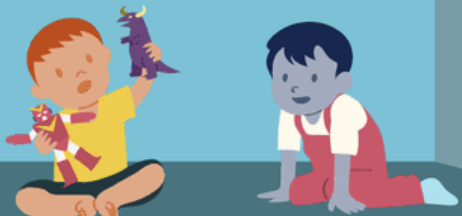
Types of play → onlooker
Children watch or converse with other children engaged in play activities
About half of 2 year olds engage in this type of play
More withdrawn behaviour
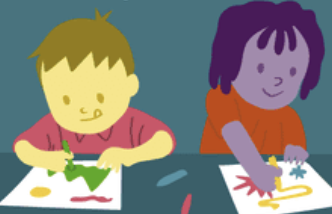
Types of play → parallel play
Children play in similar activities, often side by side, but do not engage with one another
This type of play is common in 2ya, but diminishes by the time a child is 3- 4
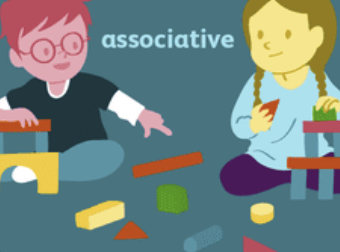
Types of play → associative play
Children play with other children but do not share the same goals
They share toys and materials and may react to/common on another child's ongoing activities
However, they are still not fully engaged with each other in a joint project
This type of play is commonly seen in 3-4ya, less often in 2ya
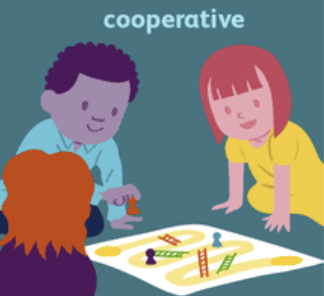
Types of play → cooperative play
At ages 3-4, children begin to engage in play in which they cooperate, reciprocate, and share common goals
Peers in the school years
Around the age of 2.5, children begin to spend more time with other children as companions and less social time with adult companions
In addition, the nature of social interactions and types of peers children has changes
How does the nature of social interactions between peers change during the school years?
There is an increase in prosocial behavior
Children are learning the rules and guidelines of society + social interactions
Physical aggression decreases; generosity and helpfulness increases
How do the types of peers children play with change across the school years?
children’s preferences for peers the same ages increases → same-age peers share interests and similar abilities
the gender of one’s peers becomes more significant
younger children (3-7ya) are equally likely to choose same gender / different gender peers
during the school years, children increasingly choose playmates of the same gender and exclude the other gender
gender differences in play styles → girls
Quiet games, small groups, near school building, close to adult supervision
Prefer play involving artistic endeavors, books, or dolls
Like unstructured activities
Are more intimate and exchange more information than boys
gender differences in play styles → boys
Play high-energy, run-and-chase games in a large group that take up nearly 10x as much space as girls play
More competitive in their play
Prefer organized games controlled by the rules
peer interaction in adolescence
adolescents spend 2x as much time with peers than their parents → this pattern is particularly marked in western cultures
adolescents are usually engaged in recreation and conversation with minimal supervision by adults
peer interactions offer the perspective of equals and ideas about how to act
i.e, peers influence many aspects of adolescents lives
peer interaction in adolescence → what do peers influence?
The style of interpersonal behaviour, selection of friends, and the choice of fashion and entertainment
The use of alcohol, tobacco, and illegal drugs (especially cannabis)
During adolescence, when are peers especially influential?
Peers are especially influential if a teen lacks parental support
However, authoritative parenting = less susceptibility to peer pressure
study: children's emotional regulation - self-report and physiological response to peer provocation → methods
Investigated the concordance between self-reported emotional regulation and physiological measures by examining emotional regulation in a specific context
In this study, the context = peer provocation; children were brought into the lab and where asked to complete a difficult computer activity in the presence of an aggravating peer
They recorded heart rate activity and recovery
study: children's emotional regulation - self-report and physiological response to peer provocation → results
Children who reported greater dysregulation showed increased heart rate activity to provocative comments
But, there was no difference in heart rate recovery
Thus, child-level factors and peer context interact to influence autonomic (biological) measures of emotional regulation
surgency
a personality trait featuring positive affect, approach tendencies, and sensation seeking
study: adolescent peer interaction and trait surgency weaken medial PFC responses to failure → methods
given that adolescent risk taking increases in the presence of peers, they wanted to see how peer provocation impacted risk-taking behaviour
they expected mPFC activity would be reduced in those with greater surgency
they had a sample of 15ya boys complete a driving simulator alone and then in the presence of peers (who heckled them); you earn points, so more points = more activity in the reward centre - but if you crash you lose all your points!
FRN event-related potential was recorded in response to an impending car crash
study: adolescent peer interaction and trait surgency weaken medial PFC responses to failure → results excluding surgency
When the participant is alone, their cognitive monitoring system works optimally
However, we can infer that the brain doesn’t work as efficiently in the presence of a peer who is telling you to drive less efficiently
Thus, context impacts this neural correlate (independent of personality traits or other differences) in a negative way
study: adolescent peer interaction and trait surgency weaken medial PFC responses to failure → results including surgency
Greater surgency and peer presence were associated with reduced activity specific in the mPFC
Riskier performance resulting in more car crashes resulted from the presence of peers only as an interaction with surgency
How do peers function as socializers?
By modeling behaviour
By reinforcing and punishing behaviour
By providing a source for social comparison
How do peers function as socializers? → by modeling behaviour
Children learn a great deal about how to behave simply by observing the actions of their peers (A bandura-esque perspective)
Older children learn about social rules by watching their peers
In adolescence, young people copy peer models to decide what to wear, how much to eat, and whether to engage in risky behavior
Children are most likely to imitate peers who are older, more powerful, and more prestigious
How do peers function as socializers? → by reinforcing and punishing behaviour
peers tell children how to behave and reinforce these behaviours
approved behaviours are met with praise, thus becoming reinforced
disliked behaviours are met with criticism, and become negatively reinforced, thus decreasing the likelihood it happens again
in adolescence, the “group” becomes a more impactful unit of social influence
How do peers function as socializers? → by providing a source for social comparison
Using peers as a source of comparison is adaptive as it provides realistic appraisals of one's abilities
Important for self esteem
Social comparison
the process by which people evaluate their own abilities, values, and other qualities by comparing themselves with others, usually their peers
What method do researchers use to study peer relationships?
the sociometric technique
The sociometric technique
A procedure for determining a child's status within his/her peer group
Each child in the group nominates others whom he/she likes best and least and rates each child in the group for desirability as a companion
Limitations → labor intensive, time consuming
Produces five categories of peer status (popular, average, neglected, controversial, rejected)
This technique has predictive utility
What are the 5 categories of peer status? (as produced by the sociometric technique)
popular children
average children
neglected children
controversial children
rejected children
What are the 5 categories of peer status? → popular children
children who are liked by many peers and disliked by very few
What are the 5 categories of peer status? → average children
children who have some friends but are not as well liked as popular children
What are the 5 categories of peer status? → neglected children
children who are socially isolated; although they are not disliked they have few friends
What are the 5 categories of peer status? → controversial children
children who are liked by many peers and are also disliked by many peers
What are the 5 categories of peer status? → rejected children
children who are disliked by many and are liked by very few
Study: neurodevelopmental differences to social exclusion - an event related neural oscillation study of children, adolescents, and adults → methods
used the cyberball task (to measure self exclusion) and recorded what was happening in the brain during the social exclusion (via EEG - they looked at theta waves and ERP) in a sample of children, adolescents, and adults
specifically, they wanted to see the brain’s response to being rejected and how much energy/power was related to the event
cyberball task
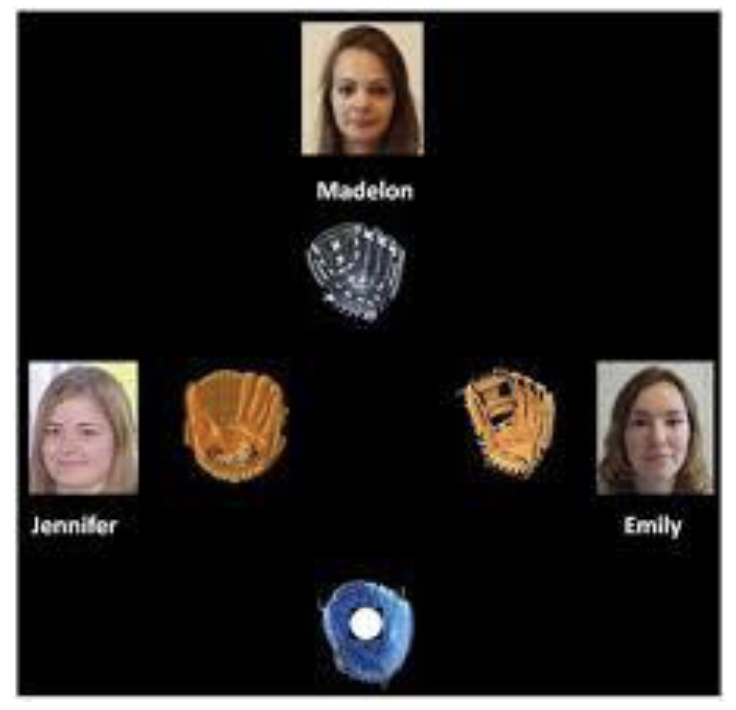
Participants come into the lab and are shown the profiles of peers of the same gender + age
They engage in a "ball toss" with these peers
Eventually, the peers stop passing the ball to the participant - they are being excluded
Theta waves
4-7 Hz
Give us information about sensory processing and drowsiness
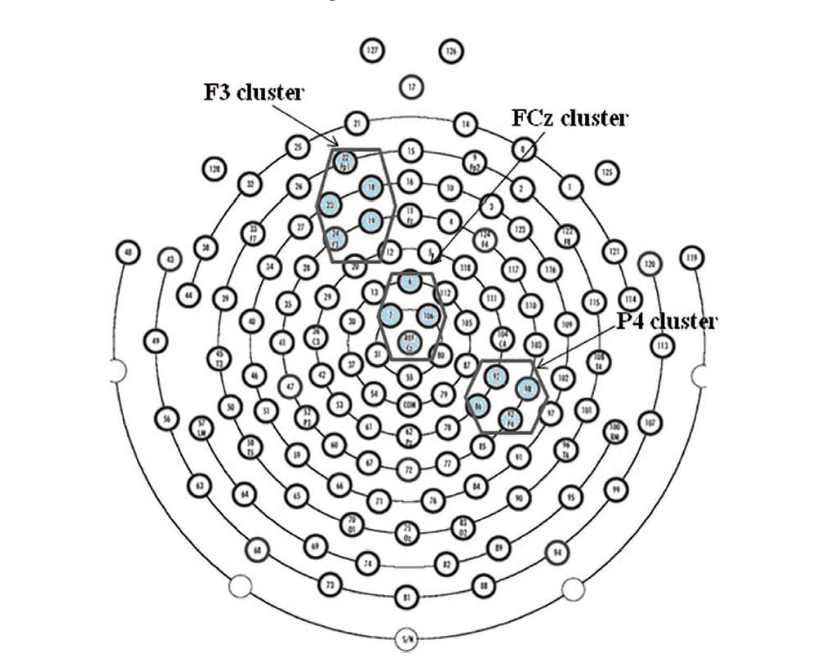
What important information can be derived from this image?
This is a diagram of EEG scalp electrode sites; in the designated study they where measuring theta waves (used in sensory processing)
F = frontal area
P = parietal area
These specific areas (F + P) capture the underlying brain areas involved in sensory processing
ERP (event related potential) responses
Captures how active the brain is during a discrete event
P = pos, N = n
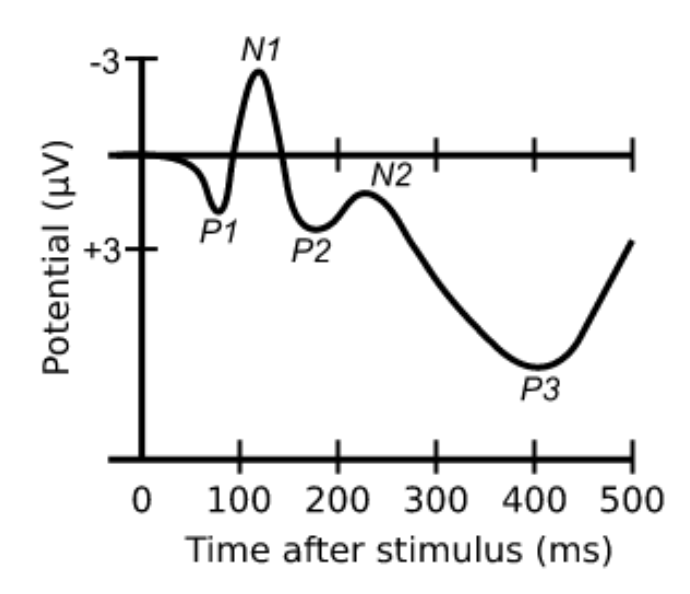
Study: neurodevelopmental differences to social exclusion - an event related neural oscillation study of children, adolescents, and adults → neural correlates
they saw quick engagement and more activity in the frontal area of the brain and at the midfrontal area after rejection
thus, there are distinct brain correlates associated with being rejected
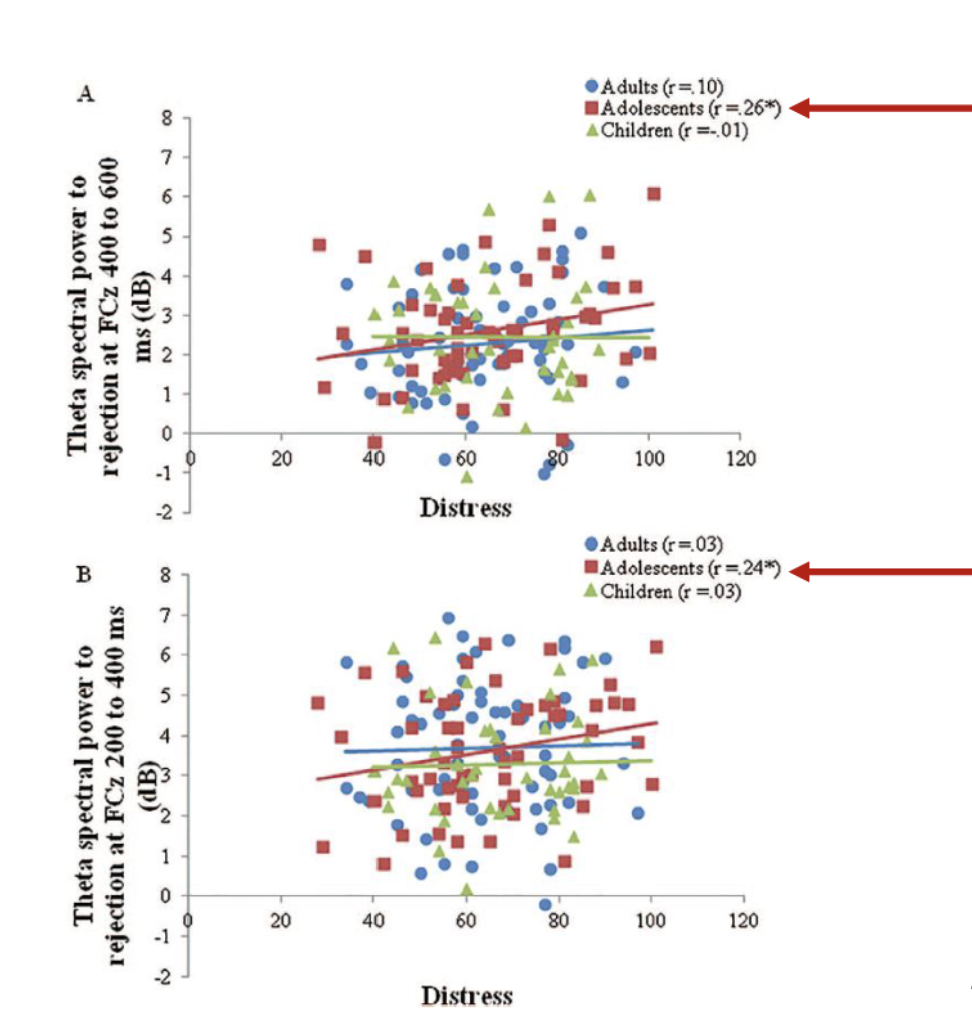
Study: neurodevelopmental differences to social exclusion - an event related neural oscillation study of children, adolescents, and adults → neural correlates x behavior
the functional link between theta power to rejection and self-reported distress was strongest among the adolescents (this was not seen in the other groups)
Perceived popularity
ratings of how well a child is liked by their peers, made by teachers, parents, and children
strongly related to popularity assessed with sociometric techniques
What are the two types of popular children?
popular friendly
popular aggressive
popular friendly children
friendly towards their peers and are well-liked
popular aggressive children
athletic, arrogant, and aggressive but at the same time are viewed as cool and attractive
study: the two faces of adolescents success with peers - adolescent popularity, social adaptation, and deviant behaviour → methods
this study tested the longitudinal outcomes of individuals with varying levels of popularity in highschool (ranging from unpopular to popular) and the values of their social groups
they examined levels of substance use and deviant behaviour
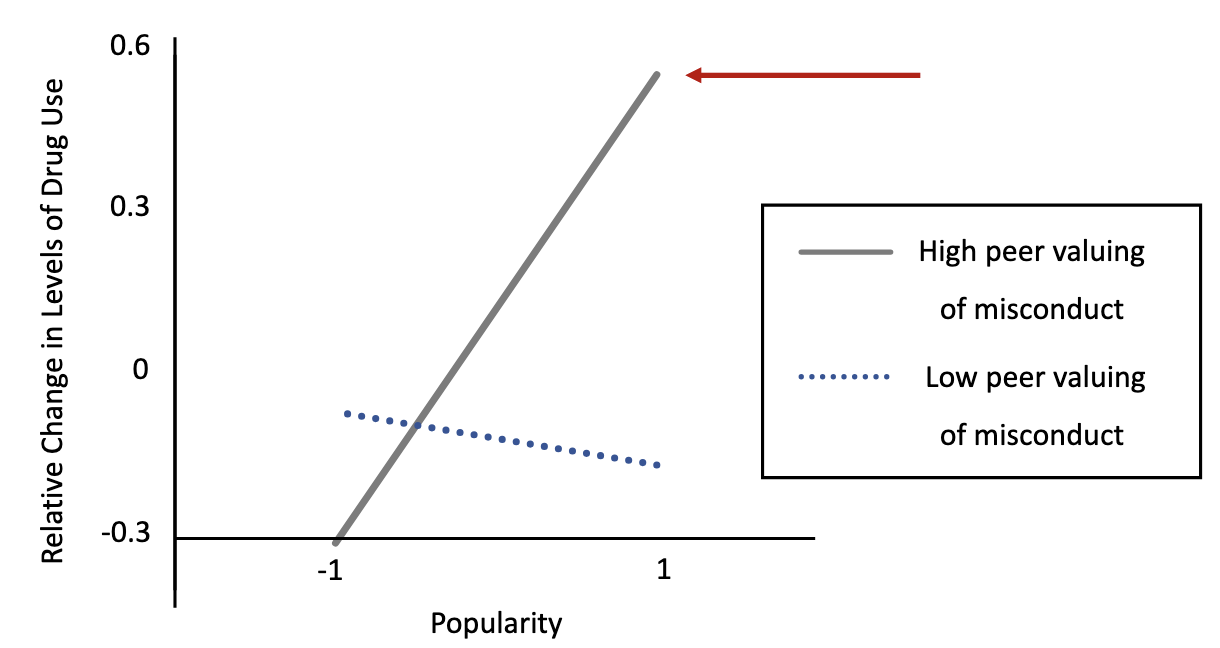
study: the two faces of adolescents success with peers - adolescent popularity, social adaptation, and deviant behaviour → results for substance use
More popularity and high peer valuing of misconduct = higher likelihood of drug use
Suggests differential susceptibility
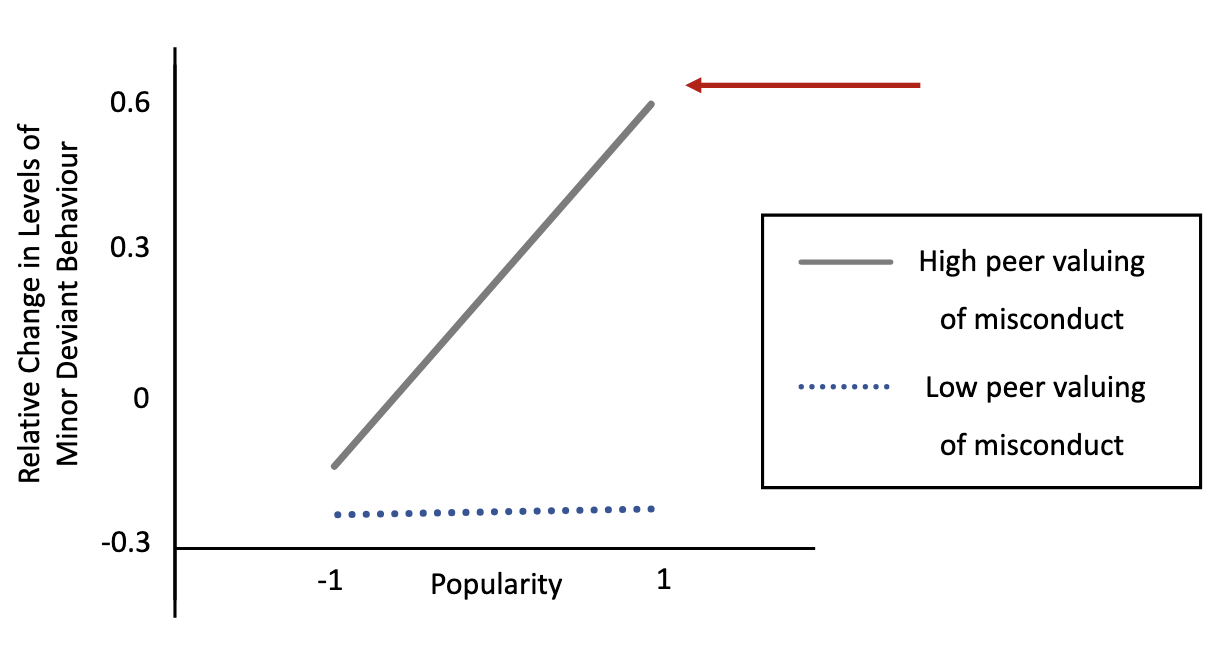
study: the two faces of adolescents success with peers - adolescent popularity, social adaptation, and deviant behaviour → results for deviant behavior
More popularity and high peer valuing of misconduct = higher relative changes in the level of minor deviant behavior
Suggests diathesis stress
Recall, peers are increasingly likely to reinforce each other as they get older and pressure each other to follow the rules of the group → so, if popular adolescents peers did not value misconduct they did not engage in it and vise versa
What are the two types of rejected children
non-aggressive rejected
aggressive-rejected
Non-aggressive rejected children
children who tend to be socially withdrawn and socially unskilled
Aggressive-rejected children
children who are not accepted by peers because of their low level of self-control and high level of aggression
What are the two types of neglected children?
socially reticent-anxious
uninterested-unsociable
Socially reticent-anxious children
children who watch others from afar, remain unoccupied in social company, and hover near but do NOT engage in social interaction
ex: children who engage in onlooking play behaviour
Uninterested-unsociable children
children who are not anxious or fearful but simply refrain from social interaction (they prefer to be alone)
What groups of children had the highest amount of loneliness?
the neglected and rejected groups
implication: popular children display more social skills and fewer behavioural problems
factors that affect peer acceptance
temperament
social cognitive skills
children’s goals in social interaction
one’s physical appearance
one’s ability to blend in
factors that affect peer acceptance → temperament
Temperament underlies many of the behaviours that affect peer status
aggressive-rejected children = low effortful control + high extraversion-surgency
non-aggressive rejected children = low extraversion surgency
popular children = neither inhibited or impulsive temperament
research on temperament x environmental interactions
Research has found that:
Poor effortful control and negative parenting leads to peer rejection
High shyness and negative parenting leads to social withdrawal
Study: inhibitory control, dyadic social behavior, and mental health difficulties in preschoolers → methods
inhibitory control typically = positive outcomes, but some studies suggest too little AND too much is problematic
they examined whether inhibitory control at T1 measurements of inhibitory control predicted observed social behaviour within an unfamiliar peer during a dyadic interaction and maternal report's of child's mental health difficulties at T2
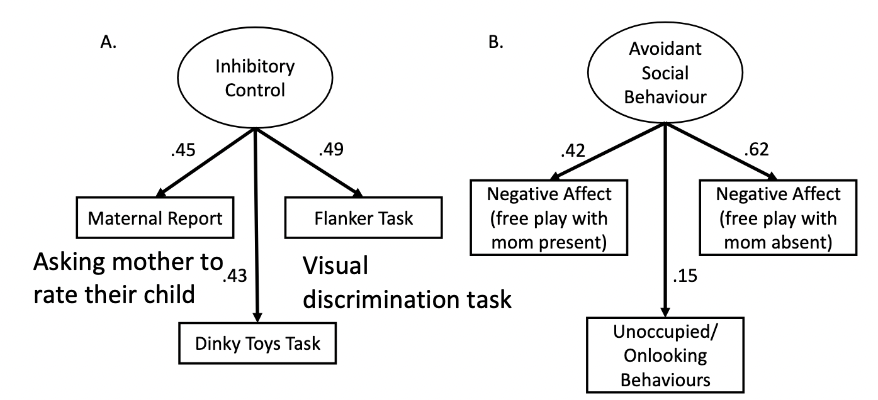
Study: inhibitory control, dyadic social behavior, and mental health difficulties in preschoolers → results
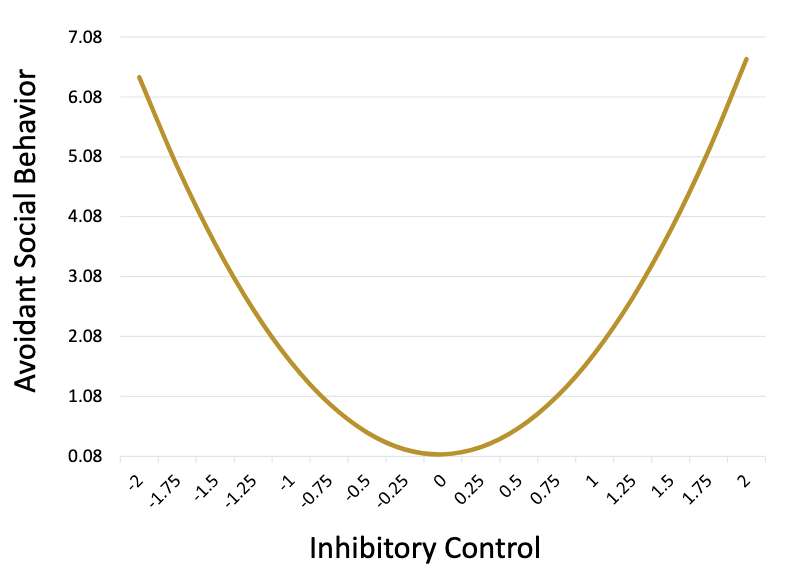
High and low levels of inhibitory control were associated with higher levels of avoidant social behaviours and mental health difficulties
Thus, having moderate levels of inhibitory control predicted the lowest amount of avoidant social behaviour → the goldilocks effect
factors that affect peer acceptance → social cognitive skills
Peer acceptance is associated with…
The social knowledge and skill to ask new acquaintances for information, offer information, or invite other children to join them in an activity
Better understanding of other people's mental states and more awareness of their emotions and motives
Deficits in social understanding can lead to maladaptive behaviour, poor interactions, and reduced peer acceptance
Dodge’s social information processing model
proposes that, in social encounters with peers, children follow these steps:
Attend to and understand other's social communications
Interpret other's behaviour
Formulate and clarify one's own goals based on these interpretations
Review possible strategies and actions to accomplish goals
Make decisions about how to act, evaluate likely responses of others, and assess the likelihood of success
Execute a social response or action
In social interactions, are children always reflective?
Children do not always respond reflectively and thoughtfully; sometimes their behaviour is impulsive or automatic
i.e, they may have social habits, which save time and energy but can also lead to problems
This has implications for social acceptance
Step by step social information processing is more likely to be used in novel situations with unfamiliar others
factors that affect peer acceptance → children’s goals in social interactions
Children whose goal is to create or maintain social relationships are likely to use prosocial strategies and to be accepted by peers
Children whose goal is to dominate others may choose coercive strategies and thus be rejected
factors that affect peer acceptance → one’s physical appearance
Everyone (from infancy to adulthood) bases their initial appraisals of people based on superficial physical characteristics
Children expect to find characteristics such as friendliness, fearlessness, and willingness to share in good‐looking peers, and they expect unattractive children to be aggressive, antisocial, and mean
factors that affect peer acceptance → one’s ability to blend in
Children who look or act odd are unlikely to be unpopular
Children with disruptive or hyperactive behaviour are likely to be rejected
Atypical behaviour becomes more salient to the peer group as children get older
Consequences of peer rejection
Loneliness
But, the effects are minimized if a child has at least one friend
Difficulties in school
Behavioral and emotional problems
Physical health problems
Can peer status change?
Children's peer status is quite stable over time
This is largely due to the reputational bias
And, the child's own behaviour also contributes to this stability
Reputational Bias
the tendency to interpret peers behaviour on the basis of past encounters with and feelings about them
(textbook) how can parents act as promoters of peer acceptance?
they can model being a positive partner
they can coach and teach children a variety of social skills through direct instruction and reinforcement
they can arrange social opportunities for their children and monitor them
(textbook) peer rejection of abused children
Parental abuse of children is likely to interfere with children's development of good peer relationships
Children who where physically abused = rejected due to high aggression
In addition, being abused increases the likelihood that children will victimize other children
(textbook) gender x friendship patterns
girls → friendships have more intimacy, self-disclosure, and co-rumination
boys → friendships are more focused on sports and games; they do not share feelings
(textbook) dominance hierarchies
Beginning at the end of the first year, infants have a rudimentary understanding of the concept of social dominance
By 1.5-3y of age, children in a group form a dominance hierarchy
Group hierarchies serve a variety of practical purposes
(textbook) clique
a group of children based on friendship and shared interests
across adolescence, cliques decline in importance
(textbook) crowd
a collection of people who share attitudes or activities that define a particular stereotype
ex: jocks, brains, populars, nerds, skaters, stoners, etc
replaces cliques during adolescence
(textbook) gangs
a group of adolescents or adults who form an allegiance for a common purpose
The gang may be loose-knit or a formal organization (formal gangs are often involved in criminal activity)