Quiz Reviews - Elementary Science
 Call Kai
 Learn
Learn Practice Test
 Spaced Repetition
 Match
Match Flashcards
 Knowt Play
1/95

Earn XP
Description and Tags
Name | Mastery | Learn | Test | Matching | Spaced | Call with Kai |
|---|
No analytics yet
Send a link to your students to track their progress
96 Terms
Hypothesis - Nature of Science
A proposed explanation based on limited evidence.
Prediction - Nature of Science
A forecast of what will happen under certain conditions.
If you wanted to investigate the effects of exercise on the human body what skills would you need to be able to use?
- Nature of Science
Record Keeping, Data Collection, Measurement, Graphing.
What are the 5Es? - Nature of Science
Exploration, Engagement, Explanation, Evaluation, Elaboration.
Exploration - Nature of Science
Is an activity for students to gather evidence that can be used to make sense of the natural world.
Engagement - Nature of Science
Explains step-by-step how the lesson will be introduced to peak student interest and raise student questions about science.
Explanation - Nature of Science
Is an interpretation of collected data.
Evaluation - Nature of Science
Could include formative or summative assessment.
Elaboration - Nature of Science
Is an activity for students to transfer or apply their new knowledge to new issues and problems.
What do you use to measure weight? - Nature of Science
Newtons (W)
What do you use to measure mass? - Nature of Science
Grams
What do you use to measure temperature? - Nature of Science
Celcius/Kelvin
What do you use to measure rate of flow of electrical current?
- Nature of Science
Amperage
What do you use to measure force?
Newtons (F)
What do you use to measure sound? - Nature of Science
Decibels
What do you use to measure energy? - Nature of Science
Joules
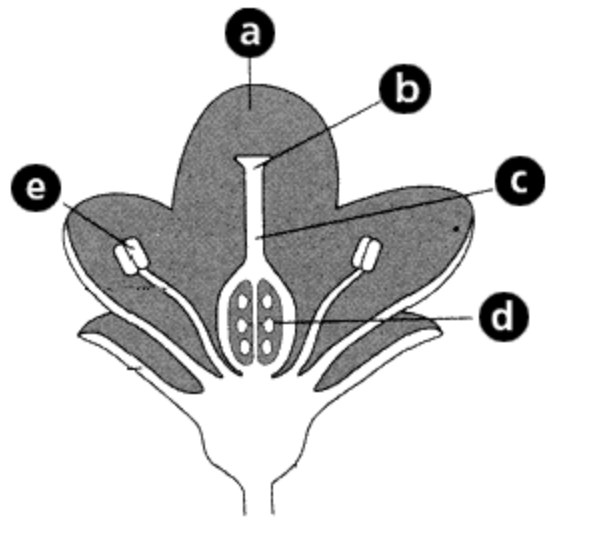
A represents… - Green Plants
Petal
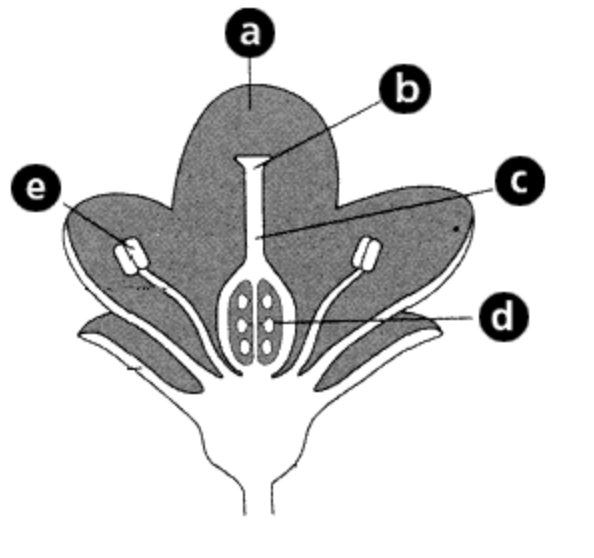
B represents… - Green Plants
Stigma
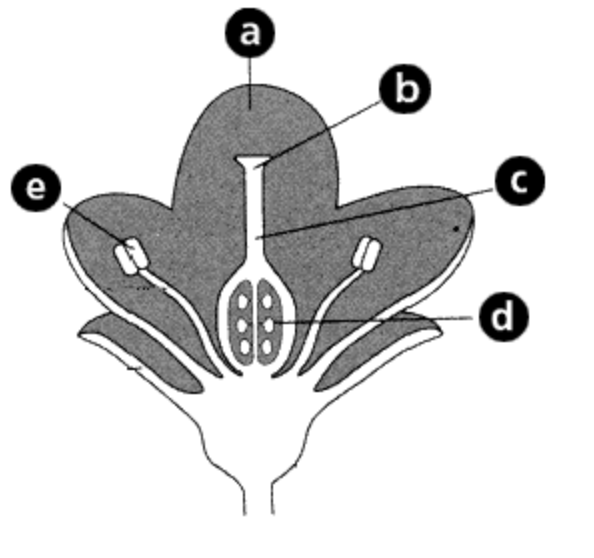
C represents… - Green Plants
Style
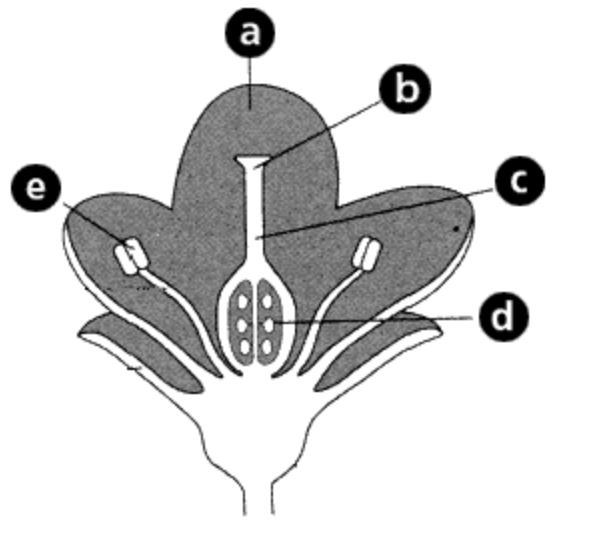
D represents… - Green Plants
Ovary
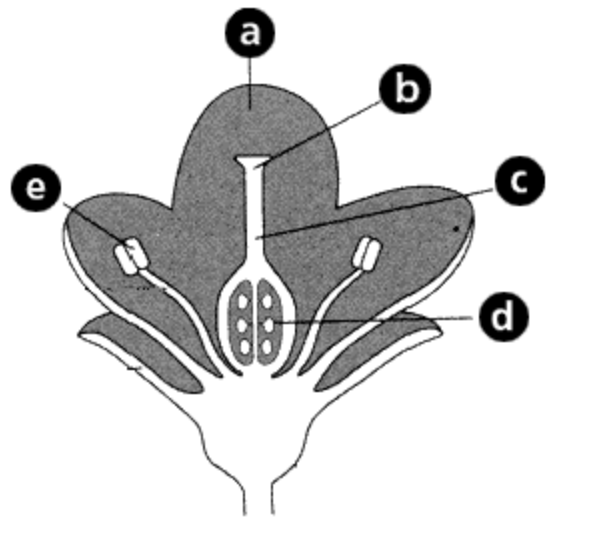
E represents… - Green Plants
Anther
The male reproductive organs or stamen of a flowering plant includes: - Green Plants
The anther and filament.
Green plants are capable of making their own food in any of their green tissues by photosynthesis. Living organisms capable of doing this are referred to as: - Green Plants
Autotrophs
The two classes of flowering plants, the most advanced and dominant forms of vegetation on Earth, are commonly referred to as:
- Green Plants
Monocots and dicots
How many bones would you expect to find in the skeleton of an average human adult? - Animals
206
What diseases does Bacteria cause? - Animals
Sore throat, tuberculosis, cholera
What diseases do viruses cause? - Animals
Colds, flu, covid, measles, mumps, polio
What diseases does fungi cause? - Animals
Ring worm, athlete’s foot, thrush
What diseases does protoctista cause? - Animals
Malaria, amoebic dysentery, sleeping sickness
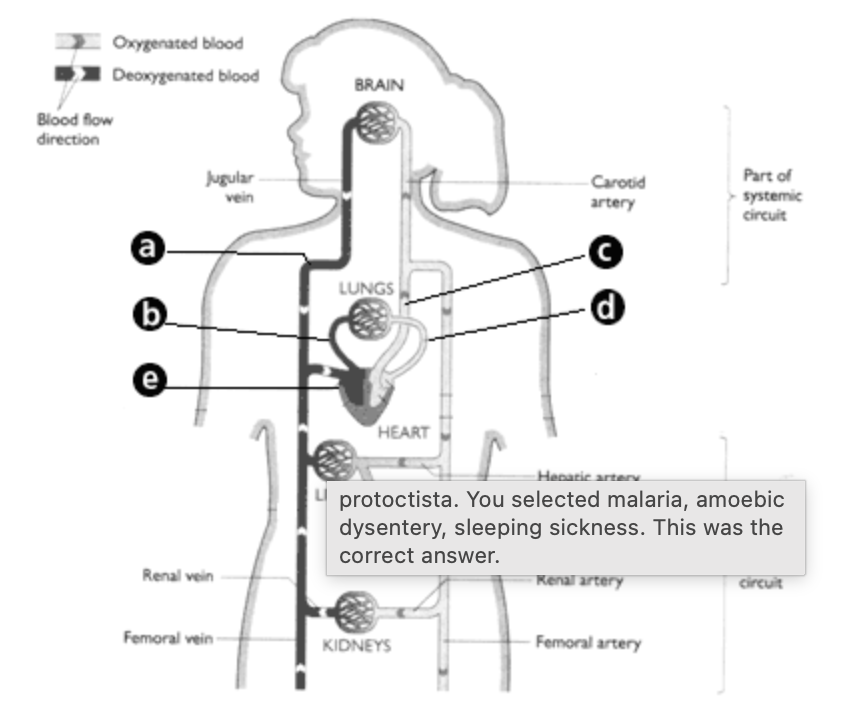
A represents… - Animals
Superior vena cava
B represents… - Animals
Pulmonary artery
C represents… - Animals
Aorta
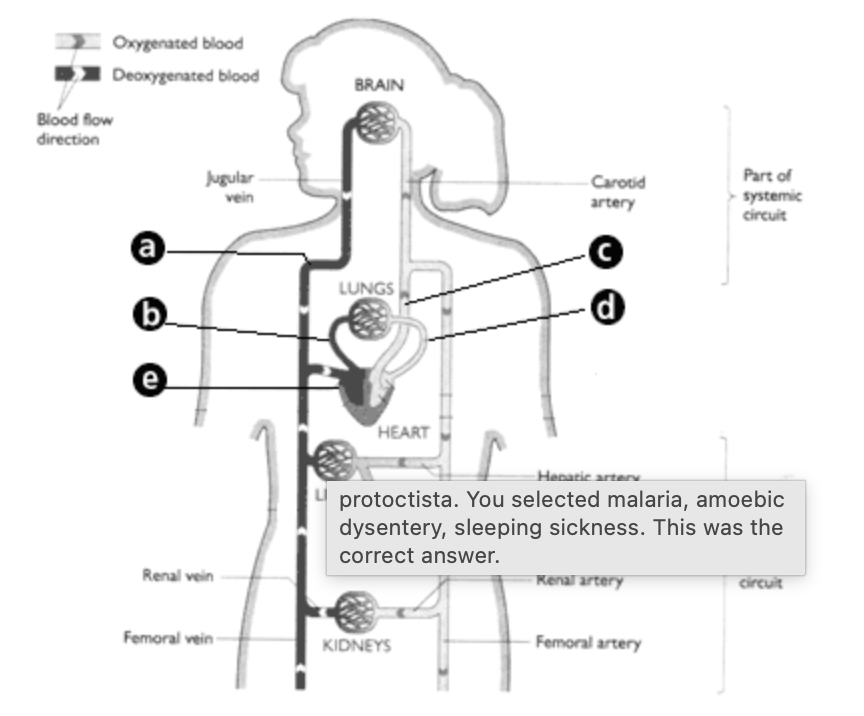
D represents… - Animals
Pulmonary vein
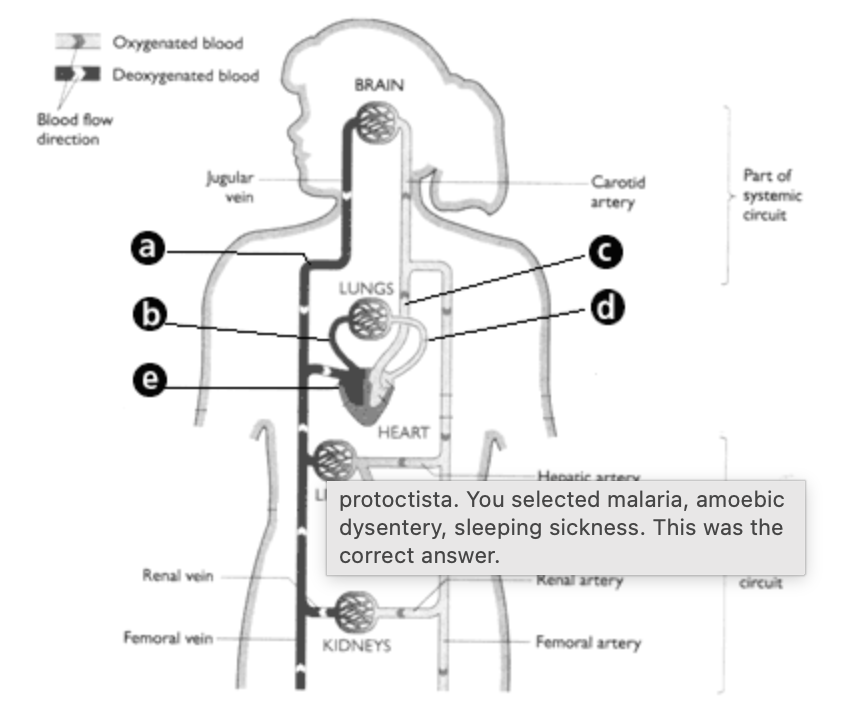
E represents… - Animals
Right atrium
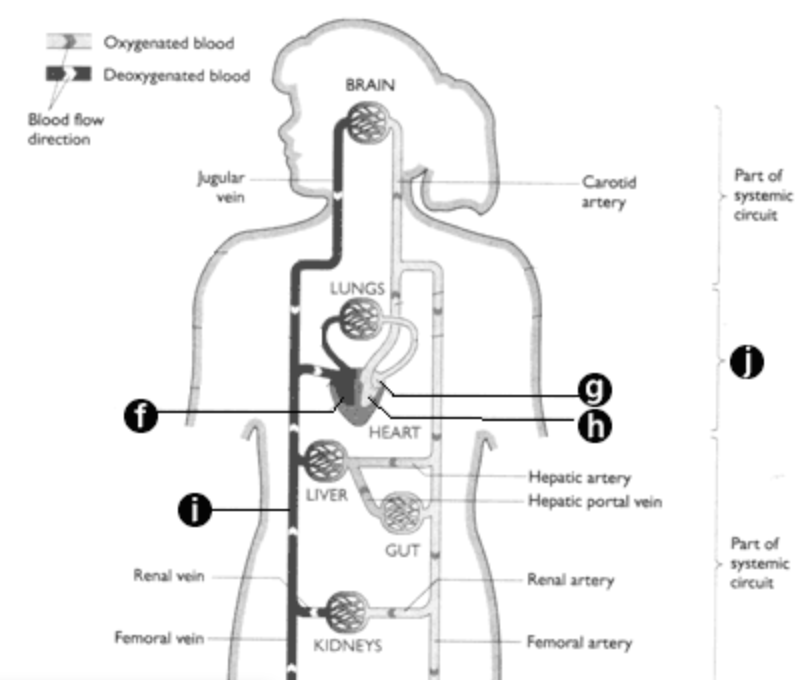
F represents… - Animals
Right ventricle
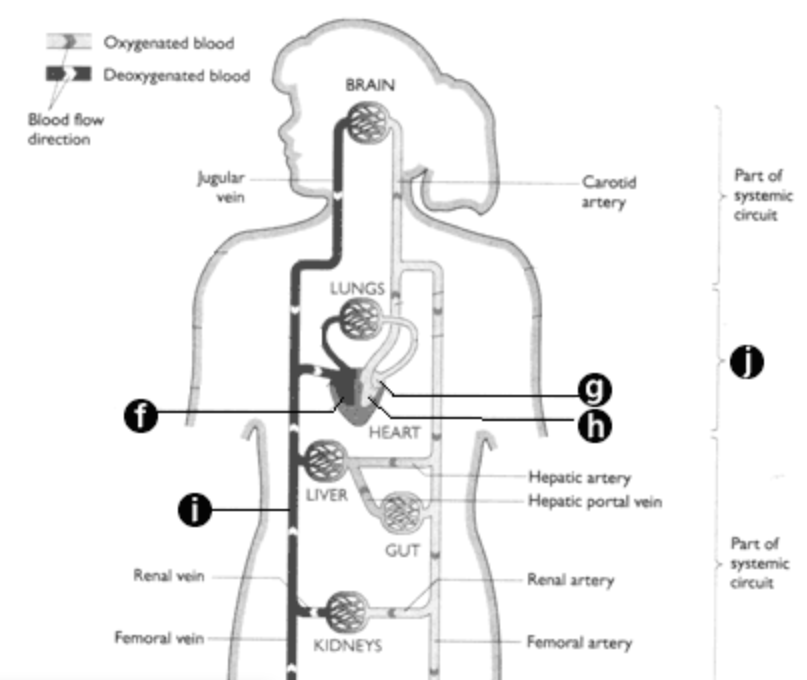
G represents… - Animals
Left atrium
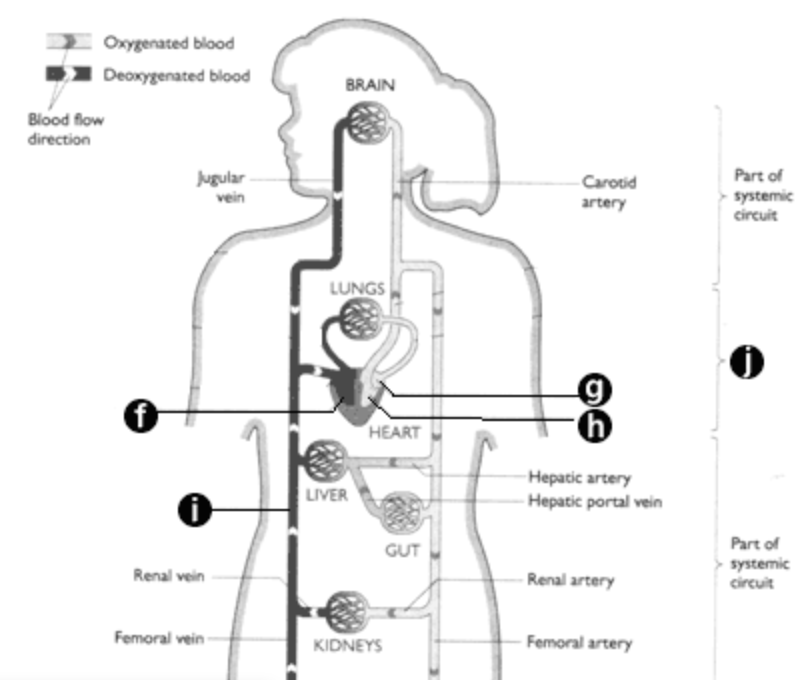
H represents… - Animals
Left ventricle
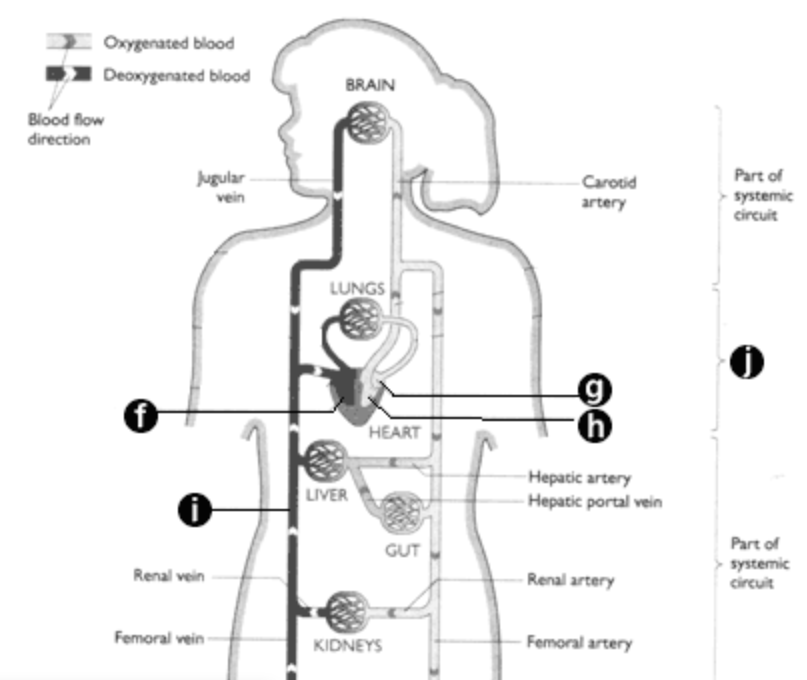
I represents… - Animals
Inferior vena cava
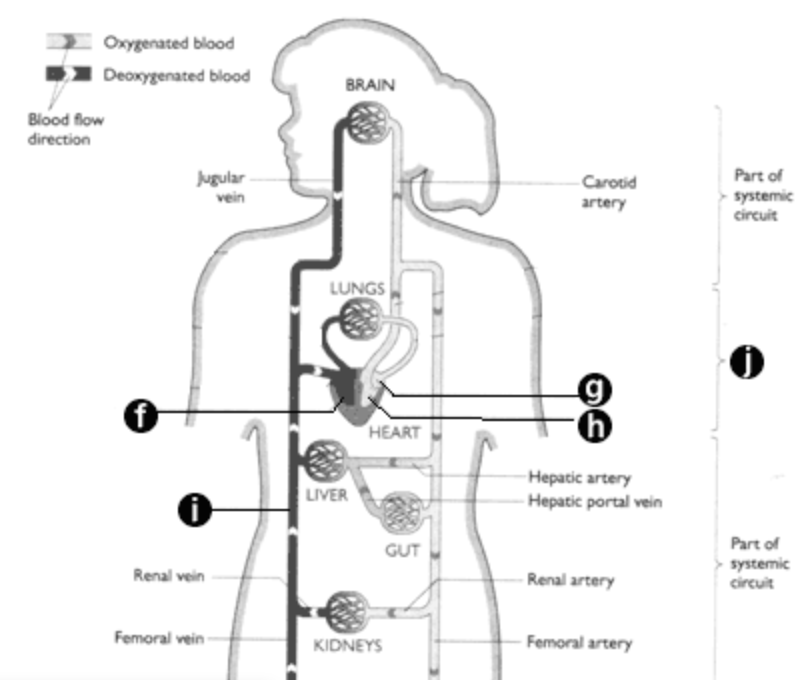
J represents… - Animals
Pulmonary circuit
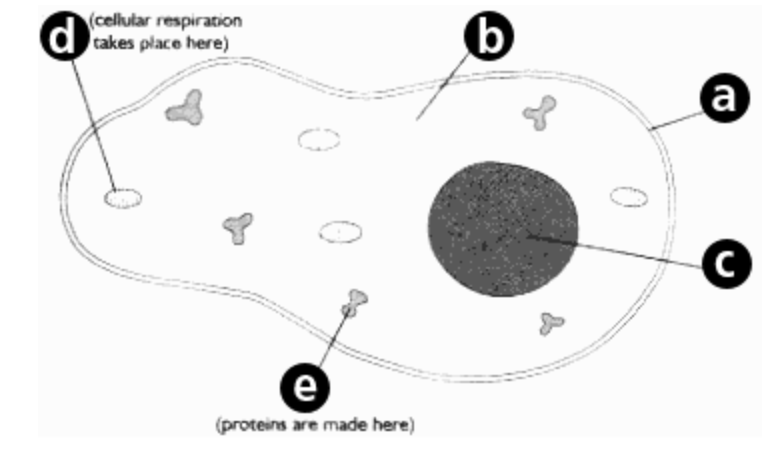
Cell membrane - Animals
A
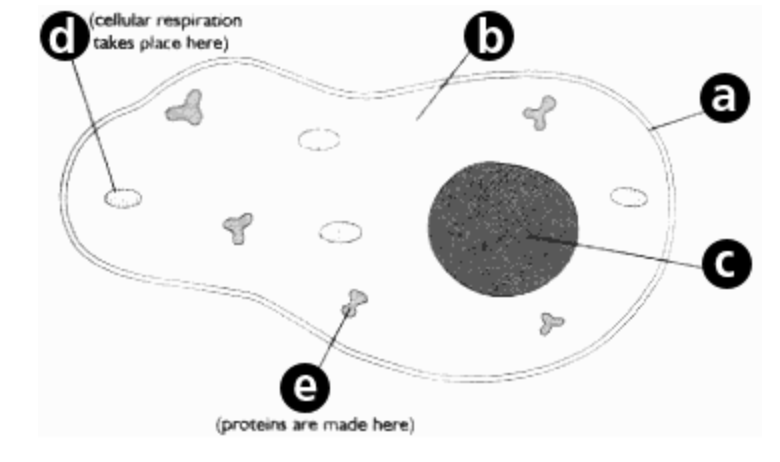
Cytoplasm - Animals
B
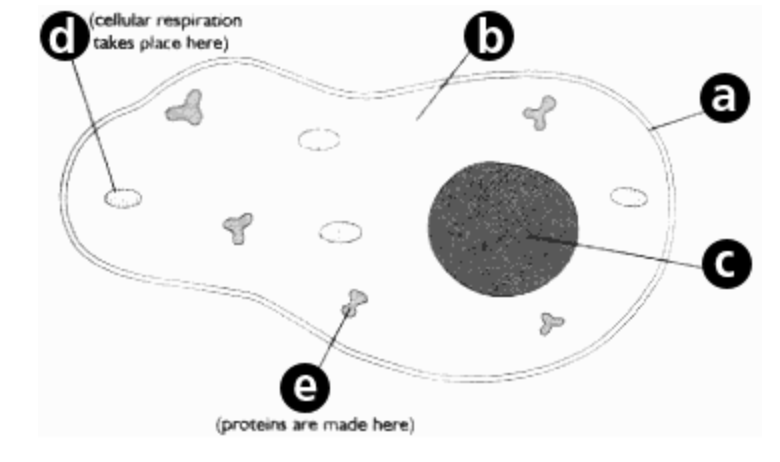
Nucleus - Animals
C
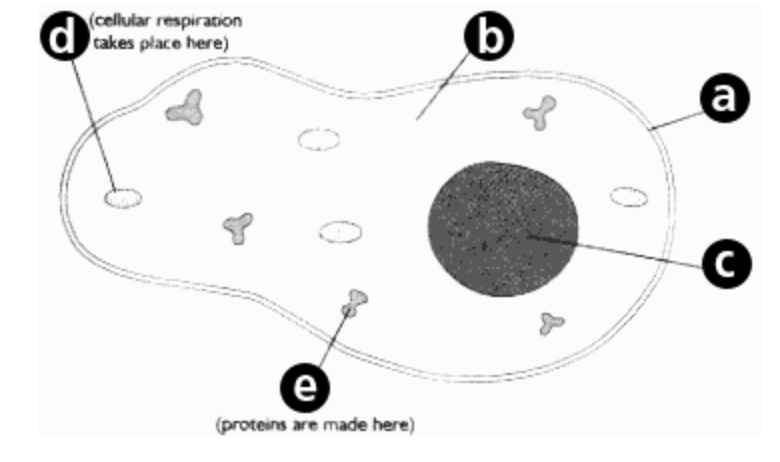
Mitochondria - Animals
D
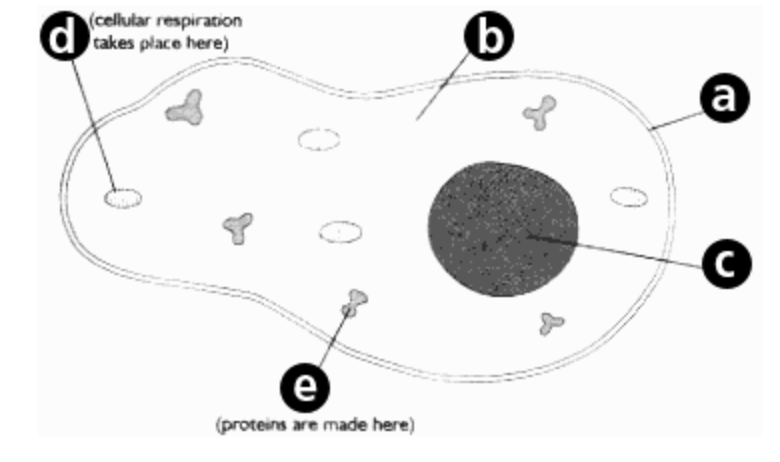
Ribosome
E
A scientist described two modern-day species as sharing a common ancestor. What does it mean when two species share a common ancestor? - Evolution and Heredity
It means that both species evolved from one species that lived in the past.
What are the two parts of a scientific name? - Evolution and Heredity
Genus and Species
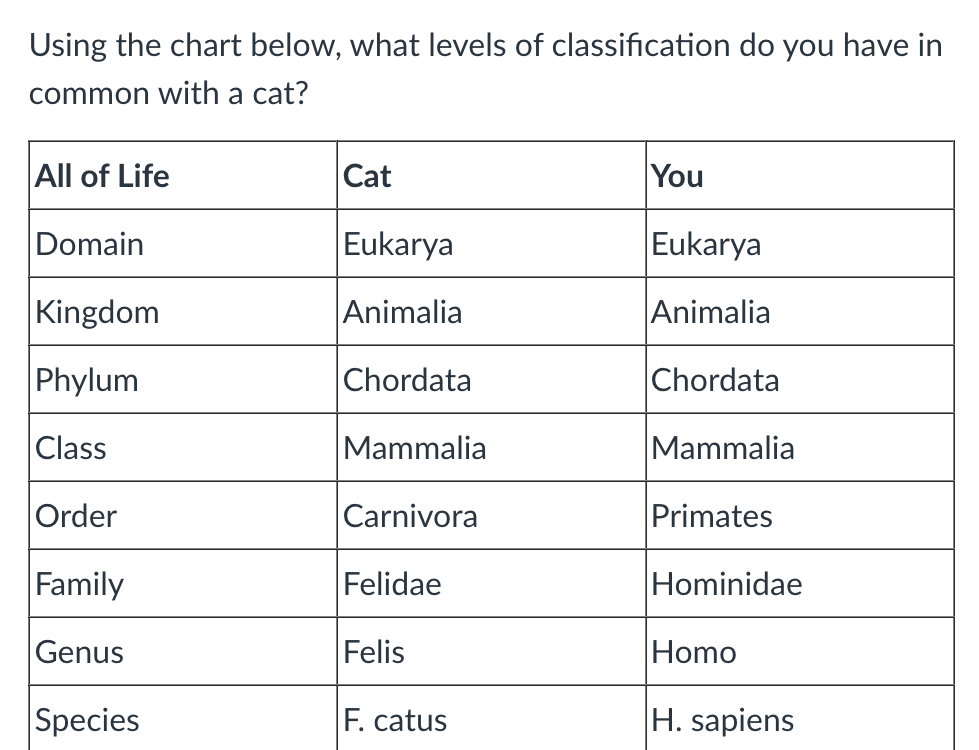
Look at the picture! - Evolution and Heredity
Domain, Kingdom, Phylum, Class
How many chromosomes would you expect to find in the typical SEX cells or gametes of a healthy human male or female? - Evolution and Heredity
23
How many chromosomes would you expect to find in the typical BODY cells (e.g. skin cells) of a healthy human male or female? - Evolution and Heredity
46
Grass - Living things and their habitats
Producer
Fox - Living things and their habitats
Secondary Consumer
Rabbit - Living things and their habitats
Primary Consumer
A place where plants and animals live and grow naturally is called a… - Living things and their habitats
A habitat
What does the term invertebrate mean? - Living things and their habitats
An animal without a backbone.
What do we call a series of changes an animal experiences during its life? - Living things and their habitats
Metamorphosis
What is a producer in a food chain? - Living things and their habitats
An organism that makes their own food.
What does a food web show? - Living things and their habitats
Several food chains joined together to make one.
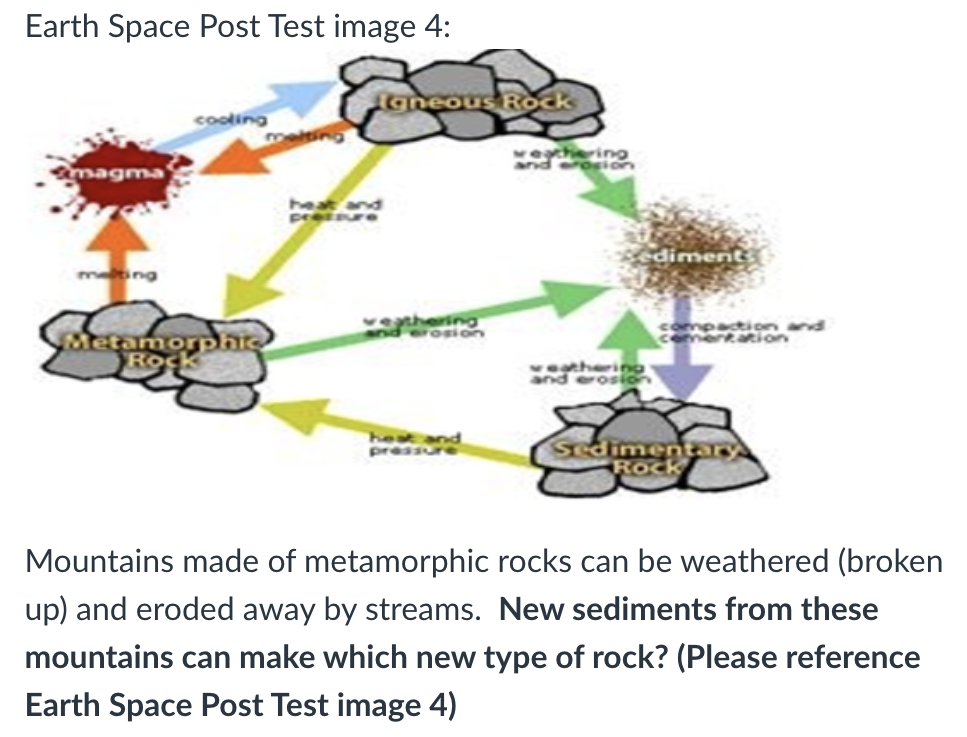
Look at the picture! - Rocks, soils, and fossils
Sedimentary Rock
Can water dissolve rock material and move the dissolved material to a new location? - Rocks, soils, and fossils
Yes, water can dissolve rock, that is called weathering. Yes, dissolved solid rock material to can move to new location, that is called erosion.
Which of the following can weather solid rock? - Rocks, soils, and fossils
Wind, rain and growth of plants.
Igneous rock - Rocks, soils, and fossils
Forms when magma cools and forms crystals.
Metamorphic rock - Rocks, soils, and fossils
Arises from the transformation of existing rock to new types of rock through heat and pressure.
Sedimentary rock - Rocks, soils, and fossils
Made up of tightly packed sediments and can form as mineral precipitate from saline water.
Soil is made up of both organic and inorganic matter. - Rocks, soils, and fossils
True (64)
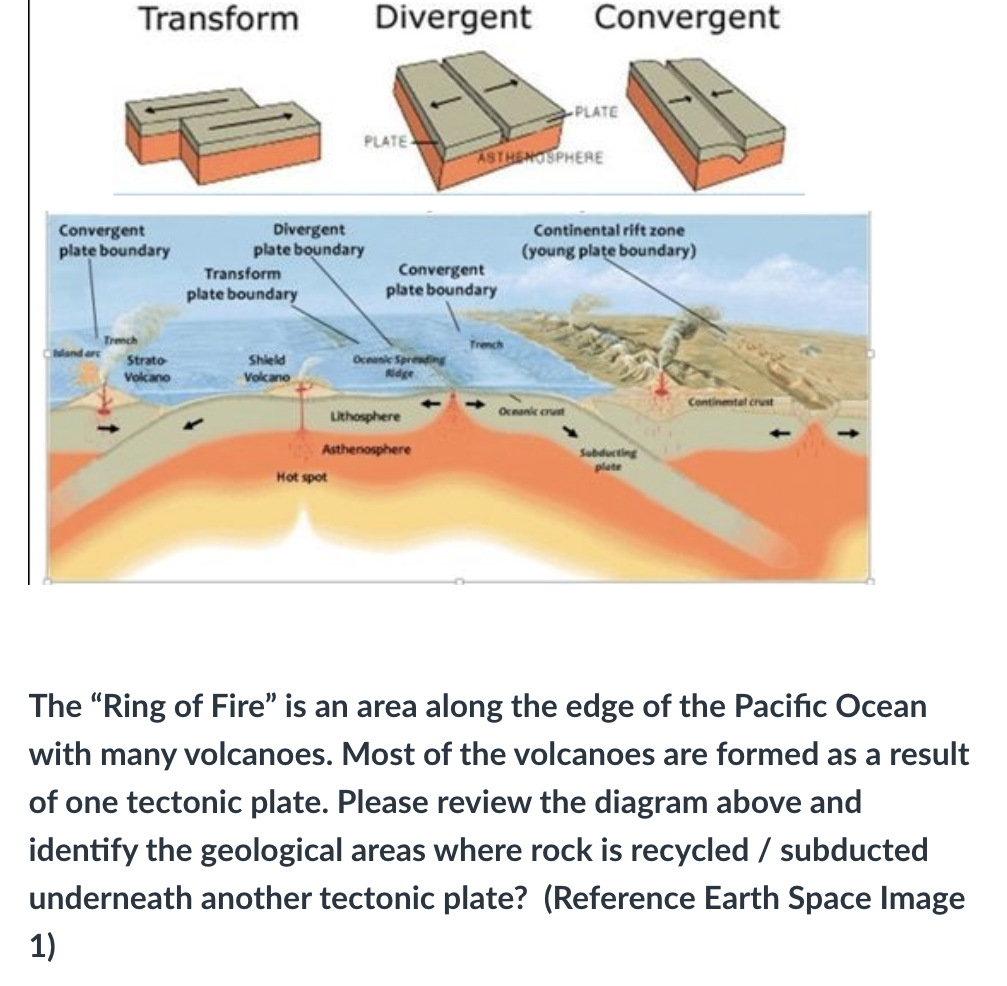
Look at the picture! - Earth and space science
Convergent boundary
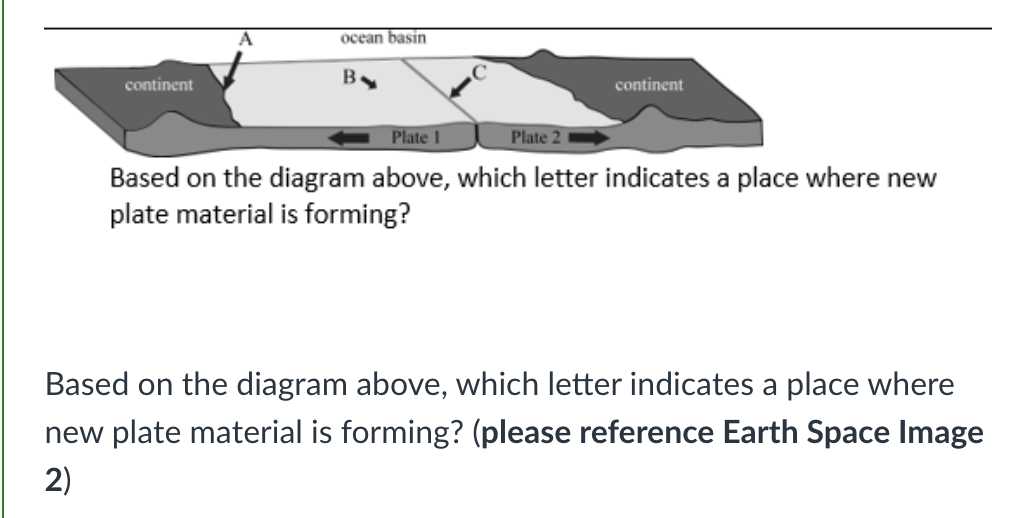
Look at the picture! - Earth and space science
C
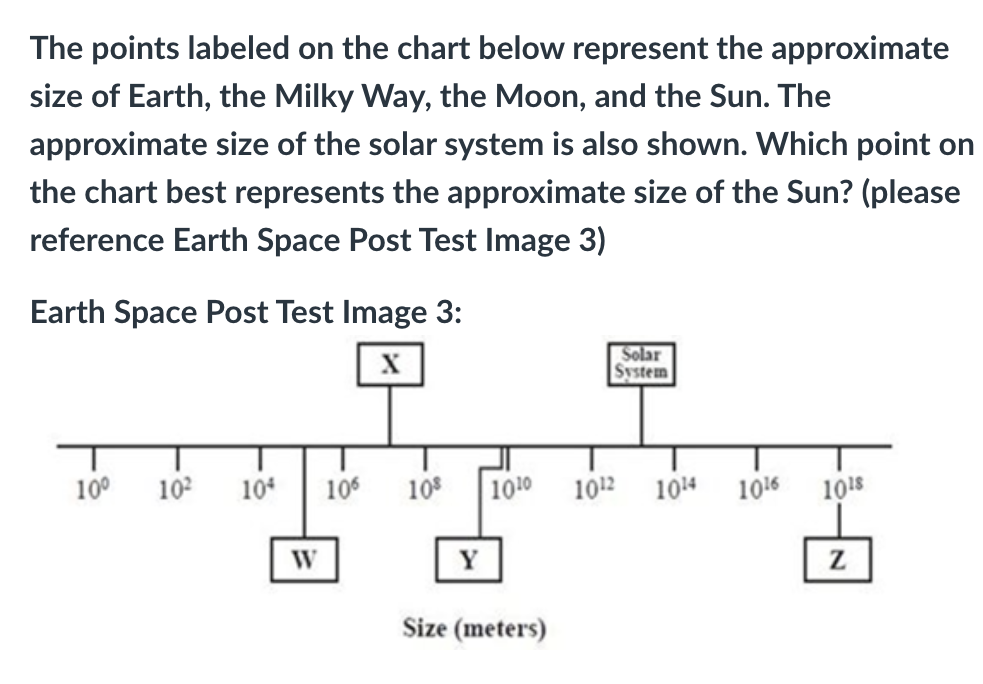
Look at the picture! - Earth and space science
Y
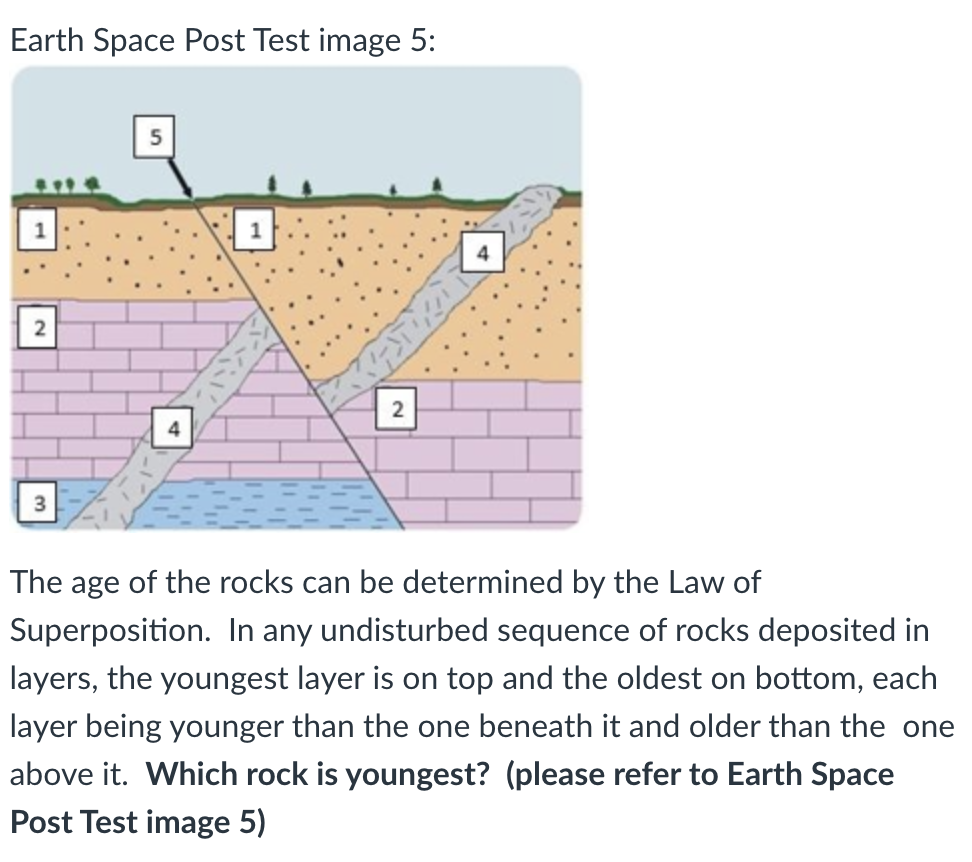
Look at this picture! - Earth and space science
4
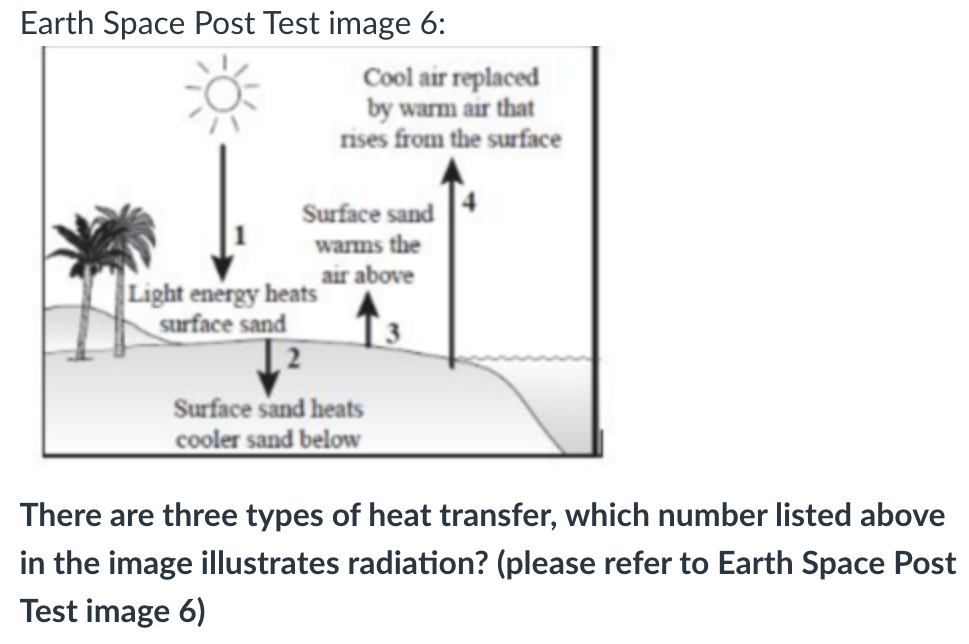
Look at this picture! - Earth and space science
1
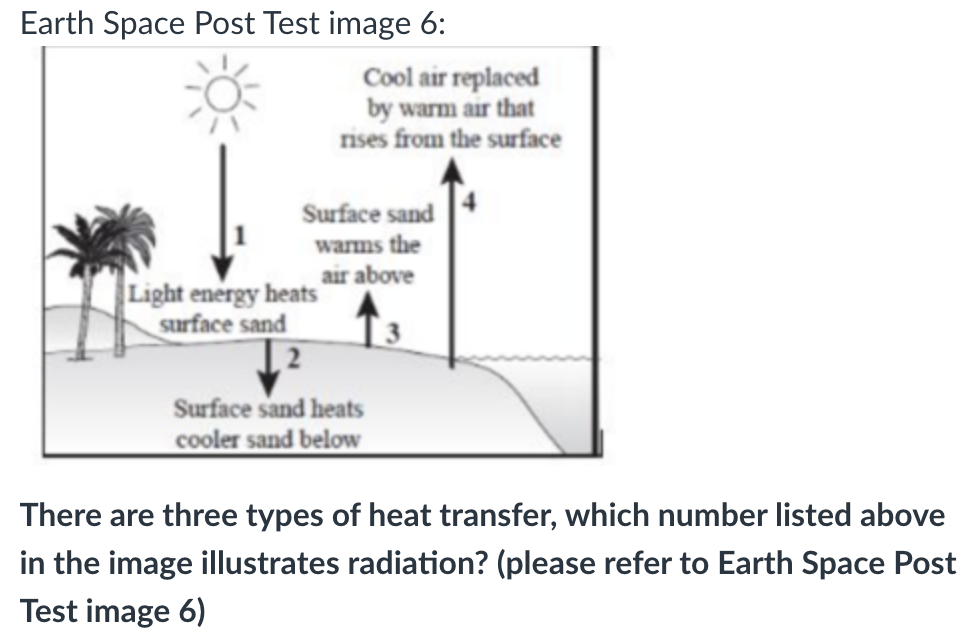
Look at this picture! - Earth and space science
4
The gravitational pull of the Moon has the greatest influence on the water levels of Earth’s ocean tides. If the distance between the Moon and Earth were to increase steadily for one week, which water-level changes would be expected to occur? - Earth and space science
High tides would get lower and low tides would get higher.
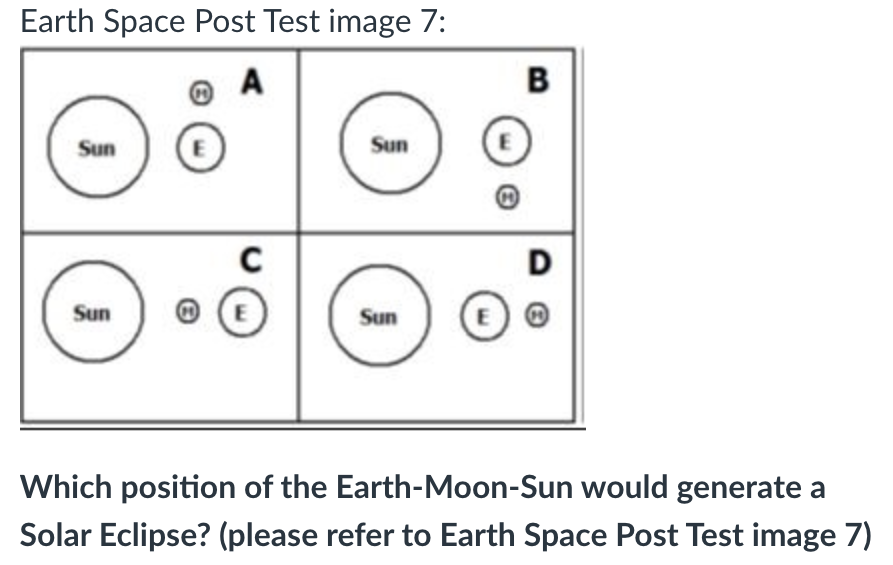
Look at the picture! - Earth and space science
C
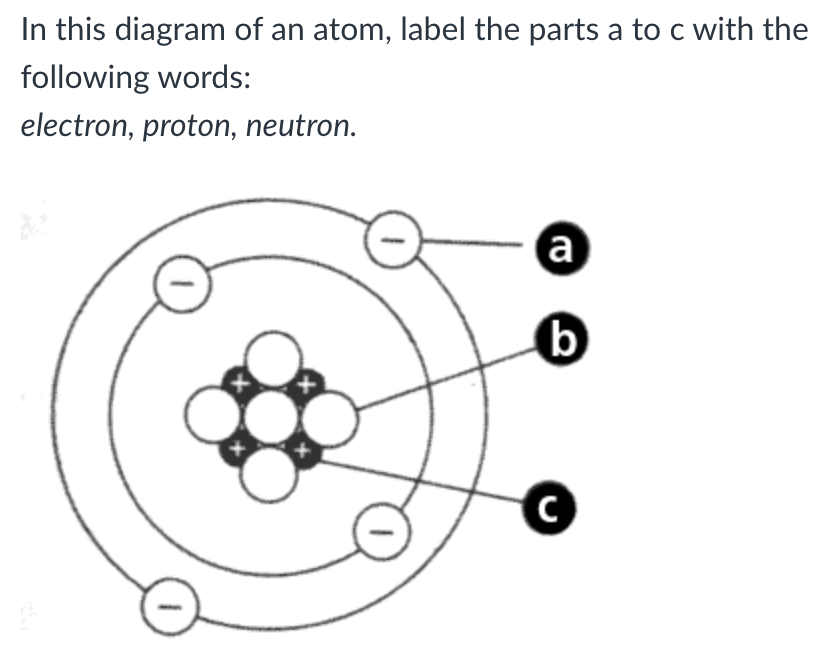
Label a, b, c - Material and matter
A- electron
B- neutron
C- proton
Identify each of the following materials as an element, a compound or a mixture.
Pure water
Honey
Copper
-Material and matter
Pure water = compound
Honey = mixture
Copper = element
Nick combines Substance X with Substance Y. The two substances react completely to form new Substance Z. Nick measures an increase in temperature as the change occurs. Did Nick observe a physical change or chemical change? -Matter and changes
The new substance Z is made creating a chemical change, and the evidence is in the heat and new substance being produced.
Which statement best describes the molecules of a gas? - Matter and changes
The molecules are far apart from one another.
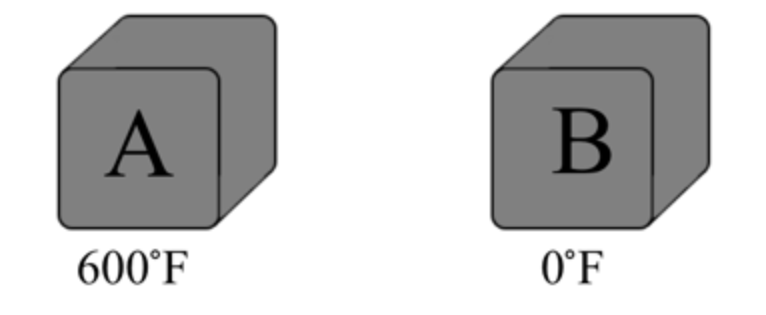
A scientist has two identical blocks of steel. She heats one block of steel to 600°F and chills the other to 0°F. She then places the two blocks near each other as pictured. She leaves the blocks in place for five minutes. Which of the following statements correctly describes the net transfer of energy between Block A and Block B over those five minutes? - Matter and changes
Block A radiated more energy than it absorbed and Block B absorbed more energy than it radiated.
The temperature of a clay ball is 80ºF and the temperature of the water in a bucket is 50ºF. A student places the clay ball into the bucket of water. Which of the following describes how thermal energy is transferred between the ball and the water? - Matter and changes
Thermal energy is transferred from the ball to the water until they are both at 65ºF.
A person puts a bottle of juice in a refrigerator. The juice gets cooler while it is in the refrigerator. As the juice gets cooler, what happens to the amount of energy the juice has? - Matter and changes
The amount of energy the juice has decreases as it gets cooler.
A person walks into a small room that is cool and dark. She lights a candle in the room. What will happen to the air in the room after the candle is lit? - Matter and changes
The air in the room will get a little warmer even though she may not notice it.
Which of the following describes the motion of the molecules in a glass of liquid water? - Matter and changes
The molecules are moving farther apart.
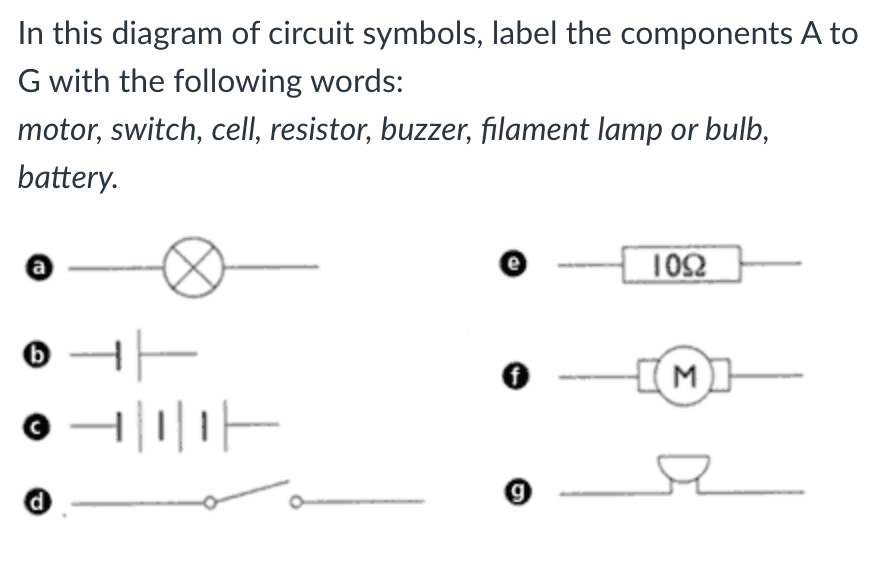
Label a - g with motor, switch, cell, resistor, buzzer, filament lamp/bulb, battery
- Electricity
A- Lamp
B- Cell
C- Battery
D- Switch
E- Resistor
F- Motor
G- Buzzer
Under normal circumstances, which of the following materials are good electrical conductors, poor electrical conductors, or insulators? Answer 'good', 'poor', or 'insulator'.
Copper
Rubber
Distilled Water
Salt Water
-Electricity
Copper = Good
Rubber = Insulator
Distilled Water = Poor
Salt Water = Good
If a 120-volt voltage source is connected to a wire with 10 ohms of resistance, how much current is flowing through the wire? - Electricity
12
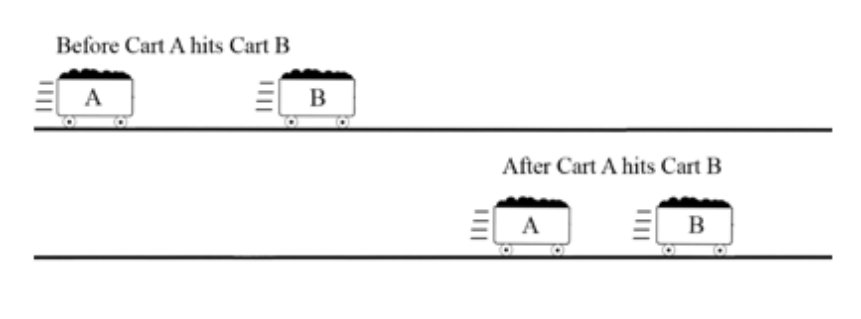
Two carts are rolling on a smooth flat surface. Cart A is rolling faster than Cart B and hits the back of Cart B. After Cart A hits Cart B, both carts continue rolling forward. Each cart is going a different speed than it was before, Cart B is going faster and Cart A is going slower. Was energy transferred from Cart A to Cart B?
- Energy
Yes, the change in speed is a sign that energy was transferred.
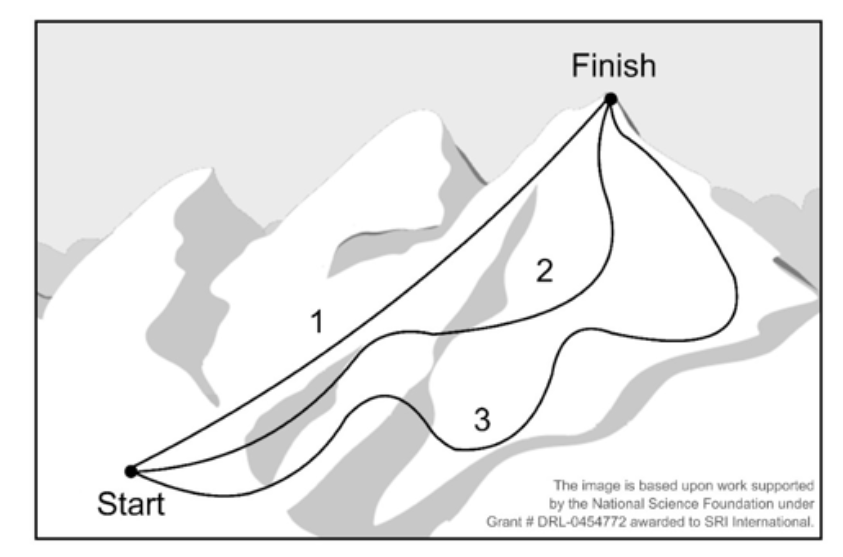
Three hikers take three different paths to the top of a mountain, paths 1, 2, and 3. The hikers are all the same mass, height and weight. When all of the hikers are at the finish point at the top of the mountain, which hiker will have the greatest amount of gravitational potential energy? - Energy
The gravitational potential energy is the same for all of the hikers.
Lily shoves a book, and it slides across a table. The book slows down and then stops. As the book moves, the book and the table get a little bit warmer. What happened to the motion energy (kinetic energy) of the book? - Energy
It was transformed into both a force and thermal energy.
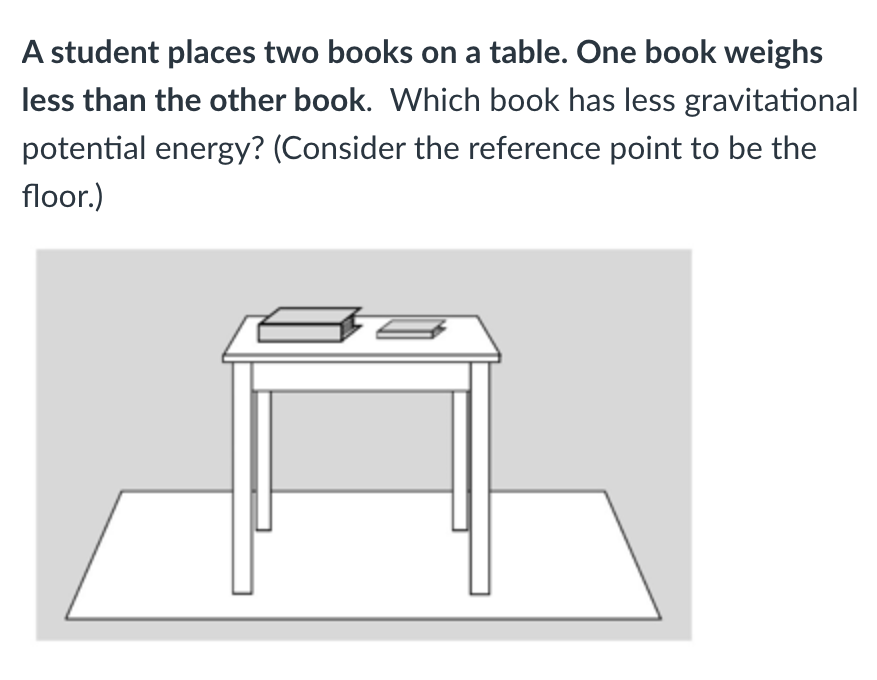
Look at the picture! - Energy
The book that weighs less has less gravitational potential energy.
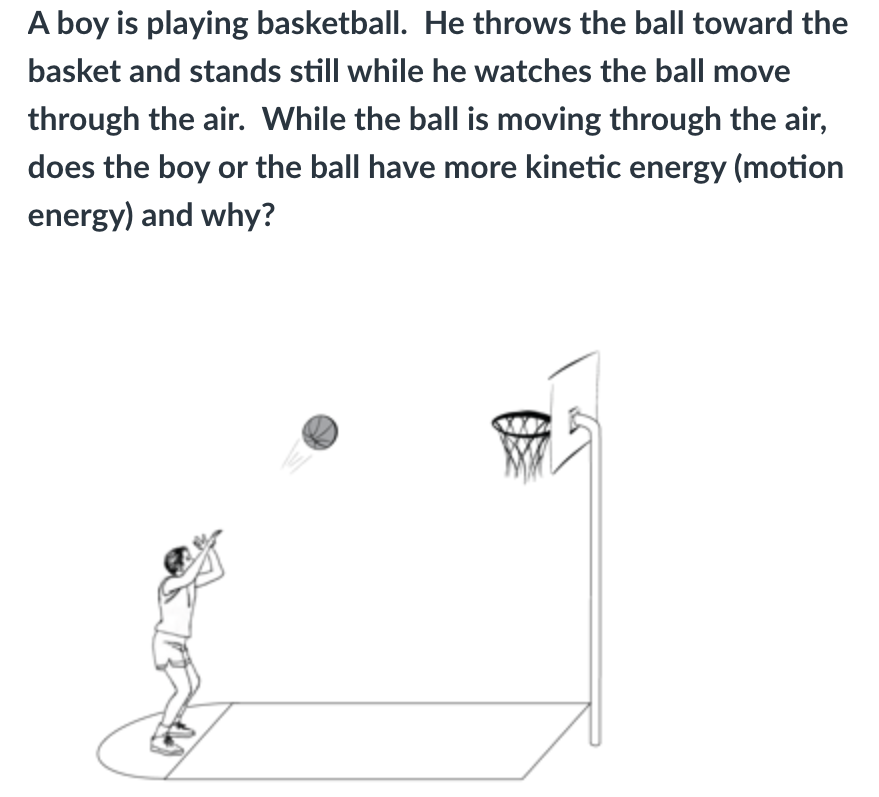
Look at the picture! - Energy
The ball has more kinetic energy because it is moving, and the boy is not.
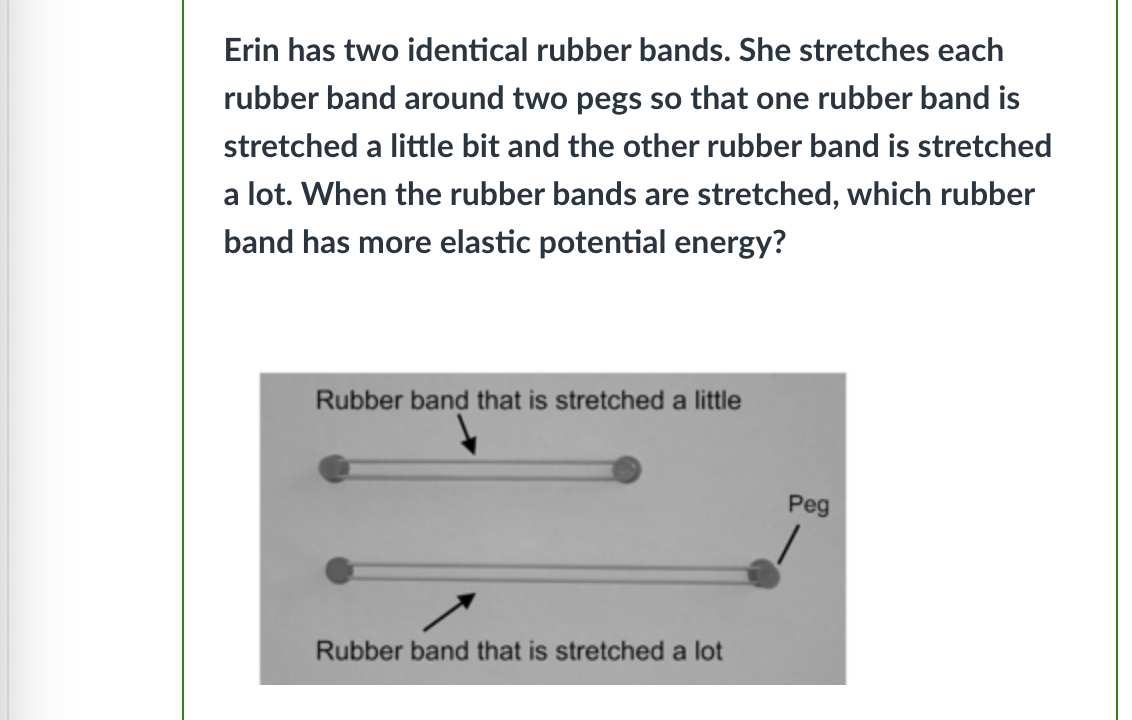
Look at the picture! - Energy
Rubber band stretched a lot.
In what units are forces measured? - Forces, magnets, sound, and light
Newtons (N)
The primary colors of light are… - Forces, magnets, sound, and light
Red, blue, and green.
Translucent - Forces, magnets, sound, and light
Allows light to pass through, but object appears blurred.
Transparent - Forces, magnets, sound, and light
Allows light to pass through and the object can be seen clearly.
Opaque - Forces, magnets, sound, and light
Blocks light and images completely.
Sounds generally travel faster in solids and liquids than in air. - Forces, magnets, sound, and light
True (96)