Resonance FInal
 Call Kai
 Learn
Learn Practice Test
 Spaced Repetition
 Match
Match Flashcards
 Knowt Play
1/48

There's no tags or description
Looks like no tags are added yet.
Name | Mastery | Learn | Test | Matching | Spaced | Call with Kai |
|---|
No analytics yet
Send a link to your students to track their progress
49 Terms
What is a teratogen?
any agent that can cause birth defects or increase their risk by interfering with normal fetal development
Teratogens associated with cleft lip/palate
cigarette smoke, certain drugs including phenytoin, valium, corticosteroids, and lead pollution
characteristics of Wolf-Hirschhorn syndrome
deletion or missing portion of short arm of chromosome 4
cleft palate is common, distinctive facial appearance linked to a greek helmet
hypertelorism
dysplastic ears and periauricular tag
occasional hearing loss
what syndrome?
Wolf-Hirschhorn Syndrome

Treacher Collins syndrome characteristics
mutations on the long arm of chromosome 5
frequently occuring cleft
pronounced micrognathia
downward slanting of the palpebral fissures
colobomas of the lower eyelids
middle ear anomalies
communication deficits related to conductive hearing loss and micrognathia
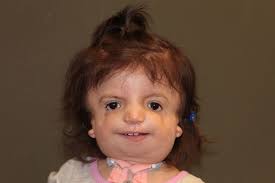
what syndrome?
Treacher Collins syndrome
Moebius syndrome
absence or udner development of abducent nerve (CN VI) and facial nerve (CN VII)
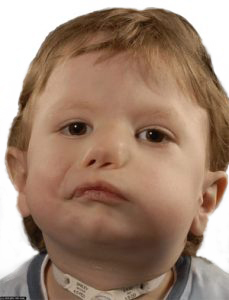
what syndrome?
Moebius syndrome
hemifacial microsomia
facial asymmetry due to unilateral hypoplasia of the face, malar, maxillary, and/or mandubular processes
pierre robin sequence
micrognathia that may be due to crowding in utero or may be genetic as part of a syndrome
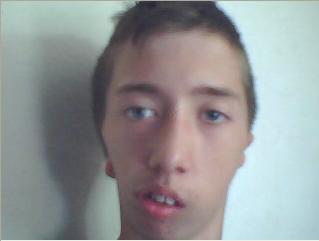
what syndrome
hemifacial microsomia
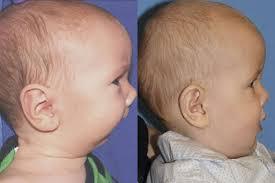
what syndrome?
Pierre Robin Sequence
velopharyngeal insufficiency
caused by an abnormal structure
speech therapy will NOT fix this because it is structural
velopharyngeal incompetency
occurs when there is poor velar mobility. there is typically enough tissue but the velum is not moving properly to close the gap. this is typically neurophysiological and can be managed with a prosthetic device.
velopharyngeal mislearning
Functional issue where abnormal articulation or faulty placement causes nasal emission or hyper natality, even though there is no structural abnormality. This typically requires speech therapy to correct.
migration
the cranial neural crest cells travel from the neural tube to their specific target destinations within the developing embryo
proliferation
Once the cells arrive at their target destination in the facial region, they proliferate (multiply) so that the facial structures can begin to take shape
differntiation
This is an ongoing process where the cells specialize to form specific tissues, such as skin, muscle and cartilage and development. The cartilage is replaced by bone
submucous cleft
congenital defect that affects the underlying structures of the pallet while leaving the oral surface Macosa intact
overt submucous cleft palate
Can be seen on the oral service and diagnose through a standard intraoral examination. Physical signs include a Bifi or hypoplastic uvula or a zone pellucida, bony notch in the midline of the posterior border of the hard palate.
bifid
split
hypoplastic uvula
underdevelopedx
zone pellucida
bluish translucent area in the middle of the velum caused by thin mucosa and lack of underlying muscle mass
what side does a uniltaeral cleft usually occur on with the primary palate?
left side
What is a cranial neural crest cell?
primary cells from which the tissues of the face are derived
how do cranial neural crest cells function?
3 main phases of development:
migration: travel from neural tube at different rates to their specific target destinations within the embryo
proliferation: once the cells arrive at their target destinations in the facial region, they rapidly multiple so that the facial structures can begin to take shape
differentiation: the cells undergo a ongoing process of specialization to form specific tissues, such as skin, muscle, and cartilage (which is later replaced by bone)
factors affecting vp closure?
velum lentgh
pharyngeal depth
muscular function and integrity
levator veli palatini
pulls velum superiorly and posteriorly to posterior pharyngeal wall
levator veli palataini is innervated by?
CN X
musuclus uvulae
Shortens and bronze uvula to help it close against posterior pharyngeal wall
innervation of musculus uvulae
CN X
palatoglossus
if tongue is fixed, pulls soft palate down (opposes levator)
if palate is fixed, the palatoglossus ____
raises back of tongue
palatopharyngeus
guide food into pharynx for swallowing, may also help lower soft palate
3 layers of pharyngeal tube
epithelial mucosa
aponeurosis/fascia
muscular:
superior pharyngeal constrictor
middle pharyngeal constrictor
inferior pharyngeal constrictor
salpingopharyngeus
help draw lateral walls of pharynx upward and medially
tensor veli palatini
tense and lower palatl aponeurosis help open Eustachian tube (pop ears)
innervation of tensor veli palatini
CN V Trigeminal
4 pairs of muscle involved in velopharyngeal closure
levator veli palatini
superior pharyngeal constrictor
musculus uvulae
palatopharyngeus
what are some ways a person can prevent craniofacial anomolies?
avoiding terotogens and maintaining proper nutrition and health
endogenous causes of clefts
chromosomal, genetic, syndromes
exogeneous causes of clefts
teratogens, maternal nutritional deficiencies
complete cleft lip
Extends entirely through the lip, the nasal floor and the alveolus reaching all the way back to the incisive foreman
incomplete cleft lip
Only affects the lip and does not involve the alveolus
passavants ridge
shelf-like projection from the posterior pharyngeal wall that occurs inconsistently in some individuals during vp activities
sagittal pattern
least common pattern of closure, involves high degree of lateral pharyngeal wall movement moving inward toward midline
coronal pattern
achieved primarily through the anterior posterior movement of the beam to the posterior wall. Very little lateral pharyngeal wall movement.
circular pattern
Close your functions more like a true sphincter involving a combination of both anterior posterior wheeler movement in lateral pharyngeal wall movement