5 - Negative Reinforcement and Avoidance Learning
 Call Kai
 Learn
Learn Practice Test
 Spaced Repetition
 Match
Match Flashcards
 Knowt Play
1/10

There's no tags or description
Looks like no tags are added yet.
Name | Mastery | Learn | Test | Matching | Spaced | Call with Kai |
|---|
No analytics yet
Send a link to your students to track their progress
11 Terms
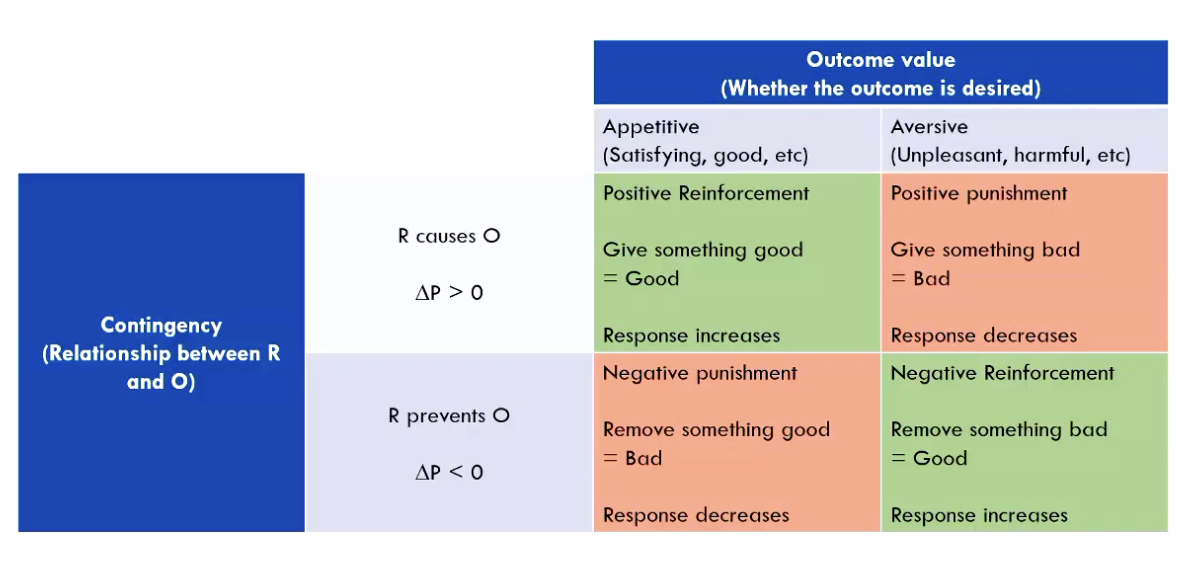
Reinforcement and Punishment
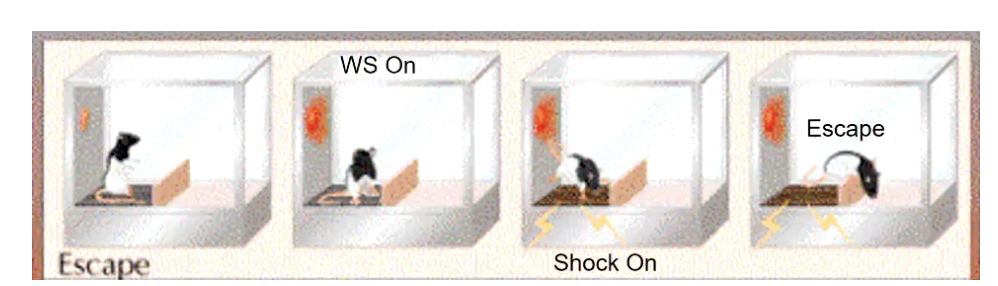
Escape Learning
barrier divides shutter box — one half has grid floor
warning signal (WS) comes on — followed by mild foot shock through grid floor
subject can escape shock by leaping over barrier to safe area
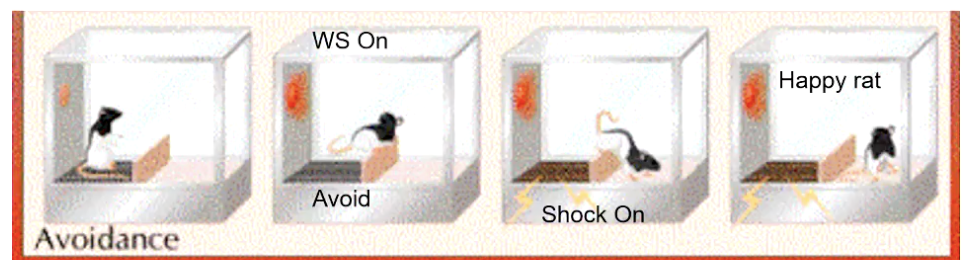
Avoidance
animal soon learns to jump over barrier when WS comes on and avoids shock altogether
escape = turning off some currently occurring aversive effect
avoid = preventing some aversive event from occurring
2 Process Theory — 1. Conditioned Fear
assumes that classical conditioning of fear occurs to WS during escape phase
WS (pav S) precedes the Shock (O)
O produces fear (R)
w repeated trials — WS conditioned to generate fear as conditioned response (R)
Avoidance and Fear
2 process theory assumes avoidance behaviour is motivated and maintained by fear
`Kamin study on strength of avoidance behav and level of fear to WS
well trained animals showed avoidance but low levels of fear to WS
but still some fear
Safety Signals
successful avoidance produces period of safety
cues that signal this period of safety can become safety signals
safety from aversive outcome is signaled by
offset of warning signal
stimuli associated w escape
avoidance response itself
safety = low prob of aversive outcome
safety signal = cue that predicts absence of aversive outcome
Why are Safety Signals Important
improve acquisition of avoidance
associated with relief
act as secondary reinforcers
maintain avoidance in absence of overt fear
protect warning signals from extinction
avoidance does not just remove danger — creates safety
safety can become something that org actively seeks
superstitious avoidance
rituals that produce safety signals
Treatment of Avoidance Flooding
individual avoids the WS — thus reducing fear
flooding involves forcing the indv to experience the WS
step 1 — prevent avoidance response
step 2 — extinguish fear to WS
Treatment of Conditioned Fear
Systemic desensitization
Treatments of avoidance
problems w exposure therapy
exposure in the context of therapy obviously different
pavlovian conditioning (inhibition of fear)
therapist acts as safety signal
original association w fear is protected
Applications of Avoidance Treatments - Chronic Pain
fear avoidance model of chronic pain
avoidance of movement hinders recovery
prominence of safety signals, safety behaviours
however — functional assessment needs to be carefully performed
some safety behaviours are rational