global regents
 Call Kai
 Learn
Learn Practice Test
 Spaced Repetition
 Match
Match Flashcards
 Knowt Play
1/49

There's no tags or description
Looks like no tags are added yet.
Name | Mastery | Learn | Test | Matching | Spaced | Call with Kai |
|---|
No analytics yet
Send a link to your students to track their progress
50 Terms
Map of Africa in 1750
interior: independent african kingdoms
north africa: under ottoman control
coastal areas: small european trading post forts
LOOKED LARGELY INDEPENDENT
BEFORE SCRAMBLE FOR AFRICA: looked largely different from 1900
European trading posts in Africa
Mostly coastal (did not go to interior b/c disease + kingdoms + geographic reasons)
West Africa: slave trade hubs
South Africa: Cape Town, Europeans settled inland
PURPOSE: TRADE ENSLAVED PEOPLE, GOLD, IVORY, SPICES (NOT CONTROL OF LAND)
Europe, Bourbon France: Louis XIV (14)/Palace of Versailles
Louis = King of France “Sun King”
Divine Right: Power came from god (no one could challenge him)
Palace of Versailles: built OUTSIDE of paris to control nobility → required to live at Versailles so they could watch them
Europe, France: Louis XIV; How did he maintain & consolidate power?
Weaken nobility
control church
intendants: royal officials sent to govern provinces
large army
forced protestants to convert
Glorious Revolution (England): HC
Gov: constitutional monarchy (many limits on monarch)
Religion: Protestant Reformation → choose catholic or protestant
Britain: required protestant
King James II: catholic + wanted more power + didn’t like parliament
fear of being another catholic ruler after son born (warming pan)
Glorious Revolution (England): What happened
Parli overthrew James + invited Dutch Prince WIlliam of Orange (and Mary) to become king (bloodless revolution)
Bill of Rights: document signed by Will and Mary
Give Parli more rule
Limits on royal power
Asia: Tokugawa Shogunate, relations with outside world
HC: warring states period → side that won started Shogunate
Shogun → Emperor → Daimyo → Samurai → Peasants/artisans/merchants
Sakoku: isolation policyfear that chistianity would undermine social order (banned)
trade TIGHTLY controlled
could not travel, others could not enter, violaters faced death
Asia: Tokugawa Shogunate, consolidate power
Edo Castle: Daimyo lived there every other year
Shogun base of power
Class system
Religious control
Censorship
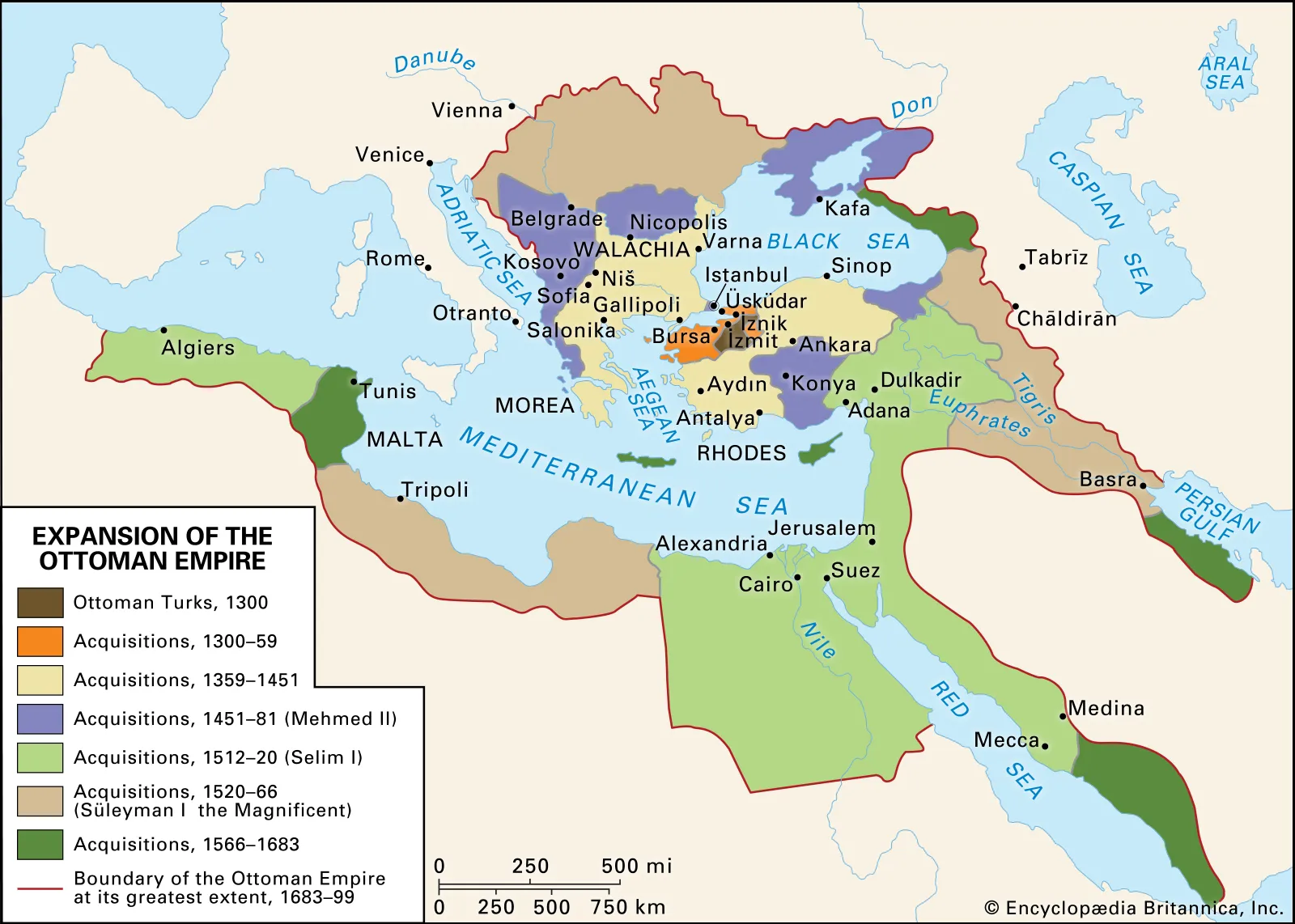
Ottoman Empire: Decline
Peak: one of world’s great empires (Suleiman the Magnificent)
Millets + Janissaries
Turkey (Constantinple/Instabul)
Decline:
Military defeats
Economic Strain
Weak sultans
Janissary problem
Nationalism
Sick man of Europe
Mughal Empire
India subcontinent (Delhi)
Peak: one of the wealthiest empires (Akbar the Great)
religious tolerance + strong administration
Decline:
Aurangzeb overreach: undo Akbar good things
religious conflict
Invasions
British East India Company
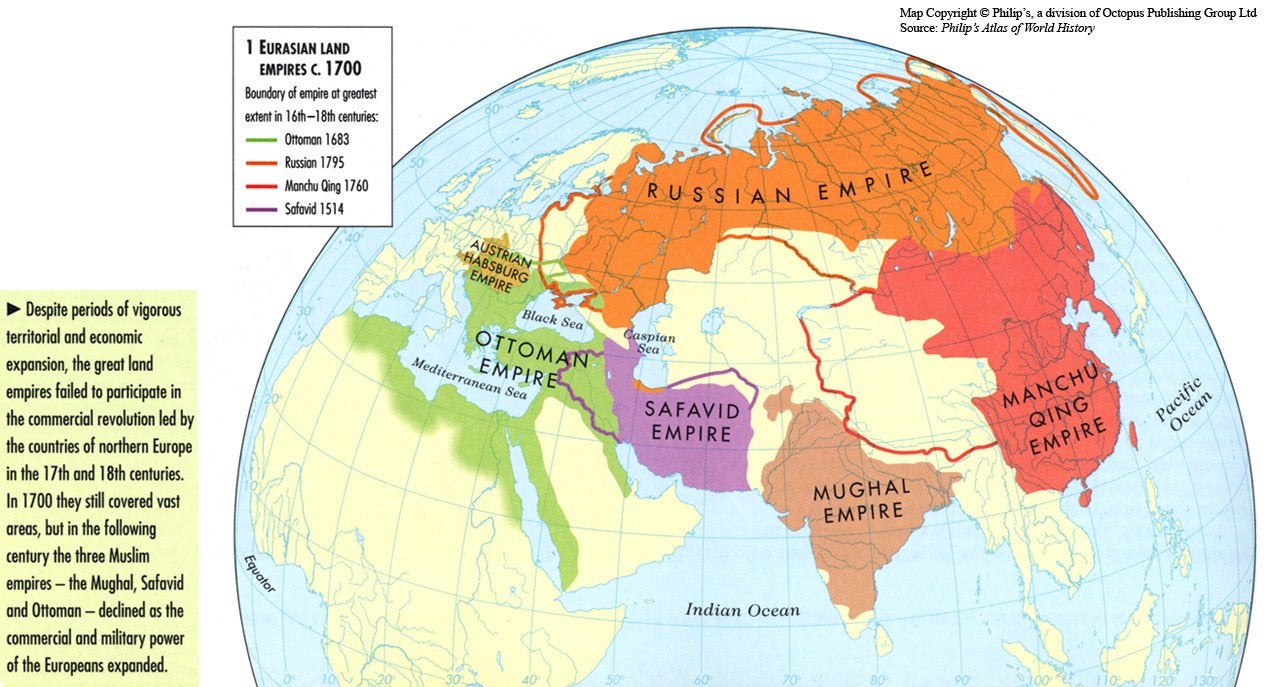
Russia
Peter the Great: moderinize/westernize Russia
Reduce power of boyars (nobility) & Russian Orthadox Church
Traveled West to learn tech + customs
Trade ports
Decline: mixed success → serfdom grew, reforms didn’t last after death
China - Qing Dynasty
Manchus invaded China
collapsed Ming Dynasty
upheld traditional confucian values to earn Chinese respect
foreigners had to follow strict chinese rules + pay tribute
Imperialism in the Americas
Spanish conquistadors conquered Aztec + Incan Empire
English colonies: more self gov than French/Spanish colonies
limited colonies
French in Canada: French + Indian War
Enlightenment: HC
Age of Absolutism: King + Queen had total power (Divine right) → power from the top down
Hierarchy in Europe: Catholic Church took central power → monarchs ruled by the church → many were illiterate
Feudalism: reestablish order → social hierarchy
nobles (wealthy landowners) → vassals (lived on noble land and provided protection + military) → peasants/serfs
Renaissance: brought ideas from Ancient places + Martin Luther’s Protestestant Reformation
Scientific revolution: modern science + math gave people better understanding (scientific method)
QUESTION CHURCH POWER
Enlightenment
intellectual movement → where thinkers believed that reason shoudl guide society (philosophies)
Age of Reason
Argued rule by consent of people, people have natural rights, inspired movements + independence movements
Enlightenment Thinkers + how it spread
John Locke: natural rights → life, liberty, property
gov protect rights → ppl can revolt if failed
Thomas Hobbes: people are bad at heart → need abs monarchy to rule (give up natural rights)
Rousseau: social contract → b/w rulers + ppl → gov = what ppl want
Montesquieu: 3 branches of gov: legislative, executive, judicial (checks and balances)
Mary Wollstonecraft: enlightenment rights should be applied to women as well
Adam Smith: Wealth of Nations (Capitalism) → Locke’s idea to economics
Wilberforce: argued that slavery was wrong
Spread through Salons (formatted by women)
American Revolution: HC and GC
American colonies controlled by GB
Taxation without representation (High taxes)
High nationalism + limits on self-gov
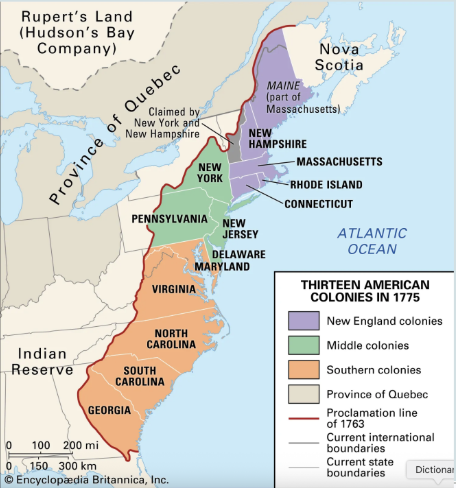
American Revolution: Causes
Higher taxes: stamps, tea, paper
Taxation without representation: no seat in Parli
The Quartering Act: colonists need to house + feed Brit Soldiers
didn’t like military in their house (not consented)
Growing American Identity
American Revolution: Triggering Events
Boston Tea Party
The Battle of Lexington: fired on colonists from behind → protests → warefare
The Declaration of Independence (Thomas Jefferson): colonists breaking away from Brit
life, liberty, pursuit of happiness
gov = power from consent
gov destroy rights → people overthrow
American Revolution: Methods, Backlash, Level of Violence
Colonists: propaganda, political writing/cartoons, France alliance, violence, intimidation
Britain: Marital law (order everyone to submit), military force, free slaves
Backlash: not everyone supported it, loyalists (tories) believed staying with Brit was safer (divided society)
Violence: VERY VIOLENT
American Revolution: Outcomes
SUCCESS
entirely new gov (enlightenment ideas)
US constitution: 3 branch gov, congress power, Britain denied this
Bill of Rights: first 10 amendments directly addressed greivences of Revolution
freedom of speech
right to bear arms
no solider in home without consent
French Revolution: Causes + Goals
Unfair Social Structure: 3 Estates → Clergy, Nobility, Commoners
Absolute monarchy: Weak leadership (King Louis XVI) + Queen Marie Antoinette = despised
American Revolution: proved people could overthrow monarchy
Enlightenment Ideas
Financial Crisis: bankrupt from wars (american rev) + Louis called Estates General to RAISE TAXES
Europe = heavy abs monarchies
Population boom
Economic crisis + shifts
Royal spending: monarchs spending A LOT
Liberty, Equality, Fraternity
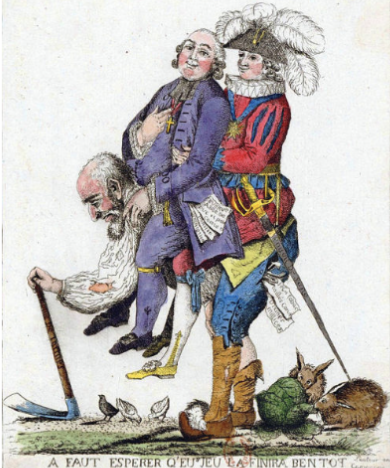
French Revolution: 3 Estates
Clergy: catholic church leaders → small population, 10% land, NO TAXES
Nobility: slightly larger population, majority of land, MOSTLY NO TAXES
Commoners: 97% of population → bourgeoisie (middle class) urban workers, peasants, PAID ALL TAXES
French Revolution: Political Spectrum
Radical Left: wanted to abolish monarchy + want change + willing for violence
Jacobins, Sans-culottes, Robespierre, Jean Paul Marat
Liberal: progressive reforms + enlightenment ideals in French Laws
Moderate: moderate gradual democratic reforms
Bourgeoisie, Girondins
Conservative: Did not want change, wanted to keep monarchy in some form (limited monarchy) + keep church
Radical Right: France to return to pre-1789 conditions + willing to use violence
French Revolution: Moderate Stage Key Events
Tennis Court Oath: third estate locked out of estate meeting → on a tennis court swore never to disband until a new constitution was signed
The Storming of Bastille: storming a prison → symbol of people rising up to authority + king losing control
The August Decrees: series of laws passed by the National Assembly that abolished the feudal system + privileges of noble/clergy → all citizens equal before the law
Declaration of Rights of Man and Citizen: All men = natural rights of speech, property, voting, fair taxation
The Woman’s March on Versailles: marched by thousands of Parisian women at Versailles due to anger and king opposing revolution → forced Louis + family to return to Paris
The Royal Family attempts to flee: tried to flee in secret → arrested and returned to Paris under guard
The Constitution of 1791: first written constitution (constitutional monarchy) → limit king’s power + Legislative assembly + abolish old estate system
limited voting rights, king could delay laws, king’s flee made it so that this constitution never worked
French Revolution: The Reign of Terror → How?
Monarchy fell in 1792 + Louis executed → France in a very unstable position
pressure facing french republic → foreign invasions, civil war, food shortage
Radical Montagnards (led by Robespierre) seized control of National Convention + Committee of Public Safety
French Revolution: The Reign of Terror → what?
radical phase of Revolution led by Robespierre + committee of public safety
justified terror → necessary to defend revolution from enemies
targeted anyone accused of being enemy of revolution → mostly third estate
no real process, just accusations
use of guillotine: invented to be a humane form of execution + have everyone be equal in death
French Revolution: The Reign of Terror - Key Figures
Maximillien Robespierre
Jacobin (member of the most famous and influential radical political club of the French Revolution) leader + head of Committee of Public Safety
Georges Danton: early supporter of terror → executed
Jean-Paul Marat: radical journalist → harsh measures
assassination made him a martyr for revolution (bathtub)
French Revolution: The Reign of Terror - End
Robespierre grew increasingly authoritarian and suspicious
executed + denounced some allies
Thermidorian Reaction: arrested + guillotined by peers
paved way for more conservative directory gov
fear + power orride ideals
French Revolution: Napoleon - HC
New constitution after Robespierre execution: Constitution of 1795
separate powers, limit power of one man, DIRECTORY
Directory: 5 member group (head of gov)
weak + poorly funded + struggled to enforce gov policies + rely on military + repeated coups d’etat (attempts to overthrow)
France: still engaged in wars with neighboring European countries
Napoleon Bonaparte: French military leader → radical left → promoted in military for successful battle plans
Directory tasked Napoleon with defending National Convention in Paris → success
gave command of military campaigns in places where French were fighting with monarchs that threatened rev.
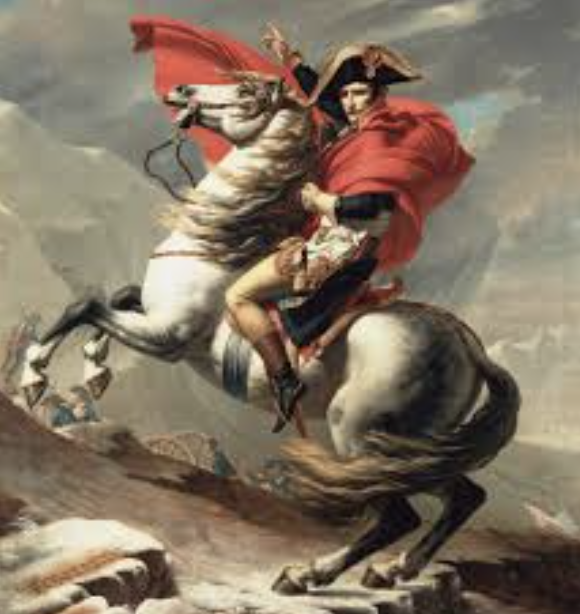
French Revolution: Napoleon - Rise to Power
gained popularity in France (always successful)
Napoleon learned that the Directory was weak + European armies threatening France
organized coup d’etat
took control of gov + declared himself First Consul of France
New constitution → gave him unlimited control
French Revolution: Napoleon - In Power
Kept many changes from revolution
support laws → strengthen central gov + goals of revolution
set up gov run pub schools
restored position of catholic church BUT made sure church not in control
Napoleonic Code: uniform set of laws + eliminated injustices
limited liberty + promoted order + authority (freedoms restricted)
assassination plot against him → recreated monarch + divine right → CROWNED HIMSELF EMPEROR
Napoleonic Wars: continuation of wars from European monarchs
scared that revolution would spread to them
Napoleon attempted to end wars by conquering all of Europe + bringing it under French control
French Revolution: Napoleon - Fall from Power
Exile: army = defeated → exiled to island called Elba
monarchy was restored, but he escaped and reclaimed power
More war: raised another army to retake Europe → defeated at Waterloo Belgium
Exile to Saint Helena: died there
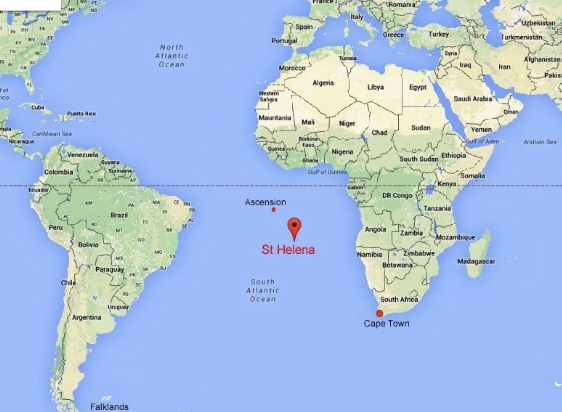
French Revolution: Napoleon - Congress of Vienna
Meeting representative of European states
address conflict + instability in Europe caused by French Revolution + Napoleonic Wars
wanted peace + long term stability
results: restoration of old boundaries of Europe & larger powers resized to establish balance of powers → prevent future wars
France: monarchy restored (Louis XVII) → constitutional monarchy
restricted power on monarch
Haitian Revolution: HC + Causes
Saint-Domingue (Haiti): French colony and one of the richest in the world → sugar plantations
Social Hierarchy: Grand/Petit Blancs (plantation owners + held most power) → Gens de Couleur (free people of color + same jobs) → Affranchis (Freed slaves + could enslave others + little profit + no citizenship) → Enslaved people (those of african descent + no power/bad treatment)
Influenced by the French Revolution (enlightenment ideas)
Enslavement was HARSH
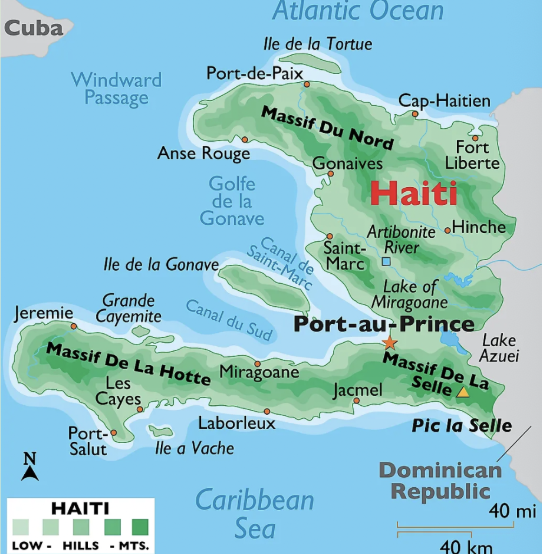
Haitian Revolution: Road to Freedom
(1791) Slave uprising: led by Toussaint Louverture → violent revolt
(1792) National Assembly grants rights + citizenship for free blacks + mulattos → troops to quell revolt
Toussaint Louverture’s leadership: former enslaved person + skilled military leader + diplomat
(1794) Abolition of Slavery: France abolished slavery (pressure) TURNING POINT
(1799-1800) Toussaint Louverture reinstates plantation system → War of the Knives (civil war) → L’ouverture wins + invade Spanish ½ of island
while Napoleon gains power
(1801): Haitian Constitution: Toussaint → ''governor for life”
(1802) Napoleon’s Attempt to Restore Slavery → Jean Jaques Dessalines take control (Toussaint was captured..?) continued to fight for freedom
(1803): French force = final defeat → Napoleon withdraws his troops
(1804) Haitian Independence: declared Haiti as independent → first black republic in the world
ONLY SUCCESSFUL SLAVE REVOLT THAT CREATED A NEW NATION
Haitian Revolution: After Independence
no one would recognize Haiti → fear of inspiring their own countries → made Haiti isolated
Dessalines tried to rebuild economy → people refuse to work
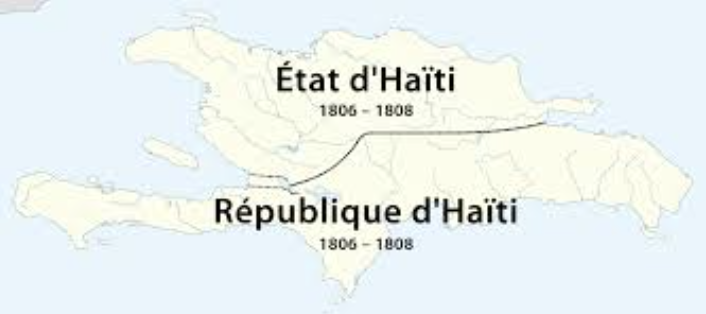
assasinated: split into 2 rival got
Etat d’haiti: monarch
Republique d’Haiti: republic
Boyer: reunited country under his rule
Haitian Revolution: Reparations
The French Ultimatum
pay reparations and france will recognize Haiti as a country
The Double Debt
5 annual payments of 30 mill
borrowed money from france to pay reparations
decades of debt
French demand reparations
armada held them at gunpoint
money for the loss of enslaved people + property
21 billion dollars
not fully free until 21st century
Haitian Revolution: Reparations
1915: US invaded Haiti and took money
US invaded → military occupation
used forced labor
felt like it was return to enslavement
Corruption wihtin
Latin American Revolution: Social Hierarchy
Peninsulares (spanish born in spain) → Creoles (born in new spain of Spanish parents) → Mestizos (born of SPanish + indigenous people’s parents) → Indigenous Peoples → Enslaved persons
Latin American Revolution: Causes
Enlightenment Ideals
French/American Revolution
Napoleonic Wars: invaded Spain → put brother on throne (bad leader)
Spain is weak → opportunity for independence
Latin American Revolution: Simon Bolivar
Wealthy Venezuelan → leader in fight for independence
Believed in creating independent nations free form Spanish control
Nationalism
dreaming of uniting all of Latin America into one big country (Gran Columbia)
Latin American Revolution: Outcome
successful in ending Spanish rule → NOT FULL EQUALITY
elites have more power + slaves did not gain many rights
1848 Revolutions: HC
Congress of Vienna
put a king back on the throne in France
restored country borders
establish balance of power
suppressed revolutionary ideas (never again)
Industrial + social changes
new urban working class
Nationalism
Liberalism: individual rights, rep gov, freedom from monarchy
1848 Revolutions: Outcomes
Why fail?
all happening at the same time
government power is very very strong at this time
after french rev. —> more aware of revolutions happening
there to prevent revolutions
didn’t have set goals/specific thigns they wanted to change
did not have a roadmap
was not organized
people who are not in the best health shape
can’t win against trained military
German Unification: HC
After Congress of Vienna
creation of the German Confederation (led by Austrian Empire)
Assembly met in Frankfurt
Key Factors
Confederation: loose alliance of states that agree to cooperate with each other
Balance of Power: Prussia + Austria
Nationalism
Rise of Prussia
German Unification: Otto von Bismark
Prime Minister of Prussia
unite german states into single empire
Realpolitik: leaders should make decisions basked on practical goals instead of what is morally right
German Unification: What happened
3 wars: blood + iron
war 1: took over Denmark German speaking territory
war 2: fought Austria
war 3: fought France with help of southern German-speaking state
Franco-Prussian War
Germany empire proclaimed & Otto von Bismark was the first chancellor
King of Prussia = Emperor of Germany
IR: Causes + where?
Agricultural revolution
new machinery
Enclosure movement:
wealthy land owners bought up small private farms and combined them
large commercial farms
many jobs lost → move to city
large urban migration
Britain: Island nation, large deposits of coal and iron
IR: Japan
HC: tokugawa → feudal heierarchy, isolation
Matthew Perry ended Isolation