Cost of capital, capital structure and dividend policy
 Call Kai
 Learn
Learn Practice Test
 Spaced Repetition
 Match
Match Flashcards
 Knowt Play
1/72

There's no tags or description
Looks like no tags are added yet.
Name | Mastery | Learn | Test | Matching | Spaced | Call with Kai |
|---|
No analytics yet
Send a link to your students to track their progress
73 Terms
What are sources of long-term finance?
equity
preference shares
debt
What does Ke stand for?
cost of equity (ordinary share capital)
What does Kd stand for?
cost of debt
What does Kp stand for?
cost of preference share capital
What does WACC stand for?
weighted average cost of capital
What does P stand for?
price
What does MV stand for?
market value
What is the cost of capital?
the minimum risk-adjusted rate of return that a project must make in order to be acceptable to investors
What happens to cost of capital if risk is held constant?
rate of return > cost of capital = increase the value of the firm
What investments reduce shareholder wealth?
When it does not cover the firms cost of capital
What project do investors accept?
ones that increase their wealth
What is the weighted average cost of capital (WACC)?
the average cost a company pays for its financing, weighted between debt and equity.
What must a firms overall cost of capital reflect?
the required return on the firms assets as a whole
What must the cost of capital include if a firm uses both debt and equity financing?
its cost of capital is the weighted average of the cost of each based on their proportions.
What is the diagram for the overview of the cost of capital?
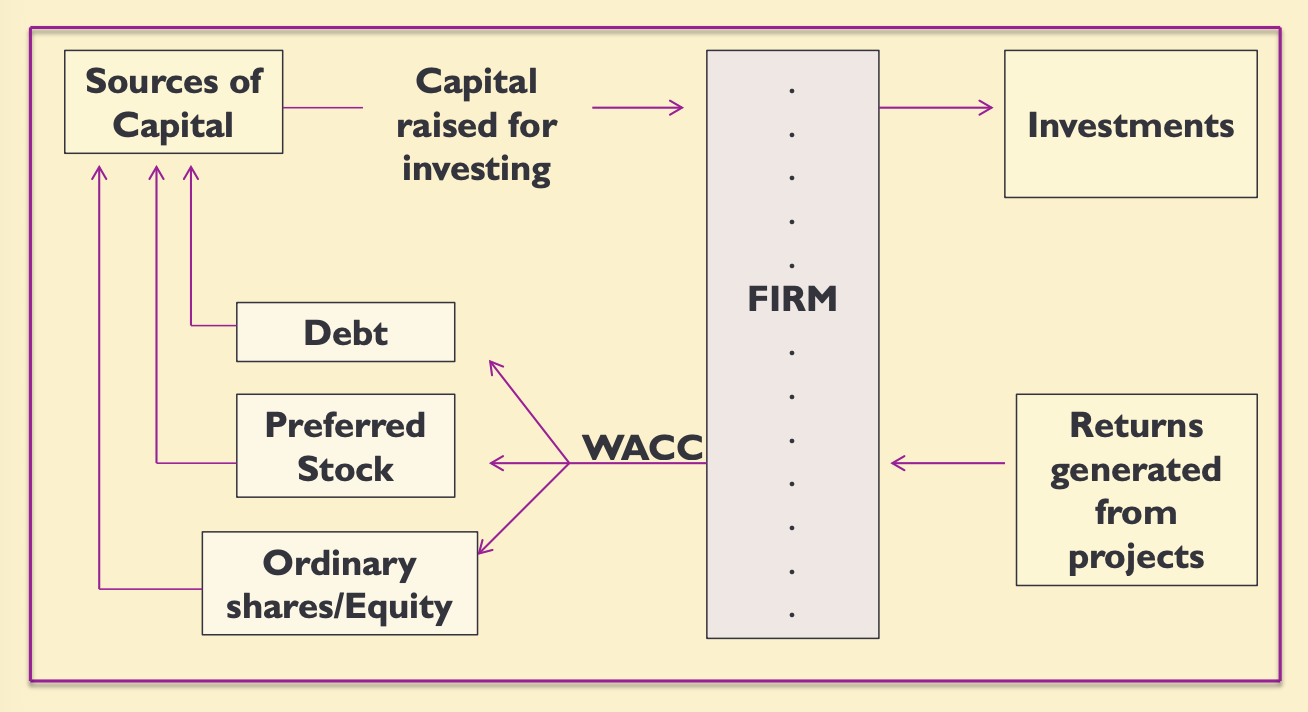
What are the 3 reasons knowledge of cost of capital is important?
capital budgeting analysis
capital structure choice
performance assessment
What is capital budgeting analysis?
Firms invest in things like equipment and research, and finance these using sources such as shares and debt.
What is capital structure choice?
The cost of capital depends on the cost of each source of finance and their mix. To maximise firm value, companies should choose the mix that gives the lowest overall cost.
What is performance assessment?
cost of capital is useful in evaluating management performance
How does good management add to shareholder wealth?
Consistently producing a return on capital which is higher than the firms cost of capital
What factors can the firm not control?
the level of interest rates
tax rates
capital structure policy
dividend policy
investment policy
How does the capital structure policy affect the firms cost of capital?
changes to the capital structure
How does the dividend policy affect the cost of capital?
Affects the level of retained earnings. Firms consider cost of capital when they establish their dividend policy
How does the level of interest rates affect the cost of capital?
higher interest rates= increase in the cost of debts, because firms will have to pay debt holders more to obtain debt capital
How do tax rates affect the cost of capital?
lower capital gain tax rate relative to the rate on ordinary income makes stocks more attractive, reduces cost of equity
How do investment policies affect the cost of capital?
most firms invest similar assets to the ones they currently operate
if they invest in a new line of business, the marginal cost of capital should reflect the riskiness
What are the two main approaches to calculating the cost of equity (Ke)?
the dividend valuation model
the capital asset pricing model (CAPM)
What is the dividend valuation model?
the cost to the company is the discount rate that makes the present value of future dividends equal to the share price.
What is the capital asset pricing model?
the idea of risk v return, applies a risk premium to the risk free rate
What is the cost to the company?
The interest payment
What is the equation for Market value?
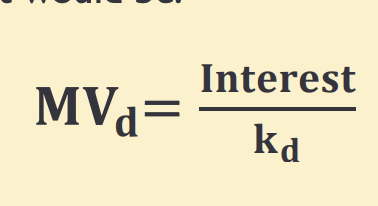
What is the equation for cost of debt (Kd)?
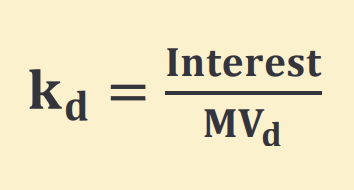
For tax purposes, what is interest on a loan?
It is an allowable expense
What is the equation for cost of debt (Kd) including tax?
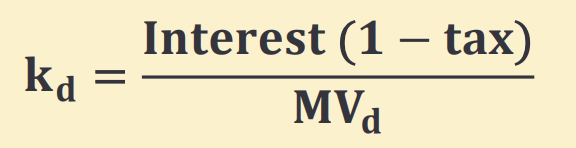
Are dividends for preference shares tax deductible?
No
What is the formula for cost of irredeemable preference shares?
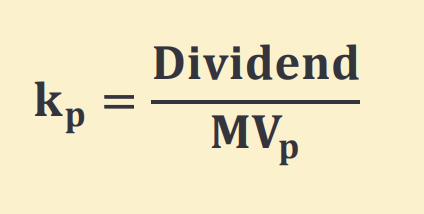
Doesnt include taxation, as they are not tax deductible
What is the equation for weighted average cost of capital (WACC)?

What is risk?
the higher the level of fixed costs, the greater the variability in profit
What does increasing the level of debt do for ordinary shareholders?
increases the fixed cost, returns to ordinary shareholders more risly
What is financial gearing?
how much a company uses debt compared to equity to finance its operations.
What is a geared (levered) firm?
firm financed by both, debt + equity
What is a ungeared (unlevered) firm?
firm financed entirely by equity
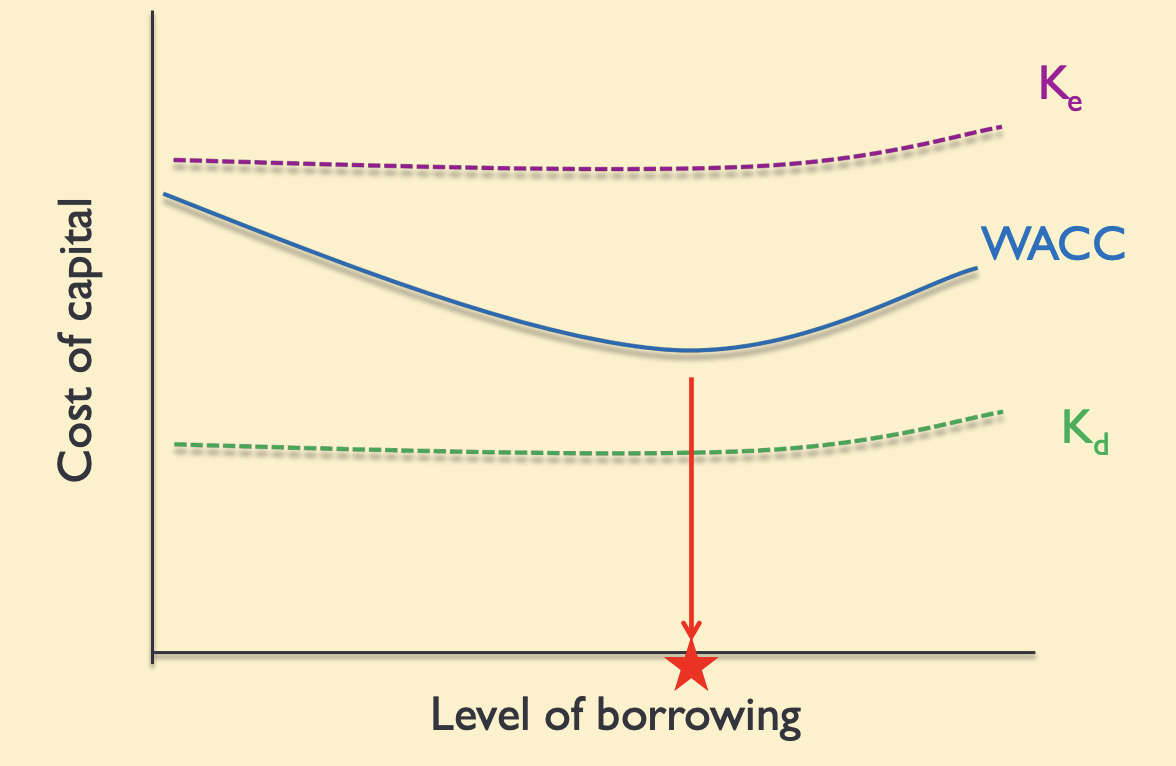
What does the Traditional View say about capital structure and WACC?
There is an optimal capital structure that minimises WACC and maximises firm value. Increasing debt initially lowers WACC (since debt is cheaper than equity), but too much debt increases financial risk, causing WACC to rise.
What does the graph for the traditional view look like?
What do we assume for Miller and Modigliani?
perfect capital markets
no bankruptcy costs
no tax
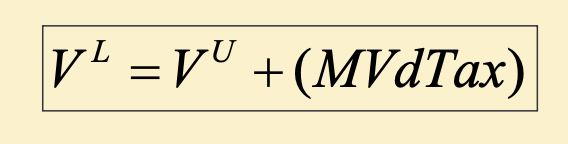
What happens to the market value of a firm if there is no taxation?
firm is independent of its capital structure
What is the formula for the value of a leveraged firm (without tax)?
How does financial gearing affect the return required by shareholders?
With debt, shareholders require a return equal to the ungeared return plus a risk premium, which increases as gearing rises.
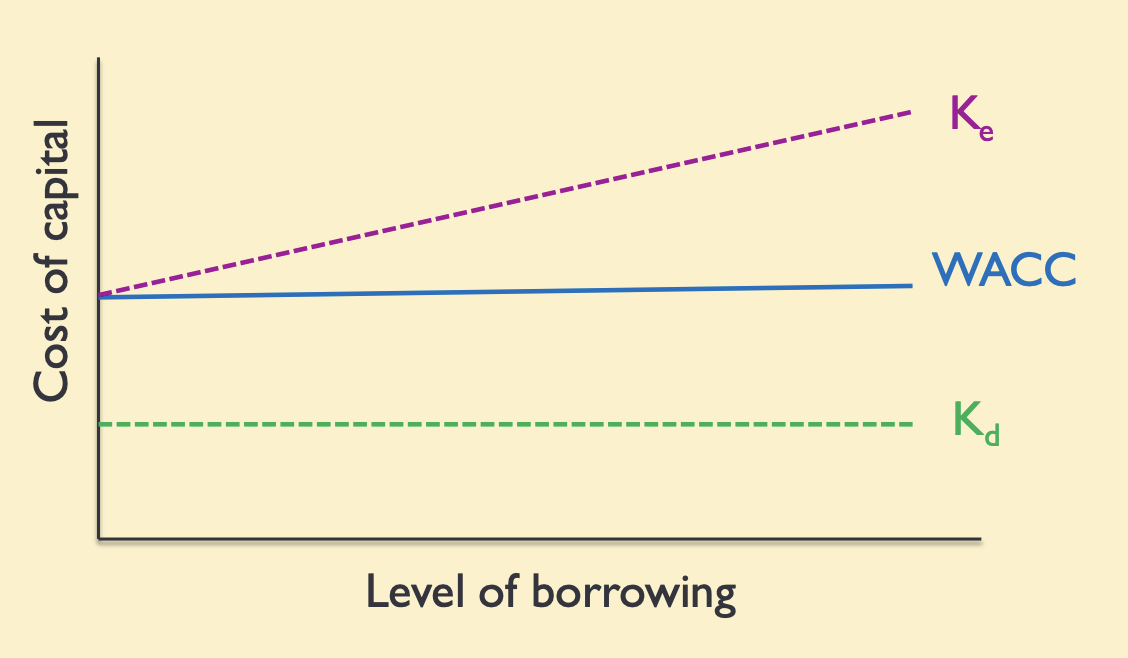
What happens to the cost of equity (Ke) as gearing increases?
The cost of equity increases in direct proportion to the level of gearing due to higher financial risk.
What is the overall effect of higher gearing on cost of capital in this theory?
The increase in the cost of equity (Ke) exactly offsets the benefit of cheaper debt (Kd), so overall cost of capital remains unchanged.
What does the graph for M&M view with no taxation look like?
What is the equation for M&M view (with tax)?
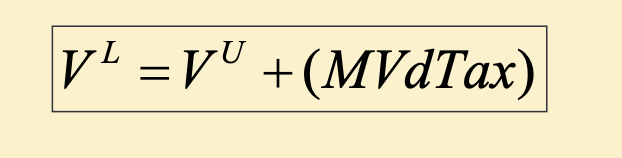
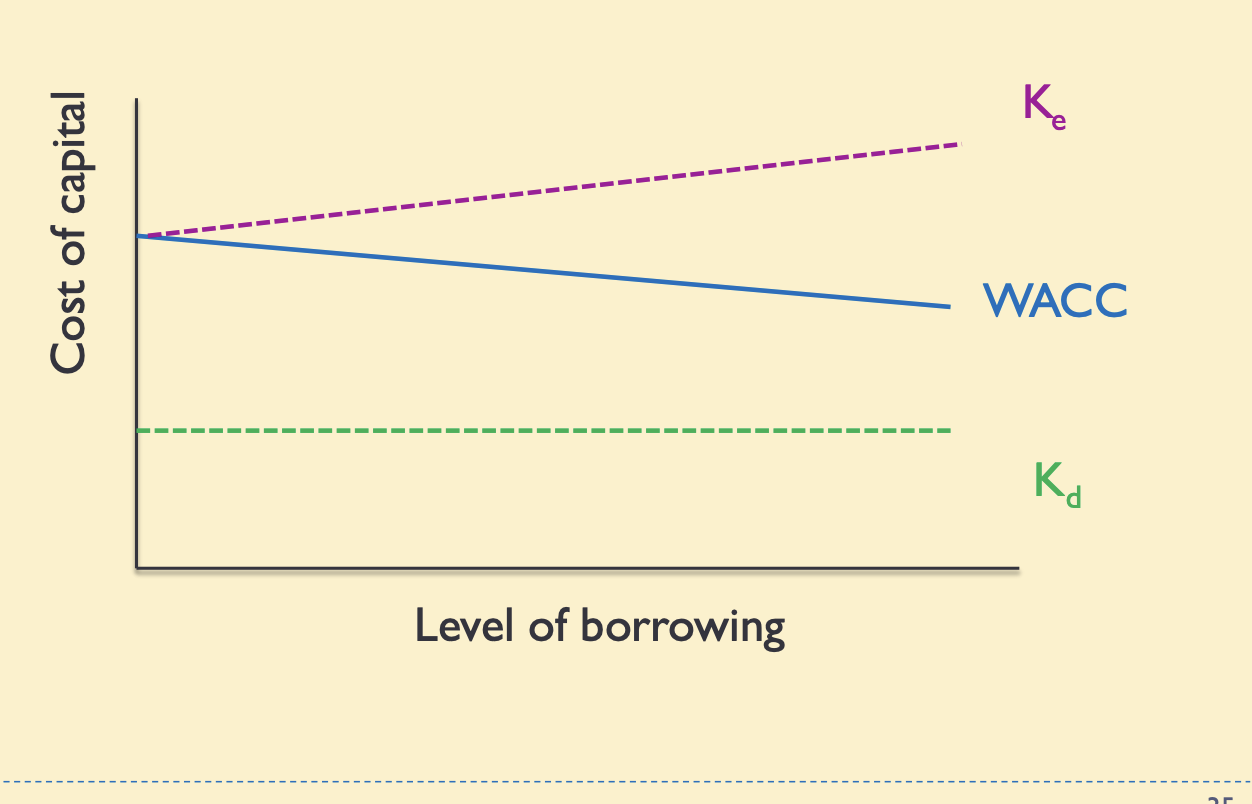
What happens to the WACC when there is a higher level of debt?
lower WACC
What is optimal capital structure?
To borrow as much as possible (100% gearing)
Who does the tax relief from interest payments on loans benefit?
Provides a benefit to shareholders
What does M&M view with tax ignore?
bankruptcy risk
What does the graph for M&M view with tax look like?
What are practical matters?
Pecking Order Theory
Signalling Theory
Taxation
Attitudes of owners
Attitudes of management
Attitudes of lenders
Costs of financial distress
What are dividends?
a permanent distribution of residual earnings of the company to its owners
they can be in cash or other forms
What is the dividend policy?
approach managers take to decide how much of the company’s earnings will be paid out to shareholders as dividends
Can the pattern of dividend payments affect shareholder wealth?
Increasing the dividend payment this year may not increase the value if it means future dividends fall
What are the 2 theories showing wether dividend payments affect shareholder wealth?
the modernist (M&M)
the traditional view
According to the Modigliani & Miller (M&M) view, how do dividend payments affect shareholder wealth?
Dividend pattern has no effect on shareholder wealth
Wealth depends on the investment projects the business undertakes
Shareholder wealth is maximised by accepting all projects with positive NPV
Lower dividends are offset by an increase in share price, so returns (dividends vs. retention) are unimportant
What is the M&M view?
investments are made through retained profits or taking out loans
investors can create or reinvest their own dividends by selling or buying shares
What does the M&M view suggest and assume?
Suggests: no optimal dividend policy
Assumes:
perfect and efficient markets
no share issue costs
no transaction costs
no taxation
Is the dividend policy for traditional view important?
Yes
Why do shareholders prefer to recieve dividends today?
future dividends/capital gains, less certain and valued less highly
investors apply higher discount rates to future dividends, as higher risk
implies businesses that retained earnings are adversely affected
Why are dividends important
Clientele effect
practical aspects
information signalling
reducing agency costs
What factors influence the level of dividends?
investment opportunities
financing opportunities
legal requirements
loan covenants
profit stability
threat of takeover
expectations
policies of other firms
What is dividend smoothing?
a company aims to keep dividends stable or gradually increasing over time, even if earnings fluctuate.
What are alternatives to cash dividends?
scrip dividends
share repurchase
What are scrip dividends?
bonus share dividend
no increase in wealth
sign of confidence
positive if dividend per share stays the same
What is share repurchase
returning cash to shareholders by buying back shares
one-off event
reduces equity
more flexible than dividend
whether buy backs are beneficial